Pages

Showing posts with label genetics. Show all posts

Friday, September 23, 2016

Donie's Ireland daily news BLOG update

Cash buyers In Ireland pay less for properties than those who need a mortgage?

Image result for Cash buyers In Ireland pay less for properties than those who need a mortgage?   Image result for Cash buyers In Ireland pay less for properties than those who need a mortgage?

CASH BUYERS ARE PAYING LESS FOR PROPERTIES THAN THOSE WHO NEED TO GET A MORTGAGE AND FIRST-TIME BUYERS ARE BEING SQUEEZED OUT OF THE MARKET.

The findings are contained in the newly revamped property price index from the Central Statistics Office (CSO) which is now based on stamp duty returns and includes cash buyers for the first time.
The CSO data now shows that the collapse in property prices was more pronounced than previously thought, while the recovery has been slightly stronger.
For example, the peak-to-trough fall in residential property prices was 54.4%, not 50.9% as recorded previously.
Similarly, the price increase from the trough to July of this year is 43.2% using the new index, whereas it was previously estimated as 37.4%.
The CSO confirmed that cash buyers — who are estimated to make up around 50% of the market — pay less for property than those who must buy their house by securing a mortgage between 2010 and 2016 and that the differential was most pronounced when the market was at its lowest and outside of Dublin.
Throughout the period 2010 to 2015, former-owner-occupiers have consistently paid the most on average for housing, followed by first-time buyers. Non-occupier households have consistently paid the least.
The CSO also found that first-time buyers have gradually been pushed out of the market between 2010 to 2015.
In 2010, they represented 53.1% of all household market transactions filed. By 2015, first-time buyers’ share fell to just 24.4% of the market. In the first seven months of 2016, first-time buyers accounted for 24.6% of household market purchases.
Across the country, residential property prices rose by 6.7% in the year to July. This compares with an increase of 4.9% in June and a rise of 6.1% recorded in the year to July 2015.
Residential prices increased by 2.5% in the month of July compared with an increase of 1% in June and an increase of 0.8% in July of last year.
Residential property prices are currently 34.7% lower than at their highest level in April 2007.
Prices declined steadily over the years 2010 to 2011, followed by a bottoming-out in 2012 to 2013.
“Since then, prices have risen again. However, the rise in prices has been uneven, with noticeable fluctuations up to the present point in time,” noted the CSO.
In the Dublin residential property market, prices increased by 3.8% in the 12 months to July. This compares with an increase of 2.5% in the year to June and an increase of 4.5% in the year to July 2015.
Dublin residential property prices increased by 1.6% in the month of July compared with an increase of 0.4% in June and an increase of 0.4% in July of last year.
Residential prices in the capital are now 58.2% higher than their lowest level but remain 35.3% below their peak price level in 2006.

The Irish Labour Party made mistakes in office, Says Brendan Howlin

LABOUR PARTY THINK-IN TOLD ECONOMIC IMPLOSION WOULD HAVE HAPPENED WITHOUT PARTY

Image result for The Labour Party made mistakes in office, Brendan Howlin admits   Image result for The Labour Party made mistakes in office, Brendan Howlin admits

Labour Party leader Brendan Howlin with Andrew Montague, Rebecca Moynihan, Ged Nash and Kevin Humphreys: “We are rightly proud of the many things we did in office. But we’re also honest enough to recognise that we didn’t get everything right.”

Labour Party leader Brendan Howlin has conceded the party made mistakes in office, but said the current Government was interested in power and nothing else.
Speaking to the Parliamentary Labour Party at its think-in yesterday, Mr Howlin said the Government was leading “a do-nothing Dáil”.
“If [it] survives at all, these will be known as the lost years,” said Mr Howlin.
“Politics is about the resolution of differences in a peaceful and civilised manner – not pretending they don’t exist.”
In the 1990s and again in 2011, Labour entered government when the country was in chaos, but twice it left office when the country had returned to economic growth.
“Had Sinn Féin or the anarchists entered government in 2011 Ireland would now have no economy to speak of. We wouldn’t have been talking about health and housing at the election just gone.
“We’d have been talking about our economic implosion, the collapse in foreign direct investment, soaring joblessness and unimaginable hardship. There would have been no debate about the scale of the recovery because things would still be getting worse.”
The liberal society
For 40 years Labour has been the parliamentary vanguard of change which has seen Ireland transformed from a narrow intolerant society to a more pluralist and liberal society.
“There are many in Ireland who only see problems as opportunities for political gain. They will always have a certain advantage over those of us that seek to solve such problems.”
Labour’s election manifesto was principled and progressive and would have helped to build a fair society: “But, frankly, I think many Irish people had stopped listening to Labour.
“Let’s be honest enough to recognise why. By the time the election came around, we faced an enormous challenge in having any of our messages heard.
“I’ve said this before – and I will continue to say it – we recognise that we made plenty of mistakes along the way; that there is a gap between what people heard us say and what they saw us do.” Mr Howlin said this was partly because governing during a crisis was messy and distracting and stopped the party from being clear about some of the things it had achieved.
“But partly also because we made some particularly high-profile promises in areas such as third-level fees. And we didn’t always deliver.
“We are rightly proud of the many things we did in office. But we’re also honest enough to recognise that we didn’t get everything right.”

Yahoo admits information from 200m accounts stolen by hackers

HACKED DATA MAY INCLUDE BIRTH DATES, USER NAMES AND PASSWORDS GOING BACK TO 2012

Image result for Yahoo admits information from 200m accounts stolen by hackers  Image result for Yahoo admits information from 200m accounts stolen by hackers  Image result for Yahoo admits information from 200m accounts stolen by hackers

DATA BREACH REVELATION WOULD CONFIRM REPORTS SAME HACKER WHO STOLE DATA FROM LINKEDIN WAS NOW SELLING INFORMATION FROM 200 MILLION YAHOO ACCOUNTS.

Yahoo announced on Thursday that the account information of at least 500 million users was stolen by hackers two years ago.
In a statement, Yahoo said user information – including names, email addresses, telephone numbers, birth dates, passwords, and in some cases security questions – was compromised in 2014 by what it believed was a “state-sponsored actor.”
It did not name the country involved. The company said it was working with law enforcement officials. It encouraged users to review their online accounts for suspicious activity and to watch out for suspicious emails.
The announcement comes as Verizon Communications moves forward with its $4.8 billion acquisition of Yahoo. It is unclear what effect the breach, if any, will have on Yahoo’s sale price.
That will most likely depend on what Verizon learns about Yahoo’s security controls. But security experts say the incident could have far-reaching consequences for users beyond Yahoo’s services.
“The stolen Yahoo data is critical because it not only leads to a single system but to users’ connections to their banks, social media profiles, other financial services and users’ friends and family,” said Alex Holden, the founder of Hold Security, which has been tracking the flow of stolen Yahoo credentials on the underground web.
“This is one of the biggest breaches of people’s privacy and very far reaching.”
The revelation would confirm earlier reports that the same hacker who stole data from LinkedIn was now selling information from Yahoo! accounts on a dark web marketplace.
Hacker named Peace
The data for sale includes user names, scrambled passwords and birth dates and probably dates from 2012, Motherboard reported in August, citing the cyber-attacker, who went by the name Peace.
Yahoo! said at the time it was investigating the claim. Many of the stolen accounts in a sample of data obtained by Motherboard were no longer in use and had been cancelled.
The sale of all of the data for just under $2,000 (€1,781) also suggested that the information itself was of little value, either because most of it was obsolete, made up, or useless because the hackers had already attacked legitimate accounts and exhausted their need for the data.
Whatever the scale of the alleged breach, the incident shows the danger of large datasets spilling into the hacker underground and being used for criminal purposes for years without the breached companies knowing or taking minimal action based on whatever data hackers tell them was taken.
LinkedIn said in May it was investigating whether a breach of more than six million user passwords in 2012 was bigger than originally thought, following a hacker’s attempt to sell what was purported to be login codes for 117 million accounts.
Reset passwords?
The company said it appeared more data was taken in the initial compromise and that the company was just learning about the larger amount through the hacker’s posting. Like many internet companies that have been breached, LinkedIn only reset passwords of everyone it believed was part of the breach at the earlier time, which amounted to 6.5 million users.
It is unclear what steps, if any, Yahoo has taken since learning about the alleged compromise.
Reports of the security breach come just as chief executive Marissa Mayer is about to close a deal that ends the once-dominant internet firm’s independence.
Verizon is acquiring its internet assets for $4.8 billion, bringing the web portal together with long-time rival AOL. The telecommunications company will pick up services that still draw a billion monthly users, including mail, news and sports content and financial tools.

Volkswagen investors seek compensation in emissions cheating scandal,

A COURT RULES

Image result for Volkswagen investors seek compensation in emissions cheating scandal  
VW Making Slow Progress On Fixing Rigged Diesels In Europe
  Image result for Volkswagen investors seek compensation in emissions cheating scandal
Vera Jourova, European Union Commissioner for Justice, Consumers and Gender Equality, presents the results of the 2016 Consumer Markets Scoreboard in Brussels, Belgium on September 5. Questions mainly focused on Dieselgate and Volkswagen, due to a scandal involving the manipulated data of emission tests.
Volkswagen (VW) faces 8.2 billion euros ($9.1 billion) in damages claims from investors over its emissions scandal in the legal district where the carmaker is based, a German court said on Wednesday.
About 1,400 lawsuits have been lodged at the regional court in Braunschweig near Volkswagen’s Wolfsburg headquarters, the court said.
The Braunschweig court said it received some 750 lawsuits on Monday alone, which marked the first business day after the anniversary of VW’s diesel emissions test-rigging scandal.
It said it brought in extra staff to process suits submitted by shareholders concerned September 18 – the day VW’s manipulations were disclosed a year ago – could be the deadline to file.
Plaintiffs say the German carmaker didn’t inform shareholders quickly enough over its cheating software, which was installed in up to around 11 million vehicles worldwide.
VW, which faces lawsuits and investigations across the world, has consistently said it did not break capital markets regulations in the disclosure of its cheating.
The biggest claim at the Braunschweig court, totaling 3.3 billion euros, was filed by lawyer Andreas Tulip on behalf of institutional investors around half a year ago.
The court detailed additional complaints on Wednesday, saying they included a filing by institutional investors for 30 million euros in damages, two investor groups demanding 1.5 billion and 550 million euros respectively and an investment company that sued the carmaker for 45 million euros.
It would take about four weeks to fully process the additional claims, the court said.
Complaints have also been filed by German state pension funds.
VW has so far set aside about $18 billion to cover the cost of vehicle refits and a settlement with US authorities, but analysts think the bill could rise much further as a result of lawsuits and regulatory penalties.
VW pledged to fix all cars equipped with illicit engine software in Europe by autumn 2017, the European Commission said on Wednesday after talks with the carmaker to ensure it is doing enough for affected customers.
At a meeting with consumer Commissioner Vera Jourova, VW board member Francisco Javier Garcia Sanz committed to a plan to inform customers by year’s end of the need for a technical fix to bring diesel cars into line with EU caps on toxic nitrogen oxide emissions, Jourova’s spokesman said.
The German carmaker also committed “to have all cars repaired by autumn 2017,” spokesman Christian Wigand said, adding the carmarker would offer clients “proof of conformity.”
VW has admitted that it installed improper software that deactivated pollution controls on more than 11 million diesel vehicles that had been sold around the world.
EU officials have called on the German carmaker to do more to compensate European clients since its $15 billion settlement in the US for using the cheat software, saying it is unfair for them to be treated differently.
“Volkswagen committed to an EU-wide action plan today, which is an important step toward a fair treatment of consumers,” Jourova said in a statement.
Volkswagen has rejected suggestions it may have breached EU consumer rules and said that it does not see the need to compensate affected car owners.
Europe’s largest automaker is making slow progress on fixing cars in Europe, having repaired less than 10 percent of the 8.5 million affected models in Europe.
It said the majority of the cars in Europe can be repaired by the end of this year, but an unspecified number will have to wait.
VW group models with 1.2 liter and 2.0 liter engines require only a software update on pollution control systems, but about 3 million 1.6 liter models also require a mesh to be installed near the air filter.

Native (aboriginal) Australian DNA reveals ancient inter-breeding profiles

Image result for Native (aboriginal) Australian DNA reveals ancient inter-breeding  Image result for Native (aboriginal) Australian DNA reveals ancient inter-breeding  Image result for Native (aboriginal) Australian DNA reveals ancient inter-breeding

DNA FROM NATIVE AUSTRALIANS HAS REVEALED EVIDENCE OF ANCIENT INTERBREEDING WITH AN UNKNOWN BRANCH OF HUMANITY THEIR ANCESTORS ENCOUNTERED AS THEY MIGRATED OUT OF AFRICA.

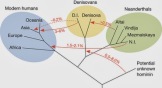
Genetic traces of the mysterious early humans, whose fossil remains have never been found, are still carried by Australian aboriginal people.
The same study suggests that indigenous tribes from Australia and Papua New Guinea have one of the oldest human pedigrees on the planet.
It also points to a single “exit” from Africa by early modern humans around 72,000 years ago.
Experts disagree on whether present-day non-African people are descended from explorers who left Africa in a single exodus or a series of distinct waves of travelling migrants.
The new research supports the single migration hypothesis. It indicates that Australian aboriginal and Papuan people both originated from the same out-of Africa migration event some 72,000 years ago, along with ancestors of all other non-African populations alive today.
Tracing the Papuan and Australian groups’ progress showed that around 50,000 years ago they reached “Sahul”. This was a prehistoric supercontinent that once united New Guinea, Australia and Tasmania – they were separated by rising sea levels.
Here in “Sahul”, they met and interbred with the unknown race of humans, who may have had links with Siberian Denisovans.
If you’re wondering exactly who the Denisovans were, they were a distinct sub-species of the human family that has been extinct for many thousands of years, like the Neanderthals.
Study leader Professor Eske Willerslev, from Cambridge University, said: “We don’t know who these people were, but they were a distant relative of Denisovans, and the Papuan/Australian ancestors probably encountered them close to Sahul.”
The research addressed “fundamental questions” about human evolution, he added.
“Technologically and politically, it has not really been possible to answer those questions until now,” said Prof Willerslev.
“We found evidence that there was only really one wave of humans who gave rise to all present-day non-Africans, including Australians.”
The findings have been published in the journal Nature. And they show that aboriginal Australians are descended directly from the first people to inhabit the continent.
Once in Australia, the ancestors of today’s aborigine communities remained almost completely isolated from the rest of the world’s population.
That was until a few thousand years ago, when they came into contact first with some Asian populations followed by European explorers in the 18th century.    

Tuesday, August 30, 2016

Donie's Ireland daily news BLOG update

17% increase in claims involving uninsured drivers in Ireland

WARNING OF INCREASED PREMIUMS AS MORE CLAIMS RECORDED DURING FIRST SEVEN MONTHS

Image result for 17% increase in claims involving uninsured drivers in Ireland   Image result for 17% increase in claims involving uninsured drivers in Ireland

OVERALL, THERE WERE 688 CLAIMS RECORDED IN DUBLIN, UP 78 ON THE 610 CLAIMS SEEN DURING THE FIRST SEVEN MONTHS OF 2015

The number of motor insurance claims involving uninsured or untraced drivers jumped by 17% between January and July, according to new figures.
The data show there were 1,644 claims involving such drivers during the first seven months of 2016, up by 235 versus the 1,409 claims lodged during the same period a year earlier.
The Motor Insurers’ Bureau of Ireland (MIBI) figures show 42% of such claims were made in Dublin with the capital also showing a big spike in general claims made compared to last year.
Overall, there were 688 claims recorded in Dublin, up 78 on the 610 claims seen during the first seven months of 2015. The next highest number of claims were in Cork (129) and Galway (92).
Between January and July, claims increased in 20 counties, with the largest percentage change being in Roscommon, which recorded an increase of 500% as the number of claims rose from 2 to 12.
A decline in four counties.
Four counties experienced a decline in the number of claims, the largest drop being in Limerick which had 80 claims, down from 95 in 2015.
The number of claims in Clare and Kildare were the same across both years.
MIBI, which was established by the Government and the insurance industry in the 1950s, pays out approximately €60 million a year on claims involving uninsured or untraced drivers. David Fitzgerald, the body’s chief executive, warned that the jump in claims involving such drivers would likely impact on premiums in the future.
“An increase of 17% represents a significant jump in the number of claims being lodged. It showcases the increased pipeline of payments facing the MIBI. While no sums are yet attached to these claims, unfortunately more claims generally means higher levels of payments coming from the MIBI and ultimately, that will impact on motor insurance premiums,” he said.

Hiqa reports critical of HSE disability services

PEER ABUSE, FAILURE TO INVESTIGATE COMPLAINTS AND MISMANAGEMENT AMONG FINDINGS

Image result for Hiqa reports critical of HSE disability services   Image result for Hiqa reports critical of HSE disability services

HIQA INSPECTORS FOUND THAT SOME STAFF FELT THEY WERE BEING TROUBLEMAKERS IF THEY RAISED CONCERNS ABOUT THE QUALITY OF DISABILITY SERVICES.

Major patient safety concerns have been raised in a series of critical reports into HSE-run disability services around the country.
Inspectors from the Health Information and Quality Authority (Hiqa) noted incidents of peer-to-peer abuse, misadministration of medications and failures to adequately report complaints of alleged mistreatment following visits to a number of large disability centres in Cork, Kilkenny and Donegal.
During an unannounced visit to the St Raphael’s Campus in Youghal, Co Cork, it was found that a resident had not been given adequate food and nutrition for a period of more than 18 hours.
Those working at the centre said there were not enough members of staff on duty on that particular day to get the resident out of bed and feed them appropriately.
The Youghal campus, which had court-applied restrictive conditions placed on its registration last year due to previous negative findings by Hiqa, also came in for criticism for incorrect use of seizure and antimicrobial medicines which could have “potentially catastrophic” or even fatal impacts on patients.
The facility is currently in the middle of a winding-down process and is due to close next year, but inspectors recorded an ongoing “lack of clarity for staff around the reporting of allegations of abuse”.
One resident alone had made 15 complaints of physical abuse by one of his peers over the space of less than a month, but none of these incidents were properly investigated, inspectors said.
Serious failings in governance and management were identified at an unnamed disability service in Donegal during another unannounced inspection in March.
Despite initially being told by the person in charge that there had been no “incidents, suspicions, allegations or investigations of abuse” there since 2013, Hiqa officials later found that such allegations had indeed been made and investigations were instigated.
Inspectors said the person in charge subsequently handed over documents relating to the alleged incidents of abuse, and they concluded that “there was a significant risk to the safety of residents as a consequence of seriously inadequate safeguarding arrangements in the centre”.
Speaking to inspectors, some members of staff felt they were being seen as “troublemakers” if they highlighted problems with safeguarding measures or instances of possible mistreatment.
Elsewhere, Hiqa was not satisfied that the requisite improvements had been made to service provision at St Patrick’s Centre in Kilkenny which was taken over by the HSE in October 2015 following “significant failings” by the previous care provider.
Incidents of peer-to-peer aggression had continued since the handover, and there were still “significant concerns regarding the lack of suitable governance and management arrangements to oversee the quality and safety of care provided to residents” which had “direct negative outcomes for residents”.
A smaller community-based facility for six residents in Westmeath failed to demonstrate compliance for any of the nine standards tested during a visit in March, and the two-story house had no overall evacuation plan in the event of a fire.
It was also found to be deficient as regards safeguarding measures, as the member of staff designated to deal with complaints told inspectors they were “not aware that they had been assigned this responsibility” and said they did not have time to carry out managerial roles alongside their frontline duties.
The findings came in a raft of 11 inspection reports released by Hiqa on Monday. Other centres visited managed to demonstrate more consistent compliance with regulations, and there was evidence of a good quality of life for residents within these services.
The State’s health watchdog also provided an update on two autism care centres which are operated by Gheel Autism Services on behalf of the HSE after it took over control from the Irish Autism Society following negative inspection outcomes published in July.
Inspectors found that significant improvements had been made in safety and quality of life of residents at both premises.

Ireland’s retail sales up by 12.6% for July 2016

BIG JUMP IN CAR SALES ACCOUNTS FOR THE OVERALL BOOST?

Image result for Ireland's retail sales up by 12.6% for July 2016    Image result for Ireland's retail sales up by 12.6% for July 2016

THE VOLUME OF RETAIL SALES INCREASED BY 12.6% IN JULY WHEN COMPARED WITH JUNE AND THERE WAS AN INCREASE OF 6.3% IN THE ANNUAL FIGURE.

If car sales are excluded, there was a decrease of 0.5% in the volume of retail sales in July when compared with June and there was an increase of 2.7% in the annual figure.
The sectors with the largest month on month volume increases were motors which were up 12.5%, furniture and lighting, up 5.3%, and books, newspapers and stationery, up 2%.
The sectors with the largest monthly decreases were clothing, footwear and textiles which were down 2.5 per cent.
Other retail sales are down 2.4% and food, beverages and tobacco are down 0.9%.
There was an increase of 4.5% in the value of retail sales in July when compared with June and there was an annual increase of 3.9% when compared with July 2015.

The genetics of Type 2 Diabetes is in a mess

A RECENT STUDY SHOWS WHY GENETIC ADVANCES IN MEDICINE ARE SO CHALLENGING.

Image result for The genetics of Type 2 Diabetes is in a mess Image result for The Human Genome Project was both a spectacular success Image result for The Human Genome Project was both a spectacular success

The Human Genome Project was both a spectacular success and a frustrating disappointment. It has revolutionized the science of biology and spawned a multi-billion dollar industry. It has alsofailed to deliver on the ambitious promise that genome science will, as President Bill Clinton stated 16 years ago, “revolutionize the diagnosis, prevention and treatment of most, if not all human diseases.”
But hype springs eternal. The human genome is now old news; today scientists study tens or even hundreds of thousands of human genomes. We now hear promises about the imminent benefits of personalized medicine, medicine that is tailored to an individual’s unique genetic make-up. President Barack Obama hopes that “10 years from now we can look back and say we have revolutionized medicine,” from cancer to Alzheimer’s. To achieve this, the White House has launched another large research effort: the Precision Medicine Initiative, which will devote hundreds of millions of dollars to advance the use of genomics and other cutting-edge science in medical practice.
It’s an admirably ambitious vision, but in 10 years we shouldn’t expect to look back and see a revolution. Scientifically, this is the right direction — over the long-term, genomic discoveries will certainly drive major medical advances. But it’s going to be a long slog. The major challenges that lie ahead are laid bare in a recent genetic study of Type 2 diabetes. This study, published inNature earlier this month, shows that the genetics of diabetes is a mess — and it illustrates why the big promises of genetic medicine won’t be realized any time soon.
Known mutations account for only 10 percent of the estimated genetic contribution to the disease. After more than a decade of large, high-tech studies, the genetic basis of diabetes remains, for the most part, unexplained.
Type 2 diabetes is one of the major diseases that biomedical scientists hope to conquer with genomics. It’s one of our most common diseases — the Centers for Disease Control and Prevention estimates that nearly 10 percent of all Americans have it. Diabetes is also expensive: It accounts for an estimated $176 billion in medical costs each year. And while most of us have the impression that diabetes is something you prevent with a healthy diet and exercise, the disease also has a strong genetic component.
By understanding the genetics of diabetes, we hope to combat the disease in three big ways. First, we’ll be able to identify people with a high genetic risk, and make them the focus of prevention efforts. Second, we might recognize and specifically treat different molecular forms of the disease — different people likely have different underlying genetic mutations, which means that not all diabetics respond the same way to a one-size-fits-all therapy. And third, genetics will help us understand the disease’s molecular underpinnings, and guide us toward better treatments that directly target those molecules. If we achieved all three goals, we would indeed revolutionize the treatment of diabetes.
And so, for the past decade, researchers have conducted large genetic studies, involving at first thousands, and now tens of thousands of diabetics. The results have been somewhat disappointing: Though researchers have linked dozens of mutations with diabetes, we’re clearly still missing much of the picture. Known mutations account for only 10 percent of the estimated genetic contribution to the disease. After more than a decade of large, high-tech studies, the genetic basis of diabetes remains, for the most part, unexplained.
To find the missing mutations in diabetes, scientists of two large international research consortia performed a deeper DNA analysis of a large set of study subjects. Earlier studies used a lower-cost, coarse-grained scan of the subjects’ DNA. These scans only had the power to detect mutations that are relatively common in the population. In this most recent study, the researchers decided to survey the subjects’ genomes much more comprehensively.
The hypothesis behind this approach is that diabetes is a bit like Leo Tolstoy’sfamous claim about unhappy families: Each case of diabetes is affected by genetics in its own way. In other words, although diabetes is a common disease, its genetic component might not be caused by a set of relatively common mutations. Rather, each person’s genetic risk could be the result of distinctly different, and relatively rare, mutations.
If that were true, this new, more comprehensive study should have turned up many of these hypothetical rare mutations. But that’s not what the researchers found. After analyzing the DNA of over 100,000 diabetics and healthy volunteers, the researchers largely re-discovered the same set of common mutations that had been previously found. They discovered few rare mutations.
The hypothesis behind this approach is that diabetes is a bit like Tolstoy’s famous claim about unhappy families: Each case of diabetes is affected by genetics in its own way.
Why is this bad news? Because it means that finding the genetic risk factors for diabetes is going to be very hard. If rare mutations were important genetic drivers of diabetes, then the task of understanding diabetes genetics would likely be easier. Rare mutations are expected to have larger effects, and therefore a person’s individual genetic risk for the disease would come down to just one or a few mutations. If we knew what mutations to look for, we could easily test for them in a routine, clinical genetic test.
Mutations that are common in the population, on the other hand, tend to have smaller effects on disease. (Mutations with large effects tend not to become common, thanks to natural selection.) This latest study suggests that the genetic basis of diabetes involved the combined effects of many mutations, each one only making a small contribution. These small contributions are statistically challenging to detect in a scientific study, and much harder to evaluate in a clinical genetic test. This is why the study authors argue that “Genome sequencing in much larger numbers of individuals than included in the current study are needed.” As one scientist put it: “Once dubbed ‘a geneticist’s nightmare,’ diabetes seems to be living up to its reputation.”
Fortunately, with today’s technologies, very large genetic studies are becoming feasible. Obama’s Precision Medicine Initiative proposes to put together a study cohort of one million Americans over the next several years. And given the hundreds of billions of dollars that diabetes costs America each year, such large studies, if successful, are clearly worth the expense.
The challenging genetics of diabetes and other common diseases, however, means that the benefits of such studies will mostly arrive in the long term. We are laying an important foundation for the medicine of the future — but people also need care today. Fortunately, even without the genetics, we understand a lot about how to prevent diabetes though lifestyle changes. Investing in large efforts to help people change their diet and exercise habits may not sound as exciting as high-tech genetic medicine. But, just as we shouldn’t overhype the near-term prospects of genetics, we shouldn’t undersell the value of the effective care we can provide today.

Putting lemon wedges in your drink is actually a bit gross

BACTERIA IS APPARENTLY RIFE THERE?

Image result for Putting lemon wedges in your drink is actually a bit gross  Image result for Bartender asks would you like a lemon slice with your cold drink  Image result for Putting lemon wedges in your drink is actually a bit gross

BARTENDER ASKS WOULD YOU LIKE A LEMON SLICE WITH YOUR COLD ALCOHOLIC BEVERAGE? YOUR REPLY “THAT SOUNDS BLOODY MARVELLOUS” – STICK IT RIGHT IN. THANKS KIND SIR FOR SUPPLYING ME WITH ALCOHOL AND A LOVELY BIT OF CITRUS FRUIT THAT PERFECTLY COMPLIMENTS MY BEVERAGE.

There’s nothing wrong with that Friday night (tad overly enthusiastic) exchange right? Wrong. According to a study published in the Journal of Environmental Health the lemons and limes given out at bars are actually rife with all kinds of bacteria. That’s just not what you want. Plus we just found out that water bottles can be pretty rank too. Can someone just cut us some slack.
The research team swabbed lemon slices that were on their drinks at 21 different restaurants, and they discovered that almost 70% of the samples had some sort of microbial growth, including 25 different microbial species. Ewwwww. But also I wonder if they got to expense all those drinks. Not a bad life despite the germs.
“The microbes found on the lemon samples in our investigation all have the potential to cause infectious diseases at various body sites, although the likelihood was not determined in this study. Restaurant patrons should be aware that lemon slices added to beverages may include potentially pathogenic microbes.”
Wow – way to ruin the humble lemon guys. Elle magazine spoke to Philip Tierno, PhD, a clinical professor of microbiology and pathology at New York University School of Medicine and author of The Secret Life of Germs who explained why they can be so gross.
“People are touching the lemon in your glass, handling it, cutting it, placing it in a container or a cup, or a glass; and then picking up those slices at a later point in time and dropping them into a drink and putting them on the rim of a glass. You can easily see how those lemon slices and lemon wedges can be contaminated.”
But here at Cosmopolitan we deal with solutions, not problems. What you’re gonna need to do is eyeball your bartender as he prepares your drink, and then send it back if you see the bartender put their fingers all over the rim of the glass or use a dirty rag to clean the glass. Thanks for the tips Tierno.

“Weather bomb” could shed new light on mysteries of the Earth’s interior

Image result for “Weather bomb” could shed new light on mysteries of the Earth’s interior Image result for “Weather bomb” could shed new light on mysteries of the Earth’s interior Image result for “Weather bomb” could shed light on mysteries of Earth’s interior

THE RARELY-DETECTED S-WAVES FROM A “WEATHER BOMB” STORM MAY HELP SCIENTISTS UNCOVER THE EARTH’S HIDDEN STRUCTURE

Researchers from the University of Tokyo have uncovered a rarely detected type of seismic wave deep inside of the Earth stemming from a “weather bomb,” an extratropical storm that is small, fast-developing and possesses central pressure that rapidly increases in intensity. The findings could help scientists map out the hidden, deeper structure of the Earth.
Despite their rapidly intensifying central pressure – typically more than one millibar per hour for the course of 24 hours – weather bombs are fairly small storms. However, their fast-moving nature creates steep pressure gradients, leading to the formation of strong winds.
In the current study, the weather bomb occurred between Greenland and Iceland in 2014, creating a pressure pulse that spread to the seafloor and transformed into microseismic waves – tremors deep inside of the Earth that stem from natural phenomena – that rippled through both the surface and interior of the Earth.
Microseismic waves are detectable as both surface and body waves. Although it is typically not possible for surface waves to be observed past the coast, body waves make their way deep into the Earth’s interior and can be detected by land-based seismic stations, making them ideal for deconstructing the internal structure of the Earth.
Body waves can be split into two categories: P-waves and S-waves. P-waves contain particles that move parallel to the direction of the waves’ motion, whereas the particles in S-waves move perpendicular to the direction of the waves’ motion. While seismologists frequently detect P-waves, the detection of S-waves by seismic stations is not a common occurrence.
Thanks to the Atlantic weather bomb, the current study is one of the first ever to detect S-waves, a feat that was accomplished through the use of 202 wave-detection stations. These stations were able to trace the movement and direction of the microseismic waves created by the weather bomb using “Hi-net arrays.”
Hi-net arrays work by taking the information gathered by seismometers that pick up the “noise” created by microseismic waves as they move through the various layers of the Earth and transforming it into electronic data that can be charted and analyzed in the lab.
The successful detection of rare S-waves provides seismologists with a novel method of uncovering the Earth’s deeper structure. S-waves are of particular use due to the fact that they are more sensitive to liquids than other waveforms, meaning scientists can use them to determine areas of the Earth’s interior where solids turn into liquids.
“This [study] demonstrates the connection of the solid Earth to the atmosphere and ocean climate system,” said Peter Bromirski, a geophysical oceanographer who co-authored a perspective on the current study. “New discoveries of any kind are always exciting, particularly when multiple fields of study are involved.”