Noonan’s core theme is: no return to boom and bust follies of the past
The Minister for Finance’s economic vision is for even growth, balanced budgets and rules-based policies


The Minister for Finance Michael Noonan says: “I am laying plans out that extend beyond the election – so the next minister can take them up if I’m not here. It’s continuity of planning rather than continuity of personnel I’m primarily interested in.”
After years in fiscal death/debt valley, Michael Noonan finds himself in something of a sweet spot as he steps up preparations for the budget next month.
With the economy growing speedily, the Minister for Finance is in the unusual position of having his outline plan for the budget endorsed by the Irish Fiscal Advisory Council. After all, the council tends to say no. Yet its informal blessing follows tacit support for the budget plan from the OECD.
This pleases Noonan. “It’s always good in the political system to get outside endorsement for what you’re doing.”
At Merrion Street yesterday – in the middle of pre-budget meetings with business lobbies, farmers, trade unionists and social campaigners – he set out his vision for the recovering economy. His is an argument for even growth, balanced budgets and rules-based policy-making.
There’s no avoiding the looming election, of course. Noonan says a 25 per cent stake in AIB would be floated next year on the Dublin and London markets if the Government is returned to office.
Of the property market right now, he says the Central Bank should examine whether to ease mortgage caps for first-time buyers. “What I’m saying is that market conditions are changing rapidly and there are aspects of it now which, according to the construction industry, are inhibiting starter homes.
“All I’m saying is the bank should review. If the bank say we’re not changing anything then, of course, I’ll accept that.”
Noonan’s core theme is familiar enough: no return to the boom and bust follies of the past.
Yet he and Brendan Howlin, Minister for Public Expenditure, face a cascade of spending demands from their own colleagues in Cabinet to go well beyond the agreed €1.5 billion limit on the 2016 budgetary expansion. Have they not learned?
At issue are fiscal constraints set out in domestic and European law. Are spending Ministers now seized of these rules?
“I think they are. But I think at things like the think-in in Adare it would have been explained, and the parliamentary party is seized of it. But Government departments always bid for additional money, you know.”
Asked whether the magnitude of the bids came as a disappointment, he says that is in line with historic practise.
“It’s the job of line Ministers to ask and it’s the job of central Ministers like Brendan and myself to refuse them.”
A Selection
Noonan smiles as he acknowledges his selection to contest the election in the renamed Limerick City constituency.
Yet he will not say whether he plans to return to the Department of Finance if Fine Gael prevails. That would be a matter for Enda Kenny, he insists.
“I’m laying plans out that extend beyond the election – so the next minister can take them up if I’m not here. It’s continuity of planning rather than continuity of personnel I’m primarily interested in.”
As for the timing of the election, this is a matter for Kenny. “It’s his call. When he asks me for advice I give him advice.”
But is it true that Noonan would not be in favour of going to the country immediately after the budget? “It won’t be my decision, and we’ll see. The economy is driving on all the time, and things are improving all the time. It’ll be the Taoiseach’s decision. It won’t be a collective decision.”
The budget next month will be predicated on the achievement this year of a budget deficit amounting to 2.3 per cent of gross domestic product. Budget planning for 2016 assumes a deficit in the region of 1.5 per cent of GDP. “1.5 will get us well into the space our projection for the debt next year will be, well below 100 per cent [of GDP]\, he says,.
Can he be more specific? Noonan replies that the figure could come in at “95ish” per cent of GDP at the end of 2016.
“We’re not factoring in there any money from the sale of AIB. We’re going to get quite a lot of money this year and next year – without any sale of AIB – from preference shares and from CoCos and so on.
“We’ll sell 25 per cent of AIB if we’re back in government. All that will come off the debt then.”
Would this be by way of an initial public offering (IPO) on the stock market?
Top three
“Yes. It will be jointly Dublin and London. It will actually be the biggest IPO in London. I think it will be kind of in the top three historically, so we’re talking about very big money. It has to be carefully managed.”
How much roughly? “I don’t know. It was valued at over €13 billion or so. A quarter of it? It’s a good lump of money anyway.
“If it doesn’t happen until this time next year we’ll have another half year. We’ll have full-year returns and we’ll have half-year returns for 2016 – and everything is very positive, so values are going up, there’s no doubt about that.
“But you always have external factors, whether it’s China or Europe or America or interest rates rising or whatever, so I don’t want to get into precise figures.”
Using bank sale proceeds to pay down debt reflects concern – expressed most recently by debt rating agency Moody’s, as well as by the Fiscal Council and the OECD – that Ireland’s high debt level makes the State vulnerable to external shock. “Beyond that there isn’t another internal risk. So I am looking forward to making this budget the first budget of what I regard as the new business cycle,” Noonan says.
The recovery is a “work in progress” but plans for the budget assume annual growth rates between 3.25 per cent and 3.5 per cent until 2020.
“The only reason we’re stopping at 2020 is that it’s the forecasting period. I don’t see any reason why this wouldn’t go on for a decade.
“The primary policy plank on which I’m building is that we mustn’t let it happen again. We mustn’t go from boom to bust again, and there are ways to stop that…In future interventions for this Government – and its successor government if we can get back again after that – it will be quite clear that interventions will have to be countercyclical because we’ll have balanced the budget.”
The spring economic statement in April assumed the State would balance the books in 2019. However, Noonan says this will be within grasp a year earlier than that. So Fine Gael will promise in the election to balance the budget within three years? “We have to revisit the figures, but I think we can do better than the spring statement. Everything is moving forward with the very rapid growth.”
Noonan attaches high importance to the budget rules. “You know the theory that if we didn’t have the fiscal rules, Noonan and Howlin would go crazy. We’re not, no,” he says.
“We negotiated the fiscal rules. We brought them home, and we put them to the people by way of referendum. We’re committed to this model. But it goes back to the opening position. We need pieces in place that prevent that boom and bust cycle that bedevilled us for so many years. Three times in my political career the country has gone from boom to bust.”
Lowest income
Of the budget itself, he reveals little of the plan to cut tax but stresses that the benefit will be concentrated on people earning up to €70,000 from the lowest income.
“We think low and middle-income people are the target for reduction because they’re overtaxed. We’ll be operating in that space… But the purpose will be to give relief to people we identified in the tranche we had last year as kind of middle Ireland.”
On the question of whether the universal social charge might be dismantled or overhauled, Noonan insists he will say whatever he has to say on budget day.
“Whether you take it one way or another, the way most people look at it as at the bottom line. Now, the USC is quite unpopular because it’s new. People see it as the added imposition and the sacrifice that was made to take the country out of crisis.
“So now that the crisis is over the public perception is: well, if you’re removing a tax it should be USC. But from an economic point of view in terms of tax as a policy lever to drive the economy…well then it doesn’t really matter where you make the move. It depends on the impact on the individual taxpayer.”
Is he saying the USC is here to stay in one form or another?
“No I’m not. I’m not saying anything either way. I’m saying that under the rules of the game I can’t give you more accurate information in advance of the budget.”
Last election
Then there is the election. Noonan indicates he is unperturbed by the strength of Independents and others. This cohort was at 24 per cent in the most recent poll, down from roughly 30 per cent in previous surveys but up form 17 per cent in the 2011 election. “What I’m saying is that if you look at the changes from the last election, it’s moving back to where it was. That’s the trend.”
What would be the implications of a surge for Independents and others next time out?
“In my view political instability always leads to economic instability. It’s the last thing we need now, just as we’re getting out of the major crisis and growing at the fastest rate in Europe. We don’t want that knocked back by political instability.”
We can expect to hear a lot more of that once the campaign begins in earnest. He recognises, however, that the Government will lose votes over the water debacle. So what went wrong there?
“In the teeth of very strong opposition it’s always difficult to get acceptance for a new tax. I think there’s acceptance now, I find anyway
“ They’d be quite critical of the way the issue was handled, but there’s acceptance of the principle that water is a scarce and it should be paid for. There’d be an argument about how much, but I think it’s moving in the right direction. Of course there were difficulties, and I presume there’ll be electoral cost attached to those difficulties, but it was a difficult time, we had a lot of very difficult decisions to make.”
Water, of course, became the beacon around which anti-establishment political forces of all stripes rallied.
“The surprise I had, and the surprise Europe had, was that the protests didn’t begin earlier with all the tough things we had to do,” Noonan says.
Water is far from the only difficulty the Government has encountered. He has nothing to say of the inquiry into IBRC, which is under the responsibility of the Taoiseach’s department.
Of corruption allegations surrounding the disposal of Nama’s Northern properties, he says there is no case to answer for the bad bank.
“The sale was conducted absolutely properly. If there was any impropriety it was on the purchasing side, not on the sell side, and I don’t know whether there was impropriety or not.”
Asked whether UK or US investigators have approached Dublin for information, he says “not to me”. Nama has published 300 pages of data it made available to the Stormont committee which is investigating the affair, he says. “There mightn’t even be a committee in Northern Ireland the way things are going.”
Asked for his observations on all that, Noonan launches into a forthright attack on Sinn Féin. “Sinn Féin are incapable of running a government.”
So what exactly is the problem? Sinn Féin as a political party or movement? Or the individuals within it? Or is it a policy deficit? “It’s populism. The inability to make a decision which will cause Sinn Féin any potential loss. If they can’t handle a budget with a couple of hundred million around social welfare, how are they going to handle a national budget down here with all the things we have to do and the decisions we have to make every year? ”
None of this takes account of naysaying unionists. But is Noonan saying Sinn Féin is not ready for government? He laughs.
“If I said they’re not ready they I’d be saying they’d be ready some time in the future. I’m not saying that. I’m not analysing Sinn Féin. A legitimate way of continuing political debate is to look at the record of different parties. The record of Fine Gael and Labour for five years is that we have been very good at handling an economy that was in the greatest crisis ever since the State was founded.
“Then we can look at the only Sinn Féin experience in government in the Assembly in Northern Ireland and in their role up there. And in terms of economic management it’s been dire.”
Audit work on Irish banks in 2008 was “satisfactory”,
A REPORT FINDS
Regulatory body says rules that governed 2008 bank audits were found “wanting”

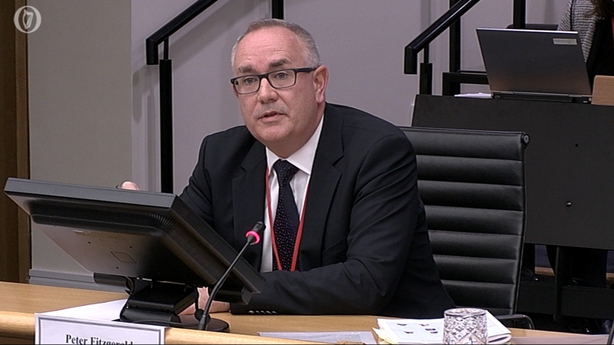
The auditing of the 2008 accounts of the six banks and buildings societies that were the subject of the Government guarantee of that year was “satisfactory”, the regulatory body that oversees the profession has concluded following a major review.
However the Chartered Accountants Regulatory Board (Carb) report also concluded that the international standards governing the audits were “wanting” and has recommended a shift towards a more “principles based” regime.
The in-depth review, conducted by six Carb staff and headed by a senior Scottish expert, chartered accountant David Spence, took a number of years and involved a detailed examination of the records of the auditing firms involved and a questioning of the relevant personnel.
KMPG audited the 2008 accounts of AIB, Irish Life and Irish Nationwide, while EY audited those of Anglo Irish Bank and EBS, and PwC those of the Bank of Ireland. However the report does not mention particular banks or firms and is more general in content. Carb director Heather Briers said this was because it can only name firms if there is a sanction against them, and has no authority to regulate or name banks.
The report focused on the issue of loan impairments, which was the dominant topic for auditors working on the 2008 accounts. The Carb investigation found that the firms involved all devoted substantial resources to the issue and substantially more time than was the case with the 2007 accounts. The work included input from colleagues in foreign branches of the global firms.
However a new international rule, enshrined in law within the EU, and which had been introduced in 2005, dictated that provisions could not be made for loan losses deemed likely to occur in the future, and that this applied “no matter how likely” the losses were. Rule IAS 39 ensured that impairments could only be recognised in respect of circumstances existing at the balance sheet date.
The effect of the rule, which was designed to stop banks trying to “smooth out” their profitability over an extended period, using the level of impairments held on the books, meant that some auditors began to question whether the rules were “fit for purpose”.
Some banks tried to compensate for the effect of the rule by issuing statements warning that loan losses might increase significantly depending on how the then crisis in the property market developed.
However the report said more emphasis should be put on the “true and fair” stipulation for audited accounts, as against the qualification that was so in relation to the relevant accountanting standards.
“Carb believes that all interested stakeholders should discuss how a principles-based framework for the future could be developed,” the report said.
Carb chairman Don Thornhill said no member of the Carb board who might have had a perceived conflict in relation to the report, was involved with its production.
TCD’s Alzheimer’s breakthrough could have ‘tremendous potential’
The disease is most common form of dementia globally and affects up to 40,000 people in Ireland


Alzheimer’s is the fourth leading cause of death in individuals over 65.
Scientists at Trinity College Dublin say a discovery they have made on the cause of Alzheimer’s disease could hold “tremendous potential” for new therapies.
Alzheimer’s is the most common form of dementia globally and affects up to40,000 people in Ireland. It is the fourth leading cause of death in individuals over 65 and it is the only cause of death among the top 10 that cannot be prevented, cured or slowed.
Alzheimer’s disease is characterised, in part, by the build-up of a small protein in the brains of patients. Failure to clear this protein “appears to be a major factor” in the build-up of plaques, and then in the disease process itself, according to the research.
Delicate tissue
While the mode by which the protein is cleared “remains unclear”, it is “evident” that it needs to be removed from the brain via the bloodstream.
“Unlike blood vessels anywhere else in the body, those in the brain have properties that strictly regulate what gets in and out of the delicate tissue – this is what is known as the blood-brain barrier,” according to the research.
The scientists believe “periodic clearance” of the protein across the blood brain barrier could lead to new treatments.
“The next steps are to consider how this might be achieved,” they said.
The research, published in international journal Science Advances, was supported by Science Foundation Ireland and the US-based charity, Brightfocus Foundation.
Drinking beetroot juice could be key to getting more out of your workout


The key to getting the most out of your workout and succeeding on the playing field could be down to one unlikely super food, new scientific research claims.
According to scientists at the University of Exeter, drinking high nitrate beetroot juice improves both sprint performance and decision-making during intermittent exercise such as rugby and football.
In their latest study, 16 male team sport players drank 140ml of Beet It Sport – a high nitrate beetroot juice – for seven days.
On the final day, the men – who were all players in rugby, hockey or football teams – completed an intermittent sprint test.
This consisted of two 40-minute sessions of repeated two-minute blocks – a six second all-out sprint, 100 seconds active recovery and 20 seconds of rest, on an exercise bike.
At the same time, they were given cognitive tasks designed to test how accurately and quickly they made decisions.
The players completed the same tests after drinking the nitrate-rich beetroot juice and after consuming a placebo version with the nitrate stripped out.
Those who had taken the nitrate-rich version saw a 3.5% improvement in sprint performance and a 3% increase in their speed of making decisions without hindering accuracy.
Chris Thompson, of the University of Exeter, led the study – which is published in the European Journal of Applied Physiology and available on PubMed.
“This research is a really exciting landmark in the work conducted on nitrate supplementation so far,” he said.
“The improvement we found may seem small, but it’s likely to provide a meaningful advantage to the athlete on the sports field.
“It could mean that team sport players are able to make those important decisions faster and cover more ground than their opponents in the seconds when it matters most.”
The Beet It shots are being used in research by 150 universities across the world who are examining the benefits of natural dietary nitrate supplementation.
The research has identified that their naturally high dietary nitrate content – 400mg per shot – interacts with enzymes in saliva to generate nitric oxide in the blood system.
Nitric oxide is a vasodilator that increases the flow of blood and oxygen in the muscles to boost strength and endurance.
Professor Andrew Jones PhD, associate dean for research at the College of Life and Environmental Sciences at the university, said beetroot juice “could make all the difference”.
“These new results suggest that beetroot juice could improve both physical performance and decision-making during team sports such as rugby and football,” he said.
“In events like the Rugby World Cup, every second counts in those crucial moments, so this improvement could make all the difference”.
The first creature to walk on four legs revealed by pre-reptile fossils found,
Researchers say


After closely examining the forelimbs of a pre-reptile fossil species known as Bunostegos akokanensis, Brown University researchers concluded that it is the oldest known creature to walk upright on all four legs.
Bunostegos is a 260-million-year-old pre-reptile that roamed the supercontinent Pangea munching on plants. According to a news release, scientists previously thought that all Permian herbivores had a sprawling body type — where their limbs would extend from the sides of their body and slant downward from their elbows, similar to some modern lizards. However, Bunostegos fossils, which were originally found in Niger, Africa, in 2003 and 2006, paint a different picture.
“A lot of the animals that lived around the time had a similar upright or semi-upright hind limb posture, but what’s interesting and special about Bunostegos is the forelimb, in that it’s anatomy is sprawling-precluding and seemingly directed underneath its body–unlike anything else at the time,” Morgan Turner, lead author and graduate student at Brown University, said in the release. “The elements and features within the forelimb bones won’t allow a sprawling posture. That is unique.”
From their recent analysis, the researchers concluded that the Bunostegos resembled modern cows in both size and posture. However, unlike grass-grazing cows today, this pre-reptile was also suited with boney armor down his back and a knobby skull, according to Linda Tsuji, co-author from the Royal Ontario Museum.
In their study, the researchers explained how Bunostegos was able to stand tall. The answers lie in the pre-reptiles’ shoulder joint, humerus, elbow and ulna. Its shoulder faced down so that the humerus, the bone running from the shoulder to the elbow, was directly underneath its body. This is different than sprawlers, where the humerus sticks out toward the side of the body. The pre-reptile’s elbow also differed from sprawler’s in that it was more like a human knee — with a limited range of motion, capable of only swinging back and forth. In contrast, sprawlers were able to swing their forearms out to the side. Finally, the researchers noted that the Bunostegos’ ulna is longer than the humerus, a common characteristic among non-sprawlers.
According to the release, the Bunostegos’s posture suggests that it was an outlier. This makes sense based on the natural habitat it would have lived in 260 million years ago, where food sources would have been spread out. Being able to walk on all fours was necessary for the Bunostegos to travel long distances for food.
“Posture, from sprawling to upright, is not black or white, but instead is a gradient of forms,” Turner explained in a statement. “There are many complexities about the evolution of posture and locomotion we are working to better understand every day. The anatomy of Bunostegos is unexpected, illuminating, and tells us we still have much to learn.”


