Pages

Showing posts with label cure. Show all posts

Tuesday, November 1, 2016

Donie's Ireland daily news BLOG update

Charlie Flanagan surprised by Arlene Foster’s claim of poaching investors from the North

FIRST MINISTER SAYS ‘POLITICAL INSTABILITY IN DUBLIN’ IS DRIVING BREXIT DECISION-MAKING

Image result for Charlie Flanagan surprised by Arlene Foster’s claim of poaching investors from the North   Image result for Charlie Flanagan surprised by Arlene Foster’s claim of poaching investors from the North

THE UNITED STATES SECRETARY OF STATE, JOHN KERRY (RIGHT) MEETS MINISTER FOR FOREIGN AFFAIRS CHARLES FLANAGAN IN CO WICKLOW DURING A ONE-DAY VISIT TO IRELAND.

Minister for Foreign Affairs Charlie Flanagan has said he was “very surprised” by comments made by Northern Ireland First Minister Arlene Foster about the “poaching” of jobs for the Republic at the North’s expense.
Mr Flanagan also said on Sunday he was “very concerned” about Mrs Foster’s remarks that political instability in the Irish Government, rather than concern for Northern Ireland, was driving the State’s stance over Brexit
Dublin made during her first address as party leader to the DUP’s annual conference on Saturday.
The Minister was asked about Ms Foster’s comments during a joint press conference in Tipperary with US Secretary of State John Kerry.
“I was very surprised at these remarks,” he said. “I’m very concerned at these remarks. I’m very concerned at a claim that representatives of the Irish Government were allegedly talking down the Northern Ireland economy.
“I’m very concerned at allegations that representatives of the Irish State were in any way poaching business or investors.”
Mr Flanagan said he spoke on Saturday evening to the North’s Minister for the Economy, Simon Hamilton, to express his concern over the comments.
“He and I agreed that it is important that we work together, which we will do. I believe it’s important that the unique relationship of the people on this island forms part of the negotiated framework in the matter of the relationship of the United Kingdom and the European Union.
“We need to work together. We have to work together, in order to ensure the economic and social prosperity for all the people on this island. That is the priority of our government.”
Mr Kerry, who was in Tipperary to accept this year’s Tipperary International Peace Award at Aherlow House Hotel, said that when dealing with Brexit “people need to be really careful with downstream consequences… one choice can have an impact on other aspects”.
He said “how that border access is managed” needs to be done “very thoughtfully and very sensitively” so it doesn’t impact on trade within the island.
During her speech Mrs Foster said political instability rather than concern for Northern Ireland was driving the Irish Government’s stance over Brexit.
The Stormont First Minister said relations with the Irish Government were as good as they ever had been and she would continue to work with the southern neighbours.
But she told delegates at the DUP annual conference near Belfast relations with the EU were much less important than the benefits derived from being within the UK.
“The reality is that political instability in Dublin, and fears for their own future, are driving their decision-making at present as much as any concern about Northern Ireland.
“And while they seek to take the views of people of Northern Ireland on the issue of Brexit at home, their representatives are sent out around the world to talk down our economy and to attempt to poach our investors.
“It is clear, conference, that the one place that a hard border does exist is in the mind of the Irish Government.
“Well, I don’t believe in a hard border and am happy to welcome shoppers looking for a bargain from across the border any time they want to come.
“And I am quite confident that the investment offer that will be available, both now and in the future, will mean our reputations as a place to invest will continue to grow.”
Mrs Foster was addressing her first party conference as leader. She replaced Peter Robinson in December. The DUP retained its position as Northern Ireland’s largest party in the May Assembly poll. The party campaigned for Brexit in the June referendum.

Gardaí offered a substantial package to avert Friday’s strike,

TALKS BETWEEN GARDA BODIES AND DEPARTMENT OF JUSTICE ARE CONTINUING OVER THE WEEKEND

Image result for Gardaí offered a substantial package to avert Friday's strike   Image result for Gardaí offered a substantial package to avert Friday's strike

THE GARDA REPRESENTATIVE ASSOCIATION (ABOVE) AND THE ASSOCIATION OF GARDA SERGEANTS AND INSPECTORS ARE THREATENING TO WITHDRAW THEIR LABOUR THIS COMING FRIDAY.

Gardaí have been offered a “substantial arrangements and a package” in a bid to avoid unprecedented strike action on Friday, according to Minister for Public Expenditure Paschal Donohoe.
Mr Donohoe declined to be drawn on the specifics of the proposals being put to the Garda Representative Association (GRA).
However, the Minister insisted the Government was committed to finding a solution and meeting the needs of gardaí.
Members of the GRA and the Association of Garda Sergeants and Inspectors (AGSI) will strike for 24-hours on each of the four Fridays in November as part of a dispute over pay and representation.
It is understood the Government is offering to pay gardaí extra money for periods of time before their shifts begin.
The offer centres on payment for a 15 minute period spent “on parade”, which is a largely historical practice of preparing for a new shift.
It is not clear if the payment would be for work that was already done and unpaid, or for extra work that would have been carried out.
Discussions between the Department of Justice and the garda representative bodies are ongoing today under the auspices of the Workplace Relations Commission.
Mr Donohoe said the Government was in discussions with a number of agencies about the need for a contingency plan if the strike proceeds.
However, Mr Donohoe would not be drawn on whether the Defence Forces would form part of the measures.
He said: “There is no contingency plan comparable to 12,000 members of the force not turning up.”
Mr Donohoe said while the Government was aware and appreciative of the work of gardaí, he stressed any arrangement would have to be within the parameters of the existing Lansdowne Road agreement on public sector pay, which 20 other unions are signed up to.
The Association of Secretary Teachers of Ireland is also in dispute with the Government over pay.
Mr Donohoe said the Government was committed to equal pay for all public servants but declined to commit to a timeframe.
Mr Donohoe told RTÉ Radio on Sunday “it all comes out of the same pot of money, the same pot of money I am using to deal with other issues all over our country.
“There is no ideological difficulty or resistance to this (equal pay). It is the challenge of having the money available to do it.”
Mr Donohoe’s Ministerial colleague Sean Canney confirmed emergency planning to deal with a potential strike by gardaí was under way.
If the strike does go ahead, gardaí will work off a priority list with violent and life-threatening crimes prioritised, one newspaper has reported.
Under this contingency plan reported murders, serious assaults and aggravated burglaries would be responded to first while burglaries and road traffic collisions where there is no serious injury or threat to life would not be responded to immediately.
If the strike proceeds, non-GRA and AGSI gardaí, mostly senior officers and members of specialist units, will provide skeleton policing cover.
Asked about the contingency plans in the event of a strike a Garda spokesman said: “There are mechanisms in place for resolving these matters the Garda Commissioner would encourage all bodies to remain engaged.
“The best outcome for all involved, including the public is that these issues are resolved within these mechanisms.”
From the Government point of view, the focus is on securing a deal with the 10,000-strong GRA compared to the estimated 2,000 members in the AGSI.
The total strength of the force is over 13,000 and Government sources said securing GRA support for a new deal is crucial to halting a possible strike.
Separately the Unite trade union called on the Government to give an unambiguous commitment to the principle of equal pay for equal work.
Unite Irish regional secretary Jimmy Kelly said the “pay discrimination against new entrants to the public sector is unacceptable and must be addressed.”
“This is not just a matter for ASTI members: it is totally unacceptable to all workers that their colleagues doing the same work are not paid the same wages. Equal pay for equal work is a fundamental principle and its application was hard-won by the trade union movement.”
“All unions who signed up to the Lansdowne Road agreement would recognise that this issue of equality must be addressed urgently.”

Jamie Oliver says obesity poses a greater threat to the UK than Isis does
Image result for Jamie Oliver says obesity poses a greater threat to the UK than Isis does  Image result for Jamie Oliver says obesity poses a greater threat to the UK than Isis does  Image result for Jamie Oliver says obesity poses a greater threat to the UK than Isis does

JAMIE OLIVER HAS ATTACKED THERESA MAY’S GOVERNMENT FOR NOT DOING ENOUGH TO TACKLE OBESITY AND INSISTED THE OBESITY EPIDEMIC POSES A GREATER THREAT TO BRITAIN THAN ISIS.

In an episode of Dispatches which is set to air on Channel 4 tonight, the celebrity chef compared the challenge of curbing obesity to “war” and argued Ms May had failed to follow through with David Cameron’s pledge to fight childhood obesity.
Mr Cameron made childhood obesity a flagship issue for his second term, placing No 10 officials in charge of the issue rather than the department of health. Childhood obesity is a growing problem in the UK and one third of children are overweight or obese by the time they reach 11 years of age.
“If you are worried about the thing that hurts British people the most, it ain’t Isis, right?” Oliver said.
“Obesity is killing huge amounts of people, well before their time. This is a war.”
Brandishing a copy of the new proposals, he also said: “This should go to the Trade Descriptions Act because that says an ‘action plan’ and there’s hardly any action in there.”
“When you look at how the plan came out at midnight, next to the A-level results, while the whole of government’s on holiday, it absolutely screams out, ‘we don’t care’.”
According to Dispatches, great swathes of Mr Cameron’s original plans no longer exist under the watered down plans of the current government.
Mr Cameron’s original plans included proposals to cut childhood obesity by half within the next ten years and thus have 800,000 fewer obese children by 2026. Obesity can lead to fundamental problems in later life, such as heart disease, cancer and diabetes and is estimated to cost the NHS more than £4 billion every year.

Galway nurse Rachael Dalton works to increase prostate issue awareness

Image result for Galway nurse Rachael Dalton works to increase prostate issue awareness  Image result for prostate cancer & local events in Galway where men can approach nurses from urology, cancer care and radiotherapy services  Image result for prostate cancer & PSA tests where men can approach nurses from urology, cancer care and radiotherapy services
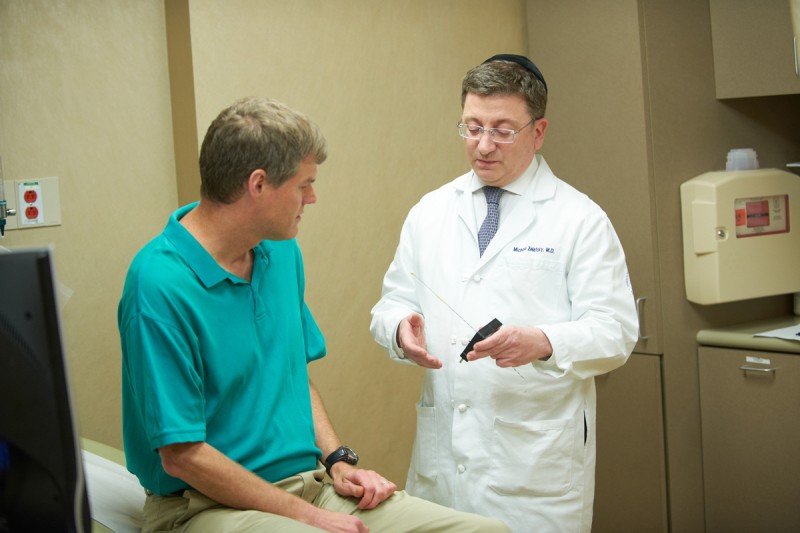
RACHAEL DALTON (LEFT) AND A MOVEMBER INITIATIVE.

A Galway nurse is aiming to create awareness surrounding men’s health – and more specifically those who have been diagnosed with prostate cancer – ahead of the nationwide Movember campaign which begins this month of November.
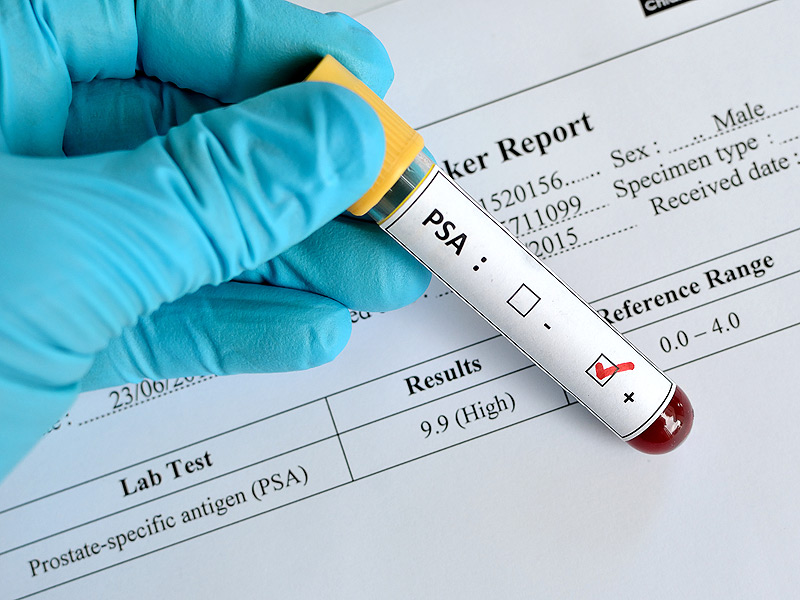
Rachael Dalton, a nurse in UHG, has organised two local events in early November where men can approach nurses from urology, cancer care and radiotherapy services to answer any questions they may have regarding the disease.
The first – in UHG on November 2 – is an information evening for the general public regarding prostate cancer. Answers relating to the diagnosis, treatment and questions relating to Prostate-Specific Antigen (PSA) testing can be sought on the night.
The second event will take place in the Salthill Hotel, on November 8, and is for men who have been diagnosed with prostate cancer and who are currently undergoing treatment. The evening will see discussion on what services are available to men to try and assist them with any side effects they may be experiencing.
Approximately 3,400 men are diagnosed with prostate cancer in Ireland each year; the second most common cancer in men here.
Prostate cancer has a 90.6% five-year survival rate – men are now living longer with prostate cancer but unfortunately on occasion they are also living with some short and long term side effects relating to their treatment.
Rachael’s events are funded by the Movember and the Irish Cancer Society.
“My main interest would have been in oncology and cancer care. I also have an interest in education – in both my colleague’s and patient’s education. So I found that clinical special role allowed me to use my skills and education to promote education of patients and to develop these education evenings which we run across the west of Ireland.
“My role is to provide men with support, education and advice along the way and be a link for men between the hospital and other community services that are available to support them with any side-effects relating to their prostate cancer treatment or diagnosis,” Rachael stated.
Rachael described the role of the Movember campaign as “absolutely pivotal” in raising awareness of cancer in men. The campaign will see thousands of men throughout Ireland grow various forms of facial hair in an effort to raise money for the cause.

Irish scientists make breakthrough on aggressive breast cancer with new drug

Image result for Irish scientists make breakthrough on aggressive breast cancer with new drug  Image result for Irish scientists make breakthrough on aggressive breast cancer with new drug  Image result for Irish scientists make breakthrough on aggressive breast cancer with new drug

IRISH SCIENTISTS HAVE FOUND A POTENTIAL NEW WAY TO TREAT ONE OF THE MOST AGGRESSIVE AND DIFFICULT TO TREAT FORMS OF BREAST CANCER.

Researchers have shown that a new drug can prevent the growth of some cancer cells.
The study was carried out by BREAST-PREDICT, an Irish Cancer Society Collaborative Cancer Research Centre. The findings from their work have recently been published in the International Journal of Cancer.
If found to be successful in clinical trials, APR-246 has the potential to save lives for patients with a form of breast cancer which is currently difficult to treat.
The research was carried out by PhD student Naoise Synnott.
“At the moment the only form of drug treatment available to patients with triple-negative breast cancer is chemotherapy.
“While this will work well for some patients, others may find that their cancer cells don’t respond as well as might be hoped to chemo, leading to patients suffering the side effects of this treatment without any of the desired outcomes.
“I decided to focus my BREAST-PREDICT research on triple-negative breast cancer because it was clear that work needed to be done to provide better and more targeted treatment for these patients.
“I hope that the work of me and my colleagues in St Vincent’s and UCD will be a big step in providing better treatment and hope to future triple-negative breast cancer patients.”
More than 250 people are diagnosed with triple-negative breast cancer each year. It accounts for approximately one in six breast cancer cases globally.
Triple-negative breast cancer is often aggressive, difficult to treat and tends to be more common in younger women.

The oldest and thickest arctic sea ice no match for our warming summers

Image result for The oldest and thickest arctic sea ice no match for our warming summers  PaintImage116
According to research conducted by NASA, the thick layers of the Arctic sea ice are melting. In the past, huge blocks of ice would remain frozen during the hot season, but today they melt along with the new ice layers.
Since 1984, scientists have been working on estimates of the sea ice age and its age evolution in order to understand the mysteries behind the ice thickness across the Arctic, as direct measurements often fail to reflect its exact characteristics.
According to the researchers, the sea ice has grown, shrunk, spun, melted and drifted out of the Arctic during the last three decades, as shown by a NASA visualization of the age of Arctic sea ice.
During the first years of the 21st century, researchers at the University of Colorado created a way to monitor the Arctic sea ice movement, as well as its evolution in age, through the use of data from a corroboration of sources, mainly satellite passive microwave instruments.
Thus, brightness temperature was shown; according to the scientists, the ice’s thickness is directly proportional to its age.
“Ice age is a good analog for ice thickness because basically, as ice gets older it gets thicker. This is due to the ice generally growing more in the winter than it melts in the summer,” noted Walt Meier, a NASA sea ice researcher.
The instruments used by the researchers measured the microwave energy that the sea ice emitted, as well as the influence on the ice temperature, the ice salinity level, the texture of the ice surface and, ultimately, the layer of snow that lies on top of the sea ice.
Each year, the ice is created during the winter and it melts during the summer. However, the ice layer that manages to survive the hot season thickens from one year to another. Consequently, this starts a natural slippery slope. The more ice remains after the hot season, the thicker the ice layer during the cold season, and the thicker it becomes, the harder it is for it to melt.
During one single year, the ice grows from 3 to 7 feet in thickness; however, multi-year ice, the one that manages to remain unmelted throughout more seasons in a row, is roughly 10 to 13 feet thick. However, despite this natural trend of growing in thickness, the sea ice has become thinner and younger during the past years.
According to Meier, this bizarre and threatening phenomenon is caused by sea ice melting from one season to another. While the sea ice formed throughout various seasons should be more resistant to melting, it seems that it behaves very similarly to the current year’s ice layer. Consequently, the old ice melts along with the new one during the hot seasons.
One of the main reasons causing this occurrence could be the ice formation and its dynamic. Unlike the past, when ice layers were seen in huge, resistant blocks, the current ice layers can be observed in much smaller chunks, which makes them more vulnerable to melting during the hot season. 

Friday, June 17, 2016

Donie's Ireland daily news BLOG update

Ireland most expensive EU country due to taxes and retail, says academic

NEW DATA SHOWS IRELAND MOST EXPENSIVE COUNTRY IN EUROPE IN WHICH TO BUY ALCOHOL


IRELAND IS THE MOST EXPENSIVE COUNTRY IN THE EU IN WHICH TO BUY ALCOHOL, ACCORDING TO RECENT DATA.

An Irish academic says higher taxes, a different retail structure and market factors are the reason why Ireland is one of the most expensive countries in Europe.
Damien O’Reilly, a lecturer in retail management in DIT, told Morning Ireland that market factors tend to drive up the cost of food. He was responding to new data from Eurostat which show that Ireland is the most expensive country in Europe in which to buy alcohol with prices at 175% of the EU average.
On average the cost of food and non-alcoholic drinks in Ireland is 119% of the EU average, the fourth highest in the EU.
The EU’s statistics agency also said Ireland is the second most expensive for tobacco at 189% of the EU average, with only the United Kingdom higher at 218%.
Only Denmark (145%), Sweden (124%), Austria (120%) are more expensive.
In Ireland, bread and cereals (111% of EU average), meat (106%) and milk, cheese and eggs (128%) all cost above the EU average.
The data is based on a 2015 price survey covering 440 products across Europe.
Donall O’Keefe of the Drinks Industry Group of Ireland (DIGI) said the high price of alcohol in Ireland is directly related to the unfair excise rate and that this is a direct tax on jobs, tourism and consumers.
“Excise is a tax on jobs, it is a tax on tourism and it is a tax on Irish consumers,” he said.
The Eurostat figures also show Ireland had the second highest per capita GDP in the EU in 2015 at 145% of the EU average.
Luxembourg had the highest per capita GDP in the EU at 271% of the average, while Bulgaria (46%) had the lowest.
However, when it comes to Actual Individual Consumption (AIC) – which measures the material welfare of households – Ireland was at 95% of the EU average.
Mr O’Reilly said that the reason Ireland’s dairy products cost so much even though there is a large dairy industry here is because 90 per cent of the milk produced in Ireland is for export.
“A lot of it is then re-imported as finished product which drives up the cost,” he said.
He also said supermarkets in Ireland have higher margins than elsewhere in Europe and that Irish shoppers are attracted to brands when they could buy cheaper own brands.
He said Irish shoppers tend to go for “higher quality foods”

EU may rule on Apple tax case next month

EU FOUND AGAINST IRELAND IN INITIAL FINDINGS ON APPLE IN 2014


MINISTER FOR FINANCE MICHAEL NOONAN SAYS THERE IS SPECULATION THAT THE EUROPEAN COMMISSION IS TO DECIDE NEXT MONTH ON WHETHER APPLE’S TAX DEALINGS IN THIS COUNTRY BREACHED STATE-AID RULES.

Minister for Finance Michael Noonan says there is speculation that the European Commission is to decide next month on whether Apple’s tax dealings in this country breached state-aid rules.
“The speculation now is that the Commission may make a decision sometime in July,” Mr Noonan said in an interview with Bloomberg in Luxembourg. “But we don’t know that with certainty. It’s the general feel around Brussels that they’re walking toward a July decision.”
Initial findings by the commission in 2014 said that Apple’s Irish tax arrangements were improperly designed to give the iPhone and iPad maker a financial advantage in exchange for jobs in the country. In a worst-case scenario, JP Morgan analysts estimate Apple could end up having to pay a $19 billion (€16.7 billion) in back taxes, though the expectation is that any negative ruling would end up with a much smaller bill.
The Government has repeatedly said that it will appeal any negative finding to the EU Court of Justice.
In the past, Apple has said it doesn’t use “tax gimmicks”, while the Government has repeatedly said that no State-aid rules were breached in this case.

Jobs lost shock as receivers shut McCormack Stores in the North West


SOME 208 JOBS HAVE BEEN LOST AND 15 BUSINESS LOCATIONS CLOSED ACROSS THE NORTH WEST FOLLOWING A RECEIVERSHIP ORDER BY BANK OF IRELAND AGAINST MCCORMACK OILS.

The news that the stores at Leitrim Village, Drumshanbo and Manorhamilton had been closed down with immediate effect was met with shock and astonishment by staff and members of the public.
The receivers arrived at the 15 premises located across Leitrim, Cavan, Sligo and Meath on Monday morning after 10am.
It is understood the three stores in Leitrim were open as per normal when the receivers entered the premises and told staff to close the doors and proceeded to put up the closure notice and seize assets.
In the ensuing hours other staff members arrived at the doors to be informed they no longer had jobs and were handed letters of redundancy from the receivers.
A statement from Receivers to the Leitrim Observer said, “Grant Thornton can confirm that Aengus Burns and Michael McAteer have been appointed as receivers to Excol Oil Limited which operates ten filling stations across the North West, two oil distribution facilities (McCormack Fuels Limited, Sligo and Breffni Oil Distribution, Cavan) and McCormack’s car sales and garage businesses in Sligo.”
They told the paper, “Our first priority is to brief employees at all 15 locations and process their entitlements for redundancy. The receivers are making every effort to sell the various businesses.” It is understood they do not intend to re-open the businesses and are hoping to sell them as soon as possible.
The umbrella company operated filling stations in Drumshanbo, Leitrim Village and Manorhamilton as well as in Killeshandra, Belturbet and Virginia, Co Cavan, Athboy, Co Meath and more in Castlebaldwin, Carraroe and the Mail Coach Road, Sligo.
Staff who were not at work on Monday were called to the businesses and handed letters of redundancy. It is understood the offer is the statutory redundancy of two weeks pay for every year worked. The letter explained that Bank of Ireland has appointed receivers to the business and also outlined entitlements for social welfare payments.
The businesses employed many local people, including a number of couples and workers from the same family.
Staff told the Leitrim Observer they are “devastated” and that the news came as a “huge shock” as they felt local stores were performing well.
A spokesperson for Grant Thornton told the paper he was unaware if the owners had knowledge of the order for receivership before Monday morning, as sometimes they are not notified beforehand.
The McCormack Family were contacted for a comment but they declined to speak at this time. Security remains outside all stores this week.
Local people were shocked and annoyed at the closures with many calling it “sad news” on Monday.
On Facebook, locals poured out their sadness and disbelief. Kelly Hewitt Kelly said, “It’s bloody awful. My husband worked in Manor and they were just handed stupid letters and told they have no job at all – out, that was it terrible way to be treated – we have 4 young kids to think about.”
Noeleen Moffatt commented, “Terrible News for Leitrim Village and surrounding areas. Travel to Drumshanbo, Carrick-on-Shannon or Pauline Skeffington’s Shop in Drumboylan for essential items.”
Mar Kelly sympathised saying, “Terrible for the McCormack family and their loyal staff.”

About 15 minutes of exercise may lower death risk in elderly people

NEW STUDY FINDS


EXERCISING IS AS IMPORTANT FOR THE ELDERLY AS IT IS FOR THE YOUTH. A STUDY HAS FOUND THAT EVEN AS LITTLE AS A 15-MINUTE WORKOUT COULD DO WONDERS FOR THE ELDERLY AND DECREASE DEATH RISK.

The study, in fact, goes on to say that it may help them cheat death, by linking it to lower death risk among the elderly, which showed how exercising lesser than the recommended number of hours might help them.
The Tech Times, French researchers analyzed a group of 1,011 French individuals aged 65 in 2001 and were followed for 12 years. They also looked at a huge group of more than 122,000 people from an international cohort who were about 60 years old and were followed for about 10 years.
The team measured physical activity via Metabolic Equivalent of Task (MET) minutes every week, meaning calories spent per minute of physical activity. A MET minute every week equates to the amount of energy expended by sitting; recommended levels of exercise, for instance, are from 500 to 1,000 MET minutes a week.
It was observed that, during the study, as people exercised more, their potential death risk dropped considerably. Furthermore, those with low activity levels, recorded approximately 22% decreased death risk, while those with medium and high levels had 28% and 35% lower risks.
Tech Times interviewed study author and University Hospital of Saint-Etienne physician, Dr. David Hupin, who said that, “Age is not an excuse to do no exercise. It is well established that regular physical activity has a better overall effect on health than any medical treatment.”

Top professionals are twice as likely to marry as unskilled workers

A RECENT SURVEY REVEALS ‘MARRIAGE CHANCES’ BY CLASS WHICH DIMINISH RIGHT DOWN THE ECONOMIC SCALE?


THIS IS THE FIRST TIME SUCH DATA LOOKING AT THE GAP IN “MARRIAGE CHANCES” BY CLASS HAS BEEN BROUGHT TOGETHER IN IRELAND.

Highly paid processionals are almost twice as likely to be married as unskilled workers, a report published this morning finds.
Some 65.7% of adults, aged 18-49 in the best off groups, were married at the end of last year, while 31.8% of the same age in the least well off group were married, notes the study, Mind the Gap, published by the Iona Institute Christian think tank.
The report also shows the likelihood of marrying diminishes right down the economic social scale, apart from in the second least well off group, which are described as “process, plant and machine operatives”.
Some 53.6% of adults in this class were married, according to the report which draws on data contained in the Central Statistics Office’s Quarterly National Household Survey from the end of 2015.
This is the first time such data looking at the gap in “marriage chances” by class has been brought together in Ireland. The findings reveal a phenomenon replicated in other western societies. It is an issue which receives much discussion and scrutiny in the United States.
This study maps likelihood of marriage by area, in Dublin, Cork and Galway cities, showing huge variations aligning by levels of prosperity or disadvantage.
In Dublin marriage rates range from highs of up to 59 per cent in Clontarf and Rathgar/Terenure to as low as 19% in north and south inner city.

WORST CHANCES

In Cork, they range from 60% in Ballinlough, to 17% in Shandon, Gilabbey and South Gate, while Galway adults with the best prospects of marriage are those in Rockbarton, Knockacarragh and Taylor’s Hill where rates are up to 53%. Galwegians with the worst chances are in Nun’s Island and St Nicholas, with rates as low as 19%.
Prof Patricia Casey of the Iona Institute said the inequality in access to marriage were “deeply concerning”. She said those entering marriages had better social and economic prospects, while children in lone parents households were at the greatest risk of poverty.
The Institute said it was publishing the report in the hope of sparking a debate on why some groups were not marrying.
Marriage, she said, was one of the greatest bulwarks against poverty and yet those in poverty had far less access to it.
“Why is it that the better off a person is the more likely they are to be married? Social disadvantage clearly diminishes a person’s chances of marrying and not marrying in turn increases the odds of remaining socially disadvantaged, It’s a vicious circle and one which obviously affects children.”
Irish society had shown it believed the gay and lesbian community should have access to marriage. So too should the poor, said Prof Casey.
The increasing proliferation of low-paid, insecure jobs at the lower end of the economic scale undoubtedly had an impact on people’s sense of their financial ability to enter into marriage, she added.
“There are also disincentives to marry built into the social welfare system . . . It can be more financially advantageous for two people on social welfare to remain single than to marry.”

Gravitational waves detected for the second time

Scientists spot ripples in space-time caused by two colliding and merging black holes
   

AN ARTIST’S RENDITION SHOWS TWO BLACK HOLES 14 AND 8 TIMES THE MASS OF THE SUN JUST MOMENTS BEFORE THEY COLLIDED AND MERGED TO FORM A NEW BLACK HOLE 21 TIMES THE MASS OF THE SUN.

Gravitational waves, ripples in space-time predicted by Albert Einstein a century ago, have been detected for the second time, scientists have announced.
An international team spotted the phenomenon on St Stephen’s Day but has only now made the news public.
As with the earlier detection in September 2015, the source was found to be two colliding and merging black holes unleashing titanic forces.
The event, some 1.4 billion light years away, caused a quantity of energy roughly equivalent to the mass of the Sun to be converted into gravitational waves.
After travelling an unimaginable distance across space, the waves were “captured” by the twin Ligo (Laser Interferometer Gravitational-wave Observatory) detectors located in Livingston, Louisiana, and Hanford, Washington, US.
Team member Dr Stephen Fairhurst, from Cardiff University, said: “This event heralds the true beginning of gravitational wave astronomy and the opening of a new window on the universe.
“The different masses and observable spins that we witnessed in the Boxing Day event show that we’re starting to collect vital information about the population of black holes that exist in the universe.
“Future gravitational wave observations will allow us to understand how black holes form from the death of massive stars, and test whether they are really as predicted by Einstein’s theory.”

THE THEORY OF GENERAL RELATIVITY?

Gravitational waves are predicted in Einstein’s Theory Of General Relativity, which shows how gravity arises from mass curving space and time.
They are ripples in space-time that propagate as waves. Anything in their path, from humans to whole planets, is made to stretch and compress slightly as the fabric of space-time is distorted.
Each of the Ligo detectors, consisting of an incredibly sensitive system of mirrors and lasers, is also made to “wobble”. But the effect is really tiny.
The amount of movement is thousands of times smaller than the width of the nucleus of an atom.
Scientists hope gravitational waves will offer a completely different view of the universe, allowing them to study events that might be hidden from traditional optical and radio telescopes.
An illustration of this was seen in results from the December 26th detection, presented at the annual meeting of the American Astronomical Society in San Diego, US.
By analysing the signal, the scientists were able to tell that the colliding black holes were 14 and eight times more massive than the Sun.
They orbited each other at least 27 times before merging into a more massive spinning black hole 21 times the Sun’s mass.
Using two detectors spotting the waves 1.1 milliseconds apart made it possible to determine the source’s rough position in the sky.

‘KEY QUESTIONS’

Prof Sheila Rowan, director of the University of Glasgow’s Institute for Gravitational Research, who took part in the discovery, said: “We know from this second detection that the properties being measured by Ligo will allow us to start to answer some key questions with gravitational astronomy.
“In future we will be able to study this and better understand cosmic history, aiming to fill in the ‘missing links’ in our knowledge.”
The findings have been accepted for publication in the journal Physical Review Letters.
Dr Chad Hanna, from Pennsylvania State University in the US, who co-led the detection team, said: “We now have far more confidence that mergers of two black holes are common in the nearby universe.
“Now that we are able to detect gravitational waves, they are going to be a phenomenal source of new information about our galaxy and an entirely new channel for discoveries about the universe.”
The Ligo Scientific Collaboration consists of more than 1,000 scientists from 17 countries.
Each Ligo site has two tubes, both 4km long, arranged in an L shape.
A laser is beamed down each tube to monitor very precisely the distance between mirrors at each end.
If a gravitational wave is present, it will alter the distance between the mirrors by a minute amount.