Pages

Showing posts with label Body mass index. Show all posts

Sunday, April 3, 2016

Donie's Ireland daily news BLOG update

Fianna Fáil now caught between a rock and a very hard place

THE PARTY MUST SUPPORT A FINE GAEL-LED GOVERNMENT OR TRIGGER AN ELECTION

    
If there is one thing that stirs the political loins of the ordinary Fianna Fáiler, it is the thought of Fine Gael “arrogance”.
Into that always open marketplace walked Richard Bruton this week, when he told RTÉ’s Morning Ireland there was no way Fine Gael would contemplate supporting a Fianna Fáil-led minority government.
“The arrogance,” sniffed one Fianna Fáil figure, summing up the mood that Bruton’s statement had pushed some sort of governmental arrangement with Fine Gael back a few more weeks. “It certainly didn’t soften anyone.”
Bruton was repeating what others including Enda Kenny and Leo Varadkar had said before and what Fine Gael TD Eoghan Murphy defended and repeated later in the week, dangling the political red meat in front of Fianna Fáil noses.
“This thing of ‘any colour as long as it is blue’ is not acceptable’,” said one Fianna Fáil TD. “They need to respect us and respect our voters.”
The reality, however, is that Fianna Fáil sensitivity betrays the truth the party has effectively already come to accept: it will almost certainly have to support or facilitate a Fine Gael-led minority government.
The Dáil numbers are against Micheál Martin and for that reason, the hearts of some Independent TDs might tell them Fianna Fáil – though their heads say Fine Gael.
Fianna Fáil outrage over statements from the mild-mannered Bruton may just be a tactic to delay the inevitable, but there is a genuine feeling that Fine Gael must soften its tone if the two parties are to work together.
Media battle
Martin and Kenny have committed to talking to each other once the Dáil vote on electing a taoiseach on Wednesday is out of the way.
In the likely event of the vast majority of Independents sitting on their hands, Fine Gael and Fianna Fáil will still continue to pursue a minority government while simultaneously talking to each other.
“Some Independents won’t declare at all, some will go to Fine Gael and we may get a very small few,” said a Fianna Fáil source, acknowledging the reality facing the party while predicting a government will not be formed for another three to four weeks.
Fianna Fáil TDs, however, do get a sense that Martin knows what he is doing and, bar some low-level grumbling about initially losing the media battle to Fine Gael, are happy with how the leadership is handling the post-election fallout.
A sizeable cohort of deputies have chosen to stay silent in case they say something that takes the party down a road Martin does not want to travel.
“A lot of us just don’t want to know,” said one. Another said: “There is absolute trust in Micheál.”
There are still some, notably Michael McGrath, the finance spokesman and head of the Fianna Fáil negotiating team, who are believed to be in favour of a full-blown coalition with Fine Gael. Dublin Bay South’s Jim O’Callaghan, who is also on the negotiating team, is another who has previously said he is open to coalition.
O’Callaghan is also understood to be the back channel through which Fine Gael made some sort of initial contact with Fianna Fáil, via a text message from Varadkar.
Party members are open to the idea of supporting a Fine Gael minority government, say TDs, but have not yet digested how it could work in practice.
Members of the parliamentary party admit they haven’t either.
“I don’t think a lot of them have thought it through, and we probably haven’t either,” said one deputy.
Martin this week told some TDs that their workloads will substantially increase in a Dáil with a strengthened committee system, news which will come as a shock to deputies who keenly tend the constituency.
Policy concessions
“I would describe things at the moment as trying to move to a European-style system of government without European-style politicians or voters,” said one party source.
The negotiations with Fine Gael could initially focus on how a minority government may actually work, which Fianna Fáil wants to be taken on a “budget-by-budget, issue-by-issue” basis. TDs believe such an arrangement could last two to three years.
It will also attempt to extract some policy concessions from Fine Gael, the most contentious of which will be on Irish Water.
Figures from both Fine Gael and Fianna Fáil concede the issue has taken on political importance out of all proportion to what it would cost to scrap the charges.
Fine Gael has held fast to its insistence that charging and a single national utility are fundamental issues.
Fianna Fáil maintains its position that water charges must be suspended for five years and Irish Water must be scrapped but party figures and TDs acknowledge that compromise is likely, although the feeling against water charges is stronger among some Dublin TDs.
Dublin Fingal’s Darragh O’Brien, however, said housing, homeless and families in mortgage distress were of paramount importance.
With Sinn Féin waiting to pounce, water will be one of the first issues settled between Fine Gael and Fianna Fáil.
“It has to be or the Shinners will bring down the government within one month,” said a Fianna Fáil source.
Second election
There is one thing almost all TDs, within and without Fianna Fáil, agree on: another election must be avoided at all costs?
Carlow-Kilkenny’s Bobby Aylward recently conducted a survey among 500 Fianna Fáil members in his own constituency.
He asked who would favour a possible coalition with Fine Gael and who would favour a second election.
Of the 200 responses, 80 per cent were against coalition and almost 100 per cent were against another election.
“Only two people said to me: go to the country if you have to,” he said.
The gap between the two results of Aylward’s straw poll is the distance over which Martin must bring Fianna Fáil in the coming weeks.

MEANWHILE:–

Fine Gael holds very constructive talks with the Independents


TALKS BETWEEN FINE GAEL AND INDEPENDENT TDS TOOK PLACE YESTERDAY?

Talks between Fine Gael negotiators and Independent TDs on the formation of a new government have been described as “very constructive”.
The Taoiseach said he hopes to have a list of priorities with the Independents by Wednesday.
Enda Kenny said they are working on 15 policy documents. The parties involved discussed economic matters.
No costings were provided but one proposal included the continuation of the phasing out of the USC as part of a medium-term tax plan.
A draft economic paper presented by Fine Gael to Independents at the meeting stated the party will seek Oireachtas approval to continue to phase out the USC.
The document, seen by RTÉ, said a medium term income tax reform plan will be published for consultation with the finance committee by July and approved by the Oireachtas in October.
It will be paid through non-indexation of personal tax credits, removal of PAYE tax credits for high earners, higher excise duty on cigarettes, a new sugar tax and improved tax compliance.
The plan also supports an increase in the minimum wage to €10.50 per hour.
Overall the Taoiseach said he did not know when a deal could be done. But he hoped Fianna Fáil will be responsible when he goes to them. He also again ruled out supporting a minority Fianna Fáil government.
Fianna Fáil have said they want to hold their talks with the Independents and for Wednesday’s vote to take place before talks with Fine Gael start.
It is understood there was a discussion between the participants earlier about credit unions and post offices working together as competitors to the banks.
Minister for Finance Michael Noonan told the meeting money will be tight next year but about €1bn will be available for taxation and spending.
He also referred to challenges such as public sector pay. He said that if all is going well after next year there will be a very strong outcome and more options.
Independents were briefed on a housing document and their feedback will be addressed in a final document.
There were requests to strengthen the role of credit unions in lending and to give NAMA a wider brief on social housing.
Some of the TDs also want the voluntary sector more involved in social housing and more accountability from county managers.
It also emerged this evening that the Independent Alliance will be holding its own talks with Fianna Fáil and not with the other Independents next week.
All 15 Independents have called on Fianna Fáil and Fine Gael to talk this weekend.
Michael Fitzmaurice said it was time for them to stop “pussyfooting”.
Independent Alliance TD Finian McGrath had said the door is “wide open” for a deal to be struck with Fine Gael – if guarantees on policy can be secured.
He described talks yesterday on housing and homelessness as “very constructive”.
Asked if he was confident a deal could be struck, Mr McGrath said he was confident because those sitting around the negotiating table were “serious” about the issues involved.
Asked when a deal could be agreed, he replied: “Monday or Tuesday.”
Independent TD Mattie McGrath said he does not think a deal can be done by Monday or Tuesday but they have spend 50 hours talking to Fine Gael and will talk to Fianna Fáil next week.
Another Independent TD, Denis Naughten, said: “Fianna Fáil and Fine Gael need to talk over the weekend, while the talks are adjourned, because they need to work out in practical terms how a minority government is going to work, and how they are going to get a budget through”.
Michael Harty said it was critical that the two parties stop wasting time and start talking over the weekend.

Central Bank says mortgage lending rules are here to stay

REVIEW OF REGULATIONS WILL NOT LEAD TO THEIR ABOLITION, SAYS THE CHIEF ECONOMIST.

    
The Central Bank chief economist Gabriel Fagan. 
The Central Bank has again robustly defended its restrictive mortgage lending rules, saying they are “permanent”.
At the presentation on Friday of the bank’s quarterly accounts, chief economist Gabriel Fagan said the bank was working on a review of the rules, which will be published in November, but said this review would not lead to their abolition.
Mr Fagan warned against people equating a review with a change in the rules.
“We shouldn’t think of a change taking place,” he said, adding that the rules may not be changed at all or may be tightened.
Introduced in February 2015, the rules limit the amount home buyers can borrow, typically to 3½ times their gross income up to a limit of 80 per cent of the purchase price of the property.
Last month, the Central Bank issued a robust defence of the home loan caps, saying commercial banks and mortgage brokers were unable on their own to uphold “prudent” credit standards.
However, the rules continue to come under increasing criticism.
Addressing the wider economic recovery, the Central Bank revised its growth forecast upwards for the Irish economy for 2016 and is now predicting growth of 5.1 per cent, up from 4.8 per cent previously, “on the back of exceptionally strong rates of growth in domestic demand”.
However, it warned that Ireland’s economic recovery was “not complete” as it forecast “marginally lower growth” for 2017.
Overall the outlook for the economy remained “broadly favourable”, it said.
It is forecasting gross domestic product (GDP) growth of 5.1 per cent for 2016, up by 0.3 per cent from its previous forecast, and 4.2 per cent for 2017, down from 4.4 per cent previously, as it said domestic demand was now firmly the main driver of expansion.
While the economic outlook may be relatively favourable, the Central Bank also noted risks, including levels of public and private sector debt, which remain high.
As such, there is a “strong case for precautionary behaviour and prudence”, Mr Fagan said.
This would allow the next government to build up a buffer should adverse circumstances arise.
Wage growth prediction?
Wage growth was also cited by the Central Bank as a potential risk, as it warned that while there may be some recovery in wage growth, “it is important that that this process does not lead to overshooting”.
Political uncertainty at home may also be an issue.
Five weeks after the general election and with no sight of a new government, Mr Fagan said the uncertainty had so far not had a negative effect.
However, he warned that “protracted uncertainty could lead to an adverse impact”.
On the external front, the regulator said emerging market concerns as well as broader geopolitical factors were potential issues, as was the forthcoming Brexit referendum which “creates uncertainty and is a downside risk factor”.
Pointing to household debt figures, the Central Bank said gross new lending increased in 2015 with households drawing down €4.4 billion in new mortgage loans.
However, the figures also revealed that “a significant degree of deleveraging” was still under way in Irish households as they continued to reduce overall debt levels.
This ongoing decline might suggest that the economic recovery had, to date, been somewhat “creditless”, the Central Bank said.

Irish SMEs told to seek examinership to block vulture funds

Small firms advised to apply for court protection from owners of loans

  
Many funds that bought distressed Irish business, consumer and property loans from Irish-based banks are active in the courts system, filing summary judgment cases to make borrowers pay their debts.
Small businesses whose bank loans were bundled into portfolios and sold to “vulture” funds have been advised to consider going into examiner-ship to protect themselves should the funds call in their loans.
Hughes Blake accountants, which specialises in examinerships for small businesses, said seeking court protection from the funds could be a “valid tactical maneouvre”.
It said many of the funds behave differently from each other so businesses should familiarise themselves with the approach of the fund that bought their loan.
“[Some] are known for their aggressive and predatory style of doing business; others are more mindful of the social issues around their actions,” said Hughes Blake.
  • Tax seems to be optional for ‘vulture’ SPVs
SMEs should research the owner of their loan and plan ahead for when it moves against the business.
Hughes Blake expects to see several smaller businesses use examinership to escape the funds in “coming weeks and months”.
Meanwhile, many funds that bought distressed Irish business, consumer and property loans from Irish-based banks are active in the courts system, filing summary judgment cases to make borrowers pay their debts.
High Court cases
Ennis Property Finance, which is affiliated with Goldman Sachs, has filed several cases in the High Court in recent weeks, as has the US giant CarVal via its affiliates, Emberton Finance, Pentire Property Finance and Stapleford Finance.
Stapleford was very active in the courts in the run-up to Christmas, filing a number of cases against prominent Irish business people and professionals, including barristers and solicitors.
On the consumer side, Cabot Asset Purchases, which is owned by US distressed debt specialist Encore Capital, is prominent among High Court listings for debt cases.
Ulster Bank, meanwhile, is preparing to sell loans attached to a large number of small businesses and their owners, after passing a deadline of last Thursday for the borrowers to indicate if they were able to refinance or face having their loan bought by a fund.
One Munster legal practice said several of its clients were told that even their performing loans would be sold if they were unable to refinance their distressed loans.

The signs of obesity can be identified in early years of children,

SAYS A NEW REPORT?


THE PATHWAY TO OBESITY CAN BE IDENTIFIED IN BABIES AS YOUNG AS SIX MONTHS OF AGE, SCIENTISTS HAVE SHOWN.

Researchers used simple body mass index measurements to single out infants destined to struggle with weight in later life.
Study leader Allison Smego, from Cincinnati Children’s Hospital in the US, said: “These children have a high lifetime risk for persistent obesity and metabolic disease and should be monitored closely at a very young age.”
Body mass index is a system of relating height and weight and expressed as kilograms per metres squared. In adults, a body mass index of 30kg/m2 or above is classified as obese.
Dr Smego’s team looked at several groups of lean and overweight children under the age of six. They included severely obese children referred to Cincinnati Children’s Hospital for specialised care.
The researchers compared 783 lean and 480 severely obese children, selected on the basis of their body mass index readings between the ages of two and six.
Growth and weight records showed the body mass index trajectories of children who were severely obese by the age of six began to differ from that of normal weight children at about four months of age.
“Body mass index at six, 12 or 18 months of age can accurately predict children at risk for early childhood obesity,” said Dr Smego, whose findings were presented at a meeting of the Endocrine Society in Boston, US.
She added: “It’s not currently recommended to measure body mass index in children under the age of two, but we say it should be because we now know it predicts obesity risk later.
“Paediatricians can identify high-risk infants with body mass index above the 85th percentile (top 15%) and focus additional counselling and education regarding healthy lifestyles towards the families of these children.
“Our hope in using this tool is that we can prevent obesity in early childhood.”
A study published in The Lancet journal on Thursday predicted that if current trends continue more than a fifth of people in the world will be obese by 2025.
The research, led by a team from Imperial College London, showed that over a 40-year period between 1975 and 2014 the global number of obese individuals had soared from 105 million to 641 million.
With each passing decade, the average person had become 1.5kg heavier.

Dopey Dick the so called killer whale that swam into Derry in 1977

IS STILL ALIVE AND VERY WELL

Whale experts discover orca they know as Comet is same killer whale that swam into Northern Irish city nearly 40 years ago
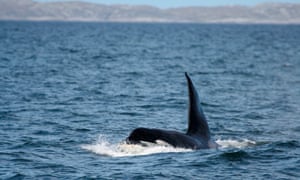
Comet the killer whale (aka Dopey Dick)   Killer whale pictured in a previous year

COMET THE KILLER WHALE (AKA DOPEY DICK) OFF THE WEST COAST OF SCOTLAND.

A killer whale that sparked widespread attention when it swam into a Northern Irish city almost 40 years ago is still alive and living off the west coast of Scotland, experts have found.
The whale was nicknamed Dopey Dick by locals after he made his way up the river Foyle into the heart of Derry in pursuit of salmon in 1977. He is now thought to be at least 58 and was identified when pictures of the Irish incident were compared with images taken of a pod of whales near the Isle of Skye in September 2014.
Known as Comet, the orca is part of the vulnerable west coast community whales – the UK’s only known resident population of killer whales – that are tracked by experts.
Andy Foote, a killer whale expert, said: “When I saw the photos on Facebook, I noticed that the white eye patch of Dopey Dick sloped backwards in a really distinctive fashion.
Ships’ noise is serious problem for killer whales and dolphins, the report finds
“This is a trait we see in all the west coast community whales, but it’s not that common in other killer whale populations. The photographs were all quite grainy, but it was still possible to see some of the distinctive features unique to Comet.
“I couldn’t believe it – he was already a full-grown male back in 1977, when I was just five years old.”
The Hebridean Whale and Dolphin Trust has been documenting the west coast community’s behaviour since 1994.
The four males and four females are not known to interact with other orca populations in the north-east Atlantic and, since studies began, have never successfully reproduced.
In January this year, one of the females, named Lulu, died after being stranded near Tiree.
The trust said the discovery that Dopey Dick was in fact Comet is significant to understanding the age of the west coast group.
Padraig Whooley, sightings officer of the Irish Whale and Dolphin Group, said: “This match places Comet very much at the upper limits of the typical life expectancy of male killer whales.
“Adult males generally live to around 30 years, but with an upper range of up to 50 to 60 years.
“So, clearly time is not only running out for this individual whale – it is equally running out for whale biologists, who may not have much time left to gather information on this unique local population of killer whales that have made the waters of the British Isles their home.”      

Friday, March 18, 2016

Donie's Ireland daily news BLOG by Donie

Ireland’s economy now growing as fast as China


Call it the luck of the Irish shamrock green…economy?

IRELAND IS BOOMING. IT GREW ALMOST 7% LAST YEAR. THAT’S FAR BETTER THAN THE U.S. AND ON PAR WITH CHINA (OR, AT LEAST, WHAT THE CHINESE GOVERNMENT CLAIMS).

The emerald isle won the “best eurozone economy” prize each of the past two years and is widely expected to keep the streak going this year.
Ireland’s economic success wasn’t a given. The country was hit very hard by the financial crisis and Great Recession. Big Irish banks were on the verge of collapse from too much lending, especially on speculative property deals. Government debt skyrocketed, and unemployment topped 15% — significantly higher than what the U.S. experienced.
Only a few years ago, experts warned that Ireland, Spain and Portugal could be the “next Greece.” Ireland received €67 billion ($73 billion) in international bailout loans in 2013, after its property market collapsed and banks started failing.
Now the Irish have extra reason for St. Patrick’s Day cheer. Unemployment recently fell to 8.6%and no one is talking about an Irish default anymore.
“Ireland bounced back the best of any economy after the recession,” says Martin Schulz, head of international equity at PNC Capital Advisors.

HOW IRELAND DID IT?

The path to success sounds simple: Ireland quickly wrote off its bad bank debt and made sweeping financial reforms, says Schulz.
The government cut costs and focused on growing exports. That turned out to be a shrewd move as the euro has fallen in value, allowing Irish (and other European) exports to thrive.
The reform measures weren’t always popular. Despite Ireland’s “Celtic tiger” growth miracle, Prime Minister Enda Kenny is struggling to hold onto power after his party lost seats in the latest election.
But as many countries, especially in Europe, struggle to jumpstart growth again, Ireland is a symbol of hope.
President Obama hailed “significant progress in the rebound of the Irish economy” when he met with acting Prime Minister Kenny on Tuesday.
Related: Americans fear a life of ‘dead-end crap jobs with crap wages’
Ireland is widely known as a tax haven. Several prominent U.S. corporations have headquarters there (or are trying to move there) to save money on taxes.
But the European Commission points out that the real Irish economy is growing too. It’s not just foreign businesses.
“While the recovery started in the external sector, domestic demand is now driving GDP growth,” a recent EU report concluded.

Housing charity Threshold call to reform ‘flawed’ Irish rent supplement law


MAKING IT ILLEGAL TO DISCRIMINATE AGAINST TENANTS IN RECEIPT OF RENT SUPPLEMENT WILL NOT MAKE IT EASIER FOR VULNERABLE TENANTS TO SECURE HOUSING.

The chairperson of Threshold (Pic. above), Senator Aideen Hayden said the Government needs to do more to protect vulnerable tenants.
National housing charity Threshold said the legislation, which came into force at the beginning of the year, “is not a cure-all” for the current difficulties faced by tenants. It said the State needs to accept responsibility for the reality of tenant’s situations by addressing soaring market rents, higher than those seen during boom times, and inadequate rent-supplement limits.
It was reported earlier this week that property websites are still featuring adverts which discriminate against tenants in receipt of rent allowance — despite this being outlawed under the Equality Act 2015.
“While the new equality legislation in relation to those in receipt of housing support and assistance is welcomed, it is simply not good enough. The State can’t pat itself on the back and claim it has addressed the issue through legislation when the reality on the ground is quite different.”
“Market rents are surpassing the maximum rent supplement limits, making it almost impossible for tenants to secure adequate accommodation and remain in their homes, resulting in increasing numbers of individuals and families becoming homeless,” she said.
Ms Hayden called on the Government to reform the “seriously flawed” rent- supplement scheme which it said was contributing to rising levels of homelessness. “In Threshold’s experience, landlords are reluctant to engage with the rent supplement scheme for a wide variety of reasons, including the inadequacy of rent supplement limits, payment in arrears and bureaucratic delays.
“The rent-supplement scheme is seriously flawed: Rent supplement tenants are not pre-approved, and payments are made in arrears not in advance. This means landlords can be left waiting for their rent payment,” she said. Threshold said the new Government must reform how the scheme operates and provide a lasting solution for rent-supplement tenants, ensuring landlords feel secure in accepting rent supplement.
It said this can be done by increasing rent supplement limits to bring them in line with market rents, introducing a pre-approval mechanism for rent supplement claimants similar to mortgage pre-approval and ensuring payments are made directly to landlords in advance. The Threshold chairperson said the charity received calls daily from tenants who face discrimination because they rely on rent supplement.
“However, there is no point pretending that landlords will take less than market rent because someone is on rent supplement,” she said. “The new Government must increase rent-supplement limits to bring them into line with market rents and remove the administrative flaws and payment delays inherent in the scheme.”

Irish firm Movidius brings vision to drone maker

MOVIDIUS UNVEILED AS PROVIDER BEHIND THE PHANTOM 4’S VISION-AIDED FLIGHT SYSTEM

   Curt Walton prepares a DJI S900 drone to shoot aerial video of a $12.5 million home for sale in Alamo, Calif., on Friday, Feb. 26, 2016. The use of video from drones as a marketing tool to help sell multi-million dollar homes is rapidly expanding even as the FAA formulates the use of drones for commercial use. (Gary Reyes/Bay Area News Group)
DJI drone: Movidius processor facilitates a number of new features.
Irish company Movidius has done a deal with drone maker DJI that brings the company’s vision-sensing technology to the latest Phantom drone.
The Dublin-founded firm has been unveiled as the provider behind the Phantom 4’s vision-aided flight system, which gives the drone the ability to sense and avoid obstacles in real time. DJI developed specialised software algorithms in spatial computing and 3D depth sensing to combine with the Movidius’ Myriad 2 chip.
The Movidius processor facilitates a number of new features in the DJI drone, including Tap Fly, which allows pilots to tap a spot on the screen to direct the drone and Active Track, which can designate an object or person on the screen to track.
The drone can also hover in a fixed position without the need for a GPS signal.
“DJI’s goal with this is that it be impossible to crash and it lowers the barrier to people adopting drones. It’s much easier for people to fly,” said chief operating officer and co-founder of Movidius Seán Mitchell. “It’s more intuitive than using the two-stick controller.”
The platform enables streams from multiple video cameras to be processed, along with readings from other sensors such as accelerometers, depth sensors, gyroscopic sensors and sonar. “That’s all coming together and we can put on top of that object identification and tracking.”
Mr Mitchell said the Phantom 4 was a milestone for vision-sensing technology.
“It is going to be very interesting to see how things evolve as these devices become more autonomous and more intelligent. The intention is to make life easier for people and safer,” he said.
Capabilities
Paul Pan, senior product manager at DJI, said the company was constantly seeking ways to expand its technological capabilities. “Movidius’ vision processor platform, Myriad 2, met the rigorous requirements we set for our flagship product,” he said.
This year’s Consumer Electronics Show in Las Vegas saw a number of new drones unveiled at the show. Intel demonstrated a drone, the Typhoon H, on stage that offered obstacle recognition using its RealSense camera, dodging a falling tree as part of the showcase. However, the product, made by Yuneec, has yet to hit the market. The Phantom 4 is available for €1,600 now.
“We’ve seen companies showing demonstrations; this is a real product and it’s a flagship product by an industry leader, and I think that’s the real proof of the pudding,” said Mr Mitchell.
The DJI deal is the latest announcement from the company which also revealed a lucrative deal with Google earlier this year. Movidius employs about 140 people between its offices in Dublin, Romania, the US and China.

Fáilte Ireland launches Virtual Reality tours of the Wild Atlantic Way

HAVE A HEADSET, WILL TRAVEL?


FÁILTE IRELAND’S VR EXPERIENCES WILL BE SHARED ON THE OCULUS STORE WHERE MILLIONS OF PEOPLE WITH VR HEADSETS CAN DOWNLOAD AND ENJOY THEM.

Fáílte Ireland has captured several experiences along the Wild Atlantic Way for Virtual Reality (VR) viewing.
The VR products, piloted this week at the ITB Berlin travel fair, will give people the chance to remotely experience 3D tours of the coastal route.
The “unmissable”, 360-degree experiences include surfing under the Cliffs of Moher, horse-riding in Sligo, cycling in the Burren and climbing one of the tallest sea stacks in Europe off the coast of Co. Donegal.
Streaming through Samsung VR Gear and Occulus Rift tehnology, the experiences were captured with the help of activity partners along the Wild Atlantic Way.
For the surfing experience, for example, Fáilte Ireland worked with creative agency Big O Media to shoot champion surfer Ollie O’Flaherty using specially adapted cameras in the Atlantic. You can watch several ‘making-of’ snippets in this video:
VR products are in their infancy, but their potential to transform travel marketing and help consumers make travel decisions is viewed as a huge opportunity.
“You forget it’s a 3D/360 experience and you think its reality,” said one user at ITB Berlin this week. “It really gave me the full experience of the Wild Atlantic Way – I never knew you could do that in Ireland, it was amazing.”
Fáilte Ireland says it is also looking at the possibility of integrating the immersive VR experiences across its Tourist Office network, and offering them to trade and industry partners for promotional activites.
“Virtual Reality is proving to be a game-changer in how experiences are consumed and this technology is set to be the most exciting innovation in travel and tourism marketing during 2016,” said its Director of Marketing, Noel-John McLoughlin.
The Wild Atlantic Way experiences will be available for consumers with VR headsets to download on the Oculus store by the end of March, the tourism agency says.
The 360-degree video tours will also be released on YouTube.

Ditch your car for public transit to shed those extra kilos


ADULTS WHO COMMUTE TO WORK VIA CYCLING OR WALKING HAVE LOWER BODY FAT PERCENTAGE AND BODY MASS INDEX (BMI) MEASURES IN MID-LIFE COMPARED TO ADULTS WHO COMMUTE VIA CAR, THE STUDY FOUND.

You should ditch your car and lace up your walking shoes or choose to cycle or take public transport for your morning commute, if you want to shed those extra kilos, according to a recent study.
Adults who commute to work via cycling or walking have lower body fat percentage and body mass index (BMI) measures in mid-life compared to adults who commute via car, the study found.
Even people who commute via public transport showed reductions in BMI and percentage body fat compared with those who commuted only by car. This suggests that even the incidental physical activity involved in public transport journeys may be important.
The study looked at data from over 150000 individuals from the UK Biobank data set, a large, observational study of 500000 individuals aged between 40 and 69 in the UK.
The strongest associations were seen for adults who commuted via bicycle, compared to those who commute via car.
After cycling, walking to work was associated with the greatest reduction in BMI and percentage body fat, compared to car-users. For both cycling and walking, greater travelling distances were associated with greater reductions in BMI and percentage body fat.
Commuters who only used public transport also had lower BMI compared to car-users, as did commuters who combined public transport with other active methods. The effect of public transport on BMI was slightly greater than for commuters who combined car use with other active methods.
The link between active commuting and BMI was independent of other factors such as income, area deprivation, urban or rural residence, education, alcohol intake, smoking, general physical activity and overall health and disability.
Study author Dr. Ellen Flint from the London School of Hygiene & Tropical Medicine said, “We found that, compared with commuting by car, public transport, walking and cycling or a mix of all three are associated with reductions in body mass and body fat percentage, even when accounting for demographic and socioeconomic factors. Many people live too far from their workplace for walking or cycling to be feasible, but even the incidental physical activity involved in public transport can have an important effect.”
Dr Flint adds: “Physical inactivity is one of the leading causes of ill-health and premature mortality. In England, two thirds of adults do not meet recommended levels of physical activity. Encouraging public transport and active commuting, especially for those in mid-life when obesity becomes an increasing problem, could be an important part of the global policy response to population-level obesity prevention.”
The study appears in The Lancet Diabetes & Endocrinology journal India is on the verge of complete eradication of poliomyelitis, the last reported case of wild polio virus disease was in January 2011.
“With the switching over to bOPV and simultaneous introduction of single dose of injectable polio vaccine, we are aiming at complete eradication of poliomyelitis. Thereafter, oral polio vaccine would be completely withdrawn and replaced by injectable polio vaccine, as being currently practised in the developed countries,” said pae diatrician Jayant Joshi, president of Pune branch of the IAP .
“Among 686 cases of paralytic polio caused by circulating vaccine derived polio viruses (cVDPVs) that have been detected since 2006, type 2 cVDPVs (cVDPV2s) accounted for 97% of the cases,” said paediatrician Rajeev Joshi.
To eliminate the risks posed by cVDPV2s, OPV serotype 2 will be withdrawn from all immunization activities through a global, synchronized replacement of all tOPV with bivalent OPV . “Eventually , we want to get rid of the polio virus, be it wild virus or vaccine virus. So the bivalent oral polio vaccine will be replaced by injectable polio vaccine by 2020 which will eliminate all types of circulating polioviruses and the adverse events caused by the current oral polio vaccine,” said paediatrician Sanjay Lalwani, head of the paediatrics department at Bharati hospital.

Astronaut Tim Peake captures the lush green Emerald Isle on St. Pats day from on board the ISS

    
  • The British astronaut took the photograph of Ireland from the ISS
  • It shows the lush-green landscape of the Emerald Isle on St Patrick’s Day
  • He will have opportunities to take further shots of the country today because the ISS will pass over Ireland a total of 16 times
Cracking open a can of Guinness on the International Space Station (ISS) would likely result in chaos, so instead, Tim Peake is celebrating St Patrick’s Day by sharing a photograph of Ireland.
 Tim Peake as photographed by one of his fellow Astronauts. 
He will have opportunities to take further shots of the country because the ISS will pass over Ireland a total of 16 times today.
British astronaut Tim Peake has shared  a photograph of Ireland (pictured) from 255 miles (410km) above the Earth on the International Space Station. He will have opportunities to take further shots of the country because the ISS will pass over Ireland a total of 16 times today
The ISS completes an orbit of Earth every 92.91 minutes and moves at 17,100mph (27,600km/h) per hour.
The snap is one of many impressive shots, ranging from countries and weather events to selfies, taken by Major Peake, who is three months into his mission.
He tweeted: ‘The Emerald Isle is looking lush and green from space…Happy St Patrick’s Day to all down there!’
Last month, he captured storms raging across Europe and Africa in all their mesmerising beauty.
The British astronaut tweeted a timelapse of the footage, explaining that it’s ‘amazing how much lightning can strike our planet in a short time.’
Earlier this year, as storms raged across Europe and Africa, Tim Peake captured them in all their mesmerising beauty from on-board the International Space Station. The footage was filmed as the ISS travelled over North Africa, Turkey and towards Russia (pictured)
Construction of the ISS began on 20 November 1998.
It supports a crew of up to six, with crews split into groups of three.
The station orbits at a height of about 255 miles (410km).
It has a total mass of about 990,000 pounds (450,000kg) and has living space roughly equivalent to a five-bedroom house.
It completes an orbit of Earth every 92.91 minutes and moves at 17,100 miles (27,600km) per hour.
It has now been in space for more than 5,900 days, during which time it has completed more than 92,000 orbits of Earth, and has been continuously occupied for more than 13 years.
It was filmed as the ISS travelled over North Africa, Turkey and towards Russia.
The ideal conditions for lightning and thunderstorms occur where warm, moist air rises and mixes with cold air above.
These conditions occur almost daily in many parts of the Earth and rarely in other areas, making certain regions more prone to strikes.
For example, parts of Africa including the Democratic Republic of the Congo have the highest frequency of lightning on Earth.
This is caused by air from the Atlantic Ocean hitting mountains as it blows across the region.
Nasa tracks lightning strikes using satellites fitted with sensors and information from these satellites is sent to staff on Earth.
During the 33-second clip, a spattering of flashes is seen on the horizon.
As the ISS soars towards Eastern Europe, the flashes become more intense and centralised and the cloud cover thickens.
More lightning occurs over land than water because the sun heats the land surface faster than the ocean.
The heated land surface warms the air above it and that warm air rises to encounter cold air.
Researchers recently found that regardless of where in the world a person is, lightning bolts are at their most powerful at 8am.
The ISS completes an orbit of Earth every 92.91 minutes and moves at 17,100 miles (27,600km) per hour. It typically visible as it flies over the regions in the clip between 6pm and 7pm local time. Lightning strikes are shown by the bright flashes in the centre of this image
The Ireland snap is one of many impressive shots, ranging from countries and weather events to selfies, taken by Major Peake, who is three months into his mission. The astronaut is shown somersaulting
This is because there are fewer particles in the atmosphere overnight so it takes a more powerful charge to overcome the extra distance between these particles and release the bolt of power.
By comparison, more storms occur in the afternoon as solar heating charges a higher number of particles, but these storms are weaker.
Typical afternoon lightning might vary from 6,000 to 20,000 amps per ground flash but powerful morning lightning to ground strokes can average 30,000 amps.
Urbanised areas are also 5 per cent more likely to be hit by thunderstorms, on a given day, than rural areas of the same size.
Storms were more likely to hit these urbanised areas during warmer months, in July and August, in the late afternoon and early evening.
These findings add further weight to the fact rising temperatures increase the frequency of storms, but also that increased pollution levels in urban areas play a major role.
In addition to pollution, urbanised areas cause more storms because they create ‘urban heat-islands’.
Concentrations of buildings can increase temperatures causing low pressures to form above cities, compared to high pressures in rural areas.
This causes a so-called ‘low-level atmospheric convergence’, which forces air up into thunderstorms.
Buildings may also change the flow and direction of winds, which in turn changes pressure levels and affects the upward movement of air.