Pages

Showing posts with label Fitness. Show all posts

Friday, July 21, 2017

Donie's Ireland daily news BLOG.

Simon Coveney says he is happy at the direction of Brexit negotiations on Irish issues

Talks focused on avoiding a hard North-South border after Brexit

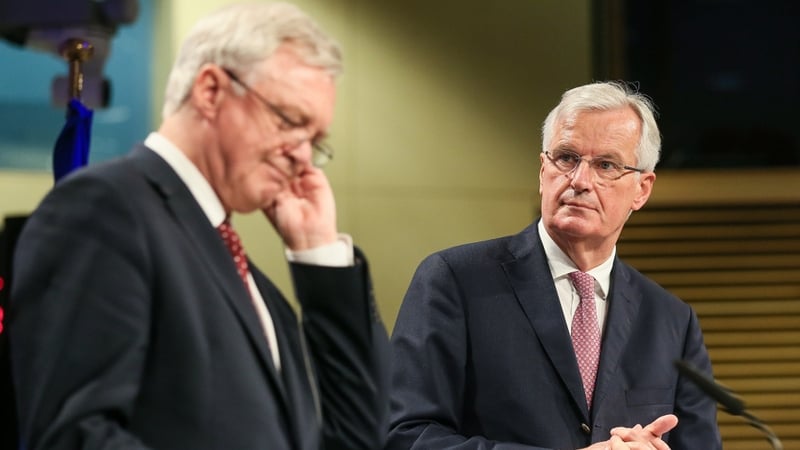
Image result for Simon Coveney says he is happy at the direction of Brexit negotiations on Irish issues  Image result for Simon Coveney happy at the direction of Brexit negotiations & Michel Barnier and his team

THE BRITISH IRISH CHAMBER OF COMMERCE HELD ITS FIRST MEETING WITH MINISTER FOR FOREIGN AFFAIRS AND TRADE, SIMON COVENEY TD IN LONDON TODAY.

Minister for Foreign Affairs Simon Coveney has expressed satisfaction at the direction of negotiations between Britain and the European Union over Ireland’s specific issues. Speaking in London after meetings about Brexit with academics, diplomats and business representatives, Mr Coveney said more work was needed on some areas.
“In particular, more detailed work is needed on how best to protect North-South co-operation, an essential aspect of the Good Friday Agreement. It has facilitated some of the most tangible benefits from the peace process and contributed directly to the normalisation of daily life in the border region. On the Common Travel Area, I welcome that both sides agreed that it should be maintained. It will now be for the UK side to confirm how it will ensure this,” he said.
The discussions in Brussels did not focus on the future of the Border but Mr Coveney said that talks between the British and EU teams this week about protecting the gains of the peace process were directly related to avoiding a hard Border after Brexit.
“My officials and I will continue to work closely with Michel Barnier and his team to ensure that sufficient progress is made on the Irish specific issues in phase one of the negotiations. Progress on these, on citizens’ rights and the financial settlement would allow parallel discussions to begin this autumn on the EU’s future relationship with the EU,” he said.
“This will require constructive engagement on all issues and a strong political willingness to achieve the best possible withdrawal agreement. Contrary to what some may think, no agreement would be disastrous for everyone. We must continue to work for the closest possible future relationship between the EU and the UK, facilitated by effective transitional arrangements.”
Theresa May on Thursday sought to reassure British business that its concerns would be considered as Britain continues its negotiations with the EU. The prime minister hosted representatives of big companies and business organisations at Downing Street for the first meeting of a new “business council”.
“The prime minister emphasised her desire to listen to the views of business, to channel their experience and to share with them the government’s vision for a successful Brexit and a country in which growth and opportunity is shared by everyone across the whole of the UK,” a Downing Street spokesperson said.
“On Brexit, the prime minister reiterated that the government’s overarching goal is for a smooth, orderly exit culminating in a comprehensive free trade deal with the EU, with a period of implementation in order to avoid any cliff-edges.”

Brexit win for the West of Ireland as medical conference moves from London to Sligo

FIREFLY FOUNDER AND MEDICAL DIRECTOR MARTIN MCGEOUGH AND BIG-WAVE SURFER DR. EASKEY BRITTON LAUNCH FIREFLY SUMMIT 2017, WHICH IS MOVING FROM LONDON TO SLIGO AS A RESULT OF BREXIT.

Image result for Brexit win for the West of Ireland as medical conference moves from London to Sligo   Image result for The Firefly Summit, a conference of 200 podiatrists,

THE FIREFLY SUMMIT, A CONFERENCE OF 200 PODIATRISTS, MAINLY FROM LONDON AND THE REST OF THE UK, WILL MOVE TO SLIGO THIS YEAR.

The summit will see 21 of the podiatry profession’s top minds deliver a series of quick-fire lectures, sharing their hands-on clinical practices.
Firefly, a custom-made orthoses company, made the decision to move the summit to Sligo as a result of the impact Brexit was having on its business.
“When sterling started devaluating on the back of the Brexit announcement, our margins were way down. We have managed to survive – but only just about. We had to decide how we were going to respond to it,” Martin McGeough, Firefly’s founder and medical director said.
While some companies are looking at how to reduce costs or increase prices, Firefly are looking at building relationships with customers who are podiatrists, and by moving the conference to Sligo the company hopes to cement existing relationships with customers and build more.
Firefly is also turning the concept of a medical conference on its head by taking speakers and delegates out of the lecture halls and into nature.
Surfing, hiking, stand up paddle boarding (SUP), golf and other activities are built into the programme of the Firefly Summit, which takes place from September 29-30.
This will allow attendees to connect with the UK and Ireland’s most renowned podiatric consultants and practitioners in a relaxed setting by removing the barriers of traditional conferences, Firefly said.
Podiatry or podiatric medicine is a branch of medicine devoted to the study, diagnosis and medical and surgical treatment of disorders of the foot and ankle.
It is expected that the conference will result in an economic boost of at least €320,000 to the local economy.

What makes a man’s best friend your dog ? It’s in their genes

Image result for What makes a man's best friend your dog ? It's in their genes   Image result for What makes a man's best friend your dog ? It's in their genes

TWO SAINT BERNARD DOGS REST ON A MEADOW AS THEY MAKE THEIR WAY TO THE GREAT SAINT BERNARD MOUNTAIN PASS, NEAR BOURG-SAINT-PIERRE, BETWEEN SWITZERLAND AND ITALY, ON JULY 

Dogs that are extra friendly share certain genetic similarities with people who are born with a developmental disorder sometimes called the “opposite of autism,” which makes them hyper social, researchers said Wednesday.
The report in the journal Science Advances pinpointed changes in two genes that are related to extreme social behavior in dogs, and also in people who are born with Williams-Beuren Syndrome.
People with this condition tend to be highly outgoing, gregarious, empathetic, interested in prolonged eye contact, prone to anxiety and may have mild to moderate learning disabilities and intellectual impairment.
The findings offer new insights into how dogs became domesticated and split paths from their wolf ancestors thousands of years ago.
“It was once thought that during domestication dogs had evolved an advanced form of social cognition that wolves lacked,” said co-author Monique Udell, an animal scientist at Oregon State University.
“This new evidence would suggest that dogs instead have a genetic condition that can lead to an exaggerated motivation to seek social contact compared to wolves.”
Survival of the friendliest
Researchers studied 18 domesticated dogs and 10 captive gray wolves to see how social they were toward people and how they performed on problem-solving tasks.
Given the task of lifting a puzzle box lid to get a sausage treat, the canines were rated on how much they turned to a human in the room for help.
The wolves were more likely to figure out how to get the treat than dogs. The dogs were more likely to stare longingly at the nearby people.
“Where the real difference seems to lie is the dog’s persistent gazing at people and a desire to seek prolonged proximity to people, past the point where you expect an adult animal to engage in this behavior,” said Udell.
Then, researchers took blood samples and to see how the wolves’ and dogs’ genetic traits lined up with their personalities.
They found variations in two genes — GTF2I and GTF2IRD1 — “appeared to be connected to dog hyper sociability, a core element of domestication that distinguishes them from wolves,” said the report.
These genes have previously implicated in the hyper social behaviors of humans with William-Beuren Syndrome.
The changes weren’t identical in humans and dogs. For instance, in dogs, unique genetic insertions called transposons in these genetic regions were linked to a strong tendency to seek out human contact.
Some of these transposons “were only found in domestic dogs, and not in wolves at all,” said the report.
In people, the deletion of genes from this region in the human genome is linked to Williams-Beuren syndrome.
“We haven’t found a ‘social gene,’ but rather an important [genetic] component that shapes animal personality and assisted the process of domesticating a wild wolf into a tame dog,” said a statement by co-author Bridgett vonHoldt, an assistant professor in ecology and evolutionary biology at Princeton University.
How wolves became dogs
Adam Boyko, an assistant professor at Cornell University and expert in dog genetics, called the study “truly interesting and important.”
“It may be one of the first studies to ever identify the specific genetic variants that were important for turning wolves into dogs,” he said in an email.
“That said, the overall sample size in the study is small, so validating the association of these variants in a much larger cohort of diverse dogs would be needed to prove that these are, in fact, the variants in the region driving both the association and the signature of positive selection.”
The topic of just when and how dogs become domesticated thousands of years ago is a subject of much debate in the scientific community.
A separate study out earlier this week in Nature Communications suggested dogs first split from wolves about 40,000 years ago.
It’s unlikely that humans sought out to tame wild wolves. Rather, the process would have started with the animals approaching hunter-gatherer camps in search of food, researchers said.
“Those wolves that were tamer and less aggressive would have been more successful at this” and more likely to befriend humans, explained the report.
The research by Udell and vonHoldt lines up with this theory — that sociability, rather than smarts, drove dogs to become man’s best friend.
“If early humans came into contact with a wolf that had a personality of being interested in them, and only lived with and bred those ‘primitive dogs,’ they would have exaggerated the trait of being social,” vonHoldt said.

Minerals firm plans market listing to fund Sligo zinc drill

ERRIS RESOURCES IS PLOTTING A FLOTATION ON LONDON’S AIM MARKET

‘Potential investors have been told that the company is looking to have its shares admitted to trading as early as August.
Image result for floating on the market listing to fund Sligo zinc drill   Image result for Zinc exploration Ireland

MINERALS EXPLORER ERRIS RESOURCES IS LOOKING TO FLOAT IN ORDER TO RAISE FUNDS FOR DRILLING A ZINC PROSPECT IN SLIGO.

The London-based company is plotting a potential listing on that city’s AIM market, raising as much as £5m (€5.7m).
Potential investors have been told that the company is looking to have its shares admitted to trading as early as August. Erris declined to comment.
The prospect is at Abbeytown in Co Sligo and was the site of a lead mine in the 1950s and 1960s.
Erris believes that zinc, lead, silver and copper are at the site, which it labels historically overlooked. Drilling work that the company has undertaken indicates that there is a potential new mineral zone at the site.
It has presented investors with two scenarios; one, in which it raises £3.5m, releasing just over £1.5m for work at Abbeytown, and another, where it raises £5m, with more than £2.8m for Abbeytown.
A £5m fundraise would give the company a market capitalisation of £9.7m on a fully diluted basis – meaning that share options are included in the calculation of the company’s value, as well as shares.
Meanwhile, another zinc explorer with interests in Ireland, Group Eleven Resources, has plans to float.
The company, which has been backed by former Davy corporate finance chief Hugh McCutcheon, is hoping to list in Canada in the autumn.
“The reason to go to Canada is that Vancouver is really the capital of the junior resource market in the world. But if it made sense for us, I’d love to be listed in Dublin at some stage in the not-too-distant future,” Group Eleven chief executive Bart Jaworski said.
Last week, the company announced a deal to buy 60pc of a prospect which covers areas of Co Longford and Co Westmeath.
It is buying the asset known as the Ballinalack prospect from the Canadian mining giant Teck. The other 40pc of the prospect is owned by a Chinese company. The asset is located 50km west of Europe’s largest zinc mine at Navan in Co Meath.
A big rise in the price of zinc has lifted activity in the Irish sector in recent months.
The island of Ireland is the biggest zinc producer in Europe.
Australian-listed Hannan Metals has been drilling at a prospect in Kilbricken in Co Clare and announced its estimates of the resource potential based on the results earlier this week.
Chief executive Michael Hudson said the result “ranks Kilbricken as one of the top 10 base-metal deposits discovered to date in Ireland. This is a significant initial achievement in a country that is ranked first in the world in terms of zinc discovered per square kilometre since the 1950s.”
He added: “While this resource is substantial, it is also lies open in all directions, with excellent potential for expansion.
“We currently have one drill rig operating a resource expansion programme and we will soon be mobilising additional drill rigs.”
Elsewhere, the mining giant Glencore has resumed drilling at its Pallas Green prospect in Limerick.
“The objective is to better understand certain aspects of the deposit,” a Glencore spokesman said, adding that any decision about building a fully fledged mine at the site was “a long way down the road”.

Potential treatment for Huntington’s disease discovered by NUIG researchers

Collaboration with University of Barcelona aims to find cure for ‘relentlessly fatal’ condition

Image result for Potential treatment for Huntington’s disease discovered by NUIG researchers   Image result for Potential treatment for Huntington’s disease discovered by NUIG researchers

RESEARCHERS AT NUI GALWAY HAVE DISCOVERED WHAT THEY SAY ARE ENCOURAGING EARLY SIGNS FOR A POTENTIAL TREATMENT FOR HUNTINGTON’S DISEASE.

Huntington’s is an inherited neurodegenerative disease that causes serious cognitive and movement defects.
Sometimes called Huntington’s chorea, it is “debilitating, untreatable and relentlessly fatal”, according to the researchers.
Prof Robert Lahue and his team at the Centre for Chromosome Biology and the Galway Neuroscience Centre at NUI Galway collaborated with scientists at the University of Barcelona.
They targeted an enzyme called histone deacetylase 3 (HDAC3), which is thought to alter important biochemical mechanisms in the brain of Huntington’s disease patients and thereby accelerate disease progression.
The study published on Thursday in the journal Scientific Reports shows that blocking HDAC3 with an experimental compound in a pre-clinical model of Huntington’s disease slows cognitive decline and delays the onset of molecular signs of neurodegeneration.
While these results are preliminary, the data shows that the onset of Huntington’s disease is delayed when HDAC3 is blocked in this pre-clinical setting. This is an encouraging first step because currently there are no effective treatments that target the root cause of the disease,” Prof Lahue said.
Prof Lahue noted the key role of the Spanish collaborators and co-authors, Dr Silvia Ginés and Nuria Suelves from the University of Barcelona.
Prof Lahue and Dr Ginés have applied for additional funding to develop the treatment further and to assess additional safety aspects.
Science Foundation Ireland and the European Huntington’s Disease Network supported the research in Ireland.
The Huntington’s Disease Association of Ireland estimates, based on research in Northern Ireland and a population of 4.67 million in 2011, that there are about 500 people here with the condition and a further 2,500 at risk.
While Huntington’s disease is relatively rare, over 9,000 family members in Ireland may require support and information, according to the organisation.
Huntington’s Disease is a genetic condition with each child of an affected parent having a 50 per cent likelihood of inheriting the gene.
Both men and women have equal chances of being affected and most people develop the symptoms between the ages of 30 and 50. About 5-10 per cent of people have onset of symptoms before the age of 20 and 10 per cent after the age of 60.
The average survival time after diagnosis is about 15-20 years, but some people have lived 30 or 40 years with the condition.

Artefact find suggests earlier arrival of humans in Australia
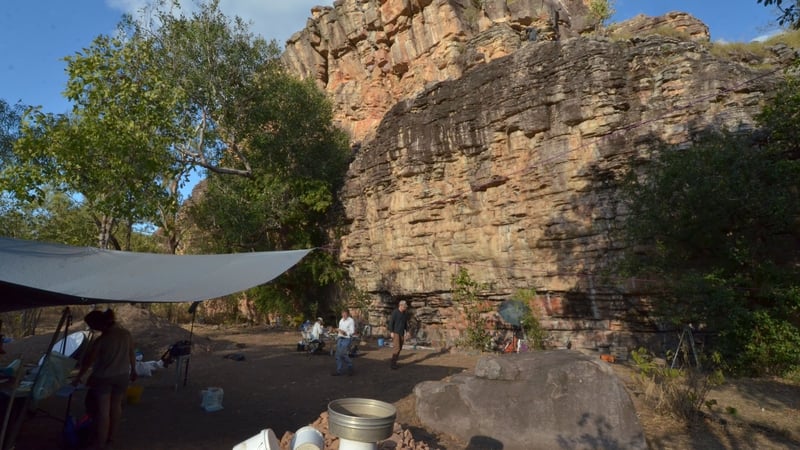
Image result for Artefact find suggests earlier arrival of humans in Australia  Image result for Artefact find suggests earlier arrival of humans in Australia
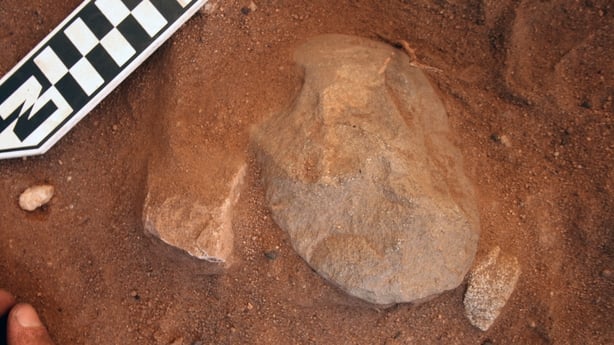
DIGS AT MADJEDBEBE HAVE UNEARTHED STONE TOOLS, OCHRES, PLANT REMAINS AND BONES

Humans arrived in Australia 10,000 years earlier than was previously thought, casting doubt on the theory that they killed off the giant kangaroo and other unique animals, scientists believe.
New artefact evidence suggests that the continent was first occupied about 65,000 years ago, long after the ancient ancestors of modern humans emerged in Africa.
The discovery challenges the theory that people caused the extinction of Australian megafauna including giant kangaroos, wombats and tortoises which disappeared more than 45,000 years ago.
Lead scientist Dr Ben Marwick, from the University of Washington, US, said: “Previously it was thought that humans arrived and hunted them out or disturbed their habits, leading to extinction, but these dates confirm that people arrived so far before that they wouldn’t be the central cause of the death of megafauna.
“It shifts the idea of humans charging into the landscape and killing off the megafauna.
“It moves toward a vision of humans moving in and coexisting, which is quite a different view of human evolution.”
Since 1973, digs at Madjedbebe, a rock shelter in Australia’s Northern Territory, have unearthed more than 10,000 stone tools, ochres, plant remains and bones.
A dating technique called optical stimulated luminescence (OSL) was used to determine the age of the oldest buried artefacts.
The process can show the last time a sand grain was exposed to sunlight up to 100,000 or more years ago.
This and other tests built up a picture of the environment and showed that when the first humans arrived, northern Australia was wetter and colder than it is today.
The findings, published in the journal Nature, support the theory that our species Homo sapiens evolved in Africa before dispersing to other continents, Dr Marwick said.

Monday, March 6, 2017

Donie's Ireland daily news BLOG update

Bus Éireann may sell company property and assets to pay for redundancy scheme?

AS PART OF REVISED SURVIVAL PLAN, MOVE CONSIDERED FOR VOLUNTARY REDUNDANCY SCHEME.

Image result for Bus Éireann may sell company property and assets to pay for redundancy scheme?  Image result for Bus Éireann may sell company property and assets to pay for redundancy scheme?

BUS ÉIREANN SUGGESTED IN A CONFIDENTIAL EMAIL TO THE WRC THAT FUNDING COULD BE SECURED TO MEET THE COST OF A VOLUNTARY REDUNDANCY SCHEME.

Bus Éireann may sell assets including property to part fund a voluntary redundancy scheme for staff as part of a revised survival plan for the company.
Bus Éireann believes the board of its overall parent holding group, CIÉ, will provide it with additional funding in the short term if it produces a viable plan to tackle potential insolvency and uncompetitiveness.
The company suggested in a confidential email on Friday to the Workplace Relations Commission (WRC) that funding could be secured to meet the cost of a voluntary redundancy scheme to be put in place over the next 12-18 months.
Sources suggested this money could be provided by both the CIÉ holding group and by Bus Éireann itself including by means of a sale of assets including property.
The company also indicated for the first time that the immediate threat of insolvency at the company could be overcome by staff co-operation with improved efficiency measures and the implementation of all existing national agreements across the company. Plans for cuts to terms and conditions and further cost-saving measures which were to be included in an all-embracing survival plan which was to have been completed by the end of March would appear to have been shelved.
Talks suspended?
A planned all-out indefinite strike at the State-owned transport company, which was scheduled to go ahead on Monday, was suspended on Friday after the intervention of the WRC, which invited the parties to talks on Monday.
Management at the company agreed to hold back on the planned unilateral introduction of work practice changes and new efficiency measures next Monday and in turn trade unions suspended their plans for strike action.
The planned closure of the Clonmel-Dublin route on March 12th and the scheduled reduction in frequency of Dublin-Limerick and Dublin-Galway services on the same date have also been deferred pending the outcome of the new talks.
In an email on Friday afternoon, Bus Éireann management told the WRC: “We all want Bus Éireann to survive and prosper. We are very conscious of the significant long-term damage that could be caused by a strike and are willing to engage with the unions and compromise to reach a sustainable agreement. With this in mind and in a final effort to avoid a dispute the company are putting forward the following position. We believe that if we can put forward a viable plan that demonstrates that we are addressing the insolvency and competitiveness issues that we can expect financial support in the short term. This proposal covers all items and there will not be a need for any additional plans such as those suggested for the end of March.”
Bus Éireann said that the issue of uncompetitiveness at the company would significantly be addressed by “restructuring and rationalisation”.
A staff reduction?
“The implementation of streamlining structures together with improved efficiencies will allow for a reduction in staff numbers. We are confident that if we reach agreement on improved efficiencies and show how this is addressing the imminent threat of insolvency that funds will be made available to provide for the costs of voluntary severance. Releasing staff through voluntary severance could then begin rolling out over the next 12 to 18 months. Redeployment will be a critical element of achieving the core manning numbers as will voluntary severance. The potential voluntary severance packages are likely to be available across all grades. “
Bus Éireann also said in the email it was willing to negotiate with the unions on the issue of a pay increase for staff “in the context of ensuring a plan for future survival without pre-conditions”.
It said any increase must be justified in its own right.
Siptu sector organiser Willie Noone said the union’s representatives would continue to play their part in trying to avert a national public transport dispute “but we rely on the management of Bus Éireann making genuine efforts to reach a resolution”.
NBRU general secretary Dermot O’Leary said his members remained on a “war footing” and would be prepared to engage in an immediate all-out strike “should the company plough ahead with any attack on members’ terms and conditions.

Parkinson’s treatment app founder named as “Ireland’s Best Young Entrepreneur”

THE APP HAS HELPED PEOPLE WITH PARKINSON’S DISEASE IN 40 COUNTRIES.

Image result for Parkinson’s treatment app founder named as "Ireland’s Best Young Entrepreneur"  Image result for Parkinson’s treatment app founder named as "Ireland’s Best Young Entrepreneur"

THE FOUNDER OF AN APP TO HELP PEOPLE WITH PARKINSON’S DISEASE HAS BEEN CROWNED IRELAND’S BEST YOUNG ENTREPRENEUR.

The 26 year old Physiotherapist Ciara Clancy, developed Beats Medical which emits a beat or soundwave from your smartphone to help control movement and speech.
She will now receive a €45,000 investment through the Local Enterprise Offices to help develop her company further.
Minister Mary Mitchell O’ Connor and Minister Pat Breen announced the winner of Ireland’s Best Young Entrepreneur (IBYE) competition at the Google European HQ in Dublin earlier today.
The competition, which is supported by the Department of Jobs, Enterprise and Innovation and Enterprise Ireland and run by the 31 Local Enterprise Offices, attracted entries from over 1,800 18-to-35-year-olds and showcased some of the country’s best and brightest business talent.
In addition to becoming Ireland’s Best Young Entrepreneur, Ciara Clancy also won the ‘Best Established Business’ category.
The Beats Medical app provides individually tailored physiotherapy, speech and language and occupational therapy exercises through mobile phones.
Ciara Clancy said that her aim is to continue supporting more and more people with Parkinson’s around the world, as an estimated 10 million people currently live with the disease.
She is also developing digital treatments for other neurological conditions such as MS, Stroke, Dyspraxia and Cerebral Palsy.
Speaking after winning the award she said “These success stories keep all of the team at Beats Medical motivated every day to do more for the people that use our service.”

U2 at the top of Irelands rich list chart

Image result for U2 at the top of Irelands rich list chart  Image result for Niall Horan, Colin Farrell, Graham Norton, Michael Flatley, Daniel O’Donnell, and Enya on Irelands rich list chart

U2 ARE THE RICHEST ENTERTAINERS IN IRELAND WITH A COMBINED WEALTH OF €645 MILLION, ACCORDING TO THE 2017 SUNDAY TIMES IRISH RICH LIST.

Irish entertainers Niall Horan, Colin Farrell, Graham Norton, Michael Flatley, Daniel O’Donnell, and Enya also feature on the new list, which examines the wealth of the 300 richest individuals and families in Ireland across entertainment, sport, business, technology and construction.
U2’s last world tour took in $133m but the band are still some way behind the world’s richest entertainer, Paul McCartney, who was estimated to have a fortune of £730m on 2015’s Sunday Times list.
One Direction star Horan is the only person under 40 on the Richest Entertainers List, and has securing a place among the top 10. Donegal star Daniel O’Donnell also makes the grade with an estimated wealth of €31m.
Alastair McCall, Editor of The Sunday Times Rich List, said: “U2’s status as one of Ireland’s most recognisable exports is confirmed by their position at the top of our Entertainers’ Rich List, accounting in their own right for more than 30% of the wealth measured. They are to Ireland what Abba were to Sweden in the 1970s – a global brand with instant recognition.”
Actors including Liam Neeson, Pierce Brosnan and Colin Farrell also appear on the Richest Entertainers List. Wicklow residents Daniel Day-Lewis and his wife Rebecca Miller are in at 8th place on the list with a fortune of €55m between them.

Threat to Sligo vet lab is against Irish rural policy says Marian Harkin

Image result for Threat to Sligo vet lab against rural policy says marian Harkin  Image result for Threat to Sligo vet lab is against Irish rural policy says Marian Harkin

THE INDEPENDENT MEP MARIAN HARKIN.

THE INDEPENDENT MEP MARIAN HARKIN HAS SAID THE POSSIBLE CLOSURE OF THE DEPARTMENT OF AGRICULTURE’S REGIONAL VETERINARY LABORATORY (RVL) IN SLIGO CONFLICTS WITH GOVERNMENT RURAL POLICY.

The proposal by the Department to close the lab in Sligo and others is flying in the face of good animal health practice and in contravention of recent Government policies to stimulate development in rural areas, according to Marian Harkin MEP.
She was speaking after it was revealed by the Irish Farmers Journal that RVLs are subject to a major internal review headed by Professor Alan Reilly, the former chief executive of the Food Safety Authority of Ireland.
One of the recommendations from the report is to, in time, close Limerick, Sligo and Kilkenny, with an upgrading of the facilities at the other three labs.
“The Sligo laboratory also plays a significant role in helping to protect Ireland’s animal health status, which is a major positive marketing tool in promoting the country’s food products on a worldwide basis,” Marian said.

A SIX-HUNDRED KILOMETRE ROUND-TRIP?

“We have seen successive lip service plans to supposedly bring long overdue balanced regional development and the latest Ireland 2040 plan’s strategy is to ensure that ‘the enormous potential of the rural parts of our country are maximised’”, she said.
If the closure goes ahead, it will leave farmers having to travel a 600km round-trip from the Inishowen Peninsula to the proposed centralised facility in Athlone.
Bringing a dead animal for the examination would have significance for both the farmer concerned and for the build-up of knowledge, which is vital to protecting the country’s animal disease status, the Independent MEP said.
She questioned how this aspiration for regional development could be taken seriously in the northwest when a service vital to the region’s most important economic sector was proposed to be removed.
Saving the lab petition.
In an effort to save the RVL, part-time suckler farmer Trevor Boland, who is from Dromard in Co Sligo, set up a petition.
He told the Irish Farmers Journal the RVL is of vital importance to farmers from Donegal to Sligo.
“If this RVL closes, the nearest one to us will be in Athlone and that will affect the speed of post-mortem tests and their results,” he said.

Obesity now linked to 11 types of cancer as our overweight population grows

Image result for Obesity now linked to 11 types of cancer as our overweight population grows  Image result for Obesity now linked to 11 types of cancer as our overweight population grows  Related image
A new research finds a link between obesity and 11 cancers as the worldwide obesity rate continues rising, according to the World Health Organization.
Obesity is strongly linked to the development of 11 types of cancers, including breast, kidney, rectum, colon, and pancreatic cancer, scientists warned in a new study.
The research on excess body fat and cancer, published in the British Medical Journal, reviewed more than 200 studies on cancer and obesity and found “strong evidence” of a connection between increased body fat and 11 cancers.
“Other associations could also be genuine, but there is still substantial uncertainty about them,” lead study author Dr. Maria Kyrgiou, of Imperial College London, said by email, according to reports from several news outlets.
Researchers specifically reviewed the data on body mass index (BMI), a ratio of weight to height, and discovered links between an increase in BMI and a higher risk for cancers of the pancreas, kidney, bone marrow, esophagus and biliary tract.
The strongest connection was discovered between obesity and cancer of the digestive organs, and excess fat and hormone-related cancers in women, according to the survey.
But, the study authors cautioned that more research is needed to better understand the connection between obesity and cancer.
Cancer is a leading cause of death globally, with almost 9 million people dying from a form of the disease in 2015, according to the World Health Organization, and the numbers are expected to continue increasing by about 70 percent over the next two decades, the WHO said on its website.
Almost 2 million adults are overweight or obese, the WHO reported. Obesity increases the risks for all kinds of health problems, including diabetes, heart disease and certain cancers.     

Monday, February 20, 2017

Donie's Ireland daily news BLOG update

Varadkar and Coveney in dogfight for power as gap closes on successor to Enda

Image result for Varadkar and Coveney in dogfight for power as gap closes on successor to Enda Image result for Varadkar and Coveney in dogfight for power as gap closes on successor to Enda OR Image result for Varadkar and Coveney in dogfight for power as gap closes on successor to Enda

The likely lads to succeed Enda Kenny above?

Simon Coveney has dramatically narrowed rival Leo Varadkar’s lead as the public’s favourite to succeed Enda Kenny yes but there is also clear evidence that a third candidate could emerge to win a Fine Gael leadership contest, according to a Sunday Independent/Kantar Millward Brown opinion poll.

Social Protection Minister Mr Varadkar (27%) has a slight lead over Housing Minister Mr Coveney (23%), but almost a quarter of all voters favour somebody else (16%) or neither (8%) of the two front-runners to lead Fine Gael, according to the nationwide poll.
This is the first time that those polled were offered a choice of just two candidates to succeed Taoiseach and Fine Gael leader Mr Kenny.
Mr Varadkar (37%) extends his lead over Mr Coveney (28%) among Fine Gael supporters, according to the opinion poll, but again almost one-quarter of party supporters favour somebody else (15%), or neither front-runner (7%), should Mr Kenny decide to step down.
Yesterday, Mr Varadkar increased the pressure on Mr Kenny to make his continued leadership intentions known, but the Taoiseach told the Sunday Independent he intended to “focus on the job in hand” which, his spokesman said, he would carry out with “continued dedication and dignity”.
But today’s opinion poll contains further findings which will add to the mounting pressure on Mr Kenny to resign. The state of the parties shows Fianna Fail (33%) — up six points since a comparable poll in October — has opened up an eight-point lead over Fine Gael (25%), down four points.
Fianna Fail is extending its lead — it is now at its highest point since 2008 — at a time when there has been a marked increase in consumer confidence.
The poll finds 23% believe they are better off than they were last year,  a seven-point increase, and 21pc feel worse off, a nine-point decrease, while 27% feel they will be better off next year, a seven point increase, and 14% feel they will be worse off, a nine- point decrease.
The poll also shows Sinn Fein (20%) unchanged, Labour (6%) down two points, the Greens (2pc) unchanged and Independents/others (14%) down one point.
Mr Varadkar told the Sunday Independent: “Everyone is waiting to hear from the Taoiseach. The current situation is distracting and destabilising for the Government, the party and the country. I have full confidence in the Taoiseach to settle it.”
Simon Coveney and his wife Ruth at the wedding Photo: Gerry Mooney
However, Mr Coveney said the Taoiseach should not be forced to “set a date” for his departure.
“Enda is still the leader of our party – he has been for 15 years. I think he deserves the respect to be given time and space to make any decisions he thinks he needs to make.”
Today’s poll also finds Mr Kenny’s satisfaction rating (27%) down just two points and dissatisfaction rating (62%) up three points since October. Furthermore, satisfaction with the Government (27%), down four points, and dissatisfaction (64%), up two points, have not significantly changed despite recent political turmoil.
The poll, among a representative sample of 960, was carried out between February 6 and 16 and has a margin of error of 3.2%.
Fianna Fail leader Micheal Martin (44%), up one point, remains comfortably the most popular party leader with an unchanged dissatisfaction rating of 40%.
However, only a slim majority (53%), down one point, want Mr Kenny to resign as Fine Gael leader while 25%, up one point, want him to remain. Fascinatingly, a majority (57%) of Fine Gael supporters say Mr Kenny should remain leader, a finding which may encourage him to resist pressure to resign and choose the time of his own departure. Furthermore, 73% of Fine Gael supporters are satisfied with his leadership.
Also interestingly, of those who believe Mr Kenny should remain, more opt for Mr Coveney (29%) than Mr Varadkar (27%c) as his successor, a finding which indicates that the Housing Minister is in a position to win the backing of more of Mr Kenny’s supporters in a leadership contest.
Of those who believe Mr Kenny should resign, 31% would support Mr Varadkar and 28% would support Mr Coveney.
These findings show that while Mr Varadkar must be the favourite to succeed Mr Kenny, a Fine Gael leadership contest would be far from a foregone conclusion.
Yesterday, Foreign Affairs Minister Charlie Flanagan said Fine Gael needed to “keep calm and measured over the next few months” or the party would “catapult ourselves into a messy general election that will play into the hands of Sinn Fein and the loony left”.
Today’s opinion poll, however, finds that support for Independents and smaller parties has almost halved since the General Election.
Furthermore, when asked which party or political grouping they would not consider voting for in the next election, the poll finds that the Socialist Party (22%), up seven points; AAA-PBP (22%), up four points; Greens (20%), up three points; and Social Democrats (14%), up four points, appear to be falling out of favour with voters, while 36%, down two points, say they would not consider voting for Sinn Fein.

Tribalism is still a problem in Northern Ireland politics after 20 years of peace

Image result for Tribalism is still a problem in Northern Ireland politics after 20 years of peace  Image result for Tribalism is still a problem in Northern Ireland politics after 20 years of peace

It is no great surprise to see that Northern Ireland politics are still as polarised as ever nearly two decades after the Good Friday Agreement was signed in a wave of optimism that society here could be changed forever.

It is no great surprise to see that Northern Ireland politics are still as polarised as ever nearly two decades after the Good Friday Agreement was signed in a wave of optimism that society here could be changed forever.
The survey from the Electoral Reform Society shows that only a tiny proportion of unionists or nationalists would ever contemplate voting first for a party outside their own bloc.
And even though the STV system allows voters to give their preferences right through the list for their constituency, few Catholics or Protestants would put their mark in the box of an opposing party.
Around one-third of all preferences were for parties outside the big four – DUP, Sinn Fein, SDLP and UUP – but that does not give a corresponding return of Assembly Members. The centre ground still remains a minority.
Little wonder that UUP leader Mike Nesbitt received such a cold shoulder from even his own party when he said he would vote for a SDLP candidate as a second preference in the forthcoming election. His gesture may be the ideal way to conduct politics, but obviously tribal considerations trump real cross-party co-operation.
So where did it all go wrong after the Good Friday Agreement? The hope for a brighter future was fuelled first by the ending of conflict, but the guerrilla war conducted by the DUP and Sinn Fein against the original power-sharing partners, the UUP and SDLP, ensured that devolution never gained the momentum it should have.
The decision eventually by the DUP and Sinn Fein to share power offered new hope, but this has dwindled over the last decade as the parties both retreated towards the trenches in a welter of bad feeling and even more virulent language.
We are now a fortnight away from a new election, but the prospect of an early return to devolved government seems remote.
The inevitable conclusion – unless there is an unprecedented sea-change in voting habits – is that the majority of those who go to the polls are content to keep to their tribal silos no matter what the implications.
The one glimmer of hope is that a significant number of the 45% of voters who didn’t bother going to the polls last May – either through apathy or weariness -turn out this time and change voting patterns to register their displeasure with the status quo. History is not encouraging.

An Irish mum shares a heart-breaking video of her 21-year-old scoliosis daughter in agonising pain?

A KILDARE MUM TINA O’KELLY HAS SHARED A VIDEO OF HER 21-YEAR-OLD DAUGHTER COLLEEN IN AGONY AND PLEADED WITH HEALTH MINISTER SIMON HARRIS FOR A SURGERY DATE.

Colleen O’Kelly has Joubert Syndrome and has now been waiting for an appointment for two years just to get on the list for scoliosis surgery.
Her mum Tina says that Colleen’s condition will worsen, unless she is granted surgery. The rate of curvature of her daughter’s spine is at 97%, and apart from causing Colleen to live with agonising chronic pain, it significantly increases her risk of lung collapse, pneumonia, and respiratory infections.
Tina spoke to Her Family about the heart-breaking situation,
“I wish that the HSE management and the government would stop blaming each other and just get together to get the root of this mess.
The HSE says it’s caused by a lack of money and the government say that it’s not a lack of money that’s the problem, but rather mismanagement of it.
While they are busy squabbling with each other nothing is getting done.”
The Naas mum explained that her 21-year-old daughter has already undergone a kidney transplant but unfortunately Colleen still has no date for surgery to correct the painful curvature of her spine,
“When Colleen turned 18 she had to be transferred from the care of Crumlin to Tallaght hospital as an adult patient. Her doctor in Crumlin essentially had to write a letter referring her to himself – from one of his patient lists to another.
She has waited two years just to get on another waiting list, she has been on the surgery waiting list since last August. The secretary said she’d ask the doctor for a 7th of March listing but I have heard nothing.”
Tina told us that Colleen is a fighter who has been through so much but has managed to keep a smile on her face,
“She is normally such a happy, happy person. She has flown through her transplant…through everything…with a smile on her face. That’s why it’s so heart-breaking to see her suffering like this now. She doesn’t have to suffer like this. This is avoidable.”
Tina says that she agonised over sharing a video of her daughter crying in pain, but she wants people to see the completely avoidable reality that they live with on a daily basis,
“Everyone that knows Colleen knows how amazingly happy she is. Lately her scoliosis has really been causing awful problems for her and it’s heart-breaking. She has no date for surgery. We have no idea when it will be.
This is the reality of living with this condition. It’s getting worse and compromising her health that we have fought so hard for all her life. It’s compromising her kidney transplant.
We wait every day for word from Tallaght.
We want her pain to end – she’s been through enough – and call on Simon Harris to fix this. ”

Take a minute to boost your fitness the easy way & it works

ROSE COSTELLO LOOKS AT THE QUICKEST AND SIMPLEST WAY TO GET FITTER?

Image result for Take a minute to boost your fitness the easy way & it works  Related image  Image result for Take a minute to boost your fitness the easy way & it works
If you think that running for the bus is a waste of time, think again. Even if you don’t catch that bus, you will be doing a lot more for your fitness than you might realise. The latest research shows that taking exercise in short bursts could be just what the doctor ordered.
It’s known as high-intensity interval training (Hiit) and it is now part of any fitness instructor’s offering. Even those who can’t be bothered to go to a gym or who don’t have the time can benefit.
High-intensity training means really pushing yourself for a short amount of time, resting, then pushing yourself again. What’s shocking is how little time it can take to make a difference to your fitness.
A report published in the PLOS One journal last year followed two groups over 12 weeks: one spent just 10 minutes on training that included intense intervals that added up to one minute; the second group worked out at a moderate, even pace for 45 minutes. The surprise is that the two groups saw similar improvements in health. There are a number of other studies showing equally encouraging results.
Claire Mc Glynn, a competitive weightlifter and personal trainer at cmgfit.com in Dublin, loves to use Hiit and says it is the best and quickest way to achieve positive results in your physical and mental health. “It’s very simple really – everyone knows that when you put 100 per cent of effort into something, you get the best results and there is no exception when it comes to exercise.”
Level of intensity?
Mc Glynn points out that she can do the same Hiit routine as a beginner, but if they both do it at their top level of intensity, they both benefit dramatically. There is no need for modification of a routine for beginners. They key is to feel that you are pushing past your own comfort.
They might curse me for asking them to do it,” she says, “but once they’re doing it, the adrenaline kicks in and it’s just a matter of working through the process. Afterwards, endorphins – happy hormones – have been released and they’re tired, yet contented and have an air of accomplishment, and sometimes surprise at what they have been able to achieve.”
The 29-year-old runs hardcore classes in CrossFit353, which involves using heavy weights or pushing around massive tyres for fun. But she also teaches members of the Retired Teachers’ Association of Ireland, who are between 50 and 70.
“Their progress has been unbelievable. Many started with me two years ago and now they are blitzing sessions of many, many squats, lunges, push-ups, plank holds for up to three minutes and so on. Their mobility, strength, fitness, self-belief and confidence has increased tenfold.”
Hiit also boosts your metabolism, ie the rate at which you burn calories, for hours afterwards.
No class needed?
Good form is key on whatever exercise you are doing, she says. “There is no point in repping out 100 squats if your back is rounded and knees are caving in, you’ll just do more harm than good.”
You don’t have to join a class to experience the benefit, however. These are principles you can put into practice every day. This doesn’t mean you should give up on beach walks, rather that you should run after that bus with abandon, for a minute anyway. And regardless of whether you catch it or not, you will have done yourself some good.
The World Health Organisation advises adults do at least 150 minutes of moderate-intensity aerobic physical activity a week or at least 75 minutes of vigorous activity. Incorporating Hiit doesn’t mean slacking off, simply realising that a few sharp bursts can be valuable too.
If you cannot exercise most days, but try to get out at the weekend, take heart. A report last month in the JAMA Internal Medicinejournal shows that “weekend warriors”, who did all their exercise on one or two days of the week, were found to lower their risk of dying from cardiovascular disease by 41 per cent and cancer by 18 per cent, compared with the inactive. Even those who didn’t manage to get the 150 minutes of activity advised by the WHO reduced their risk of early death by one-third.
Push yourself
For those not exercising now, walking quickly can count as “high-intensity” if you push yourself. Even a brisk 20-minute daily walk could reduce your risk of early death, according to research published in the American Journal of Clinical Exercise in 2015. The study of more than 334,000 Europeans found that twice as many deaths may be attributable to a lack of physical activity compared with the number attributable to obesity, but that a modest increase in physical activity could have significant health benefits.
An earlier study in the Lancet in 2012 said that inactivity was killing about as many people as smoking.
If you have been following this series, you should be eating a pretty balanced diet that gives you more energy. Put that energy to good use by adding in some extra exercise – or even just some exercise.
An effective way?
The maxim still holds that you cannot outrun a bad diet, but to be healthy you need to do some exercise too. Using the principles of high-intensity interval training is an easy and effective way to achieve results without putting in too much effort.
Ashley Borden of the Body Foundation in California, who has trained actor Ryan Gosling, says she uses Hiit training because it is efficient, burns fat and builds muscle. There is no need to have any fancy equipment either, just the focus to really go for it for half a minute at a time.
This all comes with a proviso, of course: as with any form of exercise, you need to be in fairly decent shape to get started. If not, or if you are on medication or have any concerns or conditions, check with your doctor first. And wear the appropriate footwear. Then go for it.

GM ‘surrogate hens’ could lay eggs of rare chicken breeds,

SO SCIENTISTS SAY

A radical plan to maintain diversity of gene pool proposes the use of genetically modified chickens as surrogate mothers?

Related image  Image result for GM 'surrogate hens' could lay eggs of rare chicken breeds  Related image

SOME OF THE GENETICALLY MODIFIED CHICKENS BRED BY SCIENTISTS AT THE ROSLIN INSTITUTE.

The Rumpless Game is squawky and, as its name suggests, lacks a tail, while the Burmese Bantam, has fantastically flared leg feathers and a head like a feather duster. But the true value of rare chicken breeds, according to a team of scientists working to save them from obsolescence, is not their decorative crests and plumage, but the diversity they bring to the chicken gene pool.
In a radical plan to preserve rare varieties such as the Nankin, Scots Dumpy and Sicilian Buttercup, scientists at the the University of Edinburgh’s Roslin Institute have bred genetically modified chickens designed to act as surrogates that would be capable of laying eggs from any rare breed.
Speaking to journalists at the AAAS conference in Boston, Mike McGrew, who is leading the project, said: “These chickens are a first step in saving and protecting rare poultry breeds from loss.”
The surrogacy technique, which places a new, mind-bending twist on the classic chicken or egg question, involves first genetically engineering hens to be sterile. This is done by deleting a gene, called DDX4, that is required for the development of primordial follicles (the precursors to eggs) meaning that the surrogate hens will never lay eggs that are biologically their own.
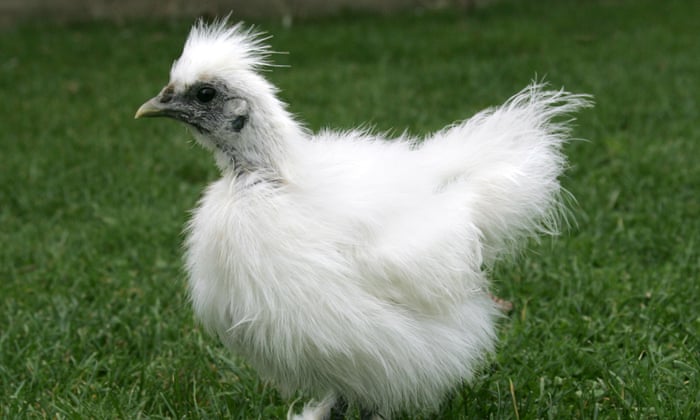
A baby bantam. The scientists’ ultimate goal is to create a gene bank of chicken breeds preserved for posterity.
A batch of sterile GM chicks hatched at the Roslin Institute in 2016, becoming the first genetically modified birds created in Europe. “We produced a hen that doesn’t have any eggs,” said McGrew, who is first author on a paper on the work published this week in the journal Development.
The next step will be to transplant follicles from rare birds into the surrogate (this is done before the surrogate chick is hatched from its own egg), meaning it would go on to lay eggs belonging to entirely different breeds of chicken.
Given that the hens would also need to be artificially inseminated with sperm from the same rare variety, the approach may appear unnecessarily convoluted. Why not just breed the rare birds the normal way?
The scientists’ ultimate goal is to create a gene bank of chicken breeds preserved for posterity, and since primordial follicles can be frozen efficiently, while eggs cannot, the surrogacy technique serves an essential work-around.
The Roslin team has set up the Frozen Aviary, a £14m project aimed at preserving a wide variety of poultry breeds.
“We’re interested in chicken because that is the animal which is the most consumed animal on the planet and we want to protect all the different breeds of chickens that we have,” said McGrew. “So we can freeze down all the breeds of chicken.”
McGrew predicts that the surrogates will be able to lay eggs from any breed, including chicken’s wild predecessor, the red junglefowl, but he is doubtful about whether it will work efficiently across species – it is not likely that the surrogate hens will be giving birth to eagle chicks, for instance.
Richard Broad, a field officer for the Rare Breeds Survival Trust, said the idea was appealing: “You can save all kinds of breeds, put them in a freezer and there would be a genetic ark for us.”
A Salmon Faverolle chicken. Scientists say rare breeds can bring diversity to the chicken gene pool.
“If you had one in every country it would be a wonderful thing. In terms of usefulness, we couldn’t wish for anything better – it would be unbelievably useful.”
Broad agreed that rare chickens could be a source of valuable genetic variation, potentially carrying variants that would provide resistance against new forms of avian flu. “It’s not what we’re protecting in the breeds that’s important, it’s what those breeds represent in their genes,” he said.
The Frozen Aviary, which would allow scientists to rapidly expand populations that contained a protective gene for a new disease, bring breeds back to life after they had been declared extinct and provide an insurance against commercial breeds, which have been honed for their fast-growing, being wiped out by a disease.
The avian biobank currently has genetic material from 25 different breeds and more than 500 samples from individual birds, all stored in liquid nitrogen cryostats. “They should be good – as long as the power doesn’t go out – for decades,” said McGrew.
At present, the team is focused on chicken breeds, but expects the technique to work to preserve rare varieties of ducks, geese and quail. Previously, scientists in Dubai used a similar technique in male birds to create a houbara (a large bustard) fathered by a cockerel.
In the future, it may also be possible to use the technique to conserve endangered species such as golden eagles – although this would depend on a suitable surrogate being identified.
“The question remains open on how evolutionarily related they have to be for them to transplant them,” said McGrew. “You need a bird that can be bred in captivity and produce a lot of eggs.”