Pages

Showing posts with label Irish SME’s. Show all posts

Thursday, June 16, 2016

Donie's Ireland daily news BLOG update

Mary McAleese warns against a Brexit leave vote result for Ireland

    
Mary McAleese has warned of the dangers of Brexit.

A BREXIT VOTE RESULT WOULD CAUSE TURMOIL AND RADICALLY ALTER RELATIONS BETWEEN BRITAIN AND IRELAND, SAID THE  FORMER IRISH PRESIDENT MARY MCALEESE.

Mary McAleese has also claimed Ireland’s peace and prosperity would be in danger if Britain votes to leave the European Union next week.
She said: “Reassurances that nothing will change are at best wishful thinking and bluffing most of us at worse.”
Mrs McAleese, who was president from 1997 until 2011, will throw her weight firmly behind the Remain campaign as she launches a new report from the British Influence think tank at Westminster later.
In her speech she will urge British voters to avoid a choice for “drift” and loss of influence in Europe. She will also call for the 600,000 Irish citizens resident in the UK to vote stay.
She will also say that the benefits in Anglo-Irish relations, now taken for granted, could be put in peril while the future of 400,000 jobs and the open road border between Northern Ireland and the Republic would also be uncertain.
“The concerns of Ireland are legitimate and well-founded,” she said.
“They involve the economy, trade, immigration controls, the hardening of the land border, security, the weakening over time of the excellent current relationship between Ireland and the United Kingdom, the impact on the peace process and the impact on European development of Britain’s voice being absent from the European Union table.”
Meanwhile, the British Influence paper, Brexit: The Irish Dimension, outlines the top seven problems that would upset Anglo-Irish relations in the event of Brexit:
They include the impact on Ireland’s economy; disruption of the free movement Common Travel Area and the re-introduction of border controls as well as the ending of current extradition arrangements with the Republic of Ireland.
Other potential difficulties would be disruption to the peace process and the ending of EU-funded programmes while the all-Ireland electricity market and the energy relationship with the UK could also be affected, the report claims.
Peter Wilding, director of British Influence, said: “Vote Leave’s ‘It’ll be all right on the night’ attitude is playing with fire when it comes to the future of our relations with Ireland.
“Our report demonstrates – and Mary McAleese together with the entire Irish Government knows – that Brexit means trouble ahead for jobs, investment and the peaceful stability of the island of Ireland.”
Meanwhile, Anthony Bailey, who sponsored the report, said he did not want to see the progress of the last two decades derailed.

Most minimum wage workers are in the‘Irish middle income families group’and just below the poverty line?


    

INCREASING THE MINIMUM WAGE WILL NOT TACKLE POVERTY BECAUSE THE MAJORITY OF WORKERS EARNING IT ACTUALLY LIVE IN MIDDLE-INCOME HOUSEHOLDS, A NEW STUDY CLAIMS.

The startling findings come as the Government is under pressure to increase the €9.15-an-hour statutory rate.
A new report by the ESRI, which is partly State-funded, warns that increases in the basic statutory pay rate will do little for households living below the breadline.
The report, to be published today, questions the impact increases in the statutory wage have on reducing poverty. It finds that recent hikes in the national minimum wage have mainly benefited people in ¬middle-income households.
The economic think tank found the proportion of low-wage employees rose from 20% in 2005 to 23% in 2014. But it added: “Results also confirm that very few low paid individuals are found in households with incomes below the most commonly used poverty line income cut-off.”
The report reveals that ‘Low Pay, Minimum Wages and Household Incomes: Evidence for Ireland’ – says 11 out of 12 low paid workers are living in households above the poverty line.
In most cases, low paid employees are not the sole earners. It finds that even where they are the sole earners, fewer than one-in-five are at risk of poverty.
The report notes that a young adult may be earning a low wage but living in the family home where the parents’ income is enough to keep the household above the poverty threshold. In addition, low wage earners with few dependants will be at lower risk of poverty.
In contrast, employees with an above average wage may be more at risk of poverty when they are the sole earners in the household or have many dependants.
But it notes a young adult may be in a poverty trap at home because they could not afford to buy or rent a home, while other workers may feel they are not earning enough to start a family.

REDUCING POVERTY?

“This is not to say that a minimum wage policy is flawed if it fails to reduce poverty,” says the report. “Rather, it is important to understand the possibilities and limitations of targeted efforts to increase wages.”
It notes that government policy may, of course, be concerned with low individual incomes as well as with low household incomes.
“But it is important to be clear about what minimum wage policy can, and cannot, achieve. It is also important, as recent UK experience illustrates, that the design of tax and welfare policy changes should take such factors into account from the outset,” it says.
The Government has committed in the Programme for Government to a hike in the wage to €10.50-an-hour over the next five years in a bid to reduce “poverty levels” for the 124,000 workers on it.
Unions want the Low Pay Commission to recommend it boosts the rate beyond this when it reports next month due to the economic recovery and a hike in the minimum rate in the UK.
The leader of Mandate trade union said it would be “ill conceived” if the Government does not increase the minimum wage.
“It’s disappointing that a body that would have had a social agenda in the past would come out with a negative statement in relation to pay, particularly low pay,” said John Douglas. “The Low Pay Commission hasn’t come up with any proposal as yet to increase the minimum wage but an increase is vital.”
He said raising the minimum wage was not a “cure-all” to ¬poverty, but an essential part of tackling poverty.

IT Sligo students win Engineers Ireland Innovative Student Engineer of the Year Award

   Students Group Discussing March 2016
Their innovative design, titled ‘Automatically fed post driver’, allows tractor operators to drive posts without having to dismount their tractors, significantly improving the safety and efficiency of the process, and was deemed the best innovation by the Engineers Ireland judging panel.  Previously there had been no post drivers that are able to hold, feed and drive a post without the operator having to dismount the tractor.
A human-powered washing machine, an advanced limb prosthesis, a clean-energy inflatable tower, a flexible robotic arm and a safe-release building hook were other projects also short listed for the final, which was sponsored by Siemens.
The Engineers Ireland Innovative Student Engineer of the Year Award is an annual competition that focuses on showcasing innovation excellence amongst engineering third-level students across Ireland.
Dermot Byrne, Engineers Ireland President, said the innovative skills which engineers possess were becoming increasingly valuable in a world of rapid change.
“Engineering is transforming how people work, live and experience the world.  In energy, transport, health, water, the digital economy and more, engineers are at the heart of the endeavour to improve lives and living standards in complex environments.  It is imperative Ireland can bring new techniques, processes and skills to all sectors so that we can compete on a global stage with our competitors.
I believe the diversity and creativity of contemporary engineering is very much reflected in this year’s projects which span areas such as robotics, clean energy and mechanical engineering.  Congratulations to Colm, Shane, Caolan and Conor for winning the 2016 Engineers Ireland Innovative Student Engineer of the Year Award and praise to all of the participants in this year’s event who have acquitted themselves so well.”
Michael O’Connor, Corporate Communications Manager, Siemens Limited said: “All the projects on show today have taken a unique approach to a challenge through original thinking, technical excellence and hard-work. Developing close links with leading educational institutions and industry partners is a key part of Siemens’ innovation strategy.
“The Engineers Ireland Innovative Student Engineer of the Year Award is a valued initiative in this regard and challenges students to think conceptually and strategically.   Competitions such as this are invaluable to companies such as Siemens, helping us to reach tomorrow’s talent.
“Siemens is very pleased once again to support a competition that engages and encourages young people to develop their engineering expertise for commercial use and the good of society.  It is a fundamental element of our programme of engagement with young people around the STEM (Science, Technology, Engineering and Maths) agenda and of our relationship with Engineers Ireland.
“Congratulations to all of the finalists here today, particularly Colm, Shane, Caolan and Conor for winning the award outright, and based on the quality of submissions we have seen, I have every confidence they will enjoy great success in their respective careers ahead.”
The runners-up in the competition were:
  1. Aisling Lee (DIT) – ‘Actuation and Control of Transradial Upper Limb Prosthesis’
  2. Antara Barbara, Ahmed Kone, Sebastien Course (CIT) – ‘Haelios Solar Technologies™ – Solar Updraft Tower Development’
  3. Ben Frost (DIT) – ‘Design and build of a Human-Powered Washing Machine’
  4. Darren Kingston (CIT) – ‘Construction Sector Safety Hook Design and Development’
  5. Noel Frisby (Trinity College Dublin) – ‘The design and development of a under-actuated, compliant anthropomorphic hand capable of dexterous grasping for a Service Robot’

€10m sought by Minister for Jobs in small business

   
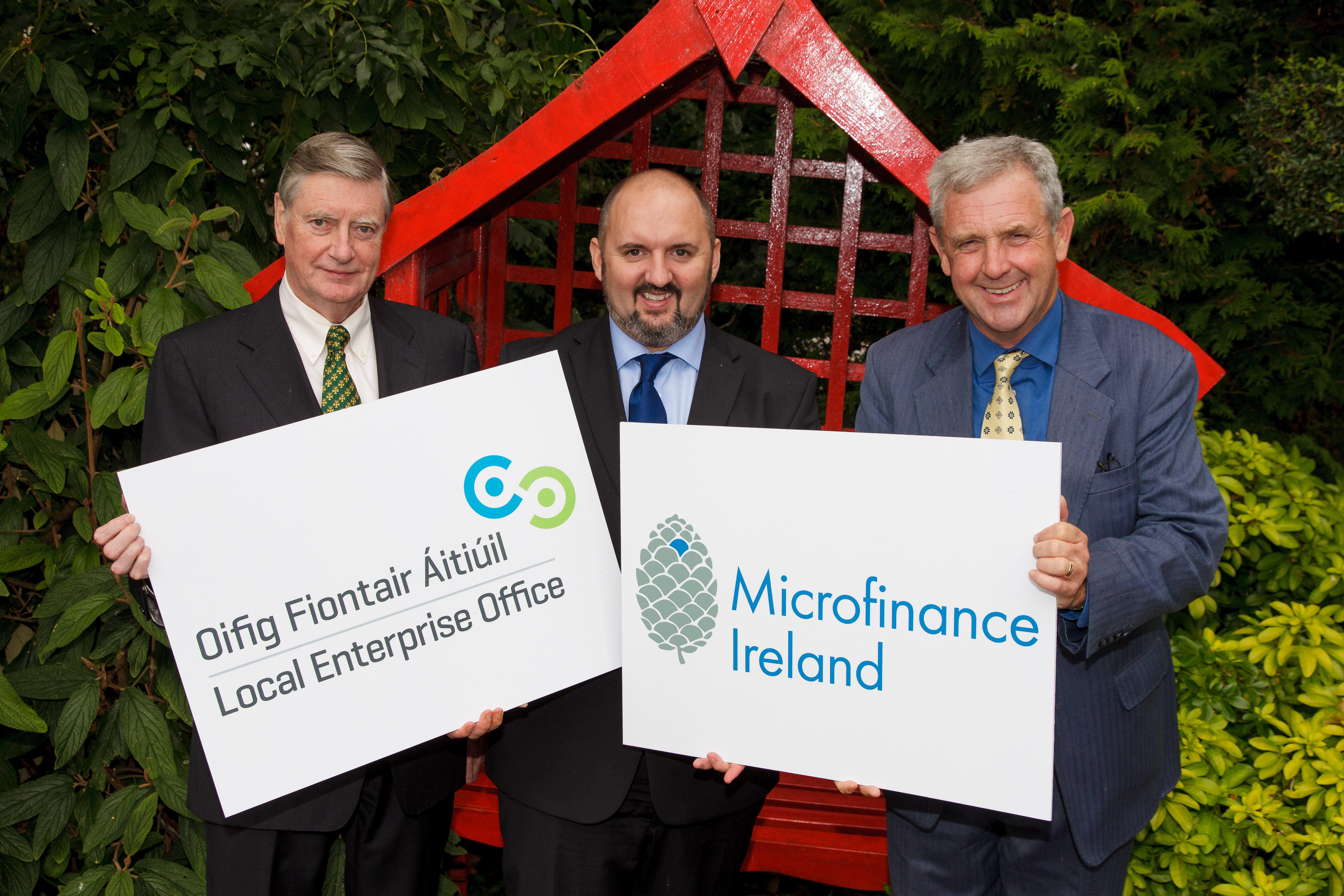
The Minister for Jobs, Enterprise, and Innovation, Mary Mitchell O’Connor (above), is hoping to secure a further €10m of exchequer funding to keep Microfinance Ireland afloat beyond 2017.

MICROFINANCE IRELAND IS THE STATE-BACKED PROJECT AIMED AT FUNDING SMALL BUSINESSES.

Ms Mitchell O’Connor also said the €11.7m lent by Microfinance Ireland has helped sustain some 2,000 jobs.
In a written Dáil reply to Fianna Fáil’s Niall Collins, she described the output by Microfinance Ireland as “a very satisfactory performance in a difficult market at a very difficult time”.
Ms Mitchell O’Connor said that, since its inception in October 2012, Microfinance Ireland has approved 867 loans out of 1,826 loan applications received.
Some 591 applications were declined with 317 being withdrawn.
Microfinance Ireland was established by the Department of Jobs, Enterprise, and Innovation under the Action Plan for Jobs.
Ms Mitchell O’Connor said: “To secure the future development of Microfinance Ireland my officials are in negotiations regarding securing a tranche of €10m additional exchequer funding required to keep the fund operating as a going concern beyond 2017 in line with company law requirements.
“This equity injection is combined with additional bank funding of €15m.”
Last year, the State-backed, not-for-profit lender had a record 50% rise in the number of loan applications.
Approvals for start-ups, sole traders and small businesses reached an all-time high in 2015 with the lender approving €5.4m in funding to 357 businesses across every county in Ireland, supporting the creation and maintenance of 930 jobs in the process.
A total of 752 businesses applied for loans in 2015, compared with 508 for 2014, an increase of 48%. The average loan size approved during 2015 was €15,190.
Figures provided by Ms Mitchell O’Connor, show the highest number of loan approvals to the end of March this year totalled 196 with the number of loan approvals in Cork at 70, Limerick and Meath at 42, Galway at 38, Tipperary at 33, Wexford at 33, Cavan at 32, Kildare at 34, Mayo at 33, Wicklow at 30, Waterford at 28, and Kerry at 23.
The fund offers business loans of €2,000 to €25,000 to companies with fewer than 10 employees, and with a turnover of less than €2m.
According Microfinance Ireland data on the gender breakdown of those making loan applications, 76% were from males and 24% from females.

Cats can understand the laws of physics, researchers now claim?


USING A PLASTIC CONTAINER, SOME MAGNETS, THREE IRON BALLS, TWO VIDEO CAMERAS AND 30 CATS, RESEARCHERS FROM KYOTO UNIVERSITY HAVE CONCLUDED THAT FELINES UNDERSTAND THE LAWS OF PHYSICS.

The research paper titled There’s no ball without noise: cats’ prediction of an object from noise was published in Animal Cognition.
Twenty-two cats from Japanese cat cafes and eight domestic cats were carried off to separate rooms to take part in an experiment which supposedly tested their abilities to understand gravity.
The researchers rattled a plastic container lined with an electromagnet. Inside was an object made from three iron balls. At the flick of a switch, the magnetic force of the magnets attracted the iron balls – restricting their movement – so the container made no noise when it was shaken.
When the researchers shook the container with the switch turned off, the iron balls rattled against the inside of the container. After the container was shaken, it was turned upside down to reveal the object inside.
The researchers proposed that the event where there was no sound and no object or a sound and an object “matched with physical laws.” They called that a congruent condition. But the events where there was no sound but the appearance of the object, or sound but no object, defied physical laws and was called the incongruent condition.
The cats were required to sit and watch each event and their reactions were filmed with video cameras.
After analyzing each video, the researchers found that the furry creatures stared longer at the container when it made a noise, as they could predict that there was an object inside. But, they also stared at the container even if the events did not make sense to them – the incongruent condition.
“Cats use a causal-logical understanding of noise or sounds to predict the appearance of invisible objects,” said Saho Takagi, lead author of the study.
In the paper, the researchers claimed: “This study may be viewed as evidence for cats having a rudimentary understanding of gravity.”
For those who remain unconvinced that cats can understand physics, since they held their gaze on the container in both the congruent and incongruent condition, the researchers said: “It is not appropriate to directly compare these two conditions because the main effect of object would overshadow the effect of the expectancy violation. Thus, the absence of a difference between these two conditions does not weaken our main conclusion.”
“Expectation violation” is a theory that analyzes how individuals respond when they are faced with unexpected events. The theory was proposed in the late seventies by Judee Burgoon, professor of Communication, Family Studies and Human Development at the University of Arizona.
Unfortunately, the conclusions of this study cannot be compared with other findings since there has been “no study specifically testing knowledge of this fundamental physical rule in cats.”
The ability for cats to predict where objects are fits in with their hunting style, Takagi explained. In the future, he hopes to devise another test to examine if cats can extract information such as the size or identity of an object from the sounds they hear.    

Friday, June 3, 2016

Donie's Ireland daily news BLOG update

New Minister Harris proposes EU bulk buying of drugs to lower Ireland’s costs

HEALTH AUTHORITIES WERE CRITICISED FOR REFUSING TO FUND A ‘GAME-CHANGING’ CYSTIC FIBROSIS DRUG


PROFESSOR MICHAEL BARRY, HEAD OF THE NATIONAL CENTRE FOR PHARMAECONOMICS, SAID THE NCPE HAS A GOOD TRACK RECORD IN NEGOTIATIONS WITH DRUGS COMPANIES.

Minister for Health Simon Harris says he intends to discuss with his European colleagues in the coming weeks the potential to jointly purchase new drugs in order to reduce costs.
He was reacting to controversy over news that the Cystic Fibrosis drug Orkambi had been judged uneconomic by the National Centre for Pharmaeconomics (NCPE), the Government body which evauluates the medical and economic case for new drugs.

THE COST OF ORKAMBI IS AN ESTIMATED €158,000 A YEAR PER PATIENT.

Mr Harris said that contrary to reports, the drug had not been rejected by the HSE. “The factual position is that the National Centre for Pharmacoeconomics is not in a position to recommend at the current price.”
However, Mr Harris said, “The drug manufacturer has indicated a willingness to negotiate so the process is not over. It will continue as a priority.”
Professor Michael Barry, head of the NCPE said he was hopeful there would be a successful outcome from negotiations with drug manufacturers Vertex.
Speaking on RTÉ’s Morning Ireland he said the NCPE had a good track record in negotiations with drugs companies.
  “We don’t put a price on life, but we believe the manufacturers got the price wrong here. The price is too high, we need a five fold reduction,” he said.
Earlier, the chief executive of Cystic Fibrosis Ireland Philip Watt said he was very disappointed the “game-changing” drug had been rejected by the NCPE.
  • Cost of high-tech drugs is a bitter pill to swallow
  • Cystic fibrosis patients dismayed as Orkambi rejected
  • Cystic Fibrosis drug Orkambi rejected as not cost effective
The centre had advised that the HSE should not cover the drug under State schemes and that the price would have be lower than € 30,000 a year, per patient, to be cost-effective.
Mr Watt said Orkambi had proven to be an innovative and very effective drug and was more important in Ireland than anywhere because more than 50% of the cystic fibrosis population of 500 here would benefit from it.
He said that he did believe the drug company could significantly drop its price and he acknowledged that the drug does cost a lot but it he pointed out that it meant fewer hospital stays for cystic fibrosis patients.
The issue was raised on Thursday in the Dáil where Tánaiste Frances Fitzgerald has said the Government wished to ensure people had the medical drugs they needed.
She was replying to Fianna Fáil leader Micheál Martin who said the programme for government included the commitment of an independent patient advocacy service.
There was also a commitment to providing “appropriate patient care pathways,’’ he added.
Earlier, he said, Jillian McNulty, who has cystic fibrosis, had outlined on RTÉ Radio, in an articulate way, the impact the drug had on her life. She had five weeks’ supply left, he added.
It seemed to him, he said, patient advocacy was not on the high end of the agenda.
Speaking on Morning Ireland, Ms McNulty said “Orkambi means people with cystic fibrosis using it can live a normal life, or as near a normal life, as possible”.
She said the drug, which she had been taking for three years, was “without doubt” a life-saving medication and without it she may not be here.
Mr Harris said Vertex had said it would continue to make the drug available to people in Ireland who are on trials, some of whom are reaching the end of the trial period in the coming weeks.
This, he said, would allow the HSE and the drug manufacturer “space to negotiate”.
He further acknowledged that with a new generation of cancer drugs shortly to become available – many of which will be vastly expensive – the problem presented by Orkambi was likely to reoccur.
“We’re going to have to look at a new policy framework,” he said. He wanted the “voice of clinician at forefront” of decisions about drugs, saying he intended to bring proposals to government shortly
Fianna Fail’s Darragh O’Brien said he was, “bitterly disappointed” to learn the drug had been rejected.
“This drug was approved by the EU Medicines Agency some time ago and has proven to be of major benefit for cystic fibrosis suffererse,” he said.
Sinn Féin Spokesperson on Health Louise O’Reilly TD said that “deciding that a drug is too expensive to be funded, without addressing how costs can be reduced through negotiations with relevant companies and sectors is not a tough policy choice, it is a cop out”.
Mr Harris’s Fine Gael colleague Tony McLoughlin also expressed disappointment at the decision, saying price negotiations with the manufacturer “ must begin immediately”.

OECD tells Government to do more for Irish SMEs


OECD THE INTERNATIONAL THINK TANK HAS SAID THE GOVERNMENT THEY SHOULD DO MORE FOR IRISH INDIGENOUS SMES AS IT HIGHLIGHTED SMALL FIRMS HERE PAY AMONG THE HIGHEST BORROWING COSTS IN THE EUROZONE.

Small firms’ industry groups long argued foreign-owned multi- nationals are showered with tax incentives, while Irish-owned small and medium companies are relatively less well supported despite employing hundreds of thousands.
That stance it unexpectedly appears to have won the backing of the Organisation for Economic Co-operation and Development, which in its economic update published yesterday, said the Government would be best advised to re-direct its business incentives to local firms.
Government business policies “should aim to make growth sustainable and inclusive”, said the influential think tank.
“Public support to business research and development, which is skewed towards R&D tax credits, should be rebalanced towards more direct support for domestic SMEs,” it said.
The OECD will also please small firms here as it highlights the high costs of their business loans, which it puts down to the still-high levels of bad loans on the balance sheets of the Irish banks.
“Financial conditions have improved on the back of monetary easing by the ECB,” said the think tank.
“The full return to normal credit supply is, however, hindered by the persistence of non-performing bank loans.
“The lending interest rates for SMEs remain among the highest in the euro area. New lending, although accelerating, is still outpaced by debt repayment in both the non-financial corporate and household sectors,” it said.
After the economy surged by 7.8% last year, the OECD projects GDP will grow 5% this year and by 3.4% in 2017.
Those forecasts compare with the Government’s own projections for growth rates of 4.9% and 3.9% in 2016 and 2017.
The OECD warns, however, that if the UK were to vote later this month to exit the EU that in time the Irish economy would be “significantly” hit, if trade barriers were raised across the Irish Sea and sterling were to slump against the euro.
It points out that British markets account for a fifth of all Ireland’s exports of goods and services.
On the theme of spreading the fruits of the economic recovery, the OECD said the Government should “prioritise” reducing unemployment through so-called activation schemes “which would spread the benefits of increased prosperity widely across society”.
It forecasts an average jobless rate here next year of 7.6% — high compared with the rest of the eurozone.
It also gives a nod to the Central Bank’s controls over mortgage lending for having “tempered” property price increases even as “very low interest rates and housing supply shortages risk boosting prices again”.

Global financial panic influenced Anglo Irish Bank conspiracy

MCATEER AND BOWE’S ACTIONS AIMED TO BOOST BANK’S BALANCE SHEET


ANGLO IRISH BANK’S FORMER HQ ON ST STEPHEN’S GREEN IN DUBLIN.

The criminal conspiracy of which former Anglo Irish Bank figures Willie McAteer and John Bowe have been found guilty took place in late September 2008 against a backdrop of international panic in the financial services sector.
The bank was preparing its accounts for the year to the end of September, and felt it had to boost its deposits, which were becoming seriously depleted.
The court heard in detail during the trial about the problems in the international banking system and how this meant depositors were looking for safe harbours.
Anglo Irish Bank was facing difficulties: its share price had fallen sharply and the trial focused on a transaction designed to improve its year-end account for 2008, which the prosecution held amounted to a conspiracy.
Meanwhile, detailed evidence was also given that Irish bankers were getting a clear message from the financial regulator and the Central Bank that they should “put on the green jersey” and help each other get through the storm.
McAteer was at the time Anglo’s director of finance and Bowe was its head of capital markets.
Both men have now been found guilty of being party to a criminal conspiracy for their role in circular transactions whereby Anglo lent a total of €7.2 billion to Irish Life and Permanent, which in turn, via Irish Life Assurance, lent the money back to Anglo.
The net result was to boost Anglo’s balance sheet, making it look more attractive to investors.
Intention to mislead?
The State argued that this was a conspiracy intended to mislead the market and investors.
Lawyers for the Anglo accused argued that their clients believed that the deposits were real deposits and were accounted for correctly on Anglo’s balance sheet and so no fraud was carried out.
The bulk of the money flowed in transactions that took place on September 29th and September 30th, 2008, with the latter being the date on which the Irish government announced its guarantee for the deposits of six Irish banks, including Anglo.
Ironically, the announcement of the guarantee instantly made the Irish banks attractive to depositors.
Also on that day, the Central Bank supplied Anglo with €1 billion in emergency funding after the bank said it might not otherwise be able to meet its obligations.
Neither McAteer nor Bowe gave evidence during their trial. However, Bowe’s work with Anglo meant that all his telephone conversations were recorded and snatches of conversations relevant to the charges were disclosed at the trial.
Discussion of transaction?
In one conversation, on September 29th, 2008, Bowe discussed the largest of the transactions with McAteer and the bank’s then chief executive, David Drumm.
The trial also heard of voluntary statements the accused had given the Garda.Matt Cullen, senior manager at Anglo’s treasury department, gave evidence of discussing the then proposed transactions with both Drumm and McAteer, and their giving their approval.
When an official in Anglo, Tony O’Hanlon, refused to sign off on the transactions,because of their size, McAteer, the trial heard, did so in his capacity as chief risk officer.
The details of an Anglo audit committee meeting on November 18th, 2008,when the transaction was discussed, also featured in the trial.
The two men were charged in 2013 after the Garda Bureau of Fraud Investigation initiated inquiries into the transactions in March 2009.
The trial, before Judge Martin Nolan, began in January of this year and is the longest running trial in the history of the State.

Half of elderly in care in Ireland could stay at home (if the services were available)

     hiqa
Policy officer with Age Action, Dr Marita O’Brien middle picture above>

AS MUCH AS 50% OF OLDER PEOPLE LIVING IN IRISH NURSING HOMES COULD LIVE AT HOME, IF THE APPROPRIATE SERVICES WERE AVAILABLE?

A report published today found that community supports are disorganised, fragmented and underfunded.
Social workers estimate that half of the older people they work with in long-term residential care could live at home.
The report was launched jointly by the Irish Association of Social Workers, Age Action, the Alzheimer Society of Ireland and the School of Social Policy, Social Work and Social Justice in University College Dublin.
It includes a national survey of social workers working with older people, including people living with dementia. There are also in-depth interviews with social workers, employed in a variety of settings across the country.
One of the report’s authors, Dr Sarah Donnelly from the School of Social Policy in UCD, said home care in Ireland was in crisis.
“Acute hospitals and nursing homes are being prioritised over the kinds of community services that enable older people to stay home,” said Dr Donnelly.
Policy officer with Age Action, Dr Marita O’Brien, said: “It has been government policy since the 1960s to support older people to stay at home as long as possible, but this simply is not happening.”
Dr O’Brien said people had a right to a nursing home bed, and it was time they had a right to stay at home.
Advocacy officer with the Alzheimer Society of Ireland, Dr Emer Begley, said geography, not need was deciding who got home help.
Community care services should be reformed and resourced, the report urges.
It also calls on the Government to establish a fair and equitable system of allocating care and support services that is underpinned by legislation.

New evidence sheds more light on the origins of man’s best friend

    
Two separate populations of wolves thousands of miles apart may have befriended humans and given rise to the domestic dog.
New evidence suggests that the first domestic dogs appeared on opposite sides of the Eurasian continent more than 12,000 years ago.
Later, the eastern dogs dispersed with migrating humans and bred with those from the west. Today, most dogs are a mixture of these ancient and once separate descendants of wolves, scientists believe.
The origins of man’s best friend is a hotly debated topic, with experts disagreeing about where and when wolves were first domesticated.
Some have pointed to Europe and others to central Asia or China, but up until now it was thought the transformation of wolves into domestic dogs only happened once.
For the new study, a team led by scientists from Oxford University analysed DNA from 59 ancient dogs that lived between 3,000 and 14,000 years ago.
Researchers also sequenced the full genome, or genetic code, of a 4,800-old-dog from Newgrange, Ireland, using one of the animal’s bones.
Comparing the data with DNA signatures from more than 2,500 previously studied modern dogs, as well as archaeological evidence, revealed a genetic split between modern dog populations from eastern Asia and Europe.
The findings are reported in the current issue of the journal Science.
Professor Greger Larson, from Oxford University, said: “Animal domestication is a rare thing and a lot of evidence is required to overturn the assumption that it happened just once in any species.
“Our ancient DNA evidence, combined with the archaeological record of early dogs, suggests that we need to reconsider the number of times dogs were domesticated independently. Maybe the reason there hasn’t yet been a consensus about where dogs were domesticated is because everyone has been a little bit right.”
Colleague Professor Dan Bradley, from Trinity College Dublin, who led analysis of the Newgrange bone, said: “The Newgrange dog bone had the best preserved ancient DNA we have ever encountered, giving us prehistoric genome of rare high quality.
“It is not just a postcard from the past, rather a full package special delivery.”
Co-author Professor Keith Dobney, who co-directs the dog domestication project at the University of Liverpool, said a “new coherent story” of the origins of the domestic dog was now beginning to emerge.
He added: “With so much new and exciting data to come, we will finally be able to uncover the true history of man’s best friend.”