Pages

Showing posts with label Doomsday clock. Show all posts

Wednesday, January 27, 2016

Donie's Ireland daily news BLOG

Central Bank says money for tax cuts should go towards deficit

REGULATOR FORECASTS GROWTH FOR 2016 OF ALMOST 5% BUT NOTES GROWING UNCERTAINTY OVER CHINA AND MARKET TURBULENCE


   
Prof Philip Lane the new Irish Central Bank Governor.

THE CENTRAL BANK SAID IRELAND’S STRONGER GROWTH PERFORMANCE HAS BEEN UNDERPINNED BY BOTH THE STABILISING INFLUENCE OF THE POLICY AND MACROECONOMIC ADJUSTMENTS WHICH HAVE BEEN UNDERTAKEN.

The Central Bank has called on political parties and the Irish people to consider using money reserved for tax cuts and new spending to accelerate the reduction of the budget deficit and national debt.
Although the bank has forecast continued strong economic growth this year and next, its says growing uncertainty over the slowdown in China and financial market turbulence present downside risks to the outlook.
“I would hope that the next government take seriously that you have to reconcile not just public spending needs but also get back to safe levels of public debt,” the bank’s new governor, Prof Philip Lane, told an Oireachtas committee on Tuesday.
“In terms of governments and manifestos and so on, it’s a good question to ask ‘what if you’re wrong’… excessive forecasting on the best guesses is incomplete. You need to have a risk plan as well.”
At the same time, Prof Lane recognised it was very difficult for governments to says to people they could spend more or cut tax but had to reduce debt. He also accepted this raised questions around the level of public investment.
A general election?
The bank’s intervention comes only days out from the formal start of a general election campaign in which most parties are setting out major plans to cut tax and increase expenditure.
Government calculations suggest the next administration could deploy as much as €12 billion in “fiscal space” over five years and still comply with domestic and European fiscal rules. However, the bank says, the next administration should do more than the minimum required to comply with the rules.
Arguing that strong growth presented scope to strengthen fiscal resilience, Central Bank chief economist Gabriel Fagan said earlier on Tuesday that a more ambitious and faster pace of deficit and debt reduction was possible.
“This opportunity needs to be taken,” Mr Fagan said, adding that action was required to mitigate the risk of future boom/bust cycles and to ensure stable and sustainable medium term growth.”
“We’ree saying that serious consideration should be given to using this [fiscal] space, given the serious problems, the vulnerabilities that the economy faces. It’s a qualitative message.”
Mr Fagan said, however, that he was not referring to specific tax or spending proposals. “What we’re saying [is that] there are vulnerabilities remaining, there are risks, and one should be prudent in terms of using that fiscal space.”
Asked whether that was a message to all parties, he said it was a message not just to parties but to voters and wider society.
“The essential idea is that we’ve done a lot of progress. Tremendous achievements have been made on the fiscal side but be careful, there are risks out there, there are vulnerabilities there, so be cautious and be prudent.”

Insurance sector rules out Irish blanket flood cover

GROUP, WHICH MET MINISTERS RECENTLY, SAYS INDUSTRY HAS ‘A LIMITED RISK APPETITE’

  
Cars in the flooded car park at Seapoint, Salthill, Galway, following the gales and high tides on Tuesday morning.
The insurance sector has said it is impossible to provide blanket national flood insurance but stressed fixed defence schemes will greatly enhance the likelihood of property owners securing cover.
Outlining its position following recent talks with the Government regarding property owners who remain unable to get insurance policies, the industry said Ireland has a relatively high level of cover but that crucial obstacles remain.
On the central issue of demountable defences – those which require a degree of manual intervention to work as opposed to fixed systems that work automatically – it said cover would remain a problem.
“Should a failure occur [in demountable systems] and flooding result as a consequence, the financial impact for insurers would most likely be very significant,” the statement from Insurance Ireland, the representative body, said.
“Because of this potential exposure and concerns about the effectiveness of demountable flood defences, insurers have a limited risk appetite for providing flood insurance in these areas.”
Defences
These concerns are clearly reflected in latest statistics: 89%t of policies in areas with fixed flood defences include flood cover compared to 78% of policies in areas with demountable defences.
The figures relate to 16 flood defence schemes on which the Office of Public Works (OPW) has provided data. The figure on fixed defences represents an increase from 86% last November, while demountable related polices have climbed from 67% in the same timeframe.
“Taking all 16 flood defence schemes (fixed and demountable together) we found that 83% of policies in the areas benefiting from flood defences include flood cover (5,749 of 6,914 policies). This is up from 67% in November,” it said.
The insurance sector clearly favours fixed systems but even then total cover is unlikely in an industry underpinned by commercial interests.
“It is not possible to achieve a 100% rate of flood insurance cover nationally for the reasons outlined,” the statement concluded.
While frustration remains in many parts of Ireland dogged by flooding and unable to secure insurance, the sector has said its rates of cover compare favourably to other countries.
Responses from insurers representing 94% of the market found that flood cover is extended to 98% of property insurance policies.
That compares, according to Insurance Ireland, with penetration rates of less than 50% in numerous countries including Austria, the Czech Republic,Finland, Germany, Greece, Italy, Poland and Slovakia.
Essential
“Insurance Ireland has always insisted that the fixed defence approach is essential when building flood defences and our findings continue to show that flood coverage rates are at their highest where fixed defences are built.”
The problems with alternative demountable systems, it said, were manifold. They depend on early warning weather systems; they can fall foul of mechanical failure; manual operators can be absent when flooding occurs and the simple possibility of human error.
Insurance Ireland said it would engage with the Government to explore further options, citing in particular the possibility of a State-run compensation scheme for those unable to secure flood policies. It did not elaborate on its potential role in that regard, but such funds are operated in other in other countries in the event of flooding or natural disasters.
Insurance Ireland chief executive Kevin Thompson said last night many of the questions regarding policies were down to individual circumstances.

Some 12,000 arthritis patients take their campaign to Leinster House

    Colleen White (9), Finglas, who suffers from juvenile arthritis, with her mother Rachael at the launch of the Arthritis Ireland Why are we waiting? campaign. Photograph: Eric Luke /The Irish Times
Some of the 12,000 children and adults on waiting lists for arthritis treatment will gather outside Leinster House today to ask election candidates to back their call for more staffing resources.
Arthritis Ireland’s campaign, called Why Are We Waiting?, comes against a backdrop of 1,400 adults and 81 children waiting over a year to access a rheumatology consultant, often amid crippling pain.
The charity said there are 152 children waiting more than nine months to see a consultant paediatric rheumatologist in Our Lady’s Children’s Hospital in Crumlin.
Best practice guidelines recommend that children be seen within six weeks of the onset of symptoms. Failure to diagnose juvenile arthritis at its onset can lead to permanent joint damage for a child.
The charity will call on general election candidates to support its plan to reduce waiting lists.
The plan calls for the next government to commit, within its first 100 days, to the appointment of 100 people, including six consultant rheumatologists. Ireland currently has 33.5 specialist consultants, well below the World Health Organisation standard of 45 for the size of our population. Arthritis Ireland is also calling for 29 clinical nurse specialists, 12 advanced nurse practitioners, 21 physiotherapists, and 32 occupational therapists.
Amie Forde, a 17-year-old Leaving Certificate student from Cork who has arthritis and is on several waiting lists for treatment, said there were times when her pain got so bad that she had to be carried around her house “and spoon-fed by someone else because my body couldn’t carry me and my hands couldn’t take holding a spoon or a fork”.
Amie said: “I’ve had arthritis since I was two years old. Life has been a bit of a battle for me. I have been in a lot of pain and haven’t had a childhood like normal people. It’s been a long road of appointments and waiting lists for nothing to be done.”
Her chronic condition means she has missed a lot of school and, with her Leaving Certificate on the cards, she has started home tuition.
“I only have to go as far as the kitchen. It’s helped my health a lot but on the social side you lose a lot of friends just from not being at school.”
Every week, Amie attends physiotherapy, occupational therapy, and hydrotherapy at Cork University Hospital. She said the hydro pool “helps a lot, but I was a long time on a waiting list to get the treatment. It took nearly two years.”
Amie is on three waiting lists for specialists to treat various symptoms of her arthritis and believes it could be “anything up to two years” before she is seen.
While seven rheumatology consultant posts have been created nationally in recent times, leading to a 40% increase in activity levels in rheumatology outpatients clinics, Health Minister Leo Varadkar said “a lot more” will need to be appointed to address a backlog.
Arthritis Ireland estimates the 100 additional posts would cost about €7m yearly. “At the moment, arthritis and other musculo-skeletal conditions cost the State more than €700m in lost days at work alone,” a spokesperson said.

Survey finds 95% of Irish homes for rent too high for rent allowance

MORE THAN 13,000 SOCIAL HOUSING UNITS DELIVERED, WITH TOTAL OF 35,000 DUE BY 2020


THE SURVEY LOOKED AT ALL PROPERTIES LISTED FOR RENT ON DAFT.IE IN 11 LOCATIONS. 

More than 13,000 social houses were delivered last year, according to a new Government report to be published on Tuesday.
Minister for the Environment Alan Kelly will bring a memo to Cabinet outlining the progress made in the first year of the Social Housing Strategy. As part of the Government plan, 35,000 houses are to be built between 2015 and 2020, at a cost of €3.8 billion to the State.
He will also announce €180 million for the construction of 1,000 new units of social housing.
Meanwhile, a survey published on Tuesday finds almost all homes for rent across Ireland are too expensive for people on rent allowance. The Simon Communities report found 95 per cent of all properties surveyed were “beyond the reach” of those in receipt of housing supports.
The survey, of all properties listed for rent on Daft.ie in 11 locations, was conducted at the end of November. Of the 726 properties surveyed, just 34, or 4.5 per cent, were within rent supplement caps.

Sea level rise from ocean warming underestimated, scientists say

Thermal expansion of the oceans as they warm is likely to be twice as large as previously thought, according to German researchers.
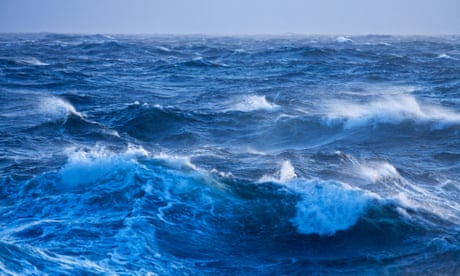
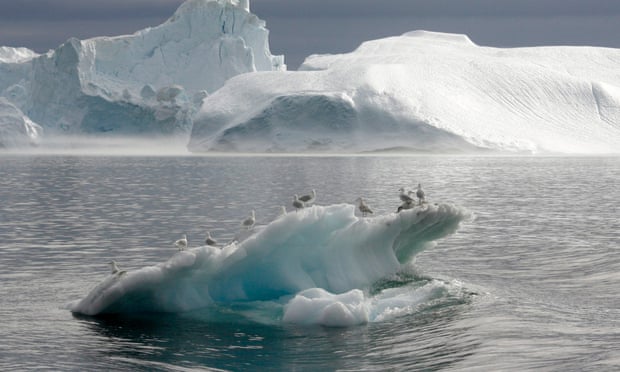
  

SEA LEVELS CAN RISE DUE TO MELTING ICE AND THE EXPANSION OF WATER AS IT WARMS.

The amount of sea level rise that comes from the oceans warming and expanding has been underestimated, and could be about twice as much as previously calculated, German researchers have said.
The findings in the Proceedings of the National Academy of Sciences, a peer-reviewed US journal, suggest that increasingly severe storm surges could be anticipated as a result.
World’s oceans warming at increasingly faster rate, new study finds
Sea level can mount due to two factors – melting ice and the thermal expansion of water as it warms.
Until now, researchers have believed the oceans rose between 0.7 to 1mm per year due to thermal expansion.
But a fresh look at the latest satellite data from 2002 to 2014 shows the seas are expanding about 1.4mm a year, said the study.
“To date, we have underestimated how much the heat-related expansion of the water mass in the oceans contributes to a global rise in sea level,” said co-author Jurgen Kusche, a professor at the University of Bonn.
The overall sea level rise rate is about 2.74mm per year, combining both thermal expansion and melting ice.
Sea level rise was also found to vary substantially from place to place, with the rate around the Philippines “five times the global rate.”
Meanwhile, sea level on the US west coast is largely stable because there is hardly any ocean warming in that area, said the findings.

The doomsday clock remains at three minutes to midnight

IRAN NUCLEAR DEAL AND CLIMATE CHANGE ACTION PROMPTS SCIENTISTS TO KEEP IT UNCHANGED


LAWRENCE KRAUSS, FROM ARIZONA STATE UNIVERSITY, HELPS UNVEIL THE DOOMSDAY CLOCK AFTER THE ANNOUNCEMENT THAT IT WOULD REMAIN AT THREE MINUTES TO MIDNIGHT, IN WASHINGTON, DC,

The Iran nuclear deal and movement on climate change have prompted the scientists who maintain the Doomsday Clock, a symbolic countdown to global catastrophe, to keep it unchanged at three minutes to midnight.
The Doomsday Clock, devised by the Chicago-based Bulletin of the Atomic Scientists, is widely recognised as an indicator of the world’s vulnerability to catastrophe.
Positive developments in 2015 include the international accord that limited Iran’s nuclear programme, and the agreement between almost 200 countries in Paris on a process to tackle climate change, the Bulletin said in a statement.
The accords “are major diplomatic achievements, but they constitute only small bright spots in a darker world situation full of potential for catastrophe”, the Bulletin said.
The Doomsday Clock’s hands “are the closest they’ve been to catastrophe since the early days of above-ground hydrogen bomb testing” in the 1950s.
Areas of concern include heightened tensions between the US and Russia, continued conflict in Ukraine and Syria, and tensions over the South ChinaSea, the Bulletin said.
Russian and American nuclear weapons modernisation programmes and growing Chinese, Pakistani, Indian and North Korean atomic programmes are also said to be cause for concern.
Although the Paris agreement was a positive step, 2015 was the warmest year on record.
The voluntary pledges to limit greenhouse gas emissions are not enough to halt drastic climate change, the Bulletin said.
History
The Bulletin is a periodical founded in 1945 by University of Chicago scientists who helped develop the first atomic weapons in the Manhattan Project.
The Doomsday Clock was moved to three minutes to midnight last year from five minutes because of fears over a nuclear arms race and climate change.
The Bulletin’s science and security board makes the decision on the clock’s hands yearly in consultation with its board of sponsors, which includes 16 Nobel laureates.

Tuesday, January 27, 2015

Donie's Ireland daily news BLOG update

Irish Minister Noonan says debt conference on Greece is not necessary


Minister insists direct recapitalisation for funding banks is still on table. 

Minister for Finance Michael Noonan: “The issue for Greece is not debt cancellation, it’s the affordability of the debt – that means the interest rate and the maturities.”
Minister for Finance Michael Noonan has said that a proposed European debt conference is “not necessary yet” as he gave his first response to yesterday’s Greek elections which saw radical left party Syriza top the polls.
Asked about his comments earlier this month in which he indicated his broad support for a debt conference, Minister for Finance pointed out that all bailout negotiations so far had been conducted within the context of the eurogroup.
“I don’t think it’s necessary yet. Cyprus and Greece and Portugal and Ireland and Spain have all been resolved by negotiations at euro group and ecofin and there’s no suggestion that that model won’t succeed again. I have no doubt even without going to the meeting, that there’s sympathy for the Greek people and that there would be a disposition among colleagues to be helpful .”
Euro zone finance ministers are meeting today for a eurogroup meeting at which the elections in Greece will dominate discussions. Greece will be represented today by the outgoing Greek finance minister Gikas Hardouvelis.
Speaking in Brussels, Minister Noonan said that Ireland had itself contributed € 350 million to the Greek bailout , hence there was “€ 350 million of Ireland’s taxpayers’ money at play.”
Asked if a Greek debt restructuring would have implications for Ireland, Minister Noonan said that Ireland had already significantly restructured its debt, through various mechanisms such as extension of maturities, and the restructuring of IMF loans.
“The issue for Greece is not debt cancellation, it’s the affordability of the debt – that means the interest rate and the maturities,” he said pointing out that restructuring is more difficult when yields are running at close to 9 per cent as in the case of Greece, rather than 1.7 per cent in the case of Ireland. “Our debt is in a very good position now – it’s affordable and it’s repayable.”
He said Ireland’s quest for retroactive direct recapitalisation from the ESM fund for AIB and Bank of Ireland was still on the table, even though the government is looking into options for selling AIB.
“There are alternatives that might suit the taxpayer better, like selling the shares on the market. Direct recap always involved selling bank shares to the European ESM but a better alternative may be to sell on the market and that’s why we have retained financial advisors to advise us on which way to go , but both options are still there. “
He said that it was important that the newly elected government in Greece was respected fully. “Everybody has to respect that choice, and everybody has to treat them like equals in this forum here.”
“I have no doubt even without going to the meeting, that there’s sympathy for the Greek people and that there would be a disposition among colleagues to be helpful ,” he said. He pointed out that Greek people don’t get any welfare payments after being unemployed for 12 months, the minimum wage and unemployment assistance is half of what it is in Ireland, and that the country has an unemployment rate of 25 per cent.
“There’s a general appreciation that it’s difficult for a lot of people in Greece and there’s not a great surprise that that would manifest itself in the polling booth.”

Is the Irish Credit Union going to provide mortgages?


The Irish League of Credit Unions is looking into whether providing mortgages for members is feasible.

The league established a group last September to investigate the idea, which would be a radical departure from their core business.
In Ireland, the average credit union loan is around €6,000.
However, sources within the movement feel that larger institutions could handle the loans on a small scale and would benefit from diversifying their loan books. It is, they say “very, very early days”.
A spokesperson for the ILCU said that the league is looking into expanding the range of loans it offers.
“In September 2014, the League Board established a “Home Loan Group” to look into how Credit Unions could provide home loans to their members as a result of many credit unions being asked for additional product of this nature and as a way to diversify the existing credit union products.
This group, with the help of an external consultant have been conducting a feasibility study to scope out how home loans might be made available by the credit union movement to credit union members.
“A first draft of this initial scoping report is due to be considered by the group next week. It is intended that the report (when finalised) will be presented to the League Board by the Home Loan Group. A decision will then have to be made on whether there is a feasible project to explore further with credit unions & with the Central Bank”.
Sources say that if successful, the move can address demand, give additional choice and improve cash flow for credit unions.he

The regular over-the-counter Anticholinergic drugs like benadryl

may increase your risk of Alzheimer’s


A new study confirms the link between everyday drugs, those medications with anticholinergic effects, and dementia.

Anticholinergic medications span a range of common drugs and include antihistamines, sleep aids, antidepressants, cardiovascular meds, gastrointestinal drugs (for diarrhea, incontinence, diverticulitis, and ulcers), and muscle relaxants. Now, a new study confirms the link between these everyday medications and dementia. Taking anticholinergic drugs at high doses or for a long time may significantly increase your risk for developing Alzheimer’s disease and other dementias, say researchers from University of Washington School of Pharmacy.
“If providers need to prescribe a medication with anticholinergic effects because it is the best therapy for their patient, they should use the lowest effective dose, monitor the therapy regularly to ensure it’s working, and stop the therapy if it’s ineffective,” Dr. Shelly Gray, a professor and director of the geriatric pharmacy program at the UW School of Pharmacy said in a release.
On average, older people take four or five prescription drugs and two over-the-counter drugs each day. Clearly, drugs are an important part of medical care for older people; however, older people are more sensitive to the effects of many pills, including anticholinergics, which block the neurotransmitter acetylcholine and so effect the nervous system. While the drugs are too numerous to mention, those with anticholinergic effects — and these effects are sometimes dependent on the dose — include Benadryl, Sominex, Xanax, Ativan, Valium, Luminal, Skelaxin, Limbitrol, and Tavist.
For the current study, the researchers investigated a previously reported link between anticholinergics, both prescription strength and over-the-counter, and dementia by employing more rigorous methods than in the past. Specifically, the researchers conducted a longer follow-up of more than seven years and more accurate use assessment via pharmacy records, which included nonprescription choices. The team tracked nearly 3,500 seniors participating in a long-running study, the Adult Changes in Thought (ACT), a joint project of UW and the National Institute on Aging.
The most commonly used medications in the study, the researchers discovered, were tricyclic antidepressants like doxepin (Sinequan), antihistamines like chlorpheniramine (Chlor-Trimeton), and antimuscarinics for bladder control like oxybutynin (Ditropan). People taking at least 10 mg/day of doxepin, 4 mg/day of diphenhydramine, or 5 mg/day of oxybutynin for more than three years, the researchers estimated, would be at greater risk for developing dementia. Importantly, substitutes are available for some of these drugs.
While this study is the first to show a dose response — meaning, the more you use anticholinergic medications the greater your risk of developing Alzheimer’s — it also is the first to suggest this higher risk may persist, and may not be reversible, even years after you stop taking these drugs. “Older adults should be aware that many medications — including some available without a prescription, such as over-the-counter sleep aids — have strong anticholinergic effects,” Gray said.

A heart-breaking message from four motherless children to Leo Varadkar


Seán Rowlette and Michael Kivlehan had meeting with Minister about safety of maternity services.

Seán Rowlette said that he told his children where he was going, they sat down and wrote a letter to Minister Leo Varadkar.
“We miss our mum so much every day.”
This was the heart-breaking message from four Co Sligo children asked their father to deliver to Minister for HealthLeo Varadkar.
Seán Rowlette and Michael Kivlehan had a “productive” two-hour meeting with Mr Varadkar where they sought assurances about the safety of maternity services. Both men lost their wives following childbirth at Sligo Regional Hospital and said they wanted to ensure that no other family endured the same pain.
Mr Rowlette from Dromore West, Co Sligo brought the same message in a hand-written note from his four children.
Addressing their letter to Minister Leo Varadkar, Leanne (9) Abbie (7) Joseph (4) and sally (2) wrote: “We miss our mum so much every day. Can you please make sure this can never happen to any other mum again.

“And to make our hospitals safe”.

Mr Rowlette’s wife Sally (36) died in the Sligo hospital in February 2013, the day after her fourth child was born there.
Dhara Kivlehan (28) from Dromahair, Co Leitrim died in a Belfast hospital in September 2010, nine days after her son Dior was born in Sligo hospital. The inquest into her death was delayed for four years.
Speaking after the meeting the men said they were pleased with a number of assurances given by the Minister.
Mr Varadkar who described the meeting as “very useful” said afterwards that a new maternity strategy was being developed in 2015 which “will map maternity services for the next few decades”.
“It was a very good meeting. He listened to everything we had to say,” said Mr Rowlette.
The men’s solicitor Roger Murray from Callan Tansey said they were particularly pleased to get an undertaking from the Minister about the availability of ICU beds in specialist hospitals in the case of emergencies. At the inquest into Dhara Kivlehan’s death it emerged that there was a delay in transferring her from Sligo because of the non-availability of such beds.
“The Minister was also very clear on doctors’ duty of candour to relatives,” said Mr Murray. Both Mr Rowlette and Mr Kivlehan had criticised the attitude of some clinical staff to them in Sligo.
Mr Murray said the Minister had acknowledged the importance of making relevant doctors appear at inquests .
Mr Rowlette said Mr Varadkar had also addressed the need to have automatic inquests if a woman dies in child birth. “We had to fight to ensure there was an inquest,” he pointed out.
He said that before he left his home at 7.30am, his children had asked him where he was going. When he told them, they sat down and wrote a letter to Mr Varadkar. “The Minister was sympathetic. I showed him First Holy Communion photos taken at Sally’s grave.”
In a statement, the Minister said that while maternity services in Ireland were on a par with the rest of the western world, there had been a number of serious cases of medical misadventure in recent years, resulting in maternal and neonatal deaths “that might have been avoided”.
He added: “This gives me concern as Minister for Health.”

The smallest and most endangered sea turtle found in Rossnowlagh beach in Co Donegal


Foot-long marine turtle did not survive landing on rocks of Rossnowlagh beach. 

The Kemp’s Ridley turtle has been described as the world’s smallest and most endangered sea turtle.
Coastwatch Ireland has confirmed identification of a tiny reptile washed up in Donegal as a Kemp’s Ridley – described by National Geographic as the world’s smallest and most endangered sea turtle.
The foot-long marine turtle with an unusual beak did not survive its landing on rocks of Rossnowlagh beach, and was found by Coastwatch volunteer Aoife Flynn on Christmas Day.
As all appropriate laboratories were closed, she photographed the reptile from all angles and put it in her deep freeze until an autopsy could be carried out.
It was initially thought to resemble a rare hawk’s bill turtle, but an autopsy conducted in recent days by a Letterkenny vet and Coastwatch regional co-ordinator Dr Trish Murphyidentified it as a Kemp’s Ridley, which is found mainly in the Gulf of Mexico, but can migrate as far north as Nova Scotia.
Just over 40 of these have been recorded in Irish waters since records dating to 1748, and only 1,000 breeding Kemp’s Ridley females are believed to exist worldwide, due to over-exploitation of its eggs by man in past centuries.
They are known for their unusual “nesting processions”, called “arribadas”, where the females colonise entire sections of beaches to lay their eggs – having swum thousands of miles in some cases to return to their own birthplace.
As National Geographic described it, the struggle to sea by tiny hatchlings is “even more riveting”.
“Beset by predators, hatchlings make this journey at night, breaking out of their shells using their caruncle, a single temporary tooth grown just for this purpose,”the magazine says.
Their nesting grounds are subject to protective legislation. Fishing vessels have also used “turtle excluder” devices in their gear, but populations haven’t recovered.
Their life span is about 50 years if they are lucky, during which they growing to all of 2 feet or 65 cms in shell length, weighing up to 45 kilos.Favourite food is crabs and jellyfish, while they also have a penchant for munching seaweed.
Rossnowlagh, a well known surfer’s beach in Donegal bay, is not far from Murvagh where quantities of jellyfish were recorded for Coastwatch by Joe Gatins last summer and autumn.

Scientists have moved Doomsday clock a bit closer to midnight?

  
The doomsday Clock has been moved closer to midnight. The atomic scientists have shifted the clock two minutes up and now it is only three minutes away from midnight, which symbolizes the Doomsday. The readjustment has been made on 22<sup>nd</sup> January and highlights the climatic change that needs to be controlled by capping fossil fuel emissions.
The advisory board stated “World leaders have failed to act with the speed or on the scale required. In 2015, unchecked climate change, global nuclear weapons modernizations, and outsized nuclear weapons arsenals pose extraordinary and undeniable threats.”
Kennette Benedict, Bulletin of the Atomic Scientist executive director, elaborated “Today, unchecked climate change and a nuclear arms race resulting from modernization of huge arsenal pose extraordinary and undeniable threats to the continued existence of humanity.” He also mentioned that the efforts of the world leaders have not been enough to protect people from potential catastrophe.
With the readjustment of Doomsday Clock the scientists are reminding the authorities to put more efforts to reduce pollution as well as overuse of fossil fuel. They also urge to end the development of nuclear weapons, which is further endangering the planet. Benedict said “We are not saying it is too late to take action but the window for action is closing rapidly.
The world needs to be awakened from its lethargy and start making changes.” The constant climate change can be stopped only by achieving this and limiting greenhouse gas emissions. According to Richard Somerville, a member of the Science and Security Board, Bulletin of the Atomic Scientists, “Efforts at reducing global of heat-trapping gases have so far been entirely insufficient.”