Pages

Showing posts with label arthritis. Show all posts

Wednesday, January 27, 2016

Donie's Ireland daily news BLOG

Central Bank says money for tax cuts should go towards deficit

REGULATOR FORECASTS GROWTH FOR 2016 OF ALMOST 5% BUT NOTES GROWING UNCERTAINTY OVER CHINA AND MARKET TURBULENCE


   
Prof Philip Lane the new Irish Central Bank Governor.

THE CENTRAL BANK SAID IRELAND’S STRONGER GROWTH PERFORMANCE HAS BEEN UNDERPINNED BY BOTH THE STABILISING INFLUENCE OF THE POLICY AND MACROECONOMIC ADJUSTMENTS WHICH HAVE BEEN UNDERTAKEN.

The Central Bank has called on political parties and the Irish people to consider using money reserved for tax cuts and new spending to accelerate the reduction of the budget deficit and national debt.
Although the bank has forecast continued strong economic growth this year and next, its says growing uncertainty over the slowdown in China and financial market turbulence present downside risks to the outlook.
“I would hope that the next government take seriously that you have to reconcile not just public spending needs but also get back to safe levels of public debt,” the bank’s new governor, Prof Philip Lane, told an Oireachtas committee on Tuesday.
“In terms of governments and manifestos and so on, it’s a good question to ask ‘what if you’re wrong’… excessive forecasting on the best guesses is incomplete. You need to have a risk plan as well.”
At the same time, Prof Lane recognised it was very difficult for governments to says to people they could spend more or cut tax but had to reduce debt. He also accepted this raised questions around the level of public investment.
A general election?
The bank’s intervention comes only days out from the formal start of a general election campaign in which most parties are setting out major plans to cut tax and increase expenditure.
Government calculations suggest the next administration could deploy as much as €12 billion in “fiscal space” over five years and still comply with domestic and European fiscal rules. However, the bank says, the next administration should do more than the minimum required to comply with the rules.
Arguing that strong growth presented scope to strengthen fiscal resilience, Central Bank chief economist Gabriel Fagan said earlier on Tuesday that a more ambitious and faster pace of deficit and debt reduction was possible.
“This opportunity needs to be taken,” Mr Fagan said, adding that action was required to mitigate the risk of future boom/bust cycles and to ensure stable and sustainable medium term growth.”
“We’ree saying that serious consideration should be given to using this [fiscal] space, given the serious problems, the vulnerabilities that the economy faces. It’s a qualitative message.”
Mr Fagan said, however, that he was not referring to specific tax or spending proposals. “What we’re saying [is that] there are vulnerabilities remaining, there are risks, and one should be prudent in terms of using that fiscal space.”
Asked whether that was a message to all parties, he said it was a message not just to parties but to voters and wider society.
“The essential idea is that we’ve done a lot of progress. Tremendous achievements have been made on the fiscal side but be careful, there are risks out there, there are vulnerabilities there, so be cautious and be prudent.”

Insurance sector rules out Irish blanket flood cover

GROUP, WHICH MET MINISTERS RECENTLY, SAYS INDUSTRY HAS ‘A LIMITED RISK APPETITE’

  
Cars in the flooded car park at Seapoint, Salthill, Galway, following the gales and high tides on Tuesday morning.
The insurance sector has said it is impossible to provide blanket national flood insurance but stressed fixed defence schemes will greatly enhance the likelihood of property owners securing cover.
Outlining its position following recent talks with the Government regarding property owners who remain unable to get insurance policies, the industry said Ireland has a relatively high level of cover but that crucial obstacles remain.
On the central issue of demountable defences – those which require a degree of manual intervention to work as opposed to fixed systems that work automatically – it said cover would remain a problem.
“Should a failure occur [in demountable systems] and flooding result as a consequence, the financial impact for insurers would most likely be very significant,” the statement from Insurance Ireland, the representative body, said.
“Because of this potential exposure and concerns about the effectiveness of demountable flood defences, insurers have a limited risk appetite for providing flood insurance in these areas.”
Defences
These concerns are clearly reflected in latest statistics: 89%t of policies in areas with fixed flood defences include flood cover compared to 78% of policies in areas with demountable defences.
The figures relate to 16 flood defence schemes on which the Office of Public Works (OPW) has provided data. The figure on fixed defences represents an increase from 86% last November, while demountable related polices have climbed from 67% in the same timeframe.
“Taking all 16 flood defence schemes (fixed and demountable together) we found that 83% of policies in the areas benefiting from flood defences include flood cover (5,749 of 6,914 policies). This is up from 67% in November,” it said.
The insurance sector clearly favours fixed systems but even then total cover is unlikely in an industry underpinned by commercial interests.
“It is not possible to achieve a 100% rate of flood insurance cover nationally for the reasons outlined,” the statement concluded.
While frustration remains in many parts of Ireland dogged by flooding and unable to secure insurance, the sector has said its rates of cover compare favourably to other countries.
Responses from insurers representing 94% of the market found that flood cover is extended to 98% of property insurance policies.
That compares, according to Insurance Ireland, with penetration rates of less than 50% in numerous countries including Austria, the Czech Republic,Finland, Germany, Greece, Italy, Poland and Slovakia.
Essential
“Insurance Ireland has always insisted that the fixed defence approach is essential when building flood defences and our findings continue to show that flood coverage rates are at their highest where fixed defences are built.”
The problems with alternative demountable systems, it said, were manifold. They depend on early warning weather systems; they can fall foul of mechanical failure; manual operators can be absent when flooding occurs and the simple possibility of human error.
Insurance Ireland said it would engage with the Government to explore further options, citing in particular the possibility of a State-run compensation scheme for those unable to secure flood policies. It did not elaborate on its potential role in that regard, but such funds are operated in other in other countries in the event of flooding or natural disasters.
Insurance Ireland chief executive Kevin Thompson said last night many of the questions regarding policies were down to individual circumstances.

Some 12,000 arthritis patients take their campaign to Leinster House

    Colleen White (9), Finglas, who suffers from juvenile arthritis, with her mother Rachael at the launch of the Arthritis Ireland Why are we waiting? campaign. Photograph: Eric Luke /The Irish Times
Some of the 12,000 children and adults on waiting lists for arthritis treatment will gather outside Leinster House today to ask election candidates to back their call for more staffing resources.
Arthritis Ireland’s campaign, called Why Are We Waiting?, comes against a backdrop of 1,400 adults and 81 children waiting over a year to access a rheumatology consultant, often amid crippling pain.
The charity said there are 152 children waiting more than nine months to see a consultant paediatric rheumatologist in Our Lady’s Children’s Hospital in Crumlin.
Best practice guidelines recommend that children be seen within six weeks of the onset of symptoms. Failure to diagnose juvenile arthritis at its onset can lead to permanent joint damage for a child.
The charity will call on general election candidates to support its plan to reduce waiting lists.
The plan calls for the next government to commit, within its first 100 days, to the appointment of 100 people, including six consultant rheumatologists. Ireland currently has 33.5 specialist consultants, well below the World Health Organisation standard of 45 for the size of our population. Arthritis Ireland is also calling for 29 clinical nurse specialists, 12 advanced nurse practitioners, 21 physiotherapists, and 32 occupational therapists.
Amie Forde, a 17-year-old Leaving Certificate student from Cork who has arthritis and is on several waiting lists for treatment, said there were times when her pain got so bad that she had to be carried around her house “and spoon-fed by someone else because my body couldn’t carry me and my hands couldn’t take holding a spoon or a fork”.
Amie said: “I’ve had arthritis since I was two years old. Life has been a bit of a battle for me. I have been in a lot of pain and haven’t had a childhood like normal people. It’s been a long road of appointments and waiting lists for nothing to be done.”
Her chronic condition means she has missed a lot of school and, with her Leaving Certificate on the cards, she has started home tuition.
“I only have to go as far as the kitchen. It’s helped my health a lot but on the social side you lose a lot of friends just from not being at school.”
Every week, Amie attends physiotherapy, occupational therapy, and hydrotherapy at Cork University Hospital. She said the hydro pool “helps a lot, but I was a long time on a waiting list to get the treatment. It took nearly two years.”
Amie is on three waiting lists for specialists to treat various symptoms of her arthritis and believes it could be “anything up to two years” before she is seen.
While seven rheumatology consultant posts have been created nationally in recent times, leading to a 40% increase in activity levels in rheumatology outpatients clinics, Health Minister Leo Varadkar said “a lot more” will need to be appointed to address a backlog.
Arthritis Ireland estimates the 100 additional posts would cost about €7m yearly. “At the moment, arthritis and other musculo-skeletal conditions cost the State more than €700m in lost days at work alone,” a spokesperson said.

Survey finds 95% of Irish homes for rent too high for rent allowance

MORE THAN 13,000 SOCIAL HOUSING UNITS DELIVERED, WITH TOTAL OF 35,000 DUE BY 2020


THE SURVEY LOOKED AT ALL PROPERTIES LISTED FOR RENT ON DAFT.IE IN 11 LOCATIONS. 

More than 13,000 social houses were delivered last year, according to a new Government report to be published on Tuesday.
Minister for the Environment Alan Kelly will bring a memo to Cabinet outlining the progress made in the first year of the Social Housing Strategy. As part of the Government plan, 35,000 houses are to be built between 2015 and 2020, at a cost of €3.8 billion to the State.
He will also announce €180 million for the construction of 1,000 new units of social housing.
Meanwhile, a survey published on Tuesday finds almost all homes for rent across Ireland are too expensive for people on rent allowance. The Simon Communities report found 95 per cent of all properties surveyed were “beyond the reach” of those in receipt of housing supports.
The survey, of all properties listed for rent on Daft.ie in 11 locations, was conducted at the end of November. Of the 726 properties surveyed, just 34, or 4.5 per cent, were within rent supplement caps.

Sea level rise from ocean warming underestimated, scientists say

Thermal expansion of the oceans as they warm is likely to be twice as large as previously thought, according to German researchers.

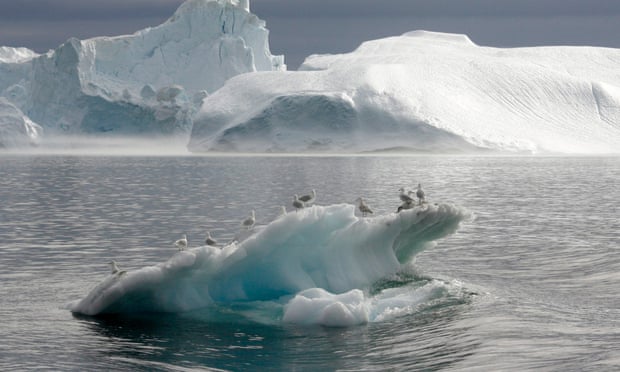
  

SEA LEVELS CAN RISE DUE TO MELTING ICE AND THE EXPANSION OF WATER AS IT WARMS.

The amount of sea level rise that comes from the oceans warming and expanding has been underestimated, and could be about twice as much as previously calculated, German researchers have said.
The findings in the Proceedings of the National Academy of Sciences, a peer-reviewed US journal, suggest that increasingly severe storm surges could be anticipated as a result.
World’s oceans warming at increasingly faster rate, new study finds
Sea level can mount due to two factors – melting ice and the thermal expansion of water as it warms.
Until now, researchers have believed the oceans rose between 0.7 to 1mm per year due to thermal expansion.
But a fresh look at the latest satellite data from 2002 to 2014 shows the seas are expanding about 1.4mm a year, said the study.
“To date, we have underestimated how much the heat-related expansion of the water mass in the oceans contributes to a global rise in sea level,” said co-author Jurgen Kusche, a professor at the University of Bonn.
The overall sea level rise rate is about 2.74mm per year, combining both thermal expansion and melting ice.
Sea level rise was also found to vary substantially from place to place, with the rate around the Philippines “five times the global rate.”
Meanwhile, sea level on the US west coast is largely stable because there is hardly any ocean warming in that area, said the findings.

The doomsday clock remains at three minutes to midnight

IRAN NUCLEAR DEAL AND CLIMATE CHANGE ACTION PROMPTS SCIENTISTS TO KEEP IT UNCHANGED


LAWRENCE KRAUSS, FROM ARIZONA STATE UNIVERSITY, HELPS UNVEIL THE DOOMSDAY CLOCK AFTER THE ANNOUNCEMENT THAT IT WOULD REMAIN AT THREE MINUTES TO MIDNIGHT, IN WASHINGTON, DC,

The Iran nuclear deal and movement on climate change have prompted the scientists who maintain the Doomsday Clock, a symbolic countdown to global catastrophe, to keep it unchanged at three minutes to midnight.
The Doomsday Clock, devised by the Chicago-based Bulletin of the Atomic Scientists, is widely recognised as an indicator of the world’s vulnerability to catastrophe.
Positive developments in 2015 include the international accord that limited Iran’s nuclear programme, and the agreement between almost 200 countries in Paris on a process to tackle climate change, the Bulletin said in a statement.
The accords “are major diplomatic achievements, but they constitute only small bright spots in a darker world situation full of potential for catastrophe”, the Bulletin said.
The Doomsday Clock’s hands “are the closest they’ve been to catastrophe since the early days of above-ground hydrogen bomb testing” in the 1950s.
Areas of concern include heightened tensions between the US and Russia, continued conflict in Ukraine and Syria, and tensions over the South ChinaSea, the Bulletin said.
Russian and American nuclear weapons modernisation programmes and growing Chinese, Pakistani, Indian and North Korean atomic programmes are also said to be cause for concern.
Although the Paris agreement was a positive step, 2015 was the warmest year on record.
The voluntary pledges to limit greenhouse gas emissions are not enough to halt drastic climate change, the Bulletin said.
History
The Bulletin is a periodical founded in 1945 by University of Chicago scientists who helped develop the first atomic weapons in the Manhattan Project.
The Doomsday Clock was moved to three minutes to midnight last year from five minutes because of fears over a nuclear arms race and climate change.
The Bulletin’s science and security board makes the decision on the clock’s hands yearly in consultation with its board of sponsors, which includes 16 Nobel laureates.

Tuesday, February 5, 2013

Donie's news Ireland BLOG Tuesday


Inter-Departmental Report says Irish State had a ‘significant’ role in Magdalene laundry referrals

  
The entrance to the former Magdalene laundry at St Mary’s Convent on Grace Park Road, Drumcondra, Dublin.
Some 10,000 women and girls entered Magdalene laundries since 1922 with more than a quarter of referrals made or facilitated by the State, a report has found.
The ’Report of the Inter-Departmental Committee to establish the facts of State involvement with the Magdalen Laundries’ was published this afternoon.
The report found “significant” State involvement in the laundries.
In the report, the committee said it found “no evidence” to support the perception that “unmarried girls” had babies in the laundries or that many of the women were prostitutes.
“The reality is much more complex” committee chairman Dr Martin McAleese writes in the introduction.
The women admitted to the laundries “have for too long felt the social stigma” of the “wholly inaccurate characterisation” of them as “fallen women”, he said. “[This is] not borne out of facts.”
In the Dáil this afternoon, Taoiseach Enda Kenny expressed his sympathies with survivors of the laundries and the families of those who have died. “To those residents who went into the Magdalene laundries from a variety of ways, 26 per cent from State involvement, I’m sorry for those people that they lived in that kind of environment,” he said. However, he stopped short of issuing a full State apology.
Reasons for Entry
The committee found a wide range of reasons women and girls entered the 10 religious run laundries operating in the State between 1922 and 1996.
Reasons include: referrals by courts, mostly for minor or petty offences; by social services; from industrial and reformatory schools; rejection by foster parents; girls orphaned or in abusive homes; women with mental or physical disabilities; poor and homeless women and girls placed by their families for reasons including socio-moral attitudes.
Women and girls referred from industrial schools and non-State agencies would not have known why they were being sent or how long they had to stay in the laundries, the report finds. Those referred by officials in criminal justice and social services would have been told reason and duration.
“None of us can begin to imagine the confusion and fear experienced by these young girls, in many cases little more than children,” Dr McAleese writes. “Not knowing why they were there, feeling abandoned, wondering whether they had done something wrong and not knowing when, if ever, they would get out to and see their families again”.
State involvement
The committee found “significant State involvement” with the laundries, Dr McAleese states.
Referrals were made or facilitated by the State made up 26.5 per cent (2,124) of the 8,025 cases for which reasons are known.
Some 8 per cent of women were referred to by the criminal justice system, either on remand, as a condition of probation or less formal referrals such as from the Garda. Some of the criminal justice referrals were based on legislation while others were ad hoc or informal. Common crimes included failure to purchase a ticket, larceny, vagrancy, assault.
Almost 8 per cent were referred from industrial schools, another almost 7 per cent from health and social services and almost 4 per cent from mother and baby homes. Some women were referred to laundries by the health and social services because it was cheaper than State-run facilities, the report said.
The report found direct State involvement in: routes of entry, workplace regulations and inspections, funding and financial assistance to laundries, routes of exit, death registrations.
The committee found the laundries were as workplaces subject to the Factories Acts and inspected by the State to the same extent as commercial laundries. The records show the laundries were generally compliant but standards are not equivalent to current workplaces.
Conditions in the laundries
The girls found themselves alone in a “harsh and physically demanding work environment”, Dr McAleese writes. The laundries were “lonely and frightening” places for many of the women.
The committee does not make findings on treatment of women because of the small sample of women available to share their experiences. However, the women who shared their experiences made no sexual abuse allegations against nuns.
Most women described the atmosphere as “cold” with a “rigid and uncompromising regime of physically demanding work and prayer” with many instances of “verbal censure”. Most women spoke of hurt due to the “loss of freedom”, the “lack of information on when they could leave” and denial of contact with family.
The former industrial school residents made a “clear distinction” between schools and laundries. They said the ill-treatment and abuse prevalent in the school was not experienced in the laundries.
The religious orders say protection of privacy was they reason some women were given a house or class name instead of heir birth name. However, the committee says many of the women “felt as though their identity was being erased”.
Six in 10 women spent less than a year in the laundries, the report finds.
Funding
State funding included capitation, grants and laundry contracts.
At one laundry, almost a fifth of business over a sample period was from the State.
The committee found the laundries operated on a subsistence or break-even basis rather than being commercial or highly profitable.
Religious Congregations
The four congregations who operated the laundries expressed their regret at the impact. Reflecting on the report, the Sisters of the Good Shepherds, the Sisters of Our Lady of Charity, the Religious Sisters of Charity and the Sisters of Mercy said:
“We have become increasingly aware that whereas our intention was to provide refuge and a safe haven, the impact on some who have experienced our care has been something different. We are aware that for some, their experience of our care has been deeply wounding, we deeply regret this.”
The first Magdalene laundry in Ireland opened on Dublin’s Leeson Street in 1767. Four female religious congregations came to dominate the running of the laundries.
The Good Shepherd Sisters also operated a Magdalene laundry in Belfast until 1977.
There were 10 Magdalene laundries in the Republic following independence. These were at Waterford, New Ross, two in Cork, Limerick, Galway, and four in Dublin at Dún Laoghaire, Donnybrook, Drumcondra and Gloucester Street/Seán MacDermott Street. This latter – and last – laundry closed in October 1996.

Hopes of an Irish recovery  grow’s with January 2013 surplus of €704m


Ireland found its way back in the black last month — but it will mean little unless a deal is done on the Anglo debt.

The figures for last month show that Ireland is continuing to bounce back, even if its on the shoulders of hard-pressed taxpayers.
The exchequer was left with a €704m surplus.
Department of Finance officials said that the tax-take was better than expected.
Throwing caution to the wind, Minister Michael Noonan said: “I would expect that this would be the year that the economy turns.”
However, there are still serious tensions within Government over the need to secure a deal on the promissory note for Anglo Irish Bank.
Taoiseach Enda Kenny and Tanaiste Eamon Gilmore are said to be at odds over how to approach the negotiation process.
Labour are ramping up the pressure for a deal with rumbles that failure to reach one could prove fatal for the coalition.
Excited
However, Fine Gael are taking a much more subtle approach even with the next annual repayment of €3.1bn due on March 31.
“I don’t understand why people are getting so excited about it at present with two months to go,” said Mr Noonan.
He said that talks on a deal that would see Ireland postpone the payment “seem to be going well”.
However all sides have been buoyed by yesterday’s exchequer results.
The main reasons for the improvement was a €1.1bn profit from the sale of bonds used to bailout Bank of Ireland to international investors.
While the sale netted the Government €1bn in January, it will rob the State of a steady income from the bonds in future.
Meanwhile, in other good news, ratings agency Standard and Poor’s said Ireland was the “standout” country in the eurozone.
It believes we may recover more quickly than previously anticipated.

Two cannabis seizures in Co Leitrim villages


Cannabis plants worth over €500,000 were found in two separate searches.

Gardaí in Leitrim have made two separate seizures of cannabis plants with an estimated street value of €490,000.
Members of the divisional drugs unit attached to Carrick-on-Shannon searched two premises in the county yesterday, a Garda spokesman said.
A house in the Kilclare area of Carrick-on-Shannon was searched at about 3.30pm  and plants with an estimated street value of €240,000 were seized.
A 44-year-old man was arrested at the scene and is being held at Manorhamilton Garda station under section 2 of the Criminal Justice (Drug Trafficking) Act 1996.
In a separate investigation. a premises in the Aughamore area of Carrick-on-Shannon was searched. Cannabis plants with an estimated street value of €250,000 were seized in the course of this search, gardaí said.
A 41-year-old man was arrested at the scene and he is detained at Carrick-on-Shannon Garda station under section 2 of the Criminal Justice(Drug Trafficking) Act 1996.
Investigations into both incidents are ongoing.

Two sea eagles found dead in County Kerry


Two more white-tailed sea eagle, introduced to the Killarney National Park from Norway as part of the raptor re-introduction programme over the past five years, have been found dead.

Two more white-tailed sea eagles, introduced to the Killarney National Park from Norway as part of the raptor reintroduction programme over the past five years, have been found dead.
Twenty six of the original 100 birds have now been recovered dead, 12 of them poisoned.
Poisoning has been confirmed in the case of a female bird found on the sea shore near Glengarriff, Co Cork on January 18th. She had been introduced in 2010.
A second bird has now been found at Derrynane, on the Ring of Kerry, and the carcass is being analysed to determine cause of death.
Test results from the State Laboratory in Celbridge confirmed the Glengarriff bird had been poisoned, presumably as a result of eating carrion.
The white-tailed eagle, golden eagle, and red kite reintroduction projects in the Republic are managed by the Golden Eagle Trust in partnership with the National Parks and Wildlife Service of the Department of the Environment.
A total of 100 white-tailed sea eagles have been released in Killarney National Park, Co Kerry as part of the release phase of the reintroduction programme. The first breeding attempt of the reintroduction programme was a pair that nested on Lough Derg, Co Clare in 2012. At least six pairs could potentially nest in 2013.
Project manager Dr Allan Mee has appealed for vigilance and protection for the birds. “As we are no longer releasing birds into the wild it is vital that we now start producing our own chicks in the wild to replace any birds that are lost and maintain the population. We are hoping that this year will be a milestone for the reintroduction project.”
A number of pairs could be expected to breed this year, he said.
Minister for Arts, Heritage and the Gaeltacht, Jimmy Deenihan, said: “The poisoning of an eagle in County Cork is very serious. Eagles are protected by law, they are majestic birds of prey, and their reintroduction to Ireland is an important and very worthwhile project. My department is providing any assistance it can to the gardaí in the investigation of this matter.”

Scientists testing for Northern Ireland ‘giant gene’

THE SKELETON OF CHARLES BYRNE IS ON DISPLAY IN THE ROYAL COLLEGE OF SURGEONS IN LONDON

Scientists in Belfast want to establish if the genetic blip that saw an 18th Century Irishman sprout to more than seven-and-a-half feet is widespread in the area he was from.
A geneticist at Queen’s University has appealed for people whose families originate from the east Tyrone and south County Londonderry areas to take part in screening for gigantism.
Professor Patrick Morrison said they would test DNA for an altered gene that can cause the body to produce too much growth hormone.
He said that most of the people who have the condition do not know they have it and suffer no ill effects.
Doctors from Queen Mary, University of London, are also taking part in the study that looks for a gene called AIP, which causes abnormal growth of the pituitary gland.
The gene at the heart of the study is the one that caused 18th century patient Charles Byrne, born near Cookstown in County Tyrone and known as the ‘Irish giant’, to grow to more than seven and a half feet tall.
Sophisticated genetic calculations identified that Byrne and the living patients who were found to carry the gene shared a common ancestor, and that the mutation is about 1,500 years old.
It is thought to be particularly prevalent in south County Londonderry and in the east of Tyrone.
While most people who carry the gene do not experience any health problems, it can lead to acromegaly – a condition in which a benign enlargement of the pituitary gland causes excess growth of muscles, cartilage and bones.
This excess growth can lead to other complications, including loss of side vision and hormone disturbances.
It is estimated more than two thirds of those who carry the mutation do not develop the condition and therefore have no idea they have it.
Professor Patrick Morrison said most of the people with the condition are unaware of it
Prof Morrison said that they would be visiting the area to conduct mobile screening to identify carriers so that they, and their families, can access screening and treatment if necessary, to help prevent potential health problems in the future.
“The particular gene mutation for which people will be screened is for a gene called AIP, which causes abnormal growth of the pituitary gland. It was first identified in 2011 in patients from south Derry and east Tyrone who are living with familial acromegaly – an inherited form of acromegaly or gigantism,” he said.
“People with the gene may not necessarily be tall but they may have other health conditions which could be linked to this altered gene.”
He said the screening involves giving a saliva sample by spitting into a tube and takes about 10 minutes.
Marta Korbonits, Professor of Endocrinology at Barts and the London School of Medicine Queen Mary, said they have been screening a number of patients from Northern Ireland with acromegaly for the gene.
“We also know, however, that over two-thirds of those who carry the mutation do not develop the condition and therefore will have no idea that they carry the gene abnormality,” she said.
“This is why it is important to look at the local general population in the geographical area from where many of the patients originate from.
“Testing in the general public will tell us more about how widespread the condition has become.”
Screening will take place on 8 and 9 February in the Tesco carpark, Cookstown, and on 1 and 2 March in the Tesco carpark, Dungannon.

Living in the sunshine may ‘reduce arthritis risk’


LIVING IN A SUNNIER CLIMATE MAY REDUCE THE RISK OF DEVELOPING RHEUMATOID ARTHRITIS, ACCORDING TO US RESEARCHERS.

Their study of more than 200,000 women, published in the journal Annals of the Rheumatic Diseases, suggested a link between sunlight and the risk of developing the disease.
They speculated that vitamin D, which is produced in sunlight, may protect the body.
Experts warned that people should not spend all day in the sun.
Rheumatoid arthritis is caused by the body’s own immune system attacking the joints and it can be intensely painful.
It is more common in women, but the reason why a patient’s own defences turn against them is unknown.
Sunny side
Researchers at Harvard Medical School followed two groups of more than 100,000 women. The first were monitored from 1976 onwards, the second from 1989.
Their health was then compared with estimates of the levels of UV-B radiation they were exposed to, based on where they lived.
In the 1976 group, those in the sunniest parts of the US getting the highest levels of sunshine were 21% less likely to develop rheumatoid arthritis than those getting the least UV radiation.
We cannot advocate everybody sitting in the sunshine all day to protect from rheumatoid arthritis, because UV-B burns people and increases the risk of skin cancer”
However, UV levels had no affect upon the risk of rheumatoid arthritis is the 1989 group.
The report’s authors said: “Our study adds to the growing evidence that exposure to UV-B light is associated with decreased risk of rheumatoid arthritis.”
They suggested that “differences in sun protective behaviours, eg greater use of sun block” could explain why the younger group of women showed no benefit from living in sunnier climes.
One theory is that difference in levels of vitamin D, which is produced when UV radiation hits the skin, could affect the odds of developing the disease. Low levels of vitamin D have already been implicated other immune system disorders such as multiple sclerosis.
Dr Chris Deighton, the president of the British Society for Rheumatology, said it was an “interesting study” which “gives us more clues” about how the environment can affect the chances of getting rheumatoid arthritis.
He added: “We cannot advocate everybody sitting in the sunshine all day to protect from rheumatoid arthritis, because UV-B burns people and increases the risk of skin cancer.
“The treatment options in rheumatology have transformed the lives of patients with this crippling disease in recent years and anything that adds to our knowledge is welcomed.”
Sunshine vitamin
Prof Alan Silman, medical director of Arthritis Research UK, said: “Studies that have been undertaken have not shown, thus far, that vitamin D is a useful treatment for rheumatoid arthritis.
“We know that many people with arthritis have low levels of vitamin D and this can have a powerful effect on the types of immune cells which may cause this condition.
“We’re currently doing research to find out how this happens and are performing lab studies to find out whether vitamin D can alter the aggressive immune response found in rheumatoid arthritis and turn it into a less harmful or even a protective one.
“In the meantime, until we know more, the best thing that people can do is to go out in the sunshine for up to 15 minutes in the summer months and expose their face and arms to the sun to top up their vitamin D levels.”