An October trial for ex-bank chairman Sean Fitzpatrick


Sean Fitzpatrick, the former chairman and one-time chief executive of Anglo Irish Bank.
The trial of the former chairman of Anglo Irish Bank over alleged failures to disclose bank loans will not take place until later in the year.
Evidence against Sean FitzPatrick, 66, of Whitshed Road, Greystones, Co Wicklow was due to start seven weeks ago but the case has been dogged by legal argument since mid-April.
The ex-banker has pleaded not guilty to 27 offences under the Companies Act, 1990 including 21 counts of making a misleading, false or deceptive statement to auditors Ernst and Young and six charges of furnishing false information.
At the Dublin Circuit Criminal Court, Judge Mary Ellen Ring discharged the jury of six women and five men.
The case is due back before the court in October when a new jury is expected to be sworn in.
Judge Ring told the jury the courts system was working with procedures that were out of date.
“It is unfortunate as I said that in the 21st century we have not come up with a way of dealing with procedures,” she said.
But she thanked them for their service and said the issues raised during legal argument could not have been aired without them being empanelled.
“It’s clearly a trial that’s not going to last an estimated eight weeks,” she said.
“It’s hard to believe but by being empanelled on April 14 you have played a vital role. What has transpired could only have transpired when a jury was empanelled.”
The judge added: “It may seem to you an odd way to run a business or run a procedure, you may not be alone.”
The case will be back before the court on October 5.
Mr FitzPatrick was chief executive of Anglo from 1986 to January 2005 when he took up the role of chairman until his resignation in 2008.
Following prolonged legal argument in the trial the foreman of the jury was excused last week while a second juror revealed the delays were interfering with his ability to get a job.
Two weeks before that the jury was told that an illness was causing a delay in proceedings.
Jurors had initially been told at the outset that the trial would last eight weeks.
Some 80% of Ireland’s hotels expect a rise in business for 2015

Global travel trends on the rise and Irish tourism has a spring in its step again, says Fáilte Ireland.
Eight out of 10 hotels expect an increase in business this year — and tourism companies’ sentiment is at its highest since the downturn began.
According to Fáilte Ireland’s barometer, tourism businesses are thriving, with more than three quarters (77%) expecting growth for the coming year.
The barometer is a survey of businesses from hotels and B&Bs and restaurants to tourist attractions. It seeks to gauge tourism performance for the year to date and prospects for the year ahead.
The majority of paid serviced accommodation providers (60%) are reporting business is up this year to date compared to the same period in 2014 rising to two thirds (66%) among hoteliers.
Almost seven out of 10 paid accommodation providers said they expected both domestic and overseas markets to generate growth in the coming season.
For the majority of such businesses, Britain (68%) and North America (67%) in particular are expected to deliver growth. The optimism for the latter two markets seems to be driven by the anticipation that exchange rates will remain favourable — mentioned by 75% of businesses.
Other factors influencing an optimistic outlook for the year ahead include the impact of repeat visitors (indicated by 72% of respondents), businesses’ own marketing efforts (54%) and a strengthening domestic economy (53%) which are also expected to help bolster performance for the majority of businesses.
With regard to Ireland’s value for money, the survey picked up a strong belief among respondents that the country’s reputation as a destination is improving overseas and that visitors and potential visitors consider Ireland to provide better value for money than it did in previous years.
This mirrors the very positive value for money ratings in recent visitor surveys.
Fáilte’s recent Ireland Visitor Attitudes Survey pointed out satisfaction levels among visitors continues to improve with 54% of tourists saying they found good or very good value for money here — up from 51% in 2014.
While last year only 6% of visitors found value for money to be poor or very poor, in 2007 this figure was 41%. When asked about their overall opinion of an Irish holiday, 55% of respondents said their trip met all expectations, while a further 44% said their holiday exceeded all expectations.
Commenting on the barometer results, the CEO of Fáilte Ireland, Shaun Quinn, said the tourism sector was going “from strength to strength” thanks to initiatives such as the lower Vat rate for the sector.
“With global travel trends on the rise, some favourable currency exchange rates and significant new Fáilte Ireland initiatives, such as the Wild Atlantic Way and Ireland’s Ancient East, tourism has a spring in its step again.
“That’s good for the economy and for jobs — particularly in those many rural regions where tourism is one of the main economic drivers,” he said.
Here’s how to get rid of your phobia in three days?


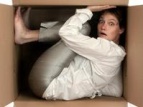
Facing your fears can be an effective way of overcoming them.
Taking your children to the park to feed the ducks is a normal and pleasurable activity for most parents. But for Kelly Phillips, a mother of two, it posed a terrifying challenge. Kelly, 31, has had a crippling fear of birds since childhood. Even seeing a pigeon perched on the roof or flying high above her would throw her into a blind panic. The disorder, called ornithophobia, had blighted her life. She relied on her parents and husband for help if ever she encountered a bird, and struggled to run errands or travel alone. Even a leisurely walk around her home town of Cambridge would be fraught with anxiety.
Kelly is one of 60 people suffering from severe phobias who feature in a new television series, Fright Club. Along with fellow psychologist and therapist Dr Becky Spelman, I had only three days to help them confront their fears with some extreme treatments that would make most of us quake. Among them was deep-sea fishing to treat a fear of water, lying in coffins to treat a fear of confined spaces and, for Kelly, handling a live turkey. As with so many of the others I met, she showed phenomenal courage.
Phobias affect some 10 million people in the UK, from all ages and walks of life. They are distressing disorders that can restrict life to an unimaginable degree: one agoraphobic woman I treated several years ago had not left the house for 23 years, for fear something terrible might happen. In her fifties she was still getting relatives to do her shopping, or ordering goods online. (It’s a sad fact that well-meaning family and friends can collude with the sufferer and make matters worse, while the internet has not helped those with a fear of public spaces.)
But what lies behind such fears? People with phobias have a pure, irrational terror of an object or situation and often “catastrophise”, or fixate on the worst case scenario. So people afraid of spiders (arachnophobes) may fear they will be lethally poisoned by a bite, while those with claustrophobia imagine that if they get in a lift it will break and they will be left to die. This fear then provokes physical symptoms such as shallow, rapid breathing, sweating, palpitations and a feeling of being disconnected from one’s environment. It doesn’t take much to bring these on: Kelly had a full-blown panic attack the evening she joined the programme, before filming had even started.
Such reactions are part of the “fight or flight” response, which can be useful for life and death situations, such as if there is a lion nearby. In the case of phobias, however, the evolutionary response has become inappropriate. But it’s no use telling people to think more rationally: they already know they are being irrational.
It wasn’t clear what had triggered Kelly’s ornithophobia. It might well have been a reaction to a bird flying at her as a child, as traumatic incidents in childhood can spark such fears. Overly anxious parents giving off signals that certain objects or situations are dangerous can also be responsible. In other cases, the sufferer projects their general anxiety on to a specific phobia, meaning they may overcome one fear, only for it to be replaced by another. There is also some evidence genetic factors play a part.
Tackling such conditions is a gradual process, but our challenge was to do so in just three days. In the first film, Kelly and others with ornithophobia are exposed to their fear object – birds – in small, incremental steps; this is called the exposure ladder and is an effective treatment for many phobias.
So first our subjects went to a park to feed the birds. Even coming into contact with bird food left quite a few in tears and threatening to walk off, but one or two in the group managed to help the others through it. The next step was visiting an aviary, where each had to handle a dove. (The birds were used for weddings, so were quite tame.) They then had to catch and weigh turkeys on a farm – no mean feat, for seeing hundreds of these ugly birds advance towards you in a field would be tough for anyone.
At the same time, the sufferers were taught to deal with their anxiety symptoms by focusing on breathing and relaxation, and also through “mindfulness” – a buzzword these days, but in fact a technique that has been used by therapists for many years. Mindfulness distracts people from their negative thoughts by focusing on something in the here and now; it could be the wallpaper, or even your own feet.
On the third and final day, the group had to handle birds of prey – falcons, hawks, owls and vultures. For this, they were given some training by experts. Even to look at the sharp claws and beaks of these birds can be terrifying, but it was an important exercise, as phobics tend to generalise, believing all birds – or all dogs or all spiders – are dangerous. Kelly chose a small South African owl that looked cute and was flightless. It hopped on to her head, from where she had to pull it on to her hand.
Did these extreme exposures help? Actually, yes. We revisited those who took part in the programme and all reported having overcome their fears. One man, Rick, who had a terrific fear of birds, is due to get married in a few months and has booked the owl he handled to carry the wedding ring.
Another programme in the series deals with fear of heights (acrophobia), featuring sufferers such as Peter, who couldn’t even scale the first rung of a ladder to change a light bulb, never mind take a flight. He’d been afflicted by this phobia since suffering a panic attack on the Blackpool Tower aged six or seven. Now in his fifties, he has been on a major journey: after starting by looking at pictures of high buildings, he managed to climb a stepladder, ascend scaffolding, and finally make it to the top ledge of the UK’s tallest sculpture, the ArcelorMittal Orbit in London’s Olympic Park. At the weekend, he and another ex-sufferer, Sarah, abseiled down the side of the Orbit for charity.
So yes, you can cure a phobia in three days, though you do need to follow up with regular exposure and reinforcement, rather than retreat. But in real life, of course, you wouldn’t undergo such an intensive course or such extreme exposure. Phobias are usually treated by cognitive behavioural therapy, generally in between six and 12 one?hour sessions. In these, the sufferer is gradually exposed to the object or situation they fear, with steps along the way repeated if necessary. Exposure can be done with the therapist if practical, or otherwise with a friend, and the client then discusses their reaction in the next therapy session.
As for Kelly, she is a changed woman. Despite some minor panic attacks, she has learnt to handle her anxiety and has come through the experience with flying colours. Only the other day, she sent us a fabulous photograph of herself with her two children – a happy family shot of them feeding the ducks in the park.
Richard Reid’s forthcoming book on phobias is to be published by Random House early next year.
Here are the five phobias and how to overcome them:
These exercises can be done with support from a friend or relative and eventually, alone. Every time you think you have reached your limit, go beyond it: people with phobias often underestimate what they can achieve.
- • Fear of heights (acrophobia): Begin by standing on the first rung of a ladder, gradually working your way up. Next, look out of the window from the second storey of a house. Then go to a tall building and look at it from the ground, before taking the elevator and looking out of the top floor window.
- Fear of spiders (arachnophobia): Begin by looking at pictures of spiders, then films of moving spiders, then look at a spider inside a jar. Try holding a small spider in your hand, then try a variety of sizes.
- Fear of flying: Many people try to overcome this with alcohol or tranquillisers, but that means they never get to grips with the fear. Programmes to combat it, which are offered by several airlines, may start with watching a film of flights, getting comfortable with being at an airport and trying a shorter flight.
- Fear of enclosed spaces (claustrophobia): Try going up one floor in an elevator with a friend, then go it alone. Or try taking the Tube, one stop at a time.
- Fear of being in public spaces (agoraphobia): Look out of the window before stepping outside your front door. Next, go to the end of the street with a friend, before going to a local shop. Then go to the town centre.
Alzheimer’s-Linked Brain Proteins Tied to Poor Sleep in Study


Poor sleep in old age may be linked to the brain-clogging plaques thought to contribute to Alzheimer’s disease, new research suggests.
“Sleep appears to be a missing piece in the Alzheimer’s puzzle, and enhancing sleep may lessen the cognitive burden that Alzheimer’s disease imparts,” said study author Bryce Mander, a postdoctoral fellow at the University of California, Berkeley.
It’s not clear how sleep and memory affect — or are affected by — the accumulation of beta amyloid plaques, believed to interfere with mental functioning. Still, the study findings hint at a major message regarding Alzheimer’s, said Mander, who works at the university’s Sleep and Neuroimaging Laboratory.
For the new study, Mander and colleagues recruited 26 mentally healthy adults ages 70 to 79. They underwent brain imaging to assess plaque buildup, and were asked to remember pairs of words before and after a night’s sleep. Overnight, researchers measured their brain waves, and the next day they conducted MRI scans during the memory testing.
Those patients with the highest levels of amyloid plaques in one part of the brain — the medial prefrontal cortex — had lighter sleep and higher levels of memory problems, the researchers found.
“It is not so much that memory after sleep is important, but that sleep after initial learning is important to help us retain memory for a longer period of time,” Mander said.
The study suggests — but does not prove — that insufficient deep sleep contributes to “a reduced ability to cement memories in the brain over the long-term, resulting in greater memory loss,” he noted.
However, he added, it’s not known for sure “whether this link between sleep and Alzheimer’s disease can explain memory loss in older adults” with higher levels of the plaques.
In particular, disrupted sleep can lead to impairment of “episodic memory,” which helps people remember events, Mander said.
“For example, what we had for breakfast last Tuesday and who we were with, and what that person’s name is. This is a critical form of memory that helps us navigate our daily lives. Without it, we quickly become lost, and our interaction with our world disjointed,” Mander explained.
Sleep disorders are frequently reported in Alzheimer’s patients, noted one expert.
Dr. Ricardo Osorio, research assistant professor of psychiatry with the Center for Brain Health at NYU Langone Medical Center in New York City, said sleep disorders “have a significant impact on caregivers and are a common cause for early institutionalization.”
In recent years, Osorio said, research has suggested a connection between sleep problems in early life and Alzheimer’s disease, the most common form of dementia.
But which comes first, poor sleep or accumulation of the brain plaques? Mander thinks they contribute to each other, creating a “vicious cycle” that leads toward Alzheimer’s disease.
Osorio said the study does point to this possibility.
Is it possible that elderly people don’t sleep as well as younger people, boosting their risk of Alzheimer’s? Maybe not. Osorio said that “in healthy elderly individuals, the rate of normal sleep is quite high.”
But poorer sleep throughout life appears to boost the risk of Alzheimer’s, he said, and better sleep lowers the risk.
“Insomnia has been shown to promote cognitive decline in the elderly, and sleep apnea both increases the risk for developing Alzheimer’s and reduces the age of onset of Alzheimer’s,” Orsio said. (Sleep apnea is a sleep disorder characterized by repeated breathing disruptions.)
In the big picture, both experts agreed, sleep matters, and better sleep can likely help on the Alzheimer’s front.
Five pairs of white-tailed eagles in four locations hatch chicks successfully

Left a white-tailed eagle chick in a nest in Co Clare.
The programme to re-introduce white-tailed eagles inIreland has been given a boost following the successful hatching of five chicks.
Eight pairs of eagles nested and laid eggs with five of these hatching chicks in counties Cork, Clare, Kerry and Galway. Three other pairs proved unsuccessful in Kerry.
One hundred young white-tailed eagles were released between 2007 and 2011 in Killarney National Park, Co Kerry following the re-introduction of the endangered species from Norway.
Twenty-nine of these have been found dead, with 13 believed to have been poisoned.
White-tailed eagles can live for 25 to 30 years and generally mate for life, with adult pairs remaining within their home range throughout the year.
Golden Eagle Trust project manager, DrAllan Mee, welcomed the arrival of the chicks but warned that poisoning remains the biggest threat to the endangered species.
Poisoning mainly results from farmers leaving traps for foxes and crows, especially during the lambing season, he said.
Dr Mee warned the public to only observe the eagle nests from a distance.
“We are very conscious of the risk of disturbing the birds especially at this stage of nesting. Disturbance could result in the birds leaving the small chicks unguarded for a period during which they could be predated or be chilled or the birds could desert the site,” he said.
Minister for Arts, Heritage and the Gaeltacht, Heather Humphreys, described the birth of the eagles as a “positive sign” for the recovery of the species.
“The white tailed eagle is an iconic bird, which is very popular in local communities and of course attracts interest from visitors,” she said.
The chicks will remain in their nests for the first 11-12 weeks following the hatch when they will then attempt their first flight.


