Pages

Showing posts with label Healthy options. Show all posts

Monday, March 20, 2017

Donie's Ireland daily news BLOG

Enda Kenny to stay ‘until North crisis is sorted out?

Image result for Enda Kenny to stay ‘until North crisis is resolved’ Image result for Northern ireland crisis is resolved’ Image result for Enda Kenny to stay ‘until North crisis is resolved’
Taoiseach Enda Kenny has risked deepening the increasingly bitter Fine Gael war over when he will step down by saying he has no intention of leaving until the Northern Ireland political crisis is resolved.
Speaking after the St Patrick’s Day parade in New York City, Mr Kenny said the Northern Ireland issue “takes precedence over everything else”, effectively delaying his departure until at least the summer.
In the aftermath of a tentative coup against Mr Kenny last month, the Taoiseach told the parliamentary party he would address the leadership issue conclusively on his return from his week-long US visit.
However, while the position was widely seen to indicate he would step down later this month or in early April, no definitive timeline was given.
In recent weeks, Mr Kenny has caused concern among Fine Gael dissenters that he will not leave due to his repeated references to the need for stability during the Brexit negotiations next month and last Thursday’s meeting with US president Donald Trump.
However, while those close to Mr Kenny have sought to downplay such fears, the Taoiseach poured further fuel on the flames yesterday by saying the Northern Ireland political crisis is now another reason for why he should not step down.
Asked about when he will resign after walking past cheering crowds at the New York City St Patrick’s Day parade, Mr Kenny said he continues to have “a number of priorities” that must be resolved.
New York Governor Andrew Cuomo and Taoiseach Enda Kenny march in the St Patrick’s Day parade on 5th Avenue.
He said the political impasse in the North caused by last month’s Stormont elections, and the fact Sinn Féin and DUP now have just three weeks to form a government or be forced into another election in May, was a new addition to these “priorities”, and stoked backbench anger by saying Ireland must provide “stable” leadership.
“What I’ve always said is I need to deal with a number of priorities here, the first priority is to put in place an executive in Northern Ireland,” said Mr Kenny.
“We have no government, no devolved authority, in Northern Ireland now. I hope the parties who are elected will accept the responsibility of putting together a government within the three-week period.
“What I did say to my party is that I would deal with this effectively and conclusively on my return, that’s my intention. But I think these are priorities that take precedence over everything else.”
Asked directly when he is “going to deal with it [the leadership question]”, Mr Kenny said: “I’m not going to answer that for you. Do you not think it’s appropriate that the immediate priority is to have an executive functioning in Northern Ireland, do you not think it’s appropriate that all the work we put together we should have an agreed negotiating stance for the EU that’s going to affect everybody in our country?
“I intend to follow through on those [priorities] very, very diligently.”
A number of Fine Gael backbenchers known to want Mr Kenny to step down as soon as possible last night declined to comment publicly, but said it has already been made clear to the Taoiseach he cannot continue to ignore the leadership issue.
Mr Kenny’s New York comments came 48 hours after a draft version of his speech to the American- Ireland Fund Gala in Washington DC said this would be his last St Patrick’s Day as Taoiseach before it was deleted from the script.
Asked about the change to the otherwise untouched 1,500-word speech on Wednesday, Mr Kenny simply said it was removed “because it shouldn’t have been in there”.

The McEvaddy brothers get Dubai backing for €2bn airport terminal

 Image result for The McEvaddy brothers get Dubai backing for €2bn airport terminal  Image result for €2 billion terminal scheme at Dublin Airport

THE MARKER HOTEL IN DUBLIN’S GRAND CANAL SQUARE WILL HAVE 30 BEDROOMS ON THE NEW FLOOR, AND THE MAIN RESTAURANT WILL BE MOVED TO THE ROOFTOP.

Businessmen Ulick (above pic) and Des McEvaddy have secured the financial backing of a Dubai-based investment group to build a proposed €2 billion terminal scheme at Dublin Airport, according to the media.
Omega Air boss Ulick McEvaddy and his brother Des have been attempting for more than 20 years to develop a third independent terminal on 130 acres of land they own adjacent to the airport. They now have the support of Dubai-based Tricap Investments, an investment fund with a diversified portfolio that spans real estate, energy and aerospace in the Middle East, the US, Asia and Africa.
The Marker Hotel in Dublin’s Grand Canal Square will  have 30 bedrooms on the new floor, and the main restaurant will be moved to the rooftop. Photograph: Cyril Byrne   Brehon to add new floor to Marker hotel in €10m upgrade
Brehon Capital Partners, the owners of the Marker hotel, in Dublin’s Grand Canal Square, is planning a €10 million investment that will add a new floor and upgraded roof bar to the property.
The expansion will include about 30 bedrooms on the new floor, bringing the hotel up to 217 rooms, while it also involves moving the main restaurant to the rooftop. The roof would be about two-thirds enclosed, with a small, open terrace, allowing it to be used all year round.
JP Morgan may double its Irish workforce.
US investment bank JP Morgan may add up to 500 people to its operations in Ireland, which would more than double its workforce here, the Sunday Business Post suggests. The bank is among those to have instructed property agents to find additional office space in Dublin, it reports.
Minister for Finance Michael Noonan said on St Patrick’s Day that more than 120 overseas banks, insurers and other financial companies are currently in talks to move operations to Ireland as a result of the UK’s decision to quit the European Union.
Mr Noonan made the comments on Friday at an event in Singapore.
Aryzta sets four-year target to cut debts by €1bn.
Aryzta chairman Gary McGann has told analysts that he plans to cut debt levels at the troubled frozen baked goods company by €1 billion within four years, according to the Sunday Times.
Mr McGann, in his first public outing as chairman of Aryzta, said the company would undertake an overhaul of the board and a review of its business model. He also said he had received “very, very clear feedback” from shareholders that they did not see “the strategic fit” between Aryzta and Picard, its French frozen-food retailing associate.
Unilever may sell off its margarine division for €6bn.
Consumer goods giant Unilever is eyeing the £6 billion sale of its margarine division, which produces Flora and Stork, says the Sunday Telegraph. The FTSE 100-listed manufacturer has been forced into a strategic review of its operations after an audacious £115 billion takeover approach from Kraft Heinz, it reports.
The newspaper understands that rather than opt for a defensive bid for a rival such as Colgate-Palmolive, or a spin-off of its entire food arm, Unilever is leaning towards a sale of the margarine business, which controls just under a third of the entire global margarine market.

Eight men rescued off the Sligo coast after dive boat capsizes

Two men taken to hospital following the incident east of Sligo town

Image result for Eight men rescued off the Sligo coast after dive boat capsizes  Related image

RESCUE 118 WAS CALLED OFF FROM ITS SEARCH AT BLACKSOD BAY, CO MAYO TO ASSIST WITH THE OPERATION.

Eight men have been rescued from the sea off the coast of Co Sligo after a dive boat capsized.
Two of the men were taken to hospital following the incident which occured off Aughris Pier, east of Sligo town.
A mayday call was received by Malin Head Coast Guard at 11.24am on Sunday. Fortunately, the Sligo Bay RNLI lifeboat crew were on a training exercise in the area and arrived at the scene of the incident at 11.43am.
The lifeboat crew rescued all eight people from the water and one man was airlifted to hospital by the Irish Coast Guard Helicopter Rescue 118. He suffered a head injury when the boat capsized in heavy seas.
The remaining seven men were taken to Aughris Pier where one person was taken by ambulance to hospital. Following the rescue, the lifeboat crew returned to the scene to tow the vessel back to the pier.
Rescue 118 was called off from the search at Blacksod Bay, Co Mayo for the missing crew members of Rescue 116, the Sikorsky helicopter which crashed into the sea on Tuesday morning.
Sligo Bay RNLI lifeboat operations manager Willie Murphy said the incident happened at the end of a difficult week for the rescue services following the loss of Rescue 116.
He said: “This morning’s callout shows that the professionalism and dedication of the search and rescue community remains unchanged.
“The RNLI crew at Sligo Bay along with their colleagues at Rescue 118 were on scene minutes after the call for help was raised and rescued eight people from the water. Our thoughts are with the man who was airlifted to hospital and with our colleagues still searching in Blacksod Bay for the three missing crew members of Rescue 116.

Cancer the dreaded disease of women
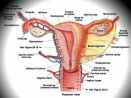
Image result for Cancer the dreaded disease of women  Image result for Cancer the dreaded disease of women  Image result for Cancer the dreaded disease of women
Cancer is a dreaded disease, and rightly so because hitherto treatment was vague and patients were generally doomed to die of it. Advances in surgical technique and adjuvant treatment have now made cancer a treatable and possibly curable disease in early stages.
Women suffer nearly half the burden of cancer even though they are not pre-disposed to the conventional causative factors like tobacco and alcohol. The causal factors in women are generally age, lifestyle, hereditary, infections and environmental factors.
Social factors, especially inequalities, are major determinants of cancer burden in females, with poorer females more likely to die of their disease than affluent ones. Cancer can have profound social and economic consequences for the people of India, often leading to family impoverishment and societal inequality.
Common cancers and their screening?
Females generally postpone their first contact with a health facility, leading to a delayed diagnosis in an advanced stage. Unfortunately, the four most common cancers afflicting females can be screened and diagnosed at an early stage.
  1. Firstly, Breast cancer, can be screened by monthly self-breast examination, annual clinical examination and mammograms after the age of 50 years.
  2. Second, cervical cancer, a sexually active female should undergo a pap smear every three years from the age of 21 years and co-testing with HPV after the age of 30 years.
  3. Third, ovarian cancer, can be diagnosed by having a high clinical index of suspicion in a female presenting with vague abdominal symptoms, early satiety and a timely investigation by tumour markers and an ultrasound examination.
  4. Fourth, uterine cancer, presents as inter-menstrual or postmenopausal bleeding usually in an obese elderly female. The sad common denominator in all these cancers is that they can all be diagnosed early with minimal effort and cured by surgery.
How is cancer treated?
Once a patient is suspected of having symptoms of cancer, a general evaluation followed by a staging workup including a tissue biopsy is done. Once the diagnosis has been confirmed, treatment options are discussed and if possible an appropriate radical surgery is planned. Radical surgery for cancer is the only curative treatment modality for solid organ cancers. Radical cancer surgeries require a centre where trained surgical oncologist interact with their medical and radiation oncology colleagues and have adequate post -operative ICU care  to obtain best results.
The first attempt at treatment is generally the best chance of cure as recurrence is resistant to most forms of treatment. After surgery the patients are followed up by designated protocol and undergo adjuvant therapy (chemotherapy, radiotherapy, targeted therapy) as needed.
The role of women in cancer is prevention?
Women have a central role in the fight against cancer, not only can they encourage their family members to change to a healthy lifestyle (abstinence from smoking/alcohol, healthier food habits, exercise) leading to cancer prevention, they can also be an observant family member who encourages an early medical consultation for a possible cancer symptom leading to early detection and cure. We must therefore, empower women with knowledge and use them as our sentinels in the war on cancer.

Scientists say the ‘five second’ rule is correct when dropping food on the floor

Image result for Scientists say the 'five second' rule is correct when dropping food on the floor  Image result for Scientists say the 'five second' rule is correct when dropping food on the floor  Image result for Scientists say the 'five second' rule is correct when dropping food on the floor

WHAT DO YOU DO WHEN YOU DROP SOME FOOD ON THE FLOOR? DOES IT GO STRAIGHT IN THE BIN OR DO YOU ADHERE TO THE WIDELY-USED ‘FIVE SECOND’ RULE AND EAT IT?

A study, undertaken by scientists at The Big Bang Fair in Birmingham, shows that four out of five people or 79 per cent of us admit to popping fallen food in our mouths.
Of course most people think their own floors are cleaner and thus it’s more acceptable to eat food off – 56 per cent of them in fact – but that figure drops considerably to just 17 per cent if eating off another’s floor.
The research also shows people are just as likely to serve food that’s fallen on the floor to their dog (18 per cent) as they are their partner (17 per cent).
The most radical examples of ‘hoovers’ include people eating snacks off the floor of the cinema (2 per cent) or public transport (1 per cent).
But when asked to justify why they would do thus, a fifth of people admitted to following ‘five-second rule’, which scientists have now revealed as legitimate and safe in most cases.
Germ expert, Professor Anthony Hilton from Aston University, told the Birmingham Mail: “Eating food that has spent a few moments on the floor can never be entirely risk free.
“Obviously, food covered in visible dirt shouldn’t be eaten, but as long as it’s not obviously contaminated, the science shows that food is unlikely to have picked up harmful bacteria from a few seconds spent on an indoor floor.
“That is not to say that germs can’t transfer from the floor to the food.
“Our research has shown that the nature of the floor surface, the type of food dropped on the floor and the length of time it spends on the floor can all have an impact on the number that can transfer.”

Supermarket soups can be laced with up to seven spoons of sugar

Image result for seven spoons of sugar  Image result for packet Supermarket soups  Related image

SOME “HEALTHY” COMMERCIAL SOUPS CONTAIN A STAGGERING SEVEN TEASPOONS OF SUGAR, A TOP CHEF HAS REVEALED.

Hilary O’Hagan-Brennan said one spiced chicken soup was made with 28 grams of sugar per tub. The World Health Organisation recommends people take no more than 24 grams a day.
Ms O’Hagan-Brennan said on the RTE’s What Are You Eating? programme that even a root vegetable soup, which people might assume was healthy, contained 16 grams of sugar, or four teaspoons.
She says “There is no place for added sugar in soup”?
And sugar wasn’t the only hidden ingredient in our convenience foods, presenter Philip Boucher-Hayes discovered when he investigated.
He found that one third of us believe wraps are more healthy than traditional sandwiches.
But a large wrap can be equal to two slices of bread. And commercial tortillas are made with glycerol – a form of sugar – to keep them moist, and emulsifier to bind the ingredients together and extend their shelf life.
“Some chicken wraps have as many calories as a 12-inch pizza,” he discovers.
Consultant dietitian Aveen Bannon reveals that while salads are good for you, the benefits are often undone by large amounts of dressing. An average tablespoon of mayonnaise contains 94 calories – and people often use two or three spoons with a salad.

What would happen if the Earth’s rotation change direction or stop

Image result for What would happen if the Earth’s rotation change direction or stop  Image result for What would happen if the Earth’s rotation change direction or stop  Related image
The Earth, is the only planet in our solar system, that as long as we know it has life, and moves with a certain pattern, which we assume. Our planet rotates around its axis, a drive that takes about 24 hours, which seems to be from east to west at a speed of about 30 km per second.
We might think that these rules are insignificant and do not affect our existence. Only if our planet “rebels” and change course or reduce speed, then nothing will be the same.
According to the BBC, if the Earth began to move east, the climate in most regions would change drastically. The Sahara would be more rainy and desert will be turned into a jungle. Another case is that of anhydrous California which will also have more rain, as opposed to Florida we would see the swamps to dry up.
If again our planet began to move very slowly, then life on the planet would not survive as well, cause the side that would strike the sun would burn, and the “dark” side would freeze. In just one day we would have a transition from the Ice Age … the planet Venus. It’s a fact that the Earth actually reduces its speed, but it will spend trillions of years until it stops completely.

BUT HERE IS A SUMMARY OF THE QUESTION ANSWERS.?

  1. The Earth would become an even more imperfect sphere and this would reduce the acceleration due to gravity; it would decrease at the equator and increase at the poles. Also, the days would shorten.
    2. Since the effect of gravity has decreased near the equator, we would observe tides much higher than usual in these areas, much more land would go underwater during high tides. I assume Venice would cease to remain habitable.
    3. The precession of the Earth’s axis would change. As the Earth becomes an even more Oblate Spheroid, the gravitational differences (of the Sun on Earth) would be larger on different parts of the Earth, this would make the axis precess even faster. The current cycle is 26,000 years long for one complete precession, this would shorten depending on the increase in rotational velocity. Axial precession
    4. North Star would change faster. Currently the North Star is Polaris which is set to be replaced by Deneb in 8,000 years. Due to the above reasons, it would occur faster.
    5. It is also possible that the axial tilt of the Earth would increase. This would mean that winters would be colder and summers would be hotter.
    6. Since the Earth now rotates faster and the Coriolis effect depends on the rotation of the Earth, the impact of Coriolis effect would increase and we would experience faster wind speeds. Coriolis force
    7. This would be a boon for geostationary satellites as the operational altitude would reduce due to Earth’s increased rotational velocity. Geostationary orbit
    8. Since the Sidereal day (Sidereal time) would now be shorter, we would have to redefine our present units of time.
    9. Since we would have to redefine our units of time and also the orbit of our satellites, it would be a disaster for the GPS system, I can safely say that it would be unusable for at least a few years until all the corrections have been made.
    10. Since the Coriolis Effect would alter the wind speeds, and the rotational velocity of Earth has increased, the travel time of aeroplanes would change.    

Tuesday, February 28, 2017

Donie's Irelnad daily news BLOG.

A child became homeless in Ireland every five hours in January, Dáil is told

Image result for A child became homeless every five hours in January, Dáil told  Image result for A child became homeless in Ireland every five hours in January, Dáil is told

‘SHAMEFUL’ STATISTIC SHOWS GOVERNMENT POLICY NOT WORKING, SAYS FF TD BARRY COWEN. 

Fianna Fáil TD Barry Cowen accused the Government of attempting to bamboozle people with details.
Focus Ireland said a child became homeless every five hours in January, a statistic called “shameful” by Fianna Fáil housing spokesman Barry Cowen.
“We are obliged in this House to seek to remove whatever obstacles that are preventing the implementation of any plans,” Mr Cowen told the Dáil on Thursday.
He said only 1,829 housing units were under construction as part of the Government’s plans. “The rest are going through various stages and the majority of them were approved over two years ago,” he said.
Mr Cowen accused the Government of being obsessed about announcements in the hope that people would be bamboozled by detail.
Tánaiste Frances Fitzgerald, who took Opposition Leaders’ Questions, said the country was in a extraordinarily difficult economic situation just a few years ago. On Wednesday, she told the Dáil that unemployment figures were revealed to be down 6.8 per cent, a figure Fianna Fáil said would never be reached, she added.
The Government was providing more money and more detailed work with local authorities to deal with the housing situation, Ms Fitzgerald said.
Repair and leasing
The Tánaiste later said the allocation of €32 million to deal with repair and leasing of housing would be announced and local authorities would work to ensure that more properties were available for people seeking housing.
She said the four Dublin local authorities had confirmed the target would be met to ensure children and families would not be using hotels in the city.
There was a targeted social plan, but it would take some time, Ms Fitzgerald added.
Later, Minister for Housing Simon Coveney said last year 2,700 “housing solutions” were put in place for homeless individuals and families.
In the past number of months, he said, the Government had managed to stop the significant increase by taking a lot of people out of homelessness as quickly as possible.
“We need to ensure that we slow down the numbers becoming homelessness and continue to increase the pace in which we can facilitate the transition out of emergency accommodation,” Mr Coveney added.
“I am still confident we can do that by July 1st.”
Mr Coveney said it was a big job to get between 700 and 800 families out of hotel accommodation and into appropriate accommodation in that period, but the Government was determined to do it.

RSA Ireland losses widen on setting aside £50m for prior-year accidents

Image result for RSA Ireland losses widen  Image result for RSA Ireland losses widen
INSURER TARGETS RETURN TO IRISH OPERATING PROFITABILITY THIS YEAR AFTER £42 MILLION LOSSES.

RSA Insurance Ireland’s operating loss widened by 62% last year after the country’s once-largest provider of motor and property coverage was forced to set aside £50 million (€59.1 million) of reserves to cover the costs of accidents in 2014 and 2015.
The local subsidiary of London-listed RSA Group posted a £42 million full-year loss compared with a £26 million loss for 2015. The performance was described by the parent as “disappointing”, especially as it had returned last year to writing new business on a profitable basis, as it and the wider industry hiked rates.
Insurers in the Republic have increased motor rates by almost 60 per cent over the past three years, according to Central Statistics Office data, in an effort to return to profitability as they struggle with rising claims, attributed to more cars on our roads in a recovering economy and spiralling court awards.
RSA Insurance Ireland has suffered more than most, as it was embroiled in an accounting scandal in 2013, when it emerged the company had not been setting aside enough reserves to cover large claims.
RSA said it is targeting a return to operating profitability for the Irish unit this year “through continued underwriting improvement, portfolio remediation and cost reduction”. However, it warned that the unit may face “additional reserve volatility” this year as a result of claims inflation on the back of the Personal Injuries Assessment board recently updating its so-called “book of quantum” – the guidelines for injury awards and judicial reviews.
As a result of the additional amount of money RSA Insurance Ireland had to set aside to cover higher expected costs from accidents in 2014 and 2015, its combined ratio – a keenly followed figure that measures insurance losses and expenses against premiums earned – rose to 116.2% from 113.4% year-on-year. A combined ratio off less than 100% indicates an insurer is writing insurance on a profitable basis.
“The prior year loss is predominantly in the Republic of Ireland commercial and motor portfolios, where a combination of higher-than-expected claims and the distortion of our reserving patterns following the events of 2013 have resulted in further strengthening of reserves during 2016,” the company said.
“The issues have been amplified by a challenging Irish market, characterised by aggressive claims inflation and increasing litigation mitigated by a very hard rating environment.”
The bulk of the additional provisioning appeared to be in RSA’s commercial insurance business rather than its personal line, comparing the full-year results with its interim figures that were published in August.
RSA said premiums in Ireland were up 6% last year to £306 million from a year earlier. This was largely driven by continued rating actions. Net written personal premiums rose 2% to £185 million with commercial premiums increasing 12% to £121 million.
Insurers have been less able to rely in recent years on investment income to cushion the blow from underwriting losses, as they grapple with low global bond yields. RSA Insurance Ireland’s investment profit fell to £7 million last year from £9 million in 2015.
The latest results come a day after three former RSA Insurance Ireland staff Rory O’Connor, Martin Ryan and Gerard Bradley were fined a combined £182,000 (€206,090) under sanctions tied to an investigation by a UK accounting watchdog into financial irregularities at the firm in 2012.
The Dublin-based insurer’s London-listed parent RSA Insurance Group injected €423 million of cash between 2013 and 2015 after the country’s once-largest insurer was thrown into crisis when it emerged it had a large hole in its balance sheet. This was mainly the result of the business having been found at the time to have set aside too little money in reserve to cover large claims.
RSA Group made a further €90 million available to the Irish division, if needed, last March to bolster its balance sheet under new insurance capital rules, known as Solvency II.
The continuing woes of the Irish business contrast with a 25% surge in operating profits delivered by the broader RSA Group last year, to £655 million. The group, which has been undergoing a restructuring programme under ex-RBS boss Stephen Hester, raised its target for return on tangible equity to 13-17% from a previous range of 12-15% on Thursday, and said it hoped to “perform in the upper part of this range”.
RSA said its cost-reduction programme was ahead of original targets and it was upgrading that target for a third time to more than £400 million sterling of gross annualised savings by 2018, from a previous target of more than £350 million.
The insurer said it would pay a final dividend of 11 pence per share and total dividend of 16 pence, up 52% from a year earlier and above a forecast 15.1 pence.

Tesco calls on union to reconsider strikes after five more stores vote no

Image result for Tesco calls on union to reconsider strikes after five more stores vote no  Image result for Tesco calls on union to reconsider strike
SIX BALLOTS HELD ON WEDNESDAY NIGHT WITH ALL BUT ONE STORE VOTING AGAINST STRIKE ACTION

Tesco has called on Mandate to re-visit its strike strategy after five more stores voted against joining the picket.
There were six “supportive ballots” held on Wednesday night with all but one store voting against strike action. There are currently pickets on 16 stores, with six more set to go on strike from next Monday.
The strike centres around what the Mandate union says is an attempt by Tesco management to enforce contract changes which will see the wages of staff recruited before 1996 fall by more than 15%.
Tesco has repeatedly denied this and says it needs to make changes to contracts to reflect an altered retail environment which now includes late-night and online shopping, as well as Sunday openings.
It says only a very small number of staff will see contract changes and promised that they will not lose out financially.
In a statement, Tesco said that 23 stores, or more than of half the shops balloted, had “overwhelmingly refused to co-operate with the union’s strike”.
The company said there was “an onus now on Mandate to face up to the emphatic decisions by the majority of colleagues. It is incumbent on Mandate after tonight’s strike rejections to re-visit its strike plans.”
The spokeswoman said it was “incontrovertible that Mandate’s strike plan is not being endorsed, as is shown not just by the union’s overwhelming losses in ballots, but also by the increasing number of colleagues crossing picket lines to return to work, with a further increase today.”
The company said the union would have to “urgently reconsider its refusal to accept the Labour Court Recommendation and its undermining of the industrial relations processes at the company and of the State, including its use of a Labour Court intervention to try to strengthen its hand in ballots.”
However, Mandate has said supportive ballots in other stores will continue next week and has said intense pressure by management on staff in voting stores was having an impact on outcome of the ballots.

Eat more fruit and veg for a longer life & eat 10 portions a day

Image result for Eat more fruit and veg for a longer life & eat 10 portions a day  Image result for Eat more fruit and veg for a longer life & eat 10 portions a day  Related image

EATING LOADS OF FRUIT AND VEGETABLES – 10 PORTIONS A DAY – MAY GIVE US LONGER LIVES, SAY RESEARCHERS.

The study, by Imperial College London, calculated such eating habits could prevent 7.8 million premature deaths each year.
The team also identified specific fruit and veg that reduced the risk of cancer and heart disease.
The analysis showed even small amounts had a health boon, but more is even better.
A portion counts as 80g (3oz) of fruit or veg – the equivalent of a small banana, a pear or three heaped tablespoons of spinach or peas.
What counts as five-a-day?
The conclusions were made by pooling data on 95 separate studies, involving two million people’s eating habits.

LOWER RISKS OF CANCER WERE LINKED TO EATING:
1. GREEN VEG (EG SPINACH)
2. YELLOW VEG (EG PEPPERS)
3. CRUCIFEROUS VEGETABLES (EG CAULIFLOWER).

Lower risks of heart disease and strokes were linked to eating:
1. apples
2. pears
3. citrus fruits
4. salads
5. green leafy vegetables (eg lettuce)
6. cruciferous veg.et is a big fan of spinach.
Harriet Micallef, from Chippenham, says she often manages eight to 10 portions a day and has multiple portions of spinach every day.
She told the BBC: “I have a lot, I don’t ever have a meal without veg or salad so eight to 10 portions is a regular thing.”
She starts her day with a veg-packed omelette containing spinach and sometimes avocado or tomatoes.
Harriet’s salad-based lunch is also packed with a mix of veg and her evening meals tend to be stir fries or stews.
Snacks during the day include blended fruit smoothies or peppers dipped in hummus.
She added: “It’s definitely healthy, if you’ve got loads of colours on your plate then you’re pretty much okay.”
The results, published in the International Journal of Epidemiology, also assessed the risk of dying before your time.
Compared with eating no fruit or veg a day, it showed:
• 200g cut the risk of cardiovascular disease by 13% while 800g cut the risk by 28%
• 200g cut the risk of cancer by 4%, while 800g cut the risk by 13%
• 200g cut the risk of a premature death by 15%, while 800g cut the risk by 31%
The researchers do not know if eating even more fruit and veg would have even greater health benefits as there is little evidence out there to review.
Dr Dagfinn Aune, one of the researchers, said: “Fruit and vegetables have been shown to reduce cholesterol levels, blood pressure, and to boost the health of our blood vessels and immune system.
“This may be due to the complex network of nutrients they hold.
“For instance, they contain many antioxidants, which may reduce DNA damage and lead to a reduction in cancer risk.”
However, many people struggle to even eat the five a day (400g) recommended by the World Health Organization.
In the UK, only about one in three people eats enough.
Heather Saunders, 24 and from Oxford, routinely manages nine or 10 portions a day since becoming vegan.
She has two pieces of fruit with breakfast, a “massive pot” of roasted vegetables at lunch and then at least four vegetables in curries or chillies in the evening.
She told the BBC: “It is about making a conscious decision, I feel fuelling myself with plant-based foods is a more healthy way to sustain myself.”
Her tips for anyone trying to eat more is to do it gently: “Maybe decide to have one or two meat-free days a week and phase more veg in, I quite like a sweet potato curry with spinach and chickpeas.”
Dr Aune said the findings did not mean the five-a-day message needed to change.
He told the BBC: “There are many different considerations if changing policy, it’s not just the health effects – is it feasible?
“But our findings are quite clear in that they do support five a day, but there are even some further benefits for higher intakes.”
• Five-a-day advice ‘unrealistic’ says new GPs’ head
• Take the test: are you getting five-a-day?
Dr Alison Tedstone, chief nutritionist at Public Health England, said: “The five-a-day target is the foundation of a healthy balanced diet and is an achievable way to help prevent a number of diseases.
“Whilst consuming more than five portions of fruit and vegetables a day may be desirable… adding pressure to consume more fruit and vegetables creates an unrealistic expectation.”

Bumble bees found to have ‘impressive’ brain power as they are trained to score ‘goals’

Image result for Bumble bees found to have 'impressive' brain power as they are trained to score 'goals'  Image result for Bumble bees found to have 'impressive' brain power as they are trained to score 'goals'

BUMBLEBEES CAN TEACH EACH OTHER HOW TO SCORE “GOALS” WITH A TINY BALL, A NEW STUDY FINDS

Bumblebees can teach each other how to score “goals” with a tiny ball, displaying a learning ability never before seen in insects, a study has shown.
The bees surprised scientists by working out how to use a novel tool to obtain a food reward simply by watching their neighbours.
In the experiment, the bees were placed on a platform and had to roll a yellow ball to a specific location – or “goal” – in order to obtain a sugar solution.
They were given two types of training, either watching a previously trained bee “score”, or being shown the ball that appeared to move on its own with help of an unseen magnet.
Insects that observed the success of other bees were better at learning the task than those given the “ghost” demonstration.
Project leader Professor Lars Chittka, from Queen Mary, University of London’s School of Biological and Chemical Sciences, said: “Our study puts the final nail in the coffin of the idea that small brains constrain insects to have limited behavioural flexibility and only simple learning abilities.”
The bees did not simply copy exactly what they saw, but figured out their own way to get the ball to the right destination.
“This shows an impressive amount of cognitive flexibility, especially for an insect,” said Dr Olli Loukola, another member of the Queen Mary team.
During the tests, the bees had to roll a ball from the edge of the platform to the centre.
Initially, “demonstrator” bees were trained by watching a plastic bee pushing the ball to the goal.
They then moved the ball in front of other bees undergoing training, who quickly learned the same trick.
But in later trials “observer” bees faced with a choice of three balls made a beeline for the one closest to the goal, rather than the one at the platform edge.
In yet another test they had to move a differently coloured ball to earn the reward.
Dr Loukola said: “It may be that bumblebees, along with many other animals, have the cognitive capabilities to solve such complex tasks, but will only do so if environmental pressures are applied to necessitate such behaviours.”    

Friday, April 22, 2016

Donie's Ireland daily news BLOG.

Eir ebitdata seen as stable in ‘competitive telecoms market’

FITCH SAYS CONSUMERS HAVE NOT BENEFITED FROM LOWER PRICES SINCE THREE ACQUIRED O2


FITCH SAID RETAIL FIXED-LINE COMPETITION IS “REMARKABLY SIMILAR” TO THE UK WITH THE INCUMBENT EIR FACING STIFF COMPETITION FROM BUNDLED SERVICES PROVIDED BY RIVALS.

Ireland’s telecoms market is “vibrant, crowded and competitive,” according to a new report that finds the sector generated about €3.7 billion in revenues last year.
The latest Irish Telecoms Dashboard from ratings agency Fitch forecasts that investment in the sector will remain high in the coming years, primarily due to spending by Eir on its fibre network.
The report also says that consumers have not benefited from lower prices in the almost two years since Three acquired O2. It adds that with increased operator consolidation, competitive emphasis is increasing focused on network quality, rather than on costs.
“Domestic average revenue per user (ARPU) trends remain under pressure and Ireland has some of the lowest ARPUs among advanced western European mobile markets,” Fitch said.
The agency said retail fixed-line competition is “remarkably similar” to the UK with the incumbent Eir facing stiff competition from bundled services provided by rivals such as Virgin Media and Sky. It said customer losses to Eir from fixed line operators were less dilutive than losses to Virgin, its only last mile retail access competitor.
“Eir’s retail broadband position has been eroded but its revenue share of the Irish fixed market appears to be stabilising at around 49% with the success of Sky and Vodafone’s broadband offers generating sizeable and growing wholesale revenues for the incumbent,” Fitch said.
It added that with improving APRU trends at both the retail and wholesale levels, along with sizeable cost-cutting, Eir has managed to stabilise its fixed earnings before interest, tax, depreciation and amortisation (ebitda).
Publication of the report comes a week after Fitch revised Eir’s outlook grade to positive from stable and affirmed its long-term issuer default rating at ‘B’.

New Sligo IT science discovery could stem spread of deadly super-bugs,

IN A GAME CHANGING BREAKTHROUGH?

Main Image      
Professor Suresh Pillai with John Browne (above middle pic), of Kastus Technologies, in the Nanotechnology Research Laboratory at Sligo IT.
A new discovery by a team of scientists in Sligo Ireland could stem the spread of deadly superbugs predicted to kill millions of people worldwide over the coming decades.
The researchers found an agent that can be baked into everyday items like smart-phones and door handles to combat the likes of MRSA and E. coli.
The nanotechnology has a 99.9 % kill rate of potentially lethal and drug-resistant bacteria, they say.
Lead scientist Professor Suresh C Pillai, of Sligo Institute of Technology’s Nanotechnology Research Group, says the discovery is the culmination of 12 years’ work.
“This is a new game changer,” he said.
“It’s absolutely wonderful to finally be at this stage. “This breakthrough will change the whole fight against superbugs. It can effectively control the spread of bacteria.”
The findings were published on Thursday in the international journal Scientific Reports.
Last week British Chancellor George Osborne warned superbugs could become deadlier than cancer and are on course to kill 10 million people globally by 2050.
Speaking at the International Monetary Fund (IMF) in Washington, he warned drug-resistant bugs could escalate into a global crisis costing £70 trillion.
Scientists have been in a race to find a way of preventing the spread of the bacteria which causes the superbugs.
The new discovery works by building or baking a water-based antimicrobial solution that kills micro-organisms or inhibits their growth into everyday products as they are being manufactured.
These could include anything made from glass, metallics and ceramics including computer or tablet screens, smartphones, ATMs, door handles, TVs, handrails, lifts, urinals, toilet seats, fridges, microwaves and ceramic floor or wall tiles.
Professor Pillai says the innovation will be of particular use in hospitals and medical facilities which are losing the battle against the spread of the killer superbugs.
“Every single person has a sea of bacteria on their hands,” he said.
“The mobile phone is the most contaminated personal item that we can have. Bacteria grows on the phone and can live there for up to five months.
“As it is contaminated with proteins from saliva and from the hand, it’s fertile land for bacteria and has been shown to carry 30 times more bacteria than a toilet seat.”
The research has been funded for the past eight years by John Browne, founder of Kastus Technologies, who will now work to bring the product to a global market.
The team says the nanotechnology is non-toxic and has no harmful by-products.
They are already working on how to adapt it for use in plastics and paint, allowing even wider use.

Sugar tax will not solve Irish nation’s dental crisis?

GREATER FOCUS ON EDUCATION IS NEEDED?


MANY IRISH CHILDREN HAVE HIGH LEVELS OF TOOTH DECAY, BUT INTRODUCING A SUGAR TAX TO TACKLE THIS ‘WILL NOT PROVIDE A MIRACULOUS QUICK FIX SOLUTION’, DENTISTS HAVE WARNED.

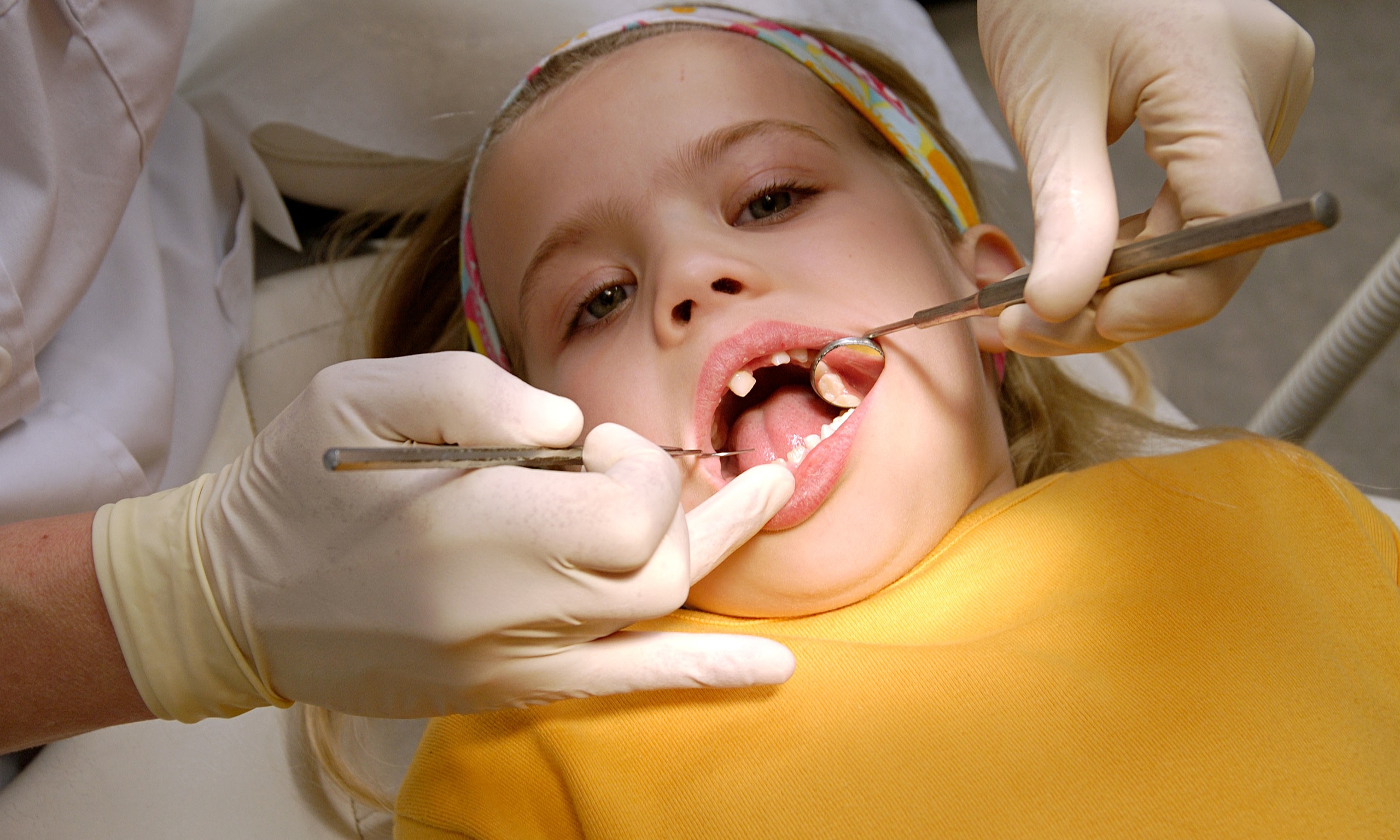
According to the Irish Dental Association (IDA), studies show that around half of all Irish 12-year-olds and three-quarters of all 15-year-olds already have some decay in their permanent teeth.
A significant amount of this this decay is thought to be due to the consumption of sugary drinks and recently, the British Chancellor, George Osborne, announced a plan to introduce a sugar tax on the producers of sugar-added soft drinks, with the revenue raised being spent on school sports programmes.
However commenting on this issue, outgoing IDA president, Anne Twomey, said that the focus should not be on how much people are paying for these products. Instead, it should be on encouraging people to reduce their consumption.
“There is overwhelming evidence that sugars in food and beverages are the main dietary causes of tooth decay and erosion in children and adults. In addition to decay, people who consume excess sugar suffer higher rates of heart disease and diabetes.
“We believe the best approach to this issue is through a coordinated programme of education and promotion, in tandem with an effective school screening programme at junior infant level, or even via free dental care for the under sixes,” she said.
While no studies have been carried out on lost school time in Ireland, international research suggests that children with poor oral health are three times more likely to miss school as a result of dental pain.
The IDA said it would support public health warning labels being placed on carbonated soft drinks. However it also said that if a sugar tax was introduced, all money raised should go towards oral healthcare programmes.
The association questioned whether companies hit with a sugar tax would reformulate their products, or simply increase their prices to compensate.
“Have any studies been carried out to test the effectiveness of sugar taxes where they have been introduced? What about the 60% of the population here who do not consume sugar-sweetened beverages?
“As well as fizzy drinks would the tax also cover fruit juices? What happens if consumers switch to alternative untaxed sugary drinks? What about the disproportionate effect such a tax will have on lower income households? These are important questions and we really haven’t heard convincing answers to any of them,” Ms Twomey commented.
She also highlighted the fact Irish children are among the highest per capita consumers of soft drinks in the western world. However, rather than trying to tackle this issue, ‘the HSE made severe cuts to its dental service catering for children’.
“There has been a 20% net reduction in dentists employed by the HSE to care for children and now those children and their dentists are dealing with the consequences of that decision. Studies show it is children from more deprived backgrounds who have a higher risk of decay and unfortunately, these are the very people who have been hardest hit by the HSE’s cutbacks in the public dental service,” Dr Twomey added.

Stunning photo of surfer in Mullaghmore Co Sligo up for major award


SURFER TOM BUTLER RIDES A BIG WAVE IN MULLAGHMORE, CO. SLIGO IN A A PHOTO LAST OCTOBER 2015 OF WHICH IS NOW UP FOR THE US$ 14,000 TOP PRIZE IN THE BEST BARREL CATEGORY AT THE 2016 XXL BIG WAVE AWARDS.

This stunning photograph of Tom Butler deep in the tube at Mullaghmore in Co Sligo is in the running for a major surf award.
Taken by South African Ian Mitchinson last October, it is among the final five photographs vying for the $14,000 top prize in the Pure Scot Barrel of the Year category at the 2016 WSL Big Wave Awards, the winners of which will be announced on April 23rd in Los Angeles.
Fellow South African Frank Solomon has been nominated in the Billabong Ride of the Year category, which carries a top prize of $93,000 for the surfer and $9,000 for the videographer, for a wave the same day at Mullaghmore. Captured on video by Irish man Peter Clyne, it was his first ever ride at the world-renowned big wave spot.
Mr Mitchinson and Mr Butler are part of a tight-knit crew of surfers and photographers chasing huge swells off the Irish coast. “We live on the fringes of society in Donegal chasing waves without really making any money doing it, but we go to the extremes to be amongst the most insane waves in the world that come to Irish shores each winter,” Mr Mitchinson said.

NFU calls for better store layouts that encourage more Fruit and Veg consumption

FOR OUR HEALTH’S SAKE?

     
The UK’s National Farmers Union (NFU) has said that retailers have a responsibility to ensure store layouts and labelling are conducive to getting consumers to eat more fruit and vegetables.
The group has outlined 34 ‘Options for Action’ in its recently published Fit for the Future report, including multi-siting fruit and vegetables in more places in stores, redesigning food service areas to offer more prominence to them, and developing fun-shaped fruit and veg options for kids.
The recommendations, based on a wide range of international studies and initiatives, have been proposed to help reverse the obesity crisis currently facing the UK, as well as increase the consumption of fruit and vegetables.
The report highlights that the ‘food swamping’ of healthy produce – or crowding them out with less healthy foods – and increasing consumer ‘decision fatigue’ are two of the major stumbling blocks in increasing fruit and veg consumption.
The NFU therefore, recommends making fruit and vegetables available in multipacks, snack packs, with lunchtime meal deals, alongside ready meals and even at the checkout – in other words, throughout the store and in various different formats.
NFU President Meurig Raymond commented, “At the moment, although most people understand the reasons why they should eat more fruit and veg, consumption simply isn’t increasing and this has to change.
“We are calling on all parts of the industry and government to work with us and to implement initiatives that will drive consumer purchases.”
ALL GOVERNMENTS should Put fruit and veg consumption at the heart of the forthcoming Childhood Obesity Strategy to deliver positive, engaging messages around food and nutrition. And ensure its objectives are followed through, regardless of the EU referendum result.
• Develop a cohesive strategy for enabling fruit and veg consumption with a view to promoting the need for increased fibre and micronutrient consumption to ensure the nation’s health, in addition to existing initiatives.
• Provide more information on the nutritional benefits of potatoes and the essential micronutrients they contain within the messaging around the Eatwell Guide.
• Revisit planning regulations with regard to enabling choice architecture at community level and ensuring that healthy foods are not simply ‘swamped out’ by energy-dense food alternatives.
• Redesign the layout of food service areas and positioning of food products in schools, hospitals and government workplaces in order to have increased fruit and veg availability at the start of the buffet setting, plus the use of convenient options for fruit and veg products in vending machines.
• Promote increased visibility of fruit and veg within the School Food Plan with an associated choice architecture strategy in the serving setting as outlined above. And ensure delivery of the plan is consistently applied across local authorities. Going forward, as all schools move towards Academy status, ensure that fruit and veg consumption remains a priority in any new school food initiatives.
• Undertake a feasibility study to determine applicability within the UK policy environment for the development of an equivalent Community Food Projects Competitive Grants Programme (CFPCGP) in order to implement a nutrition incentive based approach (e.g. fruit and veg prescriptions) as has been developed in the US where it currently involves 110 community based partners, 730 community health care centres, hospitals and food hubs.
• Extend the Healthy Start programme to include all families with children under 16. • Provide additional advice on juice and juicing of fruit and veg so consumers understand the balances required to benefit from their nutritional values.
• Provide an enabling environment for food reformulation for example through the Public Health Responsibility Deal.

The smallest full Moon of 2016: see the Slooh webcast tonight


THE FULL MOON OF MARCH 23, 2016, SHINES BRIGHTLY IN THIS IMAGE TAKEN IN CHAPMANVILLE, WEST VIRGINIA, 

The smallest full moon of 2016 will light up the night sky this weekend, and you can get a sneak preview of the lunar event in a free webcast from the Slooh community observatory tonight (April 21).
The full moon of April, which is traditionally known as the Full Pink Moon or Pink Full Moon, actually occurs on Friday night (April 22). This year, April’s full moon will be the smallest of the year because the moon will be at the farthest point from Earth in its elliptical orbit. Slooh representatives have dubbed the event a “mini-moon” and will showcase live views of the full moon on Slooh.com beginning at 8 p.m. EDT (0000 GMT) tonight.
“As the Earth and moon move to their furthest points from each other, we’ll all get a unique chance to see the full moon as it appears smallest to us here on Earth … a ‘mini’ moon, and a Pink Full Moon at that,” Slooh representatives said in a webcast announcement. You can also watch the April full moon webcast on Space.com here , courtesy of Slooh. [The Full Moon Explained: Why It Happens (Video)]
During tonight’s webcast, Slooh astronomer Bob Berman and host Paul Cox will be joined by Janice Stillman, editor of The Old Farmer’s Almanac, to discuss the upcoming full moon, why it’s known as a Pink Moon and why it is the smallest of its kind this year. Live images of the moon will be provided by Slooh’s flagship observatory at the Institute of Astrophysics in the Canary Islands.
  Viewers will be able to ask questions about the moon via Twitter by sending messages to @Slooh or by joining the webcast’s live chat, Slooh representatives said.
You can find tips on how to observe the moon in our infographic. If you need some photography tips, check out Space.com’s photo guide for moon observers by veteran night sky photographers Imelda Joson and Edwin Aguirre
Smallest-full-moon-2016-slooh-webcast-tonight.html#sthash.ivgdoGJR.dpuf.