Pages

Showing posts with label Healthy exercise. Show all posts

Tuesday, September 1, 2015

Donie's Ireland daily news BLOG UPDATE

The Right-2-Water warns Irish Government that demonstrations will continue despite Alan Kelly’s stance
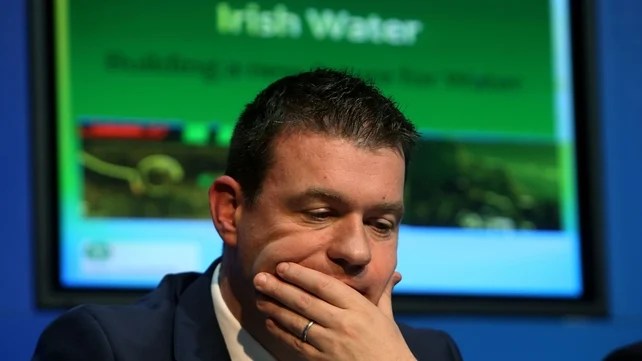
   

Right-2-Water protestors have warned the Irish Government that the campaign against the charges will continue after tens of thousands of demonstrators took to the streets in the fifth major demonstration against the utility.

Among them were 23 protesters facing charges over incidents in Jobstown, Tallaght in Dublin last November when Tánaiste Joan Burton was forced to remain in her car for more than two hours after being prevented from leaving a graduation ceremony.
The Right2Water group, which organised the weekend march in Dublin, estimated about 80,000 protesters turned out.
Sinn Féin deputy leader Mary Lou McDonald urged the Government to use the October Budget to abolish the charges and described Irish Water as “one fiasco after the other”.
Anti-Austerity Alliance (AAA) TD Paul Murphy said the demonstration showed the Government was “on the run” over water charges. Mr Murphy also said his organisation had been denied Garda permission for a collection in his Dublin South West constituency on grounds that it would “encourage an illegal act”.
Paul Murphy, and one of those expecting to be charged over the Jobstown protest, claimed that if the Government does not “bow to the inevitable” and abolish water charges the next government will be under immense pressure to do so.
Trade unions affiliated to the campaign like Unite, the Technical Engineering and Electrical Union, Mandate, the Communications Workers Union, the Civil Public and Services Union and Opatsi, the plasterers’ union also said they are now planning town hall meetings to gather more support.
Meanwhile, senior Gardaí in Cork are to conduct the internal Garda investigation into whether or not reports regarding water protest charges resulted from information emanating from within the force.
Chief Superintendent Mick Finn and Detective Superintendent John Healy have been tasked by commissioner Nóirín O’Sullivan with the inquiry.

Tens of thousands attend water charges protest in Dublin on Saturday last

Demonstrators demand end to Irish Water and ‘bully boy’ tactics of Government

   
Tens of thousands have attended a demonstration against water charges, organised by the Right2Water campaign in Dublin, having marched from the city’s railway stations and suburbs to congregate at the Spire on O’Connell Street.
Tens of thousands of anti-water charges protesters gathered at a stage at the Spire on O’Connell Street in Dublin on Saturday, after setting off from Heuston and Connolly train stations.
A number of smaller groups also marched in from the suburbs for the demonstration, which was organised by the Right2Water campaign.
The protest was the fifth official Right2Water demonstration.
It was supported by five trade unions, including Mandate, whose president John Douglas said the current Government will attempt to divide the population in the upcoming budget.
“The arrogance and the disrespect for the Irish people in the way Irish Water was set up typifies how rotten this country is,” Mr Douglas said, making his first public appearance at an anti-water charges rally.
“A society is judged by how it treats its most vulnerable, and by that test Irelandfails goddamn miserably. This economy, this society is broken- it’s rotten to the core.
“There is no recovery, it’s a bloody myth, they made it up to con us. We know best, we’re the people of Ireland, we know there’s no recovery in Ireland and the only recovery is for the elite few,” he said, adding that people were also mobilising against homelessness and under-investment in the public sector.
In her speech to the protesters, Sinn Féin TD Mary Lou McDonald denounced the “bully-boy” tactics of the Government in trying to impose domestic water charges.
However, she said afterwards that her party has not yet decided whether people who haven’t paid their bills should be entitled to receive the €100 conservation grant.
“You can see from the numbers here today that people have not been intimidated or bought off or persuaded that this issue is not important anymore- this still matters a great deal,” she said, before reaffirming Sinn Féin’s stance that refunds on water charges will not be provided if the party gets into government.
“We would not be making rebates to people who have paid the charges, but neither would we be asking for the conservation charge back.
“We’re just being honest with people. The figures have to add up and you have to balance the books.”
Feeder marches
Protesters from across the country arrived at Heuston and Connolly stations earlier this afternoon for feeder marches.
As with previous protests, there were traffic delays along the north and south quays, with O’Connell Street closed to traffic on both lanes and interruptions to bus and Luas services.
Gardaí reported no disturbances.
The organisers of the event vowed to keep up the pressure on Fine Gael and Labour to abolish the controversial utility, but details of follow-up protests in the coming months have not yet been revealed.
Right2Water spokesman David Gibney earlier said that the protest was also about other problems people faced, including access to healthcare, lack of housing and the right to education.
“This demonstration today it is not just about water. This is about the type of society we want to live in and a vision for the future,” he said.

Ireland has 25th-highest life expectancy in the world

  
The elderly should be cherished Life expectancy is climbing worldwide but we are spending more years living with illness and disability
Ireland has the 25th-highest life expectancy in the world – up from a ranking of 31 in 1990, according to a new global survey.
Life expectancy is climbing worldwide but we are spending more years living with illness and disability.
Countries with the highest life expectancy are Japan, Singapore, Andorra, Iceland, Cyprus and Israel, according to the Global Burden of Disease study, led by the Institute for Health Metrics and Evaluation (IHME) at the University of Washington.
Life expectancy in Andorra is almost 84 years, while it is 80.4 in Ireland. The UK is ahead of Ireland with people living to 81 years.
Since 1990 Ireland’s life expectancy has improved by around six years, the survey of 189 countries revealed.
People around the world are living longer, even in some of the poorest countries, but a complex mix of fatal and non-fatal ailments cause a tremendous amount of health loss, according to the analysis .
Healthy life expectancy takes into account not just mortality but also the impact of non-fatal conditions and summarises years lived with disability and years lost due to premature death.
The increase in healthy life expectancy has not been as dramatic as the growth of life expectancy, and as a result, people are living more years with illness and disability.
“The world has made great progress in health, but now the challenge is to invest in finding more effective ways of preventing or treating the major causes of illness and disability,” said Professor Theo Vos, the study’s lead author.
The differences between countries with the highest and lowest healthy life expectancies are stark. In 2013, Lesotho had the lowest, at 42 years, and Japan had the highest globally, at 73.4 years.
Even regionally, there is significant variation.
Cambodians and Laotians born in 2013 would have healthy life expectancies of only 57.5 years and 58.1 years, respectively, but people born in nearby Thailand and Vietnam could live nearly 67 years in good health.
The fastest-growing global cause of health loss between 1990 and 2013 was HIV/AIDS, which increased by 341.5%. But this dramatic rise masks progress in recent years.

Meanwhile:

A brisk daily walk can add seven years to your lifespan


Just about 25 minutes of brisk walking a day can add up to seven years to your life,

London health experts have said.
Research presented at the European Society of Cardiology (ESC) Congress over the weekend shows that regular exercise can reduce ageing and increase the average lifespan.
Sanjay Sharma, professor of inherited cardiac diseases in sports cardiology at St George’s University Hospitals NHS Foundation Trust in London, said an average person in their 50s and 60s can reduce the risk of dying from a heart attack by half with moderate exercise.
“This study suggests that when people exercise regularly they may be able to retard the process of ageing,” he said.
“We may never avoid becoming completely old, but we may delay the time we become old. We may look younger when we’re 70 and may live into our 90s.
“Exercise buys you three to seven additional years of life. It is an anti-depressant, it improves cognitive function and there is now evidence that it may retard the onset of dementia.”
He said everyone should be doing at least between 20 and 25 minutes of walking a day, involving brisk walking or slow jogging.
“People with a heart condition shouldn’t run but walk to a point where they can still speak — but they shouldn’t be able to sing. Following these simple directions is essential considering our sedentary lifestyles.”
He said exercise will bring benefits whatever age or condition. People who start exercising at the age of 70 are less likely to go on to develop atrial fibrillation, a rhythm disturbance that affects about 10% of people over 80.
The research was carried out by a team at Saarland University in Germany who introduced a group of non-exercising but otherwise healthy and non-smoking people to a staged exercise programme.
They showed that aerobic exercise, high intensity interval training and strength training all have a positive impact on markers of ageing.
The authors noted that endurance exercise and high intensity exercise may be more efficient than just lifting weights, as they further increase telomerase activity, which in turn helps to repair DNA as it gets old.
They said that by measuring the increase of telomerase activity and decrease of senescence marker p16 (both makers of cellular ageing in the blood) over a six-month period, doctors were able to show that regular exercise had triggered the anti-ageing process.
“The study brings a bit more understanding of why physical activity has that effect. It helps us understand the process of cellular ageing as that’s what drives our organ system and body ageing and the effects physical activity can have on the cellular level,” Christi Deaton, Florence Nightingale Foundation Professor of Clinical Nursing Research at Cambridge Institute of Public Health, University of Cambridge School of Clinical Medicine, said.
“The more active you are, and it doesn’t matter when you start, the more benefit you are going to have.”

“A girl’s depression tattoo” marks two perspectives on her secret battle with her mental health condition


A YOUNG WOMAN PICTURED ABOVE WANTED TO SHOW THAT PEOPLE WHO APPEAR FINE ON THE OUTSIDE MAY BE STRUGGLING WITHIN THEMSELVES ON THE INSIDE.

Bekah Miles wants her tattoo to start conversations about depression.
A young woman has revealed her struggle with depression by unveiling a heartfelt tattoo that says “I’m fine” to anyone looking at it, but from her perspective, upside down, it says “save me.”
Bekah Miles dreamed up the inking to show the struggle sufferers have in what they show to everyone around them, against what they see themselves.
The 21-year-old came out about her battle on Facebook, posting the pictures alongside an open letter to her parents, explaining why she had the tattoo done.
She wrote: “So today, I got this tattoo. I feel that my leg was the best place for the meaning behind it.
“When everyone else sees it, they see ‘I’m fine’, but from my viewpoint, it reads ‘save me’.
“To me, it means that others see this person that seems okay, but, in reality, is not okay at all.
“It reminds me that people who may appear happy, may be at battle with themselves.”
Bekah says she hopes her tattoo will start a conversation about the often misunderstood condition.
She said: “This forces me to talk about my own struggle, and why the awareness of it is important.”
People who read her letter praised her honesty and recounted their own battles with depression.
One wrote: “You’re a very brave girl – it’s an uphill struggle and I hope you reach a place where you find happiness with somebody you love xxxx.”
The post has since gone viral and has been shared more than 200,000 times.
She added: “I never expected it to go beyond my friends and family. I thought reaching out to them was enough, but I am completely and utterly in awe of how far this has traveled.
“This is exactly what I wanted–to reach out to people and let them know that they are not alone.
“Please keep sharing and spreading the awareness. This is the only way to get some real change in the stigma.”

Bekah’s letter in full

(Dear mom and dad, please don’t kill me over this permanent choice. I want you to hear me out.)
Today, I am coming out with something that only few of you know. I am ready to have a conversation about my mental illness.
Last year, I was diagnosed with depression. And in all honesty, I believe it was a problem for quite a while before that, but I think it just got worse to the point of hardly functioning.
So today, I got this tattoo. I feel that my leg was the best place for the meaning behind it. When everyone else sees it, they see “I’m fine,” but from my viewpoint, it reads “save me.” To me, it means that others see this person that seems okay, but, in reality, is not okay at all. It reminds me that people who may appear happy, may be at battle with themselves.
To me, depression is the days that I feel sad for no reason.
Depression is the mornings that I don’t feel capable of getting out of bed.
Depression is the sleeping too much, or sleeping too little.
Depression is the homework that I never completed, simply because I didn’t feel like I was capable.
Depression is the break downs I have over absolutely nothing.
Depression is the eating too much, or eating too little.
Depression is the nights I begin to cry because I feel so overwhelmed, even though everything is going right.
Depression is the 50 pounds I carry in my chest at all times.
Social media provides a welcome distraction for young people facing depression.
Depression is the need to constantly be distracted (being on social media, playing video games, watching movies or shows, or working all the time) because I can’t trust myself with my thoughts for longer than 3 minutes.
Depression is the friendships that have suffered because of my inability to function.
Depression is the hurtful thoughts and actions I have towards myself.
Depression is the tears I have because I don’t know why I feel so worthless, when I know I should feel happy.
This is one of the most difficult things to open up about because it’s extremely hard for me to feel vulnerable…but this needs to be talked about.
Mental illness is serious, but so shamed in our society. We care so much for our physical health, but hardly a thing about our mental state. And that is seriously messed up. Mental illness is not a choice and will likely hit everyone at some point in their life. If it’s such a huge issue, why aren’t we having this conversation about it?
That’s why I got this tattoo; they are great conversation starters. This forces me to talk about my own struggle, and why the awareness of it is important. You’d be surprised by how many people YOU know that struggle with depression, anxiety, or other mental illness. I may only be one person, but one can save another…and that’s all I could really ask for.
Maybe this is part of why I am so interested in psychology. I want to help people who feel the way I have—and still do—because it’s hell. And I don’t wish that upon anyone.
“I think the saddest people always try their hardest to make people happy because they know what it’s like to feel absolutely worthless and they don’t want anyone else to feel like that.” – Robin Williams

Sperm cells harpoon female egg to fertilize,

Says new research


Thanks to new discoveries at the University of Virginia in the US, new hypothesis on how conception occurs could be around the corner.
A sperm cell latches on to its target with spiky filaments that emerge from its head, say scientists at the University of Virginia (UVA) School of Medicine in the US whose 14 years of research led to the discovery.
Their finding is featured on the cover of the scientific journal Andrology, in which their corresponding paper was published.
“This finding has really captured our imagination,” says UVA reproduction researcher John Herr, PhD, of the Department of Cell Biology, adding that they have come up with an entirely new hypothesis about what happens at conception.
The research has implications for our understanding of the protein architecture of the sperm head, specifically in an organelle called the acrosomal matrix.
“One of the major proteins that is abundant in the acrosome [in the anterior region of the sperm head] is crystallizing into filaments, and we now postulate they’re involved in penetrating the egg,” says Dr. Herr.
This protein was discovered years ago in Dr. Herr’s lab in collaboration with the lab of Wladek Minor, PhD and they named it “sperm lyzosyme-like protein” (SLLP1).
Minor and his team captured the protein within a static crystal, which they chilled to cryogenic temperatures (approximately below 180 degrees C or below 292 degrees F) for protection, then zapped it with X-rays.
Observing the direction of the X-rays, the scientists were able to determine the protein’s shape in a process they compare to mapping out a shipwreck with a sonar.
It’s the first protein from that part of the sperm to have a crystal structure and it’s the first mammalian sperm protein that can bind to eggs, says Heping Zheng, the lead author of the paper.
Spring-boarding from their new understanding of the protein, the researchers aim to explore how fertilization works in the most precise detail.
The study builds on previous groundbreaking research from Herr’s lab — that time featured on the cover of the journal Biology of Reproduction, which published the corresponding paper in March.
Here, it was reported that the protein ESP1 (as it relates to the gene SPESP1) remains intact during fusion, acting as a stabilizer, while the rest of the sperm head undergoes dramatic changes.
“Getting at the molecular components of the fertilization event has a lot of practical applications — as well as intellectual value — because you want to account for all the major components involved in the essential events of the fertilization cascade,” says Dr. Herr.    

Friday, February 28, 2014

Donie's Ireland daily news BLOG

Its the end of the line for drink after the 1pm Galway train joins the banned booze list


IRISH RAIL CUSTOMERS WILL HAVE ALCOHOLIC DRINKS CONFISCATED ON A TRAIN SERVICE AFTER COMPLAINTS ABOUT ANTI-SOCIAL BEHAVIOUR.

The action will immediately come into force on Sundays on the 1pm train from Galway to Heuston Station in Dublin, and catering staff will no longer sell alcohol on board.
Customers boarding the service with alcohol will have it taken away by Irish Rail staff.
Details of the ban will be displayed at stations, and customers booking online will also be notified during the reservation process.
It comes in addition to the ‘alcohol-free’ services operated on certain weekend routes, including the 1.15pm and 3.15pm services from Heuston Station to Waterford on Fridays, and the 3.05pm service from Waterford to Heuston Station on Sundays.
An Irish Rail spokesperson told the Irish Independent the decision had been made following a “high number” of complaints about anti-social behaviour on the train.
“The vast majority of customers who wish to enjoy an alcoholic beverage on board our services do so without impacting in any way on their fellow passengers.
“Unfortunately, there is a minority that do over-indulge, particularly those travelling in large groups such as stag and hen parties, who can disrupt others in a negative way.”
This type of behaviour was most common during weekend services, when customers may be going away for or returning from weekend breaks, Irish Rail said.
“It is a measure we take reluctantly, but we must act when our customers are regularly having their journeys disturbed by a minority.”
The spokesperson confirmed that the measure would be imposed for the “foreseeable future” and, as with all routes, would continue to be monitored for anti-social behaviour.
Irish Rail said said there were no plans at present to introduce the ban on other routes.
Irish Rail also deploys security staff on a number of routes known to play host to anti-social behaviour, including the aforementioned services between Waterford and Heuston Station and from Heuston Station to Galway on Friday afternoons.
It also prohibits the possession or sale of alcohol on some trains on major GAA match days.
Fionnuala Sheahan, director of Mature Enjoyment of Alcohol in Society (MEAS)said that for years Irish people had given social permission for people who drink too much to participate in anti-social behaviour, and that this was a clear message that Irish Rail “has had enough”.
Some 38.8 million passengers travelled with Irish Rail in 2009, down from 43.3 million passengers in the previous year.

€10m western Wild Atlantic Way driving route now launched


The Government is spending €10m on the Wild Atlantic Way this year, a 2,500-km driving route from Donegal to Cork aimed at attracting more visitors.

Launching the new initiative today, Junior Tourism Minister Michael Ring described it as “the world’s longest touring route”.
 It stretches along the coast from Malin Head in Donegal to the Old Head of Kinsale taking in over 500 visitor attractions, as well as 53 Blue Flag beaches, 120 golf courses and 50 loop walks.
Mr Ring said it was already providing a hit in key overseas markets like Britain, the US, France and Germany.
“It has massive potential to bring more visitors and jobs to rural communities right along the western seaboard. That’s why we will soon be promoting it even further afield in places like Spain, Italy and the Netherlands,” he said.
The government has allocated €8m for the project this year with Failte Ireland spending another €2m on some 159 “Discovery Point” sites highlighting key attractions such as the Cliffs of Moher in Clare and Dursey Island in Co Cork.
Nearly 4,000 new signs are being erected along the route in time for the start of the tourist season, while a new app is also being developed to assist visitors on the route.
One of Germany and Austria’s largest tour operators Dertour said it was featuring the route on the cover of its current brochure because it would appeal to customers.
“Germans love the coastline and they are always looking for outstanding scenery which they wouldn’t find at home,” said Dino Steinkamp of Dertour.

Irish action Plan for Jobs has 385 item to-do list but no strategy


The Irish Government has published its latest Action Plan for Jobs and it has a 385 item to-do list but there is still lack of a strategy.

So there are lots of points to cover but there is no evidence that ministers know what works and what doesn’t.
We noted last December that the much-hyped medium term strategy 2014-2020 would likely be a brochure rather than a plan with an unvarnished analysis of strengths, weaknesses, opportunities and threats. That is what was published.
It came just three months after the OECD’s Economic Survey of Ireland recommended empirically-proven policies and sunset clauses in enterprise and innovation supportsand we noted that there is no experience of this in the Irish system.
The OECD said the number of programmes and agencies multiplied during the period of booming growth. “There are now over 170 separate budget lines, sometimes for very small amounts of money, and 11 major funding agencies involved in disbursing the Science Budget, although it is small by international standards.”
This is boring to ministers but nobody else is in charge and for example enterprise agency heads say nothing of substance in public and possibly also in private.
Focus limited fiscal resources on policies empirically-proven to improve employability; this will require systematic evaluation of labour-market programmes through consistent tracking and randomised trials, followed by decisions to close down ineffective schemes while strengthening successful ones.
Reflecting significant uncertainties about the effectiveness of various innovation policy tools, independently and regularly evaluate all actions in this area, strengthen programmes with proven higher returns, and wind down the others. To promote effective evaluation, ensure all innovation and enterprise supports have sunset clauses.”
The latest university rankings shows that Ireland does not have a single university in the top 100 includes mathematics, physics, computer sciences, and all four of the engineering disciplines.
It’s daft to aspire to be world class in science and technology in a country with a tiny indigenous research base and more than 70% of foreign firms spending nothing on R&D.
The Department of Jobs, Enterprise and Innovation said last December:
Minister Bruton and the Department of Jobs are unashamedly ambitiousfor the potential of scientific research in Ireland to support economic growth and job-creation in Ireland. In recent years we have improved our ratings for basic research to the point where we are now very competitive internationally – the challenge now is to achieve greater returns in terms of commercial outcomes and jobs from this research.”
So they are “unashamedly ambitious for the potential of scientific research in Ireland” and this is effectively the main enterprise policy. An inflation adjusted €24bn has been spent in the past decade in this area and all they can cite are citations in journals while patent applications are at a 30-year low.

Phased redeployment of Irish hospital staff on the way

  
Staff from St Brigid’s Hospital in Ballinasloe will be redeployed on a phased basis to both community mental health teams in Ballinasloe, and to acute services in Galway and Roscommon, following a consultation process with “no impact for current inpatients in Ballinasloe,” Minister of State with responsibility for Mental Health Kathleen Lynch has stated.
Galway and Roscommon Mental Health Services operate as one administrative unit. At present, there are 35 acute psychiatric beds in Galway city, and 22 acute psychiatric beds in both Ballinasloe and Roscommon. This gives a total of 79 beds, serving a population of some 315,000.
A Vision for Change recommends 50 beds for a catchment population of 300,000. In line with policy and operational norms nationally, the provision of 22 beds in both Ballinasloe and Roscommon means that the current overall stock of 79 in the HSE West is too high in relative terms, allied to a corresponding under-development of community-based mental health services, Minister Lynch said in response to Dáil questioning by Deputy Denis Naughten.
In the context of the service improvements now underway, a purpose-built, 50-bed acute mental health unit will be completed in Galway University Hospital in 2015, to replace the existing smaller unit. This unit will consist of 35 general adult mental health beds, with the remaining 15 beds relating to psychiatry of later life, eating disorders and mental health and intellectual disability. The acute unit in Roscommon will continue to provide 22 general adult mental health beds.
The proposed reorganisation of services, following a detailed assessment by HSE West, will provide for a total of 57 general adult mental health beds. This will be a sufficient number of acute psychiatric beds, in line with A Vision for Change, and will also allow the Executive to enhance community-based services through redeployment of some staff from acute services, said Minister Lynch.

10 of the hottest Exercise trends for you to try out


Fed-up with your usual workout? Don’t despair, we have the solution. Our expert rates the 10 hottest exercise trends.
Bored of bootcamp and fed up of fitness DVDs? A new survey has found that we’d rather do anything OTHER than exercise, and this includes filling out tax returns, doing house work and even going to a Justin Bieber concert.
Here we reveal 10 new ways to take the weariness out of your workout – and personal trainer Darragh Hayes gives his expert verdict on each.
1 ONLINE TRAINING:
From broadband to waistband, virtual fitness could soon replace fitness DVDs for those looking to shape up at home. Dodging Storm Darwin while doing an exercise class with a real instructor anywhere in the world is just one of the advantages. But the Skype’s the limit.
EXPERT VIEW: “I do online training with clients, but I would only do it with those who already know what they’re doing. If you’re just starting out, it’s better to have somebody standing over you telling you exactly what to do.”
TRY IT: Natalie Portman’s trainer Mary Helen Bowers offers online ballet classes at http://www.balletbeautiful.com
2 RAVE FITNESS:
Dust down your Scooter CD and dig out those glow-sticks. Nineties-style aerobic raves – but with no booze or boys – are back. Clubbers burn up to 600 calories by dancing non-stop for an hour. Best of all, you wake up feeling perky not pukey the next morning.
EXPERT VIEW: “Jumping around like a maniac for an hour will certainly burn calories, but I’m not convinced it will actually burn fat or make you stronger. Be sure to drink lots of water.”
TRY IT: Women-only freestyle dance session ‘Dance Dance Party Party’ (see dancedancepartyparty.com for upcoming Irish dates)
3 OBSTACLE COURSES:
Beanbags are for babies. Today’s toughest obstacle courses for adults include crawling through mud, plunging into ice-cold water and scrambling over 12-foot walls.
Among the extreme outdoor challenges taking place here are Hell & Back, Tough Mudder and Runamuck. Less marathon than mad-athon.
EXPERT VIEW: “In terms of motivation, setting a goal to complete an outdoor challenge is a great idea. Just remember to get into the gym and start lifting to build strength as well!”
TRY IT: Tough Mudder Ireland 2014 takes place on October 4-5 at Punchestown Racecourse, Naas, Co. Kildare (see tough mudder.co.uk)
4 HYBRID EXERCISE:
First Brangelina and now ‘Piloxing’. That’s just one of the hybrid exercise classes springing up all over the country. As well as the fusion of Pilates and boxing, designed to offer the best of both, there’s ‘yogilates’ (yoga and Pilates), ‘zennis’ (zen and tennis) and ‘YAS’ (yoga and spinning). Perfect for indecisive exercisers – or is it?
EXPERT VIEW: “If you want to do Pilates, just do pilates; if you want to box, then box. Any good personal trainer should be able to integrate the strength and conditioning offered by both into your regular fitness regime.”
TRY IT: For a full list of Piloxing instructors in Ireland seehttp://www.piloxing.com
5 BODY-WEIGHT TRAINING:
Feel the burn using nothing but your own body. Forget the fancy gym equipment and go back to basics with press-ups, sit-ups, squat and lunges. It helps prevent osteoporosis, especially for women, by building stronger bones, costs nothing and you don’t even have to change out of your jammies. Triple whammy.
EXPERT VIEW: “Since injuring my back last year, body-weight training has helped recover my strength. I see people coming into the gym who can’t even hold a side plank for 10 seconds. It’s vital to get the basics right before so much as picking up a dumbbell.”
TRY IT: “When it comes to squatting, it’s a myth that you have to go ‘ass to grass’,” says Darragh. “Keeping your knees in front of your toes, squat until you’re parallel with the floor.”
6 ACTIVE SITTING:
Now you can shape up by literally sitting on your backside. Sedentary workers are increasingly throwing away their chairs in a bid to burn calories as they work. Instead, you balance on an inflatable exercise ball, which engages tummy muscles and improves your posture – not to mention your balance.
EXPERT VIEW: “Sitting on an exercise ball intermittently is fine, but for eight hours a day it could cause your core muscles to become fatigued. Doing bodyweight core exercises like the plank or side plank will have the same effect.”
TRY IT: Pro Fitness 65cm Gym Ball, €8.95, available from Argos.ie
7 GET-FIT GADGETS:
Fitness gadgets have come a long way since the humble pedometer. From smart scales that gauge your body-fat percentage to sweat-resistant headphones, losing weight has gone all hi-tech. Nike’s FuelBand activity tracker even reminds you to move if you’ve been watching telly for too long. Big blubber is watching you!
EXPERT VIEW: “No gadget is going to get your body fat down or build muscle, so don’t expect them to. If you’re hungry, eat. If you’re not, don’t. It’s as simple as that. Unless you’re training for a competition, I think fitness gadgets are a waste of time.”
TRY IT: Nike+ Fuelband SE, €139, available from store.nike.com
8 HIIT:
If you’re time poor, and not so flush with cash either, this year’s hottest trend for ‘High-Intensity Interval Training’ could be just the trick. Torching around 15 calories per minute, studies show that a 10-minute HIIT – including push-ups and burpees – burns more calories than half an hour on the treadmill. And, as it’s over in mere minutes, the boredom excuse is invalid.
EXPERT VIEW: “High-intensity interval training blows training on a treadmill or cross trainer out of the water. It’s great for losing fat and building muscle. Do it using your own body weight, or add weights for a tougher workout.”
TRY IT: The Fit Factory, Kells, Co Meath offers HIIT classes (see facebook.com/ fitfactorymeath)
9 ANTI-GRAVITY YOGA:
Super-toned singer Pink wowed with her aerial performance at the Grammys last month. And now more and more people here are hanging out at the gym too. The Cirque de Soleil-style classes involve practising yoga moves in a hammock for maximum flexibility.
EXPERT VIEW: “I have Olympic rings and TRX equipment in my gym that I use as part of any session. But I wouldn’t base a whole session around suspension training as there’s only so much you can do with it.”
TRY IT: For details of anti-gravity yoga classes available in Ireland, seehttp://www.antigravityyoga.ie
10 GROUP TRAINING:
You don’t have to be a celeb to afford a personal trainer – any more. Tighten your belt in more ways than one by simply sharing a trainer with one or more gym buddy. Mind you, even counting our Facebook friends, we probably still can’t afford trainer to the stars Tracy Anderson.
EXPERT VIEW: “I’m a stickler for technique. When you’ve got 25 or 30 people in a class, like some bootcamps, there’s no way you can ensure everyone is exercising correctly. For those who can’t afford one-to-one training, sharing a trainer is a great idea.”
TRY IT: The Cover Model Body Gym offers ladies-only group training (limited to six per class), €300 for 12 sessions (see covermodelbodypersonal training.com)

Wild beavers in England seen for first time in centuries


Footage of a family of beavers filmed in a Devon river is believed to be the first sighting of its kind in up to 500 years

Two beavers were caught on camera playing at night while a third one (in background) is gnawing a tree on the banks of the River Otter, Devon. Tom Buckley got the footage with a hidden infrared motion sensor camera. Photograph: Tom Buckley
A family of wild beavers has been seen in the England countryside in what is believed to be the first sighting of its kind in up to 500 years.
Three European beavers (Castor fiber), believed to be adults, have been filmed together on the River Otter in east Devon and can be seen gnawing at the base of trees, grooming themselves and playing together.
Experts said the sighting was “highly significant” as it strongly suggested a small breeding population of beavers now existed outside captivity.
European beavers were once widespread in the UK but were hunted to extinction by the 16th century in England and Wales for their fur, medicinal value and meat.
There have been successful reintroduction schemes in other parts of the UK. In 2009, three beaver families were released into forest lochs near the Sound of Jura in Argyll, while plans to release the species into the wild in Wales have also moved a step closer. The sighting in Devon would be the first time in centuries that European beavers have bred in the wild in England.
Wild beavers return to Scotland Link to video: How wild beavers made their return to Britain
The footage was captured by local retired environmental scientist Tom Buckley, who noticed some trees had been felled in the area in late last year. Together with landowner David Lawrence, he installed three motion sensor cameras along a 400-500m stretch of the river. A lone beaver was spotted on the farm in January and last July a woman claimed she saw a beaver on the river.
“We’d seen bits of trees chewed and cut down and I was starting to think that it was a sign of beavers even though I couldn’t believe it,” Buckley said.
Beaver expert Derek Gow confirmed that one of the animals filmed by Buckley was a juvenile and the family may have been in the wild for years. Buckley does not know where they have come from or exactly where their home is.
“When I first saw that first beaver it was such a shock. When I saw three it was slightly different – we knew there was one around and we were tracking its activities. When we watched film and all of a sudden another appeared, and then another – I would not just say that was amazing – one was speechless realising what was happening. We had no idea there was more than one, and they are all quite large and active as well.”
Devon Wildlife Trust has been running its own Beaver Project since 2011, when an adult male and female were introduced to a securely fenced compound in the north-west of the county.
But the beavers remain in their compound and are not the source of the population now seen on the River Otter.
Steve Hussey from the Devon Wildlife Trust said he supported the reintroduction of beavers to England but that it had to be “properly planned”.
“In principle, we would like to see the European beaver reintroduced to England but recognise that a great deal of work needs to be done before this can happen.”
He said the beavers should be left alone and observed using a rigorous monitoring programme.
“This group of beavers provides us with a unique opportunity to learn lessons about their behaviour and their impact on the local landscape … [the group] could contribute to this process if they are subjected to thorough scientific study.
Beavers are a “keystone species”, meaning they provide more important ecosystem services than their numbers alone would suggest. Known as “ecological engineers”, their dams, burrows and ditches and the branches they drag into the water create habitats for a host of other species. Their dams slow rivers down, reducing scouring and erosion, and improving water quality by holding back silt.
During the recent wet weather and flooding crisis, naturalists called for the reintroduction of beavers to control floods.
Otter tracks and spraint was found alongside the beaver prints, indicating they may have been interacting with wild otters too.
Hussey added: “There’s evidence that otters, beavers are coming together here face to face perhaps for the first time in two or 300 years.”
The Department for Environment, Food and Rural Affairs (Defra) is investigating the sighting as it is against the law to release beavers in England. A spokeswoman said the department would “look into this case and will consider what action to take”.
She said she could not comment on whether the beavers could be removed from the site or destroyed.
Buckley said: “This beaver family has been around for at least a couple of years and no one seems to have noticed them. They haven’t caused any trouble for anybody and it’s only because they’ve been caught on camera that people know they are here. To think about destroying them is totally out of order. This is an insight into what the potential impact is if they are already in a place and at the moment that impact would seem to be zero.”