Mary McAleese warns against a Brexit leave vote result for Ireland


Mary McAleese has warned of the dangers of Brexit.
A BREXIT VOTE RESULT WOULD CAUSE TURMOIL AND RADICALLY ALTER RELATIONS BETWEEN BRITAIN AND IRELAND, SAID THE FORMER IRISH PRESIDENT MARY MCALEESE.
Mary McAleese has also claimed Ireland’s peace and prosperity would be in danger if Britain votes to leave the European Union next week.
She said: “Reassurances that nothing will change are at best wishful thinking and bluffing most of us at worse.”
Mrs McAleese, who was president from 1997 until 2011, will throw her weight firmly behind the Remain campaign as she launches a new report from the British Influence think tank at Westminster later.
In her speech she will urge British voters to avoid a choice for “drift” and loss of influence in Europe. She will also call for the 600,000 Irish citizens resident in the UK to vote stay.
She will also say that the benefits in Anglo-Irish relations, now taken for granted, could be put in peril while the future of 400,000 jobs and the open road border between Northern Ireland and the Republic would also be uncertain.
“The concerns of Ireland are legitimate and well-founded,” she said.
“They involve the economy, trade, immigration controls, the hardening of the land border, security, the weakening over time of the excellent current relationship between Ireland and the United Kingdom, the impact on the peace process and the impact on European development of Britain’s voice being absent from the European Union table.”
Meanwhile, the British Influence paper, Brexit: The Irish Dimension, outlines the top seven problems that would upset Anglo-Irish relations in the event of Brexit:
They include the impact on Ireland’s economy; disruption of the free movement Common Travel Area and the re-introduction of border controls as well as the ending of current extradition arrangements with the Republic of Ireland.
Other potential difficulties would be disruption to the peace process and the ending of EU-funded programmes while the all-Ireland electricity market and the energy relationship with the UK could also be affected, the report claims.
Peter Wilding, director of British Influence, said: “Vote Leave’s ‘It’ll be all right on the night’ attitude is playing with fire when it comes to the future of our relations with Ireland.
“Our report demonstrates – and Mary McAleese together with the entire Irish Government knows – that Brexit means trouble ahead for jobs, investment and the peaceful stability of the island of Ireland.”
Meanwhile, Anthony Bailey, who sponsored the report, said he did not want to see the progress of the last two decades derailed.
Most minimum wage workers are in the‘Irish middle income families group’and just below the poverty line?


INCREASING THE MINIMUM WAGE WILL NOT TACKLE POVERTY BECAUSE THE MAJORITY OF WORKERS EARNING IT ACTUALLY LIVE IN MIDDLE-INCOME HOUSEHOLDS, A NEW STUDY CLAIMS.
The startling findings come as the Government is under pressure to increase the €9.15-an-hour statutory rate.
A new report by the ESRI, which is partly State-funded, warns that increases in the basic statutory pay rate will do little for households living below the breadline.
The report, to be published today, questions the impact increases in the statutory wage have on reducing poverty. It finds that recent hikes in the national minimum wage have mainly benefited people in ¬middle-income households.
The economic think tank found the proportion of low-wage employees rose from 20% in 2005 to 23% in 2014. But it added: “Results also confirm that very few low paid individuals are found in households with incomes below the most commonly used poverty line income cut-off.”
The report reveals that ‘Low Pay, Minimum Wages and Household Incomes: Evidence for Ireland’ – says 11 out of 12 low paid workers are living in households above the poverty line.
In most cases, low paid employees are not the sole earners. It finds that even where they are the sole earners, fewer than one-in-five are at risk of poverty.
The report notes that a young adult may be earning a low wage but living in the family home where the parents’ income is enough to keep the household above the poverty threshold. In addition, low wage earners with few dependants will be at lower risk of poverty.
In contrast, employees with an above average wage may be more at risk of poverty when they are the sole earners in the household or have many dependants.
But it notes a young adult may be in a poverty trap at home because they could not afford to buy or rent a home, while other workers may feel they are not earning enough to start a family.
REDUCING POVERTY?
“This is not to say that a minimum wage policy is flawed if it fails to reduce poverty,” says the report. “Rather, it is important to understand the possibilities and limitations of targeted efforts to increase wages.”
It notes that government policy may, of course, be concerned with low individual incomes as well as with low household incomes.
“But it is important to be clear about what minimum wage policy can, and cannot, achieve. It is also important, as recent UK experience illustrates, that the design of tax and welfare policy changes should take such factors into account from the outset,” it says.
The Government has committed in the Programme for Government to a hike in the wage to €10.50-an-hour over the next five years in a bid to reduce “poverty levels” for the 124,000 workers on it.
Unions want the Low Pay Commission to recommend it boosts the rate beyond this when it reports next month due to the economic recovery and a hike in the minimum rate in the UK.
The leader of Mandate trade union said it would be “ill conceived” if the Government does not increase the minimum wage.
“It’s disappointing that a body that would have had a social agenda in the past would come out with a negative statement in relation to pay, particularly low pay,” said John Douglas. “The Low Pay Commission hasn’t come up with any proposal as yet to increase the minimum wage but an increase is vital.”
He said raising the minimum wage was not a “cure-all” to ¬poverty, but an essential part of tackling poverty.
IT Sligo students win Engineers Ireland Innovative Student Engineer of the Year Award


Their innovative design, titled ‘Automatically fed post driver’, allows tractor operators to drive posts without having to dismount their tractors, significantly improving the safety and efficiency of the process, and was deemed the best innovation by the Engineers Ireland judging panel. Previously there had been no post drivers that are able to hold, feed and drive a post without the operator having to dismount the tractor.
A human-powered washing machine, an advanced limb prosthesis, a clean-energy inflatable tower, a flexible robotic arm and a safe-release building hook were other projects also short listed for the final, which was sponsored by Siemens.
The Engineers Ireland Innovative Student Engineer of the Year Award is an annual competition that focuses on showcasing innovation excellence amongst engineering third-level students across Ireland.
Dermot Byrne, Engineers Ireland President, said the innovative skills which engineers possess were becoming increasingly valuable in a world of rapid change.
“Engineering is transforming how people work, live and experience the world. In energy, transport, health, water, the digital economy and more, engineers are at the heart of the endeavour to improve lives and living standards in complex environments. It is imperative Ireland can bring new techniques, processes and skills to all sectors so that we can compete on a global stage with our competitors.
I believe the diversity and creativity of contemporary engineering is very much reflected in this year’s projects which span areas such as robotics, clean energy and mechanical engineering. Congratulations to Colm, Shane, Caolan and Conor for winning the 2016 Engineers Ireland Innovative Student Engineer of the Year Award and praise to all of the participants in this year’s event who have acquitted themselves so well.”
Michael O’Connor, Corporate Communications Manager, Siemens Limited said: “All the projects on show today have taken a unique approach to a challenge through original thinking, technical excellence and hard-work. Developing close links with leading educational institutions and industry partners is a key part of Siemens’ innovation strategy.
“The Engineers Ireland Innovative Student Engineer of the Year Award is a valued initiative in this regard and challenges students to think conceptually and strategically. Competitions such as this are invaluable to companies such as Siemens, helping us to reach tomorrow’s talent.
“Siemens is very pleased once again to support a competition that engages and encourages young people to develop their engineering expertise for commercial use and the good of society. It is a fundamental element of our programme of engagement with young people around the STEM (Science, Technology, Engineering and Maths) agenda and of our relationship with Engineers Ireland.
“Congratulations to all of the finalists here today, particularly Colm, Shane, Caolan and Conor for winning the award outright, and based on the quality of submissions we have seen, I have every confidence they will enjoy great success in their respective careers ahead.”
The runners-up in the competition were:
- Aisling Lee (DIT) – ‘Actuation and Control of Transradial Upper Limb Prosthesis’
- Antara Barbara, Ahmed Kone, Sebastien Course (CIT) – ‘Haelios Solar Technologies™ – Solar Updraft Tower Development’
- Ben Frost (DIT) – ‘Design and build of a Human-Powered Washing Machine’
- Darren Kingston (CIT) – ‘Construction Sector Safety Hook Design and Development’
- Noel Frisby (Trinity College Dublin) – ‘The design and development of a under-actuated, compliant anthropomorphic hand capable of dexterous grasping for a Service Robot’
€10m sought by Minister for Jobs in small business

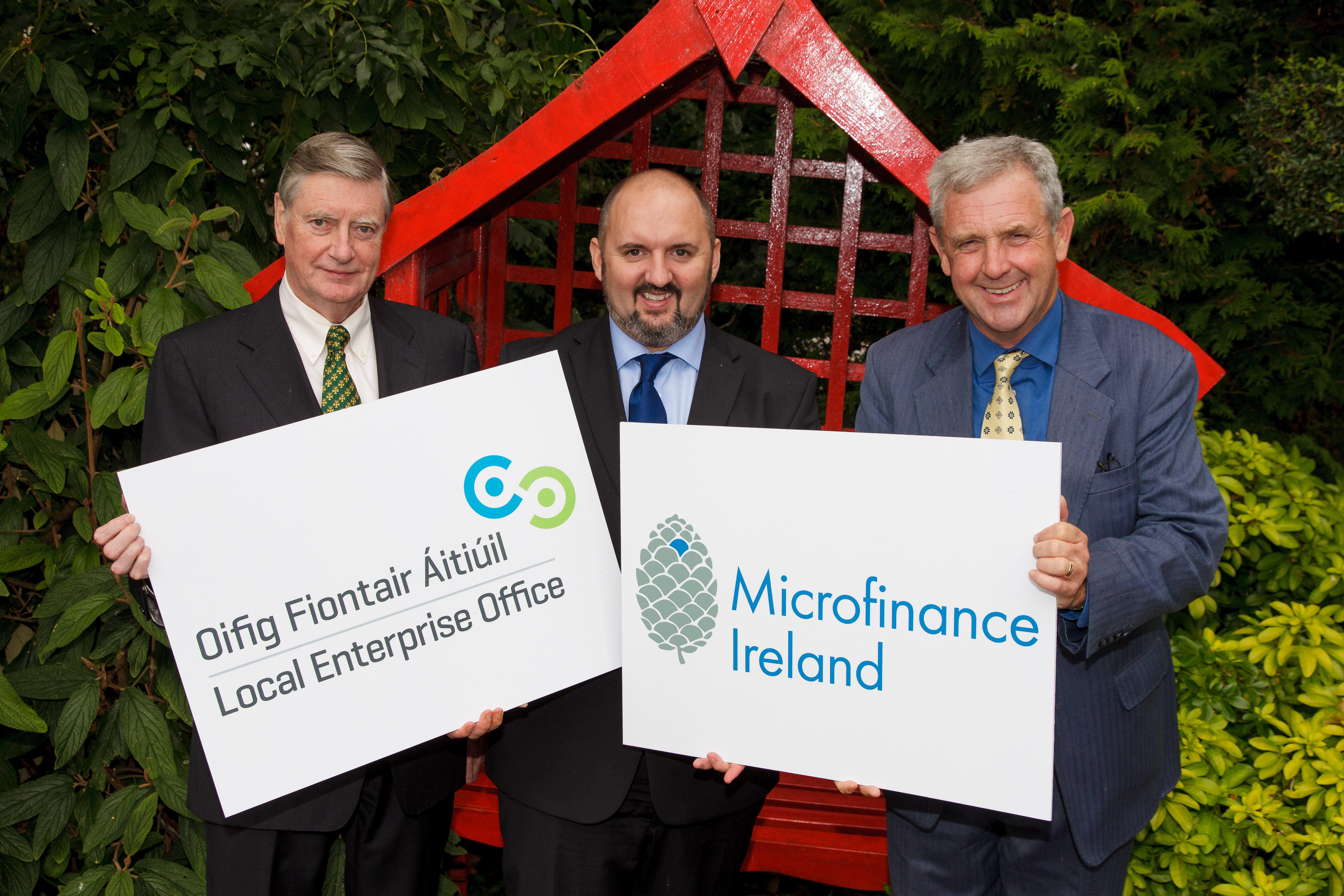
The Minister for Jobs, Enterprise, and Innovation, Mary Mitchell O’Connor (above), is hoping to secure a further €10m of exchequer funding to keep Microfinance Ireland afloat beyond 2017.
MICROFINANCE IRELAND IS THE STATE-BACKED PROJECT AIMED AT FUNDING SMALL BUSINESSES.
Ms Mitchell O’Connor also said the €11.7m lent by Microfinance Ireland has helped sustain some 2,000 jobs.
In a written Dáil reply to Fianna Fáil’s Niall Collins, she described the output by Microfinance Ireland as “a very satisfactory performance in a difficult market at a very difficult time”.
Ms Mitchell O’Connor said that, since its inception in October 2012, Microfinance Ireland has approved 867 loans out of 1,826 loan applications received.
Some 591 applications were declined with 317 being withdrawn.
Microfinance Ireland was established by the Department of Jobs, Enterprise, and Innovation under the Action Plan for Jobs.
Ms Mitchell O’Connor said: “To secure the future development of Microfinance Ireland my officials are in negotiations regarding securing a tranche of €10m additional exchequer funding required to keep the fund operating as a going concern beyond 2017 in line with company law requirements.
“This equity injection is combined with additional bank funding of €15m.”
Last year, the State-backed, not-for-profit lender had a record 50% rise in the number of loan applications.
Approvals for start-ups, sole traders and small businesses reached an all-time high in 2015 with the lender approving €5.4m in funding to 357 businesses across every county in Ireland, supporting the creation and maintenance of 930 jobs in the process.
A total of 752 businesses applied for loans in 2015, compared with 508 for 2014, an increase of 48%. The average loan size approved during 2015 was €15,190.
Figures provided by Ms Mitchell O’Connor, show the highest number of loan approvals to the end of March this year totalled 196 with the number of loan approvals in Cork at 70, Limerick and Meath at 42, Galway at 38, Tipperary at 33, Wexford at 33, Cavan at 32, Kildare at 34, Mayo at 33, Wicklow at 30, Waterford at 28, and Kerry at 23.
The fund offers business loans of €2,000 to €25,000 to companies with fewer than 10 employees, and with a turnover of less than €2m.
According Microfinance Ireland data on the gender breakdown of those making loan applications, 76% were from males and 24% from females.
Cats can understand the laws of physics, researchers now claim?


USING A PLASTIC CONTAINER, SOME MAGNETS, THREE IRON BALLS, TWO VIDEO CAMERAS AND 30 CATS, RESEARCHERS FROM KYOTO UNIVERSITY HAVE CONCLUDED THAT FELINES UNDERSTAND THE LAWS OF PHYSICS.
The research paper titled There’s no ball without noise: cats’ prediction of an object from noise was published in Animal Cognition.
Twenty-two cats from Japanese cat cafes and eight domestic cats were carried off to separate rooms to take part in an experiment which supposedly tested their abilities to understand gravity.
The researchers rattled a plastic container lined with an electromagnet. Inside was an object made from three iron balls. At the flick of a switch, the magnetic force of the magnets attracted the iron balls – restricting their movement – so the container made no noise when it was shaken.
When the researchers shook the container with the switch turned off, the iron balls rattled against the inside of the container. After the container was shaken, it was turned upside down to reveal the object inside.
The researchers proposed that the event where there was no sound and no object or a sound and an object “matched with physical laws.” They called that a congruent condition. But the events where there was no sound but the appearance of the object, or sound but no object, defied physical laws and was called the incongruent condition.
The cats were required to sit and watch each event and their reactions were filmed with video cameras.
After analyzing each video, the researchers found that the furry creatures stared longer at the container when it made a noise, as they could predict that there was an object inside. But, they also stared at the container even if the events did not make sense to them – the incongruent condition.
“Cats use a causal-logical understanding of noise or sounds to predict the appearance of invisible objects,” said Saho Takagi, lead author of the study.
In the paper, the researchers claimed: “This study may be viewed as evidence for cats having a rudimentary understanding of gravity.”
For those who remain unconvinced that cats can understand physics, since they held their gaze on the container in both the congruent and incongruent condition, the researchers said: “It is not appropriate to directly compare these two conditions because the main effect of object would overshadow the effect of the expectancy violation. Thus, the absence of a difference between these two conditions does not weaken our main conclusion.”
“Expectation violation” is a theory that analyzes how individuals respond when they are faced with unexpected events. The theory was proposed in the late seventies by Judee Burgoon, professor of Communication, Family Studies and Human Development at the University of Arizona.
Unfortunately, the conclusions of this study cannot be compared with other findings since there has been “no study specifically testing knowledge of this fundamental physical rule in cats.”
The ability for cats to predict where objects are fits in with their hunting style, Takagi explained. In the future, he hopes to devise another test to examine if cats can extract information such as the size or identity of an object from the sounds they hear.








 Viewers will be able to ask questions about the moon via Twitter by sending messages to @Slooh or by joining the webcast’s live chat, Slooh representatives said.