Pages

Showing posts with label Marc McSharry. Show all posts

Sunday, February 28, 2016

Donie's Ireland daily news BLOG update

Marc MacSharry tops poll & on course to win his father Ray’s old seat in the Sligo-Leitrim constituency

    
Early indications suggest Fianna Fáil senator Marc MacSharry is on course to win his father Ray’s old seat in the Sligo-Leitrim constituency and has topped the poll. Mr MacSharry was polling strongly in the early boxes opened from the Sligo town area.
John Perry’s director of elections has accused Fine Gael of conducting an arrogant campaign which did not resonate in rural Ireland. The former minister of State John Perry  just got 7% of first preferences – half of the vote he received in 2011
Mr Perry has been one of the biggest Fine Gael casualties to date. He took a successful High Court challenge to be included on the Fine Gael ticket, but has polled the worst of the three party candidates and has conceded that he will not be re-elected.
His vote in the Sligo-Leitrim constituency has been more than halved from his 2011 performance when he topped the poll.
Mr Perry was not present this afternoon at the count in the Clarion Hotel in Sligo.
Instead, director of elections Thomas Walsh said the defeated former small business minister was “bitterly disappointed” and neither he nor the rest of the party had forseen how bad things would be.
Mr Walsh maintained the “keep the recovery going” mantra did not transfer to rural Ireland.
Mr Perry has conceded his seat after polling very poorly in the Sligo Leitrim constituency.
Mr Perry, who fought a court battle to be included on the Fine Gael ticket, received just 7 per cent of the first preference votes. He is trailing in seventh place, according to the final tallies.
His first preference vote of 4,298 is less than half of the 8,663 votes he received when topping the poll in 2011.
He was well behind his constituency colleagues, Leitrim-based Gerry Reynolds (6,505) and the other outgoing Fine Gael TD Tony McLoughlin(6,083).
The big winner in the sprawling constituency is Fianna Fáil’s Senator Marc MacSharry who will top the poll with 8,763 votes, according to the tallies. He is certain of a seat.
Top candidates
The only other certainties are that Fianna Fáil, Fine Gael and Sinn Féin will get one seat each. The fourth seat will go to one of those parties. None of the Independents in this sprawling constituency have garnered enough votes to be in with a chance of election.
Leading candidates in order of first preferences are Marc MacSharry (8,763), Gerry Reynolds (6,505), Tony McLoughlin (6,083), Sinn Féin councillorsMartin Kenny (6,079) and Chris MacManus (4,721).
Former TD Declan Bree was the best of the Independents with 3,176 first preferences followed by Sligo Cllr Marie Casserley with 2,675 votes.
It was a disappointing election too for Labour’s Senator Susan O’Keeffe who polled just 1,803 votes. In 2011 she received 4,553 first preferences and came close to winning a seat.
Some 18 candidates stood in what is one of the biggest constituencies by geography in the country – comprising all of Sligo and Leitrim, but also including south Donegal and west Cavan.

Currency fears haunt Irish business

    
This is panning out to be a very tricky year for Irish exporters, as slowing international economic growth is being laced with extreme currency movements, led by the British pound falling under the pressure of an EU referendum now scheduled for June 23.
However, not all of the sterling fall can be loaded onto UK prime minister David Cameron’s commitment to an in-or-out referendum on the EU, or his failure to get Boris Johnson inside the tent.
The unexpected under-performance of the UK economy since the start of 2016 and the Bank of England’s delaying tactics on interest rate increases and lukewarm promises on more quantitative easing to support economic growth have also taken their toll.
Today, the sterling to euro exchange rate is down about 12% since November, which in many instances will have completely wiped out Irish exporters’ profit margins.
However, exporters may be faced with even more pain if initial sentiment supporting an exit grows.
Many international banking forecasts are indicating a further 10% to 20% slump in the value of sterling.
We will once again be looking at the spectre of trading ghosts of the years 2007 to 2009, when sterling fell by 30%, exporter sales to the UK slumped, and profitability and jobs were lost.
Of course, if over the next few months there is a clear shift in sentiment towards remaining within the EU, the situation is likely to change rapidly.
The consensus amongst foreign exchange currency dealers right now seems to indicate a return to euro to sterling rate of 70 pence, which was the average last year, if the UK commits to stay in the EU.
Exchange rate volatility will have numerous implications for Irish exporters, once the honeymoon period is over and debtor’s payments protected by forward currency contracts have been used up.
Of even greater concern to Irish exporters is if UK voters decided in June to exit the EU.
There are a number of scenarios independent think tanks, including the ESRI, have highlighted showing that Britain would struggle to maintain trade links with EU members and would give up 30% trade growth if it left the 28-nation bloc.
Some of the negative consequences are undoubtedly arising from the Scottish Nationalist Party’s declaration to push again for independence, in the event of the UK voting to exit the EU.
And there is the unique Irish prospect of the North outside the EU with the rest of the country within.
However, perhaps the biggest trading loses will come in the City of London, where the London financial services sector is by far the biggest centre for foreign exchange trading of the euro, a position it could not possible expect to retain if it was outside the EU.
This exit process is likely to take two years, which will stretch the trading skills of both Irish sellers and UK buyers, particularly if international forecasters’ expectations are right and sterling falls by a further 10% to 20% against the euro.
The UK is the single largest market for our rapidly growing services export sector, buying €23bn of computer software, financial services, insurance services, and accountancy and management consultancy services last year.
And, yes, there is also strong exposure for our agri-food and drink exporters, but it is the much smaller exposure of €4.1bn.
And of course there is exposure by the pharmaceutical exporters of €3.9bn and the computer and machinery exporters of €2.5bn as well as the many other small business exporters who export €3.2bn of their goods to the UK.
A UK outside the EU, a fragmented UK, and a much reduced economic UK will, without a doubt, be catastrophic for Ireland’s export industries.
However, it will still be an important market for Ireland, even if there is uncertainty in regulatory, currency and movement of goods and people.
For many companies both across the manufacturing sector and the various services industries in Ireland, the unsavoury option may be forced upon them to open UK offices and manufacturing facilities to retain market share, with the inevitable loss of jobs.

Carrots can help cut breast cancer risk by 60%

A NEW STUDY HAS FOUND THAT EATING CARROTS REGULARLY CAN SLASH YOUR RISK OF DEVELOPING BREAST CANCER BY 60%.

    
A new study has found that eating carrots regularly can slash your risk of developing breast cancer by 60%.
The research found women with high levels of vitamins called carotenes, which can also be found in vegetables like spinach and red peppers, in their blood faced a lower risk of developing certain types of breast cancer,
Richard Berks, senior research communications officer at Breast Cancer Now, said that people have long known that a healthy diet, carrots included, can help to lower your risk of breast cancer because it helps to maintain a healthy weight.
Berks noted that while it’s really important to eat vegetables as part of a balanced diet, there is unfortunately no such thing as a superfood when it comes to breast cancer risk.
He added “Everyone can reduce their risk of breast cancer and many other diseases through healthy lifestyle choices – such as maintaining a healthy weight, having a varied and balanced diet, being more active, and limiting your alcohol intake.”

Obesity is not good for memory

BRITISH RESEARCHERS FIND

    
Excess bodyweight not only creates physical health problems, such as diabetes and heart disease, but it increases the risk of psychological health problems, such as depression and anxiety, a new study has found.
Researchers in the United Kingdom have found a link between overweight and poorer memory. Overweight young adults may have poorer episodic memory, which can be defined as an ability to recall past events, according to the study conducted by the University of Cambridge.
The study, published in The Quarterly Journal of Experimental Psychology, tested 50 participants aged 18-35, with body mass indexes (BMIs) ranging from 18 through to 51.
Researchers found a link between high body mass index (BMI) and poorer performance on a test of episodic memory. The participants were given a memory test, where they were asked to hide items around complex scenes across two ‘days’. They were then asked to remember which items they had hidden, where they had hidden them, and when they were hidden.
Excess bodyweight may be associated with changes to the structure and function of the brain and its ability to perform certain cognitive tasks optimally.
“In particular, obesity has been linked with dysfunction of the hippocampus, an area of the brain involved in memory and learning, and of the frontal lobe, the part of the brain involved in decision making, problem solving and emotions, suggesting that it might also affect memory; however, evidence for memory impairment in obesity is currently limited,” according to a statement by the University of Cambridge.
Obesity is a growing problem around the world. In UK, around 60% of adults are overweight or obese. This number is likely to grow to approximately 70% by 2034.
Researchers noted that further research is necessary to establish whether the results of this study can be generalized to overweight individuals in general, and to episodic memory in everyday life rather than in experimental conditions.
The study was funded by the Medical Research Council and Girton College, University of Cambridge, and the James S McDonnell Foundation.

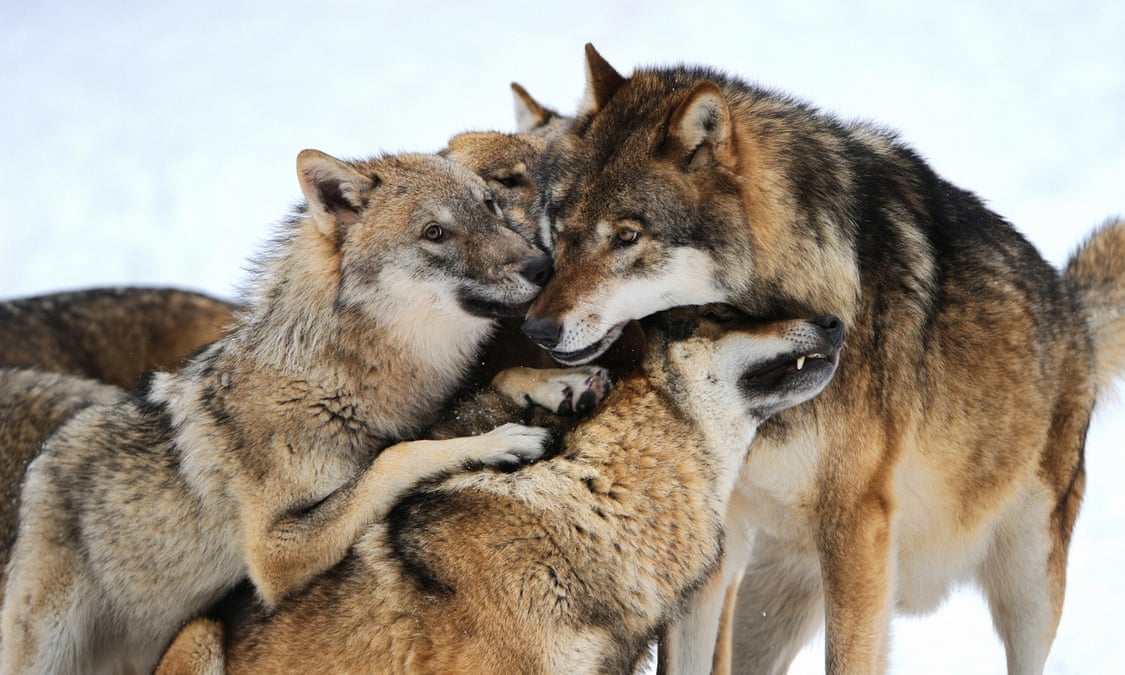
Nothing to fear except fear itself & there is also Wolves and Bears


BY TERRORIZING ISLAND RACCOONS, SCIENTISTS FINALLY CONFIRM THAT LARGE PREDATORS CAN AFFECT THEIR PREY THROUGH FEAR ALONE.

In the Gulf Islands, a short ferry ride south of Vancouver, there lives a population of distinctly un-raccoon-like raccoons. Their mainland cousins are nocturnal animals that stick to forested areas but these island residents are active throughout the day, wandering out in the tidal flats, far away from the nearest trees. And unlike normal raccoons, they forage intently, rarely raising their heads to search for danger. “If a predator came along, they’d be screwed,” says Liana Zanette from the University of Western Ontario. “They seem completely fearless.”
Their boldness is justified. Around a century ago, people wiped out all the large predators on the islands, including bears, pumas, and wolves. Their only remaining threat is the domestic dog. For Zanette, this utopia of fearless raccoons was the perfect setting for testing how fear shapes the natural world.
Predators kill, obviously. But even without baring a tooth or lifting a claw, they can affect their prey. Their very presence, manifesting through tracks, smells, growls and glimpses, produces a state of vigilance, apprehension, and stress. From their prey’s point of view, there will be safe areas where lines of sight are long, and danger zones where hiding places are more common and escape is trickier. The result is a landscape of fear a psychological topography that exists in the minds of prey, complete with mountains of danger and valleys of safety.
This concept came to attention in the 1990s, when gray wolves were reintroduced to Yellowstone National Park after having been exterminated seven decades prior. Ecologists showed that the park’s elk would spend so much time watching out for the re-emergent wolves that they spent less time eating and sired fewer young. They died in numbers way beyond what the wolves were actually killing, and their losses rippled throughout Yellowstone. The trees they ate grew taller, providing more wood for beavers and nesting sites for songbirds. The entire park changed, and all thanks to fear of the big, bad wolf.
Arthur Middleton said, “This story—that wolves fixed a broken Yellowstone by killing and frightening elk—is one of ecology’s most famous … But there is a problem with the story: It’s not true.” Follow-up studies suggested that the elk aren’t as afraid of the wolves as previously thought, and that other factors could have led to the elk declines including humans and drought and bears, oh my. And this dispute has fueled a broader controversy about whether it was a good idea to reintroduce the wolves at all, and whether it’s worth “re-wilding” other areas with other large predators that once patrolled them.
Meanwhile, the landscape of fear concept has since moved beyond correlative observations of wolves and elk, and into the world of experiments. In 2011, Zanette showed that song sparrows in the Gulf Islands raise 40 percent fewer chicks if they hear the calls of hawks, owls, and other predators through speakers—even if their nests are surrounded by protective nets and fences. A year later, Dror Hawlena showed that spiders with glued mouthparts can still terrify grasshoppers enough to change their metabolic rates, the chemical composition of their bodies, and the amount of nutrients they return to the soil when they die.
These studies unambiguously showed fear could affect populations and landscapes, but spiders and hawks are a far cry from the wolves, lynx, and bears at the heart of re-wilding debates. Zanette wanted evidence that these large carnivores could trigger the same kinds of effects that she saw among her songbirds. Hence: the raccoons.  

Monday, September 9, 2013

Donie's Ireland news BLOG update

Northern Ireland is now a far better place for residents there

SAYS EAMON GILMORE


GILMORE ASKS NORTHERN COMMUNITIES TO REFLECT ON OUTCOME OF TRIUMPHALIST DISPLAYS during this summer.

Tánaiste Eamon Gilmore is urging communities in Northern Ireland to respect their neighbours during commemorations, adding the province is now a better place in which to live.
In an address scheduled for the British Irish Association in Cambridge today, Mr Gilmore said: “Let me be clear. Northern Ireland is an immeasurably better place than it was even five years ago, notwithstanding the very real economic challenges we all face.”
Mr Gilmore also criticised last month’s IRA commemoration rally in Castlederg, Co Tyrone, saying it lacked respect and sensitivity.
“The events of recent months surrounding disputes over flags and parades and the tensions and disorder they have provoked, alongside the unresolved issues of how to deal with the past, are exerting a harmful and even regressive effect on politics and community relations.
“Both communities and the organisations which claim to represent them have the right to celebrate their history and traditions, but if these events commemorate acts of conflict or involve displays of triumphalism or antagonism against their neighbour, then people need to reflect more deeply about the value of such commemorations and how they are marked.”
Mr Gilmore said he hoped to host representatives of the British royal family and the British government, along with the leaders of unionism, at commemorations for the centenary of the Easter Rising in 2016.
He said he wanted all sides to respectfully remember those who gave their lives in the battle of the Somme, as well asIrish men who died fighting in a British uniform.
Mr Gilmore, who plans to lay a wreath at Belfast’s Cenotaph on Remembrance Day on November 11th for the second year running, said all have a responsibility to prepare and carry out commemorations in a way that gives no offence and is mindful of the sensitivities of all citizens.
Mr Gilmore also raised concerns that voices advocating Britain’s detachment from Europe were gaining in strength and volume.
British prime minister David Cameron has pledged to renegotiate the terms of Britain’s EU membership and hold an “in-out” referendum if re-elected in 2015.
“A UK detachment from Europe would be bad for Europe, which is better for Britain’s voice,” Mr Gilmore said. “I believe it would be bad for Britain, diminishing, rather than enhancing, its voice in international affairs.
“It would be bad for Northern Ireland, which has benefitted immeasurably from the EU – economically, financially, socially and indeed politically.
“It would be bad for the Republic if its most important economic partner were to distance itself from the European Union. And it would be bad for North-South co-operation.
“But most pertinent for our purposes this weekend, I believe it would be bad for British-Irish relations.”
Mr Gilmore travelled to England after attending a meeting of EU foreign ministers for talks on Syria, Egypt and the Middle East with US secretary of state John Kerry.

Cancer stories waiting to told & aired says Aine


RTE CURRENT AFFAIRS PRESENTER AINE LAWLOR SAYS BREAST CANCER IS NOT SO MUCH BLACK AND WHITE BUT MORE A CASE OF “FIFTY SHADES OF GREY”.

Aine, 51, who has landed two coveted jobs on radio and television this autumn, is speaking from experience after being treated for the disease with surgery, chemotherapy and radiotherapy.
Now fighting fit and co-presenting News at One on radio, as well fronting television’s The Week in Politics, the broadcaster is also working on a series of documentaries on the disease.
Speaking to the Sunday Independent as part of our special supplement to mark the 50th anniversary of the Irish Cancer Society, Aine said: “There is a hunger for this to be aired. It’s using patients’ own stories to give a picture of what’s happening in cancer medicine.”
   Up to 30,000 people in the country will be diagnosed with cancer this year.
Aside from providing an essential listening ear to patients, the Irish Cancer Society also plays a pivotal role in awareness, education, advocacy and research.
Aine has seen the work the society does at first hand: “I remember one day in the hospital there was an old lady having a very tough time.
There was a woman with her who was minding her, rubbing creams in her mouth, getting her cups of tea. I thought she had a fantastic daughter, but it wasn’t a daughter – it was the volunteer from the Irish Cancer Society’s Care to Drive programme.”
Aine also spoke of her own mother’s battle with the disease.
“It was kind of the case you went behind the door to be sick, and you came out in a coffin or got well. Unfortunately, she didn’t,” she said.
“I remember the first time I had my picture taken going back to work. There was a lot of interest in getting a picture. It was the first time there was a before and after (picture). I didn’t like it, and felt very vulnerable.
“I went back to the ward, and all the women were very happy because it was a picture of someone like them. We talked about seeing yourself. Hopefully I do what I can. I want to create a space for them.”

The big challenge of mental health illness


When someone suffers from a nervous breakdown, his loved ones will find it hard to cope if they lack knowledge about mental health.

Something like that happened to a friend’s family not too long ago.
The friend’s 36-year-old sister was suddenly diagnosed with schizophrenia, a chronic and disabling brain disorder.
No one in the family thought that such an illness would befall her as she had always been described as an extrovert with an optimistic outlook. She had always kept herself busy with community work as she loved to help as well as interact with people.
Her only flaw, according to her siblings, was that she was a perfectionist. Every minute detail had to be checked, and made flawless, if possible.
We don’t know whether stress it was that triggered her condition. No one else in the family suffers from schizophrenia but we do know that it is important for one to look after one’s physical and mental well-being.
In the beginning, her mother took her to Taoist temples to consult mediums.
The last we heard, she had been seeking treatment at a general hospital and is on the road to recovery. However, she has to be on medication.
It is best not to say or do things that would make anyone with this condition unhappy or she would be besieged with delusions again.
Befrienders Johor Baru is organising a forum at Permai Hospital, Johor Baru, on Saturday in conjunction with World Suicide Prevention Day.
Do not miss this opportunity to learn more about mental health as the event will focus on suicide, which is one of the leading causes of death in the world.
Suicide has become a major public health problem in high-income countries, and low-and-middle-income countries as well.
The World Health Organisation (WHO) survey found that nearly one million people worldwide die by suicide each year. This corresponds to one death by suicide every 40 seconds.
The number of lives lost each year through suicide exceeds the number of deaths due to homicide and war combined.
And, it was learnt that many of those who attempt or commit suicide suffer from mental illness.
The sad thing is a lack of access to proper care and the stigma associated with mental illness. It may be difficult for people who have recovered from mental illness to secure a job.
Unless stigma is confronted and challenged, it will continue to be a barrier to the treatment of mental illness and suicide prevention.
So, have a exercise regime to ensure that your body is fit but also find the time to relax your mind so that you do not overload it with work problems or relationship woes. Get rid of grudges that only poison your mind and body.
It is not worth going crazy over people who do not like you. They are not going to care if you are going cuckoo.

Suicide prevention must be reformed says Marc McSharry of Fianna Fáil


Fianna Fáil is calling for a major restructuring of the National Office for Suicide Prevention.

Senator Marc Mac Sharry, the party’s Health Spokesman, is urging the government to increase its budget spend to help tackle the issue ahead of World Suicide Prevention week which takes place later this week.
Marc Mac Sharry said he believes the service needs to be restructured, expanded and for appropriate resources to be provided.
“Deal with this issue – put in place the resources to deal with it, because the reality is this is a winnable battle, but unfortunately all governments over the last number of decades have paid little more than lip service to this silent plight which is ravaging communities all over the country,” he said.

The right bacteria might help fight obesity


The correct bacteria just might be able to help fight people’s fat.
Different kinds of bacteria that live inside the gut can help spur obesity or protect against it, say scientists at Washington University in St. Louis who transplanted intestinal germs from fat or lean people into mice and watched the rodents change.
And what they ate determined whether the good germs could move in and do their job.
Thursday’s report raises the possibility of one day turning gut bacteria into personalized fat-fighting therapies, and it may help explain why some people have a harder time losing weight than others do.
“It’s an important player,” said Dr. David Relman of Stanford University, who also studies how gut bacteria influence health but wasn’t involved in the new research. “This paper says thatdiet and microbes are necessary companions in all of this. They literally and figuratively feed each other.”
The research was reported in the journal Science.
We all develop with an essentially sterile digestive tract. Bacteria rapidly move in starting at birth — bugs that we pick up from mom and dad, the environment, first foods. Ultimately, the intestine teems with hundreds of species, populations that differ in people with varying health. Overweight people harbor different types and amounts of gut bacteria than lean people, for example. The gut bacteria we pick up as children can stick with us for decades, although their makeup changes when people lose weight, previous studies have shown.
Clearly, what you eat and how much you move are key to how much you weigh. But are those bacterial differences a contributing cause of obesity, rather than simply the result of it? If so, which bugs are to blame, and might it be possible to switch out the bad actors?
To start finding out, Washington University graduate student Vanessa Ridaura took gut bacteria from eight people — four pairs of twins that each included one obese sibling and one lean sibling. One pair of twins was identical, ruling out an inherited explanation for their different weights. Using twins also guaranteed similar childhood environments and diets.
She transplanted the human microbes into the intestines of young mice that had been raised germ-free.
The mice who received gut bacteria from the obese people gained more weight — and experienced unhealthy metabolic changes — even though they didn’t eat more than the mice who received germs from the lean twins, said study senior author Dr. Jeffrey Gordon, director of Washington University’s Center of Genome Sciences and Systems Biology.
Then came what Gordon calls the battle of the microbes. Mice that harbored gut bacteria from a lean person were put in the same cages as mice that harbored the obesity-prone germs. The research team took advantage of an icky fact of rodent life: Mice eat feces, so presumably they could easily swap intestinal bugs.
What happened was a surprise. Certain bacteria from the lean mice invaded the intestines of the fatter mice, and their weight and metabolism improved. But the trade was one-way — the lean mice weren’t affected.
Moreover, the fatter mice got the bacterial benefit only when they were fed a low-fat, high-fiber diet. When Ridaura substituted the higher-fat, lower-fiber diet typical of Americans, the protective bug swap didn’t occur.
Why? Gordon already knew from human studies that obese people harbor less diverse gut bacteria. “It was almost as if there were potential job vacancies” in their intestines that the lean don’t have, he explained.
Sure enough, a closer look at the mice that benefited from the bug swap suggests a specific type of bacteria, from a family named Bacteroidetes, moved into previously unoccupied niches in their colons — if the rodents ate right.
How might those findings translate to people? For a particularly hard-to-treat diarrheal infection, doctors sometimes transplant stool from a healthy person into the sick person’s intestine. Some scientists wonder if fecal transplants from the lean to the fat might treat obesity, too.
But Gordon foresees a less invasive alternative: Determining the best combinations of intestinal bacteria to match a person’s diet, and then growing those bugs in sterile lab dishes — like this study could — and turning them into pills. He estimates such an attempt would take at least five more years of research.

Study links warming to some 2012 wild weather


A study of twelve of 2012’s wildest weather events found that man-made global warming increased the likelihood of about half of them, including Superstorm Sandy’s devastating surge and the blistering U.S. summer heat.
The other half — including a record wet British summer and the U.S. drought last year — simply reflected the random freakiness of weather, researchers with the U.S. National Oceanic and Atmospheric Administration and the British meteorological office concluded in a report issued Thursday.
The scientists conducted thousands of runs of different computer simulations that looked at various factors, such as moisture in the air, atmospheric flow, and sea temperature and level.
The approach represents an evolution in the field. Scientists used to say that individual weather events — a specific hurricane or flood, for example — cannot be attributed to climate change. But recently, researchers have used computer simulations to look at extreme events in a more nuanced way and measure the influence of climate change on their likelihood and magnitude.
This is the second year that NOAA and the British meteorology office have teamed up to look at the greenhouse gas connection to the previous year’s unusual events.
“We’ve got some new evidence that human influence has changed the risk and has changed it enough that we can detect it,” study lead author Peter Stott, head of climate monitoring and attribution for the British meteorological office, said at a news conference.
The researchers said climate change had made these 2012 events more likely: U.S. heat waves, Superstorm Sandy flooding, shrinking Arctic sea ice, drought in Europe’s Iberian peninsula, and extreme rainfall in Australia and New Zealand.
The 78 international researchers, however, found no global warming connection for the U.S. drought, Europe’s summer extremes, a cold spell in the Netherlands, drought in eastern Kenya and Somalia, floods in northern China and heavy rain in southwestern Japan.
That doesn’t mean that there weren’t climate change factors involved, just that researchers couldn’t find or prove them, said the authors of the 84-page study, published in the Bulletin of the American Meteorological Society
All 12 events — chosen in part because of their location and the effect they had on society — would have happened anyway, but their magnitude and likelihood were boosted in some cases by global warming, the researchers said.
The two events where scientists found the biggest climate change connection both hit the United States.
The likelihood of the record July U.S. heat wave that hit the Northeast and north-central region is four times greater now than in preindustrial times because of greenhouse gases, Stanford University climate scientist Noah Diffenbaugh found in his analysis.
The kind of surge-related flooding that Superstorm Sandy brought to parts of New York City is about 50 percent more likely than it was in 1950,
Said study co-author William Sweet, a NOAA oceanographer.
Stott said one of the hardest connections to make is for rainfall. The researchers were able to connect three of the eight instances of too much or too little rain to climate change; the five other instances were attributed to natural variability.
The different authors of the 21 chapters used differing techniques to look at climate change connections, and in some instances came to conflicting and confusing conclusions.
Georgia Institute of Technology professor Judith Curry, who often disagrees with mainstream scientists, said connecting shrinking sea ice to human activity was obvious, but as for Sandy and the rest: “I’m not buying it at all.”
Thomas Karl, director of NOAA’s National Climatic Data Center, said the study provides “compelling evidence that human-caused change was a factor contributing to the extreme events.”