Pages

Showing posts with label studies. Show all posts

Sunday, February 28, 2016

Donie's Ireland daily news BLOG update

Marc MacSharry tops poll & on course to win his father Ray’s old seat in the Sligo-Leitrim constituency

    
Early indications suggest Fianna Fáil senator Marc MacSharry is on course to win his father Ray’s old seat in the Sligo-Leitrim constituency and has topped the poll. Mr MacSharry was polling strongly in the early boxes opened from the Sligo town area.
John Perry’s director of elections has accused Fine Gael of conducting an arrogant campaign which did not resonate in rural Ireland. The former minister of State John Perry  just got 7% of first preferences – half of the vote he received in 2011
Mr Perry has been one of the biggest Fine Gael casualties to date. He took a successful High Court challenge to be included on the Fine Gael ticket, but has polled the worst of the three party candidates and has conceded that he will not be re-elected.
His vote in the Sligo-Leitrim constituency has been more than halved from his 2011 performance when he topped the poll.
Mr Perry was not present this afternoon at the count in the Clarion Hotel in Sligo.
Instead, director of elections Thomas Walsh said the defeated former small business minister was “bitterly disappointed” and neither he nor the rest of the party had forseen how bad things would be.
Mr Walsh maintained the “keep the recovery going” mantra did not transfer to rural Ireland.
Mr Perry has conceded his seat after polling very poorly in the Sligo Leitrim constituency.
Mr Perry, who fought a court battle to be included on the Fine Gael ticket, received just 7 per cent of the first preference votes. He is trailing in seventh place, according to the final tallies.
His first preference vote of 4,298 is less than half of the 8,663 votes he received when topping the poll in 2011.
He was well behind his constituency colleagues, Leitrim-based Gerry Reynolds (6,505) and the other outgoing Fine Gael TD Tony McLoughlin(6,083).
The big winner in the sprawling constituency is Fianna Fáil’s Senator Marc MacSharry who will top the poll with 8,763 votes, according to the tallies. He is certain of a seat.
Top candidates
The only other certainties are that Fianna Fáil, Fine Gael and Sinn Féin will get one seat each. The fourth seat will go to one of those parties. None of the Independents in this sprawling constituency have garnered enough votes to be in with a chance of election.
Leading candidates in order of first preferences are Marc MacSharry (8,763), Gerry Reynolds (6,505), Tony McLoughlin (6,083), Sinn Féin councillorsMartin Kenny (6,079) and Chris MacManus (4,721).
Former TD Declan Bree was the best of the Independents with 3,176 first preferences followed by Sligo Cllr Marie Casserley with 2,675 votes.
It was a disappointing election too for Labour’s Senator Susan O’Keeffe who polled just 1,803 votes. In 2011 she received 4,553 first preferences and came close to winning a seat.
Some 18 candidates stood in what is one of the biggest constituencies by geography in the country – comprising all of Sligo and Leitrim, but also including south Donegal and west Cavan.

Currency fears haunt Irish business

    
This is panning out to be a very tricky year for Irish exporters, as slowing international economic growth is being laced with extreme currency movements, led by the British pound falling under the pressure of an EU referendum now scheduled for June 23.
However, not all of the sterling fall can be loaded onto UK prime minister David Cameron’s commitment to an in-or-out referendum on the EU, or his failure to get Boris Johnson inside the tent.
The unexpected under-performance of the UK economy since the start of 2016 and the Bank of England’s delaying tactics on interest rate increases and lukewarm promises on more quantitative easing to support economic growth have also taken their toll.
Today, the sterling to euro exchange rate is down about 12% since November, which in many instances will have completely wiped out Irish exporters’ profit margins.
However, exporters may be faced with even more pain if initial sentiment supporting an exit grows.
Many international banking forecasts are indicating a further 10% to 20% slump in the value of sterling.
We will once again be looking at the spectre of trading ghosts of the years 2007 to 2009, when sterling fell by 30%, exporter sales to the UK slumped, and profitability and jobs were lost.
Of course, if over the next few months there is a clear shift in sentiment towards remaining within the EU, the situation is likely to change rapidly.
The consensus amongst foreign exchange currency dealers right now seems to indicate a return to euro to sterling rate of 70 pence, which was the average last year, if the UK commits to stay in the EU.
Exchange rate volatility will have numerous implications for Irish exporters, once the honeymoon period is over and debtor’s payments protected by forward currency contracts have been used up.
Of even greater concern to Irish exporters is if UK voters decided in June to exit the EU.
There are a number of scenarios independent think tanks, including the ESRI, have highlighted showing that Britain would struggle to maintain trade links with EU members and would give up 30% trade growth if it left the 28-nation bloc.
Some of the negative consequences are undoubtedly arising from the Scottish Nationalist Party’s declaration to push again for independence, in the event of the UK voting to exit the EU.
And there is the unique Irish prospect of the North outside the EU with the rest of the country within.
However, perhaps the biggest trading loses will come in the City of London, where the London financial services sector is by far the biggest centre for foreign exchange trading of the euro, a position it could not possible expect to retain if it was outside the EU.
This exit process is likely to take two years, which will stretch the trading skills of both Irish sellers and UK buyers, particularly if international forecasters’ expectations are right and sterling falls by a further 10% to 20% against the euro.
The UK is the single largest market for our rapidly growing services export sector, buying €23bn of computer software, financial services, insurance services, and accountancy and management consultancy services last year.
And, yes, there is also strong exposure for our agri-food and drink exporters, but it is the much smaller exposure of €4.1bn.
And of course there is exposure by the pharmaceutical exporters of €3.9bn and the computer and machinery exporters of €2.5bn as well as the many other small business exporters who export €3.2bn of their goods to the UK.
A UK outside the EU, a fragmented UK, and a much reduced economic UK will, without a doubt, be catastrophic for Ireland’s export industries.
However, it will still be an important market for Ireland, even if there is uncertainty in regulatory, currency and movement of goods and people.
For many companies both across the manufacturing sector and the various services industries in Ireland, the unsavoury option may be forced upon them to open UK offices and manufacturing facilities to retain market share, with the inevitable loss of jobs.

Carrots can help cut breast cancer risk by 60%

A NEW STUDY HAS FOUND THAT EATING CARROTS REGULARLY CAN SLASH YOUR RISK OF DEVELOPING BREAST CANCER BY 60%.

    
A new study has found that eating carrots regularly can slash your risk of developing breast cancer by 60%.
The research found women with high levels of vitamins called carotenes, which can also be found in vegetables like spinach and red peppers, in their blood faced a lower risk of developing certain types of breast cancer,
Richard Berks, senior research communications officer at Breast Cancer Now, said that people have long known that a healthy diet, carrots included, can help to lower your risk of breast cancer because it helps to maintain a healthy weight.
Berks noted that while it’s really important to eat vegetables as part of a balanced diet, there is unfortunately no such thing as a superfood when it comes to breast cancer risk.
He added “Everyone can reduce their risk of breast cancer and many other diseases through healthy lifestyle choices – such as maintaining a healthy weight, having a varied and balanced diet, being more active, and limiting your alcohol intake.”

Obesity is not good for memory

BRITISH RESEARCHERS FIND

    
Excess bodyweight not only creates physical health problems, such as diabetes and heart disease, but it increases the risk of psychological health problems, such as depression and anxiety, a new study has found.
Researchers in the United Kingdom have found a link between overweight and poorer memory. Overweight young adults may have poorer episodic memory, which can be defined as an ability to recall past events, according to the study conducted by the University of Cambridge.
The study, published in The Quarterly Journal of Experimental Psychology, tested 50 participants aged 18-35, with body mass indexes (BMIs) ranging from 18 through to 51.
Researchers found a link between high body mass index (BMI) and poorer performance on a test of episodic memory. The participants were given a memory test, where they were asked to hide items around complex scenes across two ‘days’. They were then asked to remember which items they had hidden, where they had hidden them, and when they were hidden.
Excess bodyweight may be associated with changes to the structure and function of the brain and its ability to perform certain cognitive tasks optimally.
“In particular, obesity has been linked with dysfunction of the hippocampus, an area of the brain involved in memory and learning, and of the frontal lobe, the part of the brain involved in decision making, problem solving and emotions, suggesting that it might also affect memory; however, evidence for memory impairment in obesity is currently limited,” according to a statement by the University of Cambridge.
Obesity is a growing problem around the world. In UK, around 60% of adults are overweight or obese. This number is likely to grow to approximately 70% by 2034.
Researchers noted that further research is necessary to establish whether the results of this study can be generalized to overweight individuals in general, and to episodic memory in everyday life rather than in experimental conditions.
The study was funded by the Medical Research Council and Girton College, University of Cambridge, and the James S McDonnell Foundation.

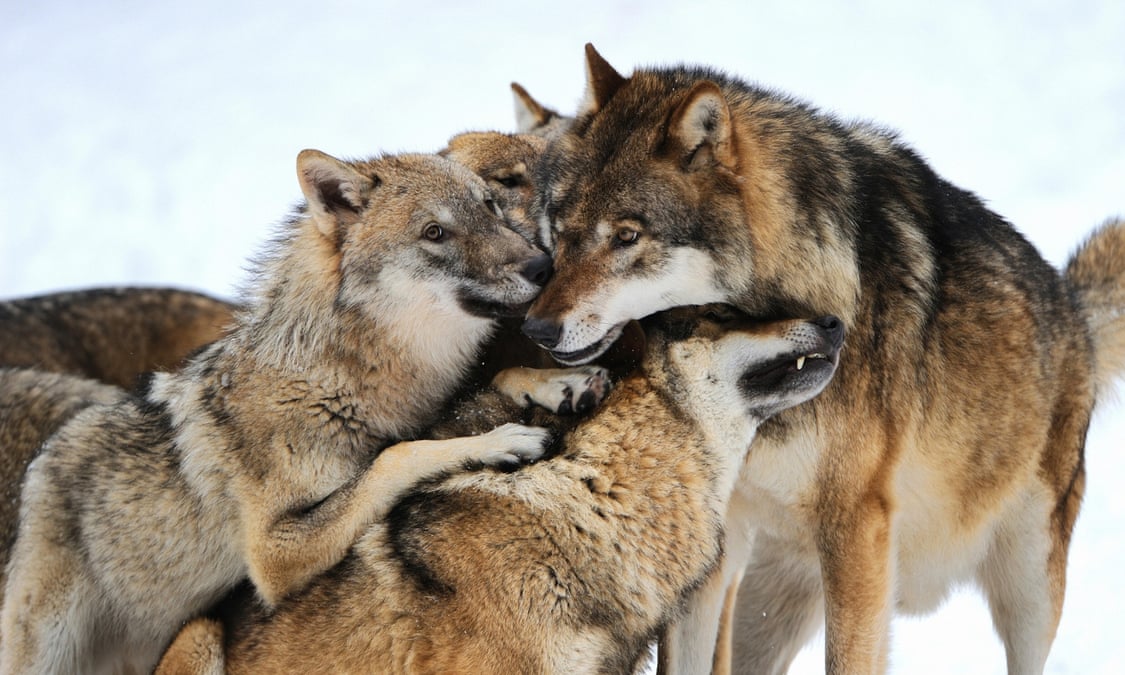
Nothing to fear except fear itself & there is also Wolves and Bears


BY TERRORIZING ISLAND RACCOONS, SCIENTISTS FINALLY CONFIRM THAT LARGE PREDATORS CAN AFFECT THEIR PREY THROUGH FEAR ALONE.

In the Gulf Islands, a short ferry ride south of Vancouver, there lives a population of distinctly un-raccoon-like raccoons. Their mainland cousins are nocturnal animals that stick to forested areas but these island residents are active throughout the day, wandering out in the tidal flats, far away from the nearest trees. And unlike normal raccoons, they forage intently, rarely raising their heads to search for danger. “If a predator came along, they’d be screwed,” says Liana Zanette from the University of Western Ontario. “They seem completely fearless.”
Their boldness is justified. Around a century ago, people wiped out all the large predators on the islands, including bears, pumas, and wolves. Their only remaining threat is the domestic dog. For Zanette, this utopia of fearless raccoons was the perfect setting for testing how fear shapes the natural world.
Predators kill, obviously. But even without baring a tooth or lifting a claw, they can affect their prey. Their very presence, manifesting through tracks, smells, growls and glimpses, produces a state of vigilance, apprehension, and stress. From their prey’s point of view, there will be safe areas where lines of sight are long, and danger zones where hiding places are more common and escape is trickier. The result is a landscape of fear a psychological topography that exists in the minds of prey, complete with mountains of danger and valleys of safety.
This concept came to attention in the 1990s, when gray wolves were reintroduced to Yellowstone National Park after having been exterminated seven decades prior. Ecologists showed that the park’s elk would spend so much time watching out for the re-emergent wolves that they spent less time eating and sired fewer young. They died in numbers way beyond what the wolves were actually killing, and their losses rippled throughout Yellowstone. The trees they ate grew taller, providing more wood for beavers and nesting sites for songbirds. The entire park changed, and all thanks to fear of the big, bad wolf.
Arthur Middleton said, “This story—that wolves fixed a broken Yellowstone by killing and frightening elk—is one of ecology’s most famous … But there is a problem with the story: It’s not true.” Follow-up studies suggested that the elk aren’t as afraid of the wolves as previously thought, and that other factors could have led to the elk declines including humans and drought and bears, oh my. And this dispute has fueled a broader controversy about whether it was a good idea to reintroduce the wolves at all, and whether it’s worth “re-wilding” other areas with other large predators that once patrolled them.
Meanwhile, the landscape of fear concept has since moved beyond correlative observations of wolves and elk, and into the world of experiments. In 2011, Zanette showed that song sparrows in the Gulf Islands raise 40 percent fewer chicks if they hear the calls of hawks, owls, and other predators through speakers—even if their nests are surrounded by protective nets and fences. A year later, Dror Hawlena showed that spiders with glued mouthparts can still terrify grasshoppers enough to change their metabolic rates, the chemical composition of their bodies, and the amount of nutrients they return to the soil when they die.
These studies unambiguously showed fear could affect populations and landscapes, but spiders and hawks are a far cry from the wolves, lynx, and bears at the heart of re-wilding debates. Zanette wanted evidence that these large carnivores could trigger the same kinds of effects that she saw among her songbirds. Hence: the raccoons.  

Sunday, October 11, 2015

Donie's Ireland daily BLOG

Could cigarettes price rise to €10.50 a packet?

Tax on cigarettes to help fund 2% cut in USC


A hike in the price of cigarettes will be used to help pay for a dramatic reduction of 2% in the Universal Social Charge (USC)

A hike in the price of cigarettes will be used to help pay for a dramatic reduction of 2% in the Universal Social Charge (USC).
The cut in the controversial USC is set to form the centrepiece of the Budget. Reducing the tax is part of a plan to cut the marginal rate to below 50%, it has been learned.
This country now has one of the highest marginal rates of income tax in Europe.
It is also understood that the entry point at which people begin paying will be raised in order to bring to more than 500,000 people out of the USC net, along with cutting the main 7% rate.
Have Your Say: Do you think smokers should be taxed extra to slash the USC?
The aim is to remove a further 90,000 from the USC by increasing the threshold in Budget 2016.
But big gains will be in store for middle-income earners from cutting the main 7% USC rate.
Around 1.28 million taxpayers will gain from a reduction in the USC’s main rate.
People earning up to €70,044 pay the main 7% rate. Dropping the main rate to 5% would see all these people make big gains.
A single earner on €36,000 would gain around €374 a year if the main rate comes down by two percentage points, according to calculations by the Irish Tax Institute.
Someone earning €75,000 a year would gain €1,049 a year.
This would meet Finance Minister Michael Noonan’s criteria to ensure that income tax changes only benefit what he considers to be middle earners – those earning less than €75,000.
In recent days, Children’s Minister Dr James Reilly has been pushing for an increase of at least 50c in the price of a pack of 20 cigarettes, coalition sources revealed. This would bring in an additional €63m in revenue.
It is expected that the extra revenue will used to part-fund the reduction in the USC rate, which is expected to cost around €150m.
“The revenue from more tax on cigarettes will help fund a cut in the USC of 2%, rather than the original plan for a 1.5% reduction,” a source familiar with the situation said.
Cutting the USC rate by two percentage points would bring the marginal tax rate to 50% from the 52% for PAYE (pay as you earn) workers now.

Bonus

The marginal rate is the amount of tax that people pay on what is regarded as higher rates of pay. However, in this country, it kicks in at €32,800 for single earners.
The Government is also seeking to increase the €12,012 USC entry point by €1,000, a move that would mean thousands of workers would no longer have to pay it.
Some 300 new teaching posts will be created in September as the Government moves to reduce the pupil-teacher ratio.
Senior government sources have indicated that the ratio, currently set at 28 pupils per every teacher, will be cut by one after next Tuesday’s Budget.
The cut, which has been secured by Education Minister Jan O’Sullivan, is due to come into effect from September of next year as around 300 new teaching posts are created.
Class sizes were increased during the crash but senior Government sources have confirmed that Ms O’Sullivan is set to deliver the good news of reduced class sizes.
Ms O’Sullivan has repeatedly said that reducing class sizes was a “major priority” for her and she has strong support from her Fine Gael colleagues to fund the additional posts.
Further details of Tánaiste Joan Burton’s welfare package for the elderly have also emerged.
It has been confirmed that there will be an increase in the Christmas bonus to €115 per pensioner and €220 per couple.
Fine Gael has lost the battle on getting a €5 increase to the old age pension. There was strong support for an increase, but Ms Burton and her officials have refused to accede to their demands, instead focusing on other measures for elderly people.
It is understood that the Tánaiste is prioritising the restoration of the Christmas bonus, which she sees as a major boost to pensioners.
She is also likely to increase the Living Alone allowance, but late last night it emerged that Ms Burton is seeking to increase the €1,375 respite care grant.

Nama highfliers to exit agency with Voluntary reduncies payoffs of €42k each


Thirty-six highfliers at Nama earning over €100,000 are to exit the agency door at the end of the year with an average payoff of €42,000 each.

According to Finance Minister Michael Noonan, 50 Nama employees have opted for the agency’s voluntary redundancy programme as the agency winds down its operations.
In a written Dáil reply to Fianna Fail’s Michael McGrath, Mr Noonan confirmed that 36 of the 50 to opt for voluntary redundancy earn €100,000 to €200,000, with the remaining 14 workers earning less than €100,000. Mr Noonan confirmed no employee earning over €200,000 at Nama has opted for the voluntary redundancy scheme.
According to Mr Noonan, the departure of the 50 employees will save the agency €5.3m annually.
“These costs include base salary, employer PRSI costs and employer pension costs,” said Mr Noonan.
He said the cost of the voluntary redundancy scheme for the 50 staff will be about €2.1m, which works out at an average redundancy payment of €42,000 each.
Yesterday was the deadline for acceptance forms to be lodged with Nama’s redundancy scheme and Mr Noonan said the figures were “indicative until agreements have been signed and returned”.
In response to the agency advertising the terms of voluntary redundancy programme to its workforce, almost a quarter of the workforce expressed an interest.
However, bosses at Nama put a halt to a third of those seeking to leave the agency by the end of this year.
Figures provided by Mr Noonan show the agency received 80 applications from staff seeking to avail of the scheme’s generous terms announced earlier this year.
The agency is seeking to reduce its workforce by 51 from 342 to 291 by the end of the year. In response to the scheme being over-subscribed, Nama rejected 26 of the applications to leave, with three staff changing their mind and opting to stay and one employee who had opted for the voluntary redundancy scheme deciding to leave now.
Nama is seeking to further reduce its workforce to 125 by the end of next year as it winds down its operations.
Based on the payments in the current redundancy plan, the agency will pay €6.97m for a further 166 employees to take the redundancy package in 2016 but save the Agency €17.5m in annualised savings.
The terms of the Nama redundancy scheme are in line with established public sector norms and grant two weeks’ statutory pay per year of service, capped at €600 per week, plus three additional weeks of base salary per year of service with an overall cap of two years base salary.
Average pay, including pension contributions, at Nama in 2014 was just over €110,000 a year or €2,115 a week. Mr Noonan has previously confirmed the overall cost of Nama’s redundancy scheme and appropriate staff retention measures agreed with Nama will not exceed €20m.
Nama was set up in 2009 to run for a fixed 10-year period. Staff working at the agency are employed by the National Treasury Management Agency on fixed-term contracts and seconded to Nama.
The decision to slash staff numbers relatively early in the proposed 10-year life of Nama follows last year’s decision to speed the selloff of Nama assets in order to repay 80% of its original €32bn of senior debt by the end of 2016.
“There is now a considerable degree of uncertainty about the future of Nama, with the minister for finance seemingly back-tracking on his plans for an early wind up in favour of it turning it in to a property development agency,” said Mr McGrath.

Plans for a public holiday to mark 1916 Rising are rejected


The Government has rejected Sinn Féin plans for an annual public holiday starting next year to mark the 1916 Rising, despite opposition claims coalition advisers backed the move two years ago.

Equality Minister Aodhán Ó Ríordáin turned down the proposed Lá na Poblachta — a national independence day — after it was raised by Sinn Féin’s Aengus Ó Snodaigh, and backed by Fianna Fáil.
Speaking during a Dáil debate on the issue yesterday, Mr Ó Snodaigh said the proposed legislative change would see April 24 become an annual national holiday.
Mr Ó Snodaigh also said the issue would address the gap between Ireland’s nine public holidays and the EU average of 11, and that when he raised it “in February 2013 at the all-party commemorations committee I received the backing of the Government’s advisers, albeit for a single year’s holiday next year”.
However, Mr Ó Ríordáin said the Coalition will not back the plan as “there was no demand” during previous 1916 Rising commemoration research, that it would “seriously dilute” existing Easter-based Rising celebrations, and that the plan has not been properly costed.
He said the Rising events next year must be a “time for reflection, celebration, and commemoration” and should not be based on a “singular narrative” from one group. The opposition plan is expected to be voted down by the Government on Tuesday.

Rural Crime is a problem? A series of break-ins In Co Sligo leaves residents terrified


A rural community is reeling following a spate of break-ins and acts of vandalism.

The Tubbercurry area in south Sligo was targeted by at least one gang last weekend and a number of homes, shops, private cars and the local national school were all damaged.
  Tubbercurry is the largest town in Co Sligo and its proximity to major routes makes it easy for travelling gangs to escape, according to local Councillor Jerry Lundy.
The spate of attacks over last weekend have yet again underlined the need for a full time garda presence in Tubbercurry, Cllr Lundy insisted..
The garda station in Tubbercurry is open only from 9.30am to 1pm Monday to Thursday and local public representatives have been repeatedly tried to have the opening hours extended.
“It’s the call of the community here in Tubbercurry and in south Sligo to have a full time garda station open 24 hours here in Tubbercurry. There has been a spate of break-ins, robberies and vandalism over the weekend.
“While Gardaí in Tubbercurry are doing their very best, they need more resources, better transport and the station in Tubbercurry needs to be open on a full-time basis”, Cllr Lundy said.
The blight of rural burglaries and break-ins has spread terror through many parts of the farming community across Ireland.
Speaking at a specially convened public meeting in Thurles on Thursday, Mary Morris from Knockmore, Tipperary, explained the personal toll the rising crime wave has had on her life.
Morris said she now keeps a licensed gun in her house for her protection. “Nearly four years ago we were visited by thieves,” she said.
“What they took were only material things, worth a couple of thousand euro. But for me they had great sentimental value; they belonged to my late husband.

Alarm bells.

“I live on my own now. I have an alarm in my house, and I have two dogs. But it’s not nice living on your own in rural Ireland any more,” she continued.
“I stay up at night time – I might go to bed around four o’clock.” She accused Taoiseach Enda Kenny of “failing to take action” to adequately tackle rural crime.
“I never thought I’d be going to bed at night with a gun in one corner and spare cartridges in the room next door,” she said.
“But I have a gun and I have a license.”

TCD and UCD in vanguard of ancient Africa migration study

Irish scientists take lead in DNA testing from man buried 4,500 years ago in Ethopian cave.


Mota Cave in the Ethiopian highlands (left) where the ancient skeleton was buried

Irish scientists were deeply involved in a study that has revealed surprising new findings about the migration of ancient farmersback into Africa.
The study was based on the analysis of ancient DNA recovered from the skull of a man buried 4,500 years ago in a cave in Ethiopia.
The study was led by the University of Cambridge but the DNA recovery and sequencing involved researchers based at Trinity College Dublin and University College Dublin.
Most people are familiar with the idea that there was a migration of early humans who moved out of Africa to colonise Europe and Asia between 60,000 and 125,000 years ago.
What is less well known is the fact that a substantial number of these migrants returned to Africa much more recently between 3,000 and 3,500 years ago.
This migration and its timing has now been confirmed after the successful copying of a full genome from the skeleton in the Mota Cave in the Ethiopian highlands.
This is the first ancient DNA from Africa to be sequenced, said Ron Pinhasi, associate professor in UCD’s school of archeology and theEarth Institute. He was co-senior author of the study published on Thursday in the journalScience.
He developed the technique of extracting ancient DNA from the thick “petrous” bone located at the base of the skull behind the ear.
“This migration is new, it has been suggested but nobody before us actually had the capacity to get this DNA for analysis,” he said.
Why these migrants travelled back into Africa is a mystery but archaeological evidence links them to new crops developed in the Levant and brought to east Africa including wheat and barley.
African return.
The DNA confirms the migrants were from what is now the Middle East and were direct descendants of the Neolithic farmers who brought agriculture into Europe 7,000 years ago but then returned to Africa 4,000 years later.
“It’s quite remarkable that genetically speaking this is the same population that left the near east several millennia previously,” said PhD researcher in genetics at Trinity College Dublin Eppie Jones, who led the laboratory work to sequence the genome.
These western Eurasians mainly settled in the Horn of Africa but didn’t stay put, said Prof Marcos Gallego Llorente from Cambridge and first author.
These migrants “seeped right across the continent, way beyond east Africa”, from the west coast and south to the heart of the Congo, he said. People from these areas show this in their DNA with up to seven per cent of their genomes derived from the Levant migrants.
The genetic impact of the migrants was much greater in east Africa, where the DNA of today’s populations are up to 25 per cent derived from the migrants.
“What was surprising was the migrant DNA was distributed all over Africa and all modern Africans have this mixture,” said Prof Pinhasi.