Pages

Showing posts with label Recession. Show all posts

Saturday, November 19, 2016

Donie's ireland daily news BLOG update

Ireland could be facing an even bigger recession,

FF LEADER MARTIN SAYS IRELAND’S ECONOMIC MODEL UNDER THREAT FROM BREXIT AND GLOBAL DOWNTURN

Image result for Ireland could be facing an even bigger recession says Michael Martin  Image result for Ireland could be facing an even bigger recession says Michael Martin   Image result for Ireland could be facing an even bigger recession says Michael Martin

FIANNA FÁIL LEADER MICHEÁL MARTIN WARNS OF THREATS TO IRELAND’S ECONOMIC MODEL.

Ireland could be facing an even bigger recession than the one it has just come through as a result of Brexit and a potential downturn in the world economy, Fianna Fáil leader Micheál Martin has warned.
In an address to the Small Firms Association (SFA), Mr Martin said both threats represented a “defining moment” for the State and its economic model.
“This is not about a conventional economic shock but a direct challenge to our core economic system.”
Mr Martin warned that without a credible response Brexit could result in hundreds of business closures and thousands of jobs losses as well as lower investment in infrastructure and weaker public services.
He highlighted a recent report by the Economic and Social Research Institute and the Department of Finance, which forecast a possible €12 billion loss to national income from a hard Brexit scenario with Britain exiting the single market altogether.
Aside from Brexit, Mr Martin said many countries were now turning their backs on the sort of trade co-operation that smaller countries such as Ireland were reliant upon.
“As for the impact of last week’s US presidential election, it is very brave person indeed who can predict what American policy will be next year let alone in four years’ time,” he told the SFA’s annual lunch event in Dublin’s Mansion House.
Mr Martin said Ireland’s basic economic strategy was no longer sustainable and that Ireland’s economic base needed to be broadened with a particular emphasis on indigenous companies.
In his address, the Fianna Fáil leader also spoke of the threat to public finances from union pay demands. While union leaders had been forthright in sounding the alarm over Brexit they were were less cognisant of the fragile state of the public purse, he said.
“We need to step back before the pay situation gets out of hand. Surely after what we have just been though, an angry, relativities-driven escalation of industrial disputes is that last thing we need?” he said.
Also addressing the event was outgoing SFA chairman AJ Noonan, who warned Ireland may lose out in the race to attract UK businesses here in the wake of Brexit because of the “punitive” tax regime.
“In terms of Brexit, the current message we are sending as a country is ‘relocate to Ireland and pay more tax’ – not a winning formula,” he said.
“Our tax system is not working for owner-managers, our employees and our future prospects,” he said, suggesting some elements of the political system were too obsessed with the redistribution of wealth by taking more from those in work.

Enda Kenny speaks with US Vice President-Elect Mike Pence on electoral success

Image result for Enda Kenny speaks with US Vice President-Elect Pence on electoral success  Image result for Enda Kenny speaks with US Vice President-Elect Pence on electoral success

TAOISEACH ENDA KENNY HAS SPOKEN TO US VICE PRESIDENT-ELECT PENCE ON THE PHONE LAST NIGHT FRIDAY.

During a 15-minute phone conversation, Mr Kenny congratulated the Vice President-Elect on his recent electoral success alongside Donald Trump.
According to a Government statement, Mr Kenny also expressed his intention to engage positively with the new administration on a number of issues to the mutual benefit of Ireland and the U.S.
It was said Mr Kenny raised the issue of the undocumented Irish in the U.S and expressed his determination to work with the President and Vice President-Elect in seeking a solution to the issue.
But chances of a resolution appear less likely under a Trump administration.
There is considerable disappointment in the Irish American community that little or no progress was made during President Barack Obama’s two terms.
The Taoiseach is said to have referred to the economic ties between the two countries, including the long standing and productive relationship Ireland has with many US companies, as well as the fact that there are 100,000 Americans employed in Irish companies across America.
“Both men spoke of Vice President-Elect Pence’s strong Irish heritage and the Taoiseach expressed the wish that the Vice President-Elect might visit here again sometime in the future,” the statement added.
Mr Kenny was one of the first leaders to speak to Mr Trump following his election victory earlier this month.
This is despite describing the President-elect as a racist earlier this year.

Vacancies filling rift between the Commissioner and Tánaiste Fitzgerald
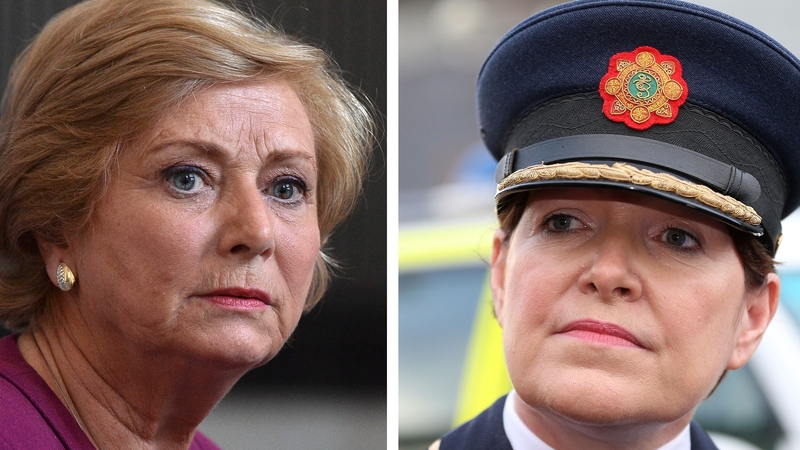
Image result for Vacancies filling rift between the Commissioner and Tánaiste Fitzgerald   Image result for Gardai senior vacancies not filled

TÁNAISTE AND JUSTICE MINISTER FRANCES FITZGERALD WITH GARDA COMMISSIONER NÓIRÍN O’SULLIVAN.

Major tensions have surfaced between Justice Minister and Tánaiste Frances Fitzgerald and Garda Commissioner Nóirín O’Sullivan over the filling of a series of key vacancies within the force.
Ms Fitzgerald has held up the promotions of a significant number of officers, including two assistant commissioners, after coming under pressure from the Policing Authority.
The newly established watchdog is understood to have voiced concern over the number of proposed promotions – meaning the jobs could remain unfilled until next year.
Sources say there is major anger within the force over the holding up of the promotions, and that the long-running vacancies weaken An Garda Síochána as a whole.
Some officers believe the decision not to send the list for Cabinet approval is “punishment” for Garda unions securing a special pay deal.
“This led to tensions between the Commissioner and Government and it is damaging to the force as a whole,” said a source.
It now seems likely that the Policing Authority will be given a much greater say over the appointments process within the force.

The ‘right to be forgotten’ and go play is ultimate in the protection of Ireland’s children

The right to play, giving more powers to Gardaí, and the abolition of direct provision centres were also contained in the report.


Image result for The 'right to be forgotten' and go play is ultimate in the protection of Ireland's children   Image result for changing the law so that children’s information can be removed from the Internet (‘right to be forgotten’)  Related image

A REPORT HAS RECOMMENDED OVER 100 CHANGES THE GOVERNMENT SHOULD MAKE TO SAFEGUARD CHILDREN INCLUDING CHANGING THE LAW SO THAT CHILDREN’S INFORMATION CAN BE REMOVED FROM THE INTERNET (‘RIGHT TO BE FORGOTTEN’), AND ENSURING CHILDREN’S RIGHT TO PLAY.

The report, compiled by a Rapporteur on Child Protection, is over 180 pages long, and discusses a range of subjects including the vulnerability of children with disabilities and the gaps in legislation in relation to technological advancements that leave children unprotected.
Other changes recommended include teaching children about consent in child sex abuse cases, and shielding children in court if absolutely necessary.
Tanya Ward, CEO of the Children’s Rights Alliance said that this report was different from others as it focused on children who were “left behind” – such as children in homeless accommodation and children in direct provision centres.
Speaking to RTÉ’s News at One, she said that although there were some ambitious longterm recommendations, there were also ‘interim ‘ suggestions made in the report.
Here are some of the most important recommendations made by Special Rapporteur Professor Geoffrey Shannon.
Consent education is a must?
In his report, Special Rapporteur raised concerns about and highlights the need for adequate sex education to teach children and young people about consent and to challenge the concept of ‘victim blaming’ or holding the victim responsible for sexual violence or crime committed against them.
Shannon is commenting on provisions in the Criminal Law (Sexual Offences) Bill which allows for children to give evidence in court behind a screen in certain circumstances.
He states that “this should be avoided whenever possible”, and the bill is currently before the Houses of the Oireachtas.
The report also highlights the fact that gardaí don’t have the power to search and seize mobile phone devices that they suspect of containing images of children if the device is outside the home.
The report also calls for the gardaí to be given better powers when requesting information from companies like Google and Facebook.
Children’s digital rights.
For the first time, Prof. Shannon discusses the right to be forgotten, pinpointing the risks to children’s online identity. Activity on social media may be instant, but the unintended consequences for children when they post something online can last beyond childhood.
The report says:
The relevance for children of the ‘right to be forgotten’ should be acknowledged, children should be educated about the matter, and it should be understood that the age at which an individual posts information online should be considered a very important factor in decisions about whether to remove an individual’s personal information from sites.
Children with disabilities?
Shannon also brings a special focus to children with disabilities in his report.
This is very relevant in the context of the ‘Grace case’ and the attention that it has brought for the treatment of children with intellectual disabilities.
Shannon calls for an examination of the effectiveness of the government’s Stay Safe Programme (a personal safety skills programme for specialised mainstream primary schools) for children with disabilities.
He is also calling for Ireland to ratify the UN Convention on the Rights of Persons with Disabilities.
Young People in the Justice System.
There are also some harsh criticisms of the method of judicial punishment for children in trouble with the law detention -the report says that detention centres “should be a measure of last resort”.
Against the backdrop of progress in the youth justice area and difficulties at the Oberstown Detention Campus, the report calls for more “imaginative community sanctions” for children.
While the Garda Diversion Programme has been extremely successful over the years, there are other, new diversion models in operation in other jurisdictions that should now also be explored. It is also calling for further attempts to “avoid the use of force, including restraint, of children in custodial settings”.
The right to play.
The report calls for child protection training and standards for people working in the field of play. He highlights the fact that children from disadvantaged groups lose out the most when it comes to play and recreation.
Children have a right to play, recreation, rest and participation in the arts.
Prof. Shannon highlights the serious and immediate developmental impact this is having on children and calls for a Government-led national strategy to address this and make sure that all children can access this basic right.
Other issues detailed in Prof. Shannon’s report include direct provision for asylum seekers, which he recommends should be abolished. In the interim, he suggests that living standards in direct provision centres should be improved. He also focuses on poverty and calls for national measures to address the nutritional needs of families.
The report is due to be debated before the Houses of the Oireachtas in the coming weeks.

Irish Pharmacists warn over drug driving and prescription medicines

AN RSA REPORT SHOWS 30% OF PEOPLE KILLED ON ROADS IN IRELAND IN 2013 WERE ON PRESCRIPTION MEDICATION

Image result for Irish Pharmacists warn over drug driving and prescription medicines Image result for Irish Pharmacists warn over drug driving and prescription medicines  Image result for Irish Pharmacists warn over drug driving and prescription medicines

THE IRISH PHARMACY UNION SAID IT WAS URGING DRIVERS TO BE AWARE OF THE DANGERS OF DRIVING AFTER TAKING MEDICINES, PARTICULARLY THOSE WHICH CAN CAUSE DROWSINESS.

Drivers who take prescription medicine should consult their pharmacist about whether it is safe for them to operate a vehicle after doing so, the Irish Pharmacy Union has said.
The union said it was urging drivers to be aware of the dangers of driving after taking medicines, particularly those which can cause drowsiness.
It comes after RTÉ reported a Road Safety Authority (RSA) internal report showed 30% of people who died in road crashes in Ireland in 2013 had taken prescription medicine.
The report examined 109 coroners’ reports and found 31% of those who died in crashes had consumed alcohol, while 30% had taken a prescription medicine.
The report stated that prescription medication includes drugs that legally require a medical prescription to be dispensed and include drugs such as benzodiazepines, antidepressants, antipsychotics and antiepileptic drugs.

SEDATIVE HYPNOTIC.

“Initial observation would indicate that presence of prescription medications appear to be over-represented in road traffic collision (RTC) fatalities, with 34 (30%) of all RTC fatalities having prescription medication found on toxicology. Benzodiazepine, a sedative hypnotic, was the most common prescription medication on toxicology.”
Irish Pharmacy Union executive committee member Caitriona O’Riordan said the data was very disturbing.
“Neither the Gardaí nor the RSA know if the medications that the unfortunate crash victims concerned were taking had been prescribed or were obtained illegally.
“The key point is that there are possible side-effects from some medications, and it’s vitally important that before driving people should ask their pharmacist if there is any possibility that the medicine may impact on their ability to drive safely,” she said.
“Many medications carry warnings to be aware of the dangers of drowsiness or other side-effects, and those warnings are there for a reason; it is absolutely vital that everyone taking medications discusses possible side-effects with their pharmacist and also reads the advisory notes with the medication,” she said.

CHARITY PLACES 380 PAIRS OF SHOES OUTSIDE DÁIL TO HIGHLIGHT RATE OF MALE SUICIDE

Image result for CHARITY PLACES 380 PAIRS OF SHOES OUTSIDE DÁIL TO HIGHLIGHT RATE OF MALE SUICIDE  Image result for We need to talk about our mental health more in Ireland and put pressure on our government to prioritise mental health services  Image result for We need to talk about our mental health more in Ireland and put pressure on our government to prioritise mental health services

A TOTAL OF 380 PAIRS OF SHOES WERE LAID OUTSIDE DÁIL ÉIREANN TODAY, SYMBOLISING THE NUMBER OF IRISH MEN WHO DIE BY SUICIDE EACH YEAR.

The Movember Foundation, which organised the event, said it is aiming to help reduce the rate of male suicide by 25% by 2030.

THE PROTEST WAS REPLICATED IN THE UK, US, AUSTRALIA AND CANADA AHEAD OF INTERNATIONAL MEN’S DAY, WHICH HAPPENS TOMORROW.

Doug Leddin, a Movember participant and mental health advocate from Dublin said: “We need to talk about our mental health more in Ireland and put pressure on our government to prioritise mental health services.
“Unless you spend a day in the shoes of someone who is suffering it’s extremely hard to know what we’re going through. I was in a dark place and I suffered alone for a long time.
“Movember is a brilliant way to spread awareness of men’s health, raising funds and getting guys talking and being more open about mental or physical challenges they might be facing.”
Neil Rooney, Director of The Movember Foundation Ireland, said too many men are dying too young and before their time.
“The Movember Foundation is investing in projects that are having a real impact on the lives of men in Ireland and around the world,” he said.
“By engaging with men where they are, and understanding what works best, we’re helping make change happen sooner, before it’s too late.
“While the state of men’s health has come a long way since Movember started in 2003, there’s still so much work to be done and we won’t stop until men are living healthier, happier and longer lives.”
Three out of every four suicides in Ireland happen to men. On average, 32 men a month take their own life in the country.

Stephen Hawking warns humanity may only have 1,000 years left

Image result for Stephen Hawking warns humanity may only have 1,000 years left   Image result for Stephen Hawking warns humanity may only have 1,000 years left

FAMED THEORETICAL PHYSICIST STEPHEN HAWKING HAS SPENT HIS LIFE PONDERING BIG QUESTIONS ABOUT THE WIDER UNIVERSE. IN RECENT YEARS, HE’S TURNED HIS ATTENTION CLOSER TO HOME, TALKING ABOUT AI, CLIMATE CHANGE, ALIEN INVASION, AND OTHER THREATS TO THE FUTURE OF HUMANITY.

NOW, HE’S PUT AN EXPIRATION DATE ON OUR SPECIES IF WE DON’T GET INTO SPACE. HE’S GIVING US JUST 1,000 YEARS.

Hawking’s latest warning came in a speech delivered at Britain’s Oxford University Union. He noted that Earth is fragile, as is any single planet. The odds of a catastrophic global event wiping out humanity in any given year is slim, but over the course of years the chance becomes quite high. Human activity is only increasing those odds as well.
Hawking noted in the speech that some of the most pressing concerns for the future of humanity could come in the next century, as artificial intelligence is perfected and global climate change continues to affect civilization. When something happens on Earth, we don’t want all of humanity to be here, according to Hawking. The best way to keep the species going is to make sure we’ve got a backup — humans on other planets and maybe even in other star systems.
But where could we go? The easiest way to get humans off of Earth is to colonize Mars, and there are some ambitious plans to make that a reality within our lifetimes. The SpaceX Interplanetary Transport System is designed to shuttle as many as 200 people to Mars in each three month trip. Launches would only happen when the orbit of Mars put it close enough to Earth for such a quick journey. It’s certainly feasible to move people to Mars, but creating a functional society is still an unknown. Mars has no magnetic field to protect people from radiation and its thin atmosphere isn’t breathable.
Mars is a good start, but being in a completely different solar system would be the ultimate backup for humanity. Astronomers are constantly finding potentially habitable exoplanets, but we can’t get to any of them with current technology. The most likely target for further examination is Proxima Centauri, which harbors an exoplanet that may be Earth-like. First, we need to get a closer look at it, which the upcoming James Webb Space Telescope can manage. A few centuries ago, wooden sailing ships were the fastest way to travel, so who know what we’ll have in another couple generations? Proxima Centauri might not seem that distant.
A whole millennium might sound like a lot of time, but humanity has existed in more or less its current form for about 100,000 years. It’d be an awful shame if all this progress we’ve made was for naught in just 1% of that time. We should probably get on this.      

Saturday, April 12, 2014

Donie's Ireland daily news BLOG update

Irish President Michael D. Higgins very moved by the British reception

 The Queen shook hands with Sinn Féin's Martin McGuinness and other politicians from Northern Ireland at Thursday's reception

The Queen and the Duke of Edinburgh say goodbye to President Higgins and his wife at Windsor Castle today Friday. 

Irish President Michael D Higgins has flown home after the end of his historic four-day state visit to the UK.
The Queen hosted two banquets for her Irish guest at Windsor Castle and he addressed both Houses of Parliament.
Mr Higgins and his wife Sabina visited Stratford-upon-Avon and Coventry on their final day.
Before leaving for Dublin Mr Higgins said he had been moved by the reception he and his wife had received.
He also told those who were unhappy with the visit to “think of all the things we have in common”.
And when he was asked about the involvement of former IRA leader Martin McGuinness in the visit, Mr Higgins said it was “very important that all those involved participated fully”.
Mr McGuinness, who is Northern Ireland’s deputy first minister, attended the state banquet on Tuesday and joined in the toast to the Queen.

A great Triumph.

The Sinn Féin MLA said his participation in the royal reception was in aid of “conflict resolution and reconciliation”.
The presidential visit was aimed at celebrating and strengthening British and Irish links.
It followed the Queen’s first state visit to the Republic of Ireland in 2011, which was widely hailed as a diplomatic triumph and a milestone in Anglo-Irish relations.
Mr and Mrs Higgins said goodbye to the Queen and the Duke of Edinburgh at Windsor Castle on Friday morning, before leaving for their final engagements.
They travelled to Stratford-upon-Avon to visit the birthplace of William Shakespeare and the home of the Royal Shakespeare Company (RSC).
In addition to his political career, Mr Higgins is a well-known poet and author, while his wife is an actress.
President Higgins made a speech about the English language, its role in Ireland, and about the shared dialogue between two islands.
He said: “It is the business of living souls to breathe life into words, and I have no doubt but that our long conversation in a shared language will continue into the far future to breathe new life, and the lightning of our different imaginations, into a common human purpose.”
Approximately 2,000 people turned out in warm spring sunshine to see the arrival of Irish President Michael D Higgins in Coventry.
The atmosphere was joyful as the city’s large Irish population gathered and a cheer went up as the president stepped out of his gleaming car.
He smiled warmly and waved to the crowd, between greeting various city and cathedral dignitaries.
It is a very proud day for Coventry, one that onlooker Bridget Connelly, originally from Galway, thought would never happen.
“It’s fantastic. It was just a dream of mine. He was so warmly welcomed,” she said.
Her daughter, Patricia Southall, added: “Diplomatically there must have been hard work to get here. I’m sure it’ll do a lot of good in the future.”
Mr Higgins was later presented with The Complete Works of Shakespeare, signed by the acting company, and he gifted the RSC a copy of The Book of Kells.
They then travelled to Coventry for a tour of its current cathedral and the ruins of the old building that was bombed during World War II.
They also attended a reception for members of the Irish community at St Mary’s Guildhall in the city.
During his four-day tour, Mr Higgins met Prime Minister David Cameron at Downing Street and Deputy Prime Minister Nick Clegg at Buckingham Palace.

A Gracious welcome

He also attended several events marking the contribution of the Irish community to public life in Britain.
They included business leaders, charity workers and NHS staff.
On Thursday evening, the president attended a concert celebrating Irish music and culture at London’s Royal Albert Hall.
At the event, Mr Higgins thanked the Queen and the Duke of Edinburgh for their “gracious welcome and warm hospitality” throughout his UK trip.
He said the preparation they had made for his state visit was “reflective of the true and deep friendship that now exists between Ireland and the United Kingdom”.

Research project reveals Irish towns worst hit by the recession,

It shows poverty rates are double those in big cities


Ireland’s towns are bearing the brunt of the economic downturn, with poverty rates now double that in the bigger cities.

They are also suffering more from unemployment and population loss, and the proportion of households where nobody has a job is one in three compared to one in five in the cities.
The struggles in provincial towns — home to 1.5m people — are revealed in a research project by Teagasc that looks at 302 towns and rural districts with populations or more than 1,500.
It says Bearna, Co Galway, is the town coping best with the recession, while Bunclody-Carrickduff, spanning Wexford and Carlow, fares worst.
Cork has four of the top 10 best performing towns and, together with Sligo, has the largest number of highly ranked towns. But even within counties there are variations. Kildare, for example, has two towns in the top 10 but also two in the bottom 10.
In general, towns further away from cities struggle more, but towns on the very outer edge of city commuter belts have also been hit hard.
Dr David Meredith, the report’s co-author, cautioned against expecting a one-size-fits-all solution, pointing out that some towns had been in long-term decline and needed different approaches from those hit recently.
“These are places that have witnessed long-term economic structural change so they’ve seen the closure of industries, the closure of factories over a very long period of time,” he said.
“During the boom the people that would have worked in those industries generally got recruited into working in the construction industry, but when the construction industry collapsed we saw the full effect of long-term economic change.
“So it isn’t just the most recent economic crisis that we are looking at here for some of these towns. They have been struggling for some time and the boom effectively masked a lot of the challenges in those places.”
Common difficulties among the towns include the vicious circle of unemployment curtailing spending, which causes local shops to suffer, which results in more job losses.
Another common concern is the “hollowing out” of towns, with people and shops moving to the edges while town centres decline.
Co-author Professor Cathal O’Donoghue said the report flagged serious issues: “One of the reasons for concern is the impact of the crisis in these areas but also the general lack of focus in national policy in relation to these towns.”
He urged communities to get involved in identifying opportunities for their own areas and said local authorities — which lose their town councils next month — faced challenges in leading the charge against decline as they were having to switch from a regulatory role to a development one.
“If you’re moving from a function where you’re doing housing or waste or whatever regulatory things, there is a different mindset. It’s more risk-taking; it’s more solution-finding than management function; and that will be a challenge for local authorities,” Prof O’Donoghue said.

The 20 strongest areas

1. Bearna, Co Galway.   2. Rathmore, Co Kerry.   3. Balraheen, Co Kildare.   4. Bantry, Co Cork
5. Whitechurch, Co Cork.   6. Kilcoole, Co Wicklow.   7. Ovens, Co Cork.   8. Clarinbridge, Co Galway
9. Celbridge, Co Kildare.   10. Dromore, Co Cork.   11. Glin, Co Kerry.   12. Carnmore, Co Galway
13. Carrigtwohill, Co Cork.   14. Collooney, Co Sligo.   15. Ightermurragh, Co Cork.   16. Oranmore, Co Galway
17. Straffan, Co Kildare.   18. Craughwell, Co Galway.   19. Carrick, Co Wexford.   20. Caldragh, Co Longford

The 20 weakest areas

1. Bunclody-Carrickduff, Co Wexford.   2. Robertstown, Co Kildare.   3. Rathkeale, Co Limerick
4. Carrick-on-Suir, Co Tipperary.   5. Abbeyfeale, Co Limerick.   6. Banagher, Co Offaly
7. Gort, Co Galway.   8. Castlelost, Co Westmeath.   9. Kilcommon, Co Tipperary.   10. Carbury, Co Kildare
11. Oldcastle, Co Meath.   12. Ballyshannon, Co Donegal.   13. Cross Roads, Co Donegal
14. Castlecomer, Co Kilkenny.   15. Ballaghaderreen, Co Roscommon.   16.Ballina, Co Mayo
17. Letterkenny, Co Donegal.   18. New Ross, Co Wexford.   19. Lifford, Co Donegal.   20. Ballybunion, Co Kerry

Garda whistle-blower John Wilson loses off duty court claim


One of the whistle-blowers in the Garda penalty points controversy has lost his High Court claim that he should not have been subject to disciplinary proceedings arising from his attendance, while off-duty, at district court proceedings in Cavan.

In her judgment, M/s Justice O’Malley said the court had been told events in this case did not relate to John Wilson’s departure from the Garda.
Mr Wilson, with an address in Cavan town, had challenged findings of May 2012 that he acted in breach of Garda discipline in refusing to say why he attended a January 2012 special sitting of Virgina District Court in Cavan courthouse. That case involved a long-running dispute between neighbours, dating from 2005, in which there were some 90 complaints to Gardai and “numerous” investigations and files sent to the DPP, Ms Justice O’Malley noted.
Garda Chief Superintendent James Sheridan had said he was very concerned Mr Wilson’s presence, while off-duty, could give rise to an apprehension of lack of impartiality on the part of the force with regard to that case.
Mr. Wilson, who retired from the Garda last year having joined in 1982, challenged findings that he, in neglect of duty, failed to promptly reply to the Divisional Officer of the Cavan/Monaghan division concerning correspondence dated January 31st 2012 and March 6th 2012. Sanctions of “advice” and a “warning” were imposed on foot of those, the lowest and third lowest level of sanctions under the disciplinary regulations.
The January 31st 2012 letter asked him to explain why he was at Cavan courthouse on January 12th 2012 in the presence of Walter and Genevieve Smith. On March 6th 2012, he was directed to comply with the January 31st direction.
The Smiths were among four people from both sides of the neighbours’ dispute who were charged with harassment. The District Judge dismissed all charges, with voluntary undertakings given by all the accused and the spouse of one of them, M/s Justice O’Malley noted.
In her judgment dismissing Mr. Wilson’s challenge, Ms Justice O’Malley said the attendance of a serving Garda, even if off duty, in a public court at the hearing of a prosecution is not something that is, on the face of it, private. The administration of justice in criminal cases is, for the most part, a public matter, she added.
In that context, it was not unlawful to ask Garda Wilson the question: “What were you doing there?” and the Garda authorities had a right to an answer, the extent of which would vary according to circumstances. That did not require a specific provision under the Garda Siochana Act 2007 or Garda Siochana Disciplinary Regulations 2007 as no statutory scheme or contract covers every incident of the employment relationship.
The context here was of “a hierarchical, discipline-based police force” and a lawful demand that a member account for himself has to be addressed, she said.
It did not necessarily follow the information requested must in all cases be given as the conduct in question may fall within a Garda’s private life. In that situation, the member must provide sufficient information so their superiors can decide whether or not to accept that privacy applies.
Garda Wilson never actually said, until the hearing before the deciding officer, that he considered his activities on the day to be private and never gave any intimation there might be grounds for their being private, other than his being off duty, she said.
She did not know why Garda Wilson was in the District Court, the judge said. As that case was being heard in the Garda divisional area where he worked, and being heard by a judge whom he previously probably would have given evidence before, that would be capable of impinging on his role as a Garda and the public perception of the force as a whole.
That was particularly so in the context of a long running neighbours dispute which had given rise to extensive Garda involvement and allegations of bias on the part of other Garda officers, she added.
While attendance at a trial to support a party did not necessarily mean a serving Garda would be in breach of discipline, it was something likely, depending on the circumstances, to call for an explanation, she added. The Chief Supt was entitled to ask why Garda Wilson was present and, having directed him to explain, was entitled to an adequate response.
Instead, Garda Wilson’s first response was to ask what was being “insinuated” about him by a Garda Inspector and that was suggestive of some degree of bad faith by the Inspector, she said. That suggestion was not elaborated upon and instead Garda Wilson began to question the authority of his superiors and “demand chapter and verse” from regulations and correspondence.
The respondents were entitled to consider his failure to deal with the matter more promptly and appropriately amounted to neglect of duty, she concluded.

World cities on the frontline of a climate change struggle

Sea level  Vancouver

Half of the world’s population now lives in cities – a proportion that’s set to rise to two-thirds by 2050. Yet cities are vulnerable to the worst impacts of climate change precisely because their locations are fixed. As the UN’s climate panel meets in Berlin, how are urban centres coping with the test?

The latest report by the Intergovernmental Panel on Climate Change (IPCC) re-emphasises the vital role cities can play in cutting greenhouse gas emissions. This should come as no surprise, since urban centres are responsible for three quarters of global energy consumption and for 80% of greenhouse gas emissions.
“In a sense, they are the carbon criminals of this world, but they also provide us with really good opportunities,” says Prof Tim Dixon from the University of Reading, UK.
Cities have moved from thinking about how they’re going to be affected to what they’re going to do about it”
One of the ways in which cities can be made greener is through a process called retrofitting. This describes a kind of directed alteration of the built environment to, for example, increase its energy efficiency and reduce energy consumption.
At one level, this might take the form of installing loft and cavity wall insulation, improved boilers, better window glazing or energy-efficient lighting.
But while this already occurs in a piecemeal manner, to be effective, retrofitting must occur on scales greater than individual buildings or even neighbourhoods – there has to be an overarching vision.
“There’s no single blueprint that fits every city. But I think successful visions underpin successful cities,” says Tim Dixon, who is a researcher on the Retrofit 2050 project.
Vancouver on Canada’s west coast stands out as a city that has already ventured some way down this path.
Vancouver has a well-developed plan for retro-fitting and clear targets
The city wants to limit car journeys, ensuring more trips are made by foot, bike or public transport
The Canadian city involved some 120 organisations and thousands of individuals (through online feedback and face-to-face workshops) in the creation of its Greenest City 2020 Action Plan. The scheme has three overarching areas of focus: carbon, waste and ecosystems.
Among the targets laid out in the document is a pledge to require all buildings constructed from 2020 onward to be carbon neutral in their operation.
Vancouver also wants to halve the solid waste going to landfill over 2008 levels and to ensure more than 50% of trips around the city are made by foot, bicycle or public transport – rather than by car – by 2020.
But in the UK, only a handful of cities have climate change strategies taking them up to the middle of this century.
Of these, few set targets for each sector, such as transport, buildings or public lighting, for example.
But cities such as Bristol and Birmingham have well advanced plans, says Tim Dixon. Bristol’s council has drawn up a Climate Change and Energy Security Framework which lays out a strategy for reducing the city’s carbon emissions by 40% by 2020 from a 2005 baseline.
It has established a £1.2m energy efficiency fund for non-domestic buildings, has embarked on a programme of installing biomass boilers and solar arrays. It is also planning to build six wind turbines at a site near Avonmouth docks, which would produce enough electricity to power several thousand homes.
Out with the old, in with the new: Las Vegas is replacing its street lights with energy efficient LED lighting
Green roofs can also play their part in visions for eco-friendly cities
“Getting the financing right is key. Urban areas have long lives. In 2050, something like 80% of our buildings are still going to be there,” Prof Dixon adds.
“It’s not going to be the 1-2% of new stock that is going to be the key focus. It’s about taking the longer-term view – looking at how to retrofit those buildings, but also how to protect them.
“You can’t unbuild the energy-hungry transport networks, homes and town centres that we’ve got. There’s a huge amount of lock-in. But the challenges are really around how do we develop partnerships within cities, bring together key stakeholders and how do we enable financing to make a difference.”
Indeed, the disappointing take-up for the UK government’s Green Deal scheme looms large in the memory of those who have a stake in greening our cities. Under the deal, householders could borrow money to install double-glazing, insulation and more efficient boilers.
In March 2013, the government said it expected 10,000 people to have signed up to the programme by the end of that year. But by December, only 1,600 households had applied.
“Looking longer term, I’m sure there’s a way the Green Investment Bank could help underpin retrofits at a city scale,” says Prof Dixon.
“We need to think creatively and imaginatively. In an era of austerity, it’s not going to be the public purse that pays for this, the private sector has to be involved, so we have to think about how we can engage them in these kinds of major energy efficiency measures across cities.”
But a balance will have to be struck between strategies aimed at climate mitigation – what we can do to limit or slow further changes – and those based around adaptation – reducing our vulnerability to those effects we can already expect.
David Dodman, an expert on climate change and urbanisation, points out that when word clouds are created from the urban chapters of the earlier IPCC reports, the dominant word is “impacts”, while in the 2014 AR5 document it is “adaptation”.
“Cities have moved from thinking about how they’re going to be affected to what they’re going to do about it,” says Dr Dodman, from the International Institute for Environment and Development (IIED) in London.
Last year, for example, on the first anniversary of Hurricane Sandy, New York’s mayor Michael Bloomberg unveiled a plan to protect the US cityfrom climate change-related flooding.
By the middle of this century, a quarter of the city – home to nearly a million people – will lie in flood zones, according to data from the US emergency agency Fema. So the proposals call for the construction of permanent levees and portable storm barriers in order to meet the challenge.
New York is an example of a metropolis with the infrastructure, the wealth and the political will to deal with the effects of a changing climate. But David Dodman, an author on the urban chapter in the latest IPCC report, says, large numbers of urban centres in Africa and in parts of Asia are much less well prepared.
“The capacities of those cities [to deal with climate change] are not just to do with knowing what those impacts are, they are much more to do with existing infrastructure, with the financial resources at their disposal, to do with the technical capacity of city governments… and on political governance,” said Dr Dodman.
Not every city need respond in the same way as New York to take effective adaptation steps. Coastal urban areas in the tropics could, for example, seed and protect dunes and reforest mangroves to provide protection against future sea level rise.
Dr Dodman uses the term “soft engineering” for such adaptive measures: “It’s not quarrying millions of tonnes of concrete to turn into a sea barrier, but more about working with the natural environment,” he adds.
The IPCC’s working group 2 report says that cities, and particularly those that are rapidly growing, present an opportunity to meet sustainable development goals. This is in part because their institutions and infrastructure are still being developed and there is at least the potential to shape them in ways that are aligned with green thinking.
However, the report also says there is limited evidence of this being realised in practice.
And as the populations of many cities increase, urban communities are springing up in informal settlements, and these groups are often on land that is at a high risk of climate impacts such as extreme weather, and related events such as landslides.
In some cases, several factors may act in concert to amplify changes. Some of Asia’s “megacities” – Bangkok, Manila and Jakarta, for example – face a high risk of flooding because of sea level rise, but are also suffering from land subsidence.
This is often due to extraction of groundwater – a resource that will be placed under further stress as the world warms – and also because of the sheer weight of the built environment on alluvial ground.
“They’re sinking as the waters are rising,” says David Dodman.
For effective climate change adaptation, as for mitigation, coherent visions for future cities will be key.