Pages

Showing posts with label child protection. Show all posts

Saturday, November 19, 2016

Donie's ireland daily news BLOG update

Ireland could be facing an even bigger recession,

FF LEADER MARTIN SAYS IRELAND’S ECONOMIC MODEL UNDER THREAT FROM BREXIT AND GLOBAL DOWNTURN

Image result for Ireland could be facing an even bigger recession says Michael Martin  Image result for Ireland could be facing an even bigger recession says Michael Martin   Image result for Ireland could be facing an even bigger recession says Michael Martin

FIANNA FÁIL LEADER MICHEÁL MARTIN WARNS OF THREATS TO IRELAND’S ECONOMIC MODEL.

Ireland could be facing an even bigger recession than the one it has just come through as a result of Brexit and a potential downturn in the world economy, Fianna Fáil leader Micheál Martin has warned.
In an address to the Small Firms Association (SFA), Mr Martin said both threats represented a “defining moment” for the State and its economic model.
“This is not about a conventional economic shock but a direct challenge to our core economic system.”
Mr Martin warned that without a credible response Brexit could result in hundreds of business closures and thousands of jobs losses as well as lower investment in infrastructure and weaker public services.
He highlighted a recent report by the Economic and Social Research Institute and the Department of Finance, which forecast a possible €12 billion loss to national income from a hard Brexit scenario with Britain exiting the single market altogether.
Aside from Brexit, Mr Martin said many countries were now turning their backs on the sort of trade co-operation that smaller countries such as Ireland were reliant upon.
“As for the impact of last week’s US presidential election, it is very brave person indeed who can predict what American policy will be next year let alone in four years’ time,” he told the SFA’s annual lunch event in Dublin’s Mansion House.
Mr Martin said Ireland’s basic economic strategy was no longer sustainable and that Ireland’s economic base needed to be broadened with a particular emphasis on indigenous companies.
In his address, the Fianna Fáil leader also spoke of the threat to public finances from union pay demands. While union leaders had been forthright in sounding the alarm over Brexit they were were less cognisant of the fragile state of the public purse, he said.
“We need to step back before the pay situation gets out of hand. Surely after what we have just been though, an angry, relativities-driven escalation of industrial disputes is that last thing we need?” he said.
Also addressing the event was outgoing SFA chairman AJ Noonan, who warned Ireland may lose out in the race to attract UK businesses here in the wake of Brexit because of the “punitive” tax regime.
“In terms of Brexit, the current message we are sending as a country is ‘relocate to Ireland and pay more tax’ – not a winning formula,” he said.
“Our tax system is not working for owner-managers, our employees and our future prospects,” he said, suggesting some elements of the political system were too obsessed with the redistribution of wealth by taking more from those in work.

Enda Kenny speaks with US Vice President-Elect Mike Pence on electoral success

Image result for Enda Kenny speaks with US Vice President-Elect Pence on electoral success  Image result for Enda Kenny speaks with US Vice President-Elect Pence on electoral success

TAOISEACH ENDA KENNY HAS SPOKEN TO US VICE PRESIDENT-ELECT PENCE ON THE PHONE LAST NIGHT FRIDAY.

During a 15-minute phone conversation, Mr Kenny congratulated the Vice President-Elect on his recent electoral success alongside Donald Trump.
According to a Government statement, Mr Kenny also expressed his intention to engage positively with the new administration on a number of issues to the mutual benefit of Ireland and the U.S.
It was said Mr Kenny raised the issue of the undocumented Irish in the U.S and expressed his determination to work with the President and Vice President-Elect in seeking a solution to the issue.
But chances of a resolution appear less likely under a Trump administration.
There is considerable disappointment in the Irish American community that little or no progress was made during President Barack Obama’s two terms.
The Taoiseach is said to have referred to the economic ties between the two countries, including the long standing and productive relationship Ireland has with many US companies, as well as the fact that there are 100,000 Americans employed in Irish companies across America.
“Both men spoke of Vice President-Elect Pence’s strong Irish heritage and the Taoiseach expressed the wish that the Vice President-Elect might visit here again sometime in the future,” the statement added.
Mr Kenny was one of the first leaders to speak to Mr Trump following his election victory earlier this month.
This is despite describing the President-elect as a racist earlier this year.

Vacancies filling rift between the Commissioner and Tánaiste Fitzgerald
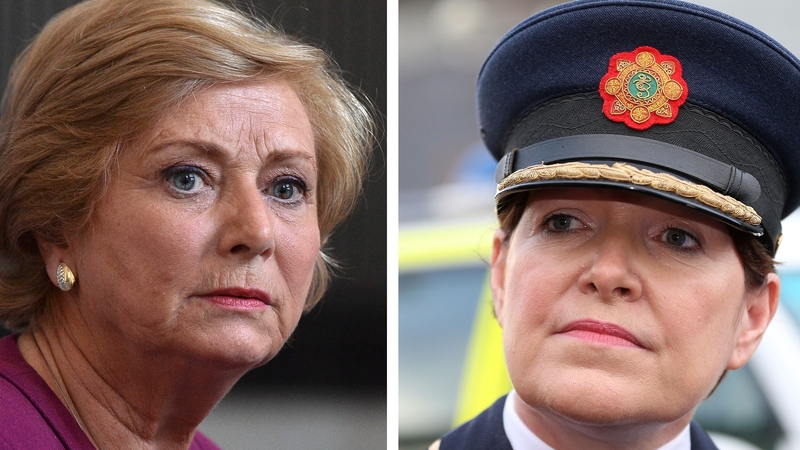
Image result for Vacancies filling rift between the Commissioner and Tánaiste Fitzgerald   Image result for Gardai senior vacancies not filled

TÁNAISTE AND JUSTICE MINISTER FRANCES FITZGERALD WITH GARDA COMMISSIONER NÓIRÍN O’SULLIVAN.

Major tensions have surfaced between Justice Minister and Tánaiste Frances Fitzgerald and Garda Commissioner Nóirín O’Sullivan over the filling of a series of key vacancies within the force.
Ms Fitzgerald has held up the promotions of a significant number of officers, including two assistant commissioners, after coming under pressure from the Policing Authority.
The newly established watchdog is understood to have voiced concern over the number of proposed promotions – meaning the jobs could remain unfilled until next year.
Sources say there is major anger within the force over the holding up of the promotions, and that the long-running vacancies weaken An Garda Síochána as a whole.
Some officers believe the decision not to send the list for Cabinet approval is “punishment” for Garda unions securing a special pay deal.
“This led to tensions between the Commissioner and Government and it is damaging to the force as a whole,” said a source.
It now seems likely that the Policing Authority will be given a much greater say over the appointments process within the force.

The ‘right to be forgotten’ and go play is ultimate in the protection of Ireland’s children

The right to play, giving more powers to Gardaí, and the abolition of direct provision centres were also contained in the report.


Image result for The 'right to be forgotten' and go play is ultimate in the protection of Ireland's children   Image result for changing the law so that children’s information can be removed from the Internet (‘right to be forgotten’)  Related image

A REPORT HAS RECOMMENDED OVER 100 CHANGES THE GOVERNMENT SHOULD MAKE TO SAFEGUARD CHILDREN INCLUDING CHANGING THE LAW SO THAT CHILDREN’S INFORMATION CAN BE REMOVED FROM THE INTERNET (‘RIGHT TO BE FORGOTTEN’), AND ENSURING CHILDREN’S RIGHT TO PLAY.

The report, compiled by a Rapporteur on Child Protection, is over 180 pages long, and discusses a range of subjects including the vulnerability of children with disabilities and the gaps in legislation in relation to technological advancements that leave children unprotected.
Other changes recommended include teaching children about consent in child sex abuse cases, and shielding children in court if absolutely necessary.
Tanya Ward, CEO of the Children’s Rights Alliance said that this report was different from others as it focused on children who were “left behind” – such as children in homeless accommodation and children in direct provision centres.
Speaking to RTÉ’s News at One, she said that although there were some ambitious longterm recommendations, there were also ‘interim ‘ suggestions made in the report.
Here are some of the most important recommendations made by Special Rapporteur Professor Geoffrey Shannon.
Consent education is a must?
In his report, Special Rapporteur raised concerns about and highlights the need for adequate sex education to teach children and young people about consent and to challenge the concept of ‘victim blaming’ or holding the victim responsible for sexual violence or crime committed against them.
Shannon is commenting on provisions in the Criminal Law (Sexual Offences) Bill which allows for children to give evidence in court behind a screen in certain circumstances.
He states that “this should be avoided whenever possible”, and the bill is currently before the Houses of the Oireachtas.
The report also highlights the fact that gardaí don’t have the power to search and seize mobile phone devices that they suspect of containing images of children if the device is outside the home.
The report also calls for the gardaí to be given better powers when requesting information from companies like Google and Facebook.
Children’s digital rights.
For the first time, Prof. Shannon discusses the right to be forgotten, pinpointing the risks to children’s online identity. Activity on social media may be instant, but the unintended consequences for children when they post something online can last beyond childhood.
The report says:
The relevance for children of the ‘right to be forgotten’ should be acknowledged, children should be educated about the matter, and it should be understood that the age at which an individual posts information online should be considered a very important factor in decisions about whether to remove an individual’s personal information from sites.
Children with disabilities?
Shannon also brings a special focus to children with disabilities in his report.
This is very relevant in the context of the ‘Grace case’ and the attention that it has brought for the treatment of children with intellectual disabilities.
Shannon calls for an examination of the effectiveness of the government’s Stay Safe Programme (a personal safety skills programme for specialised mainstream primary schools) for children with disabilities.
He is also calling for Ireland to ratify the UN Convention on the Rights of Persons with Disabilities.
Young People in the Justice System.
There are also some harsh criticisms of the method of judicial punishment for children in trouble with the law detention -the report says that detention centres “should be a measure of last resort”.
Against the backdrop of progress in the youth justice area and difficulties at the Oberstown Detention Campus, the report calls for more “imaginative community sanctions” for children.
While the Garda Diversion Programme has been extremely successful over the years, there are other, new diversion models in operation in other jurisdictions that should now also be explored. It is also calling for further attempts to “avoid the use of force, including restraint, of children in custodial settings”.
The right to play.
The report calls for child protection training and standards for people working in the field of play. He highlights the fact that children from disadvantaged groups lose out the most when it comes to play and recreation.
Children have a right to play, recreation, rest and participation in the arts.
Prof. Shannon highlights the serious and immediate developmental impact this is having on children and calls for a Government-led national strategy to address this and make sure that all children can access this basic right.
Other issues detailed in Prof. Shannon’s report include direct provision for asylum seekers, which he recommends should be abolished. In the interim, he suggests that living standards in direct provision centres should be improved. He also focuses on poverty and calls for national measures to address the nutritional needs of families.
The report is due to be debated before the Houses of the Oireachtas in the coming weeks.

Irish Pharmacists warn over drug driving and prescription medicines

AN RSA REPORT SHOWS 30% OF PEOPLE KILLED ON ROADS IN IRELAND IN 2013 WERE ON PRESCRIPTION MEDICATION

Image result for Irish Pharmacists warn over drug driving and prescription medicines Image result for Irish Pharmacists warn over drug driving and prescription medicines  Image result for Irish Pharmacists warn over drug driving and prescription medicines

THE IRISH PHARMACY UNION SAID IT WAS URGING DRIVERS TO BE AWARE OF THE DANGERS OF DRIVING AFTER TAKING MEDICINES, PARTICULARLY THOSE WHICH CAN CAUSE DROWSINESS.

Drivers who take prescription medicine should consult their pharmacist about whether it is safe for them to operate a vehicle after doing so, the Irish Pharmacy Union has said.
The union said it was urging drivers to be aware of the dangers of driving after taking medicines, particularly those which can cause drowsiness.
It comes after RTÉ reported a Road Safety Authority (RSA) internal report showed 30% of people who died in road crashes in Ireland in 2013 had taken prescription medicine.
The report examined 109 coroners’ reports and found 31% of those who died in crashes had consumed alcohol, while 30% had taken a prescription medicine.
The report stated that prescription medication includes drugs that legally require a medical prescription to be dispensed and include drugs such as benzodiazepines, antidepressants, antipsychotics and antiepileptic drugs.

SEDATIVE HYPNOTIC.

“Initial observation would indicate that presence of prescription medications appear to be over-represented in road traffic collision (RTC) fatalities, with 34 (30%) of all RTC fatalities having prescription medication found on toxicology. Benzodiazepine, a sedative hypnotic, was the most common prescription medication on toxicology.”
Irish Pharmacy Union executive committee member Caitriona O’Riordan said the data was very disturbing.
“Neither the Gardaí nor the RSA know if the medications that the unfortunate crash victims concerned were taking had been prescribed or were obtained illegally.
“The key point is that there are possible side-effects from some medications, and it’s vitally important that before driving people should ask their pharmacist if there is any possibility that the medicine may impact on their ability to drive safely,” she said.
“Many medications carry warnings to be aware of the dangers of drowsiness or other side-effects, and those warnings are there for a reason; it is absolutely vital that everyone taking medications discusses possible side-effects with their pharmacist and also reads the advisory notes with the medication,” she said.

CHARITY PLACES 380 PAIRS OF SHOES OUTSIDE DÁIL TO HIGHLIGHT RATE OF MALE SUICIDE

Image result for CHARITY PLACES 380 PAIRS OF SHOES OUTSIDE DÁIL TO HIGHLIGHT RATE OF MALE SUICIDE  Image result for We need to talk about our mental health more in Ireland and put pressure on our government to prioritise mental health services  Image result for We need to talk about our mental health more in Ireland and put pressure on our government to prioritise mental health services

A TOTAL OF 380 PAIRS OF SHOES WERE LAID OUTSIDE DÁIL ÉIREANN TODAY, SYMBOLISING THE NUMBER OF IRISH MEN WHO DIE BY SUICIDE EACH YEAR.

The Movember Foundation, which organised the event, said it is aiming to help reduce the rate of male suicide by 25% by 2030.

THE PROTEST WAS REPLICATED IN THE UK, US, AUSTRALIA AND CANADA AHEAD OF INTERNATIONAL MEN’S DAY, WHICH HAPPENS TOMORROW.

Doug Leddin, a Movember participant and mental health advocate from Dublin said: “We need to talk about our mental health more in Ireland and put pressure on our government to prioritise mental health services.
“Unless you spend a day in the shoes of someone who is suffering it’s extremely hard to know what we’re going through. I was in a dark place and I suffered alone for a long time.
“Movember is a brilliant way to spread awareness of men’s health, raising funds and getting guys talking and being more open about mental or physical challenges they might be facing.”
Neil Rooney, Director of The Movember Foundation Ireland, said too many men are dying too young and before their time.
“The Movember Foundation is investing in projects that are having a real impact on the lives of men in Ireland and around the world,” he said.
“By engaging with men where they are, and understanding what works best, we’re helping make change happen sooner, before it’s too late.
“While the state of men’s health has come a long way since Movember started in 2003, there’s still so much work to be done and we won’t stop until men are living healthier, happier and longer lives.”
Three out of every four suicides in Ireland happen to men. On average, 32 men a month take their own life in the country.

Stephen Hawking warns humanity may only have 1,000 years left

Image result for Stephen Hawking warns humanity may only have 1,000 years left   Image result for Stephen Hawking warns humanity may only have 1,000 years left

FAMED THEORETICAL PHYSICIST STEPHEN HAWKING HAS SPENT HIS LIFE PONDERING BIG QUESTIONS ABOUT THE WIDER UNIVERSE. IN RECENT YEARS, HE’S TURNED HIS ATTENTION CLOSER TO HOME, TALKING ABOUT AI, CLIMATE CHANGE, ALIEN INVASION, AND OTHER THREATS TO THE FUTURE OF HUMANITY.

NOW, HE’S PUT AN EXPIRATION DATE ON OUR SPECIES IF WE DON’T GET INTO SPACE. HE’S GIVING US JUST 1,000 YEARS.

Hawking’s latest warning came in a speech delivered at Britain’s Oxford University Union. He noted that Earth is fragile, as is any single planet. The odds of a catastrophic global event wiping out humanity in any given year is slim, but over the course of years the chance becomes quite high. Human activity is only increasing those odds as well.
Hawking noted in the speech that some of the most pressing concerns for the future of humanity could come in the next century, as artificial intelligence is perfected and global climate change continues to affect civilization. When something happens on Earth, we don’t want all of humanity to be here, according to Hawking. The best way to keep the species going is to make sure we’ve got a backup — humans on other planets and maybe even in other star systems.
But where could we go? The easiest way to get humans off of Earth is to colonize Mars, and there are some ambitious plans to make that a reality within our lifetimes. The SpaceX Interplanetary Transport System is designed to shuttle as many as 200 people to Mars in each three month trip. Launches would only happen when the orbit of Mars put it close enough to Earth for such a quick journey. It’s certainly feasible to move people to Mars, but creating a functional society is still an unknown. Mars has no magnetic field to protect people from radiation and its thin atmosphere isn’t breathable.
Mars is a good start, but being in a completely different solar system would be the ultimate backup for humanity. Astronomers are constantly finding potentially habitable exoplanets, but we can’t get to any of them with current technology. The most likely target for further examination is Proxima Centauri, which harbors an exoplanet that may be Earth-like. First, we need to get a closer look at it, which the upcoming James Webb Space Telescope can manage. A few centuries ago, wooden sailing ships were the fastest way to travel, so who know what we’ll have in another couple generations? Proxima Centauri might not seem that distant.
A whole millennium might sound like a lot of time, but humanity has existed in more or less its current form for about 100,000 years. It’d be an awful shame if all this progress we’ve made was for naught in just 1% of that time. We should probably get on this.      

Tuesday, May 13, 2014

Donie's news Ireland daily BLOG update

Child protection review severely critical of Divine Word missionary congregation


It's not acceptable that Church waited until 2012 to implement child protection policies. 

It said it was ‘not acceptable that any Church authority in Ireland would have waited until 2012 to begin the process of implementing accepted and agreed Church child safeguarding policies’, the review said.
The fact that no child safeguarding case management files existed in the Divine Word (SVD) missionary congregation prior to 2013 “is of great concern and indicates a lack of any focus on child protection within the society over the last 20 years,” the National Board for Safeguarding Children in the Catholic Church in Ireland (NBSCCCI) review has found.”Case files were constructed by the society in advance of the review taking place,” it said.
The existence of child safeguarding case management files within the congregation “can only be traced back to the beginning of 2013,” it said. “A lot of documentation was either never generated, or was removed or destroyed by parties unknown, or was kept in some file or files the existence of which has not yet been discovered.” it said.
It said it was “not acceptable that any Church authority in Ireland would have waited until 2012 to begin the process of implementing accepted and agreed Church child safeguarding policies, procedures and practices and while there may be explanations offered for this state of affairs, there are no excuses for it.”
It also described as “ truly unfortunate and a great injustice that it is almost impossible to identify the victims of historical child sexual abuse who live in developing countries and whose abuse took place many years ago.
“The behaviour of the few SVD members who perpetrated this abuse has severely undermined the integrity of a Christian brotherhood that aspires to bring the Good News to people who have not yet heard it,” it said.
The congregation fully met none of the four criteria for complaince with training and education as “child safeguarding has only really been actively taken up by the SVD IBP within the past year and much remains to be done.”
Nor did the congregation “place a notice on its website announcing this NBSCCCI review and inviting anyone who had a child safeguarding concern to make contact,” as is required.
What was missing in the congregation’s approach “is a clear and systematic consideration of the potential to identify victims of member.” The reviewers found evidence “on the files of some attempts to assess the risks posed by members about whom there were child safeguarding concerns. However, this approach was hit and miss,” it said.
A total of eight abuse allegations were made against six Divine Word missionaries since January 1st 1975, with one convicted in the courts, according to today’s review. The reviewers read case files on seven accused men, however.
“One of these men had spent some of his formation period in an SVD seminary, but he transferred to a diocesan seminary, from which he was ordained. He was subsequently found to have abused children as a diocesan priest, but no information suggesting that he had abused while an SVD seminarian was found.”

Double expense claim allegation made against a Donegal Co councillor


The standards in Public Office Commission is to make a decision about Pádraig Doherty expences claim within weeks.

SIPO heard that Cllr Pádraig Doherty attended a meeting of Údarás na Gaeltachta in Furbo, Co Galway for which he claimed mileage expenses and overnight expenses despite spending that night in Donegal.
A Donegal County Councillor has appeared before the Standards in Public Office Commission over allegations around travel and subsistence expenses, including an allegation that he claimed expenses for the same conference from two different bodies.
A total of nine alleged contraventions are made against Cllr Pádraig Doherty, an independent representative for the Glenties electoral area, following a complaint by Donegal County Council.
Cllr Doherty, who is standing in the upcoming local elections, admitted to the contraventions and, through his legal representative, apologised to the commission, but said the the contraventions were “unintentional” and “inadvertent”.
Three of the allegations relate to Cllr Doherty’s attendance of the Association of County and City Councils’ Annual conference in Dungarvan, Co Waterford between March 8th and March 10th 2007.
The commission heard that Cllr Doherty claimed travel and subsistence expenses totalling € 1,021.08 from Donegal County Council in December 2007 but had, three months earlier, claimed expenses from Údarás na Gaeltachta for the same conference for a total of € 1,032.75.
However, Cllr Doherty later wrote to Donegal County Council in August 2011, a year prior to a complaint being made in relation to the matter, saying he had discovered the duplication during a review of his expense claims and repaid the full € 1,021.08 to the council.
Further allegations against Cllr Doherty relate to two separate conferences which took place in Waterford and Galway on two consecutive days in November 2008.
Cllr Doherty attended the first of the two conferences, the Irish Central Border Area Network Conference in Dundalk, Co Louth, on November 20th 2008 and returned home that night. He later made a claim for mileage and subsistence of € 295.39.
The commission heard that, the following day Cllr Doherty attended a meeting of Údarás na Gaeltachta in Furbo, Co Galway for which he claimed mileage expenses and overnight expenses despite spending that night in Donegal.
However, Cllr Doherty’s legal representative, senior council Richard Lyons, read correspondence from Údarás na Gaeltachta stating that Cllr Doherty had later written to it amending his claim to state he left Donegal at 4am on November 21st 2008 and not 4pm on November 20th which it had accepted .
Mr Lyons said Cllr Doherty, who had been an Údarás na Gaeltachta member for 26 years and a council member for 15 years, had admitted to the breaches a “very early stage”, had cooperated fully with the inquiry. He also noted that there had been no financial loss to either body.
Chair of the commission, Mr Justice Daniel O’Keeffe said it would deliver its decision within a matter of weeks.

More drugs will be made available over the counter in Irish Pharmacies


More medicines are to be made available without a prescription saving patients an expensive trip to the doctor.

The drugs regulator has identified a range of around 20 products that will be made available over the counter in pharmacies and may include migraine medicines and commonplace anti-fungal drugs.
Pat O’Mahony, chief executive of the Irish Medicines Board (IMB), said preparations are at an advanced stage to take around 12 of these medicines off prescription shortly and patients are likely to be given easier and cheaper access to the remainder next year.
Speaking at the Irish Pharmacy Union annual conference in Cavan over the weekend, he declined to disclose the medicines on the list.
However, they are likely to include some products which are already available over the counter in the UK.
Drugs which may be included in the list include the medicine fluconazole – used to treat fungal infections such as thrush – which is available only on prescription here but can be purchased over the counter in Northern Ireland.
Pharmacists also recently called for the migraine medication Sumatriptan, to be available here without prescription, as it is in the UK. They argued it would allow migraine sufferers to access appropriate and effective treatment from their pharmacist without delay.
“We have long argued that too many medicines are prescription only and that pharmacists should be empowered to have greater discretion in deciding whether to dispense medicines to patients,” said Kathy Maher, the new President of the IPU, as she welcomed the move.
“This is key to improving public access to medicines in a safe environment. Today’s news is very welcome and we will engage with the IMB to ensure that this progresses as quickly as possible.”
She said the public will benefit through having easier access to the medicines which can be obtained over the counter in consultation with a pharmacist. For private patients it will cut out the need to pay the doctor a fee of around €50 in order to get a prescription.
Ms Maher, who is a pharmacist in Co Meath, also revealed the findings of an IPU survey showing that 38pc of medical card patients “think twice” about filling prescriptions because they will have to pay a levy of €2.50 for each medicine.
She warned this was leading patients to “ration” their use of medicines with potentially harmful consequences.
She said while the charge will not be scrapped it is time to exempt some vulnerable groups including people who are receiving palliative care, the homeless and residents of nursing homes.

Stop being so lazy about your fitness ladies


Over the last decade or so, the number of female acquaintances who continue to smoke has dwindled into single figures.
We realised that if we did not want to succumb to heart disease or lung cancer at an early age, the fags would have to go.
We’re also starting to get the message about stuffing ourselves with too much junk food and preservative-laden quickie meals – yes, Jamie Oliver, we have been listening.
And not a minute too soon, as the latest research says that if we don’t cut down on our calories Irish people are set to become the fattest in Europe by 2030.
So, increasingly I’m seeing women in the supermarket peering at labels and cutting down on the amount of “treat” foods in their baskets.
But where we’re falling behind is with exercise. If you see two women, for instance, one quite slim and the other, as we put it, “pleasantly plump” who would you think is the least fit and healthy and in more danger of contracting heart disease?
If you immediately assume it’s the overweight woman, you may be wrong. This week scientists from Queensland University revealed the results from a 20-year study which tracked the long-term health of women born in the 1920s, 1940s and 1970s.
What they found was that, after the age of 30, the biggest threat of getting heart disease for women over the age of 30 was not from smoking, obesity or high blood pressure, but from lack of exercise.
Ergo, if you are a 30-plus female, you can munch broccoli and spinach all you like, but if you lead a sedentary lifestyle you are at more risk of keeling over from heart disease than a woman who has the odd fag and glass of wine but exercises regularly.
To increase our fitness levels we need to raise our heart rates and break a sweat – that means covering a mile in less than 20 minutes or so.
And a leisurely stroll of even a few miles every other day isn’t going to cut the mustard. We need at least two-and-a-half hours of good physical activity weekly. And most of us are not getting it.
Last month, the UK government warned that the British people were more physically inactive than they have been at any other time in “all human history”.
I would bet that the Irish are even worse because promoting physical fitness has never been a priority in this country. It never needed to be when we had to plough fields, milk cows or cycle miles to the next village.
When Ruairi Quinn suggested that some of the numerous hours spent teaching catechism in Irish schools could be given over to maths instead, there was uproar.
But no one has yet to complain about the lip service we give to physical fitness and the impact that has on increasingly serious health issues in Ireland.

Peoples best friend and the power & benefits of a pet


FIND OUT WHAT PHYSICAL AND MENTAL BENEFITS YOU COULD RECEIVE FROM HAVING A PET.

It’s a well known saying that dogs are a human’s best friend. They’re loyal, always there for you and are great listeners. So animal fans will be pleased to hear that having a pet improves both your mental and physical health, even having something as small as a guinea pig.
“Pets often provide unconditional acceptance and love and they’re always there for you,” Gary A. Christenson, MD, chief medical officer at Boynton Health Service at the University of Minnesota, explained. “There is a bond and companionship that makes a big difference in mental health.”
If you want to know more about the benefits of having a pooch or moggy, or maybe even a hamster, keep reading.

EASES DEPRESSION

A study published in the Journal of Personality and Social Psychology documents how pet owners have a more positive outlook in general and better wellbeing overall. It’s the feeling an animal offers, taking away any traces of loneliness and boosting self-esteem, which makes them the perfect company.
“The calming presence and the social bond that pets bring can be very powerful,” Dr. Christenson explained. “Animals give something to focus on instead of the negative thoughts a depressed person is prone to have. When a pet pays attention to you, they’re giving you unconditional love and acceptance.”

STRESS RELIEF

After a hard day’s work it’s a relief to come home to unconditional love. You may be in a foul mood or look a mess but your pet couldn’t care less. The body’s reaction to being in the same room as an animal shows the effects they have.
“A powerful neurochemical, oxytocin, is released when we look at our companion animal, which brings feelings of joy. It’s also accompanied by a decrease in cortisol, a stress hormone,” Rebecca A. Johnson, PhD, director of the Research Center for Human-Animal Interaction at the University of Missouri College of Veterinary Medicine, revealed. She carried out a study on post-traumatic stress disorder in veterans and the prescience of an animal was extremely powerful. “One veteran couldn’t leave his home without his wife until we placed a dog with him and in less than a week he was able to go around his town,” she recalled.

REDUCE ALLERGIES IN YOUNG CHILDREN

If you’re thinking of starting a family in the future, having a pet during the first few months of having your baby could strengthen their immune system for the future. Research in the Clinical & Experimental Allergy journal found that kids who had pets before they were six months old were less likely to develop hay fever, eczema and allergies as they got older.
“In the first year of life, babies who are exposed to dogs in the household are more likely not to have allergies, asthma, and fewer upper respiratory infections,” says Rebecca said. “If exposed at an early age to dander and allergens, we may be less reactive to them over time.”

Loss of ice is moving Earth 400 km downwards!


Earth’s mantle under Antarctica is moving rapidly, changing the shape of the land at a rate that can be recorded by GPS, scientists say. 

Antarctica may seem a motionless, yet hundreds of miles down the Earth is moving at a rapid rate, says a new research.
Antarctica may seem a motionless and frozen landscape, yet hundreds of miles down the Earth is moving at a rapid rate, according to a new research.
An international research team led by Newcastle University, UK, has explained for the first time why the upward motion of Earth’s crust in the Northern Antarctic Peninsula is currently taking place so quickly.
Previous studies have shown the Earth is ‘rebounding’ due to the overlying ice sheet shrinking in response to climate change.
This movement of the land was understood to be due to an instantaneous, elastic response followed by a very slow uplift over thousands of years.
But Global Positioning System (GPS) data collected has shown that the land in this region is actually rising at a phenomenal rate of 15mm a year – much greater than can be accounted for by the present-day elastic response alone.
And researchers have shown for the first time how the mantle below the Earth’s crust in the Antarctic Peninsula is flowing much faster than expected, probably due to subtle changes in temperature or chemical composition.
This means it can flow more easily and so responds much more quickly to the lightening load hundreds of miles above it, changing the shape of the land.
“You would expect this rebound to happen over thousands of years and instead we have been able to measure it in just over a decade. You can almost see it happening which is just incredible,” lead researcher, Grace Nield, from School of Civil Engineering and Geosciences at Newcastle, said.
“Because the mantle is ‘runnier’ below the Northern Antarctic Peninsula it responds much more quickly to what’s happening on the surface. So as the glaciers thin and the load in that localised area reduces, the mantle pushes up the crust,” said Nield.
Since 1995, several ice shelves in the Northern Antarctic Peninsula have collapsed and triggered ice-mass unloading, causing the solid Earth to ‘bounce back’.
“The ice is pressing down on the Earth and as this weight reduces the crust bounces back. But what we found when we compared the ice loss to the uplift was that they didn’t tally – something else had to be happening to be pushing the solid Earth up at such a phenomenal rate.