Enda Kenny to stay ‘until North crisis is sorted out?


Taoiseach Enda Kenny has risked deepening the increasingly bitter Fine Gael war over when he will step down by saying he has no intention of leaving until the Northern Ireland political crisis is resolved.
Speaking after the St Patrick’s Day parade in New York City, Mr Kenny said the Northern Ireland issue “takes precedence over everything else”, effectively delaying his departure until at least the summer.
In the aftermath of a tentative coup against Mr Kenny last month, the Taoiseach told the parliamentary party he would address the leadership issue conclusively on his return from his week-long US visit.
However, while the position was widely seen to indicate he would step down later this month or in early April, no definitive timeline was given.
In recent weeks, Mr Kenny has caused concern among Fine Gael dissenters that he will not leave due to his repeated references to the need for stability during the Brexit negotiations next month and last Thursday’s meeting with US president Donald Trump.
However, while those close to Mr Kenny have sought to downplay such fears, the Taoiseach poured further fuel on the flames yesterday by saying the Northern Ireland political crisis is now another reason for why he should not step down.
Asked about when he will resign after walking past cheering crowds at the New York City St Patrick’s Day parade, Mr Kenny said he continues to have “a number of priorities” that must be resolved.
New York Governor Andrew Cuomo and Taoiseach Enda Kenny march in the St Patrick’s Day parade on 5th Avenue.
He said the political impasse in the North caused by last month’s Stormont elections, and the fact Sinn Féin and DUP now have just three weeks to form a government or be forced into another election in May, was a new addition to these “priorities”, and stoked backbench anger by saying Ireland must provide “stable” leadership.
“What I’ve always said is I need to deal with a number of priorities here, the first priority is to put in place an executive in Northern Ireland,” said Mr Kenny.
“We have no government, no devolved authority, in Northern Ireland now. I hope the parties who are elected will accept the responsibility of putting together a government within the three-week period.
“What I did say to my party is that I would deal with this effectively and conclusively on my return, that’s my intention. But I think these are priorities that take precedence over everything else.”
Asked directly when he is “going to deal with it [the leadership question]”, Mr Kenny said: “I’m not going to answer that for you. Do you not think it’s appropriate that the immediate priority is to have an executive functioning in Northern Ireland, do you not think it’s appropriate that all the work we put together we should have an agreed negotiating stance for the EU that’s going to affect everybody in our country?
“I intend to follow through on those [priorities] very, very diligently.”
A number of Fine Gael backbenchers known to want Mr Kenny to step down as soon as possible last night declined to comment publicly, but said it has already been made clear to the Taoiseach he cannot continue to ignore the leadership issue.
Mr Kenny’s New York comments came 48 hours after a draft version of his speech to the American- Ireland Fund Gala in Washington DC said this would be his last St Patrick’s Day as Taoiseach before it was deleted from the script.
Asked about the change to the otherwise untouched 1,500-word speech on Wednesday, Mr Kenny simply said it was removed “because it shouldn’t have been in there”.
The McEvaddy brothers get Dubai backing for €2bn airport terminal

)
THE MARKER HOTEL IN DUBLIN’S GRAND CANAL SQUARE WILL HAVE 30 BEDROOMS ON THE NEW FLOOR, AND THE MAIN RESTAURANT WILL BE MOVED TO THE ROOFTOP.
Businessmen Ulick (above pic) and Des McEvaddy have secured the financial backing of a Dubai-based investment group to build a proposed €2 billion terminal scheme at Dublin Airport, according to the media.
Omega Air boss Ulick McEvaddy and his brother Des have been attempting for more than 20 years to develop a third independent terminal on 130 acres of land they own adjacent to the airport. They now have the support of Dubai-based Tricap Investments, an investment fund with a diversified portfolio that spans real estate, energy and aerospace in the Middle East, the US, Asia and Africa.
 Brehon to add new floor to Marker hotel in €10m upgrade
Brehon Capital Partners, the owners of the Marker hotel, in Dublin’s Grand Canal Square, is planning a €10 million investment that will add a new floor and upgraded roof bar to the property.
The expansion will include about 30 bedrooms on the new floor, bringing the hotel up to 217 rooms, while it also involves moving the main restaurant to the rooftop. The roof would be about two-thirds enclosed, with a small, open terrace, allowing it to be used all year round.
JP Morgan may double its Irish workforce.
US investment bank JP Morgan may add up to 500 people to its operations in Ireland, which would more than double its workforce here, the Sunday Business Post suggests. The bank is among those to have instructed property agents to find additional office space in Dublin, it reports.
Minister for Finance Michael Noonan said on St Patrick’s Day that more than 120 overseas banks, insurers and other financial companies are currently in talks to move operations to Ireland as a result of the UK’s decision to quit the European Union.
Mr Noonan made the comments on Friday at an event in Singapore.
Aryzta sets four-year target to cut debts by €1bn.
Aryzta chairman Gary McGann has told analysts that he plans to cut debt levels at the troubled frozen baked goods company by €1 billion within four years, according to the Sunday Times.
Mr McGann, in his first public outing as chairman of Aryzta, said the company would undertake an overhaul of the board and a review of its business model. He also said he had received “very, very clear feedback” from shareholders that they did not see “the strategic fit” between Aryzta and Picard, its French frozen-food retailing associate.
Unilever may sell off its margarine division for €6bn.
Consumer goods giant Unilever is eyeing the £6 billion sale of its margarine division, which produces Flora and Stork, says the Sunday Telegraph. The FTSE 100-listed manufacturer has been forced into a strategic review of its operations after an audacious £115 billion takeover approach from Kraft Heinz, it reports.
The newspaper understands that rather than opt for a defensive bid for a rival such as Colgate-Palmolive, or a spin-off of its entire food arm, Unilever is leaning towards a sale of the margarine business, which controls just under a third of the entire global margarine market.
Eight men rescued off the Sligo coast after dive boat capsizes
Two men taken to hospital following the incident east of Sligo town


RESCUE 118 WAS CALLED OFF FROM ITS SEARCH AT BLACKSOD BAY, CO MAYO TO ASSIST WITH THE OPERATION.
Eight men have been rescued from the sea off the coast of Co Sligo after a dive boat capsized.
Two of the men were taken to hospital following the incident which occured off Aughris Pier, east of Sligo town.
A mayday call was received by Malin Head Coast Guard at 11.24am on Sunday. Fortunately, the Sligo Bay RNLI lifeboat crew were on a training exercise in the area and arrived at the scene of the incident at 11.43am.
The lifeboat crew rescued all eight people from the water and one man was airlifted to hospital by the Irish Coast Guard Helicopter Rescue 118. He suffered a head injury when the boat capsized in heavy seas.
The remaining seven men were taken to Aughris Pier where one person was taken by ambulance to hospital. Following the rescue, the lifeboat crew returned to the scene to tow the vessel back to the pier.
Rescue 118 was called off from the search at Blacksod Bay, Co Mayo for the missing crew members of Rescue 116, the Sikorsky helicopter which crashed into the sea on Tuesday morning.
Sligo Bay RNLI lifeboat operations manager Willie Murphy said the incident happened at the end of a difficult week for the rescue services following the loss of Rescue 116.
He said: “This morning’s callout shows that the professionalism and dedication of the search and rescue community remains unchanged.
“The RNLI crew at Sligo Bay along with their colleagues at Rescue 118 were on scene minutes after the call for help was raised and rescued eight people from the water. Our thoughts are with the man who was airlifted to hospital and with our colleagues still searching in Blacksod Bay for the three missing crew members of Rescue 116.
Cancer the dreaded disease of women

Cancer is a dreaded disease, and rightly so because hitherto treatment was vague and patients were generally doomed to die of it. Advances in surgical technique and adjuvant treatment have now made cancer a treatable and possibly curable disease in early stages.
Women suffer nearly half the burden of cancer even though they are not pre-disposed to the conventional causative factors like tobacco and alcohol. The causal factors in women are generally age, lifestyle, hereditary, infections and environmental factors.
Social factors, especially inequalities, are major determinants of cancer burden in females, with poorer females more likely to die of their disease than affluent ones. Cancer can have profound social and economic consequences for the people of India, often leading to family impoverishment and societal inequality.
Common cancers and their screening?
Females generally postpone their first contact with a health facility, leading to a delayed diagnosis in an advanced stage. Unfortunately, the four most common cancers afflicting females can be screened and diagnosed at an early stage.
- Firstly, Breast cancer, can be screened by monthly self-breast examination, annual clinical examination and mammograms after the age of 50 years.
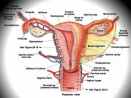
- Second, cervical cancer, a sexually active female should undergo a pap smear every three years from the age of 21 years and co-testing with HPV after the age of 30 years.
- Third, ovarian cancer, can be diagnosed by having a high clinical index of suspicion in a female presenting with vague abdominal symptoms, early satiety and a timely investigation by tumour markers and an ultrasound examination.
- Fourth, uterine cancer, presents as inter-menstrual or postmenopausal bleeding usually in an obese elderly female. The sad common denominator in all these cancers is that they can all be diagnosed early with minimal effort and cured by surgery.
How is cancer treated?
Once a patient is suspected of having symptoms of cancer, a general evaluation followed by a staging workup including a tissue biopsy is done. Once the diagnosis has been confirmed, treatment options are discussed and if possible an appropriate radical surgery is planned. Radical surgery for cancer is the only curative treatment modality for solid organ cancers. Radical cancer surgeries require a centre where trained surgical oncologist interact with their medical and radiation oncology colleagues and have adequate post -operative ICU care to obtain best results.
The first attempt at treatment is generally the best chance of cure as recurrence is resistant to most forms of treatment. After surgery the patients are followed up by designated protocol and undergo adjuvant therapy (chemotherapy, radiotherapy, targeted therapy) as needed.
The role of women in cancer is prevention?
Women have a central role in the fight against cancer, not only can they encourage their family members to change to a healthy lifestyle (abstinence from smoking/alcohol, healthier food habits, exercise) leading to cancer prevention, they can also be an observant family member who encourages an early medical consultation for a possible cancer symptom leading to early detection and cure. We must therefore, empower women with knowledge and use them as our sentinels in the war on cancer.
Scientists say the ‘five second’ rule is correct when dropping food on the floor



WHAT DO YOU DO WHEN YOU DROP SOME FOOD ON THE FLOOR? DOES IT GO STRAIGHT IN THE BIN OR DO YOU ADHERE TO THE WIDELY-USED ‘FIVE SECOND’ RULE AND EAT IT?
A study, undertaken by scientists at The Big Bang Fair in Birmingham, shows that four out of five people or 79 per cent of us admit to popping fallen food in our mouths.
Of course most people think their own floors are cleaner and thus it’s more acceptable to eat food off – 56 per cent of them in fact – but that figure drops considerably to just 17 per cent if eating off another’s floor.
The research also shows people are just as likely to serve food that’s fallen on the floor to their dog (18 per cent) as they are their partner (17 per cent).
The most radical examples of ‘hoovers’ include people eating snacks off the floor of the cinema (2 per cent) or public transport (1 per cent).
But when asked to justify why they would do thus, a fifth of people admitted to following ‘five-second rule’, which scientists have now revealed as legitimate and safe in most cases.
Germ expert, Professor Anthony Hilton from Aston University, told the Birmingham Mail: “Eating food that has spent a few moments on the floor can never be entirely risk free.
“Obviously, food covered in visible dirt shouldn’t be eaten, but as long as it’s not obviously contaminated, the science shows that food is unlikely to have picked up harmful bacteria from a few seconds spent on an indoor floor.
“That is not to say that germs can’t transfer from the floor to the food.
“Our research has shown that the nature of the floor surface, the type of food dropped on the floor and the length of time it spends on the floor can all have an impact on the number that can transfer.”
Supermarket soups can be laced with up to seven spoons of sugar


SOME “HEALTHY” COMMERCIAL SOUPS CONTAIN A STAGGERING SEVEN TEASPOONS OF SUGAR, A TOP CHEF HAS REVEALED.
Hilary O’Hagan-Brennan said one spiced chicken soup was made with 28 grams of sugar per tub. The World Health Organisation recommends people take no more than 24 grams a day.
Ms O’Hagan-Brennan said on the RTE’s What Are You Eating? programme that even a root vegetable soup, which people might assume was healthy, contained 16 grams of sugar, or four teaspoons.
She says “There is no place for added sugar in soup”?
And sugar wasn’t the only hidden ingredient in our convenience foods, presenter Philip Boucher-Hayes discovered when he investigated.
He found that one third of us believe wraps are more healthy than traditional sandwiches.
But a large wrap can be equal to two slices of bread. And commercial tortillas are made with glycerol – a form of sugar – to keep them moist, and emulsifier to bind the ingredients together and extend their shelf life.
“Some chicken wraps have as many calories as a 12-inch pizza,” he discovers.
Consultant dietitian Aveen Bannon reveals that while salads are good for you, the benefits are often undone by large amounts of dressing. An average tablespoon of mayonnaise contains 94 calories – and people often use two or three spoons with a salad.
What would happen if the Earth’s rotation change direction or stop
The Earth, is the only planet in our solar system, that as long as we know it has life, and moves with a certain pattern, which we assume. Our planet rotates around its axis, a drive that takes about 24 hours, which seems to be from east to west at a speed of about 30 km per second.
We might think that these rules are insignificant and do not affect our existence. Only if our planet “rebels” and change course or reduce speed, then nothing will be the same.
According to the BBC, if the Earth began to move east, the climate in most regions would change drastically. The Sahara would be more rainy and desert will be turned into a jungle. Another case is that of anhydrous California which will also have more rain, as opposed to Florida we would see the swamps to dry up.
If again our planet began to move very slowly, then life on the planet would not survive as well, cause the side that would strike the sun would burn, and the “dark” side would freeze. In just one day we would have a transition from the Ice Age … the planet Venus. It’s a fact that the Earth actually reduces its speed, but it will spend trillions of years until it stops completely.
BUT HERE IS A SUMMARY OF THE QUESTION ANSWERS.?
- The Earth would become an even more imperfect sphere and this would reduce the acceleration due to gravity; it would decrease at the equator and increase at the poles. Also, the days would shorten.
2. Since the effect of gravity has decreased near the equator, we would observe tides much higher than usual in these areas, much more land would go underwater during high tides. I assume Venice would cease to remain habitable.
3. The precession of the Earth’s axis would change. As the Earth becomes an even more Oblate Spheroid, the gravitational differences (of the Sun on Earth) would be larger on different parts of the Earth, this would make the axis precess even faster. The current cycle is 26,000 years long for one complete precession, this would shorten depending on the increase in rotational velocity. Axial precession4. North Star would change faster. Currently the North Star is Polaris which is set to be replaced by Deneb in 8,000 years. Due to the above reasons, it would occur faster.5. It is also possible that the axial tilt of the Earth would increase. This would mean that winters would be colder and summers would be hotter.6. Since the Earth now rotates faster and the Coriolis effect depends on the rotation of the Earth, the impact of Coriolis effect would increase and we would experience faster wind speeds. Coriolis force7. This would be a boon for geostationary satellites as the operational altitude would reduce due to Earth’s increased rotational velocity. Geostationary orbit8. Since the Sidereal day (Sidereal time) would now be shorter, we would have to redefine our present units of time.9. Since we would have to redefine our units of time and also the orbit of our satellites, it would be a disaster for the GPS system, I can safely say that it would be unusable for at least a few years until all the corrections have been made.10. Since the Coriolis Effect would alter the wind speeds, and the rotational velocity of Earth has increased, the travel time of aeroplanes would change.