Pages

Showing posts with label South Africa. Show all posts

Thursday, December 26, 2013

Donie's Ireland daily news BLOG

Ireland successfully exits €85bn bailout programme after 3 years

  
The IMF’s Peter Breuer, left, Craig Beaumont, centre, and other delegates leave the Finance Department after the Troika’s final visit in October last

On December 15 Ireland exited its €85bn bailout programme. Three years earlier, the IMF, European Commission and ECB had come to town to take control of the nation’s finances.

Austerity would be the way to underpin the country’s shaky finances and the troika set about telling the Government how to go about it. But with Ireland’s borrowing costs having fallen below those seen before the bust, and signs that the economic Armageddon is finally in reverse, there are hopes that the country can now steer a more stable course of economic growth that avoids the boom and bust cycle.
The Government also decided not to exit the bailout with a precautionary credit facility. Eurozone finance ministers backed the decision. Speaking about the bailout exit, Finance Minister Michael Noonansaid: “There’ll be no brass bands, or champagne. Our intention is not to be exuberant; this is just a stop along the way.”

Bring Back Hope as Inspired by Jane Goodall


We are reposting this archived article from 2 years ago because we like the message of hope during the holiday season of Christmas.

The past 2 months have been bittersweet. On a high note I got to accompany the legend Dame Dr. Jane Goodall as she inspired countless South Africans in her latest visit; I was amongst the first in the world to see the ground-breaking new Malapa Hominid Fossils with Prof Lee Berger and The Jane Goodall Institute Team.
I raised funds for “The Big Cat Project” with the Lion King 3D Film; I reunited with African Explorer Extraordinaire Kingsley Holgate at “The Getaway Show” and reminisced on our Central Africa Republic Chimpanzee Rescue Mission last year; I had the remarkable opportunity to participate in “Good Pitch Johannesburg 2011” for the Gorilla Documentary “Guardians of Uganda’s Gentle Giants,” and throughout met many more amazing people, young and old fighting for our environment.
However, on a sombre note I have been saddened greatly by the annual Namibian Seal Massacre that started again in addition to the yearly Japanese Taiji Dolphin Hunt.
We also still keep losing Rhinos daily in the terrible on-going Poaching Crisis … and these are but to name a few of the tragic on-going offensives plaguing our planet daily due to greed, corruption, overpopulation, poverty, mindless traditions, dogmatic religions and an ever-expanding apathetic populous choking our planet for every bit of space and resource.
It feels like we are losing ground by the hour in the countless conservation battles to save our wildlife and environment. Furthermore, as an activist my Constitutional Right to Freedom of Speech in South Africa is not something I am prepared to lose if the new legislation is passed in a seemingly-flagrant attempt to choke the media from reporting and exposing perceived atrocities.
Every day is a war and a race against time for the survival of our species! As the casualties of mankind’s failings stack up on these fast-paced battlefields, it is exceedingly easy to become despondent and drained. As Dame Dr Jane Goodall spoke to people and communities it was clear many feel this strain, especially the youth who inherited this earth (and by our failings we keep stealing from our children). No wonder they are so downhearted.
But night is darkest before the dawn and I experienced first-hand the magic she can instil within people with her bright message… clear and unflinching in its delivery. One word can make all the difference and I want to share it with you to likewise inspire and revitalise your own being.
The word is HOPE! There is always hope and the past year I have shared many stories with you where there is hope and where I have been able to make a real difference, however small or big it may be. There is hope all around us if we are willing to see it. We need to share hope with ourselves and especially our children growing up in a world on the verge of collapse.
Without hope the battle is already lost. Hope is the key and with the Jane Goodall Institute global “Roots & Shoots” Programme (expanding rapidly now in South Africa) education and hope for the youth is the way forward.
To quote Dame Dr Jane Goodall “I met so many young people who had lost hope. Some were depressed, some were apathetic and some were angry and violent. And when I talked to them, they all more or less felt this way because we had compromised their future and the world of tomorrow was not going to sustain their great-grandchildren. So this is my effort to bring back the hope that we must have if we are to change direction. I think to be fully human, we need to have meaning in our lives, and that’s what I am trying to help these young people to find.”
I recommend you read the book Hope for Animals and Their World: How Endangered Species Are Being Rescued from the Brink by Jane Goodall, Thane Maynard, and Gail Hudson for many more examples and proof of hope.
David Devo Oosthuizen is a world-renowned photographer, activist, artist, journalist, designer, writer, public speaker and eco warrior. For more than 15 years he has sought to showcase African wildlife and the threats they face from development. He works with numerous wildlife protection organizations, including Goodall’s Roots & Shoots South Africa, and Sea Shepherd Conservation Society South Africa. David is the photographer with The Jane Goodall Institute South Africa. Visit his website at www.devographic.com.
The Jane Goodall Institute SA was founded by renowned primatologist Jane Goodall. The Institute is a global organisation that empowers people to make a difference for all living things. In South Africa, the JGI SA Chimpanzee Eden Sanctuary is home to chimpanzees that have been misplaced from their natural habitats in Central Africa. This tranquil sanctuary is committed to the rescue, rehabilitation and care of Chimpanzees in need of refuge and brings the world of chimpanzees closer to humanity through education and tourism. In the 50 years since Dr. Jane Goodall first set foot on the shores of Lake Tanganyika in what is now Tanzania’s Gombe National Park, the chimpanzee behavioural research she pioneered there has produced a wealth of scientific discovery. Her vision has expanded into a global mission to empower people to make a difference for all living things.

‘Peace on Earth’ does means Syria, Sudan, and Nigeria,

POPE tells vatican audience ON CHRISTMAS DAY


Pope Francis doesn’t want a commonly quoted Bible verse chanted as empty words on Christmas Day — the one about peace on Earth.

“Glory to God in the highest heaven, and on earth peace among those whom he favors,” heavenly hosts proclaimed when Christ was born, according to the Vatican translation.
The pontiff told tens of thousands of people gathered in front of the Vatican on Wednesday where he wants that peace to happen — in Syria, South Sudan, the Central African Republic and the Holy Land.

FALSE PRETENSES WON’T DO.

“True peace is not a balance of opposing forces. It is not a lovely ‘facade’ which conceals conflicts and divisions. Peace calls for daily commitment,” Francis said in his Christmas Urbi et Orbi message.
The Urbi et Orbi address is customarily political and global, as its name indicates. It is Latin and means “to the city (of Rome) and to the world.” Popes give the address and blessing on special occasions such as Easter and Christmas.
Vatican TV estimated that about 150,000 attended the blessing in St. Peter’s Square, which marked Francis’ first Christmas celebration as pope.
He asked Jesus to inspire peace in warring factions around the world.
“Prince of Peace, in every place turn hearts aside from violence and inspire them to lay down arms and undertake the path of dialogue.”
He also continued his criticism of money-driven evils.
“Lord of heaven and earth,” he prayed, “look upon our planet, frequently exploited by human greed and rapacity.”
Pray for peace: Francis asked Christians to pray for an end to the violence and suffering in Syria and for humanitarian aid to get through to its people. He prayed for people dying of hunger, thirst and violence in the Central African Republic to find an end to war and poverty.

HE ALSO ADDRESSED A NEW ARMED CONFLICT.

“Foster social harmony in South Sudan, where current tensions have already caused numerous victims and are threatening peaceful coexistence in that young state,” he prayed.
He asked God to have mercy on civilians killed in Nigeria and Iraq and prayed that Israelis and Palestinians find peace together in “the land where you chose to come into the world.”
Francis remembered refugees fleeing conflicts and misery in Africa who died off the coast of Italy when their overfilled boats capsized before reaching the town of Lampedusa .
He prayed for those who lost entire families and homes to Typhoon Haiyan in the Philippines.
Pope adored: The massive turnout on Christmas Day mirrored the popularity Francis has enjoyed since becoming head of the Catholic Church. His reputation for being down to earth and genuinely caring about people has touched a chord with millions.

CHRISTMAS EVE WAS NO DIFFERENT.

There was a record number of requests to attend this year’s Christmas Eve Mass, the Vatican said.
“People are listening to him, because he’s speaking in a language that’s not Vaticanese,” said Gerard O’Connell, a Vatican analyst. “He’s speaking the language of ordinary people.”
The Pope preached Tuesday evening on love, forgiveness and facing life with bravery and with God’s help.
“To us the Lord repeats, ‘Do not be afraid.’ … And I, too, repeat, do not be afraid,’” Francis said.
He called on the throngs gathered at St. Peter’s Basilica on Tuesday to cast aside hatred.
“If we love God and our brothers and sisters, we walk in the light. But if our heart is closed, if we are dominated by pride, deceit, self-seeking, then darkness falls within us, and around us.”
Reforms, surprises :Nine months into his papacy, much has been made of the Pope’s reforms, among them more scrutiny at the Vatican bank, changes to the church’s bureaucratic structure, and a commission to deal with the abuse of minors.
And while this year’s Christmas liturgy remains the same, experts say we should expect the unexpected.
“He tends to be a surprise, because he does things that are normal, but are very abnormal in terms of the papacy,” O’Connell said. “He brought three homeless men into where he is living to have breakfast with him on his birthday. … I suspect we will see something else again over the Christmas period.”
The festivities began on Saturday, with the Pope’s Christmas message to the Curia. He urged the church’s governing body to avoid gossip and to focus on service.
And then he practiced what he preached, spending three hours at a local hospital bringing Christmas cheer to sick children.

Fast food is the ‘unhealthy choice’ Says McDonald’s

TO THEIR OWN STAFF ON ITS WEBSITE    


The McResource Line website, which was “temporarily performing some maintenance” late on Christmas Day, featured a section on diet.

And what it had to say was somewhat unusual given the products the company usually sells.
“Fast foods are quick, reasonably priced, and readily available alternatives to home cooking,” a post on the site said, according to US business news channel CNBC.
“While convenient and economical for a busy lifestyle, fast foods are typically high in calories, fat, saturated fat, sugar, and salt and may put people at risk for becoming overweight.”
It featured a picture of a cheeseburger with fries and a cola drink, which was captioned “unhealthy choice”, and another of a glass of water, salad and a ham and salad sandwich, which it described as a “healthier choice”.
“Although not impossible it is more of a challenge to eat healthy when going to a fast food place,” it said.
“In general, avoiding items that are deep fried are your best bet … limit the extras such as cheese, bacon, and mayonnaise. Eat at places that offer a variety of salads, soups and vegetables to maintain your best health.”
CNBC said the posts appeared to have been written by an outside contractor.
In a statement, McDonald’s said that “portions of this website continue to be taken entirely out of context”.
“This website provides useful information from respected third-parties about many topics, among them health and wellness,” the company said. “It also includes information from experts about healthy eating and making balanced choices. McDonald’s agrees with this advice.”
The McResource Line is designed for employees, but CNBC said anyone could access the website after filling in a registration form.

NEVER FORGET A FACE?

Scientists unlock genetics that cause autism sufferers’ memory struggles

PEOPLE WITH THE GENE VARIANT ARE LESS ABLE TO RECOGNISE FACES

  
One in three people have inherited a genetic variation that impairs their ability to remember faces, according to a study that could explain why some individuals recall everyone they have ever met while others have difficulty recognising their own relatives.
The study was carried out on nearly 200 families with an autistic child as part of research into genetic influences on the childhood disorder, which is linked with an inability to recognise faces as part of normal development.
However, the scientists believe that the findings have a wider significance by explaining – at least to some extent – the wide variation in the ability of the general population to recognise faces, whether of total strangers they have seen just once, or of close friends and relatives.
The scientists studied the gene for the protein receptor responsible for triggering the reaction in the brain to oxytocin, the so-called “love hormone” that helps to form social bonds, especially between close friends and lovers, as well as between mothers and their new-born babies.
When they analysed the genetic variation of the oxytocin receptor gene in 198 families with an autistic child they found a small change in the gene’s DNA sequence had a large and significant impact on the memory skills for faces within the families.
The particular variation in the gene is common in the general population, with about a third of people inheriting both copies of the deficient gene variant from each of their parents. The scientists said that high prevalence of the gene variant could explain why a relatively large proportion of people have difficulty with remembering faces.
“Some people seem to remember the faces of almost everyone they have met, yet others struggle to recognise even close friends and family,” said Professor David Scuse of the Institute of Child Health at University College London, the lead author of the study published in the Proceedings of the National Academy  of Sciences.
“We have found a possible explanation. A gene related to oxytocin, the ‘love hormone’, influences face memory and, surprisingly, about one in three people has a version of the gene that doesn’t work so well,” Professor Scuse said.
Oxytocin is released into the bloodstream during and after childbirth, as well as during lactation, and is believed to stimulate bond-forming between a woman and her baby. It is also released during love making and orgasm, helping to form pair bonds.
However, oxytocin is also released in the brain of both sexes as a “neuromodulator” and it is this aspect of the hormone’s function that is believed to be involved with face recognition, which is the primary way that humans identify individuals.
Autistic children find it difficult to form social bonds and do not learn to recognise faces in the normal way. Their close relatives also tend to have a higher-than-average risk of displaying milder versions of these kinds of autistic traits, Professor Scuse said.
“Our central conclusion is that it seems like a variation in a single gene is associated with strikingly different abilities in the population we studied to remember faces, and it could account for a significant proportion of the variation we see in the general population to recognise faces,” he said.
“It’s very unusual for a single gene to have an influence on such a complex trait as facial recognition. People with the gene variant are less able to recognise faces and it’s a bit like inheriting the kind of genes that make you two inches shorter than the average height,” Professor Scuse explained.

Astronauts complete repairs to space station


Spacewalk lasting 7.5 hours judged a success as vital repairs carried out on space station

Nasa astronaut Mike Hopkins during a spacewalk outside of the International Space Station.
Nasa astronauts have completed urgent repairs to the cooling system of the International Space Station that should return it to normal operation within a few days. In a 7-1/2-hour spacewalk, their second in four days, the astronauts, Col Michael S Hopkins of the Air Force and Richard A Mastracchio, yesterday installed a new pump module on the outside of the space station.The module, a 780-pound box about the size of a refrigerator, contains a pump and accompanying apparatus that circulate ammonia coolant through one of two loops on the station.“It’s like Christmas morning opening up a little present here,” said Mastracchio, an engineer, as the spacewalk unfolded on Nasa television. Operations on the space station, including some science experiments, have been curtailed since a valve in the pump module malfunctioned two weeks ago.
Plugging in the last of the electrical connectors yesterday afternoon, Col Hopkins said, “Houston, you’ve got yourself a new pump module.” The pump passed a brief check, and is to be turned on Tuesday evening. “We have a pump that is alive and well,” said Rob Navias, a Nasa spokesman who provided commentary during the spacewalk.
Non-essential equipment that had been turned off should be switched on by the end of the week or early next week, he said.
The first spacewalk, on Saturday, went quickly and almost flawlessly, and the astronauts were able to get far ahead of schedule and remove the old module, a task that had originally been scheduled for the second spacewalk. Yesterday, they ran into trouble when one of the ammonia fluid lines would not detach. With brainstorming help from mission control, they finally succeeded, but then some toxic flakes of frozen ammonia leaked out. The astronauts had to take a few precautions at the end of the spacewalk to ensure their spacesuits were decontaminated.
During a spacewalk in July, the cooling system in an Italian astronaut’s spacesuit malfunctioned and the helmet partly filled up with water. There were no such problems this time. “Fantastic work,” Hopkins said as he re-entered the airlock. “Merry Christmas to everybody.”
The malfunctioning pump module had been installed just three years ago, and the station has only two more spares available. With the space shuttle fleet retired, Nasa has no craft big enough to ferry a replacement up from Earth. The module will be stored on the outside of the space station, and Nasa officials said it might be possible to return it to service in the future, even with the faulty valve.
After a busy few days, the station’s six crew members will have a day off on Christmas. On Friday, two Russian astronauts are to conduct a previously scheduled seven-hour spacewalk to install two cameras and replenish some science experiments outside the station.

Wednesday, December 11, 2013

Donie's Ireland daily news BLOG update

My friend Nelson Mandela, the great man who could not cry

So says Bono

Nelson Mandela with Bono in 2002. ‘I, like everyone else, was mesmerizsed by his deft manoeuvering as leader of South Africa,’ says the U2 frontman. Photograph: AP Photo/Juda Ngwenya 

‘He has been a forceful presence in my life going back to 1979, when U2 made our first anti-apartheid effort’

As an activist I have pretty much been doing what Nelson Mandela tells me since I was a teenager. He has been a forceful presence in my life going back to 1979, when U2 made our first anti-apartheid effort. And he’s been a big part of the Irish consciousness even longer than that.
Irish people related all too easily to the subjugation of ethnic majorities. From our point of view, the question as to how bloody South Africa would have to get on its long road to freedom was not abstract.
Over the years we became friends. I, like everyone else, was mesmerised by his deft manoeuvring as leader of South Africa. His cabinet appointments of Trevor Manuel and Kader Asmal were intuitive and ballsy. His partnership with Sowetan neighbour Desmond Tutu brought me untold joy.
This double act – and before long a triple act that included Mandela’s wife, the bold and beautiful Graca Machel – took the success of the anti-apartheid fight in South Africa and widened the scope to include the battle against Aids and the broader reach for dignity by the poorest peoples on the planet.
‘Time to set them free’Mandela saw extreme poverty as a manifestation of the same struggle. “Millions of people . . . are trapped in the prison of poverty. It is time to set them free,” he said in 2005. “Like slavery and apartheid, poverty is not natural. It is man-made and it can be overcome . . . Sometimes it falls on a generation to be great. You can be that great generation.”
It certainly fell to Mandela to be great. His role in the movement against extreme poverty was critical. He worked for a deeper debt cancellation, for a doubling of international assistance across sub-Saharan Africa, for trade and private investment and transparency to fight corruption.
Indispensability
Without his leadership, would the world over the past decade have increased the number of people on Aids medication to 9.7 million and decreased child deaths by 2.7 million a year? Without Mandela, would Africa be experiencing its best decade of growth and poverty reduction? His indispensability can’t be proved with math and metrics, but I know what I believe . . .
Mandela would be remembered as a remarkable man just for what happened – and didn’t happen – in South Africa’s transition. But more than anyone it was he who rebooted the idea of Africa from a continent in chaos to a much more romantic view, one in keeping with the majesty of the landscape and the nobility of even its poorer inhabitants. He was also a hardheaded realist, as his economic policy demonstrated. To him, principles and pragmatism were not foes; they went hand in hand. He was an idealist without naivety, a compromiser without being compromised.
Surely the refrain “Africa rising” should be attributed to Madiba – the clan name everyone knows him by. He never doubted that his continent would triumph in the 21st century. “We are not just the peoples with the oldest history,” he told me. “We have the brightest future.”
He knew Africa was rich with oil, gas, minerals, land and, above all, people. But he also knew that “because of our colonial past, Africans still don’t quite believe these precious things belong to them”. Laughing, he added: “They can find enough people north of the equator who agree with them.”
Humility
He had humour and humility in his bearing, and he was smarter and funnier than the parade of world leaders who flocked to see him. He would bait his guests: “What would a powerful man like you want with an old revolutionary like me?”

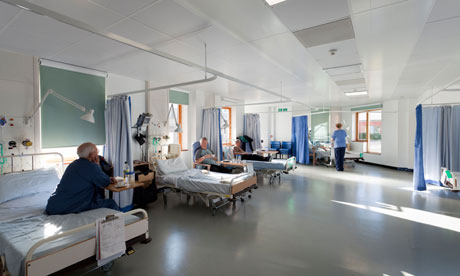
Numbers of Irish people covered by health insurance fell by 62,000 last year


The number of people covered by in-patient health insurance plans has fallen by 250,000 since 2008

The number of people covered by private health insurance is continuing to fall, new figures released by the regulator for the sector show.
The Health Insurance Authority said today that there were 2.047 million people insured with plans that covered in-patient treatment at the end of September.
This represents a reduction of 62,000 over the same period last year.
Between June and September of this year the numbers with in-patient health insurance plans fell by 11,000.
Overall since the peak of the market at the end of 2008 the number of people covered by in-patient health insurance plans has fallen by 250,000.
Since September the cost of private health insurance has continued to rise, largely as a result of Government decisions.
Health insurers have maintained that the Government’s move to reduce tax relief on health insurance in the budget in October and the Government’s recent increase in stamp duty could see the net cost of subscriptions rise by 15 per cent next year.
Insurers have warned that subscribers will face even higher increases in premiums from January on foot of a Government announcement on private patient charges earlier this month which they maintain could add close to € 100 million to their costs.
The Department of Health told insurers that Minister for Health James Reilly had decided to stick with controversial proposed new rates for private patients treated in public hospitals to come into force from the beginning of next year.
The Minister had argued last summer that the Government’s intention was that the new rates would generate only € 30 million in additional revenue next year. However insurers have disputed this projection. They maintain that a report on the proposed charges, which they commissioned from consultants Deloitte, forecast that the measures would cost them €115.5 million.
Some insurers have argued that the new rates could realise as much as € 130 million for the Government.

Father’s sperm may carry his lifestyle memory


A father’s sperm carries a “memory” of his lifestyle that can affect the health of the children he conceives, research suggests.

Scientists made the discovery after studying mice whose fathers lacked the essential vitamin folate.
Their litters were almost a third more likely to include animals with birth defects than those of mice not conceived by folate-deficient fathers.
The Canadian researchers found that DNA in the sperm of the male mice was sensitive to life experiences, especially diet.
They believe their findings have implications that go beyond the effects of not having enough folate.
“Our research suggests that fathers need to think about what they put in their mouths, what they smoke and what they drink and remember they are caretakers of generations to come,” said study leader Dr Sarah Kimmins, from McGill University.
“If all goes as we hope, our next step will be to work with collaborators at a fertility clinic so that we can start assessing the links in men between diet, being overweight and how this information relates to the health of their children.”
Folate, also called vitamin B9, is found in green, leafy vegetables, cereals, fruit and meats.
Mothers are known to need adequate amounts of folate in their diet to prevent miscarriages and birth defects such as spina bifida, caused by the incomplete development of the brain and spinal cord or their protective covering.
Taking a folic acid supplement before conception and during pregnancy to raise folate levels has been shown to prevent seven in 10 cases of the condition.
Much less is known about the way a father’s diet can affect the health and development of his sons and daughters.
The new research, published in the journal Nature Communications, indicates that a father’s folate levels may be as important as a mother’s. It also raises the possibility that other aspects of his lifestyle, such as smoking, might have a significant impact on the children he conceives.
“Despite the fact that folic acid is now added to a variety of foods, fathers who are eating high fat, fast food diets or who are obese may not be able to use or metabolise folate in the same way as those with adequate levels of the vitamin,” said Dr Kimmins. “People who live in the Canadian north or in other parts of the world where there is food insecurity may also be particularly at risk for folate deficiency. And we now know that this information will be passed on from the father to the embryo with consequences that may be quite serious.”
The study showed that in mice paternal folate deficiency was associated with an increased risk of various kinds of birth defect.
Co-author Dr Romain Lambrot, from McGill University’s department of animal science, said: “We were very surprised to see that there was an almost 30% increase in birth defects in the litters sired by fathers whose levels of folates were insufficient.
“We saw some pretty severe skeletal abnormalities that included both cranio-facial and spinal deformities.”
The research shows that a father’s sperm is susceptible to epigenetics – environmental effects that switch genes on or off and whose influence can be passed to future generations.
In effect, sperm carries a “memory” of a father’s environment and possibly his diet and lifestyle choices, said the scientists.

ERSI research shows that Irish hospitals treat mostly public patients


Medical card holders accounted for the majority of patients treated at 57 acute public hospitals across the country last year.

The research carried out by the ESRI examined activity in 57 public hospitals participating in the hospital in-patient inquiry scheme.
Figures released by the ESRI on behalf of the HSE also show that 83% of total discharges were public patients, that’s a 6% increase since 2011.
The number of private patient discharges has been trending downwards since 2008.
There has also been a drop in the length of time people stay in hospitals.
The average length of stay in 2012 was 4.1 days which is a decrease of almost 5% since 2011.
The average acute in-patient length of stay ranged from 3.9 days in the HSE South area to 4.2 days in Dublin North East.
Professor Miriam Wiley, Head of the Health, Research and Information Department at the ESRI, says the figures are in line with international trends.

The ten most coldest places on Earth?


Scientists claim to have recorded a new lowest ever temperature on earth, but where is it and just where are the coldest places on the planet?

A team of scientists analysing 32-years worth of satellite data have claimed to have recorded a new record low temperature on earth. But what are the top ten coldest places on the planet?
The coldest places on the planet are, unsurprisingly, found in the Antarctic, in particular on an ice sheet known as the East Antarctic Plateau – where, according to Nasa, temperatures in several areas can dip below minus 133.6 degrees Fahrenheit (minus 92 degrees Celsius) on a clear winter night.
Due to the low temperatures and its seclusion the East Antarctic Plateau is rarely visited – but spare a thought for the residents of Oymyakon (Russian: Оймякон).
The town has a monthly mean temperature of −46C as the daily average in January, and is the coldest permanently inhabited place on the planet.
A team of scientists analysing 32 years of satellite data say they have recorded a new record low temperature on earth. But what are the top ten coldest places on the planet?
In at No 10 in our list is 10. Snag, Yukon, Canada -63C Snag is a village located near the Alaskan Highway in Canada. It holds the current record for the lowest ever temperature recorded in continental North America.
9. North Ice, Greenland -66C
North Ice was a research station of the British North Greenland Expedition (1952 to 1954) on the inland ice of Greenland. The station recorded the lowest temperature ever in North America on January 9th 1954.
8. Klinck research station, Greenland -69.4C
The Klinck research station is located within the Arctic Circle. Direct observations of temperatures as low as -69.4C have been made at the station
7. Verkhoyansk, Russia -69.8C
Verkhoyansk, Russia has around 1,434 hardy residents. In winter average monthly temperatures are around −45.4C, though lower have been recorded.
6. Oymyakon, Russia -71.2C
Officially recognised as one of the two coldest regularly inhabited places on the planet (along with number seven Verkhoyansk), the town of 472 people is known as one of the candidates for the Northern Pole of Cold
5. Mount McKinley, Alaska -73.8C
Denali, or Mount McKinley, the highest peak in North America, has long been considered the coldest mountain on earth. Winter air temperatures regularly fall to -40C, and lower have been unofficially recorded.
4. Amundsen–Scott South Pole Station -82C
A scientific research station in the southernmost place on earth the Amundsen–Scott South Pole Station has recorded temperatures below −73C
3. Dome A, Antarctic Plateau −82.5C
Dome Argus is an Antarctica plateau located near East Antarctica at 4091 meters above sea level. The coldest temperature ever recorded there was -82.5 C (or -116.5 F) in July 2005. It is the highest point of ice sheet in Antarctic region.
2. Russia’s Vostok research station –89.2C
The Vostok Station is a Russian Antarctic research station at 3488 meters above sea level. It still remains officially the coldest place on earth having measured a bone shattering -89.2C (or -128.6 °F) on 21 July 1983.

AND SO TO THE COLDEST PLACE ON OUR EARTH.

1. Dome Fuji ridge East Antarctic Plateau –93.2C.
  A high ridge located between Dome Argus and Dome Fuji on the East Antarctic Plateau saw the lowest ever temperature on earth according to Nasa satellite data. As the temperature was not recorded directly, however, it is not counted as a new Guinness World record.
The new record low temperature smashed the previous low of minus 89.2C, set in 1983 at the Russian Vostok Research Station in East Antarctica.
Newly analysed data showed the temperature plunged to an astonishing -93.2C (-135.8F) in August 2010

Sunday, December 8, 2013

Donie's news Ireland daily BLOG update

NAMA plans a sale of €1.8 billion's worth of property loans


Ireland’s National Asset Management Agency is preparing to sell Irish, German and U.K. real estate loans with a face value of 1.8 billion euros ($2.5 billion) as demand for property debt rises, two people with knowledge of the plan said.

The loans are linked to properties built by Irish developer Michael O’Flynn and his companies, said the people, who asked not to be identified because the matter is private. UBS AG will act as broker, one of the people said. David Clerkin, a NAMA spokesman at public relations firm Gordon MRM, and UBS spokeswoman Stephanie Aneto declined to comment. O’Flynn wouldn’t comment when contacted by phone.
International investors have been buying property and loans backing European real estate as the region rebounds from its sovereign-debt crisis. Lenders in the European Union sold 29 billion euros of portfolio loans and assets such as bank branches and mortgage-servicing units and in the first half of 2013, according to Richard Thompson, a partner at PricewaterhouseCoopers LLP in London.
O’Flynn Group’s developments include student housing across Europe and The Elysian apartment tower in Cork that’s Ireland’s tallest building, according to building-data provider Emporis.
NAMA was set up in 2009 by the government to take over 74 billion euros of risky commercial real estate loans held by Ireland’s banks and sell them over as many as 10 years.

Over 500 Irish schools could close if Teachers dispute goes ahead


SUPERVISION AND SUBSTITUTION DUTIES TO BECOME UNPAID AND MANDATORY IN JANUARY

Over 500 second-level schools could close from mid-January if the Association of Secondary Teachers Ireland (ASTI) rejects the Haddington Road agreement and a dispute commences over supervision and substitution duties, Government sources believe.

The cabinet decided last week that if the ASTI votes again to reject the Haddington Road deal in a ballot currently underway , supervision and substitution would become unpaid and mandatory for its members from January 17th.

It is understood that the Department of Education will formally set out this position in a circular to schools in the weeks ahead if the ASTI votes against the agreement.

Government sources believe that if the ASTI subsequently directed members not to carry out supervision and substitution duties, schools where it has a significant number of members could not stay open.

Government sources estimated that there are around 500 schools where the ASTI is either the dominant trade union or has a significant number of members.

Ultimately it would be a matter for individual boards of management in schools to determine whether they should stay open.

It is understood the Government made no provision for non-union members to accept the Haddington Road agreement if they wished on an individual basis.

Separately figures released by the Department of Education maintained that young teachers who are members of the ASTI will be more than €220 per month worse off than their counterparts in the Teachers Union of Ireland, if they vote to reject the Haddington Road agreement.

The Department of Education stated that for ASTI members who commenced their careers in 2012 they would be worse off by €734 per month by 2020 if the Haddington Road deal was rejected and the Government imposed the provision of financial emergency legislation and ended payments for supervision and substitution duties.

Members of the Teachers’ Union of Ireland have accepted the Haddington Road agreement, however the ASTI is currently balloting again on the deal with a recommendation and members should vote against it.

The figures released by the Department of Education maintained that an ASTI member who started teaching in 2012 would be worse off by €222 per month in salary form next February if Haddington Road was rejected compared with a teacher in the Teachers’ Union of Ireland.

It said an ASTI member who started their teaching career in 2011 would be worse off by €164 per month or €660 per month by 2020.

The Department of Education maintained that an ASTI member with seven years experience would be worse off by €139 per month from next February or €339 per month in 2020 compared with a member of the Teacher’s Union of Ireland.

The Department of Education said that an assistant principal in a school on the top of their pay scale would be €2 per month worse off from February or €330 per month by 2020 compared with a member of the Teachers’ Union of Ireland.

Dunne's Stores Anti-apartheid strikers of 1984 to attend Mandela funeral


(right pic.) Mary Manning (right) kneels next to a plaque commemorating the strike

Irish supermarket workers who went on strike for almost three years over the import of goods from apartheid South Africa are set to attend Nelson Mandela’s funeral.

Trade unions are trying to organise transport for some of those who took part in the high-profile picket at Dunnes Stores in Dublin in the 1980s.
The action was triggered in 1984 when 21-year-old cashier Mary Manning was suspended for refusing to handle goods bought from South Africa.
The strike, involving 11 workers, was one of the longest in trade union history and only ended when the Irish Government agreed to ban the import of South African fruit and vegetables until the apartheid regime was over.
Mr Mandela met the strike workers during a visit to Dublin in the early 1990s.
M/s Manning has a street named after her in Johannesburg.
The workers were commemorated five years ago with an official plaque in central Dublin.
M/s Manning was presented with the plaque in a special ceremony by former South African president Thabo Mbeki.
Mandate trade union said it and other unions in Ireland were in the process of arranging the attendance of the Dunnes Stores anti-apartheid strikers at Mr Mandela’s funeral next Sunday.
Mandate general secretary John Douglas said: “The trade union movement believes it would be a fitting tribute from the Irish trade union movement to send the Dunnes Stores strikers, who took such a brave stance on the issue of apartheid, to the funeral of Mr Mandela in South Africa.”
Irish President Michael D Higgins and his wife Sabina will fly to South Africa tomorrow to attend a memorial service for Mr Mandela at the FNB stadium in Johannesburg on Tuesday.

Almost 50% of people stressed over money worries during festive season


We’re not looking forward to Christmas. A shocking 75% of middle-aged people are the most stressed and money is the biggest cause.

The Alka-Seltzer study Seasonal Stress and Excess found that almost one in two adults – 49% are stressing out about Christmas, with shopping, cooking and cleaning adding to their woes.
Seasonal stress affects more women than men with 74% of females versus 68% of men feeling the strain.
It also revealed that the “sandwich generation” of 32 to 50-year-old women carry the biggest stress burden.
Alka-Seltzer brand manager Jennifer Walsh said the frantic nature of Christmas – coupled with an already strained economy – causes serious tension headaches, the most common type of primary headaches.
MINIMISE: Some people feel them in the eyes, others in the neck and some in the back – and they account for 90pc of headaches.
But there are things you can do to minimise the stress and maximise Christmas. Cut down on your gift list as well as creating a budget for the ones you’ve decided to buy and focus on the free stuff.
Get prepared in advance and share the workload with family and friends.
PRUNE: Don’t create unnecessary work for yourself either, “prune your action list” recommends Alka-Seltzer.
Indigestion is another common symptom around Christmas with people over-indulging on the turkey.
Keep meals to a manageable size and bear in mind that excessive eating doesn’t make anyone happy. Finally make Christmas fun – not perfect.

The use of Statin increases amputation-free survival in patients with critical limb ischemia

    
In patients with critical limb ischemia, statin use was associated with lower mortality and fewer major adverse cardiovascular and cerebrovascular events, as well as increased amputation-free survival, according to recent study results published in the Journal of the American College of Cardiology.
Researchers reviewed 380 patients with critical limb ischemia who underwent diagnostic angiography or therapeutic endovascular intervention from 2006-2012. Overall, 246 patients were prescribed statins. Patients prescribed statins had lower mean serum low-density lipoprotein (LDL) levels and more baseline comorbidities, including extensive lower extremity disease, diabetes, coronary artery disease and hypertension, according to study results.
Researchers found an association between statin therapy and lower 1-year rates of major adverse cardiovascular and cerebrovascular events, including stroke and myocardial infarction, and major amputation or death. Patients with LDL levels above 130mg/dL were at greater risk of major adverse cardiovascular and cerebrovascular events and mortality compared with patients with LDL levels lower than 130mg/dL.
“The improved rates of 1-year MACCE [major adverse cardiovascular and cerebrovascular events] with stain use strengthens the evidence supporting the guideline recommendations of statin therapy for all PAD patients, including those with even the most advanced stages of disease. Our finding of superior outcomes for patients with lower LDL levels also provides support for the use of LDL as a treatment target in patients with PAD.
Future studies should determine the optimal statin type and dose, further explore potential treatment targets including low-density lipoprotein for statins in peripheral arterial disease, and investigate barriers to more widespread use of statins among patients with critical limb ischemia,” the researchers wrote.

Human evolution comparison of various humans existing prior to modern Man


DENISOVANS, NEANDERTHALS, AND HOMO FLORESIENSIS ARE COUSINS

Human evolution, ever changing and full of mystery, is beautiful. The Denisovans, Neanderthals, and Homo floresiensis were ancient populations whose DNA remnants can be traced to today’s modern humans. They were around during the early times of human progress. Each type branched off from the original early humans over time, according to Matthias Meyer of the Max Institute of Evolutionary Anthropology.
For years, it has been a conversation involving only the Neanderthal when looking into how humans evolved. The discovery in 1974 of Lucy, 3.2 million years old with features of human and ape alike, fit into the known Neanderthal context. Lucy, who walked upright,  was found in Ethiopia by Donald Johnson, a paleontologist. She was the oldest human ancestor discovered at the time.
In 2004, the human evolution chain was adjusted once more.   Homo floresiensis fossils were discovered in the Liang Bua Cave, on an Indonesian island called Flores. Research found the specimens of these ancient humans to be small in stature. Their features attracted the term “Hobbit” as their distinction.
Homo floresiensis fossils are still being investigated to see where they fit in the tree of human evolution. For one, it is not clear whether their size is natural or from adaptation to being on an island with limited food availability. Another oddity is the lack of clarification of how these fossils appear to somehow possibly fit in the old world and the new world. It is expected more findings will be uncovered providing clarification of who  Homo floresiensiswas in the future.
In 2008, a chip of a Denisovan’s fingertip was discovered in a small chamber in the Denisova Cave in the Altai Mountains of southern Siberia. After it was scientifically analyzed by Johannes Krause (part of evolutionary geneticist Svante Pääblo’s team of the Max Institute of Evolutionary Anthropology) it was clear, without a doubt, that the fingertip did not come from a modern human or a Neanderthal; it was a completely different species.
To paint a picture, two teeth were discovered that fit into the Denisovan family. The teeth are larger than the teeth of modern humans and Neanderthal.   One tooth was at first thought to belong to a cave bear. A magical note to the location of this discovery is that Densinova is (so far) the only place on the planet where modern humans, Neanderthals and Denisovans all lived at some point, according to Pääblo.
Early modern human evolution was around 500,00 years ago.  The Denisovans, Neanderthals, and  Homo floresiensis derived from that group, becoming their own separate hominin group. This interesting information designates that humans are not descendants of any of the aforementioned, but rather they broke off the same group. Until research provides different conclusions, every group originated out of Africa, with modern humans being of the Homo sapiens group, Neanderthals of the Homo neanderthalensis group and Homo floresiensis being its own group.
Dr. Meyers theorized that the Neanderthals (who went to Europe and Central Asia) and Denisovans (to East Asia) left Africa approximately half a million years ago. Homo floresiensiswas uncovered on the Indonesian Island of Flores, according to Dr. Meyer. The discovery is still being assessed. Homo sapiens left about fifty to one hundred thousand years ago. These are said to be the early beginnings of modern humans.
While the Denisovans, Neanderthals, and Homo floresiensis are the only types of hominins known at this time, in the future there may be more as scientists continue to uncover new information.  The full details of the study were published this month in the journal Nature.