Pages

Showing posts with label job seekers. Show all posts

Monday, January 19, 2015

Donie's Ireland daily news BLOG update

“Steady the Ship chaps” A crucial week for Europe and the euro coming up


All the heavy hitters at the ECB are preparing for the announcement of Europe’s QE plan this week – but the markets have already priced in the play, says Investec’s Justin Doyle

Financial traders speak in their own language – one known for banal and gratingly cliched expressions or proverbs.
I avoid them where possible, but one that I unabashedly and unapologetically throw around when I see fit is: “Buy the rumour, sell the fact”.
I use it sparingly – but I use it because it is brilliantly descriptive and, more often than not, it’s a perfect fit for the foreign exchange market.
It describes an overstretched market that has fully priced in the result or outcome of a future event or events. When the result of said future events are realised and only just meets expectations (or, God forbid, disappoints), the rebound in price can be vicious and unforgiving.
So, as we approach the most eagerly-anticipated European Central Bank (ECB) meeting for months, if not years – in tandem with what could be a game-changing Greek election – I’m dusting off my handbook as I type.
After last month’s disappointing ECB meeting on December 4, with Eurozone inflation data continuing to worsen, ECB President Mario Draghi said the bank would adopt a wait-and-see approach – they would reassess the monetary stimulus situation early in the New Year.
Pressed on exactly when that would be, he alluded to the fact that it would probably be at the March 5 meeting.
At that time, the markets were expecting the ECB to unveil their landmark sovereign/corporate bond purchase (QE) programme at the upcoming January 22 meeting, at the latest. March 5 would have been a whole 13 weeks away.
Thirteen weeks is a very long time in FX markets. It didn’t take long for the ECB’s benchmark EUR/USD rate to turn heel from multi-year lows of around $1.22 and head back up towards $1.26 – and these were unacceptable levels for a Central Bank hell-bent on keeping the value of the single currency subdued.
Mr Draghi ordered his foot soldiers onto the streets, and ECB policy makers have been hogging the newswires since mid-December.
With the exception of some of the German contingent, most – if not all – of the ECB heavy hitters have been preparing the markets for a January 22 QE announcement. The first negative Eurozone inflation print in almost six years, due mostly to lower oil prices, has given the language added impetus.
Greece popped ominously back into the headlines in late December after Greek prime minister Antonis Samaras (of the New Democracy party) called a snap general election for January 25, after he failed to get enough votes to support his nomination for president.
While Greece isn’t the basket case it was at the height of the EZ debt crisis (2010-2012), a disillusioned, austerity-ravaged electorate are still dealing with close to 25pc employment.
As a result, Alexis Tsipras and his far-left Syriza party have enjoyed a comfortable lead of almost 3pc over Samaras’ party in the opinion polls for over a year now.
It is entirely possible that Syriza won’t enter government with an outright majority, but it does look like it will be the biggest party.
In the worst-case scenario it looks likely that Mr Tsipras will head up any coalition government that is formed after the election.
Markets are jittery again – and rightly so. Mr Tsipras is adamant that he wants Greece to stay in the euro -but he is also adamant that he wants to end austerity and kick-off debt negotiations with the Troika.
Much to the horror of the ECB and the delight of Irish exporters to the US, the growing expectations and the demands for a large Fed or Bank of Japan-style QE programme from the ECB – allied with the uncertainty surrounding the upcoming Greek general election – have all formed a perfect storm.
It has helped to quickly push the EUR/USD rate to nine-year lows of just under $1.17 earlier in the week.
I fear, however, that these two major event risks are fully priced into an already stretched short euro market.
I genuinely hope I’m wrong, but my greatest concern is that the ECB may have overplayed its hand and lulled willing market players into what maybe yet another massively underwhelming announcement on January 22.
With expectations so high, the ECB must provide total clarity and transparency on the exact size, breakup (sovereign/corporate bonds) and a time line of the purchases.
Mr Draghi has pointed out on several occasions in recent months that he would like the ECB balance sheet to return to levels not seen since in the middle of the debt crisis.
At its highest level it was just over €3trn. Currently at just over €2trn, it figures that the ECB are eyeing a €1trn purchase programme. With the German voting members of the ECB still wary and the Greek election around the corner, I feel that seeking consensus on the full €1trn may be an ask too far – and an announcement of anything under €500bn will be massively disappointing.
The ECB has form in the disappointment arena – and if the Scottish referendum tells us anything, it is that polls are only polls and a swing of 6pc or 7pc on the day could hand the Greek election to the pro-Europe Samaras and his ND party.
The single currency is at multi-year lows against the currencies (USD and GBP) of our two largest non-euro denominated trading partners, a great opportunity to hedge short-term exposure ahead of what could be the first important ‘Buy the rumour, sell the fact’ event of 2015.

‘I miss that bit of lung they took away – but not badly, mind you’


Frank Cox got lung cancer at the same age his dad died from it.

FRANK COX kept getting chest infections in 2006 and 2007 – they just would not clear up.
Eventually his GP sent him for a chest X-ray which confirmed his worst fear: he had lung cancer. He was 66 years old at the time – the same age his father was when he died from the disease in 1961.
“You’re sort of in denial when you’re told, you think: ‘It’s not happening to me.’ I was off the cigarettes for 16 years at that stage, but the damage was done: I was on them since I was 16 or 17 years old.
“The doctor said I had given myself a chance by giving them up. He told me if I was still smoking we wouldn’t be doing surgery, we’d be doing chemo to prolong my life, not save it,” Frank recalls.
Luckily his cancer was detected at a very early stage. He successfully underwent surgery and three months of chemotherapy.
Frank (now 73) got the five-year all-clear in 2012.
“It was great, it really was … I was a bit nervous. It was a great relief, it’s always at the back of your mind.”
I miss that bit of lung they took away – not badly, mind you. I can climb stairs, but I would feel it if I was rushing or ran somewhere … If you saw a bus coming and you made a dart for it, that’s when you’d miss it.
Frank now does peer support with the Irish Cancer Society (ICS), where he talks to newly-diagnosed patients over the phone.
When I was diagnosed I didn’t know anything about it. I wanted to talk to somebody who had been diagnosed and had surgery and come out the other side. It’s different to hearing from doctors and nurses, you need to speak to somebody who has been through it.

Awareness

Aoife McNamara is a Lung Cancer Information Nurse with the ICS. She said that increased awareness of the disease is needed as it is now the “biggest cancer killer in Ireland and worldwide”.
About 1,800 people die from lung cancer in Ireland each year.
Frank (far left) at an ICS awareness-raising event outside Leinster House.
Aoife said women are becoming more at risk of the disease than they once were.
The mortality rate of lung cancer among men has decreased in recent years while the rate in women has steadily increased. The mortality and incidence rates in Irish women are among the highest in Europe.
Lung cancer might have been seen as a man’s disease, but that’s not the case any more.
Aoife said this is directly linked to an increased number of women taking up smoking.
She said that thanks to various campaigns, women in Ireland are “very breast aware” when it comes to cancer symptoms.
“However, this is not the case when it comes to lung cancer, despite the fact that it overtook breast cancer as biggest cancer killer in women in 2011.”
Aoife said it’s important for people to know the symptoms of lung cancer and go to their GP if they’re concerned.

Symptoms include:

•           A cough that won’t go away

•           Shortness of breath

•           Repeated chest infections

•           Coughing up blood and phlegm

•           Unexpected weight loss

•           Swelling of the neck or face

•           Sore throat

Aoife said 90-95% of lung cancer cases are directly linked to smoking. She said anyone trying to give up cigarettes should contact the National Smoker Quitline on Freephone 1800 201 203.

Instructors on jobseeker schemes were JobBridge interns?  An audit to happen


A Departmet of Social Protection report into a €6m Job Club schemes raises concerns.

The Department of Social Protection has said it will examine an audit on training schemes for jobseekers in which the instructors themselves were on JobBridge internship and Tús trainee schemes.
The Department of Social Protection has said it will examine an audit on training schemes for jobseekers in which the instructors themselves were on JobBridge internship and Tús trainee schemes.
An audit of Job Club schemes, carried out by an internal departmental audit unit last July, found some JobBridge interns were providing training workshops on their own to club participants.
Job Club schemes are run by private operators and financed by the Department of Social Protection at an average cost of €6 million a year. They aim to provide services to job seekers such as CV preparation and IT skills, through individualised supports, ‘drop in’ services and formal workshops of one to four weeks long.
There are 50 schemes countrywide and participants receive an additional €20 a week on top of their social welfare payment.
The audit, completed last July, examined Job Clubs in Dublin, mid-Leinster and in the South. It found some of the training and workshops were being delivered by instructors who were participants on Tús training and JobBridge programmes.
JobBridge is an internship scheme offered to unemployed people and Tús is a community employment scheme for unemployed people. Participants in both schemes receive a top-up on their social welfare payment similar to that paid to Job Club participants.
Auditors found on some Job Club schemes, JobBridge interns were delivering part of the workshops on their own. The job descriptions provided to the audit team said the roles of the JobBridge interns covered the entire duties of a Job Club leader and assistant, the two senior grades of staff working at Job Clubs.
They also found one private operator fell well below the minimum standard required for the scheme, but had still been allowed to continue to run clubs.
The report raised concerns that a lack of over sight of the clubs could lead to contracts being renewed where the minimum standard was not being met. It also had data protection concerns and noted inconsistencies in the awarding of the €20 allowance.
In a statement issued to The Irish Times, the Department of Social Protection said JobBridge had been very successful in providing work experience for participants to break the cycle of unemployment.
Independent evaluation showed “three in five participants secure employment after completing their internships”, the statement said.
It also said JobBridge was subject to strict control measures to ensure the internship did not displace an existing position and appropriate training and development was provided, with suitable mentoring and support.
“In practice, internships are, and can be offered, across all job types from basic entry level roles through to roles with greater responsibilities”.
It said the department would examine and respond as appropriate to the internal audit report.

Irish beef farmers eye stake in lucrative US market

  
Standing inside one of the sheds that are the winter homes for his 550-strong herd of Limousins and Belgian Blues, Robin Talbot recounts the cows daily routine with an almost paternal fondness. Among other things, his livestock and their autumn-born calves have a fresh bed every day and their diet is prepared with the help of a nutritionist.
“Everything they eat is grown on my farm,” he says, pointing to a group of about 50 heifers due to be slaughtered in a few weeks’ time. “I am pretty sure 90% of them will meet the top market specifications.”
Mr Talbot, one of Ireland’s leading cattle farmers, produces prime beef steak for the domestic and European markets from his 600-acre farm outside the village of Ballacolla, the heartland of grazing country amid the flat fields of County Laois in Ireland’s midlands.
But the lucrative market in the US, the largest consumers of beef in the world, has been denied him — until now.
Following an deal agreed recently between Washington and Dublin, he and his fellow Irish beef farmers are gearing up to sell their product to the US for the first time since a 15-year ban was imposed on European beef in the wake of the “mad cow disease” outbreak in the 1990s.
As Europe’s biggest beef exporter — overseas sales of Irish beef in 2014 were worth €2.3bn, accounting for about a fifth of all Irish food and drink exports — the reopening of the US market offers a potential lifeline to farmers such as Mr Talbot at a tough time for the industry.
With prices at home and in Europe at a low, and with beef producers in seemingly perennial dispute with the meat processing industry, the higher prices that beef in the US can fetch — up to €1 a kilogramme extra by some estimates — could turn the battle for mere survival into something approaching a decent profit.
“It can be a game-changer, but it depends on how we respond,” says Mr Talbot. “There is high potential in it, but there is a lot of work to be done.”
Mr Talbot’s caution tempers some of the excitement with which the announcement of Ireland’s return to the US beef market was greeted locally.
Although the US market is vast — its consumers eat an estimated 11m tonnes of beef each year, of which just 10 per cent is imported from the likes of Mexico and Australia — cracking it will be tough for a small country such as Ireland.
The danger of putting too much faith in the fickle US consumer was captured in a recent cartoon in the Irish Farmers Journal, the industry bible. It depicted a conversation between an Irish farmer — sporting a Stetson, cowboy boots and spurs, a horse tethered nearby — and his sceptical wife, who asked: “Aren’t you going a bit far with this beef news from the USA?”
Jer Bergin, national treasurer of the Irish Farmers’ Association, also counsels caution. “There is a little bit of irrational exuberance about the US market,” he says.
But he agrees that Irish beef has a potentially unique selling point — the cattle are grazed on family farms set amid the lush green pastures of rural Ireland, a country with which the US has close emotional links.
This is in many ways a simplified view of Irish beef farming — many Irish cattle eat food supplements too, because grass alone is not always enough to “finish” them for food. But Irish food exporters have a template — the success of Kerrygold, the butter brand masterminded by business tycoon Tony O’Reilly. Kerrygold is the number one imported butter brand in the US, according to Bord Bia, the Irish food board.
However, unlike the dairy industry, relatively homogenous and which was for many years backed by the state, the Irish beef industry is private and disparate.
So without a co-ordinated approach by independent producers, cracking the US market will be a significant challenge. Indeed, before the US ban, Europe exported just 1,500 tonnes of beef there.
Still, if grass-reared beef is becoming increasingly popular in the US, as evidence suggests, Irish farmers would be in a prime position to capitalise. Mr Talbot believes it is a market where farmers such as him can succeed. “We have a story worth selling,” he says.

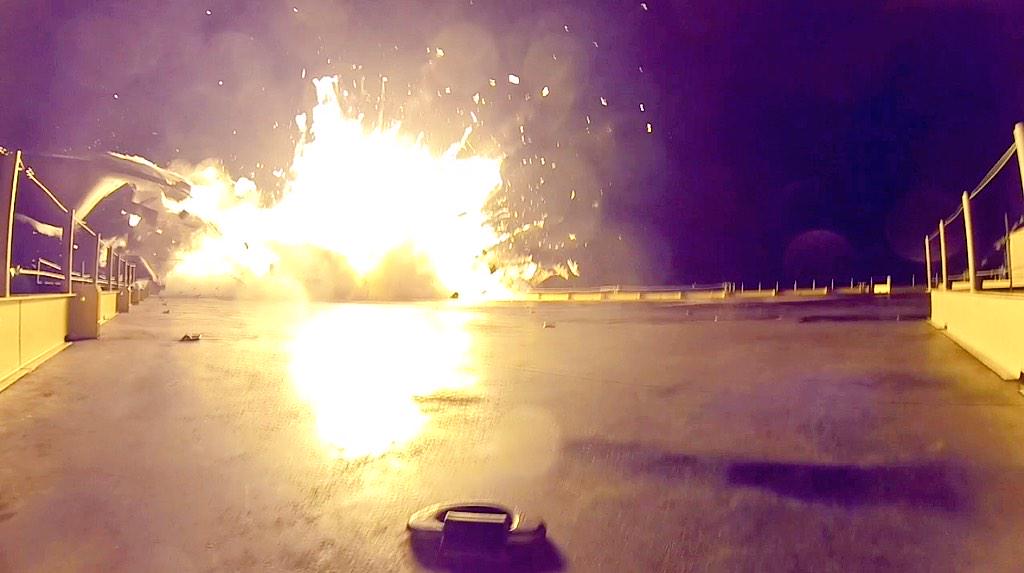
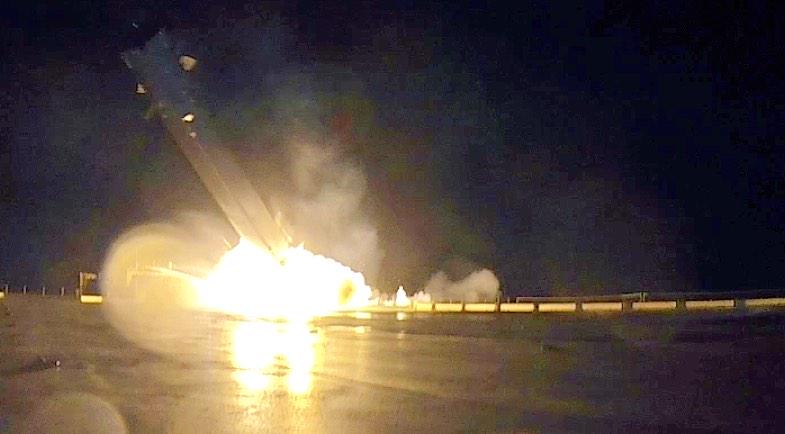
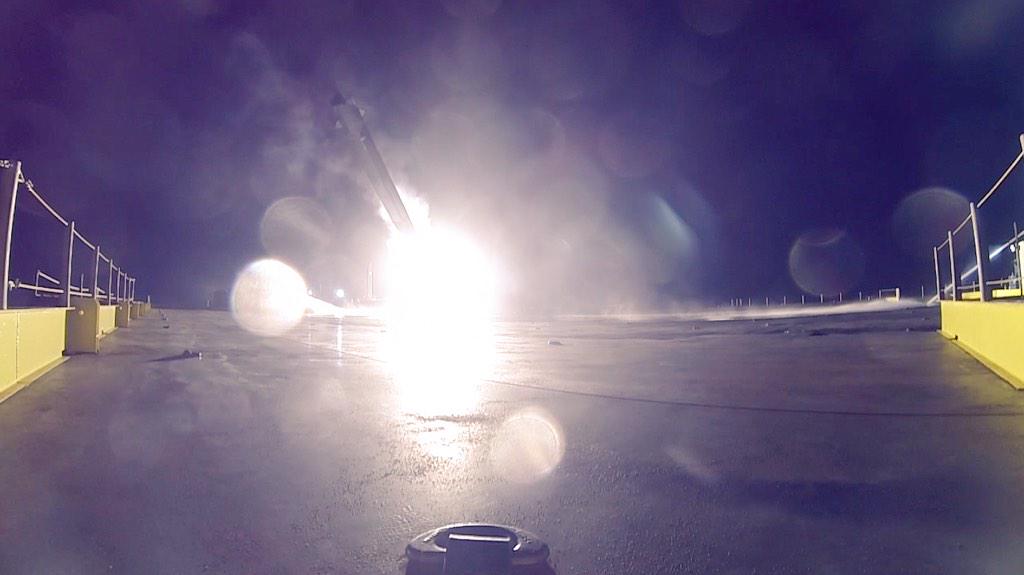
See the spaceX falcon 9 rocket crash land at sea
View image on Twitter  View image on Twitter View image on Twitter
Give it up for ambition. After an initial delay, Elon Musk’s SpaceX successfully launched its Falcon 9 rocket on a resupply mission to the International Space Station last week. In 2015, there’s nothing all that ambitious about an unmanned rocket launch. What was ambitious was what came afterwards—or what was supposed to come afterwards.
SpaceX intends to cut the cost of launching people and products into space in half. The company hopes to accomplish this by building stage-one rockets that are designed to not only survive reentry, but will land upright. If SpaceX can pull that trick off, then the rockets can be easily captured and rapidly reused, thus taking much of the cost out of space travel.
Last week’s mission was supposed to see the rocket land upright onto an unanchored floating barge (aka “drone spaceport ship”) in the middle of the Atlantic Ocean. This is no easy feat. SpaceX itself only pegged mission success at 50 percent (though Musk later said that hepulled those numbers out of the air). But let’s just agree that it’s a really hard engineering barrier to overcome.
Unfortunately, it didn’t work this time. The rocket did manage to land on the barge, but it couldn’t make the landing and exploded on impact. As Elon Musk tweeted shortly thereafter “Rocket made it to drone spaceport ship, but landed hard. Close, but no cigar this time. Bodes well for the future tho.”
Musk then went on to tweet “Didn’t get good landing/impact video. Pitch dark and foggy. Will piece it together from telemetry and … actual pieces.” But some new footage must have been found, because SpaceX just tweeted the following Vine footage taken at the point of impact explosion:
Yesterday, Musk himself tweeted out a number of spectacular stills from the crash:   

Tuesday, June 10, 2014

Donie's Ireland daily news BLOG update

Half of today’s 20-year-old's probably will never get married


Young couples are more likely to cohabit than tie the knot ONS data suggests. Sharp decline in young people getting married, 

47% of women and 48% of men aged 20 will never marry
Only 61% of men and 68% of women aged 40 today will wed
For WWII baby boomer generation, 92% of women had married

HALF OF TODAY’S 20-YEAR-OLDS WILL NEVER MARRY, STRIKING RESEARCH REVEALS. INSTEAD, COUPLES ARE INCREASINGLY CHOOSING TO COHABIT WITHOUT EVER DECIDING TO COMMIT.

A report published today using the latest data from the Office for National Statistics reveals a generational shift away from the institution of marriage, with youngsters far less likely ever to wed than their parents and grandparents.
The research by the Marriage Foundation shows that, for a variety of reasons, 47% of women and 48% of men aged 20 will never marry.
Half of today’s 20-year-olds will never marry, new data suggests. Instead they will cohabit without ever deciding to fully commit
The baby boomer generation – born between the end of the Second World War and the early 1960s – has maintained a healthy level of marriage, with 87% of men and 92% of women having married at some stage.
But subsequent generations are facing a sharp decline in marriage rates.
Half of 40-year-olds today are already married, but they are not expected to reach the levels set by their parents.
Work and Pensions Secretary Iain Duncan Smith said: ‘One of the starkest findings of this report is that young people’s aspiration to marry so outstrips achievement.
‘We should respond by asking what stops them from doing so – looking at how we can remove any barriers that currently stand in their way, and ensuring they have the opportunity to realise their aspirations.
‘This government has already funded marriage preparation and relationship education for over 6,000 couples, but there is undoubtedly more to do.
‘I firmly believe in the importance of strong families as the foundation of a healthy society, and that marriage has a powerful role to play in securing the relationship that lies at their heart.
‘We know that stable loving families offer children the best possible start in life, so it is right that this government has taken steps to ensure families have the help and support they need to flourish.
‘From action to reduce the couple penalty left by Labour to the provision of relationship education and the recognition of marriage in the tax system, it is clear that we are unashamedly pro-family.’
47% of women and 48% of men aged 20 will never marry for a variety of reasons, data shows
According to current trends, only 61% of men and 68% of women aged 40 today will ever marry.
However, the greatest decline in marriage has taken place among those in their twenties. In 1970, the peak year for marriage, 564,818 men and women aged 25 got married. In 2010, just 56,598 did, a fall of 90%.
Today, only 5% of men and 10% of women aged 25 are married, as compared to 60% of men and 80% of women 44 years ago.
When current trends are applied to today’s 20-year olds, figures show that only 52% of those men and 53% of women are expected ever to marry, despite strong aspirations to do so.
Researchers blamed a number of factors, including early cohabitation, which makes people less likely ever to tie the knot, celebrity divorces, and decades of undermining of the institution of marriage by the state.
Harry Benson, research director for the Marriage Foundation, said: ‘What we’re seeing is the devastating trickle-down effect of the trend away from marriage.
‘At the moment, we have high proportions of parents and grandparents who have got married at some stage and for the most part stayed together.
‘They provide role models for the next generation. They also show what can be gained from making a marriage work in terms of the stability it provides for a family.
‘However, fewer of today’s 40-year-olds will be in a position to demonstrate the positives of a stable household cemented by marriage.
‘Their children’s generation, currently in their twenties, will suffer twofold; first from a higher level of family breakdown when they themselves are young, and secondly from the lack of familiarity with the benefits of marriage as they look to start their own families.’
Mr Benson said that the argument for marriage is ‘not a moral or religious one, but based on concrete facts’.
‘Cohabiting couples account for only 19% of parents but 50% of family breakdown. Among parents who stay together until their children reach 15, a tiny 7% are cohabiting couples,’ he said.
In its 13 years in power Labour was accused of undermining marriage, and the UK is almost alone in Europe in failing to recognise traditional family structures in the tax system.
In last week’s Queen’s Speech, the Government confirmed its intention to restore a recognition of marriage in the tax system.
Married couples where one partner pays no income tax will be able to transfer £1,000 of their tax allowance between them, saving them £200 a year.
The Marriage Foundation was founded by Sir Paul Coleridge, a High Court Judge, moved by his personal experience in 40 years as a barrister and judge specialising in family law.

Seanad row could damage banking inquiry, chairman warns


Head of selection committee calls for a speedy resolution to Seanad disagreement

Labour Senator Susan O’ Keeffe (above) who said the reason she did not attend a committee meeting last week was because she was supporting her daughter through her Leaving Certificate.
The status of the long-awaited banking inquiry could be damaged if a row over which politicians should sit on the investigation is not resolved, the chairman of a committee tasked with selecting members warned today.
The Government planned to have a majority on the committee but the surprise election of Fianna Fáil Senator Marc MacSharry (above left)instead of the Coalition’s preferred candidate Susan O’Keeffe of Labour means the nine-member inquiry will only have four Government members.
Fianna Fáil Senator Denis O’Donovan, who chaired the Seanad selection committee, said the row over which parties were represented on the committee should not be allowed to fester.
“This row, if it’s not resolved quickly, could damage the status of the inquiry before it gets up and running. I’m around the house a long time. It’s not the start the banking inquiry needs,” Mr O’Donovan said.
The new inquiry members were due to meet for the first time on Wednesday but the meeting will not now take place.
The four Government members selected are: chairman and Labour TD Ciarán Lynch and Fine Gael TDs Eoghan Murphy, Kieran O’Donnell and John Paul Phelan.
When it came to the selection of Senators, it is understood Taoiseach Enda Kenny’s office instructed Coalition members to support Independent Senator Seán Barrett and Ms O’Keeffe.
Mr Barrett was selected unanimously, while Mr MacSharry was accepted by five votes to three. Ms O’Keeffe, who was not present, was rejected by four votes to three.
As well as Mr Barrett and Mr MacSharry, the Opposition will be represented by Fianna Fáil TD Michael McGrath, Sinn Féin deputy Pearse Doherty and Independent TD Stephen Donnelly.
Earlier, Ms O’Keeffe responded angrily to negative reaction she said she received following her non-attendance at the meeting which left the Government without a majority on the inquiry. Others expected to support her were also not present last Wednesday night.
“I take great offence at people suggesting I just couldn’t be bothered to turn up. I asked for a pair last September because my daughter was starting her Leaving Cert. Like many parents I wanted to be available and on hand to support her,” Ms O’Keeffe said.
Under pairing arrangements, a Senator from one party agrees with a Senator of an opposing party not to vote in a particular division, giving both Senators the opportunity to be elsewhere.
Ms O’Keeffe said she had obtained a “pair” for Wednesday and Thursday but the selection meeting was only called on called on the Wednesday. Substitutions are not permissible under the rules of the committee.
An email informing members about the meeting was sent on the Wednesday, but Ms O’Keeffe said she had scheduled other meetings in the locality later that day. “It wasn’t as if I sat with my feet up on the desk,” she said.
“I was legitimately unable to attend because I was in Sligo. It’s difficult if you live hours away from Leinster House. The Leaving Cert is a huge event in her life and as a parent and mother I know where my responsibility lies on such days,” she said.
“People just throw slurs around the place. This was a family matter which 95% of the people in the country would understand. Your children only do the Leaving Cert once. I find that the barbaric side of politics.”
Also absent were Labour Senator Lorraine Higgins and Independent Jillian van Turnhout, who usually supports the Government. Ms van Turnhout, who nominated Mr Barrett, had given notice that she would be away.
The Coalition is expected to try to overturn the selection committee’s decision. However, Mr O’Donovan said he believed the selection was final.

Irish Ambulance turnaround times well short of HSE targets


“My understanding as chairman of the committee on selection is that we’ve done our job and we won’t be revisiting the issue,” Mr O’Donovan said.

irish PARAMEDICS UNABLE TO HAND OVER PATIENTS AT HOSPITALS WITHIN a 20-MINUTE TIME FRAME

The majority of paramedic crews across the State waited longer than the Health Service Executive’s target of 20 minutes to hand over patients, get their trolleys back and return to responding to calls.
Ambulances spent more than 8,000 hours delayed at hospital emergency departments waiting to hand over patients during one month this year, previously unpublished records show.
The majority of paramedic crews across the State waited longer than the Health Service Executive’s target of 20 minutes to hand over patients, get their trolleys back and return to responding to calls.
The records, for April, were released to Independent TD Denis Naughten by the HSE’s National Ambulance Service last week. They reveal that almost one in 10 ambulances was delayed for over an hour.
  There were 16,333 ambulance attendances at the State’s 34 emergency departments in April and 9 per cent of them, or 1,407, spent more than an hour delayed outside, including 43 that spent from three to 14 hours.
This data indicates there has been no improvement since the end of last year in ambulance turnaround times at hospitals, despite the issue being identified by the HSE last December as one which would be a particular focus this year.
Delays at overcrowded emergency departments, formerly known as A&Es, have been singled out as a key obstacle to the HSE’s National Ambulance Service being able to address its failure to meet response time targets.
Series of deaths: Ambulance response times have come in for severe criticism in the past year following a series of deaths involving people who had been left waiting up to 45 minutes for an ambulance despite having been triaged by the NAS within 20 minutes.
These new figures, which for the first time give us a hospital-by-hospital breakdown of ambulance turnaround times, show the NAS continues to fall well short of its targets, with an average turnaround time across emergency departments of 29 minutes 57 seconds in April.
In 25 of the emergency departments, over half of all ambulances were delayed for more than 20 minutes. For instance, 89 per cent of ambulances arriving at Cork University Hospital were delayed over 20 minutes. Crews and patients endured the longest average waiting times here, at 47 minutes and 32 seconds, while 23 per cent had to wait more than an hour.
At Galway University Hospital, 80 per cent of ambulances were delayed over 20 minutes; in Mullingar 76 per cent were, while 75 per cent waited more than 20 minutes in South Tipperary General Hospital.
Hour-long delays: At others, significant numbers were waiting over an hour. At Portiuncula, Co Galway, for instance, almost one in five (19 per cent) ambulances were delayed for more than an hour, while 15 per cent waited over an hour at University Hospital Waterford and 13 per cent waited for the same period at Letterkenny General.
Mr Naughten said the figures underlined the need for a “significant investment in the ambulance service” and showed how the closure of smaller emergency departments was impacting on larger ones and the ambulance service.
The longest total delays were at Limerick Regional, described by the Health Information and Quality Authority last week as “not fit for purpose”.
Since the closure of emergency departments at Nenagh and Ennis in 2012, the annual trolley count at Limerick has increased from 3,626 in 2012 to 5,504 last year.
In April, ambulances spent 667 hours and 38 minutes parked outside it.
A spokeswoman for the HSE said: “The National Ambulance Service monitors hospital turnaround times on a continuous basis, and has an escalation policy which is implemented when required.”

New 6,100 free higher education places announced for job-seekers in Ireland


6,100 FREE HIGHER EDUCATION PLACES ANNOUNCED FOR JOB-SEEKERS

Some 6,100 new free higher education places are to be made available to jobseekers through Springboard, the Government said today.
The Springboard programme aims to help jobseekers get the skills they need to get back to work. Courses are one year or less, generally part-time, are free to jobseekers and lead to awards at certificate, degree and post-graduate level.
Since the programme was launched in 2011, 16,429 jobseekers have participated on Springboard courses with a €54m investment from the Exchequer.  Between this year and next, a further €25m will be spent on Springboard.
This year, 171 different courses in 38 colleges are being offered, including 21 in ICT.
“The biggest challenge facing our country is getting our people back to work and Springboard is aimed at doing exactly that,” said Minister for Education and Skills, Ruairí Quinn. “This year work placements are being offered on almost every Springboard course because such placements are a really important way of improving employment prospects.
“We are targeting areas like ICT, high end manufacturing and international financial services because job opportunities exist in these areas and there is a huge potential for growth.”
“One of the core features of Springboard since the start has been the rigorous evaluation of outcomes – how Springboard participants get on in their course, their experience and most importantly whether they get a job,” said Minister for Training and Skills, Ciarán Cannon. “I’m pleased to see that 94% of participants would recommend the experience to other jobseekers. Of the class of 2013, more than half were in sustainable employment or self-employment within six months of completing their studies, with some courses reporting employment rates of 90pc.”
According to the Department of Education, more than six out of 10 participants complete their Springboard course and, of those who withdraw early, almost a third does so because they get a job.

Did Male faces evolve to take a punch?

 
A controversial new theory claims that many features of the human face are the result of evolved defensive measures against fist fights.
This is not the first time that fist-fighting has been implicated in the development of our physiologies. Back in 2012, scientists made the claim that fists changed the course of human evolution, arguing that “It is…our most important anatomical weapon, used to threaten, beat and sometimes kill to resolve conflict.
” The paper earned its fair share of criticism, not only because the evidence was circumstantial, but because of its claim that violence underpinned much of human evolution — a perspective many now consider to be outdated, simplistic, and overly male-oriented (for example, some facial features could be the result of sexual selection). The new theory about human faces, which has been published in Biological Reviews, threatens to do the same.

DID FIST FIGHTING CHANGE THE COURSE OF HUMAN EVOLUTION?

 The human hand is a beautiful product of evolution. Each one a finely crafted arrangement of 27 bones our hands are among the most dexterous in the animal kingdom, and are every bit as capable of threading a needle as they are grasping the oar of a canoe. But newly published findings suggest our palms and fingers may have evolved into their present shapes for more brutish purposes — namely beating the living crap out of one another.
  Few anatomical structures can compete with the range of precision afforded by a human hand. Stout, square palms. Short fingers (relative to the longer digits of our hominoid cousins). Long, strong, flexible thumbs. When combined, these features give rise to a shape that is uniquely suited for two different hand grips: the precision grip, in which objects are held and manipulated with the fingertips, and the power grip, where an object is held firmly by fully wrapped fingers and thumb.
Our capacity for manual manipulation is a large part of what makes us human, and is thought to have played an important role in the evolution of the hand itself. But in the latest issue of The Journal of Experimental Biology, researchers Michael Morgan and David Carrier suggest another driving force in the evolutionary history of the hand-shape we know today: the ability for our ancestors — and males, specifically — to hold their own during hand-to-hand combat.
The same hand-proportions that allow us to dominate at Jenga and grip a bat also allow us to make a closed fist. Unlike a chimpanzee, whose long fingers and stout thumb form a loose, open doughnut-shape when curled, a human is capable of instantly transforming his arm and hand into what amounts to a knobby-ended cudgel. And when you get right down to it, which would you rather have at your disposal during a violent encounter: a knobby-ended cudgel, or a stick with a donut on the end of it? (The image featured here compares the anatomy of a chimp hand with that of a human.)
Reason would suggest that the cudgel is the way to go. To verify the pugilistic merits of the human fist, Morgan and Carrier asked a range of male test subjects — all of them with boxing or martial arts experience — to participate in a series of physical tests (more later on the choice to use all male subjects). In the first test, subjects were asked to strike a punching bag as hard as they could, both with an open palm, as well as with a clenched fist.
Surprisingly, the researchers found that a fist did not deliver more total force per blow. The striking surface area of a fist, however, was found to be one-third less than the area of the whole hand. “This means that if the total force applied in a strike is the same, then the stress in the targeted tissue will be 1.7 to 3.0 times greater in a fist strike than in a palm strike,” write the researchers. In other words: a clenched fist dramatically increases the potential for injury.
Additional tests looked at whether finger and thumb placement provided significant support and protection to a hand under pressure. Test subjects were first asked to make a fist and push the first joint of the index finger firmly against a device that measured the rigidity of the knuckle joint. Test subjects repeated this process for each of the three fist postures shown here (note the placement of the fingers relative to the palm and the positioning of the thumb over the fingers):
Morgan and Carrier found that positioning the fingertips against the central palm and wrapping the thumb across the backs of the pointer and middle fingers served as a supportive “buttress” for the hand, and locked the digits into a solid shape that facilitated the transfer of energy from the fingers to the wrist. This finger positioning not only quadrupled the rigidity of the first knuckle joint, it also doubled the ability to deliver “punching” force, relative to the more loosely-arranged conformations.
No other hominoid employs this clenched-fist configuration, yet to us humans it feels very natural. A clenched fist is used in fighting styles practiced all over the world, and is universally recognized as a sign of aggression. Even infants are known to use a ‘closed hand’ to communicate anxiety and distress. PAND
That most male hominoids still compete with one another over mates suggests that bigger forelimbs would have been evolutionarily advantageous to our forebears, giving rise to the dramatic physiological differences that we see in males and females today. Such differences are especially common in the upper bodies of men and women, including the hands. The ratio between the lengths of the pointer and ring fingers, for example, is lower in males than in females.
Among mammals, note the researchers, physiological differences between the sexes are often greatest in those characteristics that improve a male’s ability to dominate over other males. Repeating the present study with all female test subjects could help shed light on whether these physiological differences between male and female hands actually arose out of a need for our male ancestors to resolve contention with optimally buttressed fists.
“There appears to be a paradox in the evolution of the human hand,” the researchers ultimately conclude. “It is arguably our most important anatomical weapon, used to threaten, beat and sometimes kill to resolve conflict.”
“Yet it is also the part of our musculoskeletal system that crafts and uses delicate tools, plays musical instruments, produces art, conveys complex intentions and emotions, and nurtures.”
They continue: More than any other part of our anatomy, the hand represents the identity of Homo sapiens. Ultimately, the evolutionary significance of the human hand may lie in its remarkable ability to serve two seemingly incompatible, but intrinsically human, functions.
The Protective Buttressing Hypothesis
According to David Carrier and Michael Morgan, our distant human ancestors exhibited a remarkable number of features that can only be described as protective buttressing. Indeed, when hominids engage in hand-to-hand combat, the face is typically the primary target. The bones in our face, say the scientists, suffer the highest rates of fracture — but they’re also parts of the skull that have exhibited the greatest increase in robusticity during the course of our evolution as hominids.
Indeed, Carrier and Morgan came to this conclusion after taking a look at the skulls of australopiths. Over time, these hominids developed increasingly stronger brow and nasal ridges, cheek bones, and jaws. More technically, and in the words of the researchers:
Specifically, the trend towards a more orthognathic face; the bunodont form and expansion of the postcanine teeth; the increased robusticity of the orbit; the increased robusticity of the masticatory system, including the mandibular corpus and condyle, zygoma, and anterior pillars of the maxilla; and the enlarged jaw adductor musculature are traits that may represent protective buttressing of the face.
To bolster their case, the researchers also used data from modern humans; they analyzed several studies from hospital emergency wards to see how fist-fighting produces facial injuries.
Prior to this study, anthropologists believed that these particular facial characteristics were an adaptation to a tough diet, one that included nuts, seeds, and grasses. This new theory would seem to be a bit more plausible (the diet hypothesis doesn’t explain sexual dimorphism, for example). But like the earlier fist hypothesis, more evidence will need to be presented to bolster such a claim.
The researchers also say this is a male phenomenon — one that’s resulted in pronounced differences in facial characteristics between the sexes. These reinforcements, say the researchers, evolved as males fought over females and resources. It also may help to explain why modern humans can accurately assess another man’s strength and fighting ability from facial shape and vocal quality.