Pages

Showing posts with label marriage. Show all posts

Friday, June 17, 2016

Donie's Ireland daily news BLOG update

Ireland most expensive EU country due to taxes and retail, says academic

NEW DATA SHOWS IRELAND MOST EXPENSIVE COUNTRY IN EUROPE IN WHICH TO BUY ALCOHOL


IRELAND IS THE MOST EXPENSIVE COUNTRY IN THE EU IN WHICH TO BUY ALCOHOL, ACCORDING TO RECENT DATA.

An Irish academic says higher taxes, a different retail structure and market factors are the reason why Ireland is one of the most expensive countries in Europe.
Damien O’Reilly, a lecturer in retail management in DIT, told Morning Ireland that market factors tend to drive up the cost of food. He was responding to new data from Eurostat which show that Ireland is the most expensive country in Europe in which to buy alcohol with prices at 175% of the EU average.
On average the cost of food and non-alcoholic drinks in Ireland is 119% of the EU average, the fourth highest in the EU.
The EU’s statistics agency also said Ireland is the second most expensive for tobacco at 189% of the EU average, with only the United Kingdom higher at 218%.
Only Denmark (145%), Sweden (124%), Austria (120%) are more expensive.
In Ireland, bread and cereals (111% of EU average), meat (106%) and milk, cheese and eggs (128%) all cost above the EU average.
The data is based on a 2015 price survey covering 440 products across Europe.
Donall O’Keefe of the Drinks Industry Group of Ireland (DIGI) said the high price of alcohol in Ireland is directly related to the unfair excise rate and that this is a direct tax on jobs, tourism and consumers.
“Excise is a tax on jobs, it is a tax on tourism and it is a tax on Irish consumers,” he said.
The Eurostat figures also show Ireland had the second highest per capita GDP in the EU in 2015 at 145% of the EU average.
Luxembourg had the highest per capita GDP in the EU at 271% of the average, while Bulgaria (46%) had the lowest.
However, when it comes to Actual Individual Consumption (AIC) – which measures the material welfare of households – Ireland was at 95% of the EU average.
Mr O’Reilly said that the reason Ireland’s dairy products cost so much even though there is a large dairy industry here is because 90 per cent of the milk produced in Ireland is for export.
“A lot of it is then re-imported as finished product which drives up the cost,” he said.
He also said supermarkets in Ireland have higher margins than elsewhere in Europe and that Irish shoppers are attracted to brands when they could buy cheaper own brands.
He said Irish shoppers tend to go for “higher quality foods”

EU may rule on Apple tax case next month

EU FOUND AGAINST IRELAND IN INITIAL FINDINGS ON APPLE IN 2014


MINISTER FOR FINANCE MICHAEL NOONAN SAYS THERE IS SPECULATION THAT THE EUROPEAN COMMISSION IS TO DECIDE NEXT MONTH ON WHETHER APPLE’S TAX DEALINGS IN THIS COUNTRY BREACHED STATE-AID RULES.

Minister for Finance Michael Noonan says there is speculation that the European Commission is to decide next month on whether Apple’s tax dealings in this country breached state-aid rules.
“The speculation now is that the Commission may make a decision sometime in July,” Mr Noonan said in an interview with Bloomberg in Luxembourg. “But we don’t know that with certainty. It’s the general feel around Brussels that they’re walking toward a July decision.”
Initial findings by the commission in 2014 said that Apple’s Irish tax arrangements were improperly designed to give the iPhone and iPad maker a financial advantage in exchange for jobs in the country. In a worst-case scenario, JP Morgan analysts estimate Apple could end up having to pay a $19 billion (€16.7 billion) in back taxes, though the expectation is that any negative ruling would end up with a much smaller bill.
The Government has repeatedly said that it will appeal any negative finding to the EU Court of Justice.
In the past, Apple has said it doesn’t use “tax gimmicks”, while the Government has repeatedly said that no State-aid rules were breached in this case.

Jobs lost shock as receivers shut McCormack Stores in the North West


SOME 208 JOBS HAVE BEEN LOST AND 15 BUSINESS LOCATIONS CLOSED ACROSS THE NORTH WEST FOLLOWING A RECEIVERSHIP ORDER BY BANK OF IRELAND AGAINST MCCORMACK OILS.

The news that the stores at Leitrim Village, Drumshanbo and Manorhamilton had been closed down with immediate effect was met with shock and astonishment by staff and members of the public.
The receivers arrived at the 15 premises located across Leitrim, Cavan, Sligo and Meath on Monday morning after 10am.
It is understood the three stores in Leitrim were open as per normal when the receivers entered the premises and told staff to close the doors and proceeded to put up the closure notice and seize assets.
In the ensuing hours other staff members arrived at the doors to be informed they no longer had jobs and were handed letters of redundancy from the receivers.
A statement from Receivers to the Leitrim Observer said, “Grant Thornton can confirm that Aengus Burns and Michael McAteer have been appointed as receivers to Excol Oil Limited which operates ten filling stations across the North West, two oil distribution facilities (McCormack Fuels Limited, Sligo and Breffni Oil Distribution, Cavan) and McCormack’s car sales and garage businesses in Sligo.”
They told the paper, “Our first priority is to brief employees at all 15 locations and process their entitlements for redundancy. The receivers are making every effort to sell the various businesses.” It is understood they do not intend to re-open the businesses and are hoping to sell them as soon as possible.
The umbrella company operated filling stations in Drumshanbo, Leitrim Village and Manorhamilton as well as in Killeshandra, Belturbet and Virginia, Co Cavan, Athboy, Co Meath and more in Castlebaldwin, Carraroe and the Mail Coach Road, Sligo.
Staff who were not at work on Monday were called to the businesses and handed letters of redundancy. It is understood the offer is the statutory redundancy of two weeks pay for every year worked. The letter explained that Bank of Ireland has appointed receivers to the business and also outlined entitlements for social welfare payments.
The businesses employed many local people, including a number of couples and workers from the same family.
Staff told the Leitrim Observer they are “devastated” and that the news came as a “huge shock” as they felt local stores were performing well.
A spokesperson for Grant Thornton told the paper he was unaware if the owners had knowledge of the order for receivership before Monday morning, as sometimes they are not notified beforehand.
The McCormack Family were contacted for a comment but they declined to speak at this time. Security remains outside all stores this week.
Local people were shocked and annoyed at the closures with many calling it “sad news” on Monday.
On Facebook, locals poured out their sadness and disbelief. Kelly Hewitt Kelly said, “It’s bloody awful. My husband worked in Manor and they were just handed stupid letters and told they have no job at all – out, that was it terrible way to be treated – we have 4 young kids to think about.”
Noeleen Moffatt commented, “Terrible News for Leitrim Village and surrounding areas. Travel to Drumshanbo, Carrick-on-Shannon or Pauline Skeffington’s Shop in Drumboylan for essential items.”
Mar Kelly sympathised saying, “Terrible for the McCormack family and their loyal staff.”

About 15 minutes of exercise may lower death risk in elderly people

NEW STUDY FINDS
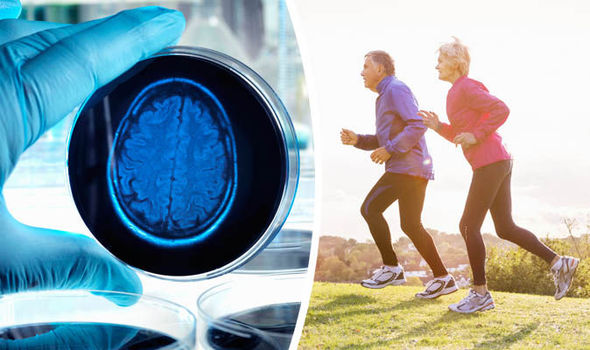
   

EXERCISING IS AS IMPORTANT FOR THE ELDERLY AS IT IS FOR THE YOUTH. A STUDY HAS FOUND THAT EVEN AS LITTLE AS A 15-MINUTE WORKOUT COULD DO WONDERS FOR THE ELDERLY AND DECREASE DEATH RISK.

The study, in fact, goes on to say that it may help them cheat death, by linking it to lower death risk among the elderly, which showed how exercising lesser than the recommended number of hours might help them.
The Tech Times, French researchers analyzed a group of 1,011 French individuals aged 65 in 2001 and were followed for 12 years. They also looked at a huge group of more than 122,000 people from an international cohort who were about 60 years old and were followed for about 10 years.
The team measured physical activity via Metabolic Equivalent of Task (MET) minutes every week, meaning calories spent per minute of physical activity. A MET minute every week equates to the amount of energy expended by sitting; recommended levels of exercise, for instance, are from 500 to 1,000 MET minutes a week.
It was observed that, during the study, as people exercised more, their potential death risk dropped considerably. Furthermore, those with low activity levels, recorded approximately 22% decreased death risk, while those with medium and high levels had 28% and 35% lower risks.
Tech Times interviewed study author and University Hospital of Saint-Etienne physician, Dr. David Hupin, who said that, “Age is not an excuse to do no exercise. It is well established that regular physical activity has a better overall effect on health than any medical treatment.”

Top professionals are twice as likely to marry as unskilled workers

A RECENT SURVEY REVEALS ‘MARRIAGE CHANCES’ BY CLASS WHICH DIMINISH RIGHT DOWN THE ECONOMIC SCALE?


THIS IS THE FIRST TIME SUCH DATA LOOKING AT THE GAP IN “MARRIAGE CHANCES” BY CLASS HAS BEEN BROUGHT TOGETHER IN IRELAND.

Highly paid processionals are almost twice as likely to be married as unskilled workers, a report published this morning finds.
Some 65.7% of adults, aged 18-49 in the best off groups, were married at the end of last year, while 31.8% of the same age in the least well off group were married, notes the study, Mind the Gap, published by the Iona Institute Christian think tank.
The report also shows the likelihood of marrying diminishes right down the economic social scale, apart from in the second least well off group, which are described as “process, plant and machine operatives”.
Some 53.6% of adults in this class were married, according to the report which draws on data contained in the Central Statistics Office’s Quarterly National Household Survey from the end of 2015.
This is the first time such data looking at the gap in “marriage chances” by class has been brought together in Ireland. The findings reveal a phenomenon replicated in other western societies. It is an issue which receives much discussion and scrutiny in the United States.
This study maps likelihood of marriage by area, in Dublin, Cork and Galway cities, showing huge variations aligning by levels of prosperity or disadvantage.
In Dublin marriage rates range from highs of up to 59 per cent in Clontarf and Rathgar/Terenure to as low as 19% in north and south inner city.

WORST CHANCES

In Cork, they range from 60% in Ballinlough, to 17% in Shandon, Gilabbey and South Gate, while Galway adults with the best prospects of marriage are those in Rockbarton, Knockacarragh and Taylor’s Hill where rates are up to 53%. Galwegians with the worst chances are in Nun’s Island and St Nicholas, with rates as low as 19%.
Prof Patricia Casey of the Iona Institute said the inequality in access to marriage were “deeply concerning”. She said those entering marriages had better social and economic prospects, while children in lone parents households were at the greatest risk of poverty.
The Institute said it was publishing the report in the hope of sparking a debate on why some groups were not marrying.
Marriage, she said, was one of the greatest bulwarks against poverty and yet those in poverty had far less access to it.
“Why is it that the better off a person is the more likely they are to be married? Social disadvantage clearly diminishes a person’s chances of marrying and not marrying in turn increases the odds of remaining socially disadvantaged, It’s a vicious circle and one which obviously affects children.”
Irish society had shown it believed the gay and lesbian community should have access to marriage. So too should the poor, said Prof Casey.
The increasing proliferation of low-paid, insecure jobs at the lower end of the economic scale undoubtedly had an impact on people’s sense of their financial ability to enter into marriage, she added.
“There are also disincentives to marry built into the social welfare system . . . It can be more financially advantageous for two people on social welfare to remain single than to marry.”

Gravitational waves detected for the second time

Scientists spot ripples in space-time caused by two colliding and merging black holes

   

AN ARTIST’S RENDITION SHOWS TWO BLACK HOLES 14 AND 8 TIMES THE MASS OF THE SUN JUST MOMENTS BEFORE THEY COLLIDED AND MERGED TO FORM A NEW BLACK HOLE 21 TIMES THE MASS OF THE SUN.

Gravitational waves, ripples in space-time predicted by Albert Einstein a century ago, have been detected for the second time, scientists have announced.
An international team spotted the phenomenon on St Stephen’s Day but has only now made the news public.
As with the earlier detection in September 2015, the source was found to be two colliding and merging black holes unleashing titanic forces.
The event, some 1.4 billion light years away, caused a quantity of energy roughly equivalent to the mass of the Sun to be converted into gravitational waves.
After travelling an unimaginable distance across space, the waves were “captured” by the twin Ligo (Laser Interferometer Gravitational-wave Observatory) detectors located in Livingston, Louisiana, and Hanford, Washington, US.
Team member Dr Stephen Fairhurst, from Cardiff University, said: “This event heralds the true beginning of gravitational wave astronomy and the opening of a new window on the universe.
“The different masses and observable spins that we witnessed in the Boxing Day event show that we’re starting to collect vital information about the population of black holes that exist in the universe.
“Future gravitational wave observations will allow us to understand how black holes form from the death of massive stars, and test whether they are really as predicted by Einstein’s theory.”

THE THEORY OF GENERAL RELATIVITY?

Gravitational waves are predicted in Einstein’s Theory Of General Relativity, which shows how gravity arises from mass curving space and time.
They are ripples in space-time that propagate as waves. Anything in their path, from humans to whole planets, is made to stretch and compress slightly as the fabric of space-time is distorted.
Each of the Ligo detectors, consisting of an incredibly sensitive system of mirrors and lasers, is also made to “wobble”. But the effect is really tiny.
The amount of movement is thousands of times smaller than the width of the nucleus of an atom.
Scientists hope gravitational waves will offer a completely different view of the universe, allowing them to study events that might be hidden from traditional optical and radio telescopes.
An illustration of this was seen in results from the December 26th detection, presented at the annual meeting of the American Astronomical Society in San Diego, US.
By analysing the signal, the scientists were able to tell that the colliding black holes were 14 and eight times more massive than the Sun.
They orbited each other at least 27 times before merging into a more massive spinning black hole 21 times the Sun’s mass.
Using two detectors spotting the waves 1.1 milliseconds apart made it possible to determine the source’s rough position in the sky.

‘KEY QUESTIONS’

Prof Sheila Rowan, director of the University of Glasgow’s Institute for Gravitational Research, who took part in the discovery, said: “We know from this second detection that the properties being measured by Ligo will allow us to start to answer some key questions with gravitational astronomy.
“In future we will be able to study this and better understand cosmic history, aiming to fill in the ‘missing links’ in our knowledge.”
The findings have been accepted for publication in the journal Physical Review Letters.
Dr Chad Hanna, from Pennsylvania State University in the US, who co-led the detection team, said: “We now have far more confidence that mergers of two black holes are common in the nearby universe.
“Now that we are able to detect gravitational waves, they are going to be a phenomenal source of new information about our galaxy and an entirely new channel for discoveries about the universe.”
The Ligo Scientific Collaboration consists of more than 1,000 scientists from 17 countries.
Each Ligo site has two tubes, both 4km long, arranged in an L shape.
A laser is beamed down each tube to monitor very precisely the distance between mirrors at each end.
If a gravitational wave is present, it will alter the distance between the mirrors by a minute amount.     

Tuesday, June 10, 2014

Donie's Ireland daily news BLOG update

Half of today’s 20-year-old's probably will never get married


Young couples are more likely to cohabit than tie the knot ONS data suggests. Sharp decline in young people getting married, 

47% of women and 48% of men aged 20 will never marry
Only 61% of men and 68% of women aged 40 today will wed
For WWII baby boomer generation, 92% of women had married

HALF OF TODAY’S 20-YEAR-OLDS WILL NEVER MARRY, STRIKING RESEARCH REVEALS. INSTEAD, COUPLES ARE INCREASINGLY CHOOSING TO COHABIT WITHOUT EVER DECIDING TO COMMIT.

A report published today using the latest data from the Office for National Statistics reveals a generational shift away from the institution of marriage, with youngsters far less likely ever to wed than their parents and grandparents.
The research by the Marriage Foundation shows that, for a variety of reasons, 47% of women and 48% of men aged 20 will never marry.
Half of today’s 20-year-olds will never marry, new data suggests. Instead they will cohabit without ever deciding to fully commit
The baby boomer generation – born between the end of the Second World War and the early 1960s – has maintained a healthy level of marriage, with 87% of men and 92% of women having married at some stage.
But subsequent generations are facing a sharp decline in marriage rates.
Half of 40-year-olds today are already married, but they are not expected to reach the levels set by their parents.
Work and Pensions Secretary Iain Duncan Smith said: ‘One of the starkest findings of this report is that young people’s aspiration to marry so outstrips achievement.
‘We should respond by asking what stops them from doing so – looking at how we can remove any barriers that currently stand in their way, and ensuring they have the opportunity to realise their aspirations.
‘This government has already funded marriage preparation and relationship education for over 6,000 couples, but there is undoubtedly more to do.
‘I firmly believe in the importance of strong families as the foundation of a healthy society, and that marriage has a powerful role to play in securing the relationship that lies at their heart.
‘We know that stable loving families offer children the best possible start in life, so it is right that this government has taken steps to ensure families have the help and support they need to flourish.
‘From action to reduce the couple penalty left by Labour to the provision of relationship education and the recognition of marriage in the tax system, it is clear that we are unashamedly pro-family.’
47% of women and 48% of men aged 20 will never marry for a variety of reasons, data shows
According to current trends, only 61% of men and 68% of women aged 40 today will ever marry.
However, the greatest decline in marriage has taken place among those in their twenties. In 1970, the peak year for marriage, 564,818 men and women aged 25 got married. In 2010, just 56,598 did, a fall of 90%.
Today, only 5% of men and 10% of women aged 25 are married, as compared to 60% of men and 80% of women 44 years ago.
When current trends are applied to today’s 20-year olds, figures show that only 52% of those men and 53% of women are expected ever to marry, despite strong aspirations to do so.
Researchers blamed a number of factors, including early cohabitation, which makes people less likely ever to tie the knot, celebrity divorces, and decades of undermining of the institution of marriage by the state.
Harry Benson, research director for the Marriage Foundation, said: ‘What we’re seeing is the devastating trickle-down effect of the trend away from marriage.
‘At the moment, we have high proportions of parents and grandparents who have got married at some stage and for the most part stayed together.
‘They provide role models for the next generation. They also show what can be gained from making a marriage work in terms of the stability it provides for a family.
‘However, fewer of today’s 40-year-olds will be in a position to demonstrate the positives of a stable household cemented by marriage.
‘Their children’s generation, currently in their twenties, will suffer twofold; first from a higher level of family breakdown when they themselves are young, and secondly from the lack of familiarity with the benefits of marriage as they look to start their own families.’
Mr Benson said that the argument for marriage is ‘not a moral or religious one, but based on concrete facts’.
‘Cohabiting couples account for only 19% of parents but 50% of family breakdown. Among parents who stay together until their children reach 15, a tiny 7% are cohabiting couples,’ he said.
In its 13 years in power Labour was accused of undermining marriage, and the UK is almost alone in Europe in failing to recognise traditional family structures in the tax system.
In last week’s Queen’s Speech, the Government confirmed its intention to restore a recognition of marriage in the tax system.
Married couples where one partner pays no income tax will be able to transfer £1,000 of their tax allowance between them, saving them £200 a year.
The Marriage Foundation was founded by Sir Paul Coleridge, a High Court Judge, moved by his personal experience in 40 years as a barrister and judge specialising in family law.

Seanad row could damage banking inquiry, chairman warns


Head of selection committee calls for a speedy resolution to Seanad disagreement

Labour Senator Susan O’ Keeffe (above) who said the reason she did not attend a committee meeting last week was because she was supporting her daughter through her Leaving Certificate.
The status of the long-awaited banking inquiry could be damaged if a row over which politicians should sit on the investigation is not resolved, the chairman of a committee tasked with selecting members warned today.
The Government planned to have a majority on the committee but the surprise election of Fianna Fáil Senator Marc MacSharry (above left)instead of the Coalition’s preferred candidate Susan O’Keeffe of Labour means the nine-member inquiry will only have four Government members.
Fianna Fáil Senator Denis O’Donovan, who chaired the Seanad selection committee, said the row over which parties were represented on the committee should not be allowed to fester.
“This row, if it’s not resolved quickly, could damage the status of the inquiry before it gets up and running. I’m around the house a long time. It’s not the start the banking inquiry needs,” Mr O’Donovan said.
The new inquiry members were due to meet for the first time on Wednesday but the meeting will not now take place.
The four Government members selected are: chairman and Labour TD Ciarán Lynch and Fine Gael TDs Eoghan Murphy, Kieran O’Donnell and John Paul Phelan.
When it came to the selection of Senators, it is understood Taoiseach Enda Kenny’s office instructed Coalition members to support Independent Senator Seán Barrett and Ms O’Keeffe.
Mr Barrett was selected unanimously, while Mr MacSharry was accepted by five votes to three. Ms O’Keeffe, who was not present, was rejected by four votes to three.
As well as Mr Barrett and Mr MacSharry, the Opposition will be represented by Fianna Fáil TD Michael McGrath, Sinn Féin deputy Pearse Doherty and Independent TD Stephen Donnelly.
Earlier, Ms O’Keeffe responded angrily to negative reaction she said she received following her non-attendance at the meeting which left the Government without a majority on the inquiry. Others expected to support her were also not present last Wednesday night.
“I take great offence at people suggesting I just couldn’t be bothered to turn up. I asked for a pair last September because my daughter was starting her Leaving Cert. Like many parents I wanted to be available and on hand to support her,” Ms O’Keeffe said.
Under pairing arrangements, a Senator from one party agrees with a Senator of an opposing party not to vote in a particular division, giving both Senators the opportunity to be elsewhere.
Ms O’Keeffe said she had obtained a “pair” for Wednesday and Thursday but the selection meeting was only called on called on the Wednesday. Substitutions are not permissible under the rules of the committee.
An email informing members about the meeting was sent on the Wednesday, but Ms O’Keeffe said she had scheduled other meetings in the locality later that day. “It wasn’t as if I sat with my feet up on the desk,” she said.
“I was legitimately unable to attend because I was in Sligo. It’s difficult if you live hours away from Leinster House. The Leaving Cert is a huge event in her life and as a parent and mother I know where my responsibility lies on such days,” she said.
“People just throw slurs around the place. This was a family matter which 95% of the people in the country would understand. Your children only do the Leaving Cert once. I find that the barbaric side of politics.”
Also absent were Labour Senator Lorraine Higgins and Independent Jillian van Turnhout, who usually supports the Government. Ms van Turnhout, who nominated Mr Barrett, had given notice that she would be away.
The Coalition is expected to try to overturn the selection committee’s decision. However, Mr O’Donovan said he believed the selection was final.

Irish Ambulance turnaround times well short of HSE targets


“My understanding as chairman of the committee on selection is that we’ve done our job and we won’t be revisiting the issue,” Mr O’Donovan said.

irish PARAMEDICS UNABLE TO HAND OVER PATIENTS AT HOSPITALS WITHIN a 20-MINUTE TIME FRAME

The majority of paramedic crews across the State waited longer than the Health Service Executive’s target of 20 minutes to hand over patients, get their trolleys back and return to responding to calls.
Ambulances spent more than 8,000 hours delayed at hospital emergency departments waiting to hand over patients during one month this year, previously unpublished records show.
The majority of paramedic crews across the State waited longer than the Health Service Executive’s target of 20 minutes to hand over patients, get their trolleys back and return to responding to calls.
The records, for April, were released to Independent TD Denis Naughten by the HSE’s National Ambulance Service last week. They reveal that almost one in 10 ambulances was delayed for over an hour.
  There were 16,333 ambulance attendances at the State’s 34 emergency departments in April and 9 per cent of them, or 1,407, spent more than an hour delayed outside, including 43 that spent from three to 14 hours.
This data indicates there has been no improvement since the end of last year in ambulance turnaround times at hospitals, despite the issue being identified by the HSE last December as one which would be a particular focus this year.
Delays at overcrowded emergency departments, formerly known as A&Es, have been singled out as a key obstacle to the HSE’s National Ambulance Service being able to address its failure to meet response time targets.
Series of deaths: Ambulance response times have come in for severe criticism in the past year following a series of deaths involving people who had been left waiting up to 45 minutes for an ambulance despite having been triaged by the NAS within 20 minutes.
These new figures, which for the first time give us a hospital-by-hospital breakdown of ambulance turnaround times, show the NAS continues to fall well short of its targets, with an average turnaround time across emergency departments of 29 minutes 57 seconds in April.
In 25 of the emergency departments, over half of all ambulances were delayed for more than 20 minutes. For instance, 89 per cent of ambulances arriving at Cork University Hospital were delayed over 20 minutes. Crews and patients endured the longest average waiting times here, at 47 minutes and 32 seconds, while 23 per cent had to wait more than an hour.
At Galway University Hospital, 80 per cent of ambulances were delayed over 20 minutes; in Mullingar 76 per cent were, while 75 per cent waited more than 20 minutes in South Tipperary General Hospital.
Hour-long delays: At others, significant numbers were waiting over an hour. At Portiuncula, Co Galway, for instance, almost one in five (19 per cent) ambulances were delayed for more than an hour, while 15 per cent waited over an hour at University Hospital Waterford and 13 per cent waited for the same period at Letterkenny General.
Mr Naughten said the figures underlined the need for a “significant investment in the ambulance service” and showed how the closure of smaller emergency departments was impacting on larger ones and the ambulance service.
The longest total delays were at Limerick Regional, described by the Health Information and Quality Authority last week as “not fit for purpose”.
Since the closure of emergency departments at Nenagh and Ennis in 2012, the annual trolley count at Limerick has increased from 3,626 in 2012 to 5,504 last year.
In April, ambulances spent 667 hours and 38 minutes parked outside it.
A spokeswoman for the HSE said: “The National Ambulance Service monitors hospital turnaround times on a continuous basis, and has an escalation policy which is implemented when required.”

New 6,100 free higher education places announced for job-seekers in Ireland


6,100 FREE HIGHER EDUCATION PLACES ANNOUNCED FOR JOB-SEEKERS

Some 6,100 new free higher education places are to be made available to jobseekers through Springboard, the Government said today.
The Springboard programme aims to help jobseekers get the skills they need to get back to work. Courses are one year or less, generally part-time, are free to jobseekers and lead to awards at certificate, degree and post-graduate level.
Since the programme was launched in 2011, 16,429 jobseekers have participated on Springboard courses with a €54m investment from the Exchequer.  Between this year and next, a further €25m will be spent on Springboard.
This year, 171 different courses in 38 colleges are being offered, including 21 in ICT.
“The biggest challenge facing our country is getting our people back to work and Springboard is aimed at doing exactly that,” said Minister for Education and Skills, Ruairí Quinn. “This year work placements are being offered on almost every Springboard course because such placements are a really important way of improving employment prospects.
“We are targeting areas like ICT, high end manufacturing and international financial services because job opportunities exist in these areas and there is a huge potential for growth.”
“One of the core features of Springboard since the start has been the rigorous evaluation of outcomes – how Springboard participants get on in their course, their experience and most importantly whether they get a job,” said Minister for Training and Skills, Ciarán Cannon. “I’m pleased to see that 94% of participants would recommend the experience to other jobseekers. Of the class of 2013, more than half were in sustainable employment or self-employment within six months of completing their studies, with some courses reporting employment rates of 90pc.”
According to the Department of Education, more than six out of 10 participants complete their Springboard course and, of those who withdraw early, almost a third does so because they get a job.

Did Male faces evolve to take a punch?

 
A controversial new theory claims that many features of the human face are the result of evolved defensive measures against fist fights.
This is not the first time that fist-fighting has been implicated in the development of our physiologies. Back in 2012, scientists made the claim that fists changed the course of human evolution, arguing that “It is…our most important anatomical weapon, used to threaten, beat and sometimes kill to resolve conflict.
” The paper earned its fair share of criticism, not only because the evidence was circumstantial, but because of its claim that violence underpinned much of human evolution — a perspective many now consider to be outdated, simplistic, and overly male-oriented (for example, some facial features could be the result of sexual selection). The new theory about human faces, which has been published in Biological Reviews, threatens to do the same.

DID FIST FIGHTING CHANGE THE COURSE OF HUMAN EVOLUTION?

 The human hand is a beautiful product of evolution. Each one a finely crafted arrangement of 27 bones our hands are among the most dexterous in the animal kingdom, and are every bit as capable of threading a needle as they are grasping the oar of a canoe. But newly published findings suggest our palms and fingers may have evolved into their present shapes for more brutish purposes — namely beating the living crap out of one another.
  Few anatomical structures can compete with the range of precision afforded by a human hand. Stout, square palms. Short fingers (relative to the longer digits of our hominoid cousins). Long, strong, flexible thumbs. When combined, these features give rise to a shape that is uniquely suited for two different hand grips: the precision grip, in which objects are held and manipulated with the fingertips, and the power grip, where an object is held firmly by fully wrapped fingers and thumb.
Our capacity for manual manipulation is a large part of what makes us human, and is thought to have played an important role in the evolution of the hand itself. But in the latest issue of The Journal of Experimental Biology, researchers Michael Morgan and David Carrier suggest another driving force in the evolutionary history of the hand-shape we know today: the ability for our ancestors — and males, specifically — to hold their own during hand-to-hand combat.
The same hand-proportions that allow us to dominate at Jenga and grip a bat also allow us to make a closed fist. Unlike a chimpanzee, whose long fingers and stout thumb form a loose, open doughnut-shape when curled, a human is capable of instantly transforming his arm and hand into what amounts to a knobby-ended cudgel. And when you get right down to it, which would you rather have at your disposal during a violent encounter: a knobby-ended cudgel, or a stick with a donut on the end of it? (The image featured here compares the anatomy of a chimp hand with that of a human.)
Reason would suggest that the cudgel is the way to go. To verify the pugilistic merits of the human fist, Morgan and Carrier asked a range of male test subjects — all of them with boxing or martial arts experience — to participate in a series of physical tests (more later on the choice to use all male subjects). In the first test, subjects were asked to strike a punching bag as hard as they could, both with an open palm, as well as with a clenched fist.
Surprisingly, the researchers found that a fist did not deliver more total force per blow. The striking surface area of a fist, however, was found to be one-third less than the area of the whole hand. “This means that if the total force applied in a strike is the same, then the stress in the targeted tissue will be 1.7 to 3.0 times greater in a fist strike than in a palm strike,” write the researchers. In other words: a clenched fist dramatically increases the potential for injury.
Additional tests looked at whether finger and thumb placement provided significant support and protection to a hand under pressure. Test subjects were first asked to make a fist and push the first joint of the index finger firmly against a device that measured the rigidity of the knuckle joint. Test subjects repeated this process for each of the three fist postures shown here (note the placement of the fingers relative to the palm and the positioning of the thumb over the fingers):
Morgan and Carrier found that positioning the fingertips against the central palm and wrapping the thumb across the backs of the pointer and middle fingers served as a supportive “buttress” for the hand, and locked the digits into a solid shape that facilitated the transfer of energy from the fingers to the wrist. This finger positioning not only quadrupled the rigidity of the first knuckle joint, it also doubled the ability to deliver “punching” force, relative to the more loosely-arranged conformations.
No other hominoid employs this clenched-fist configuration, yet to us humans it feels very natural. A clenched fist is used in fighting styles practiced all over the world, and is universally recognized as a sign of aggression. Even infants are known to use a ‘closed hand’ to communicate anxiety and distress. PAND
That most male hominoids still compete with one another over mates suggests that bigger forelimbs would have been evolutionarily advantageous to our forebears, giving rise to the dramatic physiological differences that we see in males and females today. Such differences are especially common in the upper bodies of men and women, including the hands. The ratio between the lengths of the pointer and ring fingers, for example, is lower in males than in females.
Among mammals, note the researchers, physiological differences between the sexes are often greatest in those characteristics that improve a male’s ability to dominate over other males. Repeating the present study with all female test subjects could help shed light on whether these physiological differences between male and female hands actually arose out of a need for our male ancestors to resolve contention with optimally buttressed fists.
“There appears to be a paradox in the evolution of the human hand,” the researchers ultimately conclude. “It is arguably our most important anatomical weapon, used to threaten, beat and sometimes kill to resolve conflict.”
“Yet it is also the part of our musculoskeletal system that crafts and uses delicate tools, plays musical instruments, produces art, conveys complex intentions and emotions, and nurtures.”
They continue: More than any other part of our anatomy, the hand represents the identity of Homo sapiens. Ultimately, the evolutionary significance of the human hand may lie in its remarkable ability to serve two seemingly incompatible, but intrinsically human, functions.
The Protective Buttressing Hypothesis
According to David Carrier and Michael Morgan, our distant human ancestors exhibited a remarkable number of features that can only be described as protective buttressing. Indeed, when hominids engage in hand-to-hand combat, the face is typically the primary target. The bones in our face, say the scientists, suffer the highest rates of fracture — but they’re also parts of the skull that have exhibited the greatest increase in robusticity during the course of our evolution as hominids.
Indeed, Carrier and Morgan came to this conclusion after taking a look at the skulls of australopiths. Over time, these hominids developed increasingly stronger brow and nasal ridges, cheek bones, and jaws. More technically, and in the words of the researchers:
Specifically, the trend towards a more orthognathic face; the bunodont form and expansion of the postcanine teeth; the increased robusticity of the orbit; the increased robusticity of the masticatory system, including the mandibular corpus and condyle, zygoma, and anterior pillars of the maxilla; and the enlarged jaw adductor musculature are traits that may represent protective buttressing of the face.
To bolster their case, the researchers also used data from modern humans; they analyzed several studies from hospital emergency wards to see how fist-fighting produces facial injuries.
Prior to this study, anthropologists believed that these particular facial characteristics were an adaptation to a tough diet, one that included nuts, seeds, and grasses. This new theory would seem to be a bit more plausible (the diet hypothesis doesn’t explain sexual dimorphism, for example). But like the earlier fist hypothesis, more evidence will need to be presented to bolster such a claim.
The researchers also say this is a male phenomenon — one that’s resulted in pronounced differences in facial characteristics between the sexes. These reinforcements, say the researchers, evolved as males fought over females and resources. It also may help to explain why modern humans can accurately assess another man’s strength and fighting ability from facial shape and vocal quality.