Pages

Showing posts with label legislation. Show all posts

Saturday, October 29, 2016

Donie's Ireland daily news BLOG update

KBC cuts mortgage interest rates for new and existing customers

Both fixed and variable rates to be reduced, with possible savings of more than €23,000
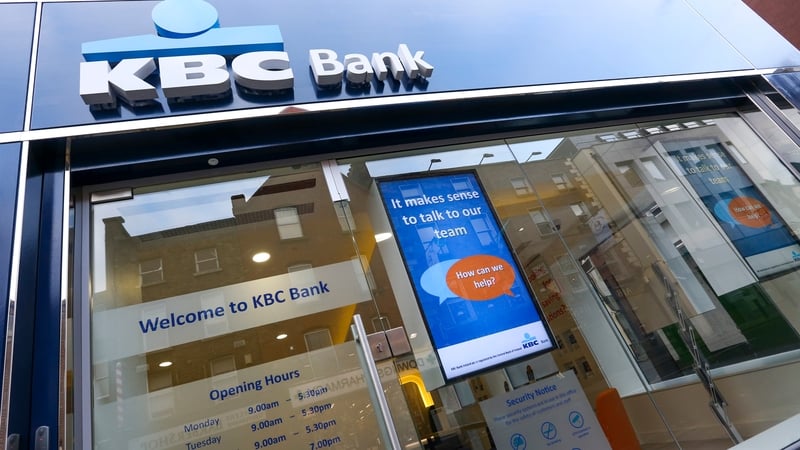
Image result for KBC cuts mortgage interest rates for new and existing customers  Image result for KBC cuts mortgage interest rates for new and existing customers  Image result for KBC cuts mortgage interest rates for new and existing customers

EXISTING CUSTOMERS OF KBC WILL ONLY BE ABLE TO APPLY FOR THE REVISED MORTGAGE INTEREST RATE AFTER SUBMITTING AN UP-TO-DATE VALUATION OF THEIR PROPERTY BY AN APPROVED VALUER.

KBC Bank Ireland is to cut fixed and variable mortgage interest rates by between 0.1% and 0.6% for both new and existing customers.
The bank, which has previously been criticised for only passing on rate cuts to new customers, said the revised rates varied depending on the mortgage amount relative to the value of the home.
While the bank has reduced some of its rates, it is not cutting back its standard variable rate, which remains high at 4.25%.
KBC said that along with the new rate cuts it is also offering €2,000 towards professional fees for switchers, movers, first-time buyers and buy-to-let investors. In addition, it has extended its 50% offer of home insurance for new mortgage customers until the end of the year.
The bank said under the new rates, an existing customer with a €250,000 mortgage balance on a standard variable rate at 4.25% and 20 years remaining and a loan-to-value (LTV) of between 80% and 90% could save €98.19 per month and €23,565 over the term of the mortgage by availing of the reduced LTV variable rate of 3.50%.
A similar customer could also increase their savings in year 1 to €174.01 per month and €25,261 over the term by availing of the one-year fixed rate of 2.90%, the bank said.
Valuation
New mortgage customers will be able to avail of the new rates from the start of November. Existing customers will able to apply for the revised rate from early December but only after submitting an up-to-date valuation of their property by an approved valuer.
KBC has also announced a new limited offer promising what it said was the lowest personal loan rate currently available of over €10,000 at 6.3% annual percentage rate (APR).
Investec chief economist Phlip O’Sullivan said he expected the impact of both political pressure and rate cuts by the likes of KBC to feed through to similar 25 basic point cuts in lending rates by the rest of the major Irish mortgage providers during the fourth quarter.
He said downward pressure would likely remain on mortgage pricing next year, particularly with niche new entrants to the Irish market such as Frank Money expected to offer rates below 3%.
Mr O’Sullivan said he expects Permanent TSB and Bank of Ireland will continue to only focus on cutting rates for new customers to protect income from existing loans.

FF deputies vote against Government over blocking abortion Bill

DÁIL APPROVES GOVERNMENT AMENDMENT THAT BLOCKS PROPOSED AAA-PBP LEGISLATION

Image result for FF deputies vote against Government over blocking abortion Bill   Image result for FF deputies vote against Government over blocking abortion Bill

ANTI-AUSTERITY ALLIANCE-PEOPLE BEFORE PROFIT TDS RUTH COPPINGER AND BRÍD SMITH: “THE KEY POINT IS WE MUST KEEP WOMEN’S BODIES OUT OF THE CONSTITUTION.”

Five Fianna Fáil TDs voted against a Government amendment that blocked a Bill to allow a referendum on abortion.
The Dáil approved the amendment by 96 votes to 47 and blocked the Anti-Austerity Alliance-People Before Profit (AAA-PBP) Bill from being read a second time. Sinn Féin, Labour, the Green Party and the Social Democrats voted with the AAA-PBP.
Cork North-Central TD Billy Kelleher, Limerick TD Niall Collins, Mayo TD Lisa Chambers, Kildare South TD Fiona O’Loughlin and Clare TD Timmy Dooley voted against the Government amendment on the issue.
Party whip and Cork North-West TD Michael Moynihan abstained, as did Independent TD Maureen O’Sullivan. A majority of Fianna Fáil’s deputies voted with the Government. The party had allowed its TDs a free vote on the issue.
The dissenting party members supported the Bill which had been introduced by Dublin West TD Ruth Coppinger and Dublin South-Central TD Bríd Smith. It proposes a referendum to remove from the Constitution the equal right to life of the mother and the unborn.

A FREE VOTE?

However, an amendment agreed between the Fine Gael and Independent Alliance coalition Government prevented a vote on the legislation, the 35th Amendment of the Constitution (Repeal of the Eighth Amendment) Bill.
Independent Alliance members insisted on a free vote on abortion and to avoid another bitter split in Cabinet, Fine Gael and the Independents in Government agreed a deal, after late night talks, preventing a vote on abortion.
The Citizens’ Assembly established by Taoiseach Enda Kenny to discuss abortion will report back to an Oireachtas committee in June next year and make recommendations.
The Government motion gives the Oireachtas committee an additional six months after the assembly reports to complete its deliberations. This means there will be no referendum on abortion before 2018 at the earliest.
A division in the Cabinet ensued in July on a Bill to allow abortion in cases of fatal foetal abnormality, when Independent Alliance Ministers insisted on a free vote.

BODILY AUTONOMY

During the Dáil debate on the Bill on Tuesday night, AAA-PBP TD Ruth Coppinger said the Dáil and the electorate were very clear that Fine Gael and the Independent Alliance were, in effect, opposing the repeal of the Eighth Amendment.
“What will enrage many women and young people is that Independents, who were elected on a platform of repealing the amendment, are now buckling under a whip and kicking this issue to touch,’’ she said.
Ms Coppinger said the issue was about bodily autonomy. “The key point is we must keep women’s bodies out of the Constitution,’’ she said.
Ms Smith said the public was angry that the Taoiseach and Ministers had let women down.
Minister for Health Simon Harris said during the debate that the issue cannot be answered “with one word or three words or one Bill”.
He said the Citizens’ Assembly should be allowed to conclude its deliberations and make its recommendations.
“Tabling a referendum Bill is the easy part,” he said. “Telling the Irish people what would replace that constitutional amendment in law or elsewhere is the difficult work we have to do.”

Fracking ban gains ground after Fianna Fáil opposes delay to legislation

Image result for Fracking ban gains ground after Fianna Fáil opposes delay to legislation   Image result for Legislation put forward by Fine Gael backbench TD Tony McLoughlin was due to be put on hold

ATTEMPTS TO GET THE GOVERNMENT TO BAN FRACKING LOOK SET TO PASS THEIR FIRST HURDLE, IT HAS EMERGED.

Legislation put forward by Fine Gael backbench TD Tony McLoughlin was due to be put on hold for at least eight months to allow for an independent report on the controversial gas extraction to be completed.
But the proposal may progress more quickly after Fianna Fáil refused to support the delay.
Mr McLoughlin’s legislation had been accepted by Government this week but it attempted to add a clause to stop it from further parliamentary scrutiny until after June 30 next year, potentially delaying an outright ban until 2018.
The TD for Sligo Leitrim, one of the three regions identified for potential shale gas exploration, sought to ban energy companies from using high-pressure water and other additives to extract raw fuels from rocks, sands and coal seams.
The legislation will be brought before the Dáil later today.
It is understood the Government cancelled proposals to stall the legislation until next June after Fianna Fáil warned it would not vote in favour of any delay.
Oisin Coghlan, director of Friends of the Earth Ireland, had expressed concern that the Government was trying to slow the reform.
“I hope that reports Fine Gael will now drop their motion to delay the bill to ban fracking are true,” he said.
“On the day the Dáil voted to ratify the Paris Agreement Taoiseach Enda Kenny and Fine Gael risk being on the wrong side of history.
“All party agreement tonight to progress the bill without delay would be a sign that Ireland is finally getting serious about climate action.”
If the legislation progresses it will be the first step in enforcing a nationwide ban on fracking and it will give the Government 12 weeks before it goes before further parliamentary scrutiny.
Hydraulic fracturing, commonly known as fracking, involves drilling into the earth before a high-pressure water mixture is forced into rock to release gas.
Three exploratory licences were granted in Ireland but no extraction has taken place.
The Environmental Protection Agency (EPA) commissioned a report on the impact of the controversial gas extraction on the environment and human health. It is due in the coming months.
Eamon Scanlon, Fianna Fáil TD for Sligo-Leitrim, said the Government was trying to push the legislation back for at least a year.
“It said it wanted to wait for the EPA to report. There are many people I’ve spoken to in relation to fracking who have no confidence in the EPA report,” he said.
“We were supporting the Bill as it was. There was no question about that.
“And I would like to see a ban in the next year.”

New CSO figures reveal the new health state of our nation

Image result for New CSO census figures have highlighted the new birth rates and the main causes of death in Ireland  Image result for New CSO census figures have highlighted the new birth rates and the main causes of death in Ireland

NEW CSO CENSUS FIGURES HAVE HIGHLIGHTED THE NEW BIRTH RATES AND THE MAIN CAUSES OF DEATH IN IRELAND.

The latest Central Statistic Office (CSO) figures have revealed how the nation’s birth rate has stalled while fewer people are dying.
The new data showed how there were 67,295 children born in Ireland during 2014, down 1,659 from 2013.
The CSO said this is the lowest number of births since 2006 when there were 65,425 births.
The birth rate was 14.6 per 1,000 of the population in 2014 compared to 15.0 in 2013 and 15.3 in 2004.
It also emerged that teen pregnancies are down over 50% compared to 10 years ago while births to mothers over 40 surged by over 70%.
The figures showed just 1,296 births were registered to women under the age of 20 in 2014.
The figure stood at 2,493 in 2004.
In fact, it emerged the average age of mothers is rising with the typical new Irish mothers now aged 30.5 years old compared to 28.5 years old 12 years ago.

DEATH RATES

The “Vital Statistics Annual Report 2014″ by the CSO also revealed that circulatory and respiratory conditions are still some of the biggest killers on the island.
Heart problems accounted for 8,852 deaths while respiratory illness killed 3,492 in 2014.
The CSO said there were 29,252 deaths in Ireland in 2014, of which 14,897 were men and 14,355 were women.
The death rate for 2014 stood at 6.3 deaths per 1,000 total population, slightly lower than the 6.4 recorded in 2013.

Royal College of Surgeons advises doctors to let patients decide on treatment options

Image result for Royal College of Surgeons advises doctors to let patients decide on treatment options   Image result for Royal College of Surgeons advises doctors to let patients decide on treatment options

THE ROYAL COLLEGE OF SURGEONS HAS ADVISED DOCTORS TO LET PATIENTS CHOOSE WHETHER OR NOT TO UNDERGO MEDICAL TREATMENTS IN NEW CONSENT GUIDANCE.

According to the guidance, doctors must now outline every risk of the procedure that may be significant to the patient along with other treatment options.
The guidance adds that in cases where patients ’choose to refuse treatment and this path is potentially dangerous or fatal, surgeons must respect the patient’s decision.’
Intending to replace the ’paternalistic’ approach to consent with a ’patient-centred perspective’ the RCS guidelines says surgeons are ‘no longer the sole arbiter of determining what risks are material to their patients’.
The RCS warns that if these changes to how doctors obtain consent are not made, NHS trusts could face increasing medical negligence claims.
According to the NHS Litigation Authority, which handles medical negligence claims on behalf of hospitals, trusts in England paid out more than £1.4bn in during 2015/2016.
This warning comes following a judgment given last year in the Supreme Court case of Nadine Montgomery, who son has cerebral palsy.
Ms Montgomery, who is small and a type 1 diabetic, was awarded £5.25m after doctors failed to tell her the risks of her condition and offer her a caesarean section.
The judges in the case said doctors must tell patients the ‘material risks’ that will matter to them.
The new guidelines clarify that doctors must assess a ‘material risk’ as one that ‘a reasonable person in the patient’s position would be likely to attach significance to the risk, or the doctor is or should reasonably be aware that the particular patient would likely attach significance to it.’
Mr Leslie Hamilton, a Royal College of Surgeons council member, said the RCS is ‘very concerned that doctors and hospitals haven’t fully appreciated’ how the judgment changed the understanding of patient consent.
He said: ‘Hospitals and medical staff are leaving themselves very vulnerable to expensive litigation and increased pay-outs by being slow to change the way the consent process happens.
‘We cannot underestimate the psychological impact facing litigation can also have on doctors. It can do serious damage to their confidence in practice and their reputation. Doctors must protect themselves and their patients by ensuring the consent process is carried out properly.’
Dr Keith Grimes, a GP in East Sussex, said on Twitter that shared decision making is something that “GPs have been doing for decades, and I learned about 16 [years ago].’
Dr Martin Brunet, a GP in Guildford, said he agrees with the guidelines but hopes ‘doctors don’t now abandon patients in making decisions’.
The BMA also added that implementing the new guidelines will be “difficult”.
Dr Mark Porter, BMA chair of council, said: ‘Doctors must have the time to fully explain and outline the risks involved in any procedure to their patients before it takes place. In today’s NHS it is becoming increasingly difficult as we face rising demand and staff shortages.’

Wildlife populations drop by almost 60% since 1970

Image result for Wildlife populations drop by almost 60 percent since 1970   Image result for Wildlife populations drop by almost 60 percent since 1970

‘WILDLIFE IS DISAPPEARING WITHIN OUR LIFETIMES AT AN UNPRECEDENTED RATE,’ SAYS WWF.

Worldwide populations of mammals, birds, fish, amphibians and reptiles have plunged by almost 60 per cent since 1970 as human activities overwhelm the environment, the WWF conservation group said on Thursday.
An index compiled with data from the Zoological Society of London (ZSL) to measure the abundance of biodiversity was down 58% from 1970 to 2012 and would fall 67% by 2020 on current trends, the WWF said in a report.
The decline is yet another sign that people have become the driving force for change on Earth, ushering in the epoch of the Anthropocene, a term derived from “anthropos”, the Greek for “human” and “-cene” denoting a geological period.
Conservation efforts appear to be having scant impact as the index is showing a steeper plunge in wildlife populations than two years ago, when the WWF estimated a 52% decline by 2010.
“Wildlife is disappearing within our lifetimes at an unprecedented rate,” Marco Lambertini, Director General of WWF International, said in a statement of the group’s Living Planet Report, published every two years.
“Biodiversity forms the foundation of healthy forests, rivers and oceans,” he said in a statement.
“We are entering a new era in Earth’s history: the Anthropocene,” he said. WWF is also known as the World Wide Fund for Nature.
The index tracks about 14,200 populations of 3,700 species of vertebrates – creatures that range in size from pea-sized frogs to 100 ft long whales.
The rising human population is threatening wildlife by clearing land for farms and cities, the WWF’s report said.
Other factors include pollution, invasive species, hunting and climate change.
But there were still chances to reverse the trends, it said.
“Importantly … these are declines, they are not yet extinctions,” said Professor Ken Norris, Director of Science at ZSL.
Deon Nel, WWF global conservation director, told Reuters it wasn’t all bad news.
“I don’t speak at all about doom and gloom – we do see a lot of positive signs,” Nel said.
One hopeful sign is a global agreement by almost 200 nations last year to curb climate change could, for instance, help protect tropical forests, slow a spread of deserts and curb an acidification of the seas caused by a build-up of carbon dioxide.
And a 2015 UN plan for sustainable development by 2030, seeking to end poverty with policies that safeguard the environment, would also help if properly implemented.
Also, some species are recovering. Last month, the giant panda was taken off an endangered list after a recovery in China.    

Monday, October 27, 2014

Donie's Ireland daily news BLOG update

Survey of some 10,000 people in Ireland will give snapshot of how healthy we are


THE DEPARTMENT OF HEALTH AND HEALTHY IRELAND ARE LAUNCHING THE STUDY TO FIND OUT JUST HOW HEALTHY – OR OTHERWISE – IRISH PEOPLE ARE.

Households have been randomly selected for the survey which will start in the coming weeks.
The Healthy Ireland questionnaire will provide a snapshot of key indicators that influence our health right across the population.

SMOKING

These include nutrition, alcohol consumption, smoking, level of physical activity, weight management and wellbeing.
The survey’s results will enable health planners to get an idea of how policies are working, and to develop a baseline on how healthy the population is in general.
They should be available for analysis by next April or May.
“If we’re going to help people to stay healthy, we need to have an idea of how healthy they are,” said Health Minister Leo Varadkar.
“So this new survey will be really useful in making sure that the right policies are in place. It will also tell us what areas we need to focus on in future.
“The Healthy Ireland initiative was set up to improve the nation’s physical and mental health. We haven’t had a comprehensive survey since 2007, and there have been huge changes since then.
“On the one hand, more people are more aware of the importance of diet, lifestyle, health, wellbeing and mental fitness, but as a nation we now face even bigger challenges on obesity, stress, diet and many other areas. So there’s a big job ahead of us.
“This new survey will give us a really up-to-date picture of the nation’s health and will provide vital data. The results will give us a baseline set of data telling us how healthy or unhealthy Ireland is.
“We can then use future surveys to assess whether or not our policies are working. It’s entirely voluntary, so I want to thank in advance any people who agree to take part as their participation is of enormous value.”
The interviews with people in the selected households will begin soon and continue until April, said Kate O’Flaherty, the director of the Health and Wellbeing Programme in the Department of Health.

CONFIDENTIAL

“Those households selected will receive letters inviting them to take part in the survey,” she said.
“I would like to assure people that the data collected will remain confidential at all times.”
The last similar survey was SLAN 2007, so there is a huge need for more up to date information, according to experts.
A higher percentage of respondents in the Republic (29pc) were current smokers compared with Northern Ireland (26%), that survey found.
The new survey is being conducted by Ipsos MRBI for Healthy Ireland, which is a cross-Government initiative.

Greens call for referendum to block Irish Water privatisation


Green Party leader Eamon Ryan (centre pictured with deputy leader Catherine Martin and party chairman Roderic O’Gorman at the launch of their campaign for a referndum on the public ownership of water.

FUTURE GOVERNMENTS COULD OVERTURN LEGISLATION BANNING SALE OF COMPANY SAYS EAMON RYAN

A constitutional referendum to block the privatisation of Irish Water should be held next year, the Green Party has said.
The party wants to amend Article 10 of the Constitution which deals with ownership of natural resources to state that “… the State shall not provide for the privatisation or commercialisation of water services for the people.”
Party leader Eamon Ryan said legislation banning the sale of Irish Water would be insufficient because it could be overturned by future governments.
“At the moment the continued public ownership of this precious resource hangs on the support of the government of the day. We believe that our water supply should never be up for sale. We can ensure that that will never happen by inserting a new Article into our constitution which would guarantee the public ownership of our water supply into the future.”
While the Government has said it has no plans to privatise Irish Water, the way the utility had been set up made it attractive for commercial buyers, he said.
“Private equity markets are particularly interested in this type of regulated asset company where there is a guaranteed income stream. The whole bonus and financing arrangements that have been put in place around Irish Water have been designed as if it is already a private commercial company.”
This referendum would be a step towards “winning back the trust of the Irish people in the way our water supply is being managed,” Mr Ryan said.
When asked why his party didn’t resolve this issue when in Government Mr Ryan said the Green Party had always made it clear that privatisation of water was “off the table” and would have held a referendum on that issue before introducing water charges .
He called for cross party support, and the support of all city and county councils, for the holding of a constitutional referendum.

Macra Na Feirme told new laws are needed to stop selling cheap vegetables


SOME 80% OF IRELAND’S FRUIT AND VEGETABLES ARE IMPORTED

When an ash cloud occurred following an eruption of an Icelandic volcano “there was significant pressure on Irish food shelves” because of the lack of fresh fruit and vegetables
Ireland should follow the UK’s example and introduce legislation to tackle supermarkets selling vegetables for just a few cents.
Policy director for an Taisce James Nix said last year’s sale of vegetables such as Brussels sprouts at 5 cent a kilogramme was likely to be repeated again this year.
There is huge scope for import substitution and he said 80 per cent of Ireland’s fruit and vegetables are imported.
He told the Macra na Feirme annual conference that the UK had brought forward legislation to tackle the supermarkets’ power and in Ireland four or five supermarkets control 80 per cent of the sector.
An Taisce met Minister for Agriculture Simon Coveney last week and pressed him on the issue, he said.
Mr Nix pointed out that when the ash cloud occurred following the eruption of an Icelandic volcano “there was significant pressure on Irish food shelves” because of the lack of fresh fruit and vegetables. “We need to reduce that 80% dependence on imported fruit and vegetables.”
He said huge dedication was going into reducing carbon emissions in beef production and in some cases the average Irish figure of 19-20kg carbon emission for every 1 kg of beef produced had been cut in half. “Some farmers are down to 10kg” carbon equivalent for each kilo of beef produced.
President of Macra na Feirme Kieran O’Dowd said young farmers “have grown up in an era where re-use, reduce and recycle is the order of the day”.
He also said that while there was a perception cattle contributed to higher carbon emissions, production methods offset greenhouse gas.
Irish cattle are grass fed and “we do not have animals confined in stores and in feed lots like in other parts of Europe”.
Sean Coughlan, chairman of Macra’s agricultural affairs committee, told the conference “the countryside today looks like it does because of farmers. It didn’t happen by accident. It is actively managed.”
Mr Coughlan, a Co Mayo farmer, said “grass is Ireland’s key, key advantage. There are very few places in the world that can grow grass like Ireland. This is what we can do best.”

See this incredible moment a whale launches itself into the air

METRES FROM BOAT FULL OF TOURISTS 


Photographer Jodi Frediani captured the huge animal breaching off the coast of Monterey Bay, California – it was the closest she has ever seen

A photographer caught the incredible moment a humpback whale put on a show for a group of tourists – launching itself out of the water metres from their boat.
The huge mammal breached sensationally into the air off the coast of Monterey Bay, California, USA.
She said: “It was a great trip but I had no idea this would happen.
“This is the closest I’ve ever seen an adult whale breach alongside a boat. The whale was close enough to rock the boat in its wake.
“Looking closely at the people in my photos, I can see open mouths of astonishment and smiles of joy on the faces of all the passengers.

“IT WAS A DAY WE WILL ALL REMEMBER.”

After putting on such a spectacular show, the whale continued to “breach, tail lob and pec slap repeatedly”.
Frediani added: “It was such a surprise!
“Having the boat so close really gives a sense of scale, showing just how large and powerful these animals are.”

Researchers learn how nature makes powerful antibiotic


A report in the journal Nature that they have made a breakthrough in understanding how a powerful antibiotic agent is made in nature. Their discovery solves a decades-old mystery and opens up new avenues of research into thousands of similar molecules, many of which are likely to be medically useful.

The team focused on a class of compounds that includes dozens with antibiotic properties. The most famous of these is nisin, a natural product in milk that can be synthesized in the lab and is added to foods as a preservative. Nisin has been used to combat food-borne pathogens since the late 1960s.
Researchers have long known the sequence of the nisin gene, and they can assemble the chain of amino acids (called a peptide) that are encoded by this gene. But the peptide undergoes several modifications in the cell after it is made, changes that give it its final form and function. Researchers have tried for more than 25 years to understand how these changes occur.
“Peptides are a little bit like spaghetti; they’re too flexible to do their jobs,” said Univ. of Illinois chemistry professor Wilfred van der Donk, who led the research with biochemistry professor Satish Nair. “So what nature does is it starts putting knobs in, or starts making the peptide cyclical.”
Special enzymes do this work. For nisin, an enzyme called a dehydratase removes water to help give the antibiotic its final, three-dimensional shape. This is the first step in converting the spaghetti-like peptide into a five-ringed structure, van der Donk said.
The rings are essential to nisin’s antibiotic function: Two of them disrupt the construction of bacterial cell walls, while the other three punch holes in bacterial membranes. This dual action is especially effective, making it much more difficult for microbes to evolve resistance to the antibiotic.
Previous studies showed that the dehydratase was involved in making these modifications, but researchers have been unable to determine how it did so. This lack of insight has prevented the discovery, production and study of dozens of similar compounds that also could be useful in fighting food-borne diseases or dangerous microbial infections, van der Donk said.
Through a painstaking process of elimination, Manuel Ortega, a graduate student in van der Donk’s lab, established that the amino acid glutamate was essential to nisin’s transformation.
“They discovered that the dehydratase did two things,” Nair said. “One is that it added glutamate (to the nisin peptide), and the second thing it did was it eliminated glutamate. But how does one enzyme have two different activities?”
To help answer this question, Yue Hao, a graduate student in Nair’s lab, used X-ray crystallography to visualize how the dehydratase bound to the nisin peptide. She found that the enzyme interacted with the peptide in two ways: It grasped one part of the peptide and held it fast, while a different part of the dehydratase helped install the ring structures.
“There’s a part of the nisin precursor peptide that is held steady, and there’s a part that is flexible. And the flexible part is actually where the chemistry is carried out,” Nair said.
Ortega also made another a surprising discovery: transfer-RNA, a molecule best known for its role in protein production, supplies the glutamate that allows the dehydratase to help shape the nisin into its final, active form.
“In this study, we solve a lot of questions that people have had about how dehydration works on a chemical level,” van der Donk said. “And it turns out that in nature a fairly large number of natural products – many of them with therapeutic potential – are made in a similar fashion. This really is like turning on a light where it was dark before, and now we and other labs can do all kinds of things that we couldn’t do previously.”   

Monday, September 10, 2012

Donie's Ireland news BLOG Monday


ISME survey shows 49% refusal rate for Irish businesses bank credit

ISME Chief Executive Mark Fielding has described the survey results as “alarming”, and indicated the issue of bank credit remains a serious problem for the economy.    
The Irish Small and Medium Enterprise organisation claims that 49% of small and medium firms have been refused bank credit in the last three months.
It reveals a slight improvement on the 54% in the previous quarter.
Their Quarterly Bank Watch Survey, conducted in the week ending September 7, shows that demand for bank credit was steady at 38% in the same period.
The association has called on the Government “to immediately demand full and complete disclosure from the bailed out banks on lending to SMEs”.
They siad that the report backs up the recent report from the Central Bank “that access to bank finance is being denied to viable but vulnerable businesses”.
The survey attracted 862 responses.

Stigma still persists on mental health in Ireland


New figures have shown that lack of understanding of mental health problems is still fuelling stigma and preventing people from getting the support they need.

The findings from St Patrick’s Hospital in Dublin show that one-fifth of people surveyed believe that those suffering from mental health problems are of below average intelligence.
In addition, nearly one-in-three respondents said they would not willingly accept someone with a mental health problem as a close friend.
The findings were published to coincide with World Suicide Awareness Day.
The survey also found that nearly two-in-three people would discriminate against hiring someone with a history of mental illness on the grounds that they may be unreliable and 42% felt that undergoing treatment for a mental health problem is a sign of personal failure.
St Patrick’s Hospital CEO Paul Gilligan said the findings highlight the critical requirement to reduce stigma and barriers to accessing mental healthcare.
“It’s also essential that those looking for help are provided with adequate high quality services they can trust in.”
The survey was conducted among 300 members of the public.
The results show that exposure to mental health problems is very widespread, with 40% of respondents revealing that a close member of their family has been treated for a mental health issue.
Tom Maher, head of clinical servics at St Patrick’s, stressed that we need to prioritise the promotion of mental health literacy among the general population. The hospital is organising a free series of mental health information evenings for families and carers.
Meanwhile, the HSE is marking World Suicide Prevention Day by gathering together over 130 participants from various agencies and orgnisations at a conference in Dublin today to share evidence-based best practice on suicide prevention.
The HSE says the conference will discuss oppprtunities for better coordination of suicide prevention initaitives.
The meeting will highlight a research study carried out by the Headstrong organisation and UCD recently which shows that rates of suicidal thoughts and self-harm were higher in young adults who did not seek help or talk about their problems.
The HSE says early intervention programmes in GP practices and hsotpitals targeted at people at risk will help prevent suicides in Ireland.

Transgender legislation pledged by Irish Government soon

   
Joan Burton said legislation to provide for the legal recognition of transgender people is to come before a joint Oireachtas committee
Legislation to provide for the legal recognition of transgender people would be put before the Joint Oireachtas Committee on Social Protection in coming weeks, the Minister Joan Burton has said.
Speaking at the opening session of the fourth European Transgender Council meeting in Dublin today she said the enacting of such legislation was a priority for her, though she was unable to give reassurances on a number of key issues to trans people.
Transgender delegates from across Europe are in Dublin for the council meeting, which continues through the weekend and is hosted by the Transgender Equality Network Ireland (Teni).
It is 15 years since the Free Legal Advice Centres (Flac) issued legal proceedings to assert the right of transgender woman Lydia Foy to legal recognition of her gender. Though the High Court ruled against her in 2002 it ruled in her favour, in new proceedings, in 2007.
Michael Farrell, senior solicitor with Flac, who led Ms Laffoy’s case, said it was was “unacceptable” that Ireland remained the only country in Europe where there was no legal recognition of transgender people.
Legislating for recognition of transgender people was “not an option for the Irish Government”, given its acceptance in 2010 that it was in breach of the European Convention of Human Rights, he said.
“The jurisprudence of the European Court of Human Rights is clear and unambiguous. Trans people are legally entitled to recognition in their own gender,” he said. The absence of such legislation means trans people cannot have their birth certificate reissued to indicate their true gender.
Ms Burton said her legal section had received guidance from the Attorney General’s office in the past week.
Delegates voiced concerns that the legislation may include a compulsory medical examination before trans people could access legal recognition and that married trans people would have to divorce their spouse before accessing recognition. This is due to the constitutional protection of marriage.
Asked about the question of “forced divorce”, Ms Burton said the Attorney General’s report “deals specifically with that issue and of course for the groups it is an issue, but the Irish Constitution and its position on marriage is a matter of fact”.
Ms Burton faced protest from eight members of the audience who held up placards, with “Shame on you Minister Burton”, “Same Old Story” “Not Good Enough” and “15 years and still waiting” as she finished speaking.
Broden Giamrone, director of Transgender Equality Network Ireland, said legislation was needed that respected the community and did not pathologise trans people or tear their families apart.
Senator Katherine Zappone said if Ireland introduced a legislation incorporating a forced divorce clause, “requiring an individual to choose between their family and their identity we will inevitably see more legal challenges, costing more money to the State”.

Molecular milestone: scientists unravel the human genome


The 46 human chromosomes, where DNA resides and does its work. Each chromosome contains genes, but genes comprise only 2 percent of DNA. 

In a milestone for the understanding of human genetics, scientists just announced the results of five years of work in unraveling the secrets of how the genome operates.
The ENCODE project, as it is known, dispensed with the idea that our DNA is largely “junk,” repeating sequences with no function, finding instead that at least 80 percent of the genome is important.
The new findings are the latest in a series of increasingly deep looks at the human genome . Here are some of the major milestones scientists have passed along the way.
1. An understanding of heredity, 1866
The realization that traits and certain diseases can be passed from parent to offspring stretches back at least to the ancient Greeks, well before any genome was actually decoded. The Greek physician Hippocrates theorized that “seeds” from different parts of the body were transmitted to newly conceived embryos, a theory known as pangenesis. Charles Darwin would later espouse similar ideas.
What exactly these “seeds” might be was destined to remain a mystery for centuries. But the first person to put heredity to the test was Gregor Mendel, who systematically tracked dominant and recessive traits in his famous pea plants. Mendel published his work on the statistics of genetic dominance in 1866 to little notice. [Genetics by the Numbers: 10 Tantalizing Tales ]
2. Chromosomes come to light, 1902
But the painstaking work of cross-breeding pea plants wouldn’t languish for long. In 1869, Swiss physician Johannes Friedrich Miescher became the first scientist to isolate nucleic acids, the active ingredient of DNA. Over the next several decades, scientists peering deeper into the cell discovered mitosis and meiosis, the two types of cell division, and chromosomes , the long strands of DNA and protein in cell nuclei.
In 1903, early geneticist Walter Sutton put two and two together, discovering through his work on grasshopper chromosomes that these mysterious filaments occur in pairs and separate during meiosis, providing a vehicle for mom and dad to pass on their genetic material.
“I may finally call attention to the probability that the associations of paternal and maternal chromosomes in pairs and their subsequent separation … may constitute the physical basis of the Mendelian law of heredity,” Sutton wrote in the journal The Biological Bulletin in 1902. He followed up with a more comprehensive paper, “The Chromosomes in Heredity ” in 1903. (German biologist Theodor Boveri came to similar conclusions about chromosomes at the same time Sutton was working on his chromosome discovery.)
3. What genes do, 1941
With the link between chromosomes and heredity confirmed, geneticists delved deeper into the mysteries of the genome. In 1941, geneticists Edward Tatum and George Beadle published their work revealing that genes code for proteins , explaining for the first time how genes direct metabolism in cells. Tatum and Beadle would share half of the 1958 Nobel Prize in Physiology or Medicine for their discovery, which they made by mutating bread mold with X-rays.
4. DNA structure decoded, 1953
Now scientists knew that DNA was the molecule responsible for carrying genetic information. But how? And what did this molecule look like?
The pieces of the puzzle were beginning to come together throughout the 1940s. In 1950, biochemist Erwin Chargaff figured out that the nucleotides, or building blocks, of DNA occur in specific patterns. These nucleotides are represented by four letters (A, T, G and C), and Chargaff was the first to discover that no matter the species, A and T always appeared in equal measures, as did G and C.
This discovery would be crucial to James Watson and Francis Crick, the scientists who would describe the structure of DNA for the first time in 1953. Combining Chargaff’s work with studies by Maurice Wilkins and Rosalind Franklin and other scientists, the pair worked out the iconic double helix shape of DNA, a discovery Crick reportedly called “the secret of life.”
5. Human Genome catalogued, 2001
With DNA becoming an increasingly open book, scientists began to tackle genomics, the study of the complete genetic library of organisms. In 1977, researchers sequenced a complete genome for the first time, starting with a rotund little bacteriophage known as Phi X 174. By 1990, science was ready to start something much bigger: a complete cataloguing of the human genome. [Animal Code: Our Favorite Genomes ]
The result was the Human Genome Project, a 13-year international effort that resulted in the complete sequencing of the human genome in 2001. (More detailed analyses of the initial sequence continued after the release of this first draft.) The project revealed that humans have about 23,000 protein-coding genes, a mere 1.5 percent of the genome. The rest is made up of what has been called “junk DNA ,” including fragments of DNA that don’t code for any proteins and chunks of genes that regulate other portions of the genome.
6. Junk DNA de-junked (2012)
Now, the ENCODE project has looked deeper into this “junk DNA” than ever before. And junk it is not: According to more than 30 research papers published today (Sept. 5) in a number of journals including Science and Nature, at least 80 percent of the genome is biologically active, with much non-protein-coding DNA regulating nearby genes in a complex dance of influence. [Mysteries of Human Evolution ]
The findings reveal that the genetic basis of many diseases may not be in protein-coding genes at all, but in their regulatory neighbors . For example, genetic variants related to metabolic diseases pop up in genetic regions that activated only in liver cells. Likewise, regions activated in immune cells hold variants that have been associated with autoimmune disorders such as lupus.
“These breakthrough studies provide the first extensive maps of the DNA switches that control human genes,” study researcher John Stamatoyannopoulos, associate professor of genome sciences and medicine at the University of Washington, said in a statement. “This information is vital to understanding how the body makes different kinds of cells, and how normal gene circuitry gets rewired in disease. We are now able to read the living human genome at an unprecedented level of detail, and to begin to make sense of the complex instruction set that ultimately influences a wide range of human biology.”