Pages

Showing posts with label waiting lists. Show all posts

Sunday, November 6, 2016

Donie's Ireland daily news BLOG update.

Irish Patients suffer as our hospital queues grow longer & reach a record high

Image result for Irish Patients suffer as our hospital queues grow longer & reach a record high   Image result for people waiting to see a specialist, a rise of 700   Image result for Hospital waiting lists have reached yet another all-time high
Minister Simon Harris

HOSPITAL WAITING LISTS HAVE REACHED YET ANOTHER ALL-TIME HIGH WITH MORE THAN 535,000 PUBLIC PATIENTS NOW IN A QUEUE FOR TREATMENT OR AWAITING INVESTIGATION FOR A POTENTIALLY SERIOUS ILLNESS.

Despite months of promises from the Government to tackle waiting lists, the suffering goes on for many very ill patients.
Many of these desperately need an operation, diagnostic procedure or appointment with a specialist.
Newly released figures for October reveal the extent of the crisis and show that nearly 27,000 more patients are now on hospital waiting lists since Health Minister Simon Harris took office.
The HSE said yesterday that 416,000 people who had appointments to see a specialist last year did not turn up.
But it failed to say how many of these patients, whose condition was serious enough to be referred by their GP, died while they were waiting or had to pay for a private appointment and even though they may have had to get into debt to do so.
The latest figures show 78,621 are waiting for an operation, up by 1,000 compared to September.
While there was a fall of around 3,000 in patients in this surgical queue for more than a year, the longest waiters – those waiting beyond the target time of 15 months – actually grew.
There is now a record 438,931 people waiting to see a specialist, a rise of 700 compared to September. In another worrying trend, the number of patients waiting longest for one of these appointments past 15 months jumped by 2,000.
Despite funding being targeted at reducing the queue of people needing an endoscopy procedure, an invasive test for conditions including cancer, the drop of 700 was marginal.
It still leaves a staggering 17,984 waiting to find out if they have a serious illness.
There was no statement on the figures from Mr Harris, but the HSE again pointed to the growing influx of patients who are attending hospitals.
Hospitals increased the number of inpatient and day case surgery by 4% this year but they cannot keep pace with demand, while emergency departments are seeing a 5% rise in patients compared to last year.
It said progress is being made in reducing the numbers of patients waiting more than 18 months for surgery.
It is now recruiting what it termed “improvement leads” which will involve putting some existing consultants in a HSE-funded post to drive the campaign to try to bring the waiting lists under control.
The National Treatment Purchase Fund is to get €20m in 2017 to outsource some patients who have been waiting longest to hospitals with spare capacity. But this is unlikely to mean any dramatic improvement.

Meanwhile:

More trouble as Junior doctors are the latest group to threaten strike action

IT’S PART OF A DISPUTE OVER A ‘LIVING OUT ALLOWANCE’.

Image result for Irelands HSE Junior doctors are the latest group to threaten strike action Image result for Irelands HSE Junior doctors are the latest group to threaten strike action   Image result for Irelands HSE Junior doctors are the latest group to threaten strike action

JUNIOR DOCTORS ARE THE LATEST PUBLIC SECTOR PAY WORKERS TO THREATEN INDUSTRIAL ACTION IN A DISPUTE OVER A ‘LIVING OUT ALLOWANCE’.

Non-Consultant Hospital Doctors have been in an ongoing dispute with the government over the withdrawal of the €60-a-week payment in 2012.
The Irish Medical Organisation represents the junior doctors and claims that the living out allowance was not paid despite it being part of a contract with employers.
A High Court case against the government is pending over the dispute and negotiations are set to resume next week.
Despite this, the IMO has come out to say that it will support junior doctors should they decided to go on strike over the dispute.
Speaking this evening, IMO president Dr John Duddy says that the government’s pay policies are already leading to a shortage of doctors.
“We already have too few doctors in this country to deliver adequate services to patients yet government have consistently ignored the fact that if you breach contracts and deliberately create a policy that disrespects and devalues doctors they will simply choose to work for countries that value them,” he says.

Financial crisis threatens Ireland’s Institutes of Technology

Image result for Financial crisis threatens letterkennys Institutes of Technology  Image result for letterkenny Institute of Technology

THE VIABLE FUTURE OF UP TO 10 OF THE 14 INSTITUTES OF TECHNOLOGY ACROSS IRELAND IS BEING QUESTIONED IN A REVIEW BY THE HIGHER EDUCATION AUTHORITY.

A financial review of the Institutes of Technology (ITs) across Ireland has pointed to significant financial deficiencies.
It describes six of the ITs – Letterkenny, Tralee, Galway-Mayo, Waterford, Dundalk and Cork – as vulnerable.
The review also points to risks facing the ITs in Athlone, Limerick, Tallaght and Dublin, particularly in relation to financial reserves and projected deficits.
‘The increase in Ireland’s young population is the envy of other countries – new energy, new ideas and a critical mass of educated young people will give Ireland a social, cultural and competitive edge’
Across Ireland, there are more than 87,000 students studying at the various ITs. This includes over 66,000 full-time undergraduates, 13,000 part-time undergraduates, 1,400 remote undergraduates and 3,000 full-time postgraduates.
The purpose of the review by the Higher Education Authority (HEA) was to assess the financial health of the ITs across Ireland, and involved site visits to the 14 campuses.
The HEA noted a reduction of 34pc in support for the education sector between 2008 and 2015, as well as an increase of 24pc in student numbers, which has led to an existential crisis for the educational institutes.
HEA review paints a bleak picture
The overall reserves held by the ITs fell from €132.5m to €78.7m over the period, wiping out 40% of the finance available to underpin ongoing sustainability and future development.
The cash flow position across the sector is a major concern, with a decline in the cash balances held by ITs, from €218.1m in August 2013 to €147m in August 2016. A further fall is anticipated, to €116m by August 2017.
At an aggregate level, the sector is in deficit and this trend is projected to continue over the next five years.
Pay costs still account for between 72.5% and 80% of total IT expenditure, despite core staffing levels falling by 12% between 2008 and 2014. The absence of flexibility to redeploy staff or introduce new work arrangements (for part-time or online study, for example) is a significant factor in financial performance.
The campus environment has been adversely impacted, as there has been no funding available for capital investment.
The HEA said that while growth in science and ICT education provision is encouraging, it is constrained by existing capacity. Targeted capital investment, aimed at reinforcing the technological mission of the sector, has the potential to generate a significant impact.
The remedy is in sight but needs to be acted upon
“The announcement of increased funding for higher education in Budget 2017 and a three-year commitment to further investment marks an important turning point for the sector, but this review demonstrates the scale of the challenge that remains,” said Dr Anne Looney, (below picture) interim CEO of the HEA.
Image result for Anne Looney, interim CEO of the HEA.  “We now have comprehensive evidence of the current financial challenges being faced by many ITs, and the capacity constraints which will limit their ability to meet the expected growth in student demand in coming years.
“While it is a review of the impact of past cuts, it’s a report with an eye to the future, and the provision of higher education across the country for young people still in school who will expect to go to college in the next decade.
“The increase in Ireland’s young population is the envy of other countries – new energy, new ideas and a critical mass of educated young people will give Ireland a social, cultural and competitive edge. The Institute of Technology sector has its origins in the 1962 report, Investment in Education, and since the first doors opened in 1970, [it has] been critical to Ireland’s economic and social development.
“If they are to continue to do this, we have work to do to put them on a sustainable footing.
“The HEA has set out a clear action plan to address the issues, both financial and otherwise, identified in the report, while it is also about to embark on a comprehensive review of the funding approach for higher education institutions, which will also take into account the findings,” Looney said.
LIT president urges immediate action
“It must be said that there is a stark reality at the heart of this review,” said the president of Limerick Institute of Technology (LIT), Prof Vincent Cunnane.
“It clearly demonstrates serious underfunding of higher education in Ireland, and points to a set of actions which must be undertaken to address the situation.”
Cunnane said that despite the ingenuity and commitment demonstrated by the ITs during the financial crisis that engulfed Ireland, the inescapable conclusion is that prompt action is needed if Ireland is to field the skilled graduates needed to sustain the growth in jobs recently seen in the past year.
“LIT has invested in our capital infrastructure, our stock of industry-standard equipment and facilities to ensure that our graduates have practical experience at the cutting edge,” Cunnane said.
“This was challenging in times when state investment in higher education has dried up completely.
“Nonetheless, we invested our own resources sensibly in targeted areas such as precision engineering, which will provide the optimum benefit to the economy and the optimum job prospects to our graduates.
“We have also been able to navigate many of the challenges facing higher education in Ireland by prudent management of our finances over the last number of years.
“This has meant that we are not now subject to the severe financial difficulties besetting some areas of the higher education sector in Ireland.  However, the longer this funding situation remains unresolved, the less able the Irish higher education system will be to cater for the state’s needs, including the demands of our population to progress to higher education.
“The reality is that the core challenges identified in the report are the same as those identified in the Cassells report last July, among others.
“It is fair to say that the diagnosis of the issues facing higher education in Ireland is now done, and we must move without delay to implementing the remedy,” Cunnane warned.

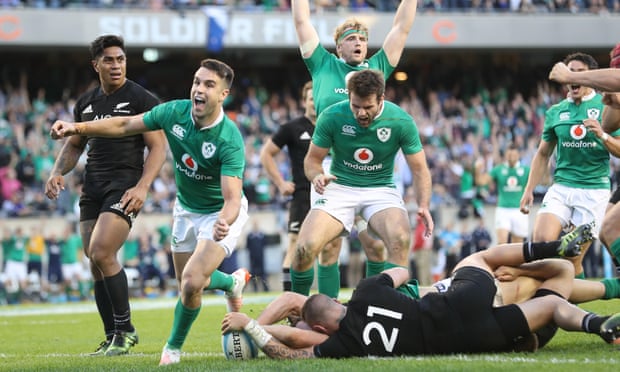
Ireland’s win against the All Blacks after a historic 111 year wait.

IRELAND 40-29 NEW ZEALAND

Image result for Ireland's win against the All Blacks after a historic 111 year wait.  Image result for Ireland's win against the All Blacks after a historic 111 year wait.  Image result for Ireland's win against the All Blacks after a historic 111 year wait.
Tries: Murphy, Stander, Murray, Zebo, Henshaw Cons: Sexton 2, Carbery Pens: Sexton 2, Murray 1
Tries: Moala, Perenara, B Smith, S Barrett Cons: B Barrett 3 Pen: B Barrett
Ireland produced a stunning display to record a first ever win over New Zealand at the 29th attempt and end the All Blacks’ run of 18 straight wins.
Tries from Jordi Murphy, CJ Stander and Conor Murray helped the Irish to a 25-8 half-time lead, then Simon Zebo scored his side’s fourth try in the corner.
The world champions fought back to move to within four points but Robbie Henshaw’s late try ensured the victory.
The sides will meet in another Test match in Dublin in two weeks’ time.
This was Ireland’s first success over the Kiwis in 111 years and it came about in sensational fashion as Joe Schmidt’s men repelled a stirring second-half comeback by Steve Hansen’s side.
TJ Perenara, Ben Smith and Scott Barrett added to George Mola’s first-half try for the New Zealanders but despite some sustained late pressure, they fell short for the first time in their past 19 encounters with top-tier nations.
The match was the first of four autumn internationals for both sides, played in front of a capacity crowd of 60,000 at Soldier Field in Chicago, a venue chosen in an attempt to increase the exposure of the sport.
The teams will meet again at the Aviva Stadium in a fortnight after Ireland host Canada next Saturday and Steve Hansen’s side face Italy in Rome on the same day.

IRELAND FIRED BY THE ANTHONY FOLEY MEMORY.

From the start, the Irish effort appeared to be fuelled by the memory of former international and Munster head coach Anthony Foley, who died suddenly last month.
Image result for The number 8 Anthony Foley rugby shirt Prior to kick-off Ireland lined up in the shape of a number eight, the jersey worn with distinction by Foley for many years, while their opponents performed their traditional pre-match haka.
Ireland made light of the aura of invincibility surrounding the three-time world champions in a first half which they mostly dominated to go in 17 points to the good at the break.
Schmidt’s side produced a performance of accuracy, purpose, pace and skill as they denied the All Blacks quality possession and repeatedly frustrated their efforts to win their own line-outs.
The Irish display bore echoes of the Test between the sides in Dublin in November 2013 when they built up a 19-0 lead, before ultimately losing 24-22 after conceding a last-gasp converted try, but there was to be no repeat of that outcome this time.
New Zealand prop Joe Moody was sent to the sin-bin for a tip tackle
Moala raced through for a fifth-minute try after Waisake Naholo had carved a way through the Ireland defences but the turning point of the opening period came when front-rower Joe Moody was yellow-carded for a tip tackle on Robbie Henshaw.
Ireland made good use of the prop’s 10-minute absence as Murphy rumbled over after a rolling maul and then fellow flanker Stander surged over the line following a break by Rob Kearney.
Murphy was subsequently carried off after turning his knee in a freak incident but seven minutes before the interval Murray produced a moment of magic, darting through a gap in the New Zealanders’ defence to run in his third try in five Tests against the Rugby Championship winners.
The All Blacks’ half-time deficit equalled their biggest ever at that stage of an international match and Ireland held out in a thrilling second half.
The Irish momentum continued on the resumption, their relentless defensive efforts thwarting the normally ruthlessly efficient All Blacks, and Zebo increasing the advantage by touching down in the corner.
Replacement Perenara reduced the arrears by diving over near the posts and then full-back Smith managed to ground the ball beside the flag before being tackled into touch by Andrew Trimble.
Scott Barrett took advantage of some poor Ireland tackling to score on his international debut and when brother Beauden knocked over his third conversion of the game, the All Blacks trailed by just four.
Ireland continued to defend heroically however, forcing their opponents into a series of uncharacteristic errors, and a historic triumph was assured when Henshaw showed raw strength to score under the posts after Jamie Heaslip broke clear.

THE TEAMS THAT LINED UP .

Ireland: R Kearney (Leinster); A Trimble (Ulster), J Payne (Ulster), R Henshaw (Leinster), S Zebo (Munster); J Sexton (Leinster), C Murray (Munster); J McGrath (Leinster), R Best (Ulster), T Furlong (Leinster); D Toner (Leinster), D Ryan (Munster); CJ Stander (Munster), J Murphy (Leinster), J Heaslip (Leinster).
Replacements: S Cronin (Leinster), C Healy (Leinster), F Bealham (Connacht), U Dillane (Connacht), J van der Flier (Leinster), K Marmion (Connacht), J Carbery (Leinster), G Ringrose (Leinster).
New Zealand: B Smith; W Naholo, G Moala, R Crotty, J Savea; B Barrett, A Smith; J Moody, D Coles, O Franks; P Tuipulotu, J Kaino; L Squire, S Cane, K Read (capt).
Replacements: C Taylor, O Tu’ungafasi, C Faumuina, S Barrett, A Savea, TJ Perenara, A Cruden, M Fekitoa
Ireland’s remaining 2016 autumn internationals
12 November v Canada    Aviva Stadium, Dublin     19:15 GMT
19 November v New Zealand    Aviva Stadium, Dublin   17:30 GMT
26 November v Australia    Aviva Stadium, Dublin  17:30 GMT

Canada investigates mysterious ‘pinging’ sound in a canal of water on sea floor

HUNTERS IN THE REMOTE CANADIAN ARCTIC CONCERNED ABOUT SOUND THAT IS SCARING ANIMALS AWAY

Image result for Canada investigates mysterious ‘pinging’ sound in a canal of water on sea floor  Image result for Canada investigates mysterious ‘pinging’ sound in a canal of water on sea floor  The sound has been heard in Fury and Hecla Strait, around 75 miles (120 kilometres) northwest of the hamlet of Igloolik

(LEFT) THE SEA ICE IN THE NORTHWEST PASSAGE NEAR NUNAVUT IN THE CANADIAN ARCTIC.

The Canadian armed forces have sent a crew to investigate reports of a mysterious “pinging” sound that seemed to be coming from the sea floor.
Hunters in a remote community in the Canadian Arctic have become concerned about a pinging or beeping sound they say they’ve been hearing in the Fury and Hecla Strait, a channel of water that’s 120 km north-west of the Inuit hamlet Igloolik.
Paul Quassa, a local politician, told CBC that the sound seems to be coming from the sea floor, and is scaring animals away from a popular hunting area of open water surrounded by ice that is usually abundant with sea mammals.
“And this time around, this summer, there were hardly any. And this became a suspicious thing,” he said.
Several reports were passed to the military, which sent a CP-140 Aurora patrol aircraft to investigate on Tuesday under the mandate of Operation Limpid, a domestic surveillance programme designed to “detect, deter, prevent, pre-empt and defeat threats aimed at Canada or Canadian interests”.
In a statement, Department of National Defence spokeswoman Ashley Lemire said: “The Canadian armed forces are aware of allegations of unusual sounds emanating from the seabed in the Fury and Hecla Strait in Nunavut. The air crew performed various multi-sensor searches in the area, including an acoustic search for 1.5 hours, without detecting any acoustic anomalies. The crew did not detect any surface or subsurface contacts.
“The crew did observe two pods of whales and six walruses in the area of interest.
“At this time the Department of National Defence does not intend to do any further investigations.”
That hasn’t stopped people from theorising about the source of the sounds, which have been variously attributed to the sonar surveys of local mining operations or to Greenpeace activists.
Sonar is used by mining companies to make detailed maps of the sea floor in their search for offshore oil and gas. The sonar is known to disturb marine mammals such as whales and dolphin.s
However, the Baffinland Iron Mines Corporation, which has conducted sonar surveys nearby, told CBC it has no equipment in the water at this time.
Others believe that Greenpeace is creating the sound on purpose to scare wildlife away from Inuit hunters – an allegation Greenpeace denies.
Mysterious sounds have a tendency to send people’s imaginations into overdrive. Earlier this year a high-pitched flute-like noise kept people in Portland, Oregon, awake. The steady whistling noise had also been heard by residents several decades previously.
Meanwhile in Ontario, a low rumbling sound known as the “Windsor Hum” has confounded residents for six years, with some describing it as like thunder or a subwoofer that can rattle windows.
The sound appears to come from an island surrounded by fences that’s home to a steel plant. The secrecy surrounding the plant has led to wild and unfounded speculation that the sound comes from an alien aircraft or from the construction of an underground tunnel by a billionaire.     

Wednesday, April 27, 2016

Water deal to pave way for a new Fine Gael minority Irish government

ENDA KENNY TELLS MINISTERS THEY HAVE HELD THEIR FINAL CABINET MEETING

    
Fianna Fáil leader Micheál Martin said the party has indicated it is willing to consider the principle of charging for water at some stage in the future if water charges are suspended for a number of years.
A deal between Fine Gael and Fianna Fáil on the contentious issue of water charges may be finally in the offing, paving the way for a Fine Gael led minority government.
As the negotiating teams of both parties continued to meet on Tuesday night, acting Taoiseach Enda Kenny and senior Fine Gael Ministers were preparing their TDs to accept a possible compromise on issue water charges.
It is understood they informed backbenchers that the only prospect of saving Irish Water as an entity is to reach a compromise with Fianna Fáil on the charging regime.
In another indication of progress in the talks some 61 days after the general election – Mr Kenny told the outgoing Fine Gael-Labour Minister that Tuesday’s Cabinet meeting was their last, and thanked them for their work.
While Fianna Fáil leader Micheál Martin told the Dáil he is not afraid to go to the country in an election over water charges, senior figures in his party said a deal will be done within 48 hours because both sides were losing credibility.
On Wednesday, the Dáil will hear statements on water, but there will be no vote on the issue. Sources suggested the water deal will centre on the suspension of charges for a period of time. This period has yet to be finally agreed between Mr Kenny and Mr Martin but it will not be linked to the length of time of any arrangement Fianna Fáil will enter into to support a Fine Gael led minority government.
While initially hostile to a compromise that involved a lengthy suspension of charges, Fine Gael backbenchers have softened their positions as many realised a failure to reach a deal would cause an election.
Fears among TDs of an immediate election reached their height on Monday night, when talks between the two parties ended badly.
The emerging deal will see a commission of experts established to examine issues surrounding water charges, such as alternative charging systems. Irish Water, as an entity, will not be referred to the commission. It was estimated last night that the work of the commission could take a year.
The outcome of the commission would then be referred to an Oireachtas committee. The committee’s findings would then be voted on by the Dáil, as had been proposed by Fianna Fáil, meaning the future of charges will have to be decided on the floor of the House.
Mr Martin has argued that the majority of TDs in the current Dáil favour the abolition or suspension of water charges.
Fianna Fáil has indicated it is willing to consider the principle of charging for water at the end of that process if water charges are suspended for a number of years. But no firm commitment has been given to support re-introducing water charges, as had been sought by Fine Gael.
“We have said we could take part in a committee as constructively as possible,” said a Fianna Fáil source. “With Labour, the Social Democrats, the Greens and Independent Alliance all pro charges, it’s not impossible, once consensus is built.”
How to deal with those who have already paid water charges, and those who haven’t, has also been identified as a key issue by Fine Gael. Party sources said that if water charges are re-introduced, those who have already paid will have to be given future credits, with refunds in the event of charges being abolished entirely.
Group schemes
It is understood another outstanding issue is how to deal with those who are on group water schemes and those whom use wells. Fine Gael sources said a final position on charges would have decided by Budget 2018, due to be delivered in October 2017. Fianna Fáil will want to push it out for longer.
Fine Gael had offered the suspension of water charges for a period of six to nine months, with an expert commission to examine a new charging regime. The party had said that if new charges are not accepted, then the existing regime would remain in place – which was rejected by Fianna Fáil.
Fianna Fáil sources said this position from Fine Gael forced the pace of negotiations, while maintaining the existing charging regime had been rejected by voters at the least election and must not continue.

Ireland’s National Broadband Plan will not be completed until year 2022

SOME TEN YEARS AFTER ITS LAUNCH?

    
The setback means that completion of the roll-out plan may not happen until 2022 or later.
The government has confirmed that the National Broadband Plan, which promised subsidised modern internet to 750,000 non-urban homes and businesses by 2020, will not start this year as planned.
The setback means that completion of the rollout plan may not happen until 2022 or later, 10 years after the scheme was first launched.
A spokesman for the Department of Communications, Energy and Natural Resources said today that the rollout has been put off due to the postponement of negotiations with shortlisted bidders for the process.
The news will be greeted with dismay by over a million people living outside cities and large towns in Ireland. With the process expected to take up to five years, the setback means that many rural homes may be left without adequate broadband until 2022, two years after the government’s promised delivery date and a decade after the government first launched the plan.
The contract to build the network out to 750,000 rural homes and businesses could be worth upwards of €500m of state funding, with the government seeking an unspecified amount of matching investment from winning contract bidders.
10 telecoms companies had expressed an interest in discussing the National Broadband Plan rollout with the government. Eir and Siro, the joint fibre venture betweenVodafone and the ESB, are considered to be front runners to contend for the state contract. Enet, the company that manages metropolitan area networks in 94 towns around the country, has also indicated that it intends to compete for the state broadband tender.
Other companies to have expressed an interest include French-based Bouyges subsidiary Axione and Gigabit Fibre, which is fronted by the former O2 Ireland boss Danuta Gray.
Virgin Media, formerly UPC, will not compete for the National Broadband Plan tender according to its chief executive, Tony Hanway.
The number of homes and businesses under the tender could shrink, according to officials in the Department of Communications, Energy and Natural Resources. The officials say that if Eir proceeds with plans to build out fibre infrastructure to 300,000 of the identified 750,000 rural premises, those 300,000 premises will be withdrawn from the National Broadband Plan. Under EU competition rules, state bodies cannot intervene with services where there are viable commercial alternatives.
A spokesman for Eir said that the company regretted the postponement of the plan’s rollout.
“Eir notes the confirmation today by the Department of Communications, Energy and Natural Resources that it will not now be in a position to commence negotiations with shortlisted bidders as planned this year or to award the NBP contract to the winning bidder or bidders until 2017, several months later than originally planned,” said the spokesman.
“Eir confirms that it will continue to rollout high speed broadband at pace. Today, 1.4 million homes and businesses across Ireland, can access high speed broadband. This will rise to 1.6 million, or 70pc of the country by June of this year, and will reach 1.9 million premises as soon as possible thereafter.”

The ability to pay can be the difference between life and death, cancer charity says


THE IRISH CANCER SOCIETY SAID EARLY DIAGNOSIS IS OFTEN CRUCIAL TO THE PATIENT’S CHANCES OF SURVIVAL, CANCER SUFFERERS IN IRELAND CAN LIVE OR DIE DEPENDING ON HOW MUCH MONEY THEY HAVE, THE COUNTRY’S LEADING CANCER CHARITY HAS WARNED.

In a bleak rebuke of the “two-tier” health system, a new study by the Irish Cancer Society reveals the less wealthy can be forced to wait up to 20 times longer for potentially life-saving tests.
The charity said early diagnosis of cancer is often crucial to the patient’s chances of survival.
Donal Buggy, head of services with the Irish Cancer Society, said the majority of Irish people do not have private healthcare and are denied early tests for the disease.
“The grim reality of our healthcare system is that the difference between life and death can come down to your ability to pay for healthcare,” he said.
“This situation is striking in its unjustness but has been the modus operandi which has defined our health services for decades.”
The Irish College of General Practitioners carried out a survey of GPs around the country to gauge access to testing for suspected cancers.
The findings confirm a “stark divide” between those who can afford private health insurance and those who cannot, says the Irish Cancer Society.
Public patients are forced to wait up to 480 days – or 96 working weeks – for critical tests such as abdominal cancer diagnosis. Private patients have to wait just five days on average.
Waiting-times for brain scans are 20 times higher in the public health system than for those who can afford private care.
Nine out of every ten GPs surveyed for the study agreed that a patient’s ability to pay played a role in their treatment.
They complained about “unacceptable delays” in getting several cancer tests and warned diagnosis for gynaecological, neurological, urological and head and neck cancers was “particularly problematic”.
About 46% of the population has private health insurance?
“We know from the many cancer patients and survivors who have shared their stories with us that our two-tier system of healthcare leads to huge differences in outcomes based on whether you can afford to pay for private health insurance or not,” said Mr Buggy.
“This report makes clear that GPs working right across the country and in all socioeconomic areas face a struggle in securing timely tests to diagnose public patients”.
One in three people in Ireland will develop cancer at some stage, with an average 30,000 new cases diagnosed every year. That number is expected to rise to 40,000 within the next four years.
The Irish Cancer Society has demanded public access to cancer tests within 28 days around the country.
“Early diagnosis often means a cancer is more likely to be treated successfully, intervention will be less complicated and chances of survival may be higher,” said Mr Buggy.
“However, for the majority of the population without access to the private system, they may have to face lengthy waits that deprive them of early access to either a diagnosis or peace of mind.”
Sinn Fein’s health spokesman Caoimhghin O Caolain said the findings expose an “immoral” lack of fairness in health care.
“This is not acceptable,” he said. “Inability to pay should not deny anyone the opportunity to lead a full, long, healthy life.
“The extreme depth of inequality in our health services is immoral and cries out for urgent address.”

Loneliness linked to heightened stroke risk

      
Loneliness and social isolation are linked to around a 30% increased risk of having a stroke or developing coronary artery disease (CAD) — the two leading causes of illness and death in high-income countries.
The size of the effect is comparable to that of other recognised risk factors, such as anxiety and a stressful job, the findings of an analysis of the available evidence, published online in the journal Heart, indicate.
Loneliness has already been linked to a compromised immune system, high blood pressure, and ultimately, premature death, but it’s not clear what impact it might have on heart disease and stroke risk.
The researchers trawled 16 research databases for relevant studies, published up to May 2015, and found 23 that were eligible. These studies, which involved more than 181,000 adults, included 4,628 coronary heart disease ‘events’ (heart attacks, angina attacks, death) and 3,002 strokes recorded during monitoring periods, ranging from three to 21 years.
Analysis of the pooled data showed that loneliness/social isolation was associated with a 29 per cent increased risk of a heart or angina attack and a 32% heightened risk of having a stroke.
The effect size was comparable to that of other recognised psychosocial risk factors, such as anxiety and job strain, the analysis indicated.
This is an observational study, so no firm conclusions can be drawn about cause and effect, added to which the researchers point out that it wasn’t possible to exclude the potential impact of other unmeasured factors or reverse causation — whereby those with undiagnosed disease were less sociable, so inflating the findings.
Nevertheless, the findings back public health concerns about the importance of social contacts for health and well-being, say the researchers.
“Our work suggests that addressing loneliness and social isolation may have an important role in the prevention of two of the leading causes of morbidity in high income countries,” they write.
In a linked editorial, Drs Julianne Holt-Lunstad and Timothy Smith of Brigham Young University, Utah, agree, pointing out that social factors should be included in medical education, individual risk assessment, and in guidelines and policies applied to populations and the delivery of health services.
However, one of the greatest challenges will be how to design effective interventions to boost social connections, taking account of technology, they say. “Does interacting socially via technology reduce or replace face to face social interaction and/or alter social skills?” they ask.

As much as a 20% rise in 18-month surgery waiting lists in Irish hospitals


PRESSURES ON HOSPITALS ARE REFLECTED IN LONGER WAITING TIMES, WITH TODAY’S CANCELLED OPERATIONS POTENTIALLY TOMORROW’S EMERGENCY MEDICAL PRESENTATIONS.

At Our Lady of Lourdes Hospital Drogheda there were 74 inpatient/ day cases waiting for longer than a year and a half last month, down from 126 in February, while at Letterkenny General the figure was 13, compared to just six people waiting for over 18 months in February.
At Sligo Regional there were seven patients waiting over a year and a half, while at Cork University Hospital the total was 28 compared to 26 in February, and at the Mercy University Hospital it was 25, compared to 32 the previous month.
It is important to balance both planned and emergency care needs to prevent delays in diagnosing or treating illness, which could result in greater need in future for emergency interventions.
The total number of inpatient/ day cases waiting longer than 18 months in March totalled 1,214 — nearly a 20% rise compared to February’s figure of 1,015, new NTPF data reveals.
Firstly demographic pressures are responsible for this rise, as the growing and ageing population is causing a small but relentless increase in demand year-on-year, the HSE has said.
Emergency Department (ED) admission rates vary widely from hospital to hospital. At some hospitals, patients are twice as like to be admitted as in others. This can be cultural or it can be down to the fact that a particular doctor will admit more patients than is necessary.
Less experienced doctors and locums may be more likely to admit than experienced and more senior physicians, the HSE’s National Director for Acute Care Liam Woods has said.
There is also the issue of elective admissions — involving patients being brought straight in for surgery, or from a clinic, into a hospital bed rather than through ED. Some hospitals manage this better than others by taking more people in when trolleys are low and restricting them when trolleys are high. Others manage things less effectively, the Minister for Health, Dr Leo Varadkar, has said.
In all, there were 399,086 people on the outpatients waiting list in March, a further 72,881 on the inpatients/day case waiting list, and 18,579 on the GI endoscopy waiting list. This makes a total of 490,546 waiting. The numbers of day cases waiting rose from 47,294 at the start of the year to 50,802 at the start of March. The number of inpatient waiters grew from 20,792 to 22,579 in the same period.
Average length of stay is also an issue. Some hospitals can deal with the average patient in four days, while others might take a week, thereby using twice as many beds to do the same work. This is often linked to delays in getting tests and scans carried out or skeletal services at weekends, or slow decision-making due to infrequent senior clinician-led ward rounds. Beaumont had the highest number of long waiters in March at 402, compared to 361 the previous month, followed by Galway University Hospital, which recorded a total of 351, up from 253 the previous month.

Regarding care provided on an outpatient basis and the operation of acute medical assessment units, some hospitals are able to complete tests in a single day, so the patient does not need to be admitted. Others have to admit a patient, which then requires a bed to be allocated. Then there is simple bed capacity, with some hospitals just not having enough beds, Minister Varadkar has said.
Another area where capacity could be a problem was in the delayed discharge of patients from hospitals. Some areas don’t have enough nursing home capacity or home care packages, which means that patients are delayed leaving hospital, while some hospitals are more active than others in getting patients to go home or on to step-down facilities.
At the South Infirmary there was just one very long waiter in March (over 18 months), yet Waterford clocked up a total of 20 waiting for over 18 months.
While the Children’s University Hospital Temple Street had zero patients waiting for longer than 18 months, the figure at Our Lady’s Children’s Hospital Crumlin was 28, a rise from 15 in February. Tallaght Children’s Hospital also recorded a zero figure. However, at Tallaght Hospital long waiters totalled 114, a rise from 98 a month earlier.
Other major academic teaching hospitals had the following totals waiting longer than 18 months: St Vincent’s (49), St James’s (20), Connolly (7), the Mater (26), and UHL (3).
The National Waiting List Management Policy is a standardised approach to managing scheduled care treatment for inpatient, day case and planned procedures and has been developed to ensure that all administrative, managerial and clinical staff follow an agreed national minimum standard for the management and administration of waiting lists for scheduled care. This policy, which has been adopted by the HSE, sets out the processes that hospitals are to implement to manage waiting lists.
Hours can be lost getting a patient’s discharge paperwork done, prescriptions written and the bed cleaned for the next patient. This could be done in an hour. But sometimes it can take as long as five hours.
Another cause is bed closures, which can occur for a number of reasons — staff shortages, renovations, or infection control.
The number of outpatients waiting more than 18 months at the end of March totalled 6,114 nationally. The number waiting at Beaumont was 1,349, compared to 1,130 in April. At Galway, there were 1,044 compared to 980 a month earlier and at Letterkenny there were 669, compared to 527 in February.
At Tallaght, meanwhile, there were 597 (588 in February) at CUH 391 (457 Feb), at the Mercy 385 (108), at Connolly there were 382 (317), and at St James’s there were 19 (12). There was just one outpatient at both the Mater and St Vincent’s waiting longer than 18 months.

The Beagle 2’s most detailed images yet of lost Mars lander revealed

NEW PICTURES ARE MOST DETAILED IMAGES OF MARS EVER ACHIEVED FROM AN ORBITING SPACECRAFT AND SEEM TO ADD WEIGHT TO THEORY ON BEAGLE 2’S FINAL RESTING PLACE

  
An artist’s impression of the Beagle 2 lander, which landed on Mars in 2003 but failed to fully unfurl its solar panels, causing it to lose contact with Earth.
Astronomers have revealed the most detailed images yet of what is thought to be the landing site of the ill-fated Mars lander, Beagle 2, offering further evidence that the British spacecraft failed to phone-home because of problems following touchdown.
Showing a bright blip in dusty terrain, the new picture is four times the resolution of previous images. The image adds weight to the theory that the diminutive spacecraft – just under a metre in diameter – landed as planned on Mars in 2003, but failed to fully unfurl its solar panels. “Given the size of Beagle 2, even with super-resolution images you are not likely to see more than a series of blobs because it is so small,” said Mark Sims, of the University of Leicester and former mission manager for Beagle 2. “What it does show is that it is on the surface and it is at least partially deployed.”
Launched on board the European Space Agency’s Mars Express Orbiter, the Beagle 2 spacecraft was due to touchdown on Mars on Christmas Day in 2003. But after leaving the mother craft it failed to make contact with Earth, leading to speculation that the lander had crashed.
But a series of clues have since indicated that the hitch likely occurred after it landed correctly on the planet’s surface. Last year Sims and colleagues including John Bridges, also at Leicester University, revealed an image from Nasa’s High Resolution Imaging Science Experiment (HiRISE) on board the Mars Reconnaissance Orbiter, that showed a trio of specks on the planet’s surface, thought to be Beagle 2, its parachute and rear cover.
The top image is one of the original HiRISE images. Below is the newly-created SRR image. The bright dot at approximately 91º47’28.5”, 11º 31’ 37” is thought to be the Beagle 2 lander. Photograph: Nasa/UCL/University of Leicester
Now researchers at University College, London, have improved the resolution of the HiRISE images, to produce the most detailed pictures of Mars ever achieved from an orbiting spacecraft. The technique, known as Super-Resolution Restoration (SRR), involved stacking and matching up to eight HiRISE images of the same area – the first results of which were revealed by the team in February. “Each of the images are taken from a slightly different angle,” said Muller.
While each HiRISE image has a resolution of around 25cm, the technique allowed the team to produce images of the Martian landscape with a resolution of just 5cm, allowing much finer detail to be observed than ever before. In the case of the Beagle-2 landing site, five images were compiled resulting in a four-fold improvement in resolution. But it’s a lengthy process. “It takes three days on our fastest computers to do a small scene of 2,000 by 1,000 pixels,” said Jan-Peter Muller, from University College, London who led the work. “We can’t yet do an entire scene.”
When researchers zoomed in on the ‘bright dot’ seen in the picture above, and then applied the new SRR system, the outline of what seems to be Beagle 2 became clearer.
The results, they say, confirm the idea that Beagle 2 did indeed make it to the red planet. “Intriguingly it isn’t a single white blob which is how it was represented last time around,” said Muller,. “We can now actually see a y-shape on the left hand side and some distortions as well on the right.”
But understanding what happened to Beagle 2, says Sims, isn’t just about unpicking the past – it could also help with future missions. “It’s important to tease the mystery apart because you want to know why it didn’t fully deploy,” he said. “You need to have some idea of how far you got, what might have been the good parts of your design, what might have been the parts which you would improve at a later date.”
While the new shot of the Beagle 2 site appears, to the untrained eye, to show little more than a y-shaped blob, Muller believes the technique has the potential to yield even greater detail. “We have provided the highest ever resolution pictures of the surface and we are going to keep going – the more pictures we get the better the resolution,” he said. “There is no theoretical limit at this point in time to what we can achieve.”
The Beagle 2 site isn’t the only super-resolution image to be released by the team. Among the pictures produced with the SRR technique are views of the planet’s ancient lake beds, showing their craggy forms in breathtaking detail. Also visible are the erratic tracks of Nasa’s Spirit rover which roamed Mars from 2004, sending its last communication in 2010.
Two of the original HiRISE images are shown on the top line. Below, the new SRR images reveal a rock filed (left) and the tracks of Nasa’s Spirit rover (right). Photograph: Nasa/UCL/University of Leicester
Scientists believe such high-res images could be a boon when it comes to choosing the landing site of future missions including the European Space Agency’s ExoMars mission which will see a lander touch down in October this year, followed by a rover in 2018 that will search for life on the planet.
The SRR technique, Muller adds, could also shed light on a number of mysteries in the Martian landscape, including the suggestion that there is flowing water onthe planet. “We are creating images which allow us to see the same features what we would in a rover from 5 metres away,” he said, adding that it isn’t just Mars, but bodies as distant as the moons of Jupiter that could be revealed in stunning details. “We could do this for the Moon and we can do this in the future for Europa and Ganymede,” he said. “It opens up a new way of being able to see features that we would see if we were walking on the surface.”