Pages

Friday, September 9, 2016

Donie;s Ireland daily news BLOG update

Insurance Companies in retreat over lack of information about Ireland’s claim costs

MOTORISTS MORE CONCERNED ABOUT PRICE OF COVER THAN ROAD SAFETY, COMMITTEE HEARS

Image result for Insurance Companies in retreat over lack of information about Ireland's claim costs  Image result for Insurance Companies in retreat over lack of information about Ireland's claim costs

MOTOR INSURANCE PREMIUMS HAVE RISEN DRAMATICALLY AND COULD RISE BY A FURTHER FIFTH, SAYS CONOR FAUGHNAN OF THE AUTOMOBILE ASSOCIATION.

Insurance companies are pulling out of Ireland because of the lack of information about the costs of meeting claims, the Automobile Association warned on Thursday.
“Competition should be attracted into our market, but, in fact, insurers are in active retreat from Ireland,’’ Mr Conor Faughnan, director of consumer affairs of the Automobile Association (AA Ireland) told an Oireachtas committee.
The “book of quantum’’, the document that describes in detail the appropriate level of financial compensation for injuries of a given severity, is hopelessly outdated and is effectively useless as a guideline to the courts, he said.
Meanwhile, the courts are not bound to abide by it. Seven out of every 10 cases are settled directly by the insurance companies to avoid a court case, but the detail of settlements are not shared.
Motorists are now more concerned about the cost of insurance than road safety, fuel costs, taxation and road maintenance, Mr Faughnan told the Oireachtas Joint Committee for Finance, Public Expenditure and Reform.
Premiums have risen dramatically and could rise by a further fifth, he warned, adding that new car sales have themselves jumped by 20 per cent so far this year.
Motorists who had made an insurance claim, or acquired penalty points, were unable to shop around and had to absorb whatever increases there were with their insurance company.
Mr Faughnan said there was a lack of clear information and data on issues surrounding proper claims’ costs. “So if you are a foreign insurance company, and you want to come into Ireland, you are at a disadvantage vis-a-vis the people already here because our data is so murky and so difficult to understand,’’ he added.
Chief executive of the Irish Small and Medium Enterprise Association Mark Fielding said there was a continuous line of complaints from members on the handling of what they would regard as questionable claims.
Members complained insurance companies continued to settle without the consent and knowledge of the insured businesses, he added.
Director of the Small Firms Association Patricia Callan said rising costs and competitiveness were issues for her members, ranking second only to labour costs.

Pension gap is sickening news for anyone retiring in Ireland over the next 40 years

 Image result for Pension gap is sickening news for anyone retiring in Ireland over the next 40 years  Image result for Pension gap is sickening news for anyone retiring in Ireland over the next 40 years  Finance Minister Michael Noonan (left) and Taoiseach Enda Kenny (right) are 73 and 65 years old respectively. Most workers must retire at 65.

(Right pic above) Finance Minister Michael Noonan (left) and Taoiseach Enda Kenny (right) are 73 and 65 years old respectively. Most workers must retire at 65?

THIS IS NOT THE KIND OF NEWS THAT ANY YOUNG PROFESSIONAL IN IRELAND WANTS TO HEAR.

Ireland’s pension gap is now the second largest in Europe, according to Aviva, behind only that of the UK.
Aviva’s report on the Irish pension system has advised that people hoping for an adequate income post-retirement must save an additional €1,000 per month – something that virtually anyone who is earning anything like the average wage in Ireland will tell you is utterly impossible.
The news gets worse the older you are, with people in their 60s being told they need to save an extra €28,000 a year. Short of winning the lottery, it’s hard to see where that is going to come from for most.
The report notes that there has been a decline in pension savings, meaning that a pushback on the age of retirement or an increase in state pensions would not entirely alleviate the problem.
According to media sources, two of the biggest factors that have widened that pension gap are longer life expectancy and lower returns on investments.
The number of workers with pensions has dropped by 5% since the start of the economic crash in late 2008.

A 5% increase in support for a united Ireland

A FIVE-POINT INCREASE IN BACKING FOR UNIFICATION, NOW AT 22% WHICH IS UP FROM 17% IN 2013.

Image result for 5% increase in support for a united Ireland  Image result for 5% increase in support for a united Ireland  Image result for 5% increase in support for a united Ireland

ACCORDING TO THE DATA THERE IS STILL A SIGNIFICANT PERCENTAGE OF PEOPLE IN FAVOUR OF NORTHERN IRELAND REMAINING PART OF THE UNITED KINGDOM.

There has been a significant statistical increase in support for a united Ireland among people in the North, according to a new survey conducted by Ipsos Mori.
The face-to-face survey of more than 1,000 people carried out across Northern Ireland on behalf of BBC political programme The View, between August 16th and September 2nd, indicates a five-point increase in support for a United Ireland (22%), from 17% in 2013 . This is regarded as a significant change.
More than four out of 10 people with a Catholic background (43 per cent) would back a United Ireland, up from 35% in 2013, an increase regarded as statistically significant.
When respondents from across the North were asked if the government should call a referendum on the Border, 33% of people said No and 52% said Yes, while 15% were don’t know.
A majority of Protestants were against the idea, with 72% No and 53% of Catholics Yes.
According to the data there is still a significant percentage of people in favour of Northern Ireland remaining part of the United Kingdom.

A REFERENDUM.

When asked how they would vote if there was a referendum on the Border, 63% of respondents said they would vote to stay in the UK, down 2% on 2013.
From 2013 there has been a 5% increase to 22% among those who said the would vote to join the Republic of Ireland.
When the 2016 results are broken down by religion, 88% of Protestants and 37% of Catholics said they would vote to stay in the UK, while 5% of Protestants and 43% of Catholics said they would vote to join the Republic of Ireland.
Some 83% said the Brexit decision had not altered their position, while 17% indicated it had changed their thinking.
Those whose views had been influenced by the EU result were slightly more likely to be female, from a Catholic background and drawn from the affluent AB social classes.

Positive ageing perception ‘You are as young as you feel always’

IRISH RESEARCH NOW SHOWS THAT HOW PEOPLE PERCEIVE THEIR AGE AFFECTS THEIR OVERALL HEALTH CONDITION.

Image result for Positive ageing perception ‘You are as young as you feel’  Image result for Positive ageing perception ‘You are as young as you feel’
The Tilda study found older adults with negative attitudes towards ageing had slower walking speeds and worse cognitive abilities compared to those with more positive attitudes towards ageing.

“THE SAYING” YOU REALLY ARE AS OLD AS YOU FEEL, A LEADING EXPERT ON AGEING HAS CONFIRMED.

Prof Rose Anne Kenny, principal investigator with the Irish Longitudinal Study on Ageing (Tilda) said their research shows that how people perceive their age affects their overall health.
Uncovering the Secrets of Successful Ageing is an analysis by Tilda of 10 years of its study of older people.
Its findings, published today, include health, social, and economic factors.
The study found older adults with negative attitudes towards ageing had slower walking speeds and worse cognitive abilities compared to those with more positive attitudes towards ageing.
This was true even after participants’ medications, mood, life circumstances and other health changes were accounted for. Negative attitudes towards ageing also seemed to affect how different health conditions interacted.
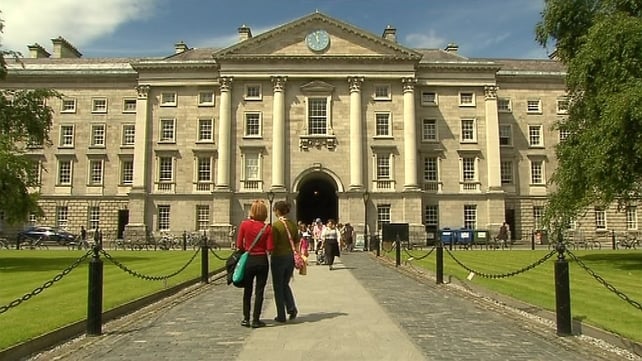
Hundreds of participants from all over Ireland gathered at Trinity College Dublin today for the 10th birthday of Tilda.
Sattie Sharkey said she volunteered herself to be part of the study because she tended to fall.
“It is very important this research has taken place as it will play such a large role in policy and decision-making, and researchers have gained a real insight into the issues facing older people in Ireland,” she said.
“I used to fall regularly in my home. Falls are debilitating. They not only hurt you physically but they take your confidence away too. My falls were due to a tumour in the back of my head and I had to have an operation.”
Living independently?
Ms Sharkey said she enjoyed being interviewed by the Tilda researchers and has more confidence living independently.
“I’d also like to say, I’m younger than the two people who want to be the president of the United States,” she said to laughter and applause from the audience.
Dr Colm O’Reardon, deputy secretary for strategy and policy at the Department of Health, said Tilda’s findings will help to dispel myths about older people and ageing.
“The common portrayal of older people in our society is often that people over 65 have no meaningful contribution to society and it becomes part of the myths about ageing,” he said. “This study will change the assumptions decision-makers will bring when it comes to making policy.”
Dr Graham Love, chief executive of the Health Research Board, said “the time has come to stop HSE-bashing” and to focus on how to improve our health service.
He said the recent RTÉ documentary on the HSE called Keeping Ireland Alive had a positive reaction on social media and from the general public.
“It’s a small turning point in the collective ambition for our health service at a time when collective energies are switched from HSE-bashing to actually defining what ambition we have for our health service here,” said Dr Love.
“I believe that through initiatives like Tilda we can turn our health service into a national treasure.”

Researchers discover there are not just one  but four species of giraffe

DISCOVERY OF GENETIC DIFFERENCES, USING DNA ANALYSIS, COULD BOOST EFFORTS TO SAVE DECLINING POPULATIONS.
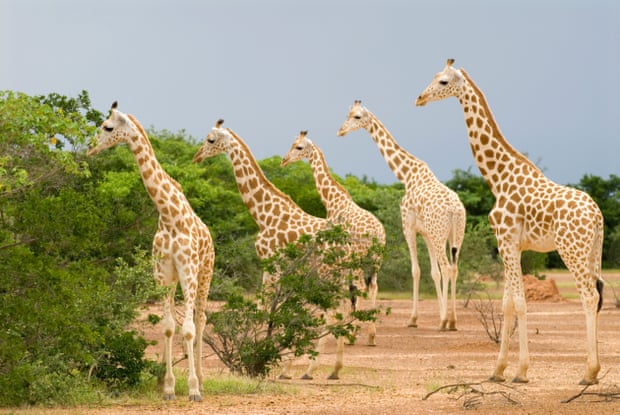

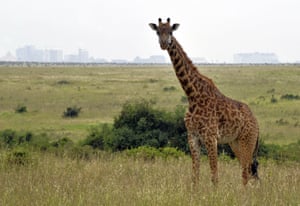
Image result for Researchers discover there are not just one  but four species of giraffe  Image result for Researchers discover there are not just one  but four species of giraffe  A Masai giraffe, one of the four newly recognised species, grazing inside Nairobi national park

FOUR GIRAFFE SPECIES: TOP LEFT: RETICULATED GIRAFFE (GIRAFFA CAMELOPARDALIS RETICULATA), TOP RIGHT: WEST AFRICAN GIRAFFE.

Researchers have discovered there are not just one but four distinct species of giraffe, overturning two centuries of accepted wisdom in a finding that could boost efforts to save the last dwindling populations.
Analysis of DNA evidence from all of the currently recognised nine sub-species found that there is not just one species of giraffe but enough genetic differences to recognise four distinct species. Experts said the differences are as large as those between brown bears and polar bears.
Giraffe have suffered a decline in number from around 150,000 across Africa three decades ago to 100,000 today, as their habitat has been turned over to agriculture. But as a single species the giraffe is currently listed as of least concern on the red list of endangered species, leaving the tallest living animals a relatively low conservation focus compared to rhino and elephant.
“People need to really figure out that giraffes are in danger. There are only 100,000 giraffes left in Africa. We’ll be working closely with governments and big NGOs to put giraffes on the radar,” said Dr Julian Fennessy, lead author of the new study which saw genetic testing in Germany on 190 giraffe.
The four recommended new species are the southern giraffe, with two subspecies, the Angolan giraffe and South African giraffe; the Masai giraffe; the reticulated giraffe; and the northern giraffe including the Kordofan giraffe and west African giraffe as subspecies.
If formally recognised as four separate species, three of those four would suddenly be deemed more seriously threatened by the red list, Fennessay said, which would hopefully catalyse greater efforts to protect them.
A Masai giraffe, one of the four newly recognised species, grazing inside Nairobi national park.
While the southern giraffe was increasing markedly in number, populations in east and central Africa were in trouble, he said.
“It’s all habitat loss, fragmentation and a lot of that is, let’s be honest, linked to human population growth – increasing land for agricultural needs, whether for commercial or for subsistence farming,” he said, speaking from Windhoek, Namibia. “In some of these countries though there is illegal hunting or poaching causing the decline.”
Co-author Axel Janke, a geneticist at the Senckenberg Biodiversity and Climate Research Centre and Goethe University in Germany, said: “This has huge implications for conservation. It’s also significant from an evolutionary aspect: the giraffe is a very young species and we see evolution, becoming species, in real time, happening in front of our eyes.”
Both said they were surprised at the number of genetically distinct species, because the currently recognised nine subspecies are relatively similar-looking. The most obvious differences are in the shape of their patterns and how far they extend, and how many horns the creatures have.
The study also suggested that the four species do not mate with each other in the wild, an unexpected finding given giraffe move far and wide, and have been shown to interbreed in captivity.
The historically accepted definition of one species of giraffe was based on a description in 1758 by the Swedish taxonomist Carl Linnaeus, who examined a Nubian giraffe (now to be considered as a northern giraffe). The new study’s discovery that there are in fact four will not come as a a total surprise to those who study giraffe closely – previous research has suggested some subspecies appeared genetically distinct enough to be considered separate species.
The conclusions of the study, which took five years, will be now be reviewed by the International Union for Conservation of Nature’s specialist group on giraffes.
West African giraffe, a subspecies of northern giraffe, in southern Niger.
In a statement, the IUCN said: “The number of species of giraffes has come in for much discussion and debate in recent years. The findings of this latest study will need to be carefully evaluated, as it could – as the authors note – have considerable implications for their conservation. We know that giraffes, while widely distributed, are declining nearly across their range, with some narrowly distributed populations in serious trouble.
“If the findings of the current study are accepted, then it may well be that some species would be listed in threatened categories on the IUCN red list. This would hopefully flag the need for increased attention on a species that is otherwise normally considered common.”
Fennessy, who is also co-director of the Giraffe Conservation Foundation, said: “I would just hope that as the IUCN reviews this, they look at the fact 200 years ago people looked at giraffe coat patterns from samples sent from Africa and made a decision to call it one species and nine subspecies. And now, using nuclear mitochondrial and genomic DNA, I think more science can help us answer the mystery.”
The new study, Multi-locus Analyses Reveal Four Giraffe Species Instead of One, was published in the journal Current Biology on Thursday.   

Wednesday, September 7, 2016

Donie's Ireland daily news BLOG update

Volkswagen company representatives walk out of Mayo court emissions case

Image result for Volkswagen company representatives walk out of Mayo court emissions case  Image result for Judge Mary Devins ruled   Image result for Volkswagen company representatives walk out of Mayo court emissions case

LEGAL REPRESENTATIVES FOR VOLKSWAGEN WALKED OUT OF COURT IN MAYO TODAY AFTER LABELLING AN ONGOING COURT CASE REGARDING EMISSIONS AS “ENTIRELY INAPPROPRIATE AND UNFAIR”.

Barrister Paul Fogarty and two instructing solicitors from A&L Goodbody walked out of Castlebar District Court after Judge Mary Devins ruled that she would continue with the case.
Earlier Mr Fogarty told Judge Devins that his clients, Volkswagen Group Ireland and Volkswagen AG had obtained legal advice that the court had no jurisdiction to take the case.
He said that as a result representatives were not present in court and the defence would be calling no witnesses.
Mr Fogarty said his clients also took the view that there were serious issues in relation to orders previously made by the court in the case and raised concerns about the manner in which evidence would be given by witnesses for the claimant. He said the manner of the case was “highly unconventional”.
He informed Judge Devins that the respondents would be seeking a judicial review in the matter.
Judge Devins said the case would continue “without Hamlet” and later referred to the actions of the legal team as a “spectacular walk out”
The case, before Castlebar District Court is being taken by mother of three Eithne Higgins Croghan, Boyle, Co Roscommon.
She is seeking compensation after Volkswagen admitted cheating on emissions tests last year.
The case will deal with whether there was an issue with carbon dioxide (CO2) and / or oxides of nitrogen (NOx) emissions on the vehicle in question.
Ms Higgins’ claim states that there may be implications in respect to the payment of Vehicle Registration Tax or road tax as a result of incorrect emissions data.
The court heard that after the emission revelations emerged she attempted to trade in her car at three different garages, each time unsuccessfully.
Evan O’Dwyer, representing Ms Higgins criticised the respondents and their legal representation, stating that he and his client had been ‘bullied’. He also criticised the manner in which the respondents had treated the court by arriving late on one occasion, failure to make a witness available, failure to provide adequate data and the failure of the respondents to attend court. He also claimed he had received letters from A&L Goodbody threatening him with contempt while Ms Higgins had received three letters stating the company would pursue her for costs if she proceeded with the case.
“There has been a system of bullying going on in this case from the beginning. Bullying of Ms Higgins, myself and laterally this court. Attempts have been made to goad this court so that a judicial review could be sought.
“They are trying to set-up this court for a judicial review,” he added.
He added that the quality of information provided by Volkswagen “belittles” the court.
A statement from Volkswagen Group Ireland’s technical services manager Stephen McDonnell was read into the record. Mr McDonnell did not attend despite having been directed by the judge to do so.
His statement stressed that CO2 emissions were not linked to the NOx emissions.
However, this was dismissed by emissions expert Horace Calvert Stinson who said it didn’t stack up with theory, practice or experience.
He stressed the issue of CO2 and NOx could not be separated adding they were “intimately related” and were completely interdependent on each other.
Dr Calvert Stinson said the data provided by Volkswagen was not sufficient in this case and was not fit for purpose.
This was also the view of Michael Lehmann who was involved in the Volkswagen litigation in the US. He said the level of information provided to the court fell well below the data provided for similar cases in the US adding that there was a “complete absence of hard data”.The case continues tomorrow Wednesday.

Bruton says Irish universities must agree to reform if they want more money

EDUCATION MINISTER RESPONDS TO COLLEGES’ DEMANDS AFTER FALL IN RANKINGS

Image result for Bruton says universities must agree to reform if they want more money  Image result for irish universities world rankings  Image result for irish universities world rankings

RICHARD BRUTON: HE DISMISSED SUGGESTIONS BY SOME UNIVERSITY LEADERS THAT A PROPORTION OF CORPORATION TAX SHOULD BE SET ASIDE EXCLUSIVELY FOR THE THIRD-LEVEL SECTOR

Universities must agree to a series of reforms in return for any increases in funding, Minister for Education Richard Bruton has said.
Mr Bruton conceded that universities were under funding pressure following the publication of global rankings that saw all but one of the State’s universities fall, but said “virtually every part of the public service” was experiencing similar problems.
He was “absolutely” considering reforms in return for additional funding, but also suggested that any such increases – which university heads say are vital to sustain the system – would only come about as part of a longer-term plan.
“I made it absolutely clear that any new money, whether it comes from students, employers or, indeed, it comes from the State, it has to be locked into policy tools that deliver the priorities that people would expect,” Mr Bruton said in response to calls from heads of universities and third-level teachers for more funding for their institutions.

SKILLS GAPS

“That means meeting the skills gaps and the requirements of the war for talent in the enterprise world, meeting our needs to bring through from areas of disadvantage and disability and seeing them participate to the full, and showing that we can drive innovation to high standards.
“So I would be very keen to see a reform in the funding mechanism as well as the amount of funding so that we can leverage more impact from our higher education system.”
Heads of universities said the fall in the global rankings of Irish universities was the consequence of a decade of cutbacks to the sector, and third-level representatives warned of a crisis in the colleges caused by growing student numbers and a lack of investment.
Trinity is the only Irish university ranked in the top 100 international universities, and it and all other universities here except NUI Galway are rated lower than last year in this year’s world university rankings.

CRISIS

However, Mr Bruton avoided conceding there was a crisis in the sector, and spoke of the necessity for a longer-term plan for reforming the funding of higher education.
He dismissed suggestions by some university leaders yesterday that a proportion of corporation tax should be set aside exclusively for the third-level sector.
Two months ago a major report into the funding of higher education by former trade union leader Peter Cassells said the sector needed a long-term funding solution, and laid out options, including increased State investment and a student-loan system.
Mr Bruton has not yet indicated his preferences, but said he wanted to build a political consensus on the issue. He said the report would soon be discussed by the Oireachtas education committee.
However, he also indicated that higher education was only one of a number of sectors that would be seeking priority in the forthcoming budget, citing especially pressures in housing and health.

Emergency treatment for severe low blood glucose is recalled by drugs watchdog

Image result for Emergency treatment for severe low blood glucose is recalled by drugs watchdog  Image result for Emergency treatment for severe low blood glucose is recalled by drugs watchdog  Image result for Emergency treatment for severe low blood glucose is recalled by drugs watchdog

A RECALL OF CERTAIN BATCHES OF GLUCAGEN HYPOKITS, USED FOR THE EMERGENCY TREATMENT OF SEVERE LOW BLOOD GLUCOSE, WAS ORDERED BY THE COUNTRY’S DRUGS’ WATCHDOG TODAY.

The reason for the recall is that in a small number of units (0.006% approx.) the syringe needle has become detached from the syringe. Units with a detached needle cannot be used to prepare the medicine for administration.
The Health Products Regulatory Authority (HPRA) said it is  advising patients and carers to check the batch number on any GlucaGen Hypokit units they may have at home or in their possession and to return any of the affected product to their pharmacist where a replacement will be provided.
GlucaGen HypoKit is packaged with a syringe containing sterile water for injection which is used to prepare the medicine for use.
They are used in emergency situations to treat severe hypoglycaemia in children and adults with diabetes mellitus.
While a very small number of units are likely to be impacted, a delay in emergency treatment could have significant health consequences and, therefore, units from affected batches should not be used and should be returned to the dispensing pharmacy where a replacement will be provided.
Two batches of Novo Nordisk GlucaGen HypoKit and two batches of PCO Manufacturing GlucaGen Hypokit are being recalled in Ireland and this represents a total of 8,064 units.
The affected batch numbers, which are printed on the product label along with an expiry date, are as follows:
Patients and carers who have a GlucaGen Hypokit with a batch number which is not mentioned above, do not need to return the unit to their pharmacy.
The HPRA will closely monitor the recall and provide further updates as necessary on http://www.hpra.ie
How to Identify the Batch Numbers:- Novo Nordisk GlucaGen HypoKits:
  1. Firstly check if you have a GlucaGen HypoKit which has a marketing authorisation no. PA218/31/2.
  2. If the GlucaGen HypoKit has this authorisation number, then next check the batch number to confirm if it is one of the batches being recalled. The batch number can be found on the part of the label highlighted by the red box below.
  3. If the batch number is FS6X249 or FS6X592, then please contact your pharmacist to return the unit and to receive a replacement unit.
PCO Manufacturing GlucaGen HypoKits:
  1. Firstly, check if you have a GlucaGen HypoKit which has a marketing authorisation no. PPA465/331/1.
  2. If the GlucaGen HypoKit has this authorisation number, then next check the batch number to confirm if it is one of the batches being recalled. The batch number (which is a combination of BN and PC numbers) can be found on the parts of the label highlighted by the red boxes below.
  3. If the batch number is BN: FS6X718 / PC: 206 or BN: FS6X718 / PC: 208, then please contact your pharmacist to return the unit and receive a replacement unit.

New Head of Environmental Science at IT Sligo

Image result for New Head of Environmental Science at IT Sligo   Image result for New Head of Environmental Science at IT Sligo

DR FRANCES LUCY (PICTURED) HAS BEEN APPOINTED AS THE NEW HEAD OF DEPARTMENT OF ENVIRONMENTAL SCIENCE AT INSTITUTE OF TECHNOLOGY, SLIGO.

She succeeds Dr Billy Fitzgerald who has recently retired from the role.
Dr Lucy is a native of Cork, and has been living in Drumkeerin, County Leitrim since she first joined the Institute in 1992.
During that time she has immersed herself in a wide range of teaching, course development and research in the Dept. of Environmental Science.
She is also Director of the Institute’s Centre for Environmental Research Innovation and Sustainability (CERIS), and has over twenty years experience in the areas of invasive alien species (IAS) management and freshwater ecology.
She carried out her PhD while working in the institute, and her topic area was on the dynamics of zebra mussel populations in Lough Key.
“I am very proud to be appointed as Head of the Department of Environmental Science,” said Dr Lucy. “Our students are the future guardians of the environment and we work hard to give them the best student experience that is achievable.
“At IT Sligo, they get the education, skills and work experience they need to walk straight into the workplace. There are extremely good job prospects for graduates from our environmental, occupational safety and health and archaeology courses,” she said.
Dr Lucy is currently the lead Principal Investigator for a new three-year Irish EPA research project on ‘Prevention, Control and Eradication of Invasive Alien Species’ (2016-2019).
Beyond her IT Sligo roles, she is chairperson of the Environmental Sciences Association of Ireland and a Board Member of the Irish state agency, Inland Fisheries Ireland.

New Scientific study reveals changes to our taste buds.

Image result for New Scientific study reveals changes to our taste buds.  Image result for New Scientific study reveals changes to our taste buds.  Image result for New Scientific study reveals changes to our taste buds.

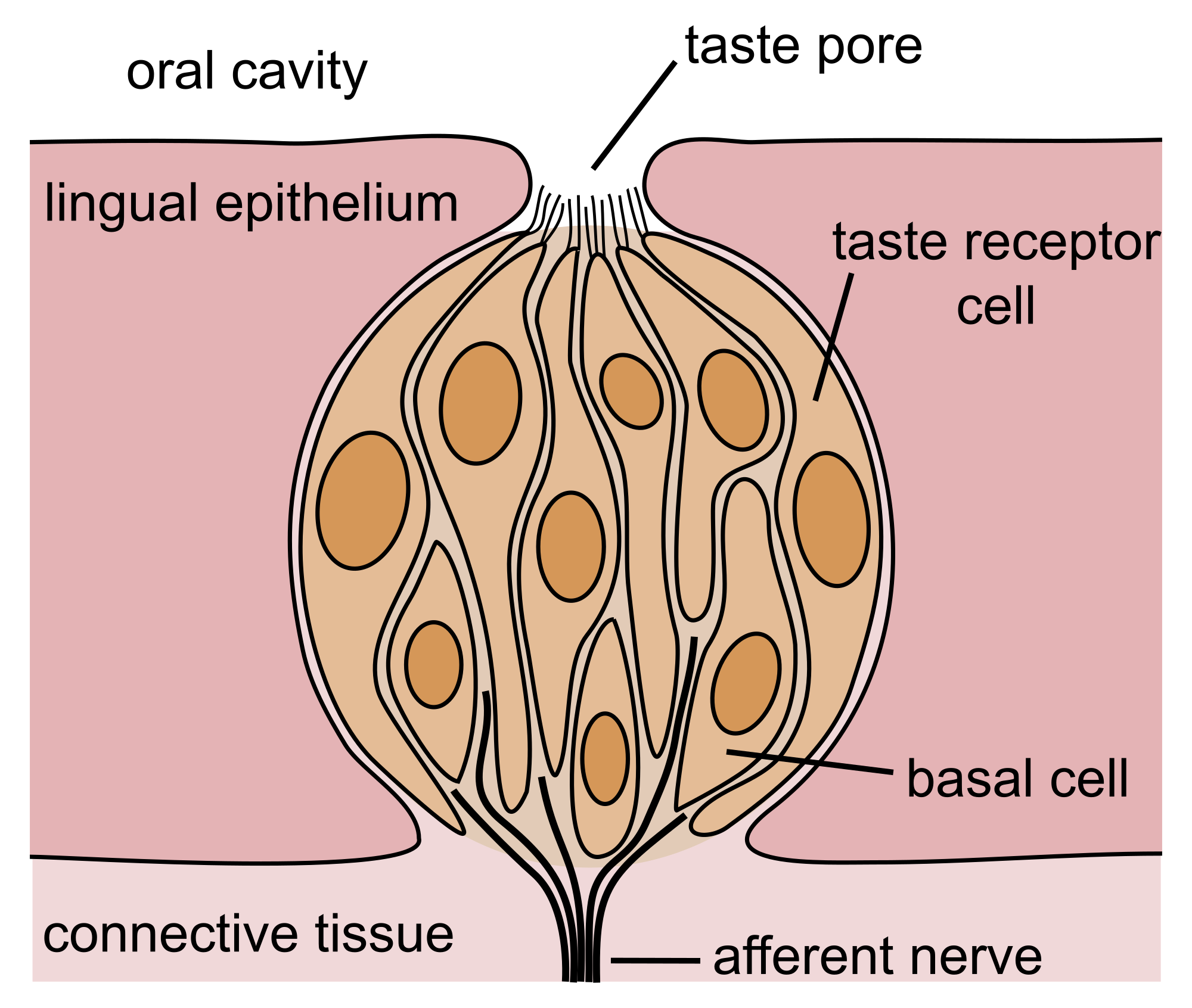
Researchers at Oregon State University in Corvallis conducted a study published in the New Scientist that suggests foods rich in carbohydrates have a uniquely distinct taste, revealing that “starchy” could be a noteworthy taste in its own right. Researchers found that the human taste palette can distinguish carbohydrates in certain foods like pasta, potato and bread.
“Every culture has a major source of complex carbohydrates. The idea that we can’t taste what we’re eating doesn’t make sense,” Juyun Lim at Oregon State University said, according to the New Scientist.
The team gave volunteers a range of different carbohydrate solutions during the experiment. “They were able to detect a starch-like taste in solutions that contained long or shorter carbohydrate chains. They called the taste ‘starchy,'” said Lim. “Among the participants, Asians indicated a “rice-like” flavor whereas Caucasians described the taste as being “bread like” or “pasta like.”
“Like eating flour,” she added. Researchers have not yet identified the taste buds that specifically differentiate between starchy and non-starchy foods but studies are ongoing. The five basic tastes – sweet, sour, bitter and salty – might be making room for another one “umani,” a savory taste that was also identified during the study.       

Tuesday, September 6, 2016

Donie's Ireland daily news BLOG update

Irish State to shut controversial ‘vulture fund’ tax loopholes

USE OF FUNDS’ CHARITABLE STATUS TO BE TACKLED IN FINANCE BILL, DEPARTMENT VOWS

Image result for Irish State to shut controversial ‘vulture fund’ tax loopholes  Image result for Michael McGrath: the Fianna Fáil finance spokesman

MICHAEL MCGRATH: THE FIANNA FÁIL FINANCE SPOKESMAN SAYS HE WROTE TO THE MINISTER AND THE CHAIRMAN OF THE REVENUE COMMISSIONERS, URGING THEM TO CLOSE THE LOOPHOLE.

The Government has committed to close off a number of controversial tax loopholes as part of a drive to ensure tax transparency and fairness in the wake of the Apple tax ruling.
The Department of Finance confirmed yesterday that a loophole in legislation dating to 1997 that has allowed vulture funds avoid tax by gaining charitable status will be closed off in the Finance Bill, to be published after the budget.
Provisions of the legislation, especially section 110 of the Finance Act 1997, have allowed such funds – which have acquired billions of euro of distressed debt and properties – to register as charities and minimise their tax bills to negligible amounts.
Their use of the legislation in this manner has also been examined by the Charities Regulator.
A spokesman for the Department of Finance said yesterday that the change, as reported by the Sunday Business Post, is being considered in the context of the Finance Act.
Fianna Fáil finance spokesman Michael McGrath said yesterday that he wrote to Michael Noonan and the chairman of the Revenue Commissioners last month, urging them to close the loophole.
“I wrote that the use of aggressive tax avoidance by the funds did not seem to be consistent with section 110..
“I would hope the Government is minded to shut it down.
Introducing legislation option?
“I also said that if Revenue was of the opinion it did not have existing powers to deal with this, legislation should be brought forward and that Fianna Fáil would be happy to support it,” he said.
The department is now examining the legislative option as a means of addressing the loophole.
It forms part of a broader move by the Government to repair Ireland’s reputation internationally after it was damaged by a series of controversies over its tax structure, not least by the European Commission ruling on Apple. In addition to a review of the corporation tax set-up, the Government has made a commitment to achieve tax justice, a key demand of Independent Minister Katherine Zappone.
An important concession achieved by the Minister for Children was that any tax opinion would be valid for a maximum of five years. This would represent a significant change.
Ministers from Fine Gael and from the Independent ranks agreed yesterday that internal communications between the dominant party and its Coalition partners needed to be put on a more structured basis, rather than the slightly informal nature of operations until now.
The Independent Alliance has appointed experienced lawyer Tony Williams as a special adviser and programme manager, and he will undertake that liaison work within government. The group is also expected to appoint a press officer this month to represent its views and position in government.
A Fine Gael Minister said yesterday the “mood music” this week was a measurable improvement from the tense exchanges that took place during the vote on the private members’ motion on fatal foetal abnormalities.

APPLE RULING

Sinn Féin finance spokesman Pearse Doherty confirmed the party had tabled an amendment to the Government motion on its appeal of the Apple ruling, to be heard in the Dáil on Wednesday. The amendment calls on the Government to spend the €13 billion on essential services.
However, with support from Fianna Fáil and from Labour, the Government is expected to have a comfortable majority in the Dáil.

CSO to revise property price index to include cash purchases

MOVE COMES AFTER CRITICISM THAT ITS MORTGAGE DATA-BASED INDEX ONLY COVERS 50% OF MARKET

Image result for CSO to revise property price index to include cash purchases  Image result for CSO to revise property price index to include cash purchases

THE NEW INDEX IS EXPECTED TO BE PUBLISHED BY THE END OF SEPTEMBER. 

The Central Statistics Office has responded to criticism of how it calculates property price trends by substantially revising its price index, which is now set to include cash purchases for the first time.
The new index, which tracks house prices across the country, had been due to launch this week but has now been postponed and is expected to be published by the end of September.
Including data on cash purchases may lead to a substantial revision of the index. The most recent index for example showed that prices across the country rose by 6.6 per cent in the year to June, but once it is reconstituted, this figure may change.
Since its launch in 2011, the index has been based on mortgage data from lenders only but now it will be based on stamp duty returns. Given that cash buyers accounted for about 47 per cent of all transactions in the first six months of the year, and more than 50 per cent in previous years, the index has to date only reflected price trends in about half of the market.

THE NEW INDEX

The new index will replace the existing monthly Residential Property Price Index and will be based on stamp duty returns made to the Revenue Commissioners, which is the same data source as the Residential Property Price Register (RPPR), maintained by the Property Services Regulatory Authority.
It means that it will cover both cash and mortgage-based transactions for the first time, as well as all market purchases of houses and apartments. When the index was first launched in 2011, e-stamping had only been introduced, and the CSO was unable to access Revenue data, hence the reliance on mortgage statistics.
The CSO said the move represents a “significant methodological improvement” over the existing index, as in addition to the stamp duty information, data from the RPPR will be matched with Building Energy Rating certification data provided by the Sustainable Energy Authority of Ireland, and locational characteristics from the GeoDirectory and census 2011 small area population statistics.
The new index will also include regional indices, giving a breakdown of price and transactions trends in specific areas, such as Dublin city and Dún Laoghaire–Rathdown, as well as statistics drawn from Eircodes.
It will also include details on the characteristics of sellers and buyers.
One omission in the new index is data on institutional buyers, such as the likes of real estate investment trusts, and it will also exclude non-market transactions.

Some 2,137 young jobseekers in Donegal as Youth Council calls for moves to reduce figure

Image result for Some 2,137 young jobseekers in Donegal as Youth Council calls for moves to reduce figure   Image result for young jobseekers in Donegal

THE NATIONAL YOUTH COUNCIL OF IRELAND (NYCI) HAS CALLED FOR MEASURES TO REDUCE YOUTH UNEMPLOYMENT IN COUNTY DONEGAL AND NATIONWIDE.

Data from the Department of Social Protection shows that the number of young people in Donegal in receipt of Jobseeker’s Allowance or Benefit is 2,137.
“This number is still far too high and investment to tackle the continued high level of youth unemployment are needed,” according to James Doorley, deputy director at the National Youth Council of Ireland (NYCI), which represents youth organisations working with over 380,000 young people nationwide.
As part of its pre-budget submission published recently, the NYCI is calling for an investment of €30m in a renewed Youth Guarantee scheme and asking Government to incentivise education, training and work experience for young people by reversing the cuts in payments to young people on these schemes. Mr Doorley said:
“While youth unemployment has declined from the crisis levels of the 2009 to 2013 period, the most recent figures indicate that we have almost 40,000** young people on the live register – of whom 16,000*** have been on the register for one year or more. In Donegal alone there are 2137 young people in receipt of Jobseekers payments. We need action now to support these young people on the path to employment.”

The cleanest (and the most littered) parts of Ireland

 Image result for The cleanest (and the most littered) parts of Ireland   litter  Image result for The cleanest (and the most littered) parts of Ireland

ILLEGAL DUMPING NEAR RATHFARNHAM IN DUBLIN EARLIER THIS YEAR.

A survey has revealed the cleanest and most littered areas in the country.
Only 2 of 25 towns surveyed were deemed littered, but 7 of the bottom 8 places on the list were city areas in Dublin, Cork and Galway.
Kilkenny was named Ireland’s cleanest area in the survey by Irish Business Against Litter, while Farranree in Cork was Ireland’s only ‘litter blackspot’.
The previously littered towns of Athlone, Portlaoise and Ennis all improved to ‘Clean to European Norms’, while Maynooth shot up 19 places in the rankings.
Dublin city centre had its best ever showing, with Grafton Street, Temple Bar and Christchurch receiving top marks.
“Dublin City Council has done a fine job in presenting the capital at its best in what was an important summer for tourism,” says IBAL’s Conor Horgan. “This job was complemented by the roads around Dublin Airport being exceptionally clean. At the same time Ballymun and North Inner City were littered, so we’re not near to solving the capital’s litter problem yet.”
Galvone in Limerick city and Mahon in Cork city were also found to be littered.
These survey findings bear out our contention that while our city centres are generally well maintained, disadvantaged areas continue to be the source of much of the litter in our country,” continues Horgan.
According to IBAL, litter is a symptom of social neglect, and councils need to look at a community-wide response targeting those areas where the problem is at its worst.
“Work at keeping these areas clean for six to twelve months and they are likely to stay clean, and the community can have pride in their neighbourhood, “ says Horgan. “That does cost money initially, but the payback will be significant.”
The survey also found that while littering had decreased, dumping is on the rise; IBAL are concerned that mandatory pay-by-weight bin charges, due to be introduced next year, could encourage dumping.

Red kite chicks bred in Fingal for first time in 100 years

FLEDGLINGS IN THE AIR AFTER EFFORTS TO REINTRODUCE SPECIES INITIALLY BESET BY PROBLEMS.

Image result for Red kite chicks bred in Fingal for first time in 100 years  Red-Kite-2-web   Image result for red kite in flight

THE SUCCESSFUL FINGAL FLEDGLING COMES AFTER GET, ALONG WITH THE NATIONAL PARKS AND WILDLIFE SERVICE AND THE WELSH KITE TRUST, BROUGHT BACK RED KITES TO IRELAND BETWEEN 2007 AND 2011.

Three newly fledged red kite chicks are soaring over Dublin after a successful breeding programme.
Years of patient efforts to reintroduce red kites into Ireland have resulted in three chicks being fledged in two nests in Fingal this year, the Golden Eagle Trust (GET) said.
It is good news for the kites, which last bred in north Co Dublin more than 100 years ago, but bad news for rats and crows which are among the birds’ favourite fodder.
Efforts to reintroduce the species in Ireland in recent years were initially beset by problems due to the use of second generation rodenticides, leading to a campaign for the responsible use of such chemicals.
The successful Fingal fledgling comes after GET, along with the National Parks and Wildlife Service and the Welsh Kite Trust, brought back red kites to Ireland between 2007 and 2011.
Strategic locations
The Fingal Red Kite release programme was part of the final year of the project and the final batch of 53 red kites was released in 2011 at various strategic locations in Fingal.
Dr Marc Ruddock of GET said the confirmation of the three chicks in 2016 is “hugely rewarding” and means there are now six established pairs of kites.
Hans Visser, biodiversity officer at Fingal Co Council, said this was a “pretty amazing” result as red kites were last breeding in north Co Dublin more than a century ago.
The presence of the species here dates back much earlier. Numerous red kite bones were uncovered from excavations of the 11th century Wood Quay site in Dublin, and were also noted in the Phoenix Park in the 14th century.