Pages

Showing posts with label healthy-living. Show all posts

Monday, February 20, 2017

Donie's Ireland daily news BLOG update

Varadkar and Coveney in dogfight for power as gap closes on successor to Enda

Image result for Varadkar and Coveney in dogfight for power as gap closes on successor to Enda Image result for Varadkar and Coveney in dogfight for power as gap closes on successor to Enda OR Image result for Varadkar and Coveney in dogfight for power as gap closes on successor to Enda

The likely lads to succeed Enda Kenny above?

Simon Coveney has dramatically narrowed rival Leo Varadkar’s lead as the public’s favourite to succeed Enda Kenny yes but there is also clear evidence that a third candidate could emerge to win a Fine Gael leadership contest, according to a Sunday Independent/Kantar Millward Brown opinion poll.

Social Protection Minister Mr Varadkar (27%) has a slight lead over Housing Minister Mr Coveney (23%), but almost a quarter of all voters favour somebody else (16%) or neither (8%) of the two front-runners to lead Fine Gael, according to the nationwide poll.
This is the first time that those polled were offered a choice of just two candidates to succeed Taoiseach and Fine Gael leader Mr Kenny.
Mr Varadkar (37%) extends his lead over Mr Coveney (28%) among Fine Gael supporters, according to the opinion poll, but again almost one-quarter of party supporters favour somebody else (15%), or neither front-runner (7%), should Mr Kenny decide to step down.
Yesterday, Mr Varadkar increased the pressure on Mr Kenny to make his continued leadership intentions known, but the Taoiseach told the Sunday Independent he intended to “focus on the job in hand” which, his spokesman said, he would carry out with “continued dedication and dignity”.
But today’s opinion poll contains further findings which will add to the mounting pressure on Mr Kenny to resign. The state of the parties shows Fianna Fail (33%) — up six points since a comparable poll in October — has opened up an eight-point lead over Fine Gael (25%), down four points.
Fianna Fail is extending its lead — it is now at its highest point since 2008 — at a time when there has been a marked increase in consumer confidence.
The poll finds 23% believe they are better off than they were last year,  a seven-point increase, and 21pc feel worse off, a nine-point decrease, while 27% feel they will be better off next year, a seven point increase, and 14% feel they will be worse off, a nine- point decrease.
The poll also shows Sinn Fein (20%) unchanged, Labour (6%) down two points, the Greens (2pc) unchanged and Independents/others (14%) down one point.
Mr Varadkar told the Sunday Independent: “Everyone is waiting to hear from the Taoiseach. The current situation is distracting and destabilising for the Government, the party and the country. I have full confidence in the Taoiseach to settle it.”
Simon Coveney and his wife Ruth at the wedding Photo: Gerry Mooney
However, Mr Coveney said the Taoiseach should not be forced to “set a date” for his departure.
“Enda is still the leader of our party – he has been for 15 years. I think he deserves the respect to be given time and space to make any decisions he thinks he needs to make.”
Today’s poll also finds Mr Kenny’s satisfaction rating (27%) down just two points and dissatisfaction rating (62%) up three points since October. Furthermore, satisfaction with the Government (27%), down four points, and dissatisfaction (64%), up two points, have not significantly changed despite recent political turmoil.
The poll, among a representative sample of 960, was carried out between February 6 and 16 and has a margin of error of 3.2%.
Fianna Fail leader Micheal Martin (44%), up one point, remains comfortably the most popular party leader with an unchanged dissatisfaction rating of 40%.
However, only a slim majority (53%), down one point, want Mr Kenny to resign as Fine Gael leader while 25%, up one point, want him to remain. Fascinatingly, a majority (57%) of Fine Gael supporters say Mr Kenny should remain leader, a finding which may encourage him to resist pressure to resign and choose the time of his own departure. Furthermore, 73% of Fine Gael supporters are satisfied with his leadership.
Also interestingly, of those who believe Mr Kenny should remain, more opt for Mr Coveney (29%) than Mr Varadkar (27%c) as his successor, a finding which indicates that the Housing Minister is in a position to win the backing of more of Mr Kenny’s supporters in a leadership contest.
Of those who believe Mr Kenny should resign, 31% would support Mr Varadkar and 28% would support Mr Coveney.
These findings show that while Mr Varadkar must be the favourite to succeed Mr Kenny, a Fine Gael leadership contest would be far from a foregone conclusion.
Yesterday, Foreign Affairs Minister Charlie Flanagan said Fine Gael needed to “keep calm and measured over the next few months” or the party would “catapult ourselves into a messy general election that will play into the hands of Sinn Fein and the loony left”.
Today’s opinion poll, however, finds that support for Independents and smaller parties has almost halved since the General Election.
Furthermore, when asked which party or political grouping they would not consider voting for in the next election, the poll finds that the Socialist Party (22%), up seven points; AAA-PBP (22%), up four points; Greens (20%), up three points; and Social Democrats (14%), up four points, appear to be falling out of favour with voters, while 36%, down two points, say they would not consider voting for Sinn Fein.

Tribalism is still a problem in Northern Ireland politics after 20 years of peace

Image result for Tribalism is still a problem in Northern Ireland politics after 20 years of peace  Image result for Tribalism is still a problem in Northern Ireland politics after 20 years of peace

It is no great surprise to see that Northern Ireland politics are still as polarised as ever nearly two decades after the Good Friday Agreement was signed in a wave of optimism that society here could be changed forever.

It is no great surprise to see that Northern Ireland politics are still as polarised as ever nearly two decades after the Good Friday Agreement was signed in a wave of optimism that society here could be changed forever.
The survey from the Electoral Reform Society shows that only a tiny proportion of unionists or nationalists would ever contemplate voting first for a party outside their own bloc.
And even though the STV system allows voters to give their preferences right through the list for their constituency, few Catholics or Protestants would put their mark in the box of an opposing party.
Around one-third of all preferences were for parties outside the big four – DUP, Sinn Fein, SDLP and UUP – but that does not give a corresponding return of Assembly Members. The centre ground still remains a minority.
Little wonder that UUP leader Mike Nesbitt received such a cold shoulder from even his own party when he said he would vote for a SDLP candidate as a second preference in the forthcoming election. His gesture may be the ideal way to conduct politics, but obviously tribal considerations trump real cross-party co-operation.
So where did it all go wrong after the Good Friday Agreement? The hope for a brighter future was fuelled first by the ending of conflict, but the guerrilla war conducted by the DUP and Sinn Fein against the original power-sharing partners, the UUP and SDLP, ensured that devolution never gained the momentum it should have.
The decision eventually by the DUP and Sinn Fein to share power offered new hope, but this has dwindled over the last decade as the parties both retreated towards the trenches in a welter of bad feeling and even more virulent language.
We are now a fortnight away from a new election, but the prospect of an early return to devolved government seems remote.
The inevitable conclusion – unless there is an unprecedented sea-change in voting habits – is that the majority of those who go to the polls are content to keep to their tribal silos no matter what the implications.
The one glimmer of hope is that a significant number of the 45% of voters who didn’t bother going to the polls last May – either through apathy or weariness -turn out this time and change voting patterns to register their displeasure with the status quo. History is not encouraging.

An Irish mum shares a heart-breaking video of her 21-year-old scoliosis daughter in agonising pain?

A KILDARE MUM TINA O’KELLY HAS SHARED A VIDEO OF HER 21-YEAR-OLD DAUGHTER COLLEEN IN AGONY AND PLEADED WITH HEALTH MINISTER SIMON HARRIS FOR A SURGERY DATE.

Colleen O’Kelly has Joubert Syndrome and has now been waiting for an appointment for two years just to get on the list for scoliosis surgery.
Her mum Tina says that Colleen’s condition will worsen, unless she is granted surgery. The rate of curvature of her daughter’s spine is at 97%, and apart from causing Colleen to live with agonising chronic pain, it significantly increases her risk of lung collapse, pneumonia, and respiratory infections.
Tina spoke to Her Family about the heart-breaking situation,
“I wish that the HSE management and the government would stop blaming each other and just get together to get the root of this mess.
The HSE says it’s caused by a lack of money and the government say that it’s not a lack of money that’s the problem, but rather mismanagement of it.
While they are busy squabbling with each other nothing is getting done.”
The Naas mum explained that her 21-year-old daughter has already undergone a kidney transplant but unfortunately Colleen still has no date for surgery to correct the painful curvature of her spine,
“When Colleen turned 18 she had to be transferred from the care of Crumlin to Tallaght hospital as an adult patient. Her doctor in Crumlin essentially had to write a letter referring her to himself – from one of his patient lists to another.
She has waited two years just to get on another waiting list, she has been on the surgery waiting list since last August. The secretary said she’d ask the doctor for a 7th of March listing but I have heard nothing.”
Tina told us that Colleen is a fighter who has been through so much but has managed to keep a smile on her face,
“She is normally such a happy, happy person. She has flown through her transplant…through everything…with a smile on her face. That’s why it’s so heart-breaking to see her suffering like this now. She doesn’t have to suffer like this. This is avoidable.”
Tina says that she agonised over sharing a video of her daughter crying in pain, but she wants people to see the completely avoidable reality that they live with on a daily basis,
“Everyone that knows Colleen knows how amazingly happy she is. Lately her scoliosis has really been causing awful problems for her and it’s heart-breaking. She has no date for surgery. We have no idea when it will be.
This is the reality of living with this condition. It’s getting worse and compromising her health that we have fought so hard for all her life. It’s compromising her kidney transplant.
We wait every day for word from Tallaght.
We want her pain to end – she’s been through enough – and call on Simon Harris to fix this. ”

Take a minute to boost your fitness the easy way & it works

ROSE COSTELLO LOOKS AT THE QUICKEST AND SIMPLEST WAY TO GET FITTER?

Image result for Take a minute to boost your fitness the easy way & it works  Related image  Image result for Take a minute to boost your fitness the easy way & it works
If you think that running for the bus is a waste of time, think again. Even if you don’t catch that bus, you will be doing a lot more for your fitness than you might realise. The latest research shows that taking exercise in short bursts could be just what the doctor ordered.
It’s known as high-intensity interval training (Hiit) and it is now part of any fitness instructor’s offering. Even those who can’t be bothered to go to a gym or who don’t have the time can benefit.
High-intensity training means really pushing yourself for a short amount of time, resting, then pushing yourself again. What’s shocking is how little time it can take to make a difference to your fitness.
A report published in the PLOS One journal last year followed two groups over 12 weeks: one spent just 10 minutes on training that included intense intervals that added up to one minute; the second group worked out at a moderate, even pace for 45 minutes. The surprise is that the two groups saw similar improvements in health. There are a number of other studies showing equally encouraging results.
Claire Mc Glynn, a competitive weightlifter and personal trainer at cmgfit.com in Dublin, loves to use Hiit and says it is the best and quickest way to achieve positive results in your physical and mental health. “It’s very simple really – everyone knows that when you put 100 per cent of effort into something, you get the best results and there is no exception when it comes to exercise.”
Level of intensity?
Mc Glynn points out that she can do the same Hiit routine as a beginner, but if they both do it at their top level of intensity, they both benefit dramatically. There is no need for modification of a routine for beginners. They key is to feel that you are pushing past your own comfort.
They might curse me for asking them to do it,” she says, “but once they’re doing it, the adrenaline kicks in and it’s just a matter of working through the process. Afterwards, endorphins – happy hormones – have been released and they’re tired, yet contented and have an air of accomplishment, and sometimes surprise at what they have been able to achieve.”
The 29-year-old runs hardcore classes in CrossFit353, which involves using heavy weights or pushing around massive tyres for fun. But she also teaches members of the Retired Teachers’ Association of Ireland, who are between 50 and 70.
“Their progress has been unbelievable. Many started with me two years ago and now they are blitzing sessions of many, many squats, lunges, push-ups, plank holds for up to three minutes and so on. Their mobility, strength, fitness, self-belief and confidence has increased tenfold.”
Hiit also boosts your metabolism, ie the rate at which you burn calories, for hours afterwards.
No class needed?
Good form is key on whatever exercise you are doing, she says. “There is no point in repping out 100 squats if your back is rounded and knees are caving in, you’ll just do more harm than good.”
You don’t have to join a class to experience the benefit, however. These are principles you can put into practice every day. This doesn’t mean you should give up on beach walks, rather that you should run after that bus with abandon, for a minute anyway. And regardless of whether you catch it or not, you will have done yourself some good.
The World Health Organisation advises adults do at least 150 minutes of moderate-intensity aerobic physical activity a week or at least 75 minutes of vigorous activity. Incorporating Hiit doesn’t mean slacking off, simply realising that a few sharp bursts can be valuable too.
If you cannot exercise most days, but try to get out at the weekend, take heart. A report last month in the JAMA Internal Medicinejournal shows that “weekend warriors”, who did all their exercise on one or two days of the week, were found to lower their risk of dying from cardiovascular disease by 41 per cent and cancer by 18 per cent, compared with the inactive. Even those who didn’t manage to get the 150 minutes of activity advised by the WHO reduced their risk of early death by one-third.
Push yourself
For those not exercising now, walking quickly can count as “high-intensity” if you push yourself. Even a brisk 20-minute daily walk could reduce your risk of early death, according to research published in the American Journal of Clinical Exercise in 2015. The study of more than 334,000 Europeans found that twice as many deaths may be attributable to a lack of physical activity compared with the number attributable to obesity, but that a modest increase in physical activity could have significant health benefits.
An earlier study in the Lancet in 2012 said that inactivity was killing about as many people as smoking.
If you have been following this series, you should be eating a pretty balanced diet that gives you more energy. Put that energy to good use by adding in some extra exercise – or even just some exercise.
An effective way?
The maxim still holds that you cannot outrun a bad diet, but to be healthy you need to do some exercise too. Using the principles of high-intensity interval training is an easy and effective way to achieve results without putting in too much effort.
Ashley Borden of the Body Foundation in California, who has trained actor Ryan Gosling, says she uses Hiit training because it is efficient, burns fat and builds muscle. There is no need to have any fancy equipment either, just the focus to really go for it for half a minute at a time.
This all comes with a proviso, of course: as with any form of exercise, you need to be in fairly decent shape to get started. If not, or if you are on medication or have any concerns or conditions, check with your doctor first. And wear the appropriate footwear. Then go for it.

GM ‘surrogate hens’ could lay eggs of rare chicken breeds,

SO SCIENTISTS SAY

A radical plan to maintain diversity of gene pool proposes the use of genetically modified chickens as surrogate mothers?

Related image  Image result for GM 'surrogate hens' could lay eggs of rare chicken breeds  Related image

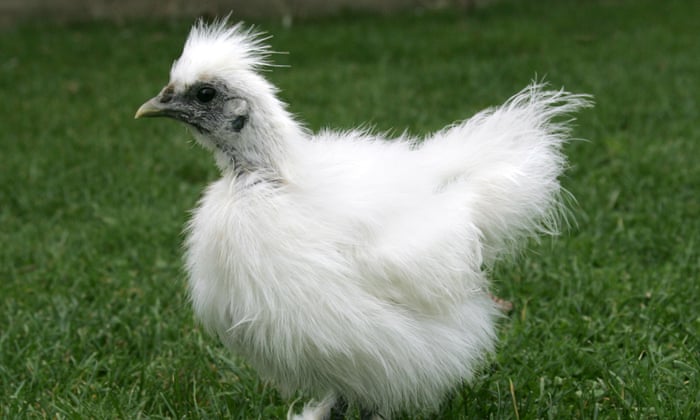
SOME OF THE GENETICALLY MODIFIED CHICKENS BRED BY SCIENTISTS AT THE ROSLIN INSTITUTE.

The Rumpless Game is squawky and, as its name suggests, lacks a tail, while the Burmese Bantam, has fantastically flared leg feathers and a head like a feather duster. But the true value of rare chicken breeds, according to a team of scientists working to save them from obsolescence, is not their decorative crests and plumage, but the diversity they bring to the chicken gene pool.
In a radical plan to preserve rare varieties such as the Nankin, Scots Dumpy and Sicilian Buttercup, scientists at the the University of Edinburgh’s Roslin Institute have bred genetically modified chickens designed to act as surrogates that would be capable of laying eggs from any rare breed.
Speaking to journalists at the AAAS conference in Boston, Mike McGrew, who is leading the project, said: “These chickens are a first step in saving and protecting rare poultry breeds from loss.”
The surrogacy technique, which places a new, mind-bending twist on the classic chicken or egg question, involves first genetically engineering hens to be sterile. This is done by deleting a gene, called DDX4, that is required for the development of primordial follicles (the precursors to eggs) meaning that the surrogate hens will never lay eggs that are biologically their own.
A baby bantam. The scientists’ ultimate goal is to create a gene bank of chicken breeds preserved for posterity.
A batch of sterile GM chicks hatched at the Roslin Institute in 2016, becoming the first genetically modified birds created in Europe. “We produced a hen that doesn’t have any eggs,” said McGrew, who is first author on a paper on the work published this week in the journal Development.
The next step will be to transplant follicles from rare birds into the surrogate (this is done before the surrogate chick is hatched from its own egg), meaning it would go on to lay eggs belonging to entirely different breeds of chicken.
Given that the hens would also need to be artificially inseminated with sperm from the same rare variety, the approach may appear unnecessarily convoluted. Why not just breed the rare birds the normal way?
The scientists’ ultimate goal is to create a gene bank of chicken breeds preserved for posterity, and since primordial follicles can be frozen efficiently, while eggs cannot, the surrogacy technique serves an essential work-around.
The Roslin team has set up the Frozen Aviary, a £14m project aimed at preserving a wide variety of poultry breeds.
“We’re interested in chicken because that is the animal which is the most consumed animal on the planet and we want to protect all the different breeds of chickens that we have,” said McGrew. “So we can freeze down all the breeds of chicken.”
McGrew predicts that the surrogates will be able to lay eggs from any breed, including chicken’s wild predecessor, the red junglefowl, but he is doubtful about whether it will work efficiently across species – it is not likely that the surrogate hens will be giving birth to eagle chicks, for instance.
Richard Broad, a field officer for the Rare Breeds Survival Trust, said the idea was appealing: “You can save all kinds of breeds, put them in a freezer and there would be a genetic ark for us.”
A Salmon Faverolle chicken. Scientists say rare breeds can bring diversity to the chicken gene pool.
“If you had one in every country it would be a wonderful thing. In terms of usefulness, we couldn’t wish for anything better – it would be unbelievably useful.”
Broad agreed that rare chickens could be a source of valuable genetic variation, potentially carrying variants that would provide resistance against new forms of avian flu. “It’s not what we’re protecting in the breeds that’s important, it’s what those breeds represent in their genes,” he said.
The Frozen Aviary, which would allow scientists to rapidly expand populations that contained a protective gene for a new disease, bring breeds back to life after they had been declared extinct and provide an insurance against commercial breeds, which have been honed for their fast-growing, being wiped out by a disease.
The avian biobank currently has genetic material from 25 different breeds and more than 500 samples from individual birds, all stored in liquid nitrogen cryostats. “They should be good – as long as the power doesn’t go out – for decades,” said McGrew.
At present, the team is focused on chicken breeds, but expects the technique to work to preserve rare varieties of ducks, geese and quail. Previously, scientists in Dubai used a similar technique in male birds to create a houbara (a large bustard) fathered by a cockerel.
In the future, it may also be possible to use the technique to conserve endangered species such as golden eagles – although this would depend on a suitable surrogate being identified.
“The question remains open on how evolutionarily related they have to be for them to transplant them,” said McGrew. “You need a bird that can be bred in captivity and produce a lot of eggs.”    

Friday, November 4, 2016

Donie's Ireland daily news BLOG update

Garda call off strike action planned for Friday,

BOTH THE AGSI AND GRA SUSPEND STRIKE ACTION ‘PENDING THE RESULT OF THE BALLOT’

Image result for Garda call off strike action planned for Friday  Image result for Garda call off strike action planned for Friday  Image result for Garda call off strike action planned for Friday
THE ASSOCIATION OF GARDA SERGEANTS AND INSPECTORS (AGSI) AND GARDA REPRESENTATIVE ASSOCIATION (GRA) HAVE SUSPENDED ITS STRIKE ACTION PLANNED FOR FRIDAY.
AGSI president Antoinette Cunningham said: “As a result of proposal received which will be put to a ballot of our membership, [the] AGSI will be calling off its day of industrial action pending the result of the ballot. AGSI are delighted a fundamental right in gaining access to the industrial relations mechanisms, the WRC and the Labour Court for our membership. AGSI are delighted to announce we have gained an uplift in income for all of our members.”
The GRA decision was late Friday night, after they met to discuss the Labour Court recommendations, which said that GardaĂ­ should receive a new €15 payment for every day of annual leave, as well as more money in rent allowance.
It has also proposed that plans to integrate rent allowance into core pay for all GardaĂ­ – which will have a knock-on impact on premium payments and overtime – should be brought forward to the beginning of January 2017.
It says that rent allowance should be restored for recently-recruited GardaĂ­ immediately on the acceptance of the new proposals.
It also recommended that the new €1,459 payment for GardaĂ­ to attend briefings prior to starting their shifts should also be introduced in January, earlier than previously anticipated.
Under Government proposals rejected by the Garda Representative Association (GRA) earlier this week, rent allowance was to be phased in in two parts, half in January 2017 and the other half in January 2018.
The proposed briefing payment had been envisaged originally to commence by April.
The Labour Court has effectively suggested amendments to the original proposals rejected by the GRA earlier this week as well as some new measures.
The court says that a new premium payment should be introduced to GardaĂ­ to reflect uncertainty over the taking of annual leave.
This would provide for an additional €15 for each day of leave they receive.
“The court understands that the operation of the system of administration of justice has the effect of diminishing the certainty of approved annual leave for GardaĂ­ in consequence of their necessary attendance at court hearings even at short notice when on approved leave.”
“The court recommends that this uncertainty should be acknowledged by payment to GardaĂ­ of a €15 premium payment per annual leave day eg a Garda with a leave allowance of 30 days should receive a premium payment per annual leave payment of 30 x €15 per annum. The parties to agree the manner of implementation of this provision. This provision should take effect from the commencement of the next leave year.”
The Labour Court says it accepts that the value of rent allowance has diminished as a result of the evolving rental market. “The court, on the basis of submissions made & recommends that rent allowance should be increased by €500 with effect from 1 January 2017.”
The Labour Court did not make any recommendation in relation to “pay restoration” for GardaĂ­ as this was being addressed in a separate process due to be completed in December.

Tánaiste Fitzgerald hopes new legislative move ends cycle of charity scandals

FRANCES FITZGERALD SAYS REGULATING SECTOR AN ‘ABSOLUTE PRIORITY’ FOR GOVERNMENT

Image result for Tánaiste Fitzgerald hopes legislative move ends cycle of charity scandals  Image result for legislative move ends cycle of Irish charity scandals  Image result for legislative move ends cycle of Irish charity scandals

A DAMAGING CYCLE OF SCANDALS RELATING TO CHARITIES MUST COME TO AN END, MINISTER FOR JUSTICE FRANCES FITZGERALD HAS SAID.

Alluding to the controversy involving suicide charity Console, Ms Fitzgerald said there was a time during the summer when issues surrounding charities dominated the news cycle.
She said the full implementation of the Charities Act 2009 would ensure the sector is no longer clouded by controversy.
Ms Fitzgerald was speaking at the launch of the Charities Institute Irelandwhich has been formed from the merger of Fundraising Ireland and the Irish Charities Taxation Research LTD (ICTR) which represents 180 charities in Ireland.
The institute will deal with issues related to charity taxation, regulation, fundraising standards and overall governance.
Ms Fitzgerald, the Minister for Justice, described the merger as a “brave, practical and thoughtful decision”.
She hoped the CII would work with the Charities Regulatory Authority which she said now has the necessary staff and financial resources required to achieve its goals. An additional €1.7 million was announced in the budget to give the authority the specialist skills to regulate the sector.
Absolute priority
Ms Fitzgerald said the regulation of the charities sector was “an absolute priority” for the Government.
“It will reassure the many thousands of people who generously volunteer their time, energy and money to charitable causes that their efforts serve a noble purpose, which is to assist the most vulnerable citizens in our society.”
CII chief executive Lucy Masterson said the purpose of the institute is to restore “trust and confidence” in the causes and charities people in Ireland support.
“That they know that the money that they are giving is going to the cause that they have a deep connection with,” she said.
Alone, the charity that supports older people to age at home, welcomed the creation of the CII.
Its chief executive Seán Moynihan said: “We hope that this initiative will encourage other charities to get serious about quality and transparency in order to restore public trust and confidence in the sector.”

Some Irish public transport fares to rise by up to 18%,

AUTHORITY ANNOUNCES SAVINGS OF 50% FOR COMMUTERS FROM SOME KILDARE TOWNS

Image result for Some Irish public transport fares to rise by up to 18% Image result for Some Irish public transport fares to rise by up to 18%

THOSE TRAVELLING ON SOME IRISH RAIL SERVICES WITHIN THE SHORT HOP ZONE – SUCH AS LEIXLIP TO DUBLIN – FACE AN 18% PRICE INCREASE.

Many public transport users face significant fare hikes under a National Transport Authority reorganisation of fares.
Within the Dublin area “short hop zones”, some rail fares will rise sharply, including the Leixlip to city centre fare which will increase by up to 18%.
Meanwhile, the cost of an annual adult Luas all-zones ticket, currently €910, will rise to €1,000, before the permitted tax deductions are made. This is a 9.9% rise, far higher than the 3.3% requested.
Currently, a monthly Luas ticket costs €91. A rise to €94 had been requested. However, the NTA approved a rise to €100 per month.
However, it’s not all bad news for commuters, as some will see reductions by as much as 50% in their fares.
Among the winners are residents of Co Kildare, where Sallins and Kilcock stations have been brought into IarnrĂłd Éireann’s Dublin area “short hop zone”. The large savings will also be available to residents of Naas, which is also served by Sallins station.
Outside Dublin, intercity rail tax saver fares will rise by 4%, Cork commuter rail fares will rise by up to 2%, and intercity adult and child weekly tickets will rise by 2%.
Intercity tickets
In many cases, the intercity rail increases actually exceed those requested by IarnrĂłd Éireann – which, in the case of intercity annual tickets for example, tended to be about 2%. The authority set no fare increase on any single or return intercity fares in 2017.
Bus fares outside Dublin will rise by 10 cent for adults and five cent for children when paying by cash on Bus Éireann services. There will, however, be no increase in Leap card fares. One-day, seven-day, monthly and annual bus fares will be adjusted to reflect distance travelled, with some dropping by as much as 5.9% as others rise by up to 2.8%.
Dublin Bus annual tax-saver cards – for journeys on Dublin Bus only – will not change. Dublin Bus monthly and annual tickets – for complex journeys involving other providers such as Luas or Dart – will rise by up to 2.3%.
Tax saver tickets for Bus Éireann vary, with some distances dropping in cost by as much as 5.8% while others rise by up to 2.8%. Iarnród Éireann annual and monthly tickets will rise by 2%, while under the rationalisation of Luas zones, notably merging zones three and four, some student pre-paid Leap cards will actually drop by 3.8% while some zones will rise by 5.9%.

DUBLIN BUS

* Pre-paid Rambler tickets rise by up to 2.9%
* Adult cash fares and Leap card fares will see no change
* Schoolchild Leap bus fares will rise by 2% on Irish Rail

IARNRÓD ÉIREANN

* Dublin short hop zone and intercity fares to increase by 4%
* Cork commuter fares up by up to 2%
* Change to the distance-based fares, pulling in towns to the short hop zone around Dublin, but increasing some fares within that zone

BUS ÉIREANN

* Cash fares up 10 cent for adults, five cent for children
* Daily, seven-day, monthly and annual tickets vary from a drop of 5.9% to a rise of 2.8%
* No increase in child or student returns

LUAS

* Merge zones three and four resulting in fare changes from minus 4.2 per cent to plus 7.4 per cent
* 10 to 20 cent increase in adult single journey cash fares
* Adult prepaid daily, seven-day and 30-day adjusted from minus 4.2% to plus 6.3% The fares will apply from January.
The NTA said the aims of the reorganisation were to better link the distance travelled to the fare price and to offer reductions to children and students.

Smoking causes hundreds of DNA mutation changes

Image result for Smoking causes hundreds of DNA mutation changes  Image result for Smoking causes hundreds of DNA mutation changes  Image result for Smoking causes hundreds of DNA mutation changes

SMOKING LEAVES AN “ARCHAEOLOGICAL RECORD” OF THE HUNDREDS OF DNA MUTATIONS IT CAUSES, SCIENTISTS HAVE DISCOVERED.

Having sequenced thousands of tumour genomes, they found a 20-a-day smoker would rack up an average of 150 mutations in every lung cell each year.
The changes are permanent, and persist even if someone gives up smoking.
Researchers say analysing tumour DNA may help explain the underlying causes of other cancers.
Pamela Pugh, 69, was diagnosed with lung cancer in 2013. She started smoking aged 17 and quit in her early 50s.
But she said: “Even though I gave up many years ago, the effects of smoking caught up with me.
“Had I known as a teenager that smoking caused mutations which would stay with me for life then I would never had started”.
‘Mysterious and complex’
The study, in the journal Science, was carried out by an international group, including the Wellcome Trust Sanger Institute in Cambridgeshire and the Los Alamos National Laboratory in New Mexico.
The analysis shows a direct link between the number of cigarettes smoked in a lifetime and the number of mutations in tumour DNA.
The authors found that, on average, smoking a packet of cigarettes a day led to:
  1. 150 mutations in each lung cell every year

  2. 97 in the larynx or voice box

  3. 23 in the mouth

  4. 18 in the bladder

  5. six in the liver

Joint lead author Prof Sir Mike Stratton, from the Wellcome Trust Sanger Institute, said: “The more mutations there are, the higher the chance that these will occur in the key genes that we call cancer genes, which convert a normal cell into a cancer cell.”
The researchers said that in tissues such as the lung, which are directly exposed to smoke, they could find the mutational signature of the chemicals in tobacco smoke, of which at least 60 are carcinogens.
However, they could not find this same pattern in tissues such as the bladder, which are not directly exposed.
Prof Stratton said in these organs smoking seemed to be accelerating a natural mutational process, but how it did this was “mysterious and complex”.
He said the same investigative approach could be used with other cancers where the underlying causes were less well understood.
“By looking in the genomes of the cancers, we will find the archaeological traces of past exposures which have been responsible for generating the cancers and that may potentially lead to prevention,” he said.
Genetic disruption
Dr David Gilligan, consultant oncologist at Papworth Hospital and Roy Castle Lung Foundation trustee, said: “For every 150 mutations in the cell each year, that is 150 opportunities for lung cancer to develop.
“Lung cancer has been at the bottom of the survival league for many years, but there are many exciting developments, including immunotherapy and genetically targeted drug treatments.”
Ms Pugh has received treatment at Papworth and Addenbrooke’s Hospitals in Cambridgeshire.
She has just spent six months on a trial of a drug that aims to disrupt the genes that drive the growth of lung cancer.
Participants in the Matrix trial have DNA from their tumours examined to check they have genes that may respond to the drug.
But a scan has shown the tumour in Ms Pugh’s right lung is growing, and she has had to leave the trial.
She will now undergo more chemotherapy and radiotherapy.
There are 35,000 deaths a year in the UK from lung cancer, and it is estimated that nine out of 10 cases are preventable.

More & more Women dying of Cancer & here’s why?

Image result for Worldwide, cancer will kill 5.5 million women a year by 2030  Image result for Worldwide, cancer will kill 5.5 million women a year by 2030  Image result for “The Global Burden of Cancer in Women,”

THE NUMBER OF WOMEN DYING FROM CANCER AROUND THE WORLD KEEPS RISING, AND IT WILL TAKE A GLOBAL RESPONSE TO REVERSE THE TREND.

WORLDWIDE, CANCER WILL KILL 5.5 MILLION WOMEN A YEAR BY 2030. THAT’S AN INCREASE OF 57% FROM 2012 WHEN 3.5 MILLION WOMEN DIED FROM CANCER.

Many of these deaths can be prevented, according to a new report, “The Global Burden of Cancer in Women,” presented at the World Cancer Congress in Paris.
Released by The American Cancer Society and Merck KGaA of Darmstadt, Germany, the report examines the physical, societal, and financial impact of cancer in women around the globe.
Cancer rates continue to rise along with world population. It is now the second leading cause of death among women.
It’s a major health and economic threat across the globe. Cancer rates are generally greater in wealthier countries. Now they’re on the rise in developing countries.
One reason is that improved healthcare in those countries is increasing life span.
Another is that as economies improve there are some added risk factors for cancer. These include physical inactivity, unhealthy diet, and having a first child at an older age.
Some of the most commonly diagnosed cancers among women are breast, lung, cervical, and colorectal.
In less affluent countries, these cancers can often go undiagnosed or untreated, leading to a higher mortality rate.
Societal, economic cost
Women with cancer face considerable physical and emotional challenges. So do their families.
Cancer treatment, if you can get it, is expensive. In addition, patients may require the assistance of family or other caregivers as well as transportation to treatment centres.
Indirect costs also include loss of productivity and income, especially when young and middle-aged women are involved.
According to the report, the global economic burden of cancer in 2009 was about $286 billion. Much of that is attributed to premature death of women in the workforce.
In the United States, years of productive life lost to cancer in women were estimated at $82 billion in 2008.
Where you live matters.
Cancer mortality rates for women are highest in Zimbabwe, Malawi, Kenya, Mongolia, and Papua New Guinea.
Mortality rates are lowest in northern and western Africa, Central America, select islands of Oceania, and south-central Asia.
Many cancers can be prevented
According to the report, about one-third to one-half of cancer cases could be avoided based on what we already know about risk factors.
Several common cancers in women have known means of prevention or early detection. Screening and early detection often mean patients have better treatment options and more favourable outcomes.
The report highlights the potential to reduce suffering and loss of life while easing the family and societal economic burden.
Dr. Homayoon Sanati is medical director of breast oncology at the Memorial Care Breast Centre at Long Beach Memorial and Orange Coast Memorial medical centre’s.
In an interview with Healthline, Sanati said there are no real surprises in the report. He is particularly concerned with mortality rates for lung cancer in women.
It surprises me, with all information we have, to see younger women smoking.
He said the problem can be attributed to the rise in women smokers. It’s a trend that began in the 1970s when ads started targeting young women.
“It surprises me, with all information we have, to see younger women smoking,” said Sanati.
“It’s a warning sign that we need to educate patients to stop smoking. We do have screening modalities right now for lung cancer that can reduce mortality,” he said.
Sanati said there’s a low-dose CT scan that can be done once a year in patients who have a history of smoking and are older than 50 years of age. Earlier diagnosis increases the chances of stopping the disease before it spreads.
“There’s also an increase in smoking in China,” he continued. “The effects of smoking show up 20 years later, so it will be a large problem for them pretty soon.”
Preventing breast cancer?
Image result for healthy diet, good body mass index (BMI), and physical activity are important in preventing breast cancer. Sanati said a healthy diet, good body mass index (BMI), and physical activity are important in preventing breast cancer.

“I think these are some of the main issues that can be improved. But some subsets of breast cancer are genetically driven. Patients should be aware of those,” he said.
Sanati doesn’t agree with current U.S. Preventive Services Task Force screening guidelines for breast cancer. Although the United States has good screening modalities and good treatments, he believes less screening may lead to increased mortality five or 10 years down the road.
“Current guidelines recommend a mammogram every other year for women aged 50 to 74. Every other year works for slow growing cancer, but it won’t pick up on fast growing cancers,” he said. “Those are the ones you want to diagnose sooner rather than later.”
Sanati also sees the benefit of self and clinical breast examinations.
“I see patients get diagnosed because they found the mass themselves or their doctor found the mass. There are women alive today because of that,” he said.
Cervical & liver cancer
When it comes to cervical cancer, Sanati expects rates to go down in countries where the HPV vaccine is widely available.
“South American countries are actively promoting vaccinations because the cost of the vaccine is much cheaper than managing cervical cancer. For that reason, the trend should be going down,” said Sanati.
Decline is unlikely in countries that don’t have or promote the vaccine.
In addition, cervical cancer screening, starting with the Pap test, can lower incidence and mortality.
Sanati said we should also pay more attention to liver cancer.
“In certain countries, there’s an increase in liver cancer mostly due to chronic infection with hepatitis B,” he said. “I think we would see a lowering of this trend in those countries as they get more access to hepatitis vaccines.”
“In the United States, liver cancer will become more prominent in the near future,” warned Sanati.
That’s due to diet, a factor well within our control.
“A high sugar diet leads to a condition called ‘fatty liver.’ Sugar gets converted into fat and is stored in the liver. In time, it damages the liver and increases the risk of liver cancer,” explained Sanati.
It’s not inevitable?
The report concluded that the burden of disease, loss of life, and economic hardship is not inevitable.
There are known means of prevention and early detection for the most common cancers among women.
The report suggests that countries need to prioritize cancer education and prevention. It will require support and commitment from the global community.
“We are proud to partner with the American Cancer Society to address the impact cancer has on women worldwide,” BelĂ©n Garijo, member of the Executive Board and CEO Healthcare at Merck KGaA, said in a press release. “This collaboration is a first-of-its-kind public-private partnership that recognizes that no one sector can tackle this challenge alone. Improving women’s health and well-being has an uplifting ripple effect on our world, and we know when women do better, our communities do better.”

We are about to see the biggest and the brightest super moon of the 21st century on November 14th

We are about to see the biggest and the brightest supermoon of the 21st century  Image result for We are about to see the biggest and the brightest super moon of the 21st century on November 14th  Image result for We are about to see the biggest and the brightest super moon of the 21st century
Forget all the other super-moons you’ve seen in the past. Or even meteor showers, blood moons and lunar eclipses. Because on November 14, your night sky is going to light up with the biggest full moon you’ll see in a long time.
Super-moons aren’t all that uncommon, but this one’s going to be pretty special because for the first time since 1948, the full moon will be nearest to Earth. And it won’t get this close again until November 25 2034.
If you want to see the astronomical event this year – it’s the supermoon in November. Here’s everything you need to know:
How does a supermoon happen?
A supermoon is a full moon or a new moon (yes a new moon is also classed as supermoon, even if you can’t see it) at its closest point to Earth. The moon orbits Earth in an elliptical plane so sometimes it can come quite close to our planet (which is called a perigee) and at other times, it can be at the furthest point from Earth (which is called an apogee).
The perigee distances can vary but at its closest, the moon is about 30,000 miles (48,000 km) closer to Earth than during apogee. When the sun, the moon, and Earth line up – the occurrence is known as syzygy.
As Nasa explains: “When perigee-syzygy of the Earth-moon-sun system occurs and the moon is on the opposite side of the Earth from the sun, we get a perigee moon or more commonly, a supermoon!”
This occurrence causes the moon to appear much bigger and brighter in our sky than usual.
Why is this supermoon so special?
Supermoons aren’t unusual – we just had one on October 16 and there’s going to be another one on December 14.
But on November 14, the moon’s orbit is also going to bring it even closer to Earth than previous perigee occurrences. To be precise, the distance between Earth and the moon will be a mere 221,524 miles (356,509 km). On average, the moon is about 239,000 miles (384,000 km) away from the Earth.
“On November 14, it becomes full within about two hours of perigee – arguably making it an extra-supermoon,” says Nasa.
“The full moon of November 14 is not only the closest full moon of 2016, but also the closest full moon to date in the 21st century. The full moon won’t come this close to Earth again until November 25 2034.”
How will we be able to see it?
Sometimes it can be difficult to tell whether the moon is a supermoon or not. This is because the moon is too far away for our eyes to perceive the change in distance.
But if you have buildings, trees or the horizon to compare it to, it might appear larger than usual – this is known as “moon illusion”.
“When the moon is near the horizon, it can look unnaturally large when viewed through trees, buildings, or other foreground objects,” says Nasa.
“The effect is an optical illusion, but that fact doesn’t take away from the experience.”
When can you see it?
The moon will become full at 1.52pm GMT on November 14. If you live in the UK, you should be able to see the moon later that evening.
Be sure to get somewhere nice and dark, away from the city lights, if possible, and try and look for reference points which you can use to gaze at the moon – like the horizon or trees.
Let’s just hope the weather holds up its end of the bargain.