Pages

Showing posts with label Competition. Show all posts

Saturday, February 27, 2016

Donie's Ireland daily news BLOG

An Irish Times exit poll shows Coalition are well short of overall majority

SIGNIFICANT RECOVERY FOR FIANNA FÁIL AND GAINS FOR SINN FÉIN AND SMALLER PARTIES, IPSOS MRBI SURVEY FINDS


THE COALITION PARTIES HAVE FALLEN FAR SHORT OF AN OVERALL MAJORITY IN THE NEXT DÁIL, ACCORDING TO AN EXIT POLL CONDUCTED FOR THE IRISH TIMES BY IPSOS, MRBI.

Fine Gael support has slumped from 36.1% in the last general election to only 26.1% a far worse result than the party anticipated at any stage of the campaign.
The poll indicates the Labour Party received just under 8% support, far behind the 19.5% it achieved at the 2011 general election.
The Coalition parties did not benefit from a swing in the final days of the campaign, according to the poll..
Fianna Fáil appears to have made a significant recovery since the last election and is could almost double its number of Dáil seats.
Support for Sinn Féin has increased since 2011. There are also big gains for Independents and smaller parties.
The poll indicates the parties’ vote shares to be: Fine Gael 26.1%; Labour 7.8%; Fianna Fáil 22.9%; Sinn Féin 14.9%; AAA-PBP 3.6%; Greens 3.5%; Social Democrats 2.8%; Renua 2.6%; and Independents 16.1%.
At the last general election in 2011, Fianna Fáil took 17% of the first preference vote and Sinn Féin 10%.
In Dublin, Fine Gael has emerged as the largest party with 25.7% of the vote, followed by Sinn Féin with 15.4%, according to the poll. Fianna Fáil is on 14.6%, Labour 9.4% and others received 34.9%.
The 2016 General Election Exit Poll was conducted exclusively on behalf of The Irish Times by Ipsos MRBI, among a national sample of 5,260 voters at 200 polling stations throughout all constituencies in the Republic of Ireland.
Voters were randomly selected to self-complete a mock ballot paper on exiting the polling station. The accuracy level is estimated to be approximately plus or minus 1.2%.
If the final result is close to the exit poll predictions, the Fine Gael/-Labour Coalition will be far short of the numbers required to form a majority government.
Prediction
The complexity of the single transferrable vote system makes it difficult to provide an accurate prediction of the number of seats which will be won by the various parties .
At the last election Fine Gael got a seat bonus of 10%. In the unlikely event of a similar seat bonus this time, it would end up with 56 seats. But a more likely seat bonus of 5% would give the party 50 seats. The new Dáil has 158 seats, eight fewer than in the last one.
It is even more difficult to predict the number of seats the Labour Party will win if it takes just under 8% of the vote. It is likely to be in the range of eight to 12.
One thing that could benefit the party is that the poll indicates very strong transfers from Fine Gael to Labour.
Fianna Fáil, on 23%, should come close to, or even surpass, its target of 40 seats, which would represent a remarkable achievement for party leader Micheál Martin.
Sinn Féin on 14.9% also looks like it could make reasonable gains. Even with no seat bonus, the party should be able to break into the 20s range.
At the dissolution of the last Dáil, Fine Gael had 67 seats, Labour 33, Fianna Fáil 21 and Sinn Féin 14.
Disappointment
The strong performance of smaller parties and Independents confirms the trend evidenced in The Irish Times polls going back over the past 18 months.
The poll results will come as a severe disappointment for both Government parties even though they are very close to the figures they have been getting inIrish Times polls for the past year or so.
The expectation in the Coalition parties was that they would gain support as the election got closer and voters weighed up the merits of stability versus change.
That message did not resonate with the voters and the outcome will generate uncertainty about who can form the next government.
The turnout in the election appears to be down on the 70% figure achieved in 2011. Party sources estimated it might be about 65%.
Turnout was described as “uneven” in the run-up to the polls closing, with politicians claiming many people were still undecided up to the last moment.
The counting of votes begins at 9am today, with the first counts expected to be announced in the late afternoon.

Property tax take should rise with house prices

THE EU SAYS

Bailout reforms deemed not enough to remedy all problems resulting from crash
    
The European Commission report said potential new entrants into the mortgage market were probably deterred by the still-high level of non-performing loans and issues with access to property collateral underlying home loans.
The European Commission has strongly criticised the Government’s decision to suspend property tax revaluations, as it underlines a litany of vulnerabilities in the recovering Irish economy.
In an 85-page report published at 10pm yesterday – just as polling closed in the general election – the EU executive also suggested the property tax could be extended to non-agricultural land.
After an election campaign dominated by debate on promised cuts on taxes on income, the commission’s report said the tax wedge on labour in Ireland – the amount taken in taxation – was second-lowest in the EU. Revenue from VAT was also low compared to other member states, it added.
Non-performing loans
Turning to high variable-rate mortgage charges, the report said potential new entrants into the mortgage market were probably deterred by the still-high level of non-performing loans and issues with access to property collateral underlying home loans.
The report on Ireland, which is a regular assessment published each February, said reforms undertaken in the bailout programme had not been sufficient to tackle all the legacy issues from the crash.
“These issues continue to represent vulnerabilities and imbalances that affect the economy, hinder Ireland’s investment potential and pose challenges to macroeconomic policymaking,” it said.
These observations were made even as the commission said Ireland’s “remarkable” economic rebound had broadened and gained momentum in the last two years.
In relation to the property tax, the commission said the yield remained below the EU average.
“A revaluation of self-assessed property values used to calculate local property tax liabilities was initially planned for 2016, but has been delayed by three years to November 2019,” it said.
“This decision represents a lost opportunity to broaden the tax base as residential property prices have increased substantially since the first self-assessment in 2013.”
An increase in the share of revenue from the property tax would reduce the cyclical sensitivity of government revenues and encourage more efficient allocation of land resources, the commission said.
Housing supply
“Extending the coverage to adjacent non-agricultural land would broaden the tax base and improve the efficiency of land use. The latter point may pertinent given current housing supply constraints,” it added.
On housing, the report said demand exceeds supply by a wide margin in major urban areas.
Vulnerabilities persist as Ireland’s debt-to-GDP ratio remained high, it said. While financial sector vulnerabilities were in decline, profitability remained weak. Capital positions were sound but challenges remain as banks adapt to new prudential rules.
“Non-performing loans fell further with the recovery but the ratio remains among the highest in the euro area.”
Unemployment had fallen below the EU average but long-term unemployment and the low work intensity of households remained a matter of concern, the commission said.
“Overall, the welfare system has worked well to contain the effects of the crisis on poverty and inequality, but barriers to inclusive growth remain.
“In particular, concerns persist about inactivity traps for certain households, the high proportion of people living in households with very low work intensity, child poverty and the lack of access to affordable, full time and quality childcare.”

Dunne’s Stores acquisition of meat businesses cleared by competition authority


TIPPERARY BUTCHER PAT WHLEAN (CENTRE PHOTO), OF JAMES WHELAN BUTCHERS IN CLONMEL.

The deal first notified to the Consumer & Competition authority in January has been cleared to go ahead.
Dunnes Stores acquisition of two meat wholesale businesses, Whelan Food & Meat Processors Ltd and Tipperary Sustainable Food Company Ltd, has been cleared by the Competition & Consumer Authority. The proposed deal was first notified to the competition authority just over a month ago.
The meat wholesale businesses that Dunnes has acquired are owned by well-known Tipperary butcher Pat Whelan. The transaction is only for the two wholesale businesses and not the chain of well-known butcher stores operated by Whelan.
Both businesses are located in Co Tipperary and described as operating in the retail sale of meat and related products. The deal is private, with no figures disclosed.
Fifth generation
Whelan Food & Meat Processors was established in 2001 with an address at Clonmel, Co Tipperary. The second business, Tipperary Sustainable Food Company Ltd, was set up in 2008 and also has an address in Clonmel.
The latest accounts filed for Tipperary Sustainable Food Company show the business made profits of more than €280,000 in 2014.
Pat Whelan, a director of both businesses, is a fifth-generation butcher who also operates a chain of high-end butcher stores in Rathcoole and Monkstown in Dublin, Kilmacanogue near Bray in Wicklow, and Clonmel in Co Tipperary. This chain of butcher stores is not part of the deal.
Whelan Butchers and its beef dripping product were winners of the supreme award for the best food product in the UK and Ireland at the 2015 Guild of Fine Food Awards in London.
Dunnes Stores primary supplier of meat is Martin Jennings Wholesale in Co Mayo.

Penguins on a treadmill: what can we learn from the study?

STUDY FINDS FAT PENGUINS FALL OVER MORE THAN SLIMMER PENGUINS. AND THEY CHEAT
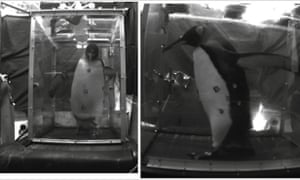
    
A University of London study using a treadmill shows that fat King penguins fall over more often than slim ones but carrying a bit of extra weight comes with an important advantage when it comes to reproduction, the biomechanics researchers say.
Fat king penguins are unsteady on their feet while waddling compared to their slimmer counterparts, making them an easier catch for predators (or pesky scientists).
A UK research team discovered this by simply travelling to the subantarctic region of Antarctica, catching 10 male king penguins and putting them on a treadmill. Okay, it wasn’t quite as simple as that but it does mean we can watch penguins on a treadmill.
The team, led by Astrid Willener from the University of Roehampton, was studying the biomechanics of the waddle of the king penguin, which can grow up to 1m tall and up to 16kg, making it the second largest species of penguin behind the emperor.
They captured 10 males who were in courtship and weighed more than 12kg near the shoreline at the edge of a colony. The penguins, serial monogamists, have the longest breeding cycle of all the penguin species – 14 to 16 months – and produce just one chick per cycle. Anyone who has seen March of the Penguins knows that caring for a penguin egg requires enduring an intensely long fast, so it’s crucial that parents have enough fat to keep them going.
The captured penguins, who were kept beside the colony for two weeks, received two training sessions of 10 minutes to get used to walking on the treadmill. Then they were filmed at a speed of 1.4km/hr before and after a 14-day fast (fasting for periods of up to one month is normal for king penguins and researchers checked the critical body mass of the birds to be sure that they were not losing body mass too fast during the study).
The posture – leaning and waddling – of the penguins while walking was then determined by the researchers. To quantify the waddling, the amplitude of peak left and right leaning was calculated.
It wasn’t all simple though. Some of the penguins – the larger individuals – found ways to cheat the system.
“ Sometimes the penguins were lazy and ‘water-skied’ on the treadmill by leaning their back on the back wall of the treadmill. That is obviously not good for the data collection,” Willener told the Guardian.
In the end the researchers found that although the penguins waddled with more agility at a lower weight, they had nonetheless adapted well to be able to handle waddling while heavier, even if they were not as efficient and less stable.
And packing on the pounds did give the big guys an important advantage when it comes to reproduction, the study, which was in the online journal PLoS One, found.
“The weight gain is an adaptive mechanism for them to survive their fast while reproducing and taking care of the egg,” said Willener. “But it is a trade-off between putting on weight to fast longer, in case there is a delay in finding a penguin partner to mate with, and still being able to walk, because if they can’t walk steady, they fall and will be spotted and eaten alive by predators.” Luckily walking isn’t their primary travel mode.
Willener hopes the findings will help in efforts to better understand, and protect the species.
The scientists were careful to point out that the video of its chubby penguin has been sped up, so it appears to be running faster than it did in reality. And, they clarify, no penguins were pushed over during the process.
So, you get to watch penguins on a treadmill and relax in the knowledge that it’s not only humans who put on weight when they have got a new girlfriend.

A view of the Milky Way like you have never seen before

  
Here’s a view of the Milky Way galaxy like you’ve never seen before.
https://youtu.be/Ip3YHk0gu0I   This video takes a close look at a new image of the Milky Way released to mark the completion of the APEX Telescope Large Area Survey of the Galaxy.
The Atacama Pathfinder Experiment telescope in Chile (APEX for short) captured this super-panoramic image of our home galaxy, mapping the full view of the galactic plane as seen from the Southern Hemisphere in unprecedented detail.
The 40-foot telescope views the sky in sub-millimeter wavelengths, which are between infrared light and radio waves and are invisible to the eye. That allows astronomers to observe the coldest regions of the universe, where gas and dust are only a few tens of degrees above absolute zero, as well as the regions where stars are born.
In the image, the APEX telescope’s observations appear in red, with some data from theEuropean Space Agency’s Planck satellite in fainter red. The blue parts of the image show shorter infrared light captured by NASA’s Spitzer Space Telescope.
The European Southern Observatory released the map to celebrate the completion of the APEX Telescope Large Area Survey of the Galaxy project. The image spans an area of sky 140 degrees long by 3 degrees wide — four times larger than the project’s first map.  

Wednesday, June 10, 2015

Donie's Ireland daily news BLOG update

Irish Bank’s need to take the heat out of the housing market

   
Ireland needs to make renting much more attractive to tenants and landlords to take the heat out of the housing market and prevent the chances of another housing bubble, a deputy head at the Central Bank has said.
The call by deputy governor Stefan Gerlach will be seen as the Central Bank continuing to apply pressure on the Government to make renting as attractive an option as buying.
Despite pressures from across the political spectrum, the Central Bank, led by outgoing governor Patrick Honohan, this year stuck to its controversial plans to impose new restrictions on mortgage credit for first-time and second-time home buyers.
Politicians and industry figures continue to say that the controls that require first-time buyers to save large deposits to cover portions of the mortgage loan are too onerous because house price increases in some regions are making home purchases unaffordable for many prospective buyers.
However, Mr Gerlach, speaking at a conference in Dubrovnik, Croatia, said that the rental market could be the key to bringing stability to the housing market in countries such as Ireland and Croatia, which both saw huge collapses in the value of their property assets when their credit bubbles burst from 2008.
Citing research from Red C, he said that over a third of people renting out Irish homes are so-called accidental landlords, who were forced by economic necessity to rent rather than sell up when the financial crisis struck.
Moreover, a large majority in Ireland are unwilling tenants and would much prefer to own rather than rent, Mr Gerlach said.
Croatia, like Ireland, suffered from a property collapse. Some of the country’s large banks were, as was the case in Ireland, foreign-owned and required to be bailed out by their parents’ groups.
Encouraging renting will require policies aimed at tenants and landlords, Mr Gerlach said.
Strengthening security of tenure by offering long-term tenancy agreements may be a start, while landlords may require new incentives too.
Attracting institutional investors into the market who take a long-term view of tenancies such as real estate investment trusts may help the market provide more rental properties.
“The empirical evidence shows that the economies in which the rental market was relatively large and deep suffered less during the financial crisis. Deep rental markets appear to promote the resilience of the economy to adverse shocks and are therefore desirable from an economic stability perspective,” Mr Gerlach said.
“To promote their development, it is important that renting is an attractive long-term proposition for households and landlords alike.
“While many households may continue to buy rather than rent, we need to make sure that this choice reflects their preferences and does not merely reflect a poorly functioning rental market.”

Dunne’s Stores prices comparisons with Aldi are misleading a court finds

Court rules in favour of Aldi over pricing labels on sausages, yogurts, tomato ketchup

  
German discounter group Aldi claimed that the on-shelf banners created the impression that Dunne’s Stores products generally, or its “Family Essentials” range, were cheaper than Aldi products when there was “no basis” for such a claim, Aldi claimed.
Dunnes Stores has been found guilty of engaging in misleading commercial practices when comparing the prices of some of its own-brand goods with Aldi products in a move which the High Court said was likely to deceive consumers.
Mr Justice Brian Cregan ruled in favour of Aldi over the pricing labels on Dunnes’ shelves in 14 out of 15 products before the court including sausages, turkey breast mince, yoghurts, tomato ketchup, tinned beef and chicken dogfoods and dry catfood.
In doing so Mr Justice Cregan said Dunnes Stores had infringed consumer protection law and EU regulations.
Aldi had alleged Dunnes on multiple occasions infringed Aldi trademarks by displaying banners in Dunnes’ supermarkets which contained the words “Lower Price Guarantee” and “Guaranteed Lower Prices on all your Family Essentials every week”.
Aldi took the action on the grounds that the banners failed to objectively compare one or more of the relevant and verifiable features of the Dunnes Stores products with those of Aldi and so did not comply with the Consumer Protection Act 2007 and the European Communities (Misleading and Comparative Advertising) Regulations 2007.
The German discounter also claimed that the on-shelf banners created the impression that Dunnes’ products generally, or its “Family Essentials” range, were cheaper than Aldi products when there was “no basis” for such a claim, Aldi claimed.
It accused Dunnes Stores of “comparing products which were not of the same quality and therefore giving an inaccurate comparison.”
It also said it had been “comparing products which were of different weights and therefore making inaccurate calculations which failed to show a proper comparison on a pro-rata basis for customers”. And thirdly the court was told that Dunnes had been “giving an inaccurate price of the plaintiff’s products at the time of the comparison”.
Dunnes denied the claims and told an earlier High Court hearing that comparing non – branded or own brand products “is always more difficult than comparing branded products.
This is because competitors’ own brand product ranges are rarely identical in terms of ingredients and specifications”.
It said that while some of the products “may not have identical ingredients and specifications it does not necessarily follow that the products are not comparable”.
In his ruling, Mr Justice Cregan found “shelf edge labels”, claiming Dunnes Stores prices for 14 of the 15 identified products were lower than Aldi prices had failed to objectively compare products which met the same needs or were intended for the same purpose.
He also said the advertisements included “the provision of false information” in relation to the 14 out of 15 comparative products, including information about the nature, composition, characteristics or ingredients of those products.
The information would be likely to cause an average consumer to make a transactional decision which that consumer would not otherwise make and this was contrary to the Consumer Protection Act, 2007.
The advertisements were misleading because they were likely to cause the average consumer to be deceived or misled in relation to those 14 products.
He also found Dunnes ommitted or concealed material information in relation to comparative advertisements that the average consumer would need to make an informed transactional decision.
The case was adjourned for two weeks to allow both sides consider the judgment before the court makes any orders. Dunnes will also consider whether to seek a stay on any order in the event of an appeal.
“The grocery retail market is highly competitive and in order to find the best value consumers must have confidence that the advertising information with which they are being presented is transparent, accurate and true,” said Aldi’s Group Buying Director, Finbar McCarthy after the ruling.
“Today’s ruling benefits consumers, clarifying their protection under the law.”

A second 100-year-old+ woman left on a hospital trolley for 25 hours


Rosanna O’Halloran, a 102 year old lady from Castle Close in Clondalkin spent 26 hours on a trolley at Tallaght Hospital.
A second woman faced a 25-hour wait on a hospital trolley despite being over 100 years old – a situation which has been described as “inhumane”.
The 101-year-old woman’s granddaughter slammed the “wreck of a health system we have in Ireland”.
In a Facebook post highlighting the trolley situation in the A&E at University Hospital, Limerick, the woman said: “This is not a unique case.”
It is the second such reported incident to occur in the space of a week and follows a 26-hour wait on a trolley for 102-year-old Rose O’Halloran at the A&E in Tallaght.
Industrial Relations Officer with the Irish Nurses and Midwives Organisation Mary Fogarty said: “What happened is inhumane and you wouldn’t see it in the third world.
“It is a catastrophic situation where the oldest person in the hospital is left to languish on a trolley for all of that time.”
A member of the HSE West forum, Independent Councillor Ann Norton, said the woman’s daughter compared the A&E in Limerick to “a war zone”.
The family has asked not to be named.
A spokeswoman for the HSE said: “The Emergency Department at University Hospital Limerick has seen an unexpected increase in patients presenting over the last week, which has resulted in high numbers of patients waiting on trolleys and long delays.”
She said she could not comment on a specific patient, but “UL Hospitals Group apologises that any patient has to wait to be admitted”.
She said “delivery of the best possible care for the patient is our priority”.

Chimps get drunk on palm wine in Africa


A juvenile chimpanzee uses a leaf sponge to drink palm wine in Guinea in West Africa.

Humans’ closest living relatives may have a drinking habit:
Scientists spied intoxicated wild chimps soaking up palm wine with leaves and squeezing it into their mouths.
Alcohol consumption is seen across nearly all modern human cultures that have access to fermentable materials. This prevalence led scientists to suggest what is known as the “Drunken Monkey Hypothesis” — that alcohol consumption might have provided a benefit of some kind to the ancestors of humanity, and perhaps also to the ancestors of chimpanzees, humanity’s closest living relatives.
Humans and apes share a genetic mutation that emerged about 10 million years ago that helps them break down alcohol and could have helped them eat overripe and fermenting fruit. According to the proponents of the Drunken Monkey Hypothesis, the benefits of such an expanded diet may have even led evolution to favor an attraction to alcohol.
There were a few anecdotes of primates other than humans partaking in alcohol — for instance, green monkeys introduced to the island of St. Kitts like drinking tourist cocktails. However, most of these anecdotes were unconfirmed.
Now, researchers say they have confirmed, for the first time, that wild apes habitually drink alcohol.
The scientists watched wild chimpanzees living near the village of Bossou in the West African country of Guinea from 1995 to 2012. Villagers in Bossou tap raffia palm trees for the sap, harvesting it with plastic containers placed near the crowns of the tall palms. Villagers leave the containers alone for most of the day, collecting the palm sap in the early morning and late afternoon.
The sweet palm sap ferments quickly into palm wine. Villagers knew chimps occasionally sampled this sap for themselves, the researchers said.
Chimps often fold or crumple leaves inside their mouths to produce a drinking tool. They dip these “leaf sponges” into their preferred drink, and then squeeze the leafy tools in their mouths.
The researchers saw 51 instances in which 13 chimps used leaf sponges to drink fermenting sap. “I was fascinated by this behavior,” study lead author Kimberley Hockings, a behavioral ecologist at Oxford Brookes University in England, told Live Science.”To harvest the palm wine, chimpanzees at Bossou use a leafy tool as a spongy drinking vessel.”
The sap averaged about 3.1 to 6.9 percent alcohol, or 6.2 to 13.8 proof. For comparison, beer averages between 3 and 6 percent alcohol, and wine can contain 7 to 14 percent alcohol, with dessert wine having nearly 19 percent alcohol content, according to the University of Notre Dame. The chimps often drank the booze in large quantities — about a liter (34 ounces, or about three average-size beers) of fermented sap on average. Males accounted for 34 of the 51 instances of drinking — one adult male in particular accounted for 14 of the 51 instances.
“Chimpanzees at Bossou have applied their knowledge of how to make and use leafy tools to exploit a new liquid resource — palm wine,” Hockings said. “This new use of elementary technology shows once again how clever and enterprising humankind’s nearest living relations are.”
A number of chimps appeared intoxicated. One time, Hockings noted the chimps rested immediately after drinking the palm wine; “on another occasion after drinking palm wine, one adult male chimpanzee seemed particularly restless and whilst other chimpanzees were making and settling into their night nests, he spent an additional hour moving from tree to tree in an agitated manner,” she said.
Hockings noted these findings do not confirm the Drunken Monkey Hypothesis, since they cannot say for sure whether the chimpanzees were attracted to the alcohol. “However, our data clearly show that alcohol is not an absolute deterrent to chimpanzee feeding in this community,” Hockings said.

Michael D Higgins opens new sea lion cove at Dublin Zoo

President pays a visit to his neighbours to launch wildlife park’s new attraction


Dublin Zoo’s sea lions have moved into their new Cove habitat which features a deep saltwater pool and a viewing area to observe the colony of sea lions underwater through glass.

President Michael D Higgins’s neighbours are a noisy lot with their grunting, squawking and squealing. What else do you expect when you have Dublin Zoo in your back garden?
However, despite his close proximity to the zoo, Mr Higgins’s arrival to open the sea lion cove marked his first official visit to the wildlife park since he took office in 2011. The zoo was certainly on its best behaviour.
The flamingos were tickled pink with the attention, and even the monkeys looked pensive as Mr Higgins waxed lyrical about the zoo’s role in preserving the diversity of the earth’s species.
Mr Higgins proclaimed himself delighted with his visit. “I want to say what a wonderful day it is to be here to visit the neighbours.
“Without a doubt, a day trip to the zoo has been a special highlight for generations of Irish children and adults.”
The Sea lion cove
The key attraction of the sea lion cove is a viewing area where visitors can watch the mammals swimming underwater. Mr Higgins and his wife Sabina peered through the glass at the sea lions as they swooped and dived in front of them.
Viewed from the other side of the cove, it looked like the presidential couple were so impressed with the facility that they had plunged underwater themselves.
“They really know how to strut their stuff,” Ms Higgins said, after the mammals caught a few fish and honked happily.
Sea lion team leader Eddie O’Brien said the new habitat was one of the best he’d seen anywhere. “This new pool was built in the lake of the zoo and it’s salt water, which is pretty amazing.”
As well as being its nearest neighbour, Mr Higgins also has a family connection with the attraction, as his son John produces RTÉ’s The Zoo.
“Everytime I’ve seen that programme I’ve been so struck by the importance of those who work in the zoo, the extraordinary care of putting the animals first,” Mr Higgins said.
Then, in the best tradition of neighbourliness, he was invited to have a cup of tea.
“Don’t leave it as long again,” Dublin Zoo director Leo Oosterweghel might have been tempted to say as he waved off the presidential couple.