Pages

Showing posts with label Crocodiles. Show all posts

Sunday, October 30, 2016

Donie's Ireland daily news BLOG.

Some 170 Garda stations not connected on to the Pulse system

BEST PRACTICE SHOWS THERE ARE TOO MANY STATIONS FOR EFFECTIVE SERVICE, SAYS SINN FÉIN TD

Image result for Some 170 Garda stations not connected to the Pulse system  Image result for the Garda Pulse system  Image result for Some 170 Garda stations not connected to the Pulse system

THE MINISTER FOR JUSTICE FRANCES FITZGERALD: SAYS ENHANCING RURAL ACCESS TO THE GARDA NETWORK BY CONNECTING NON-NETWORKED SITES TO THE NETWORK IS BEING EXAMINED.

Many Garda stations are not connected to the Garda Pulse network, according to Department of Justice figures.
Minister for Justice Frances Fitzgerald said 167 stations were not connected to the Garda computer network, but that Gardaí can “contact the Garda Information Services Centre to provide relevant details to trained civilian call-takers who enter the details on the Pulse system”.
Enhancing rural access to the Garda network by connecting non-networked sites to the network was being examined, she said.
Sinn Féin justice spokesman Jonathan O’Brien, who sought the information in a parliamentary question, said Garda management “want to close as many stations as possible”.
Gardaí in non-Pulse connected stations report into a centralised centre in Connacht. The Garda Inspectorate and the Garda Commissioner favoured a regional model, he said.
Mr O’Brien, who was appointed justice spokesman after this year’s general election, said “it’s not politically popular but international best practice has shown and the Garda Inspectorate has said that we have too many Garda stations for an effective policing service”.
The 2016 election manifesto?
This conflicts with Sinn Féin’s 2016 election manifesto, which says “we will reverse the closure of Garda stations – these closures have provided minimal savings to the State of €556,000 per annum and are a shameful legacy of this government”.
However, the Cork North-Central TD said the Garda Inspectorate view was that “to have an effective police service in the 21st century, you’re going to have some stations that are going to have to close”.
Referring to the Garda Inspectorate’s report on the service, he said: “You don’t need an actual police station to have a police presence.”
Mr O’Brien pointed to the inspectorate’s call for a civilianisation programme of elements of the service, which he said “could release 1,500 Gardaí for active duty in a matter of months”, while the force would be recruiting 600 to 700.
Gardaí should not be at the front desk in a station to deal with passport applications, he said. That was a job for civilians.
He said Gardaí on duty reporting and investigating crimes should not actually be designating what category of crime is involved, in part because of excessive paperwork and also for improving crime classification.
Mr O’Brien said a “Garda in Cork might designate a crime as burglary while another garda elsewhere might report it as trespassing even though it’s the same type of offence”.
The Minister pointed to the launch in June of the Garda Síochána Modernisation and Renewal Programme 2016-2021 which aimed to “professionalise, modernise and renew An Garda Síochána” to meet current and future challenges.

The AAA-PBP surges to record high of 9% acording to Red C Poll

PARTY IS UP 3 POINTS TO 9% FOLLOWING ATTEMPTS TO PASS ABORTION REFERENDUM BILL
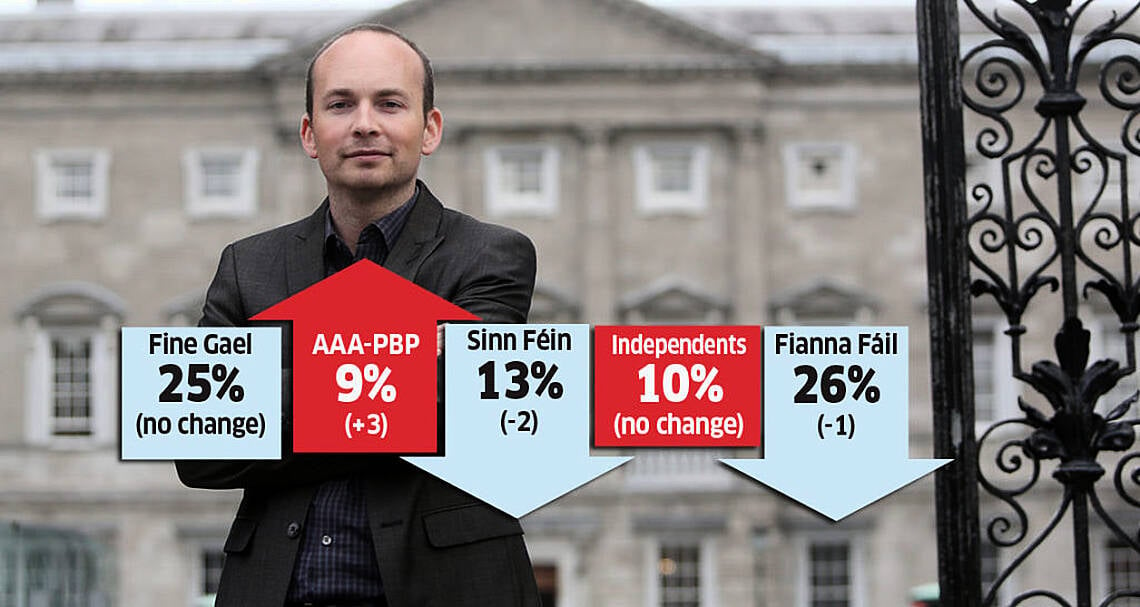
Image result for The AAA-PBP surges to record high according to Red C Poll   Image result for The AAA-PBP surges to record high according to Red C Poll

THE ANTI-AUSTERITY ALLIANCE AND PEOPLE BEFORE PROFIT PARTY HAS SEEN ITS SUPPORT SURGE TO ITS HIGHEST LEVEL IN THE LATEST SUNDAY BUSINESS POST/RED C POLL.

It is up by three points to a record 9% after extensive coverage of its attempt to pass an abortion referendum bill in the Dáil this week. The bill was defeated but party TDs such as Brid Smith, Ruth Coppinger, Paul Murphy and Richard Boyd Barrett all featured prominently in the debate.
The poll of 1,000 voters, which was carried out between Monday and Thursday last week, is also the first to show the impact of the Budget on party support.
Fianna Fáil, which played a key role in budget negotiations, has actually dropped in support by one point to 26%. It has now lost support in the last four Red C polls in a row. However, it still remains the most popular party among those polled.
Fine Gael did not make any gains from the budget two weeks ago with its support unchanged at 25%. But the Independent Alliance is up by two points to 6%. Support for other Independents, which includes the likes of Children’s Minister Katherine Zappone, Communications Minister Denis Naughten and Independent TDs in opposition, is unchanged at 10%.
While the AAA-PBP party has made gains, they appear to be at the expense of Sinn Féin, which is down by two points to 13%, and Labour, which drops by two points to 5%. The Green Party is up by one point to 3%, while the Social Democrats are down by one to 3%.

FOR A FULL BREAKDOWN AND ANALYSIS SEE BELOW.

How they stand:

Fianna Fáil 26 (-1)
Fine Gael 25 (no change)
Sinn Féin 13 (-2)
Independents 10 (no change)
AAA-PBP 9 (+3)
Independent Alliance 6 (+2)
Labour 5 (-2)
Social Democrats 3 (-1)
Green Party 3 (+1)  Totals 100. 

What do families who have already scattered the ashes of loved ones do now?

Image result for What do families who have already scattered ashes of loved ones do now?  Image result for What do families who have already scattered ashes of loved ones do now?

I REMEMBER CALLING TO GLASNEVIN TO PICK UP THE URN CONTAINING MY BELOVED FATHER’S ASHES AND WONDERING WHAT TO DO WITH IT; I COULDN’T PUT HIM IN THE BOOT, SO I STRAPPED HIM INTO THE BACK SEAT AS WE DROVE TO KERRY,

What are we going to do now? the families of the faithful who have already scattered our loved ones’ ashes? Can we assume that the new Vatican ban on the practice won’t be applied retrospectively?
Can we also ask if the Catholic Church is bent on alienating us, the relatives of the 1,300 people cremated in Ireland annually?
About 50% of all people who die in Ireland are cremated and, of those, about a quarter choose to bring the ashes home, or to scatter them.
Not all of those people are practising Catholics and many may simply choose to ignore the new guidelines issued by the Congregation for the Doctrine of the Faith and approved by Pope Francis. But for the observant, it is now against Church regulations to scatter the ashes of our departed relatives in the air, on land, at sea, or in some other way.
The measure is designed to counter so-called New Age ideas that death is a “fusion” with Mother Nature, or the “definitive liberation” from the prison of the body.
The new rules also consider it non-Christian to preserve ashes or bone fragments “in mementos, pieces of jewellery or other objects”.
That last instruction is, let’s say, interesting when you consider the bone fragments of saints that have, for centuries, been preserved “in mementos, pieces of jewellery or other objects” in lavishly made Church- approved reliquaries. You can visit them in the treasury houses of the bigger Catholic churches and cathedrals all around the world.
I love visiting those wonderful repositories, packed, as they are, with rings, chasubles, copes, beautifully illuminated books, crosses, crucifixes and breath-taking reliquaries. They offer a tantalising peep into the past.
They also show the deep human need for ritual in life but, more importantly, in death.
Of course, the key difference between the Church’s collection of mementos and those held by its grieving faithful is that the former are held in a sacred place. That is one of the central concerns behind the latest Vatican document — it insists that ashes should be kept only in sacred places, such as cemeteries.
In truth, the Catholic Church never fully endorsed cremation. It reluctantly allowed it as recently as 1963, so it is not entirely surprising to hear the Church say now that burial is the most “fitting way to express faith”.
I won’t be alone in feeling a deep sense of betrayal in that understandable U-turn. I say “understandable” because this measure is all about exercising more control and we have come to expect that from the Catholic hierarchy.
Though, it has to be said the softening of the rules on eulogies at funerals some years ago was a heartening step. In fact, only last week, at the funeral of a dear friend’s mother it struck me that Catholic funerals were one of the few truly inclusive Church occasions.
There is something genuinely comforting about allowing family members stand on the altar to recall their loved ones in those moving self-penned prayers and eulogies that are often delivered in quavering voices.
It is to the credit of Irish clergy that they allow a little of the profane to be included at the edges of their sacred rites. Allowing those family tributes has neither diluted the funeral liturgy, as was feared, nor turned religious ceremonies into some sort of a This is Your Life show. If anything, it has heightened the integrity of the sacrament and made it more meaningful to relatives and friends.
Thanks, too, to those understanding priests who bend the rules on hymns and music. My wonderful Auntie Mary went out to the strains of the Preservation Hall Jazz Band, a nod to her love of jazz and her visit to New Orleans.
But now? What about those committed Catholics who have passed on believing that the ashes of their living spouses would be scattered as theirs were, in some favoured beauty spot?
Or those deeply Christian people, now departed, who would be rocked to their core to discover that they had contravened some Church regulation?
Of course, they could not possibly know that the Church would move the goal posts, yet it is still not clear if the guidelines are retroactive or not. Worse, there is no explicit instruction on what Catholics should do if they scattered their loved ones’ ashes in a practice now deemed improper.
In the ten years since we, as a family, scattered my father’s ashes, it comforts me to think that he got the dignified funeral that he had wished for. He was a committed Catholic but more than that, he was a truly Christian man in the broadest possible sense. One of the balms during his illness were the regular visits from local priests. They, too, were Christian in the broadest sense — those kind, generous, men helped us navigate some sort of a path through those final bewildering months.
There were lots of bewildering moments in death, too. I remember calling to Glasnevin Cemetery to pick up the urn containing my beloved father’s ashes and wondering what to do with it; I couldn’t, in all conscience, put him in the boot, so I strapped him into the back seat as we drove to our native Kerry. I am almost afraid now to say exactly how we dispensed with those ashes, but I can say that, to us, it was sacred and fitting and solemn.
The Catholic hierarchy has already alienated so many with its indifference to the child abuse scandals and its continuing refusal to include women, to mention the most damaging examples. Many, however, are still happy to dance around the fringes and join in during those important times in a Catholic’s life — baptism, Communion, Confirmation, marriage and death. But for how long?
The Catholic Church is not a democracy, of course. Still, I can’t help feeling these new guidelines will prompt even more people to vote with their feet.

Irish among the biggest consumers of calories per day

Image result for Irish among the biggest consumers of calories per day  Image result for Irish among the biggest consumers of calories per day  Image result for Irish among the biggest consumers of calories per day

PEOPLE IN IRELAND CONSUME THREE TIMES MORE CALORIES PER DAY THAN THOSE LIVING IN INDIA AND WE ARE AMONG THE BIGGEST CONSUMERS OF CALORIES IN THE WORLD, ACCORDING TO A REPORT.

The average daily consumption of calories in the world is 1,398, with the lowest seen in India at 761 calories per capita per day. The highest is Belgium with 2,580 per capita per day.

THE IRISH NATIONAL AVERAGE IS AT NO 12 ON A TABLE OF 54 COUNTRIES WITH 2,307 DAILY CALORIES PER DAY.

Data analysts, Euromonitor International, reveal that Ireland’s love affair with red meat and baked goods has bumped up calorie intake.
Nutrition analyst at Euromonitor International, Sara Petersson, said the nation’s carbohydrate-heavy diet accounts for Ireland’s high calorie score.
“Most of Ireland’s calories derive from meat, followed by baked goods, with bread being the primary source within that category.
“In third place is dairy, and confectionery in fourth. This pattern is similar to what we see in other Western Countries such as the UK, the US or Canada.
“It differs from Asian Pacific Countries, where rice, noodles or nuts, play a more significant role in the diet.”
The Irish are the biggest carnivores in Europe with the nation tucking into nearly three times as many red meat dinners as our counterparts in Britain.
Irish people ate the equivalent of more than 70 steaks or 140 quarter pounders per head of population last year to become the top beef and veal eaters in Europe just ahead of the Netherlands and Denmark.
Ms Petersson said the passport nutrition data relating to Ireland also shows the country consumes a high number of liquid calories.
“Soft drinks are the seventh highest source of calories in Ireland, providing over 100 calories per capita per day, followed by alcoholic drinks in eighth place, delivering a very similar number, also over 100 calories a day.”
Our overweight and obesity prevalence has risen steadily over the past couple of decades from around 43% of the population in 1996 to 51% of the population in 2015, according to Euromonitor Data.
In terms of just obesity, according to Euromonitor, Ireland was number 53 among 80 researched countries in 1996 and is currently ranked 59 in 2015.
America had the highest rate of obesity followed by Kuwait and Venezuela.
While 43% of the US population is classed as obese, the figures showed that 14.5% of the Irish population was obese in 2015.

TOP OF THE TABLE

Euromonitor Table of Calories Per Capita for last year 2015.
  1. Belgium 2,580
  2. Austria 2,558
  3. Germany 2,519
  4. Chile 2,518
  5. Bulgaria 2,517
  6. Netherlands 2,447
  7. Hungary 2,418
  8. Sweden 2,348
  9. Finland 2,343
  10. Romania 2,334
  11. Czech Republic 2,321
  12. Ireland 2,307

Now revealed the 32 best pubs in Ireland for a drink and a bite

Image result for Moran's Oyster Cottage in Kilcolgan  Image result for Sligo's top gastropub is Hargadon in Sligo town  Image result for Oarsman in Carrick-on-Shannon

SOME QUALITY PUB EATING HOUSES WEST OF THE SHANNON ABOVE.

IF YOU HAVE BUILT UP AN APPETITE AS WELL AS A THIRST, 32 IRISH PUBS ACROSS 15 COUNTIES CAN PROVIDE THE SOLUTION.

The hostelries north and south of the Border have been named in the prestigious 2017 ‘Michelin Eating Out In Pubs Guide’.
Of the 32 establishments listed, 25 are in the Republic and seven are in the North.
And if you’re in Dublin, the two winners are only about 100 metres apart.
Down dominates the winners with six listings, followed closely by Cork with five, Clare with four and Kildare with three.
Galway, Dublin and Mayo each received two listings, while Antrim, Kerry, Leitrim, Louth, Sligo, Tipperary, Wexford and Wicklow all have one.
The capital’s listings are the Old Spot and the Chop House, both located in Ballsbridge, Dublin 4.
General manager of the Old Spot, Conor Kavanagh, spoke about what it takes to be listed in the guide for the second year in a row.
“We opened at the end of 2014, so we’re really delighted about this,” he said. “We have a real dedication to quality and because we declared ourselves as a gastropub when we opened. I think people wanted to come and see us to check us out.

OFFERING QUALITY.

“We offer fantastic food in a pub environment, very high quality produce, great wine and a great cocktail list. We’re in a great part of Dublin, right beside the Aviva Stadium.”
Antrim’s listing is Billy Andy’s in Mounthill, near Larne. Clare’s pubs are Morrissey’s in Doonbeg, Vaughan’s Anchor Inn in Liscannor, the Wild Honey Inn in Lisdoonvarna and Linnane’s Lobster Bar in New Quay.
Cork’s listed pubs are Mary Ann’s in Castletownshend, the Poacher’s Inn in Bandon, Deasy’s in Clonakilty, Cronin’s in Crosshaven and Toddies at The Bulman in Kinsale.
Down’s winning pubs were the Pheasant in Annahilt, the Poacher’s Pocket in Comber, the Parson’s Nose and the Plough Inn, both in Hillsborough, Pier 36 in Donaghadee and Balloo House in Killinchy.
Galway’s listings were Moran’s Oyster Cottage in Kilcolgan and O’Dowd’s in Roundstone.
Kerry’s listed pub is the O’Neill’s Seafood Bar in Caherciveen. Kildare impressed with Hartes in Kildare town, the Ballymore Inn in Ballymore Eustace and Fallons in Kilcullen.
Leitrim’s stand-out pub is the Oarsman in Carrick-on-Shannon, while Co Louth’s is Fitzpatrick’s in Jenkinstown.
Mayo’s listings are The Tavern in Murrisk and the Sheebeen in Westport.
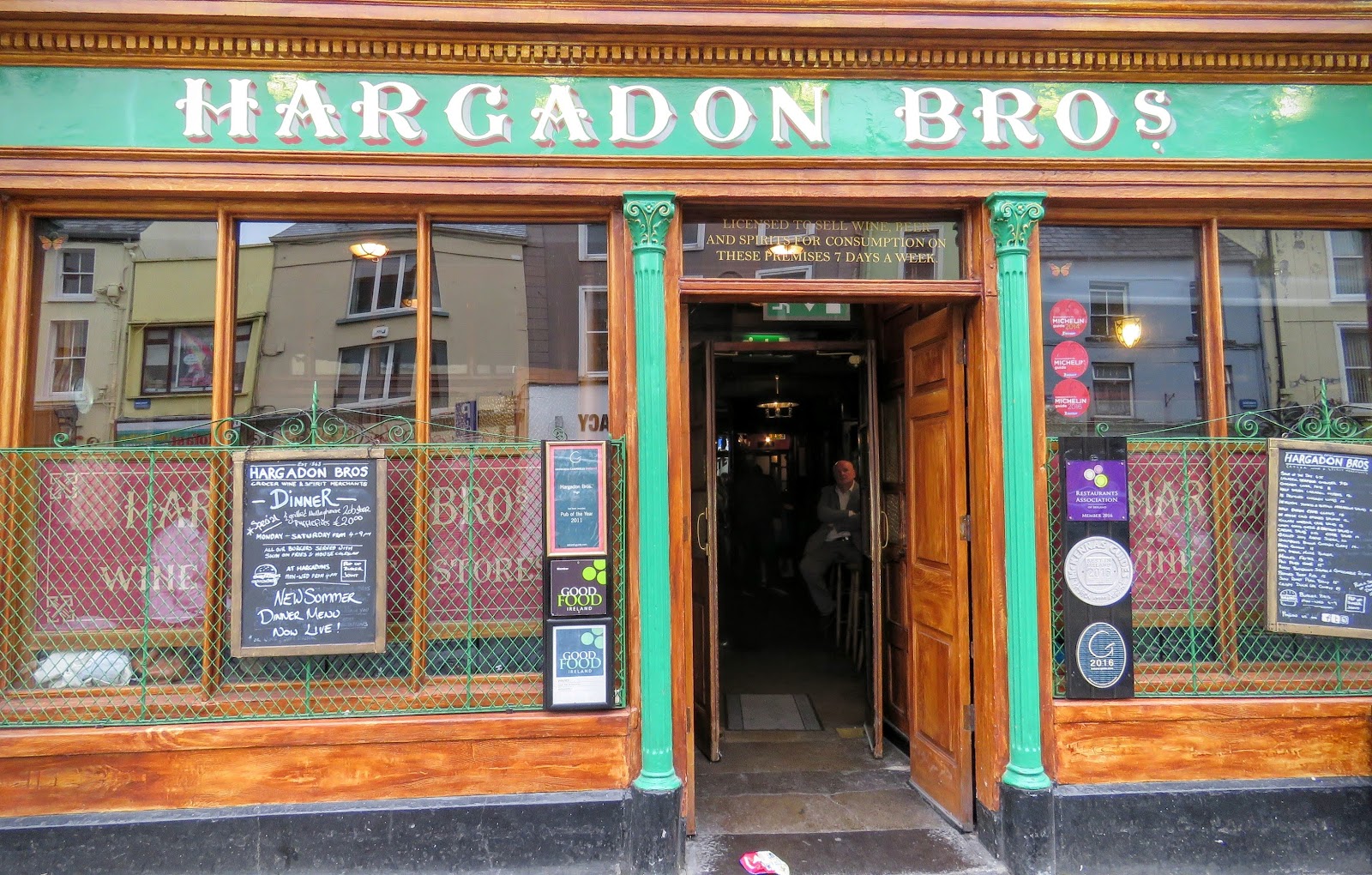
Sligo’s top gastropub is Hargadon in Sligo town, while Larkins in Garrykennedy is the premier pub in Tipperary.
Wexford’s listing is the Lobster Pot in Carne, while Wicklow won with Byrne & Woods in Roundwood.
Wild Honey Inn and Toddies at The Bulman both retained an ‘Inspectors’ Favourites’ commendation, described as “establishments found to be particularly charming and which offer something extra special”.

Fossilised dinosaur brain discovered for the first time same as Crocodiles and Birds

Image result for Fossilized dinosaur brain discovered for the first time same as Crocodiles and Birds Image result for Fossilized dinosaur brain discovered for the first time same as Crocodiles and Birds  Scanning the fossil (pictured) revealed the brain tissue had distinct similarities to those of modern-day crocodiles and birds
Scans from the fossil (pictured above right) revealed the brain tissue had distinct similarities to those of modern-day crocodiles and birds.

WE’VE LONG KNOWN THAT DINOSAURS EXISTED, MAINLY BECAUSE OF THEIR FOSSILIZED SKELETONS. HOWEVER, WE’VE NEVER SEEN A BRAIN UNTIL JUST RECENTLY.

Scientists have come across several dinosaur fossils in the past, but never have they seen a fossilized dinosaur brain. Well, this is no longer the case for the first fossilized brain tissue has been found in southeast England.
The small clump of the rock-looking object most likely comes from a dinosaur that lived 133 million years ago. According to scientists, what they have found is a small brain tissue of a leaf-eating dinosaur, a large one at that. Researchers are not 100 percent confident of the type, but it could be similar to an Iguanodon.
According to a report released by the Geological Society of London, the specimen is the first brain tissue found for a dinosaur, so there is a chance of finding more, but those chances are rather slim. Furthermore, scientists say the fossilized brain tissue has similar characteristics to that of crocodiles and birds.
“What we think happened is that this particular dinosaur died in or near a body of water, and its head ended up partially buried in the sediment at the bottom,” said David Norman from the University of Cambridge. “Since the water had little oxygen and was very acidic, the soft tissues of the brain were likely preserved and cast before the rest of its body was buried in the sediment.”
Here’s the thing, these findings could potentially shed light on how dinosaur brains and the brains of other ancient creatures have evolved over millions of years. This has always been a problem for researchers, but things could change for the better.
One of the reasons why scientists haven’t come across dinosaur brain tissue in the past is the fact that brains are the first part of a body to decay. It’s quite surprising this clump of brain tissue has been found, considering the circumstances.
More Findings On The Horizon?
This finding should allow scientists to have an idea of what to look for when seeking out fossilized dinosaur brains. They know where to look now, so it’s only a matter of time, no matter how long, before another clump of brain is located.
How Smart Were The Dinosaurs?
Where the brain fossil was located in the skull should give scientists an idea of how intelligent the ancient creatures were. However, they are hesitant at coming to any conclusion based on a single fossil. We’re guessing if more fossils are found in the future, researchers will make an announcement. Don’t be too surprised if these creatures were as smart as a crocodile. That would be scary, right?
A New Dinosaur Species
Recently, we reported the discovery of a new species of plant-eating dinosaur in Australia. This is the first to ever be discovered in the country, and we’re sure it won’t be the last. We understand the creature is a long-neck Sauropod, and spans nearly half the length of a basketball court.   

Thursday, October 15, 2015

Donie's Ireland daily news BLOG

Families of Ireland the focus of Budget as Coalition unveils an election vote catch all process


The main focus of the package on USC cuts and increases to pensions, Christmas bonus and child benefit.

The Government has laid the ground for its re-election campaign with a budget designed to deliver increased income to every home in the State.
On a day of tax cuts, pension increases and special measures for parents of young children, the Coalition parties also sought to set the agenda for the election to come with a series of pledges for a second term if they are returned to power.
The centrepiece of Budget 2016 is a 1.5 percentage point cut in the 7 per cent universal social charge rate which applies to earnings up to €70,044. Workers on more than €70,044 gain from this cut, but earnings above that amount will remain subject to the 8 per cent USC rate.
The 3.5 per cent and 1.5 per cent USC rates on low income will each be cut by 0.5 percentage points.
“If people are wondering how much they will gain, it will be approximately a full extra week’s wages at all points of income. It is an easy way of assessing what the income gain might be,” Mr Noonan told the Dáil.
The package of USC cuts came on top of increases to child benefit, the extension of free GP care to all children under 12 and an additional year of free preschool childcare.

The self-employed

There were also measures to ease the tax burden on the self-employed, homeowners, farmers and hauliers.
Mr Noonan said that the Government parties would work “progressively” to eliminate the USC if re-elected. Another election pledge was to complete tax equalisation for the self-employed and other measures to support job creators.
On RTÉ television last night, Taoiseach Enda Kenny made it clear that the election will take place next spring. Asked whether he might be tempted to cut and run after the budget, Mr Kenny said: “No, there won’t be an election this year.”
Earlier, Mr Noonan told reporters: “You can be absolutely certain there will be no election between now and Christmas.”
Mr Noonan raised duty on cigarettes by 50 cent a packet from midnight, the only tax increase next year.
A continuation for five years after 2016 of the €150 million annual bank levy will raise €750 million.
Among the spending measures set out by Minister for Public Expenditure Brendan Howlin were a €3 a week increase in the old age pension and a €5 increase in child benefit. The Christmas bonus will be reinstated to 75 per cent of the pre-abolition rate for all social welfare recipients.
Mr Howlin said the Coalition had, through prudent management of the State’s finances, brought the State back from the brink. “Who speaks of Syriza now?” he asked.
The package, predicated on a 4.3 per cent gross domestic product next year, was cast to reduce the budget deficit in 2016 to 1.2 per cent of GDP from 2.1 per cent in 2015.
The plan was cast to foster job creation as a cornerstone of budgetary strategy, making work pay for people taking up jobs.
Mr Noonan said the barriers to taking up employment included taxation, wage levels for the low paid and childcare costs, all of which were being addressed in the budget.

‘An more unequal place’

Fianna Fáil finance spokesman Michael McGrath said the budget continued the Government’s trend of making Ireland “a more unequal place” and lone parents, women and the elderly had been targeted in successive budgets.
His party colleague Barry Cowen strongly criticised the failure of Government to introduce rent certainty measures.
Sinn Féin finance spokesman Pearse Doherty said the cut in USC and the changes to PRSI would put three times more in the pocket of someone earning €70,000 a year compared to the average worker

Joan Burton says election should not be held before the banking inquiry finish of the new year?


Joan Burton said the banking inquiry should be allowed to take its course. 

Tánaiste Joan Burton has said she believes the banking inquiry should be allowed to finish its work before an election is held.
Speaking at a jobs announcement in Dublin, Ms Burton said the Government had made the inquiry a priority, and because it now had an extension into January, she said it was important that it should be allowed “take its course”.
Asked about speculation of a November vote, the Tánaiste said she had had “a long and very friendly” conversation with Taoiseach Enda Kenny last night, and she believed that an election should not be held until after the banking inquiry had published its report.
She said the talks she had with Mr Kenny were “very similar to all other conversations” she had had with him on the topic, adding that the Government was focused on doing the job it was elected to do.
Earlier, during a speech announcing the creation of 200 jobs at software firm Workday, Mr Kenny had joked that there may not be an election within the next six months.
The Fine Gael leader said the electoral cycle was “seven years in the Constitution, but convention says it’s five”.
Elsewhere today, Minister for Education Jan O’Sullivan told RTÉ’s News at One that she expects the election will take place after St Brigid’s Day.

When asked if Labour trusts the Taoiseach to hold on until the spring, the Labour minister said: “Yes, we do trust the Taoiseach … everything the Taoiseach has said has been reiterated by the Tánaiste that the election will be in the spring and that is the Government position on it.”

Hallucinations ‘help make sense of world’


The brain records information from the colour image on the left.

Hallucinations, often associated with psychotic disorders, may result from a natural process used by the brain to make sense of the world, say scientists.
The results of a new study support the theory that many people are close to the edge of this aspect of madness at least.
Visions and sounds that do not exist can be generated by the brain’s habit of predicting what it expects to experience, filling in missing gaps in reality, the search shows.
It is this ability that allows you to recognise a fast-moving black shape in your living room as the cat, even though it was little more than a blur.
Professor Paul Fletcher, one of the scientists from the Department of Psychiatry at Cambridge University, said: “Having a predictive brain is very useful – it makes us efficient and adept at creating a coherent picture of an ambiguous and complex world.
“But it also means that we are not very far away from perceiving things that aren’t actually there, which is the definition of a hallucination.
“In fact, in recent years we’ve come to realise that such altered perceptual experiences are by no means restricted to people with mental illness. They are relatively common, in a milder form, across the entire population. Many of us will have heard or seen things that aren’t there.”
The Cambridge team together with colleagues from the University of Cardiff set up an experiment to see if people with psychotic tendencies are better at mentally filling in missing parts of pictures.
Participants were shown black and white images that looked little more than a collection of lines and blotches until the full colour originals were seen.
Once the complete picture was recorded in the brain it became possible to recognise what the crude black and white outlines were meant to represent.
But not everyone found the task equally easy. People with very early signs of psychosis performed better than volunteers with no symptoms of mental illness.
When the same experiment was conducted with a larger group of 40 members of the general public, a range of ability was seen. Individuals who had higher scores in tests for psychosis-proneness – but no psychotic symptoms as such – stood out.
The research is published in the journal Proceedings of the National Academy of Sciences.
Naresh Subramaniam, also from Cambridge University, said: “These findings are important because they tell us that the emergence of key symptoms of mental illness can be understood in terms of an altered balance in normal brain functions.
“Importantly, they also suggest that these symptoms and experiences do not reflect a ‘broken’ brain but rather one that is striving – in a very natural way – to make sense of incoming data that are ambiguous.”

Some patients go from being claustrophobic and immobile to running marathons if they lose enough weight’

Colm O’Boyle is a consultant bariatric surgeon and laparoscopic general surgeon at Bon Secours Hospital in Cork, and senior clinical lecturer at UCC Medical School

   
Colm O’Boyle, bariatric surgeon at the Bon Secours Hospital, Cork.
I am one of only four bariatric surgeons in the country, so people come from afar. More than half my patients are from outside Munster. Patients regularly travel from Dublin, Galway and Limerick for surgery.
Bariatric surgery is a most rewarding surgical discipline, because the majority of the patients are absolutely delighted with the results of surgery. No other surgical procedure can cure the majority of the patients’ medical conditions, greatly improve how they look in the mirror and make them feel so much happier in themselves.
Women in particular are delighted to be able to drop a few dress sizes. They often relate how they can buy off the peg in “normal” clothes shops when previously they had to get clothes tailormade or buy from special sites online.

Surgery is last hope

Men tend not to be so image conscious and, for many, surgery is their last hope to have medical conditions such as diabetes or high blood pressure cured or improved. As there is a very significant improvement or cure in the rate of diabetes, hypertension or sleep apnoea as well as the obvious cosmetic benefits from significant weight loss, the patients tend to be very happy with the results.
The most common bariatric surgical intervention is the gastric sleeve followed by gastric bypass. Bariatric surgeons are moving away from gastric band surgery as the long-term results are not as good as other procedures. I’ve taken out more bands in the past year than I have put in, and the commonest obesity operation in France – where they put in thousands of bands – is removal of gastric bands.
The gastric sleeve procedure involves removing four-fifths of the patient’s stomach, leaving a narrow, banana-shaped tube or sleeve. The patient can’t eat as much after the surgery and has to start on a diet of yogurt and milky porridge before moving on to smaller amounts of solid food, which they must chew well. As I tell my patients, their starter becomes their main course after surgery.
Patients lose one to two stone in the first couple of months after surgery and 90 to 95 per cent lose a total of between five and eight stone. The more motivated a patient is, the better they do. Surgery breaks the cycle of weight gain, but it’s not a magic bullet. Once they get down to a certain level, the patient has to eat healthily and exercise, ideally for an hour a day, to keep the weight off.
The causes of obesity are multifactorial. Many morbidly obese patients suffered some sort of trauma in their childhood and turned to food as a result, and there are some people whose satiety centre in the brain is probably set higher.
I do the operation that helps my patients to lose the weight but, at the end of the day, keeping the weight off is in their own hands. In many ways, an operation is not the best way to treat obesity, but it’s the best we have. Someday they may invent a pill that will suppress appetite without any side effects but I don’t think it will happen without the patient working on their diet and exercise as well; there will always have to be an element of patient self-control.

Centre of Excellence Award

The surgical unit at the Bon Secours Cork has recently obtained a Centre Of Excellence award from the International Federation for Surgical Obesity. We are the first unit in Ireland to obtain such an award and I am delighted for the hospital and the team that we have been given the credit for the high standard of care we provide for our patients.
I work as part of a large team including dietitians, physiotherapists, nursing staff, endocrinologists, cardiologists, radiologists, anaesthetists and respiratory physicians.
This wide medical team is very important for the management of morbid obesity, which can be associated with very complex medical conditions such as diabetes, hypertension and sleep apnoea. These patients also require regular psychological input.
The hospital has invested significantly in refurbishing a dedicated ward of individual rooms for bariatric surgical patients. Beds, chairs, doors and washing facilities are specially geared towards larger patients. Theatre equipment is all designed to deal with patients weighing up to 350kg.
I enjoy teaching the medical students. It keeps me on my toes. I have at least two final-year medical students attached to my team in any week. During their time with my unit, I will teach them how to treat general surgical and bariatric patients. They attend my endoscopy and theatre lists and come on ward rounds. As postgraduate tutor, I also regularly give lectures to the junior doctors and nursing staff to help them gain a better understanding of surgery so I am continuously teaching.
I am an examiner for final medical examinations for UCC. I am a member of the teaching faculty for the Royal College of Surgeon’s (UK) minimally invasive surgical skills course. I regularly commute to London to teach on this course.

My gatekeeper. 

My working week begins and ends with invaluable support from my PA, Caitríona O’Sullivan, who is the link between my patients and my service. After eight years working with me, she has acquired the skills of secretary, gatekeeper, counsellor, nurse, diagnostician and data manager, all in one.
Monday morning begins with a unit ward round at 8am with the junior doctors, medical students and nursing staff. This is followed by my endoscopy (scope) list. I regularly perform endoscopic procedures for bariatric patients before surgery to rule out ulcers or identify undiagnosed hiatus hernias.
Monday afternoon is my bariatric clinic for new referrals, where I see patients who are contemplating bariatric surgery for the first time. I usually spend up to an hour discussing the various options with the patients. Patients are often very emotional as it takes great courage to admit that you need an operation to lose weight. Many have been thinking of having surgery for years but have not been able to pluck up the courage to see someone.
Most patients have tried everything possible to get their weight down, including every diet and every diet pill on the market.
Many actually cry at finding someone who is empathetic and who can “cure” the condition they have battled all their lives.
I usually ask the patients to bring a relative with them. I give them booklets explaining the surgery and take them through a presentation explaining the benefits of having it.
I give them the contact details of patients who have had surgery in the past and who are willing to chat with them. I advise them to go to the patient support group meetings [at Bon Secours Hospital in Cork on the first Tuesday of every month], where patients who have had surgery and patients who are thinking of having surgery sit around and have an informal chat. Many patients make long-term friends with others when they go through the surgery together.
After that clinic, I carry out an evening ward round and review all the patients who have come in to have bariatric surgery on the following day.

Operating list

On Tuesdays at 7am I do paperwork followed by an early-morning pre-operative ward round. After this I attend the hospital radiology meeting, where all the medical staff meet and review complex (non-cancer) cases as a group. This is followed by my bariatric operating list, which may finish any time up to 8pm. I will perform between one and four bypass/sleeve procedures during the day.
During and between operations, I will teach the medical students and junior doctors who are attached to my service. I also tend to do my general surgical on-call on a Tuesday. After operating I will do a ward round with the team and review the postoperative patients and see any emergency general surgical patients who have been admitted to the hospital that day.
If any patients need emergency surgery, I will perform this during the day or that night. I work with three other general surgeons. One day in four I am on call for a continuous period of 24 hours for acute surgical admissions and any emergency surgical condition that may arise in the hospital.
Wednesday morning begins at 7.30am with a post-take ward round. I review and assess all the patients who have been admitted as an emergency during the previous 24 hours. If anyone needs surgery, I will try to arrange this for Wednesday afternoon or sooner. This is followed at 8am by surgical journal club/case presentations; an important meeting which is largely run by the surgical SHOs and registrars, and attended by all the surgical consultants. I then attend my general surgical clinic followed by my general surgical theatre list on Wednesday afternoon. This usually finishes at 6pm and I carry out a postoperative ward round and post-take review of all the acute admissions and the investigations that the patients have had during that day.

Multidisciplinary meetings

Thursday morning begins at 7.30am with a ward round. After that we have the cancer multidisciplinary team meeting, during which all physicians, surgeons, radiologists and pathologists involved in cancer surgery review all cancer cases. This is one of the most important meetings in the week.
After this meeting I have my bariatric review clinic. I review all patients undergoing weight-loss surgery. Many of the patients I have treated go from being claustrophobic, immobile and sometimes bedridden to ultimately running marathons once they have lost a significant amount of weight. The improvement in their quality of life is really quite dramatic.
It is amazing to see some people change their lifestyles from being TV addicts and agoraphobics to committed athletes in love with the outdoors.
I might have an operation to perform on a patient who was admitted during the week, or a course or conference to attend. I use any spare time to carry out paperwork or surgical research.
I am currently involved in a number of research projects. My particular interests are the benefits of surgical weight loss on medical conditions such as diabetes, hypertension, sleep apnoea and urinary incontinence. I regularly attend national and international meetings and present our research at these meetings. We have submitted two scientific papers to international journals for publication. And our team has published a bariatric book entitled Weight-loss surgery: A comprehensive medical team approach.

Out of hours

My favourite time is spent with my wife, Ursula, our four children, and Davis, our Labrador, near Sliabh Laig in Donegal at the northern part of the Wild Atlantic Way, where we love to swim, kayak, fish and mountaineer. We also all have a keen interest in scuba diving and I am working towards a Divemaster qualification. I have season tickets for Munster and Ireland rugby matches and travel to Thomond Park and the Aviva Stadium whenever possible.

€88bn SAB-Miller takeover in Beverages is a bid to shake up global brewing


The world’s two biggest brewers yesterday agreed to create a company making almost one third of the world’s beer after SAB-Miller accepted an offer worth more than $100bn from larger rival Anheuser-Busch InBev.

The SABMiller board said it would give its blessing to a fifth proposal from its sole larger rival. If it goes through, the deal would rank in the top five mergers in corporate history and be the largest takeover of a UK company.
After repeated rejections to its lower proposals, AB InBev said on Tuesday it was willing to pay £44 in cash per SABMiller share, with an alternative for cash and shares set at a discount and limited to 41% of SABMiller shares.
The tie-up could also force change in the wider beverage sector, with SABMiller a large distributor of Coca Cola while AB InBev has ties with rival PepsiCo.
The new group would combine AB InBev’s Budweiser, Stella Artois, and Corona lagers with SABMiller’s Peroni, Grolsch, and Pilsner Urquell. AB InBev would add certain Latin American and Asian breweries to its already large presence and, crucially, enter Africa for the first time.
Africa is expected to see a sharp jump in the legal drinking age population in coming years and a fast-growing middle class more willing to switch to lagers and ales from illegal brews.
For many observers, this would be the final chapter of decades of consolidation in brewing. The big four, AB InBev, SABMiller, Heineken, and Carlsberg are already present across the globe and brewing more than half of the world’s beer.
The new offer surpasses a Monday proposal set at £43.50 in cash and is 50% above SABMiller’s shares on September 14, the day before speculation surfaced about an impending AB InBev approach.
The partial share alternative remains, designed for SABMiller’s two main shareholders, cigarette-maker Altria and the BevCo company of Colombia’s Santo Domingo family, who own 40.5% of the UK-based brewer.
“There’s so much we don’t know, we don’t know what costs they’ll take out, we don’t know what they’ll get for the asset sales that they’ll have to make,” said Morningstar analyst Phil Gorham.
“But if you make reasonable assumptions about those, I think it’s a pretty good price all around.”
There are significant antitrust hurdles to any combination, particularly in the US, where the companies would have about 70% of the beer market.
A deal would likely result in Denver-based Molson Coors acquiring SABMiller’s 58% stake in their US joint venture. Any merged group may also have to sell interests in China, where SABMiller’s CR Snow joint venture with China Resources Enterprise is the market leader.
Mr Gorham said that, of remaining its assets, the beer business of Guinness and spirits maker Diageo looked particularly attractive, with Heineken a possible buyer.
Carlsberg’s new management is likely to have its hands full with sorting out problems in Russia for some time.
“With all the major M&A targets now taken, and M&A so important to brewers’ growth, it raises the question of where next for global brewers as they bid to carry on growing,” said Jeremy Cunnington, a drinks analyst at Euromonitor International.

The melting of the Antarctic ice shelves may double by year 2050

   
The surface melting of Antarctic ice shelves may double by 2050 and surpass intensities associated with ice shelf collapse by 2100 if greenhouse gas emissions continue at the present rate, a new study has warned. 
Ice shelves are the floating extensions of the continent’s massive land-based ice sheets, researchers said.
While the melting or breakup of floating ice shelves does not directly raise sea level, ice shelves do have a “door stop” effect: They slow the flow of ice from glaciers and ice sheets into the ocean, where it melts and raises sea levels.
“Our results illustrate just how rapidly melting in Antarctica can intensify in a warming climate,” said Luke Trusel, lead author and postdoctoral scholar at Woods Hole Oceanographic Institution (WHOI) in US.
“This has already occurred in places like the Antarctic Peninsula where we’ve observed warming and abrupt ice shelf collapses in the last few decades,” said Trusel.
“Our model projections show that similar levels of melt may occur across coastal Antarctica near the end of this century, raising concerns about future ice shelf stability,” he said.
To study how melting evolves over time and to predict future ice sheet melting along the entire Antarctic coastline, the scientists combined satellite observations of ice surface melting with climate model simulations under scenarios of intermediate and high levels of greenhouse gas emissions until the year 2100.
The results indicate a strong potential for the doubling of Antarctica-wide ice sheet surface melting by 2050, under either emissions scenario.
However, between 2050 and 2100, the models show a significant divergence between the two scenarios.
Under the high-emissions climate scenario, by 2100 ice sheet surface melting approaches or exceeds intensities associated with ice shelf collapse in the past.
Under the reduced-emissions scenario, there is relatively little increase in ice sheet melting after the doubling in 2050.
“The data presented in this study clearly show that climate policy, and therefore the trajectory of greenhouse gas emissions over the coming century, have an enormous control over the future fate of surface melting of Antarctic ice shelves, which we must consider when assessing their long-term stability and potential indirect contributions to sea level rise,” said Karen Frey, Clark University Associate Professor of Geography.

These African baby dwarf crocodiles will melt your heart  “I swear”

    
Five baby West African dwarf crocodiles are already swimming alongside their parents – just eight days after hatching.
The youngsters, which measure around 15cm long, hatched following three months of natural incubation at Bristol Zoo Gardens.
They are now exploring the Zoo’s Reptile House along with their “protective” parents, under the close eye of keepers.
Tim Skelton, curator of Reptiles and Amphibians at the zoo, said: “The mother has been with us for over 20 years and we have reared the father since we rescued him over 10 years ago from a customs confiscation at Heathrow airport, so it’s great to see them rearing young so well.
“They are proving to be good and protective parents so we have let them get on with looking after the new arrivals with very little intervention.
“They seem to be doing well but we are keeping a close eye on them while they are still very young.”
It is the third breeding success for the species at Bristol Zoo in the past four years.
Despite being a powerful predator, the West African dwarf crocodile is under threat due to hunting for their meat and habitat loss through deforestation and logging.