Pages

Showing posts with label Dairy. Show all posts

Monday, January 4, 2016

Donie's Ireland daily news BLOG

Credit union rules relaxed to allow investment in social housing

FINANCE MINISTER MICHAEL NOONAN HAS ORDERED A REVIEW INTO THE LIMITS ON THE SECTOR


MINISTER FOR FINANCE MICHAEL NOONAN TD SPEAKING TO MEDIA AT GOVERNMENT BUILDINGS FOLLOWING RENT CERTAINTY PROPOSALS AND INCREASED HOUSING SUPPORTS.

The Central Bank is scrapping a rule that prevents credit unions from investing in public projects, such as social housing.
The country’s credit unions have long campaigned to be allowed to invest in social housing. The Irish League of Credit Unions said in November that it had up to €8.5bn of members’ deposits available to help solve Ireland’s social housing crisis and that it could not understand why the Government was prohibiting this.
Department of Finance assistant secretary-general Ann Nolan confirmed to the country’s biggest credit unions that the prohibition is being scrapped last month.
“Following discussions with the Central Bank, I have been informed that regulations have been updated in relation to classes of investments for credit unions to specifically include investments in projects of a public nature, including investments in social housing,” Ms Nolan wrote on December 16.
Many other rules governing credit unions are also being reviewed, following the surprise move by Finance Minister Michael Noonan in December to order a statutory committee to probe the limits imposed on the sector, such as limitations on the nature and term of lending.
Many of these rules were originally introduced by the Central Bank, based on a 2012 report by the Commission on Credit Unions, another statutory group.
The Central Bank has been accused of implementing the Commission’s recommendations in a manner inconsistent with their spirit and intent. Some credit unions deem them onerous.
The new review, to be conducted by the Credit Union Advisory Committee, will begin this month and is expected to report by the end of June.
The Sunday Independent has seen its terms of reference and among the things the committee must take into account is “the need for credit unions to develop their business model and grow income in a prudent manner”.
The contentious €100,000 savings cap for credit unions has already been relaxed. Credit unions with more than €100m in assets may apply to the regulator to accept more than €100,000 from individual savers.
The Credit Union Development Association, which represents some of the country’s largest credit unions, wants the regulator to go further. Writing in the Sunday Independent today, CUDA chief executive Kevin Johnson called for the introduction of tiered regulation, whereby larger credit unions would be given more freedom than smaller credit unions.
“Tiered regulation, done properly, will allow some credit unions to continue to offer basic savings and loans, while allowing other credit unions to develop and offer a greater range of services, as long as they have what is necessary to manage the additional risks,” he writes.
“Credit unions need to be allowed to compete with banks… Fundamentally, credit unions offering a full range of services will drive great competition – something that is sorely lacking in Ireland at the moment.”

House prices outside Dublin up 13% as supply at decade low
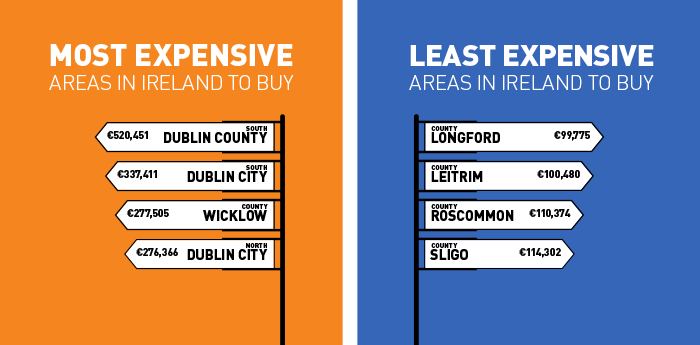
  

HOUSE PRICES OUTSIDE OF DUBLIN SOARED IN 2015, WHILE THE NATIONAL HOUSING SUPPLY NOW STANDS AT ITS LOWEST POINT IN ALMOST A DECADE.

According to the latest Daft.ie house price report, prices rose by an average of 8.5% in 2015.
However, the national average hides a significant difference between Dublin,  where prices rose by just 2.7% — and the rest of the country, where the average asking price jumped by 13.1%.
The report found the national average asking price in the final quarter of 2015 was €204,000, compared to €188,000 a year ago and €164,000 at its lowest point in early 2013.
The different trends in Dublin and elsewhere mark a turnaround from 2014, when prices rose by 21% in the capital and by 9% elsewhere.
The Daft.ie report highlights that the slowdown in Dublin inflation occurred at a time when inflation in Ireland’s other cities accelerated.
For example, house prices rose by an average of 20.7% in Cork in 2015 compared to 14.7% in 2014, and by 19.7% in Galway compared to 16.3% in 2014.
In Waterford City the rate of inflation increased significantly, with prices up 18.6%, compared to 4.1% a year ago.
However, the most dramatic change in house prices has occurred in Limerick City.
A year ago, prices in the city were falling by 1.3% year-on-year, but in the last 12 months they have risen by 22.3%.
Prices in the city are now back at mid-2012 levels.
Elsewhere in the country, inflation has accelerated from 8.8% in 2014 to 12.1% in 2015. The Daft.ie study also pointed out that the total stock of properties for sale is now at its lowest point in nearly nine years, with just over 25,000 properties for sale nationwide.
A year ago, there were nearly 30,000 properties on the market, with the bulk of the reduction coming from outside of the five main cities.
Ronan Lyons, economist at Trinity College Dublin and author of the report, said the dramatic slowdown in Dublin house prices in 2015 shows how effective the Central Bank deposit rules have been there, but that this had not been replicated elsewhere.
“This has not been the case elsewhere in the country as house prices are lower relative to incomes and thus the new rules have not been as binding.
“Some have criticised the new rules as hindering new housing supply, but the solution to a lack of supply is not stimulating demand even more.
“If supply is lacking, the solution to this must be found in reducing construction costs, not in giving borrowers access to potentially dangerous levels of mortgage credit,” he said.

Minister Frances Fitzgerald says miscarriage’s are one of Ireland’s main taboos

MINISTER RECALLS HER MISCARRIAGES, SAYS FAMILIES HAVING MISCARRIAGES AT OLDER AGE AS THEY WAIT TO HAVE CHILDREN

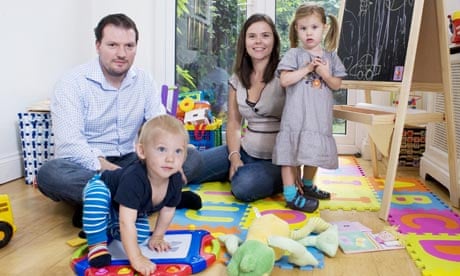
   

‘A LOT OF PEOPLE ARE HAVING MISCARRIAGES AT AN OLDER AGE BECAUSE THEY WANT TO HAVE BABIES AT AN OLDER AGE,’ MINISTER FOR JUSTICE FRANCES FITZGERALD SAID OF A SUBJECT THAT STILL REMAINS A TABOO IN IRELAND SHE SAYS.

Miscarriages are one of Irish society’s main taboos in an era where couples are choosing to have children later in life, Minister for Justice Frances Fitzgeraldhas said.
Ms Fitzgerald, who spoke about having had two miscarriages, said it has become an issue for an older demographic.
“A lot of people are having miscarriages at an older age because they want to have babies at an older age, so it is more stressful. Then they think: ‘Am I going to get pregnant again?’” she said in an interview with the Irish Examiner.
“Younger generations of men and women have gotten into the mindset, and that is obviously linked to the availability of contraception, there is a belief that you can plan a pregnancy.
“Of course, first of all, there are fertility issues as you get older. Secondly, the fact is a lot of pregnancies end in miscarriage, there is a shock and disbelief for people.”
More than one in five pregnancies result in miscarriage. Ms Fitzgerald said the availability of contraception had impacted on people’s perceptions around having children.
Of her own experience she recalled the shock of being told by doctors but that going on to have subsequent successful pregnancies had helped her.
“For me, I went on to have a second and a third pregnancy afterward, so you can recover from it.
“And you can kind of accept, well there was something wrong and there is a reason for it.”

First there was no shaving, then no booze and now meat and dairy face the chop

Veganuary campaign expects 50,000 people to join the likes of Vivienne Westwood, Romesh Ranganathan and Sara Pascoe for a month free of animal products

     
L-R Gwyneth Paltrow, Brad Pitt, Sara Pascoe, Romesh Ranganathan Composite: REX Shutterstock & Graeme Robertson
In the beginning, there was Movember. Then there was Stoptober. Now prepare yourself for Veganuary.
Those who have overindulged this festive period may be tempted to turn vegan for January. If so, they will not be alone. Organisers of Veganuary, now in its third year, predict that 50,000 people will take part this month, of whom around half will stay vegan.
About 3,000 people participated in the first Veganuary. Last year the figure rose to 12,800. But eschewing meat, fish and dairy products is now becoming increasingly fashionable thanks to a number of high-profile advocates.
Famous names who have tried vegan diets in the past include Bill Clinton and actor Anne Hathaway. Committed vegans include Brad Pitt, Ellie Goulding and Gwyneth Paltrow. Kat Von D, an American tattoo artist and model, crashed theVeganuary website earlier this year when she encouraged people to register.
Among the celebrities taking part this month are comedians Romesh Ranganathan and Sara Pascoe. Actor Peter Egan of Downton Abbey fame and designer Vivienne Westwood have also signed up.
Organisers of the event claim the surge in support for veganism reflects a growing awareness that it can help alleviate the world’s food crisis.
Rearing animals for consumption and dairy production produces significantly more carbon dioxide than plant-based food. In addition, animal farming is the leading producer of methane gas, a major contributor to global warming. However, organisers said that a concern for animals was still the primary motivation for people becoming vegan.
“We ask about motivation when people sign up to Veganuary and, for the past two years, animals are the primary reason by a large majority, with health coming second, and the environment third,” said Clea Grady, marketing manager of Veganuary.
“There is an increasing awareness and concern at how we treat, use and abuse animals, and this is growing year on year. Anecdotally, we know that, for whatever reason an individual approaches veganism, the lines begin to blur once education has taken place.”
The business world is now waking up to the growing vegan market. Companies such as VBites, Violife and Fry’s market products such as vegan cheese, ice-cream, “fish” fingers, burgers, sausages, schnitzels and “chicken” nuggets.
Pret a Manger has been expanding its range of vegan sandwiches; Caffè Nero labels its mince pies as vegan; and Pizza Express has a vegan pizza on its regular menu. Both Yo! Sushi and the Handmade Burger Company are doing special promotions in support of Veganuary.
“There has been a marked increase in enthusiasm in the UK over the past 12 to 18 months, and that’s extremely exciting to see,” Grady said.
“This has resulted in more media coverage, many more vegan products on our shelves, and ever-increasing numbers of Veganuary participants. We are starting to catch up with the States, but they continue to pave the way.”
Some nutritionists argue that humans cannot derive all the minerals and vitamins they need from a pure vegan diet. Both Clinton and Hathaway famously turned their backs on veganism. “I just didn’t feel good or healthy,” Hathaway once explained.
However, Grady said veganism could provide a balanced diet. “All it requires is a little knowledge and guidance, and that’s what Veganuary specialises in,” she said. “The Health and Nutrition sections of Veganuary.com were co-authored by a GP and a qualified nutritionist, so we are confident in the information we provide. We follow this up with practical guides on what to eat, and what to replace, demonstrating how easy getting the right nutrition can be.”

Which planets are habitable? Astrophysicists have a fresh insight

By looking at slight variations in the brightness of distant stars, scientists say they can determine their surface gravity, a technique that provides important clues to life-hosting properties of the planets that orbit them.
     
An international team of astrophysicists has devised a way to measure the surface gravity of distant stars to help determine if the planets in their orbit are hospitable to life.
Led by a researcher at the University of Vienna, the team calculated the surface gravity of stars that are too distant to study with conventional methods by looking at the slight variations in their brightness, which is caused by convection and surface turbulence, the same forces behind a pot of boiling soup, explains the Vancouver Sun.
Gravity is crucial to many aspects of astrophysics, say the researchers in a paper published on January 1 in the journal Science Advances, as it provides clues to the properties of stars, such as their mass and radius, and to the properties of planets in their orbits that might make them habitable.
“Our technique can tell you how big and bright is the star, and if a planet around it is the right size and temperature to have water oceans, and maybe life,” said study co-author Jaymie Matthews, a professor of astrophysics at the University of British Columbia, in a study announcement.
“If you don’t know the star, you don’t know the planet,” explained Prof. Matthews. “The size of an exoplanet is measured relative to the size of its parent star. If you find a planet around a star that you think is Sun-like but is actually a giant, you may have fooled yourself into thinking you’ve found a habitable Earth-sized world.”
To determine the gravitational pull of distant stars, the researchers used data of star brightness collected from Canada’s MOST and NASA’s Kepler satellites.
Since its launch in 2009, Kepler has already discovered more than 1,000 planets, a dozen of them less than twice the size of Earth and residing in the habitable zone of their host stars, which means these planets orbit their host stars at the right distance to make them neither too hot nor too cold to harbour liquid water. Astronomers believe the presence of water on planets is critical to life.
The team of astrophysicists behind the latest gravity-measuring technique believes that it will help future exoplanet surveys to correctly characterize the planets they find.
“I expect someone will announce the discovery of life on an exoplanet within about 20 years,” Matthews told the Vancouver Sun. 

Thursday, January 15, 2015

Donie's Ireland daily news BLOG update

102 Government TDs have just one year to save their jobs before General Election?


The Tanaiste and Labour party leader Joan Burton & Enda Kenny.
Labour could come back with just five ‘guaranteed’ safe seats, the Tánaiste Joan Burton and three of her fellow senior Labour ministers look set to lose their seats at the next election, as the party is guaranteed to win just five seats.
A detailed analysis of newly redrawn Dáil constituencies based on Labour’s current poll rating of just 6pc, shows that just five TDs appear safe to return in the next Dáil. In 2011 the party won 37 seats and now holds 34.
Worse still for the party, just one Cabinet minister – Brendan Howlin – looks set to return to the next Dáil. Both Ms Burton and her deputy leader, Alan Kelly, are vulnerable to losing their seats.
The other TDs who appear safe are Brendan Ryan (Dublin North); Emmet Stagg (Kildare North); Willie Penrose (Longford Westmeath) and party chairman Jack Wall or his son Mark, who could run in his place in Kildare South.
Mr Howlin has successfully been returned to the Dáil in Wexford in every election since 1987. Despite his tough role as Public Expenditure Minister, he looks assured of keeping his seat.
Senior Labour Party figures have conceded that with the party’s slump in support, combined with a reduction in Dáil seats from 166 to 158, a large number of their TDs stand “little or no chance” of retaining their seats.
“If an election was called tomorrow, the five named are the only ones who look safe to return, and largely that is because all of them have strong personal votes in their areas. When the tide is out it is out,” said one senior figure.
In Ms Burton’s case, she shares the highly-competitive Dublin West constituency with Health Minister Leo Varadkar, which means that the two political heavyweights are locked in a “do-or-die” battle for the last seat.
“Joan is likely to be very squeezed, given the rise of the left across Dublin since 2011. But it is definitely a race between herself and Leo for the last seat,” said one party figure.
Ms Burton topped the poll in Dublin West at the last election, being the first person elected to the Dáil nationally. However, she previously lost her seat in 1997.
Mr Kelly, while coming from a Labour stronghold in Portroe in the constituency of Tipperary North, is now also vulnerable. It is not certain he will retain his seat.
Education Minister Jan O’Sullivan is seen as having very little chance of keeping her seat, despite her promotion to the senior Cabinet last summer. Communications Minister Alex White could also lose out as the Dublin South constituency has been reduced from a five-seater to a three-seater. There has been some speculation that he might move to the new five-seat Dublin South-West constituency, as it is expected that Pat Rabbitte will not run again.
The party looks set to be all but wiped out in Munster, which would see several junior ministers and other leading party figures lose out.
Junior ministers including Kathleen Lynch (Cork North Central), Seán Sherlock (Cork East), as well as Banking Inquiry chairman Ciarán Lynch look set to miss out, as do Clare TD Michael McNamara and Cork South-West TD Michael McCarthy.
Other junior ministers Ann Phelan (Carlow Kilkenny), Ged Nash (Louth), Kevin Humphreys (Dublin Bay South) and Aodhán Ă“ RĂ­ordáin (Dublin Bay North) appear unlikely to retain their seats at the party’s current poll ratings.
Former party leader and Tánaiste Éamon Gilmore is also looking doubtful to return in the Dún Laoghaire constituency.
Mr Gilmore will be hoping that Ceann Comhairle Seán Barrett does not decide to stand again, as his automatic election to the Dáil would turn an already tough four-seater into a near impossible three-seat race.
Mr Gilmore has maintained a deliberate silence since stepping down as leader last May, but is said to be “fully concentrating” on his constituency and ensuring he at least has a chance of holding his seat.

Irish Government brings Jobs target forward by two years to 2018


Government reduces timeline for restoring jobs lost during the recession by two years to 2018.

Taoiseach Enda Kenny and Tánaiste Joan Burton at a press conference after Cabinet meeting on jobs.
The Government’s target for achieving full employment has been brought forward by two years from 2020 to 2018, Taoiseach Enda Kenny confirmed after today’s Cabinet meeting.
Having 2.1 million people at work was an “ambitious and realistic goal”, Mr Kenny said.
“Our goal is that all of the 250,000 jobs that were lost during the recession will be able to be restored and that’s why, at the suggestion of both myself and the Tánaiste, Cabinet agreed to bring forward plans from 2020 to be implemented by 2018 to achieve full employment.”
Mr Kenny said unemployment was still too high and was the main reason for unfairness and inequality in society.
The Taoiseach noted that the unemployment rate had dropped from 15 per cent to 10.6 per cent last December. He said that although that was a “substantial movement”, the unemployment rate was still too high and the Government wants to reduce the rate to below 10 per cent.
Mr Kenny confirmed the Low Pay Commission, under Minister of State for Business and Employment Ged Nash, would meet in the next few weeks.
Mr Kenny also said an “overall economic roadmap” would be published and debated as part of a forthcoming economic statement.

‘A YEAR OF OPPORTUNITY’

Tánaiste Joan Burton said 2015 was a year of opportunity in terms of getting people back to work.
Ms Burton said that at the peak of the boom employment stood at 2.1 million but that figure fell at the height of the economic crisis to 1.8 million people.
“There is no sector of the Irish economy and there is no part of Ireland that should be left out of the move to get people back to work.”
Ms Burton said apprenticeships and traineeships for young people would be prioritised, saying they had been successful in countries like Germany and Austria.
Under the Back to Work Family Dividend, people could retain social welfare benefits of up to €30 per child a week.
Ms Burton said there would be increased funding for Jobs Plus, the scheme under which employers are paid by the Government to take on people who have been long-term unemployed. The scheme would also be extended to include young people.
Ms Burton also said many construction workers had been “sidelined” in the employment market but would be helped to upskill by the Government.

I want something ‘completely and utterly new’ for Irish politics says Sane Ross


Shane Ross has said that there is still a future for his alliance of independent TDs, despite Stephen Donnelly’s decision not to take part.

The Wicklow-based TD today said he would not be joining the alliance – but could yet join another group, if one emerges.
Deputy Ross has set up the group alongside fellow independent Michael Fitzmaurice. He says he is disappointed that Stephen Donnelly will not be joining – but that he is happy with how big the alliance has become.
“I believe that the radical idea which we have is catching on, which is basically to have an alliance of TDs without taking a party whip,” he said.
“That’s something, I think, he doesn’t like, and he’s perfectly entitled to it.
“But I want to see something completely and utterly new, and a change in Irish politics.” He says but alas Stephen Donnelly has ruled himself out of the alliance of independent deputies being put together by Ross and Roscommon/South Leitrim’s Michael Fitzmaurice.
Mr Donnelly, a TD for Wicklow, had been linked with the grouping in the last week, after Ross and Fitzmaurice recently confirmed that they were teaming up.
“Recently, I have had conversations with TDs involved in the Independent Alliance to explore the possibilities for such a political movement,” Donnelly said in a statement.
“At this stage, I have concluded that it is not something I will be joining. I believe all challenge to the stale cartel that is Irish politics is welcome, and I wish those involved luck in their endeavours,” he added.
The development follows increasing speculation over who will and who won’t be joining the grouping.
Other Independent TDs, Michael Healy Rae, Maureen O’Sullivan and Catherine Murphy have poured cold water on the prospects of them joining the Ross Aliiance.
Tipperary North TD and former Fine Gael Minister Michael Lowry has ruled himself out of the group saying he has no plans to join.
Donegal TD Thomas Pringle said he expects to have conversations with Mr Ross and Mr Fitzmaurice this week now the Dail is back.
Previously, former Labour Minister Roisin Shortall had expressed an interest in joining an alliance but is known to be cool on the idea of linking up with members of the Reform Aliiance.

Most cancer deaths for all under 80’s could be ‘eliminated by 2050


Chemotherapy is administered to a cancer patient via intravenous drip at Duke Cancer Center in Durham, N.C., in September 2013.

“It is reasonable to expect that by 2050 nearly all cancer related deaths in children and adults aged up to (say) 80 years will have become preventable through life style changes and because of the availability of protective technologies and better pharmaceutical and other therapies.”
Scientists Dr. Jennifer Gill, Prof. Richard Sullivan and Prof. David Taylor released their report on Wednesday. Their work was funded by pharmacy chain Boots UK.
Age-standardized cancer deaths rates in Britain have fallen by more than 20 per cent since 1990, the researchers note. However, there are still 325,000 new cases diagnosed in the U.K. each year, and 150,000 deaths.
Just over half of deaths from cancer in Britain today are among people aged 75 and older, they say.
The researchers credit the decline in deaths to a number of factors, ranging from smoking cessation campaigns that have led to a drop in tobacco use and related cancers, effective early diagnostic strategies and more advanced surgical techniques and treatments.
They offer numerous recommendations for ensuring the downward trend continues, including:
  • continuing with widespread public health campaigns aimed at smoking cessation and weight loss.
  • enhancing access to screening and diagnostic services.
  • boosting vaccination rates for viruses linked to cancer, including HPV and hepatitis B.
  • increasing screening rates for early cancer indicators, such as bowel polyps.
  • improving awareness among patients with genetic risks for cancer and testing for the BRCA gene mutations that are linked to breast and ovarian cancers.
“In future decades combinations of innovative medicines coupled with enhanced radiological and surgical interventions will, provided research investment levels are maintained, mean that many more individuals with advanced cancers will be cured, or enabled to live with them in a fulfilling manner,” the researchers write.
The disease does pose numerous challenges, they warn. Cancers involve a wide variety of cell types and impact so many different organs in the body, and can be impacted by our genes in myriad ways.
“Such realities mean that there cannot ever be a single, low cost, ‘magic bullet’ technical solution to overcoming all the challenges that cancer presents,” they write.
Indeed, there remain some 14 million new cancer cases diagnosed around the world every year, and 8 million deaths. Some estimates suggest those figures could rise to 26 million new cases and 17 million deaths by 2030, the researchers write.
“Overcoming cancer in the 21st century will require a holistic and empathetic approach to understanding and meeting both individual and community needs,” they say.

Irish food and drink exports up 4% to €10.5 billion for 2014


Strongest performing sectors were dairy product and ingredients which topped €3bn

Irish food and drink exports rose by 4% to €10.5 billion last year – equating to a record €200 million per week.
Irish food and drink exports have grown by 45% or €3.2 billion since 2009, out-performing all other sectors of the economy.
To put this in context, Irish merchandise exports as a whole grew by just 5% during the period.
The strong performance, detailed in Bord Bia’s latest Export Performance and Prospects report, is all the more remarkable given it took place against a backdrop of global recession and several industry-wide food scandals, most notably the horse meat debacle of 2013.
The report, however, warned that 2015 will be a challenging year for the sector with the ending of milk quotas set to boost supply to a market already beset by falling prices and under pressure from weaker-than-expected global demand .
Bord Bia also noted that while a tightening of supply would stabilise beef prices, which fell sharply last year, consumer demand in the State’s main export markets remained weak.
However, it said the opening up of the US market to Irish beef imports, where prices are at an all-time high, provided an opportunity for Irish producers.
According to its report, food and drink exports rose by 4% to €10.5 billion last year, equating to a record €200 million per week.
The strongest performing division was dairy product and ingredients which rose 3% to exceed the €3 billion mark for the first time.
Prepared food exports increased by 8% to €1.8 billion and seafood exports also rose 8% to €540 million, despite the Russian ban on imports which displaced a significant portion of Irish exports.
Drinks exports also put in a positive performance, climbing 1% to €1.2 billion, driven in the main by strong whiskey sales which offset a fall-off in beer and cider sales.
Irish whiskey is now the fastest-growing spirit in the world with seven million nine-litre cases exported last year; this is projected to grow to 25 million by 2030.
Significantly, most of the growth in Irish food and drink exports occurred outside of Europe, including an almost 40 per cent increase in food exports to China which reached €520 million last year.
Bord Bia chief executive Aidan Cotter said there had been a “significant shift” in the destinations for Irish exports in 2014 with international markets showing renewed growth, reflected in a 15 per cent increase in international or non-EU trade, which stood at €3 billion last year, accounting for 29% of total food and drink exports.
Overall, the value of exports to Asia jumped 45 per cent to reach €850 million. There were also increases in exports to North America (€740 million, +18%), the Middle East (€330 million, +1%) and Africa (€610 million, +9%).
While it remains Ireland’s most significant export market, the share of exports destined for the UK eased slightly though the value showed little change at €4.2 billion, representing 40% of total food and drink exports.
Minister for Agriculture, Food and the Marine Simon Coveney said over the past five years agri-food exports grew at a rate ten times that of normal merchandise exports, making it “the most important part of our economy.”
“Every parish in this country has a stake or a dividend in this growth,” he added.

The rise in sea levels is ‘faster than we had thought’


Melting ice is contributing to the rise in sea levels. 

Sea levels have been rising at almost double the estimate for the last two decades, scientists find

Sea levels have risen significantly faster in the last two decades than has been thought, according to new research.
Previous estimates had indicated that sea levels rose between 1.5 and 1.8 millimetres per year throughout the 20th century.
However, since 1990 sea levels had risen by about three millimetres annually.
US researcher Eric Morrow, from the Department of Earth and Planetary Sciences (EPS) at Harvard University, said: ”What this paper shows is that sea-level acceleration over the past century has been greater than had been estimated by others.
”It’s a larger problem than we initially thought.”
Co-author Dr Carling Hay, also from Harvard University, said: ”Scientists now believe that most of the world’s ice sheets and mountain glaciers are melting in response to rising temperatures. Melting ice sheets cause global mean sea level to rise. Understanding this contribution is critical in a warming world.”
Scientists conceded that the increase in global sea level from 1900 to 1990 had been over-estimated by as much as 30%.
The new study, published in the journal Nature, suggests that from 1901 until 1990 the figure was closer to 1.2 millimetres per year.
But they confirmed that current estimates of sea levels were accurate, suggesting a rapid increase in the speed at which levels are rising.
To obtain their improved estimate of 20th century sea levels, the researchers looked at the task in a new way.
Typically estimates of sea level rise are produced by dividing the world’s oceans into sub-regions and gathering records from tide gauges – yard sticks used to measure ocean tides.
Rates of sea level for each region are then averaged together to create a global estimate.
The new technique involved taking account of sea level ”fingerprints” – patterns of change produced by on-going effects such as ice age signals, the melting of land ice, ocean circulation changes, and the heating and expansion of the oceans due to global warming.
Dr Hay said: ”We are looking at all the available sea-level records and trying to say that Greenland has been melting at this rate, the Arctic at this rate, the Antarctic at this rate, etc.
”We then sum these contributions and add in the rate that the oceans are changing due to thermal expansion to estimate a rate of global mean sea-level change.”
To the scientists’ surprise, it quickly became clear that previous estimates of sea-level rise over most of the 20th century were too high.
”We expected that we would estimate the individual contributions, and that their sum would get us back to the 1.5 to 1.8 millimetres per year that other people had predicted,” said Dr Hay.
”But the math doesn’t work out that way. Unfortunately, our new lower rate of sea-level rise prior to 1990 means that the sea-level acceleration that resulted in higher rates over the last 20 years is really much larger than anyone thought.”