Pages

Showing posts with label Solar System. Show all posts

Monday, January 4, 2016

Donie's Ireland daily news BLOG

Credit union rules relaxed to allow investment in social housing

FINANCE MINISTER MICHAEL NOONAN HAS ORDERED A REVIEW INTO THE LIMITS ON THE SECTOR


MINISTER FOR FINANCE MICHAEL NOONAN TD SPEAKING TO MEDIA AT GOVERNMENT BUILDINGS FOLLOWING RENT CERTAINTY PROPOSALS AND INCREASED HOUSING SUPPORTS.

The Central Bank is scrapping a rule that prevents credit unions from investing in public projects, such as social housing.
The country’s credit unions have long campaigned to be allowed to invest in social housing. The Irish League of Credit Unions said in November that it had up to €8.5bn of members’ deposits available to help solve Ireland’s social housing crisis and that it could not understand why the Government was prohibiting this.
Department of Finance assistant secretary-general Ann Nolan confirmed to the country’s biggest credit unions that the prohibition is being scrapped last month.
“Following discussions with the Central Bank, I have been informed that regulations have been updated in relation to classes of investments for credit unions to specifically include investments in projects of a public nature, including investments in social housing,” Ms Nolan wrote on December 16.
Many other rules governing credit unions are also being reviewed, following the surprise move by Finance Minister Michael Noonan in December to order a statutory committee to probe the limits imposed on the sector, such as limitations on the nature and term of lending.
Many of these rules were originally introduced by the Central Bank, based on a 2012 report by the Commission on Credit Unions, another statutory group.
The Central Bank has been accused of implementing the Commission’s recommendations in a manner inconsistent with their spirit and intent. Some credit unions deem them onerous.
The new review, to be conducted by the Credit Union Advisory Committee, will begin this month and is expected to report by the end of June.
The Sunday Independent has seen its terms of reference and among the things the committee must take into account is “the need for credit unions to develop their business model and grow income in a prudent manner”.
The contentious €100,000 savings cap for credit unions has already been relaxed. Credit unions with more than €100m in assets may apply to the regulator to accept more than €100,000 from individual savers.
The Credit Union Development Association, which represents some of the country’s largest credit unions, wants the regulator to go further. Writing in the Sunday Independent today, CUDA chief executive Kevin Johnson called for the introduction of tiered regulation, whereby larger credit unions would be given more freedom than smaller credit unions.
“Tiered regulation, done properly, will allow some credit unions to continue to offer basic savings and loans, while allowing other credit unions to develop and offer a greater range of services, as long as they have what is necessary to manage the additional risks,” he writes.
“Credit unions need to be allowed to compete with banks… Fundamentally, credit unions offering a full range of services will drive great competition – something that is sorely lacking in Ireland at the moment.”

House prices outside Dublin up 13% as supply at decade low
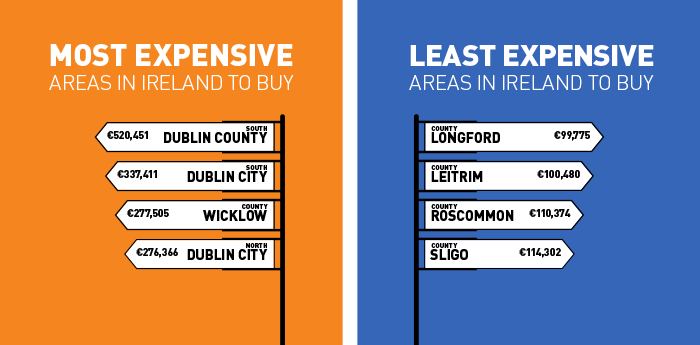
  

HOUSE PRICES OUTSIDE OF DUBLIN SOARED IN 2015, WHILE THE NATIONAL HOUSING SUPPLY NOW STANDS AT ITS LOWEST POINT IN ALMOST A DECADE.

According to the latest Daft.ie house price report, prices rose by an average of 8.5% in 2015.
However, the national average hides a significant difference between Dublin,  where prices rose by just 2.7% — and the rest of the country, where the average asking price jumped by 13.1%.
The report found the national average asking price in the final quarter of 2015 was €204,000, compared to €188,000 a year ago and €164,000 at its lowest point in early 2013.
The different trends in Dublin and elsewhere mark a turnaround from 2014, when prices rose by 21% in the capital and by 9% elsewhere.
The Daft.ie report highlights that the slowdown in Dublin inflation occurred at a time when inflation in Ireland’s other cities accelerated.
For example, house prices rose by an average of 20.7% in Cork in 2015 compared to 14.7% in 2014, and by 19.7% in Galway compared to 16.3% in 2014.
In Waterford City the rate of inflation increased significantly, with prices up 18.6%, compared to 4.1% a year ago.
However, the most dramatic change in house prices has occurred in Limerick City.
A year ago, prices in the city were falling by 1.3% year-on-year, but in the last 12 months they have risen by 22.3%.
Prices in the city are now back at mid-2012 levels.
Elsewhere in the country, inflation has accelerated from 8.8% in 2014 to 12.1% in 2015. The Daft.ie study also pointed out that the total stock of properties for sale is now at its lowest point in nearly nine years, with just over 25,000 properties for sale nationwide.
A year ago, there were nearly 30,000 properties on the market, with the bulk of the reduction coming from outside of the five main cities.
Ronan Lyons, economist at Trinity College Dublin and author of the report, said the dramatic slowdown in Dublin house prices in 2015 shows how effective the Central Bank deposit rules have been there, but that this had not been replicated elsewhere.
“This has not been the case elsewhere in the country as house prices are lower relative to incomes and thus the new rules have not been as binding.
“Some have criticised the new rules as hindering new housing supply, but the solution to a lack of supply is not stimulating demand even more.
“If supply is lacking, the solution to this must be found in reducing construction costs, not in giving borrowers access to potentially dangerous levels of mortgage credit,” he said.

Minister Frances Fitzgerald says miscarriage’s are one of Ireland’s main taboos

MINISTER RECALLS HER MISCARRIAGES, SAYS FAMILIES HAVING MISCARRIAGES AT OLDER AGE AS THEY WAIT TO HAVE CHILDREN

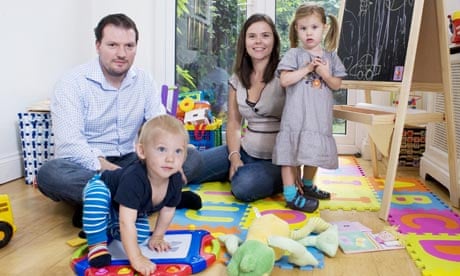
   

‘A LOT OF PEOPLE ARE HAVING MISCARRIAGES AT AN OLDER AGE BECAUSE THEY WANT TO HAVE BABIES AT AN OLDER AGE,’ MINISTER FOR JUSTICE FRANCES FITZGERALD SAID OF A SUBJECT THAT STILL REMAINS A TABOO IN IRELAND SHE SAYS.

Miscarriages are one of Irish society’s main taboos in an era where couples are choosing to have children later in life, Minister for Justice Frances Fitzgeraldhas said.
Ms Fitzgerald, who spoke about having had two miscarriages, said it has become an issue for an older demographic.
“A lot of people are having miscarriages at an older age because they want to have babies at an older age, so it is more stressful. Then they think: ‘Am I going to get pregnant again?’” she said in an interview with the Irish Examiner.
“Younger generations of men and women have gotten into the mindset, and that is obviously linked to the availability of contraception, there is a belief that you can plan a pregnancy.
“Of course, first of all, there are fertility issues as you get older. Secondly, the fact is a lot of pregnancies end in miscarriage, there is a shock and disbelief for people.”
More than one in five pregnancies result in miscarriage. Ms Fitzgerald said the availability of contraception had impacted on people’s perceptions around having children.
Of her own experience she recalled the shock of being told by doctors but that going on to have subsequent successful pregnancies had helped her.
“For me, I went on to have a second and a third pregnancy afterward, so you can recover from it.
“And you can kind of accept, well there was something wrong and there is a reason for it.”

First there was no shaving, then no booze and now meat and dairy face the chop

Veganuary campaign expects 50,000 people to join the likes of Vivienne Westwood, Romesh Ranganathan and Sara Pascoe for a month free of animal products
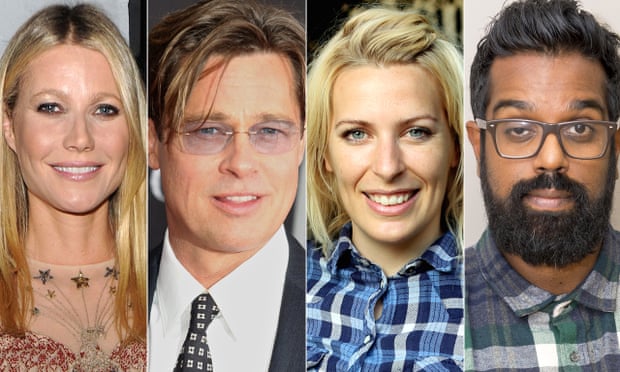
     
L-R Gwyneth Paltrow, Brad Pitt, Sara Pascoe, Romesh Ranganathan Composite: REX Shutterstock & Graeme Robertson
In the beginning, there was Movember. Then there was Stoptober. Now prepare yourself for Veganuary.
Those who have overindulged this festive period may be tempted to turn vegan for January. If so, they will not be alone. Organisers of Veganuary, now in its third year, predict that 50,000 people will take part this month, of whom around half will stay vegan.
About 3,000 people participated in the first Veganuary. Last year the figure rose to 12,800. But eschewing meat, fish and dairy products is now becoming increasingly fashionable thanks to a number of high-profile advocates.
Famous names who have tried vegan diets in the past include Bill Clinton and actor Anne Hathaway. Committed vegans include Brad Pitt, Ellie Goulding and Gwyneth Paltrow. Kat Von D, an American tattoo artist and model, crashed theVeganuary website earlier this year when she encouraged people to register.
Among the celebrities taking part this month are comedians Romesh Ranganathan and Sara Pascoe. Actor Peter Egan of Downton Abbey fame and designer Vivienne Westwood have also signed up.
Organisers of the event claim the surge in support for veganism reflects a growing awareness that it can help alleviate the world’s food crisis.
Rearing animals for consumption and dairy production produces significantly more carbon dioxide than plant-based food. In addition, animal farming is the leading producer of methane gas, a major contributor to global warming. However, organisers said that a concern for animals was still the primary motivation for people becoming vegan.
“We ask about motivation when people sign up to Veganuary and, for the past two years, animals are the primary reason by a large majority, with health coming second, and the environment third,” said Clea Grady, marketing manager of Veganuary.
“There is an increasing awareness and concern at how we treat, use and abuse animals, and this is growing year on year. Anecdotally, we know that, for whatever reason an individual approaches veganism, the lines begin to blur once education has taken place.”
The business world is now waking up to the growing vegan market. Companies such as VBites, Violife and Fry’s market products such as vegan cheese, ice-cream, “fish” fingers, burgers, sausages, schnitzels and “chicken” nuggets.
Pret a Manger has been expanding its range of vegan sandwiches; Caffè Nero labels its mince pies as vegan; and Pizza Express has a vegan pizza on its regular menu. Both Yo! Sushi and the Handmade Burger Company are doing special promotions in support of Veganuary.
“There has been a marked increase in enthusiasm in the UK over the past 12 to 18 months, and that’s extremely exciting to see,” Grady said.
“This has resulted in more media coverage, many more vegan products on our shelves, and ever-increasing numbers of Veganuary participants. We are starting to catch up with the States, but they continue to pave the way.”
Some nutritionists argue that humans cannot derive all the minerals and vitamins they need from a pure vegan diet. Both Clinton and Hathaway famously turned their backs on veganism. “I just didn’t feel good or healthy,” Hathaway once explained.
However, Grady said veganism could provide a balanced diet. “All it requires is a little knowledge and guidance, and that’s what Veganuary specialises in,” she said. “The Health and Nutrition sections of Veganuary.com were co-authored by a GP and a qualified nutritionist, so we are confident in the information we provide. We follow this up with practical guides on what to eat, and what to replace, demonstrating how easy getting the right nutrition can be.”

Which planets are habitable? Astrophysicists have a fresh insight

By looking at slight variations in the brightness of distant stars, scientists say they can determine their surface gravity, a technique that provides important clues to life-hosting properties of the planets that orbit them.
     
An international team of astrophysicists has devised a way to measure the surface gravity of distant stars to help determine if the planets in their orbit are hospitable to life.
Led by a researcher at the University of Vienna, the team calculated the surface gravity of stars that are too distant to study with conventional methods by looking at the slight variations in their brightness, which is caused by convection and surface turbulence, the same forces behind a pot of boiling soup, explains the Vancouver Sun.
Gravity is crucial to many aspects of astrophysics, say the researchers in a paper published on January 1 in the journal Science Advances, as it provides clues to the properties of stars, such as their mass and radius, and to the properties of planets in their orbits that might make them habitable.
“Our technique can tell you how big and bright is the star, and if a planet around it is the right size and temperature to have water oceans, and maybe life,” said study co-author Jaymie Matthews, a professor of astrophysics at the University of British Columbia, in a study announcement.
“If you don’t know the star, you don’t know the planet,” explained Prof. Matthews. “The size of an exoplanet is measured relative to the size of its parent star. If you find a planet around a star that you think is Sun-like but is actually a giant, you may have fooled yourself into thinking you’ve found a habitable Earth-sized world.”
To determine the gravitational pull of distant stars, the researchers used data of star brightness collected from Canada’s MOST and NASA’s Kepler satellites.
Since its launch in 2009, Kepler has already discovered more than 1,000 planets, a dozen of them less than twice the size of Earth and residing in the habitable zone of their host stars, which means these planets orbit their host stars at the right distance to make them neither too hot nor too cold to harbour liquid water. Astronomers believe the presence of water on planets is critical to life.
The team of astrophysicists behind the latest gravity-measuring technique believes that it will help future exoplanet surveys to correctly characterize the planets they find.
“I expect someone will announce the discovery of life on an exoplanet within about 20 years,” Matthews told the Vancouver Sun. 

Thursday, January 8, 2015

News Ireland daily BLOG by Donie.

TDs Shane Ross and Michael Fitzmaurice to form alliance


Independents hope to have candidate in each constituency for General Election

Shane Ross (pictured above left) will join up with Independent TD Michael Fitzmaurice (above right) to form an alliance.
Independent TD for Roscommon South-Leitrim Michael Fitzmaurice has said he will be joining up with Independent TD for Dublin South, Shane Ross to form a new alliance.
Mr Fitzmaurice said Mr Ross was a “very reasonable guy” and said he believes they can work together.
Mr Fitzmaurice said he has been talking to people interested in running for the party from around the country including the west and midlands.
He told RTÉ’s Prime Time they hope to have at least one candidate with a shot at a seat in every constituency in the next General Election. Mr Fitzmaurice was elected in October a by-election for Luke ’Ming’ Flanagan’s vacatedseat .
Mr Ross told RTÉ the issue of who would lead the alliance has not been discussed. He said members of the alliance will be able to vote and speak as they like on key issues and they hope to “change the face of the Dáil and make it relevant.”
Former Reform Alliance member and Independent TD for Roscommon South- Leitrim, Denis Naughten also said he is interested in joining the alliance. “I think we need to agree a programme and be able to put a proper platform to the people but in principle I do think there’s merit in it,” he said.
Several other independent TDs are set to join the alliance.
Mr Fitzmaurice did not say if the alliance would be left or right wing. “I don’t buy into this left and right. I could say something and people would say he’s right wing, I could say something and they would say he’s left wing,” he said.
His priorities include job creation, agriculture, rural Ireland and social housing, he added.

“Ireland like a 3rd World” has to improve its youth fitness says expert


Ireland is a “Third World” nation when it comes to the physical sporting health of its young people, according to a leading expert in the field.

Professor Niall Moyna of the Centre for Preventive Medicine in DCU is involved in a research study of which details were released yesterday and showed that signs of early onset of heart disease in 15-year-olds are linked to poor fitness.
The DCU football manager also stressed that reshaping behaviour in primary school is vital if recent trends are to be reversed.
“The Sports Council have made great strides in the last 20 years, there’s no doubt about that,” Moyna said. “But we’re still a Third World nation. I mean, we talk the talk but we’re couch-potatoes sportspeople.
“We’ve known now for years that, as a nation, our children are less active and they’re becoming heavier. Obviously we know from adults if you’re overweight and inactive it increases the likelihood that you’re going to get heart disease.
“If we’re really serious about this we have to educate kids,” he warned.
“Asking a child to switch on when they get to secondary school aged 12, it’s too late.”
The study involves measuring the fitness of a number of secondary school students and conducting tests to attempt to predict heart disease. The results indicate a worrying trend.
Moyna explained: “What we found was that compared to the moderately active and high-fit kids, if you were low-fit you had a higher body fat — 23 percent versus 10 — significantly higher blood pressure and higher levels of circulating bad cholesterol.
“It basically shows not alone did the 15-year-olds have risk factors for heart disease, they actually had the disease itself.”
Moyna called for an overhaul of how Physical Education is taught at schools and criticised the Department of Education’s inaction in light of evidence of increasing obesity of young people due to poor lifestyles.
“I think the inertia in the Department of Education is mind-boggling. We live in a different world than we did even 10 years ago, but we are not moving with the times at all.
“I don’t like the words ‘PE teacher’. It has the connotation of sport and elite sport and it should be about so much more than that. That’s only 10% who like elite sport.
“The other 90%, we have to find a way of getting them regularly active so it has a positive effect on both their physical and mental health. I would like to see dedicated teachers in primary schools and get kids to change their behaviour. We’ve got to get them to adopt healthy behaviour when they’re at a young age.
Moyna recommends scrapping the biology and PE curriculums and combining them into a life science course.
“We need to contextualise biology, learn about it from the effects of alcohol, stress, tobacco, diet and inactivity so they understand what happens when they do these things.
“Learn how they all affect our organ systems because when you leave secondary school you leave with your body and you forget 95% of the rest of it.
“Most students think, ‘I’m young, I’m healthy’ but we’re showing you’re not young and healthy, you actually have heart disease. You have clinical manifestations of heart disease at 15 years of age because you’re inactive and you’re overweight.”
And he believes making it a Leaving Certificate subject with CAO points on offer is the best way to make a difference and to get parents to heed the warnings contained in the study.
“I suggested five years ago we give you €5,000 if you’re in the top one percent of Europeans for fitness,” Moyna added. “Because if you’re in the top one percent of Europeans for aerobic fitness the likelihood of you being obese is reduced. It has to be a Leaving Cert subject.
“You can say to a parent, ‘Johnny or Mary is overweight or they’re unfit’, but it doesn’t even resonate. You say to a parent, ‘By the way, Johnny has a wee problem here in the artery and that increases risk for a stroke’, they listen then. Hopefully this is a wake-up call not just for parents but for our educational system, our healthcare system.”
Prof Niall Moyna was at the Aviva Stadium to launch the 2015 Schools’ Fitness Challenge to first, second, third and transition year students which aims to highlight the importance of cardiovascular fitness from an early age.

Opposition parties demand a statement on overcrowding from Leo Varadkar in annual Irish Hospital crisis


Opposition parties are demanding a statement from the Minister for Health as hospital overcrowding hits a new record.

601 people are lying on trolleys or sitting in chairs awaiting admission to hospitals across the country today.
The Irish Nurses and Midwives Organisation says it fears a ‘major incident’ will occur because of the crisis and its holding ballots for industrial action at ED units.
Leo Varadkar is not in the country at present, with the Dáil not set to resume until next week. However, his political opponents are calling for a statement of intent from the Minister.
Fianna Fail’s Health Spokesperson Billy Kelleher says Leo Varadkar needs to prove his claim that he is a “hands-on” Minister:
“Clearly, the staff are under huge pressure – the HSE have now said themselves that patient safety is compromised … the Government has to respond to that.
“It’s time for the Minister to act, and we would like to hear a statement from him on what he intends to do.”
Sinn FĂ©in leader Gerry Adams said there were more than 80 people on trolleys in Drogheda’s Our Lady of Lourdes hospital.
“The Minister for Health appears to be AWOL. This is unacceptable. Minister Varadkar needs to surface and to address this developing crisis with urgency,” Adams said.
Meanwhile, a consultant in emergency medicine says the Government has no plan to deal with the current hospital admissions crisis.
There are calls for the Dáil to return from its break to deal with the overcrowding, in addition to a statement from the Health Minister.
A consultant at Sligo Regional Hospital, Dr Fergal Hickey says comments by the Jobs Minister earlier that the coalition was dealing with the issue are a cause for concern:
“The first recorded case of a patient remaining overnight in an emergency department took place on the 8th of October, 1997.
“This is a problem which has got worse and worse and worse – and all we’ve had is politicians and health service managers claiming improvements in the absence of improvement.”
A statement from the Department of Health this evening said the Minister is due back at his desk tomorrow but has kept in close contact, including having regular discussions with senior HSE management.

UPC ups fibre power offering for Ireland to 240Mb/s


UPC has begun offering consumers a 240Mb/s service – the fastest in Ireland to date. The announcement follows the publication of the results on an independent survey by broadband research company SamKnows, which confirms UPC as having the best broadband speed in Ireland.

The study, which measured broadband performance delivered by UPC’s 120Mb/s broadband product to users, found that UPC customers receive speeds of at least 100Mb/s on average.
Campbell Scott, portfolio product manager, UPC Ireland, said: “Our research shows that broadband device usage is doubling every three years in Ireland. The actual Broadband speed performance delivered by providers is therefore becoming increasingly important and there is a real lack of transparency in the market.
With this study, we’ve opened ourselves up to independent scrutiny of our actual speeds with SamKnows, to set a clear benchmark and help consumers draw comparisons of real speed performance between providers.”
The SamKnows report is the first in a series of ongoing studies. It is also the first based on data from measurement hardware and software, in this case, the SamKnows ‘Whitebox’ device whose software conducts automated measurements of broadband performance throughout the year.

Rogue Star said to be on a collision course with the solar system

  
If a recent research paper is to be believed a rogue star known as HIP 85605 and one of the binary system in the Hercules constellation some 16 light years away is en route to a probable collision course with our solar system, but before you start worrying there are few reassuring caveats that you need to know about.
According to Dr. Coryn Bailer-Jones of the Max Planck Institute for Astronomy in Heidelberg, Germany HIP 85605 will cruise past our Solar System at a distance of 0.04 parsecs – equivalent to 8,000 times the distance between the Earth and the Sun (8,000 AUs). Further this event is not going to happen for another 240,000 to 470,000 years from now, and if it does happen, it will not affect Earth or any other planet’s orbit around the Sun.
The star is expected to have an effect on the icy planetesimals laden Oort Cloud and could cause serious disruption. The close encounter could blow away planetesimals into the space and some could be sent hurtling towards Earth. This could be a problem to Earthlings – assuming that humanity is still around for another 240,000 years or more.
Bailer-Jones, in his paper published in Astronomy & Astrophysics, says that such “close encounters” between stars isn’t a common occurrence but on astronomical timescale, they are common and HIP 85605’s close shave is one of several predicted to take place in the coming years.
The researcher has studied as many as 50,000 stars and out of the many said to be coming close to our solar system, HIP 85605 is the only one expected to come within a single parsec. He is 90% confident that this event will occur; however, he added that if astronomy is incorrect, the next closest encounter will happen when a K7 dwarf dubbed GL 710 is predicted to pass our solar system within 0.10 – 0.44 parsecs.
Bailer-Jones added that last time such an encounter happened was some 3.8 million years ago when gamma Microscopii – a G7 giant having mass two and a half times that of our Sun – came within 0.35-1.34 parsec of our system. He is 90% confident that such an event took place.

‘Alien Earth’ is among eight new far-off planets


One of eight new planets spied in distant solar systems has usurped the title of “most Earth-like alien world”, astronomers have said.

All eight were picked out by Nasa’s Kepler space telescope, taking its tally of such “exoplanets” past 1,000.
But only three sit safely within the “habitable zone” of their host star – and one in particular is rocky, like Earth, as well as only slightly warmer.
The find was revealed at a meeting of the American Astronomical Society.

Red sky. The three potentially habitable planets join Kepler’s “hall of fame”, which now boasts eight fascinating planetary prospects.

And researchers say the most Earth-like of the new arrivals, known as Kepler 438b, is probably even more similar to our home than Kepler 186f – which previously looked to be our most likely twin.
At 12% larger than Earth, the new claimant is bigger than 186f but it is closer to our temperature, probably receiving just 40% more heat from its sun than we do from ours.
So if we could stand on the surface of 438b it may well be warmer than here, according to Dr Doug Caldwell from the Seti (Search for Extra-Terrestrial Intelligence) Institute in California.
“And it’s around a cooler [red dwarf] star… so your sky would look redder than ours does to us,” Dr Caldwell said.
That first-person encounter, however, is unlikely – both because the planet is 475 light-years away and because we still have essentially no idea what it’s made of.
Images from the Kepler telescope, which trails behind the Earth and peers far into the distance as we orbit our own sun, are used to identify far-off planets by observing “transits”.
This refers to the dimming of a star’s light when a planet passes in front of it.
A large team of researchers then uses additional data from Earth-bound telescopes to further explore these unfamiliar solar systems.
They try to calculate how big the planets are, and how closely they orbit their host stars.
Not everything that causes such a dimming eventually turns out to be a planet, however.
At the same time as the eight confirmed new exoplanets were announced by a 26-strong team spanning Nasa and multiple US institutions, the Kepler mission’s own scientists released another tranche of more than 500 “candidate” planets.
“With further observation, some of these candidates may turn out not to be planets,” said Kepler science officer, Fergal Mullally.
“Or as we understand their properties better, they may move around in, or even outside, the habitable zone.”

‘Star Trek’ scenario

Even once scientists have anointed a candidate as a confirmed exoplanet, the question of whether or not it is “Earth-like” is a fraught one, with fuzzy boundaries.
The size of the habitable, or “Goldilocks” zone, where a planet is far enough from its sun to hold water but not so distant that it freezes, depends on how confident scientists want to be with their guess-work.
According to Dr Cardwell, just three of the eight new exoplanets can be confidently placed in that zone – and only two of those are probably rocky like the Earth.
More detailed description is very difficult.
“From the Kepler measurements and the other measurements we made, we don’t know if these planets have oceans with fish and continents with trees,” Dr Caldwell told BBC News.
“All we know is their size and the energy they’re receiving from their star.
“So we can say: Well, they’re of a size that they’re likely to be rocky, and the energy they’re getting is comparable to what the Earth is getting.
“As we fill in these gaps in our solar system that we don’t have, we learn more about what it means to be Earth-like, in some sense.”
Speaking at a related event at the conference, Prof Debra Fischer from Yale University said she remembered a time before the first exoplanet was discovered, more than two decades ago.
“I remember astronomers before that point being very worried,” she said.
“We really had to step back and say: Maybe the Star Trek picture is wrong. That filled me with despair.”
Prof Fischer said that sensitive telescopes like Kepler had ushered in an era of “amazing and impressive work”.
“We’re talking about a planet – and we can only see its star with a powerful telescope.
“And we can draw graphs and sketch its composition and have serious scientific discussions. This is incredible.”