France stress the urgency of saving the Earth in climate change issue
Struggles against climate change and terrorism two greatest issues of the 21st century,
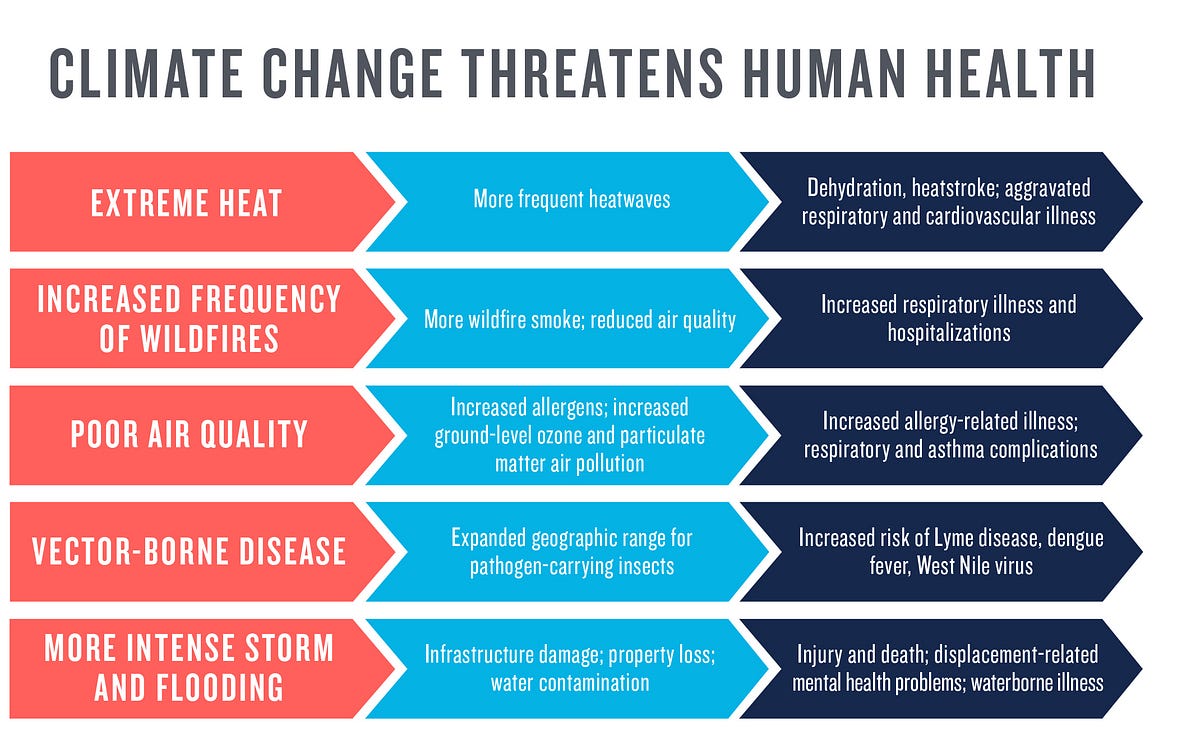

The COP21 United Nations conference on climate change which begins today is being presented by French media as “two weeks to save the Earth”.
The gathering of 150 heads of state and government is the largest ever hosted by France. “Their presence en masse shows the necessity and urgency of action,” said the French foreign minister and president of COP21, Laurent Fabius.
President François Hollande will begin greeting the heads of state and government in the Le Bourget exhibition park – usually the site of an air show – at 8am today.
The conference will formally open at 11.00am, with a minute of silence in homage to the victims of the November 13th attacks.
After the “family photo,” the heads of state and government have been asked to limit their speeches to three minutes each. Because their number is so great, they will speak in two different conference rooms.
The speeches will be interrupted for an all-organic lunch prepared by five leading French chefs.
Mr Fabius said the meal “will reflect environmental and French excellence, since diplomacy does not exclude conviviality – au contraire. We wanted to promote our gastronomy.”
All this week, the 1,500 negotiators who have hammered out a 50-page draft agreement will meet in groups and spin-off groups, behind closed doors. Their text will be finalised by Mr Fabius and the heads of 195 delegations between December 5th and 11th.
At the same time, leaders will stage symbolic media events to launch initiatives intended to curb global warming.
The three most important events today will be “Mission Innovation” led byBill Gates and President Barack Obama. It will commit the 19 developed countries who represented 80 per cent of clean energy research to double their research and development budgets.
The White House is uneasy about security within the UN zone and has chosen to hold events involving Mr Obama off site. He will be the guest of honour at dinner at the Élysée Palace tonight.
Indian prime minister Narendra Modi will launch a “solar alliance” of countries lying between the Tropics of Cancer and Capricorn.
More than 100 countries enjoy more than 300 days of sunshine annually, and believe they can lower the cost of solar energy through economies of scale.
Finally, the World Bank will host a press conference with Mr Hollande and the heads of state of Canada, Chile, Ethiopia, Germany and Mexico to emphasise the importance of setting a price on carbon pollution.
Mr Fabius has said “the struggle against climate change and the struggle against terrorism are the two greatest challenges of the 21st century”.
France has been called upon to play a role in both,” he added. “Is it an accident of history?”
Ireland’s restaurants to hit diners with €1 charge for glass of tap water


Diners set to be charged for tap water.
A glass of tap water with your carvery lunch will cost €1 next year – as restaurant owners pass on massive commercial rate increases to diners, Restaurant industry experts say a tap water charge is likely to be introduced in line with anticipated hikes in water charges for businesses next year.
Adrian Cummins, CEO of the Restaurants’ Association of Ireland, says a reasonable charge on tap water is “only fair” as he claims Irish Water has repeatedly “flagged” plans to increase commercial water rates.
“They have flagged the issue to us and it’s my opinion that they are softening us up. They are getting us ready for a rise in rates and it’s going to have a major knock-on affect on our industry,” he said.
“Businesses are going to get hit with the cost so we need to look at how to recoup that cost and we feel a small charge on good quality tap water is a fair and equitable way of doing it,” he said. Mr Cummins expects many restaurants, pubs and coffees shops, that already pay hefty water bills to local authorities, to apply a €1 tariff on filtered tap water.
He says some restaurants will be looking at it more seriously than others.
“Some will say they’ll provide filtered water at a charge of €1 for a bottle, and that’s it – customers can have as much water as they want throughout the night,” he said, adding that sparkling and still water will be made available.
“From a logical perspective, if you invest in equipment that provides good quality, filtered, good-tasting drinking water then restaurants will probably add a charge to the bill,” he said.
“Some people think it’s carte blanche but we’re not a public service – it’s a business and people need to respect that,” he said.
However, he said it’s unlikely a uniform system will be implemented for all establishments.
“Those who feel they should be charging for tap water will be on a case-to-case basis. A lot of restaurants are already putting in that type of a system,” he said.
According to Irish Water, there are approximately 500 separate tariffs for non-domestic water customers around the country.
A spokeswoman for Irish Water described the current system as “a legacy of the historic provision of water services by more than 30 separate local authorities”.
These tariffs were carried forward to Irish Water and will remain in place until a new tariff structure is approved by the regulator, the Commission for Energy Regulation (CER).
“The CER will undertake a process to define and agree the appropriate and enduring tariff arrangements for non-domestic customers of Irish Water in the future. This process is likely to take a number of years and will involve extensive public consultation,” said the spokeswoman.
However, the Restaurants’ Association of Ireland is concerned the new system will be introduced sooner rather than later and will have lasting ramifications for the industry.
“We are being softened up now for all of this,” said Mr Cummins, adding that consumers need to be aware of the situation.
“We’re not like the households where you pay a flat fee, you pay per consumption so the more you consume the more you pay. We have to educate consumers,” he said.
Meanwhile, the Consumers’ Association of Ireland says diners won’t appreciate a charge on tap water.
Dermott Jewell, policy advisor at the consumer body, said: “Tap water is viewed by customers as part of the standard charge of provision of service.
“It’s a bad charge, it’s poorly thought out and it’s going to hurt them.
“Even if it’s filtered, not all water is of the same quality from every tap and that needs to be considered.
“We understand a rise in rates is a cost to business but tap water has always been deemed part of general service and a move away from that will indirectly backfire,” he said.
ICMSA members told low interest 15-year loans for farmers ‘in pipeline’


Irish Farmers may be able to avail of low-interest 15-year loans backed by the European Investment Bank by mid-2016, ICMSA members have heard at its AGM in Limerick.
In a week dominated by salary issues at its IFA rivals, the ICMSA event also featured news of a possible softening in the Russian embargo on EU food imports, and talk that EU may support food producers in their battles with retailers.
Agriculture Minister Simon Coveney and EU agriculture commissioner Phil Hogan told the ICMSA’s members that market indicators pointed to an improvement in the milk price towards the end of 2016. Both would continue to seek EU supports such as storage aid and measures to improve volatility controls.
They also told dairy farmers the proposed EIB loans would give farmers more competitive options than those available with the two main Irish commercial banks.
Mr Hogan said: “I want to make it possible for people to have access to 15-year or even 20-year money rather than the present three-year loan arrangements.”
Dairy farmer Lorcan McCabe said farmers are paying 4.5% or 5% interest on loans versus the 0.5% being paid by farmers in Austria.
“Irish farmers are paying too much to banks in terms of interest rates on short term loans,” said Mr Coveney.
“We are trying to intervene. The banks see farmers as a good bet.”
As to why fertiliser prices have stayed stubbornly high despite falling fuel costs, Mr Hogan urged farmer groups to gather any data indicative of a cartel among fertiliser companies. He said the EU has been successful in stamping out anti-competitive practices in the past.
Mr Hogan also offered some support for ICMSA calls for EU measures to ensure greater fairness in the food supply chain, a matter which is up for review in 2016.
IMCSA president John Comer said the farm gate milk price has fallen up to 40%, while EU retail prices have only fallen by 2% this year.
Mr Comer said: “Whenever the supply situation permits them, retailers just wipe out the margins of everyone behind them all the way back to the cow. And they’re allowed to do it.
“No-one seems to find anything wrong with this grotesque abuse of their dominance. Control of indigen-ous EU food production has got to be taken back from the greedy clutches of multinational retail corporations.”
Mr Comer welcomed Mr Hogan’s commitments to address the multiple retailer power. He said retailers would use their dominant position to sell below-cost vegetables over Christmas. He called for a floor of 28c per litre payable to milk producers, noting the current 24cpl price from processors is below the cost of prodction.
However, while very much a side issue on the day, the ICMSA did address the controversy on salary scales at the IFA. While the ICMSA’s annual wage bill for its 11 Limerick staff comes to about €577,000, members still called for transparency.
My toughest fight of all?
BOXING CHAMPION FRANK BRUNO ON HIS LIFELONG BATTLE WITH BIPOLAR DISORDER


FORMER HEAVYWEIGHT BOXER FRANK BRUNO (CENTRE & WITH DAUGHTER RACHEL RIGHT PIC.)
Frank Bruno is making a recovery, with the support of his friends and family – has spoken out about his relapse for the first time since being hospitalised this autumn.
FRANK Bruno has spoken out about his bipolar disorder relapse for the first time since being hospitalised this autumn.
Now making a recovery, with the support of his friends and family, the former world boxing champion said: “I know I’ll have this illness for the rest of my life. But I’ll never, ever, let it beat me.
“Bipolar is not nice to live with. But I’ve work to do, money to make, bills to pay, four kids to raise.”
Bruno has been sectioned under the mental health act three times since quitting boxing in 1996.
But when he suffered a relapse in September after the Great North Run, he asked to be ¬admitted to ¬hospital.
He said: “I tried doing six months work in one month and I hit a brick wall. I started to get irritated, grumpy, I needed to rest. But I chose to go back into hospital.”
His comments came as figures from watchdog Equality and Human Rights Commission show a 40 per cent rise in male suicides since 2008. Charities say rising numbers of men suffer from depression and ¬bipolar in silence.
Frank said: “I can ¬understand that. It is a big issue for a man to talk about. Many think they have to be the king – so it’s hard for them to say they are struggling. It shouldn’t be that way.
“Bipolar is there for life. In boxing at least you can see your opponent. They hit you, you hit them back. But with mental illness you can’t always see it. It comes from the shadows and, all of a sudden, bang, you are down.”
Thousands brave storm for climate marches around Ireland
About 5,000 people march through Dublin to pressure leaders ahead of COP21 summit


Protesters watch during the climate change march in Dublin as a steam train hoots its way across the Liffey on Sunday.
About 5,000 people marched in a good-natured but determined fashion through Dublin on Sunday in a bid to put pressure on the Government and world leaders ahead of the COP21 climate change summit in Paris.
Hundreds of people joined other marches in Belfast, Cork and Galway as part of a global day of action.
The Dublin march was organised by Stop Climate Chaos – a coalition of 28 organisations including Friends of the Earth, Oxfam and Trócaire – and the crowds braved some harsh and stormy conditions to make their presence felt as they made their way from Custom House Quay to Dáil Éireann.
The march was led by a dozen or so members of the Dublin Cycling Campaign. Just before it got under way, a coal-burning steam train thundered over the protesters on the Loop Line Bridge – to hoots of derision from the crowd.
“I’m here for my little boy,” said broadcaster Jonathan McCrea, nodding in the direction of his four-year-old son sitting on a bench waiting for the march to start.
“I turn 40 next year and when he turns 40 the world will be a much different place. There is very little I can do. I feel useless – but at least by marching we can show our Government this is an issue we care about.”
Green Party leader Eamon Ryan said climate change was an issue the Government “doesn’t care about” . He accused the Coalition of “shaming our country” and paying lip service to the will of the people who want real action to be taken to curb emissions.
“I think there will be a deal in Paris,” he said. “Everyone is moving in the right direction in lowering their emissions, except us. Ours are actually increasing. We are becoming a pariah in Europe. ”
Friends of the Earth director Oisin Coghlan was similarly scathing of the official response to the climate change crisis, but not as upbeat as Mr Ryan about the prospects of a deal being struck in Paris.
He said people had come onto the streets of cities all over the world because they “no longer trust our leaders to grasp the urgency of climate change or the opportunities of action”.
- Planet Earth: The time to act is now
- Anarchists throwing bottles set off Paris clashes with police
- COP21: Mary Robinson ‘hopeful’ of climate agreement in Paris
He told the crowd that the central issue was “our future, us, our friends and family, and the human family around the world, where climate change is already intensifying storms, floods and droughts, undermining livelihoods, exacerbating conflict and creating refugees”.
Cork
In Cork, a teenager who won the BT Young Scientist of the year competition for her research on solving the global food crisis was among close to 400 people who attended the climate change rally in Cork city centre on Sunday.
Sophie Healy Thow (17) from Kinsale, Co Cork, who was named by Timemagazine as one the most influential teenagers in the world, said it was important to build momentum prior to the meeting in Paris.
“My particular area of interest is food security. To make sure the world is food secure, we need 50 per cent more food by 2015 – and that is a crazy amount.
“We need everybody to get together to achieve these goals,” she said.
Attendees at the rally on Grand Parade held placards with slogans such as System Change not Climate Change, Keep Fossil Fuels in the Ground and There is No Planet B.
Organisers and supporters of the march in Cork included Cork Environmental Forum, Trócaire, the Social Health & Education Project, People’s Climate Ireland, UCC Green Campus, Transition Town Kinsale and UCC Environmental Society. There was also a strong turnout from members of the Quaker movement.
Belfast
In Belfast, the threat of Storm Clodagh was not enough to keep about 300 protesters from gathering at Writers’ Square.
Amandine Chesnel (8), from Belfast, was among the young activists. Carrying an Act Now – There Is No Plan B banner made with the help of friends, she explained her motivation for joining the day of action. “I don’t think that the world should be overheating,” she said.
Demonstration organiser Niall Bakewell, from Friends of the Earth, said: “It is a very important gathering of world leaders and we need around the world to give a message that they now are running out of time to get the right deal.”
Green Party leader in Northern Ireland, Steven Agnew MLA, said Stormont had a responsibility to take part in the international effort to tackle climate change.
“We have had mixed messages from the government in terms of investment in renewables, and that is disincentivising investment – but there are real actions we can take.
“We have got fantastic wind, wave and tidal power, we can retrofit our housing and really make a difference for people’s lives in Northern Ireland and climate change globally.”
Galway
In Galway, several hundred people including performers and drummers braved heavy downpours of rain and a southwesterly gale to take part in Sunday’s Carnival for the Climate.
Chanting reworked lyrics to the tune of the Italian civil war anthem Bella Ciao, the participants set off from Eyre Square to the Spanish Arch.
The event was organised by Transition Galway, and was supported by representatives of a number of groups including NUI Galway’s Irish Centre for Human Rights and Amnesty International.


