Pages

Showing posts with label Canada. Show all posts

Tuesday, April 4, 2017

Donie's Ireland daily news BLOG

Major broadband providers ordered to block illegal streaming sites

MAJOR FILM AND TV STUDIOS SAY UP TO 1.3 MILLION USERS HERE MAY BE INVOLVED IN ILLEGALLY ACCESSING THEIR OUTPUT

Image result for Broadband providers ordered to block illegal streaming sites  Image result for Broadband providers ordered to block illegal streaming sites

SIX MAJOR FILM AND TV STUDIOS HAVE SECURED INJUNCTIONS DIRECTING INTERNET SERVICE PROVIDERS TO BLOCK ACCESS TO WEBSITES INVOLVED IN ILLEGAL STREAMING OR DOWNLOADING OF FILMS AND TV SHOWS.

Mr Justice Brian Cregan made the orders against nine internet service providers after saying it was “clear” from evidence before the court breaches of the studios’ copyright had “manifestly occurred.”
The orders would not amount to a breach of lawful use of the internet and were not disproportionate, said the judge.
Their proceedings were brought against a number of ISPs – Eircom, Sky Ireland, Vodafone Ireland, Virgin Media Ireland, Three Ireland, Digiweb, Imagine Telecommunications and Magnet Networks.
None opposed the application for the injunctions and the court heard they had adopted a neutral stance.
The studios, all members of the Motion Picture Association, sought the orders on grounds including up to 1.3 million users here may be involved in illegally accessing their films via various websites.
  • Irish film industry lauds judgment blocking piracy websites
  • Online content: Studios’ battle with streaming services heats up
  • Music industry shows movie makers the way with illegal downloads
Represented by Jonathan Newman SC, the companies argued digital piracy is costing the studios hundreds of millions annually and, according to recent research, led to the loss of 500 jobs here in 2015 and €320 million in lost revenues.
The plaintiffs are Twentieth Century Fox, Warner Bros Entertainment, Paramount Pictures, Disney Enterprises, Universal Studios, Sony Pictures Television and Columbia Pictures. Their case was supported by independent distributors and film-makers in Ireland.
Disable access ???????
In a ruling on Monday evening, Mr Justice Cregan granted orders requiring the ISPs to block or disable access by subscribers to a number of websites, known as “streaming” websites, including movie4k.to, primewire.ag and onwatchseries.to.
There was no opposition to the orders but the court was asked to deal with issues raised by Eir.
Eir said it was prepared to pay the cost involved in dealing with the relevant websites to date but was concerned about the cost implications if it had to deal with a large number of these sites into the future.
It asked the court to put a cap on the number of notifications per month, which the movie companies could make directing the ISPs to block websites.
Conor McDonnell, solicitor for Eir, said it was suggesting a cap of perhaps 50 notifications per month but the movie companies were opposed to any cap.
The judge said there should be no cap on the amount of notifications for the time being.
The judge welcomed that Eir and the movie studios had resolved another outstanding issue in relation to the temporary blocking of certain websites.

American families desperate to flee to Canada from Donald Trump’s power grasp

Image result for American families desperate to flee to Canada from Donald Trump's power grasp  Image result for fleeing families to Canada

THE NUMBER OF PEOPLE TRYING TO CROSS THE US BORDER INTO CANADA HAS INCREASED DRAMATICALLY SINCE DONALD TRUMP CAME TO POWER.

At the end of a lonely country road in upstate New York, a taxi pulls up.
Five people get out and stand uncertainly in the freezing rain – two men from Yemen, a woman from Eritrea and her two small boys.
They’ve come to flee America through its northern border, in to Canada.
The Royal Canadian Mounted Police waiting on the other side of the snowy ditch tell them they will be arrested if they cross at this unofficial border point.
They know this, but it is still scary to hear and the group pauses, just a few feet from the border.
One man is starting to shiver in the cold? and another explains that his visa has expired and he cannot go back to his war-torn country.
“Can you help us, please?” asks the woman as she tries to hold both her children to stop them standing in the snow, but they are wriggling and she lets one go.
He is giggling and playing next to abandoned luggage and a baby stroller from previous crossings as his mother calculates if this is going to be worth the risk.
Suddenly an officer offers the information she is waiting to hear – she will be arrested, processed, and then if all is well, released to the immigration authorities.
The two men, the woman and her sons take just a few steps over the invisible border and in to police custody, hoping to one day become a refugee in Canada.
The next morning it happens again.
Three smartly dressed men from Turkey say they want to claim asylum in Canada.
They don’t speak much English but they’ve brought carefully written letters explaining why they want to leave.
One is a former history teacher who was arrested and harassed in Turkey and he has been living in the States but now feels he cannot remain here anymore.
Why not stay in America? We asked “Because of Trump” his friend says, shaking his head.
In just this one location these crossings are happening up to five times a day.
Up and down this vast border region thousands have done the same, the numbers increasing sharply since Donald Trump rode to power on a wave of populist anti-immigrant sentiment.
The Canadian Border Services Agency says there was a six-fold increase in refugee claims just at Quebec’s border in February compared to the same month in 2016.
Nationally, the agency says that in January and February 2017 more than 2,500 people crossed over and made asylum claims.
RCMP Corporal Francois Gagnon said: “It’s mostly families … parents with kids, strollers.
“We’re going to use compassion on every occasion, but definitely seeing those families crossing the border, you know it touch somewhere our hearts, you know we are all most of us fathers and mothers, so the approach is going to be softer.
For many, being detained by the Canadian police is actually the aim.
An agreement between the US and Canada prevents people from either country seeking refugee status in the other.
But if they are arrested while crossing illegally, most people are given a criminal background check and then are released and given access to housing, schools, emergency healthcare and work permits while they await immigration hearings.
Immigration lawyer and head of the Canadian Association for Refugee Lawyers Mitchell Goldberg said: “I think it’s decent, I think it’s the right thing to do, I think it’s an investment in the future of Canadians.”

‘A lot of the time’ I am just waiting on a system that may or may not work properly

COLIN MCSWEENEY IS JUST ONE OF 4,875 ADULTS NATIONWIDE RELYING ON EMERGENCY ACCOMMODATION EVERY NIGHT?

Image result for we am just waiting on a system that may or may not work properly  Colin, who told his story on Ireland's Property Crisis (Image via RTE)

AN RTÉ DOCUMENTARY HIGHLIGHTING IRELAND’S PROPERTY CRISIS TONIGHT SHONE A BIG LIGHT ON A HOMELESS TRINITY COLLEGE GRADUATE WHO IS WORKING BUT STILL CAN’T AFFORD SOMEWHERE TO LIVE.

Colin McSweeney, 45, above left pic began working in the IT sector after completing his degree in Dublin. When that company folded, he found himself not being able to afford his rent and relying on the emergency accommodation system to shelter him.
Although he has a job as a researcher in a library, Colin spends his nights searching for accommodation in different hostels.
The college graduate details the trouble with finding a bed in the city and revealed that he sometimes relies on using the 24-hour Starbucks, which is located at the former Anglo Irish Bank HQ on St Stephen’s Green, to keep him warm through the night.
“This is Dublin’s first and only 24-hour Starbucks. I’ve spent a few nights over the last five months here. I’ve gone an entire evening here on just a cup of tea. The one thing is that if you try and sleep, you’ll be woken up by the security guard. But they’re nice.”
Colin is forced to find ways of keeping warm and safe for a whole night when the emergency accommodation system lets him down.
He spends his days in Pearse Street library waiting for a call back to see whether or not he has somewhere to stay that night.lin receives the phone call telling him he has a bed for the night.
Waiting on the call, he says: “Today revolves around this phone call. At this point, the system should ring me back.
“A lot of the time, you’re just waiting on a system that may or may not work properly and call you back. The longer you wait, the worse it seems.”
Thankfully, just as he was about to give up hope, Colin receives a call telling him he has a bed for the night and he makes his way to Frederick Street. This is what he does every night of the week.
Other people featured on Ireland’s Property Crisis included single mother Selena who is trying to find a new home to rent since her landlord sold her current property. Selena must leave the property by Easter Monday but the new Housing Assistance Payment (HAP) scheme has found nothing suitable in her area.
In another example of people trying to make ends meet, the Sadlier family are paying rent on their house in Donnycarney, Dublin, while also trying to pay off the mortgage on a one-bed apartment they bought ten years ago.
The number of people presenting as homeless in Ireland was at an all-time high in February.
There were 4,875 adults staying in emergency accommodation. As well as this, there are 1,239 families with 2,546 children, according to the latest Housing Department figures.

Bowel cancer and doing this could reduce the risk of this cancer by nearly 50%

Image result for Bowel cancer and doing this could reduce the risk of this cancer by nearly 50% Image result for Bowel cancer and doing this could reduce the risk of this cancer by nearly 50%
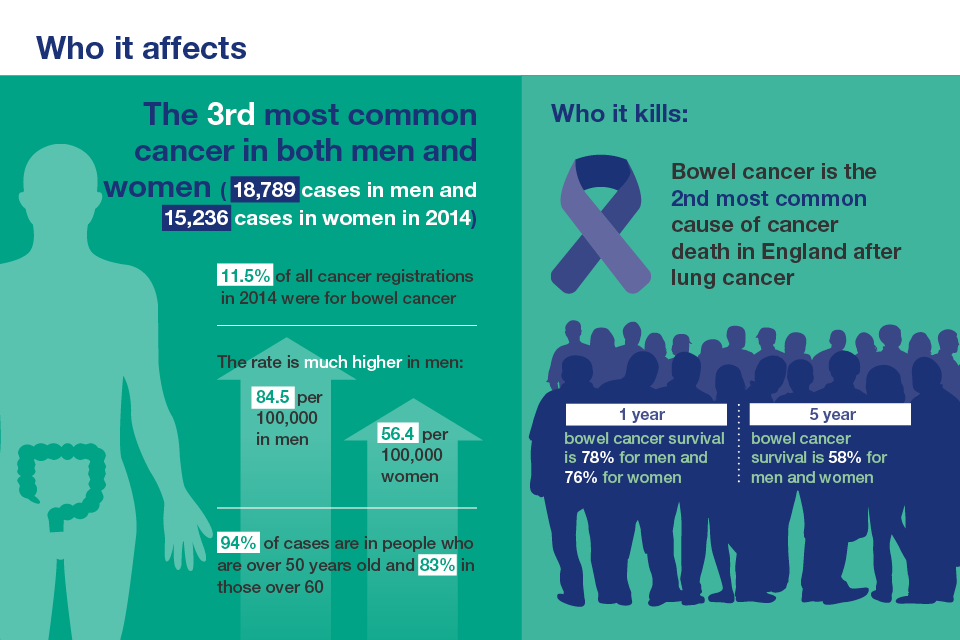
BOWEL CANCER RISK IS 46% HIGHER IN PEOPLE WITH THE LARGEST WAIST CIRCUMFERENCE, COMPARED TO THOSE WITH THE SMALLEST.

Bowel cancer: Losing weight is key and could reduce the risk by as much as 50%, experts now claim
Research has revealed women in the UK are not considering their cancer risk when it comes to their weight.
According to 2017 statistics, only just over one in ten UK women – 11 per cent – would be motivated to lose weight to reduce their cancer risk.
Lee Dvorkin, consultant general and colorectal surgeon at BMI Healthcare said: “Factors thought to increase the risk include smoking, obesity and eating excessive red meat, alcohol, animal fat and sugar.”
Obesity and a high body mass index (BMI) ratio are strongly associated with an increased risk of bowel cancer, argue experts.
Additional body fat is classified by the International Agency for Research on Cancer (IARC) and World Cancer Research Fund as a cause of bowel cancers.
Bowel cancer: Over half of cancer cases are diagnosed too late
An estimated 13% of bowel cancers in the UK are linked to being overweight or obese.
Maintaining a healthy weight through diet and exercise is essential to lowering the risk of the second biggest cancer killer.
Bowel cancer can affect both men and women of any age.
It is the fourth most common cancer in the UK, and the second biggest cancer killer, with someone dying of bowel cancer every 30 minutes in the UK.
Factors thought to increase the risk include smoking, obesity
Over half of bowel cancer cases are diagnosed late, but an early diagnosis is crucial.
In line with new 2017 NHS Digital statistics, 58% of women in the UK are currently overweight or obese, and 27% of women are currently inactive – doing less than 30 minutes of exercise a week.
Maintaining a healthy weight is essential not just for overall health but also to help prevent cancer development.
Despite this the latest research, conducted on behalf of BMI Healthcare points to the vast majority of women in the UK not being motivated to lose weight to cut their risk of cancer.
Bowel cancer concern: Maintaining a healthy weight can prevent the cancer developing
The new research conducted independently on behalf of BMI Healthcare as part of its April Be Bowel Cancer Aware campaign reveals that 42% of UK women would feel embarrassed to tell someone if they had irregular bowel habits or blood in their stool, the two key warning signs of the cancer.
The new figures raise the concern that women are putting themselves at increased risk of late diagnosis because they are too embarrassed to tell anyone about their bowel habits.
More than a quarter – 27% – of women have or may have had bowel cancer related symptoms.
However some 40% of women did not discuss their bowel cancer related symptoms with anyone – this includes just talking to a partner, friend or a family member.

Fearless fanged Coral Reef fish’s heroin-like venom could lead to pain killing treatments

Image result for Fearless fanged Coral Reef fish’s heroin-like venom could lead to pain killing treatments   Image result for Fearless fanged Coral Reef fish’s heroin-like venom could lead to pain killing treatments

A FEARLESS FANGED CORAL REEF FISH THAT DISABLES ITS OPPONENTS WITH HEROIN-LIKE VENOM COULD OFFER HOPE FOR THE DEVELOPMENT OF NEW PAINKILLERS.

University of Queensland researcher Associate Professor Bryan Fry said the venomous fang blenny was found in the Pacific region, including on the Great Barrier Reef.
“The fish injects other fish with opioid peptides that act like heroin or morphine, inhibiting pain rather than causing it,” he said.

“ITS VENOM IS CHEMICALLY UNIQUE????

“The venom causes the bitten fish to become slower in movement and dizzy by acting on their opioid receptors.
“To put that into human terms, opioid peptides would be the last thing an elite Olympic swimmer would use as performance-enhancing substances. They would be more likely to drown than win gold.”
Fang blennies, also known as poison-fang blennies or sabre-tooth blennies, of the genus Meiacanthus, are popular as ornamental tropical aquarium fish.
“Fang blennies are the most interesting fish I’ve ever studied and have one of the most intriguing venoms of them all,” Associate Professor Fry said.
“These fish are fascinating in their behaviour. They fearlessly take on potential predators while also intensively fighting for space with similar sized fish.
“Their secret weapons are two large grooved teeth on the lower jaw that are linked to venom glands.”
Associate Professor Fry said the unique venom meant, the fang blenny was more easily able to escape a predator or defeat a competitor.
“This study is an excellent example of why we need to protect nature,” he said.
“If we lose the Great Barrier Reef, we will lose animals like the fang blenny and its unique venom that could be the source of the next blockbuster pain-killing drug.”
The research, published in Current Biology, was led by Associate Professor Fry, who works with the UQ School of Biological Sciences Venom Evolution Laboratory, and Dr Nicholas Casewell of the Liverpool School of Tropical Medicine in the UK.
It involved researchers from across UQ and from Leiden University and the Leiden University Medical Center in the Netherlands; Monash University; and the Bangor and Anglia Ruskin universities in the UK.    

Monday, April 6, 2015

Donie's Ireland daily news BLOG

Austerity and the Verdict of the Squeezed Middle people of Ireland

Angry voters want their money back and tell Noonan to slash taxes USC now toxic as hated water charges.


Angry voters are demanding their money back after eight years of hard austerity,

The recent Sunday Independent/Millward Brown opinion poll has found.

The economic recovery has so far failed to clearly boost the Government’s standing with the electorate, according to the poll.
Dissatisfaction with the Coalition has actually increased a little at a time of higher than expected economic growth.
Exchequer returns for the last three months show €545m more tax than anticipated has been collected.
Now voters are demanding a financial dividend after almost a decade of increased taxes and charges.
With the economic recovery taking hold, a clear message in the poll is that people want more money in their pockets.
The Government’s performance has satisfied one-in-four, a three-point increase drawn from the undecided, but the level of dissatisfaction has also increased a point to 69%.
The poll was conducted in 971 interviews between March 24 and April 2. Among the key findings are that the Universal Social Charge (USC) is hated as much as water charges.
Voters want austerity taxes and charges, such as the USC and water charges, to be cut first ahead of the Coalition’s preferred option to reduce income tax. The poll has also found demand for pay hikes has increased, with a reversal of wage cuts in the private sector being favoured over the public sector.
After undecided voters (20%) are excluded, the state of the parties is: Fine Gael (25%) unchanged; Sinn Fein (24%) down two points; Fianna Fail (19%) unchanged; Labour (8%) up two points; Greens (3%) up two points; Independents/others (20%) down three points. Sinn Fein’s fall in support confirms findings in other polls and shows the party has been damaged by recent scandals related to child sex abuse.
The level of public disillusionment in general is illustrated by an increased level of dissatisfaction with all party leaders.
Although satisfaction with the Government (26%) has improved somewhat, the level of dissatisfaction has also increased, up a point to 69%, the same level as a year ago and within the margin of error from two years.
Today’s poll will add to the pressure on Finance Minister Michael Noonan after a week which saw a surge in anger at the banks’ imposition of high mortgage variable interest rates and industrial action on zero-hour contracts.
The average variable mortgage rate for new customers in Ireland is 4.2%, compared with a rate of 2.09% in the rest of the Eurozone.
This means the holder of a €200,000 mortgage here is paying €350 a month more than mortgage holders in Europe. The Coalition’s economic Spring Statement was initially scheduled for April 21, but is to be delivered on April 28 instead at the insistence of Labour, which wants to concentrate on the mortgage arrears crisis first.
The Coalition intends to use the statement to outline a five-year tax reform plan to secure a second term after the Budget in October.
However, today’s poll illustrates the level of voter expectation with which the Coalition must now contend.
The poll finds support for wage hikes has increased for both the private and public sectors but that voters still believe the public sector may have to wait.
Asked if there had been sufficient economic improvement to merit wage increases in the private sector, 45% said no (up one point) but 43% said yes (up five points) while 12% did not know (down six points).
Half of voters (50%), down one point, did not believe there should be public sector pay increases, while 37% (up six points) believed there should and 12% (down six points) did not know.
If exchequer money is to be given back, 61% said water charges should be reduced; 60pc said USC should be cut; 54% said reduce income tax; 47% want a cut to property tax; and 38% wanted PRSI reduced.
Dissatisfaction with all the party leaders has also increased: Enda Kenny (67%) up three points; Joan Burton (65%) up four points; Micheal Martin (57%) up eight points; Gerry Adams (56%) up six points.
Renua Ireland leader Lucinda Creighton has recorded a satisfaction rating of 20% and dissatisfaction of 44%; while 36% said they did not know.

The Irish government might cap the Property Tax?


The Tánaiste says that there has to be a reaction to rising property prices.

The Irish Government could consider capping the amount payable in Property Tax.
Speaking at a 1916 commemoration today, Tánaiste Joan Burton said that the government was “aware that house valuations are rising steeply” in parts of the country.
She said that the government is awaiting a new report and will act on it.
The tax is currently based on property valuations as of 1 May 2013, but that will be recalculated next May, with some householders potentially hit for €180 or €270 more from 2017 on.
Today’s Sunday Times reports that Finance Minister Michael Noonan told the Fine Gael party that it would be “absolute madness” to allow those whose property prices were inflating to be hit for bigger bills.
Already, over 7,000 properties have had their tax revised upwards.

It’s now time for a new Proclamation?


As the Centenary of the 1916 Rising draws near, we invite six people – a journalist, an artist, activists and economists – to write a new Proclamation for today’s Ireland

The Proclamation of 1916 is among Ireland’s best known historical documents. Almost 100 years after its publication, it continues to exercise a profound effect on the Irish imagination. In some ways it has not dated but, 99 years on, does it work for 21st-century Ireland?
The Irish Times has asked six people – journalist Fintan O’Toole; disability activist Joanne O’Riordan;  theatre maker Grace Dyas, environmentalist Oisin Coghlan; economist Constantin Gurdgiev; and author Gerard O’Neill – to compose new proclamations for today’s Ireland.
We’ve borrowed the idea from the official State Centenary Programme for 2016, launched this week. Its “Proclamation for a New Generation” project begins in schools in the next academic year, and will invite primary and secondary students to write a new proclamation that reflects the “values and aspirations of the generation of 2016”.

Seriously ill man traveled on an icebreaker, through rough seas for help

  
The Aurora Australis at anchor at Davis station
A seriously ill man reached an Australian hospital more than two weeks after he suffered a medical emergency at a remote Antarctic base.
The patient was admitted to hospital in Hobart, Australia’s mostly southerly city.
He had travelled aboard an icebreaker 3,000 miles through rough and ice-jammed seas from Australia’s Davis Station on the coast of Princess Elizabeth Land.
The Australian Antarctic Division’s chief medical officer Jeff Ayton said the patient was transferred by ambulance from the icebreaker, Aurora Australis, to the Royal Hobart Hospital where he remained in serious but stable condition.
“He will require ongoing medical treatment, but we are very pleased he has travelled well over the past couple of weeks and his condition has not deteriorated,” Mr Ayton said.
The authorities have released no personal details about the man, who is a tradesman. They have not revealed the nature of his medical emergency, other than to say it was not the result of an accident.
The man arrived at the Australian base in November and was supposed to spend the approaching southern winter there.
He became ill on March 18 only days after the Aurora Australis had resupplied the station and begun its voyage back to Hobart.
When the icebreaker returned to the station, officials had to wait for a break in snow showers so that the patient could be flown across sea ice on March 22.
The icebreaker rolled heavily in swells up to 23ft and winds gusting at 70mph while navigating the treacherous Antarctic Ocean toward Hobart.
The patient was cared for by the ship’s doctor with the help of distant specialists using telecommunications equipment designed for remote medical examinations.

Small farmers under threat from falling food prices & Euro red tape

   
Traditional British farming will soon be replaced by international investors and creation of mega farms to feed China. 
Centuries of traditional small family farming in Britain is under threat from a collapse in the price of food and European red tape, industry leaders have warned.
David Handley, chairman of the lobby group Farmers for Action said: “If you look at the exodus now from the industry, the small British tenant farmer is under threat. Tenant dairy farmers like ourselves are being crucified at the moment.”
Dairy prices in the UK have hit multi-year lows as China’s softening demand for milk and a Russian embargo on European imports sends shock waves through the British farming industry.
According to Mr Handley, the collapse in prices has left many farmers who were already operating on tight margins in financial difficulty.
He claims that for many farmers, a litre of milk is now costing more to produce than it is to sell to a commercial buyer. International milk prices as measured by the GlobalDairyTrade index fell by 48% and the market has shown little sign of recovery since.
Milk is now cheaper to buy than bottled water due to a fierce supermarket price war, recent figures showed.
When bought in a four-pint bottle, the price per litre of milk has dipped to 43p, compared with 44p for bottled still water.
In January, Asda cut the price of four pints of own- Label milk from £1 to 89p.
A collapse in profits could see many small farmers giving up the occupation altogether, either selling their farms or handing the keys back to landowners in a shift that could end centuries of tradition in the countryside.
There are around 10,000 dairy farmers left in England and Wales, half the number they were in 2002. That could fall to 5,000 in the next 10 years, the National Farmers Union (NFU) has warned.
Many experts expect traditional, small family-run British farms to be replaced by bigger operations owned and managed by large investors. “It’s part of a process of continuing evolution in the agricultural industry,” said Phil Bicknell, head of food and farming at the NFU.
“The trend is for farms to get bigger. If you want to make more you have got to farm a bigger area.”
Last month, the NFU warned that Britain’s food security was in danger and that just 53pc of the nation’s food needs will be produced from domestic farms by 2040.
Farming continues to make an important contribution to the UK economy, bringing in more than £8bn last year. Although George Osborne, the Chancellor, offered British farmers some relief in the Budget, Mr Bicknell said that the UK lacks a clear “vision for agriculture”.
Farmers will now be able to average profits for tax purposes over five years, up from the current two years, to counter volatile commodity markets.
Allan Wilkinson, HSBC Bank’s head of agriculture, has also warned that average farm incomes in the UK will drop this year amid a global oversupply of food and softer demand in Asia. British farmers have been hit by falling international food prices and the ban on dairy, meat and fish exports to Russia, which came into force last year.
“Incomes will fall this year,” said Mr Wilkinson. “The impact of the struggling pound is a bigger challenge than Russia because so much of UK farming revenues are from Europe.”
Last week, the European Milk Board (EMB) warned that dairy farmers can expect a severe loss in market power, plus chronic milk price slumps as the European milk quota system came to an end last Tuesday.
The EMB said that dairy farmers across the EU will step up production, driving down prices as producers look to offload their supplies.
Farm gate food prices have fallen to the lowest level recorded in the past five years according to the United Nations (UN), while the pound has appreciated by more than 12% against the euro over the past year.

HAVE SCIENTISTS FINALLY FOUND PROOF OF BIGFOOT?

  
A leading genetecist claims a towering woman named Zana (artist’s representation) who lived in 19th Century Russia – and appeared to be ‘half human, half ape’ – could have been the fabled yeti
Over the centuries the legend of North America’s Bigfoot and the Hemolayan Yeti have continued to crop up.
Here in Canada, there are still many Bigfoot sightings each year. Now, scientists may finally be able to say that the giant creature was not a myth.
Bryan Sykes, emeritus ¬professor of human genetics at the University of Oxford, has identified a strain of west African DNA on the Georgian-Russian border that he believes could ¬belong to a sub-species of modern humans.
Sykes claims to have found the best evidence that a woman who lived in 19th century Russia could have been a yeti.
According to accounts, she was described as resembling a wild beast, and “the most frightening feature of which was her expression which was pure animal”, one zoologist wrote.
Analysis of her DNA showed that while she was “100% African”, she bore little physical or genetic resemblance to any modern African group.
Experts believe the wandering ‘Wild Woman’ was found lurking in the remote region of Ochamchir in the Republic of Abkhazia.
According to Yahoo News, her resemblance has been described as that of a wild beast, and “‘the most frightening feature of which was her expression which was pure animal”, one Russian zoologist wrote in 1996 according to a report in the Times.
The man who organised various eyewitness accounts of Zana wrote: “Her athletic power was enormous.
“She would outrun a horse and swim across the Moskva river, even when it rose in violent high tide.’”
Zana was eventually “tamed” by the nobleman who bought her as a servant and kept her on his estate in Tkhina in the Republic of Abkhazia, according to local accounts.
Some of the professor’s colleagues remain doubtful given his previous findings – which include a claim that an unknown species of bear might account for yeti sightings in Bhutan.
Sykes has been involved in a number of high-profile cases dealing with ancient DNA, including those of Ötzi the Iceman and Cheddar Man, and others concerning people claiming to be members of the Romanovs, the Russian royal family. His work also suggested a Florida accountant by the name of Tom Robinson was a direct descendant of Genghis Khan, a claim that was subsequently disproved