Pages

Showing posts with label Finance. Show all posts

Friday, August 19, 2016

Donie's Ireland daily news BLOG update

Irish household debt decreases by €1.1bn in first quarter of 2016

IRISH HOUSEHOLDS FALL TO FOURTH MOST INDEBTED IN THE EUROPEAN UNION


NEW FIGURES FROM THE CENTRAL BANK SHOW IRISH HOUSEHOLD DEBT STOOD AT €31,216 PER CAPITA IN THE FIRST THREE MONTHS OF THE YEAR, THE LOWEST LEVEL SINCE THE FIRST QUARTER OF 2006.

Irish households fell from being the third most indebted in the European Union to the fourth during the first quarter of this year, according to new figures from the Central Bank.
The figures show Irish household debt fell by €1.1 billion to €148.5 billion in the first three months of the year.
This represented a household debt per capita of €31,216, which is the lowest level since the first quarter of 2006.
Household net lending fell to a level of €2.4 billion during the first quarter.
The net worth of households increased by 0.3% to €628.7 billion, mainly driven by a rise in house values, and a decline in household liabilities.
Household net worth has regained two-thirds of the drop that followed the Celtic Tiger’s high-water mark of €718 billion in the second quarter of 2007.
The Central Bank said household debt as a proportion of disposable income now stands at 149.4%, its lowest level since the end of 2004.
Investec said the stock of household liabilities now stands at €148.5 billion, 27% below the all-time high of €203.7 billion reached in the third quarter of 2008. It noted household net worth has increased for 12 successive quarters.
“Notwithstanding external pressures, we expect the Irish economy to continue to turn in some of the strongest growth in the EU both this year and the next, facilitating further improvements in the aggregate balance sheet of Irish households,” said Investec chief economist Philip O’Sullivan.

Irish Parents spend some €450 a month ‘supporting’ students

IRISH LEAGUE OF CREDIT UNIONS DATA SHOWS 87% WILL BACK CHILDREN FINANCIALLY WHILE IN COLLEGE


JUST OVER TWO-THIRDS OF STUDENTS WORK THROUGHOUT THE ACADEMIC YEAR TO FUND THIRD-LEVEL EDUCATION, WORKING ON AVERAGE 17 HOURS WEEKLY FOR €12 AN HOUR.

The vast majority of students attending third level institutions will be financially supported by their parents over the next year with the average parent spending €447 each month, a survey has found.
According to a piece of research published by the Irish League of Credit Unions this morning 87 per cent of parents will financially support their children through the academic year with 60 per cent getting into debt to do so.
The research asked both parents and students about how they meet the costs of third level education and the financial challenges facing families. The results highlight the impact of sending children to college (in financial terms) has on spending and budgets as well as the challenges and concerns parents have in relation to finance, debt, accommodation, course choice and job prospects.
All told just under three quarters of parents polled said they would struggle to cover the cost of their child’s third level education. The average amount of debt parents will accrue is put at €4,300 down from €4,670 in 2015.
The piece of research also found that parents save for an average of eight years to cover third level costs for their children and manage to accumulate on average €8,150 over that period.

A WORRY?

The survey also asked parents what they worried about as their children headed off to college. Employment prospects after graduation was the biggest concern for parents with 32 per cent saying it was the thing which worried them the most. Passing exams was in second place with 17 per cent highlight that while concerns over the misuse of drink and drugs has jumped sharply to 17 per cent up from 10 per cent last year.
It is not only parents who have worries ahead of the new term. The poll suggests that just over two thirds of students who need to live away from their family home are “extremely worried” about finding suitable accommodation for the academic year.
Concerns about the availability and affordability of accommodation could be behind a slight increase in the number of students who say they will live at home over the course of the next academic year. The survey says that 65 per cent of students will be living at home compared to 62 per cent in 2015.
The cost of living away from home is laid bare in the study with students living outside the home saying they will spend €1,048 euro per month while those living at home will spend €530 per month
Just over two thirds of students work throughout the academic year to fund third level education working an average of 17 hours per week getting paid an average of €12 per hour.
The survey by iReach was carried out in July using 1,000 responses from over-18s across Ireland.

Nutrition business progress drives Glanbia earnings growth


EXCEPTIONALLY STRONG GROWTH IN GLANBIA’S PERFORMANCE NUTRITION BUSINESS HELPED THE IRISH COMPANY TO EARNINGS OF €176.5M IN THE OPENING HALF OF THE YEAR.

Glanbia’s H1 earnings increased by close to 11% compared with the same period last year in what company chief executive Siobhán Talbot described as a “strong set of results”.
That firm’s earnings growth was driven primarily by its performance nutrition (GPN) business which accounted for almost half the company’s earnings.
The performance nutrition business segment’s earnings before interest tax and amortisation (EBITA) totalled €81.7m a 35% increase on H1 2015 on a constant currency basis.
Ms Talbot said she was pleased with the progress of GPN which develops products aimed at the sport and fitness markets, including protein shakes.
Growth would moderate to more modest and sustainable levels over time, she accepted.
“Sales of performance nutrition brands and value-added nutritional ingredients showed good growth in the first half of 2016 delivering on our vision to be a leading nutrition business.
“Our overarching strategy is to continue to get growth across the group. Various dynamics in various periods of the year and indeed full years can accelerate that and we’re very pleased with the 35% that we had in the first half [of 2016].
“We very much look to that long-term sustainable growth rate and we’re obviously not saying that that level of growth will be sustainable but if you take our overall guidance for the year that we’ve reiterated of 8%-10%, growing performance nutrition is an important factor within that,” Ms Talbot said.
GPN’s growth will be increasingly driven by new product innovations rather than breaking into new markets.
Ms Talbot said she expected continued “pull” on pricing in its Irish dairy division after a 4.9% decline in prices in the first half of the year.
Glanbia described Dairy Ireland’s performance as “satisfactory” despite a 3.3% decline in revenue to €356.9m which reflected the continued price drop as well as a 1.1% increase in volumes.
Ms Talbot said conditions for “anybody in the dairy space are a bit challenging” but noted that Dairy Ireland delivered a modest profit increase in the first six months of the year.
The company is dealing with currency headwinds arising from both the relative strength of the dollar and the uncertainty created by the UK’s decision to leave the European Union.
Ms Talbot said the UK is not a particularly big market for Glanbia but like all other corporates, the Irish firm doesn’t like uncertainty and currency volatility caused by the Brexit vote would need to be monitored.
Similarly, Glanbia is “always watching” the dollar-euro exchange rate and is used to managing the associated risk.
The relative strength of the dollar against other currencies can have a marked effect on demand in other markets, such as Brazil, however.
Ms Talbot said the dollar’s strength was actually more of an issue last year than it has been in the opening half of 2016 though.
The company remains on the lookout for potential acquisitions and has a good pipeline of deals.
Ms Talbot said, however, that it is difficult to be prescriptive about how many deals would be completed or when.

Viruses are more dangerous in the morning and so maybe we should all sleep in


EARLY MORNING COMMUTERS ON PACKED TRAINS CAN FINALLY FEEL JUSTIFIED IN THEIR AVERSION TO THEIR FELLOW PASSENGERS, AFTER A NEW STUDY FOUND VIRUSES ARE MORE DANGEROUS IN THE MORNING.

A science paper (rivetingly) entitled “Cell autonomous regulation of herpes and influenza virus infection by the circadian clock” found viruses were 10 times more successful at breaking down their host if the infection began in the morning.
The study, by the University of Cambridge, involved infecting mice with either the influenza (the cause of flu) or the herpes virus. Tests showed mice infected in the morning had a viral level 10 times higher than those infected in the evening.
Professor Akhilesh Reddy told the BBC: “It’s a big difference. The virus needs all the apparatus available at the right time, otherwise it might not ever get off the ground, but a tiny infection in the morning might perpetuate faster and take over the body.”
Viruses hijack living cells in order to replicate and proliferate around the body. It is thought the body clock, or circadian clock as per the paper title, is what makes cells more susceptible to viruses at different times.
Bmal1 is the body clock gene scientists in this study identified as the key to this susceptibility and it peaks in the afternoon, increasing resistance to infection. Bmal1 activity is low in the morning however, so we have increased vulnerability.
So should we all be locking ourselves in quarantine in the mornings for fear of microscopic germ warfare? Well no, but the findings could be helpful in preventing the spread of disease during a viral pandemic.
“In a pandemic, staying in during the daytime could be quite important and save people’s lives – it could have a big impact if trials bear it out,” said Professor Reddy.
One thing is clear – we’ve all been given one more reason to hit that snooze button tomorrow…

Zebra finches sing to eggs to prepare babies for global warming ahead

THIS COULD BE ONE WAY BIRDS LEARN TO SURVIVE THE HEAT
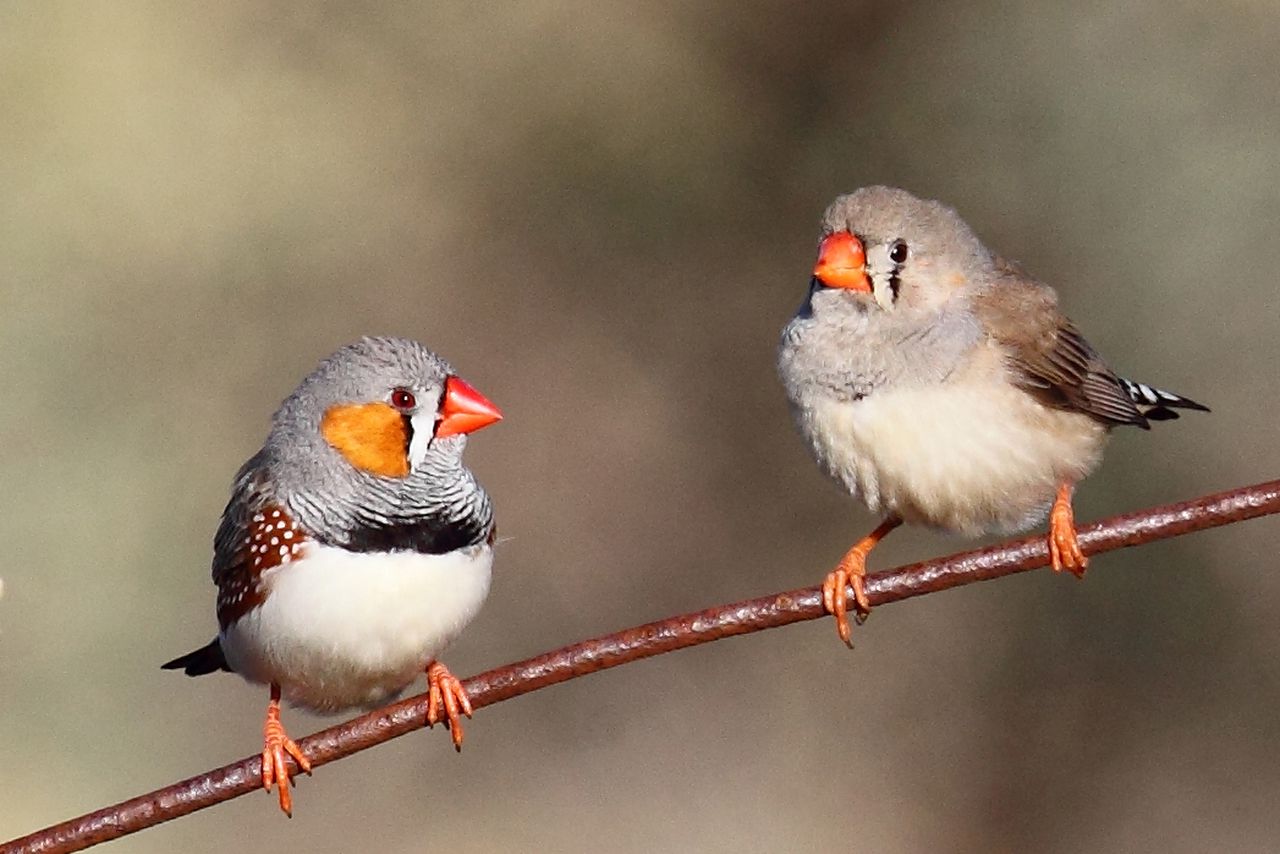
    
Zebra finches program their offspring to prepare for global warming by singing to eggs before they hatch. In especially hot areas, finch parents make a special call to incubating eggs, basically telling them it’s really hot outside and they better not grow too big. The hatchlings listen and this mechanism might explain how birds learn to adapt, and survive climate change.
Many bird species sing to their eggs. These calls have been shown to do everything from improving learning to synchronizing hatching times. When it comes to the Australian zebra finch, we already know that they make a specific call when it’s unusually hot outside, which in this case means over 79 degrees Fahrenheit no matter what season it is.
Finch parents start making these calls about five days before the eggs are supposed to hatch and the calls become more frequent the closer it gets to hatch time. This suggests the calls are a way to tell the soon-to-be-born finches about the world outside, and not just the parents complaining about the heat.
But how do we know if it’s just a coincidence? Mylene Mariette and Katherine Buchanan at Australia’s Deakin University figured out a way to test this. For a study published today in Science, they put a bunch of zebra finch eggs in an incubator that created a temperature around 100 degrees Fahrenheit. Mariette and Buchanan then played the “global warming” call for some of the eggs and not others.
Next, the scientists waited to see if there were significant differences between the two groups. If there were, it was probably because of the difference in the calls they heard.
After the eggs hatched, the baby finches were raised in an environment where the temperature varied naturally. By day 13 after hatching, nestlings that heard the “heat” calls were smaller than the ones who didn’t. This seems to confirm that the embryos in the eggs really do listen to the calls and then change how they grow.
All this makes sense because other research tells us that animals end up smaller when it gets hotter because the smaller size makes it easier to cope with high temperatures. Mariette and Buchanan also found that birds who were smaller in hot conditions produced more fledglings during their first breeding season, showing that this is a good evolutionary strategy after all.     

Thursday, November 21, 2013

Donie's Ireland daily news BLOG update Wednesday

The Irish Government has done a U-turn on early tax returns


NO CHANGES TO THE PAY AND FILE REGIME FOR 2014 

There will be no change to next year’s deadline of the end of October, with those who file on line having two weeks more time to file.
Pressure from Irish farmers and the self-employed has forced the Government to drop plans to make them file their tax returns earlier than normal next year.
There will be no change to next year’s deadline of the end of October, with those who file on line having two weeks more time to file.
But the Department of Finance no decision had been made yet for the date for paying and filing in 2015.
In a statement it said: “Following a consultation process in relation to changes required to the pay-and-file dates, the Minister for Finance has decided not to introduce any changes to the pay and file regime for 2014.
“The minister’s intention to bring annual pay and file dates forward remains, in order to provide increased certainty around the annual tax take and forecasting process following the move to an earlier Budget day.
The department wanted to bring the pay-and-file date forward so that officials have all the information needed to finalise the earlier Budget.
Budgets are now in October instead of December, as part of new EU rules.
Because of this, the department has proposed moving the pay-and-file deadline to either the end of June or mid-September.

Irish DNA results show that half of pigs meat produced here & tested is not of Irish origin 


IFA ACCUSES BACON PRODUCES OF CONFUSING CONSUMERS WITH LABELS

Some bacon producers have been accused by the Irish Farmers Association of confusing consumers by using labels that suggest they are using Irish pigmeat when tests results showed that non-Irish product had been used in some cases.
The IFA commissioned DNA testing company Identigen to test 300 pigmeat samples and compare the results against a complete DNA database of Irish boars.
The results showed 52 per cent of the rashers and bacon joints tested were not from Irish pigs. The IFA said no illegal activity had taken place and retailers were entitled to label non-Irish products as being “Produced in Ireland” if they had processed them further. But it said that customers had a right to know if items were actually Irish products.
IFA president John Bryan said the products “masquerading as Irish” were undermining the huge investment Irish farmers have put into traceability and quality control.
The IFA DNA certified programme for pigmeat was established to deal with labelling issues and to provide reassurance for producers and consumers on the origin of pigmeat on the Irish market.
Brands using the Love Irish Food label must manufacture in the Republic of Ireland and a minimum of 80 per cent of the brand must be made in the Republic.
The Love Irish Food organisation said member companies undertake in their licensing agreements that the source of the raw material they use originates and is produced in Ireland.
Dunnes Stores fared poorly in the test results with only half of its own brand St Bernard rashers and bacon joints matching the Irish database. Dunnes Stores was unavailable for comment.
IFA Pigs and Pigmeat chairman Pat O’Flaherty criticised Dunnes Stores for using the slogan “better because we’re Irish” while failing to support Irish pig farmers.
“The idea behind this pilot campaign is to help consumers make informed decisions when buying pigmeat products and to increase the sales of Irish product in the domestic and export markets,” he said.
He added he had no problem with Spanish, Danish or British pork being sold in Ireland but questioned why these products were marketed as “Irish” when put on supermarket shelves here.
“It is unacceptable that companies and retailers are using imported pigmeat in their products. In addition, some companies and retailers are relying heavily on imagery and branding that would lead the consumer to believe they are buying Irish when the reality is they are being conned into believing a product is Irish when our DNA testing has proved this is not the case,” said Mr O’Flaherty.
In a statement, Lidl Ireland said its Glensallagh own brand was produced exclusively for the chain by a number of Irish suppliers. “We have developed two distinct logos for packaging of our ow- label products – Produce of Ireland and Produced in Ireland. Many Glensallagh products carry the Bord Bia and Produce of Ireland logos as they contain 100 per cent Irish pig meat. Products that are made by Irish suppliers, but that do not contain 100 per cent Irish pig meat, do not carry the Bord Bia logo but instead have a ‘Produced in Ireland’ logo,” the statement said.
A spokewoman for the Food Safety Authority of Ireland (FSAI) insisted the Irish legislation is very clear.
“Pigmeat products do not have to display the country of origin on the label, unless the absence of this information could mislead consumers as to the true origin of the food,” she said.

Children these days are not as fast at running as their parents were


Study of global fitness shows children today cannot run as far or as fast as their parents did

Most children today cannot run as far or as fast as their parents did, according to a study of global fitness.
Most children today cannot run as far or as fast as their parents did, according to a study of global fitness.The decline, which may indicate worse health in adulthood, was discovered following an international study of running fitness in children over the last 50 years.

It found that children’s cardiovascular fitness had dropped markedly worldwide since about 1975.

Over a mile run, youngsters today would be about a minute and a half slower than children 30 years ago.
Dr Grant Tomkinson, the study’s lead author from the University of South Australia, said: “If a young person is generally unfit now, then they are more likely to develop conditions like heart disease later in life.
“Young people can be fit in different ways. They can be strong like a weightlifter, or flexible like a gymnast, or skillful like a tennis player. But not all of these types of fitness relate well to health.
“The most important type of fitness for good health is cardiovascular fitness, which is the ability to exercise vigorously for a long time, like running multiple laps around an oval track.”
Researchers analysed 50 studies on running fitness between 1964 and 2010 of more than 25 million children aged nine to 17 in 28 countries.
They gauged cardiovascular endurance by how far they could run in a set time or how long it took to run a set distance, typically lasted five to 15 minutes or covering half a mile to two miles.
Cardiovascular endurance declined significantly within the 46 years, the researchers revealed at the American Heart Association’s annual meeting yesterday.
On average, endurance has declined consistently by about 5 per cent every decade, while children are about 15 per cent less fit on a cardiovascular measure than their parents were at their age.
In the US, children’s cardiovascular endurance fell by an average of 6 per cent per decade between 1970 and 2000.
The problem is largely one of Western countries, but some parts of Asia like South Korea, mainland China and Hong Kong are also seeing this phenomenon.
To stay healthy, children and young people need to do at least an hour of physical activity – such as walking or cycling to school and running in the playground – every day. It can be done in small chunks rather than one session
The average changes were similar between boys and girls, younger and older children, and across different regions, although they varied country to country.
The decline in cardiovascular endurance performance was probably caused by social, behavioural, physical, psychosocial and physiological factors, Dr Tomkinson said.
The fitness findings were mirrored by measurements of being overweight or obesity and body fat, suggesting one factor may cause the other.
“In fact, about 30 per cent to 60 per cent of the declines in endurance running performance can be explained by increases in fat mass,” Dr Tomkinson said.
He added that children should take part in at least 60 minutes of daily activities that use the body’s big muscles, such as running, swimming or cycling.
“We need to help to inspire children and youth to develop fitness habits that will keep them healthy now and into the future,” Dr Tomkinson said. “They need to choose a range of physical activities they like or think they might like to try, and they need to get moving.”

Significant changes suggested for Irish climate change Bill


Committee on the Environment finds targets for Ireland will effectively be set by EU

A report on climate change by an Oireachtas Committee has made no cast-iron recommendations to Minister for the Environment Phil Hogan but does suggest a number of courses of action that might be followed.
The report of a parliamentary committee on a draft climate change Bill has made a number of significant suggestions for change in the legislation but has made no recommendations over the controversial absence of 2050 targets for emissions reductions.
The Oireachtas Committee on the Environment, chaired byLabour TD Michael McCarthy, this morning issued its report following a nine-month scrutiny of the Outline Heads of the Climate Action and Low Carbon Development Bill 2013.
The committee received over 45 submissions and heard evidence from 30 individuals and groups during the course of its deliberations.
The committee makes no cast-iron recommendations to Minister for the Environment Phil Hogan but does suggest a number of courses of action that might be followed, that differ from the draft legislation and from the document that formed its basis, a report from the secretariat of the National Economic and Social Council which concluded the emphasis should not be on ‘how much’ emissions reduction, rather on ‘how to’ achieve a low carbon society.
In relation to the issue of targets, the committee has said that Ireland abiding by targets for 2030, 2040 and 2050 set by the EU Roadmap will “satisfy the objectives of the Bill”. Essentially, the targets for Ireland will be those set by the EU.
The committee did suggest a number of significant changes. The first relates to sectoral roadmaps, the building-blocks envisaged for Ireland achieving its low-carbon objectives. It has concluded that a national roadmap is needed first and no sectoral roadmaps be drawn up until that is achieved. It also recommends that intervals between national roadmaps be no greater than five years.
There is also a bigger emphasis on the Expert Advisory Body, with the committee’s language suggesting there should be an insistence on full independence, regular and robust reporting mechanism, as well as an operation and structural model based on the composition of the Fiscal Advisory Council.
The committee also gives strong backing to the case that has been made by Minister for Agriculture Simon Coveneythat Ireland’s agricultural situation is unusual in Europeand the current requirements for emissions reduction in that sector are disproportionate, unjust, unfair and make little sense.
  The report supports rain-fed and grass-based agriculture as opposed to less sustainable forms and recommends the creation of a Europe-wide agriculture emissions trading scheme, which would award efficient and sustainable Irish agricultural practices.
It puts the emphasis on carbon-neutrality in agriculture by 2050 with a bigger focus on the use of carbon sinks from forestry and other land-use change initiatives.
Mr McCarthy emphasised the non-partisan approach of the committee members and accepted there were different views from TDs and Senators from Government and opposition. He said it was more useful to produce a document without recommendations but with consensus views in relation to courses of action and reference to where there were divisions.
Independent TD Catherine Murphy said it was the best that could be hoped for: “Ideally we wanted to see targets. The [setting of 2030 targets for the EU] in 2015 will change the scenario,” she said.
“We will have to scrutinise what is in those plans. If we do not have practical measures it is going to run into serious difficulties.”
The initial reaction to the report was that it was broadly welcomed although some bodies expressed reservation. Both the IFA and Ibec congratulated the committee for the report and its inclusive nature.
Stop Climate Chaos, which represents 28 civil society organisations, said the committee had missed an opportunity by not suggesting specific carbon emissions reduction targets should be set for 2050.
While welcoming the strengthening of the independent advisory body its spokesman Oisin Coghlan said “one disappointing aspect of the report is that it falls shy of proposing that specific carbon emissions reductions targets should be set for 2050”.

Ancient Siberian Skeletons Confirm Native American Origins

Humerus from Mal'ta  Malta boy, map of Beringia
DNA was extracted from a boy’s arm bone above left.

The DNA gleaned from two ancient Siberian skeletons is related to that of modern-day Native Americans and western Eurasians, new research suggests.

The genetic material from the ancient Siberians provides additional evidence that the ancestors of Native Americans made the arduous trek from Siberia across the Bering Strait into the Americas.
But it also reveals there were multiple waves of migrations in Asia around this time, said Mark Hubbe, a biological anthropologist at The Ohio State University who was not involved in the study.
This brings a new level of complexity to what we think happened in Asia
Several genetic clues indicate that Native Americans came from a population that once inhabited Siberia and crossed the Bering Strait between 20,000 and 15,000 years ago.
Between 1928 and 1958, Russian scientists excavated a Siberian site in Mal’ta, Russia, near Lake Baikal, and unearthed a trove of Venus figurines along with the skeleton of a juvenile, all dating back approximately 24,000 years. The figurines were intriguing, because they were similar in style to ones made by European hunter-gatherers.
European relatives: To trace the ancestry of these ancient people, Maanasa Raghavan, a researcher at the University of Copenhagen in Denmark, and colleagues managed to extract DNA from the ancient skeleton.
The team found that the mitochondrial DNA, or genetic material carried in the cytoplasm of cells that is passed through the maternal line, came from a lineage known as U, which is rare or extinct now, but was once common in hunter-gatherers from Europe during the Paleolithic Period.
 The team also sequenced the male sex chromosome (Y chromosome), which traces the paternal lineage of the skeleton. On the paternal side, the ancient boy came from a lineage known as R, which is now found in southern Siberia and western Eurasia. The R lineage is also a sister group to one common in Native Americans.
The researchers estimate that between 14 and 38 percent of Native American ancestry could come from this ancestral population, with the remaining portion coming from ancient East Asians.
DNA from a 17,000-year-old skeleton found in south central Siberia showed signs of being from the same genetic lineage as the Ma’lta specimen.
Previously, researchers had thought that people migrated from Europe into east Asia, and then entered Siberia from the south in a fairly linear expansion, Hubbe said. But the new results suggest the Siberian inhabitants may have come from the West, he said. That suggests Asia experienced multiple, crisscrossing waves of migration, he said.
However, because the skeletons are so old, it’s important to rule out the possibility that the DNA was contaminated, Theodore Schurr, an anthropologist at the University of Pennsylvania who was not involved in the study, wrote in an email.
And having so few ancient samples paints a very limited picture of a complicated genetic history.
“Although these results are intriguing and important, we should be cautious in inferring too much from just two genomes,” said Jennifer Raff, an anthropologist at the University of Texas at Austin who was not involved in the study. “I would certainly like to see a more geographically and temporally widespread sampling of Siberian genomes in order to better understand their population history.”