Pages

Showing posts with label agreement. Show all posts

Tuesday, March 28, 2017

Donie's Ireland daily news BLOG.

Oxfam report accuses Ireland of facilitating tax avoidance by European banks

OXFAM REPORT CLAIMS 16 OF EUROPE’S TOP 20 BANKS BOOKED PROFITS HERE IN 2015

Image result for Oxfam report accuses Ireland of facilitating tax avoidance by European banks  Image result for Oxfam report accuses Ireland of facilitating tax avoidance by European banks
The 16 top European banks operating in Ireland examined by the report paid an average effective tax rate here of no more than 6%.
Ireland has been accused of facilitating large-scale corporate tax avoidance by European banks. A report by Oxfam and the Fair Finance Guide International said a “disproportionate” amount of profits generated by these institutions are being booked through Ireland.
The research found 16 of Europe’s 20 biggest banks had reported profits here in 2015. It said these banks had generated €2.3 billion in profits in Ireland on €3 billion of turnover. That equates to a profitability rate of 76 per cent, four times higher than the global average. Only the Cayman Islands had a higher average profitability rate at 167 per cent.
Responding to the report, the Department of Finance said it rejects any allegations that the State is a tax haven. In a statement, it said: “Ireland does not meet any international definition of being a tax haven. We only have and want real substantive foreign direct investment, the kind that brings real jobs and investment into Ireland. Ireland is also fully compliant with all international best practices in the areas of tax transparency and exchange of information.”
The report said Ireland appears to be “a very productive location” for European banks with just the Cayman Islands, Curacao and Luxembourg having a higher average profit per employee.
An average employee in Ireland generated €409,000 in profits in 2015, more than nine times the average for employees worldwide.
It pointed to Spanish bank BBVA Compass as an example. That bank’s employees generated on average a profit of €33,000 each, but its average employee in Ireland generated €6.8 million, which is more than 200 times as much.
The 16 top European banks operating in Ireland examined by the report paid an average effective tax rate in Ireland of no more than 6 per cent , half the statutory rate of 12.5 per cent, with three banks (Barclays, RBS and Crédit Agricole) paying no more than 2 per cent.
Oxfam said countries were being denied large amounts of potential tax revenue by corporate tax avoidance.
This was contributing to inequality and poverty with governments forced to decide between increasing indirect taxes such as value-added tax (VAT), which are paid disproportionately by ordinary people, or cutting public services, which hits the poorest hardest.
It also said increased profits as a result of lower corporate taxation benefit wealthy companies’ shareholders, further increasing the gap between rich and poor.
“The massive profitability levels of European banks in Ireland suggests that large profits may be reported in Ireland as a tax avoidance strategy,” Oxfam Ireland’s senior policy and research co-ordinator Michael McCarthy Flynn said.
“This is creating little additional benefit to the Irish economy and tarnishing Ireland’s reputation,” he added.
Oxfam’s report suggested tax havens accounted for 26 per cent of the profits (an estimated €25 billion) made by the 20 biggest European banks but only 12 per cent of banks’ global turnover and 7 per cent of the banks’ employees.
This was out of proportion with the real level of economic activity that occurs in these jurisdictions.
While there may be legitimate business reasons for booking high profits in some cases, the report suggests that discrepancies may have arisen because some banks are using tax havens to avoid paying their fair share of tax, to facilitate tax dodging for their clients, or to circumvent regulations and legal requirements.

No Stormont agreement & no budget, “So what happens next”

Image result for No Stormont agreement & no budget, "So what happens next" Image result for No Stormont agreement Flanagan & Teresa May Image result for No Stormont agreement & no budget

FAILURE TO AGREE A POLITICAL DEAL AT STORMONT MEANS NO BUDGET WILL BE PASSED FOR THE NEW FINANCIAL YEAR, WHICH BEGINS NEXT WEEK. SO, WHAT HAPPENS NEXT?

The lack of a budget does not mean public services will grind to a halt.
Instead, the most senior civil servant at the Department of Finance, David Sterling, will use emergency powers to keep the money flowing.
On Wednesday, he will gain immediate control of a sum of money equivalent to 75% of this year’s budget.
Section 59 of the Northern Ireland Act allows him to use that money “for such services and purposes” as he directs.
Community groups vulnerable
In practice, that will mean funding existing services at their current level.
In January, Mr Sterling told a Stormont committee that he viewed this only as an interim measure.terling will shortly become the man holding the purse strings at Stormont
“It is purely a stopgap to ensure that business continuity prevails and that departments have the cash necessary for them to run their services until such times as a budget act is put in place,” he said.
On the whole, these emergency measures should not mean cuts to services in the short term.
However, voluntary and community groups which receive government funding on a year-to-year basis could be vulnerable.
They do not have certainty that their funding will continue and some organisations have already warned staff they are at risk of redundancy.
Health service difficulties
This extraordinary situation could also be storing up trouble for later in the financial year, particularly for the health service.
Mr Sterling told MLAs that the Department of Health “faces real difficulties in this scenario”.
“The quality of service provided will depend on the pattern of spend that the department is allowed to incur from the beginning of April,” he said.service is set to face “real difficulties” in the absence of a budget
“So, some big decisions need to be taken around that – I cannot say what those decisions are.
“Obviously, from my perspective, it is better that it is ministers who are taking those decisions.”
If we get as far as July and there is still no budget then the situation becomes critical.
The law says that Mr Sterling will then have the right to spend an amount equivalent to 95% of this year’s budget across the whole of the financial year.
That will effectively mean in-year cuts of least 5% across the public service.
Resources seriously squeezed
There are other complications – Stormont has not set a regional rate so rates bills cannot be issued.
Households and businesses will get a bill at some point, but it is not clear when.
subsidies for farmers will have to come from Mr Sterling’s pot of money
Councils, which rely on rates revenue, will instead get their money directly from Mr Sterling’s pot, but that cannot go on indefinitely.
The rules also mean that European farm subsidies cannot be paid out in the normal way.
Farmers will still get their money, but again that will have to come out of Mr Sterling’s pot until such time as a budget is passed.
Resources could becomes seriously squeezed long before the end of the financial year.
One other thing to remember is that even in the absence of a crisis Stormont’s budget was falling in real terms in the coming year.
When a budget is eventually passed, it will mean cuts anyway.

Sligo to retain ban on fracking in county development plan

COUNCIL CHIEF, BACKING ACTIVITY, CITES CONFLICT BETWEEN NATIONAL AND LOCAL GOVERNMENT NEEDS

Image result for Sligo to retain ban on fracking in county development plan  Image result for Sligo to retain ban on fracking in county development plan

RURAL FRACKING. CLLR DECLAN BREE SAID THE BAN HAD BEEN WELCOMED BY THE SLIGO COMMUNITY “WHO FULLY RECOGNISE THE DANGERS FRACKING POSES TO WATER QUALITY, TO HUMAN SAFETY AND TO THE GENERAL ENVIRONMENT”.

Sligo county councillors have unanimously voted – for a second time – to have a ban on fracking included in the county’s new development plan.
The councillors rejected a recommendation from council chief executive Ciaran Hayes that the ban, agreed last June, should be omitted from a new county development plan.
Mr Hayes said this was a situation where there was a conflict between the requirements of national government and local government.
He made the recommendation following a submission to the Draft County Development Plan 2017-2023 from the Department of Local Government suggesting that a ban on Unconventional Gas Exploration and Extraction would be “premature”.
Fracking is the extraction of natural gas by pumping high pressure water and chemicals into shale formations deep underground.
In a separate submission, David Minton, director of the Northern and Western Regional Assembly (NWRA), said the proposed ban would be ultra vires (beyond one’s legal power or authority) and should not be included.
Cllr Declan Bree (Independent) said the ban had been warmly welcomed by the community “who fully recognise the dangers fracking poses to water quality, to human safety and to the general environment”.
He said he had “half expected” a pro-fracking commercial operator to make a submission seeking to have the ban removed. “Imagine my surprise when I heard that the submission seeking the removal of the ban was made by the Northern and Western Regional Authority,” he said.
“Fortunately it is not regional assembly or the chief executive who ultimately decide what is included in our development plan – it is the elected representatives of the people of this county who will make the decision,” he added.
In his submission, Mr Hayes said the NWRA had pointed out that placing a ban on certain exploration and extraction activities in Co Sligo was “ beyond the legal powers of the county council”.
He also pointed out that at the end of October 2016 the Dáil had passed the first stage of a Bill calling for a ban on fracking in Ireland. This Bill was introduced by Sligo-Leitrim TD Tony McLoughlin.

Irish researchers make a ‘significant’ diabetes finding?

HOPES THAT DISCOVERY MAY LEAD TO SCREENING TEST FOR THE MOST SERIOUS TYPE OF DIABETES

Image result for Irish researchers make a ‘significant’ diabetes finding?  

RESEARCHERS SAID THEIR DISCOVERY HAD THE POTENTIAL TO CONTRIBUTE TO THE IDENTIFICATION OF BIOLOGICAL MARKERS THAT PREDICT THE DEVELOPMENT OF TYPE 1 DIABETES.

Irish researchers have made a “significant” medical discovery they believe may ultimately lead to a screening test for the most serious type of diabetes.
The 3U Diabetes Consortium, composed of researchers from Dublin City University, Maynooth University and the Royal College of Surgeons in Ireland, published the finding in the online journal Diabetic Medicine this week.
They said it had the potential to contribute to the identification of biological markers that predict the development of Type 1 diabetes, a chronic autoimmune disease.
The research showed the presence of a substance called 12-HETE in blood samples provided by newly diagnosed Type 1 diabetes patients at Connolly Hospital Blanchardstown and the Children’s University Hospital Temple Street.
This substance was not found in patient samples where the condition was already established, the researchers said.
“The elevated levels of 12-HETE, detected in early-onset Type 1 diabetes patients indicates the potential of this substance, in collaboration with other factors, to act as a biomarker for the onset of the autoimmune disease,” they said on Monday.
Analysing samples?
They will now turn their attention to analysing retrospective samples from patients who subsequently developed Type 1 diabetes.
“If 12-HETE is found in samples from people prior to diabetes onset, the researchers are hopeful that it can ultimately be used, in conjunction with other biomarkers, to develop a screening test for Type 1 diabetes among the general population,” the research team said.
Type 1 diabetes is caused by the body’s own immune system destroying the cells in the pancreas that make insulin, the hormone that helps the body use glucose for energy.
It usually occurs in childhood or early adulthood. It can develop extremely rapidly and requires life-long self-management of glucose monitoring, insulin injections, food intake and exercise.
The research team said early diagnosis of the condition was crucial to ensure the serious complication diabetic ketoacidosis did not develop.
Up to five children and teenagers are diagnosed each week in Ireland with Type 1 diabetes and one in 10 are affected by a late diagnosis which can result in critical illness.
Phenomenon
Prof Martin Clynes of DCU said it had been a “surprise” to the research team to discover the 12-HETE substance in people recently diagnosed with Type 1 diabetes. It was not present in people with the lesser form, Type 2, or in those who had established Type 1 diagnoses.
“It could be useful as a signal that children will go on to get Type 1,” he added.
The researchers will now try to get access to data from other countries to study the phenomenon further.
The study, conducted over a period of three years and then peer reviewed, had received little in terms of core funding.
Prof Clynes said there had been some funding from the Health Research Board, but that in general the researchers had to “beg, borrow or steal” resources as they went along.
It was not as easy to get funding for diabetes research in Ireland as it was for cancer, he added.
“Diabetes is very poorly supported.”
About 226,000 people in Ireland live with diabetes, with between 14,000 and 16,000 of those having the Type 1 form. About 2,750 of those are under 16.

Aliens are HERE on Earth and they will eventually TAKE OVER,

CLAIMS A NUCLEAR SCIENTIST

Image result for Aliens are HERE on Earth and they will eventually TAKE OVER, Image result for Aliens are HERE on Earth and they will eventually TAKE OVER, Image result for Aliens are HERE on Earth and they will eventually TAKE OVER,

Brian Cox scientist (middle pic) says that aliens have killed themselves off so what?

A SCIENTIST HAS ISSUED A CHILLING WARNING THAT ALIENS ARE ALREADY HERE ON EARTH AND ARE BIDING THEIR TIME BEFORE UNLEASHING A FULL REVEAL.

Stanton Friedman,a nuclear physicist, (Above left Caption) is convinced there have been multiple visitations of Earth by aliens, who will ultimately quarantine us here on Earth.
The Canadian claimed there “was not a shadow of a doubt” the existence of intelligent aliens was being covered up by global governments as part of a so-called truth embargo.
Mr Friedman, 82, is a top Ufologist, who has been at the heart of investigations into the mysterious Roswell alleged UFO crash of 1947, after previously working on classified projects for American aerospace corporation McDonnell Douglas.
Speaking to Dailystar.co.uk, he said: “We have enough to prove without a shadow of a doubt that planet Earth is being visited [by aliens].
“This is kept from people because who would want the world in upheaval? There would be mass panic and distress.
“If they (the aliens) want to make themselves known, it’s easy – they will.”
He said recently declassified CIA files on UFO sightings were all part of the proof.
PROOF OF ALIENS? ‘Lizard-like creature jumped on NASA Curiosity Rover’
‘bearded face carved by ALIENS found on Mars’ by scientists
So why does he say they are here?
Mr Friedman says aliens actually want to prevent humans colonising space and will ultimately quarantine us here for the greater good to prevent mankind travelling.
He said: “I think they are here. I think they are here to quarantine us, keep us from going out there.
“With our track record – we’re evil.”
But Mr Friedman claims our governments are trying to take advanatage of aliens being here by obtaining their technology to achieve world supremacy.
He said: “The first country to replicate [alien] technology will rule the roost if they can build it.
Documentary exposes ‘truth’ about aliens on the Moon
What happened to man ‘bundled into van after stealing from Area 51?’
Scientist claims crop circle patterns are ‘ALIEN messages’
We have enough to prove without a shadow of a doubt that planet Earth is being visited by aliens.
“It’s political too – the US says ‘are we ready to put out anything if the Russians don’t or the Chinese don’t’.”
Mr Friedman, who has written extensively on Aliens and UFOS, has described this culture of secrecy as the world’s “Cosmic Watergate” – a reference to the President Nixon cover-up scandal in the 1970s.
He now tours the globe giving talks on his beliefs at universities and conferences.
Some sceptics are not convinced by his arguments, however.
One poster on the forum skepticforum.com wrote: “Recently I was looking at some of Friedman’s arguments for UFO’s and against sceptics.
NASA astronaut ‘saw bodies of dead Roswell aliens in video footage’
Former MoD expert says alien invasion could spark WW3
“Overall he did a pretty poor job of battling sceptics and proving his point.
“When he says he debunks the debunkers he makes sweeping generalisations and says sceptics ignore some ‘big’ cases even though many of them were looked at by sceptics.
“So my question is what’s his point.
“He only uses old cases that were mostly debunked and just tries to discredit sceptics rather than provide non-speculative evidence.”  

Saturday, August 20, 2016

Donie's Ireland daily news BLOG update

CSO had intensive talks with EU officials on Ireland’s GDP surge

EUROSTAT ACCEPTS HOW IRELAND CALCULATES GDP, CSO SAYS IRISH VISIT A ‘FINAL VERIFICATION’


THE FORTHCOMING EUROSTAT VISIT IS ‘ROUTINE’, ACCORDING TO THE CSO.

The Central Statistics Office said it has held “intensive discussions” with the EU’s statistics agency on the recent sharp revision of Ireland’s economic growth last year to 26%.
“Eurostat has held intensive discussions with the CSO on the changes to our National Accounts and Balance of Payments statistics, driven by the location of capital assets in Ireland and accepts the recent [gross domestic product] revisions,” Jennifer Banim, assistant director general with the CSO, said.
A planned mission by Eurostat staff to Ireland next month reported last Thursday on receipt of records released under the Freedom of Information Act, amounts to “final verification” of the data.
Eurostat said in the internal document, circulated to Irish officials last month, that the initial explanations provided by Ireland for the surprising data “look plausible”.

‘A ROUTINE PROCESS’

“The forthcoming Eurostat visit is part of an ongoing routine process of verification of GDP and GNI (gross national income) figures for all states,” Ms Banim said.
  • ‘Leprechaun economics’: EU mission to audit 26% GDP rise
The GDP revision on July 12th has prompted widespread criticism among economists about the relevance of the data, which has skewed various widely-followed gauges, including Government debt relative to the economy’s size. Moody’s, one of the world’s main credit ratings agencies, said at the time that the country’s highly volatile economic performance is one of its main concerns about the country’s creditworthiness.
The surge, including the impact of US companies merging with Irish firms to gain a tax benefit, contract manufacturing and aircraft leasing activity, served to push Ireland’s debt level below 80% of GDP compared to previous estimates of 94%.
While the CSO calculated GDP along Eurostat criteria, Nobel Prize-winning economist Paul Krugman famously said last month the Irish figures were best summed up as “leprechaun economics”.
The GDP statistics “accurately reflect the complex and highly globalised nature of the Irish economy,” Ms Banin said. “In this context, the figures are highly relevant and plan an important role in understanding the complexity of our economy.”

Vat cut in 2011 drives increase in Irish hospitality jobs


THE RESTAURANTS ASSOCIATION OF IRELAND IS CLAIMING THE CREATION OF 45,260 NEW JOBS IN THE HOSPITALITY AND FOOD SECTOR SINCE 2011 IS LARGELY DUE TO A REDUCED VAT RATE FOR THE SECTOR.

A report by economist Jim Power, which the association commissioned, looked at direct and indirect jobs created and an estimate of the social welfare savings, as well as the increase in revenue for the exchequer.
Using statistics from the Central Statistics Office, it concluded the number of people directly employed in the accommodation and food services sector was 145,900 in the first quarter of this year which was 31,000 more than in the second quarter of 2011.
The report argued if the “multiplier effect” was applied to the total number of employees, the number of indirect jobs increased by 14,260.
The association said the total contribution to the exchequer through payroll taxes from the sector is €695m.
“The total contribution to the exchequer is €147.6m,” it said. “The reduction in social welfare payments, assuming the extra employment took people off the live register, is estimated at €620m.”
Adrian Cummins, the association’s chief executive, said: “Our report highlights that the introduction of the low Vat rate in July 2011 has been a major driver of local employment growth.
He added: “45,260 new jobs have been created in the food and accommodation sector across the whole country since this initiative has been introduced.
“Our figures show that 31,000 direct jobs and 14,260 indirect jobs have been developed in this sector since July 2011. It is a substantial number of new jobs to result from just one government action. The 9% Vat rate has benefited regions greatly across the country and we would like to see that maintained.”
The association also pointed out that on a national scale, tourism has also increased every year since the new Vat rate was introduced, with overall visits to Ireland rising by almost 30% since July 2011.
“There is further good news for Ireland’s tourism sector regarding Ireland’s Value for Money (VFM) rating as the number of visitors rating Ireland ‘good’ or ‘very good’ VFM has increased from 28% to 58% from 2009 to 2015 and the number of visitors rating Ireland ‘very poor’ or ‘poor’ for VFM has fallen sharply from 40% in 2009 to 8% in 2015,” it said.
Last year, Siptu criticised the failure of Minister for Finance Michael Noonan, in Budget 2016, to end the 9% Vat rate for the hotel and restaurant sector.
It said retention of the Vat break came at a time when the tourism and hospitality sector was experiencing steady growth and increased revenues, but said employers in the hospitality sector were continuing to veto the Joint Labour Committee (JLC) process for agreeing statutory minimum wages and conditions for workers in the sector.

Promoting the West of Ireland in Britain a good initiative


TOURISM IRELAND HAS TEAMED UP WITH FLYBE AND IRELAND WEST AIRPORT KNOCK TO PROMOTE FLIGHTS TO KNOCK FROM MANCHESTER, BIRMINGHAM AND EDINBURGH AND GROW TOURIST NUMBERS TO THE WEST OF IRELAND THIS AUTUMN. THE JOINT CAMPAIGN WILL RUN IN BRITAIN DURING AUGUST AND SEPTEMBER.

Working with airlines and airports to build demand for flights is a key priority for Tourism Ireland and this campaign includes an online article in the Daily Record in Scotland, and an online article in the Birmingham Mail and the Manchester Evening News.
Julie, Tourism Ireland’s Deputy Head of Great Britain, said: “We are delighted to partner with Flybe and Ireland West Airport Knock once again, to maximise the promotion of flights from Birmingham, Edinburgh and Manchester and help grow tourist numbers to the West of Ireland this autumn.”

Ireland’s Filipino adoption deal gets the go ahead


A WELCOME AND POSITIVE DEVELOPMENT IN THE BEST INTEREST OF CHILDREN: THAT’S THE CHILDREN’S RIGHTS ALLIANCE RESPONSE TO IRELAND’S AGREEMENT ON INTER-COUNTRY ADOPTION WITH THE PHILIPPINES.

Chief executive Tanya Ward said the importance of adoption agreements, such as the process signed in Dublin yesterday between Ireland and the Philippines, could not be overstated.
“Given the sums of money involved, inter-country adoption can encourage malpractice and corruption, with children and prospective adoptive parents at risk of being exploited for financial gain,” she said.
“Children have been denied the right to grow up with their parents and families because of child trafficking, abduction, and through the deception of birth parents.”
The Children’s Rights Alliance represents a group of organisations working to ensure the rights of all children and young people in Ireland are respected.
Ms Ward said Ireland and the Philippines had ratified the 1993 Hague Convention on Protection of Children and Co-operation in Respect of Inter-country Adoption and it clearly outlined how the adoption process would operate between the countries.
Minister for Children and Youth Affairs, Dr Katherine Zappone said the convention provided an assurance for children, their families and the state that appropriate procedures had been followed and that the adoption was in the best interests of the child.
“My aim is to have safe and secure adoptions. It is against this background that my department is working to create the appropriate legislation, policy and administrative frameworks which will ensure a well-regulated regime of adoption,” said Ms Zappone.
She believed the agreement between the Adoption Authority of Ireland and the Philippines Inter-country Adoption Board would provide a clear road map on how the inter-country adoption process would operate between Ireland and the Philippines.
The agreement on administrative arrangements between the two countries was drafted by the chair of the Adoption Authority of Ireland, Dr Geoffrey Shannon, who said it reflected the legal diversity and common goals of the contracting states.
There have been 10 children adopted from the Philippines since the establishment of the Adoption Authority in 2010.
The administrative agreement between Ireland and the Philippines is the third to be concluded by the authority. In 2012, an administrative arrangement was reached between Ireland and Vietnam and that was followed by one between Ireland and the US in 2013.
Speaking on RTÉ radio, Dr Shannon, said the central authority in the sending country, in this case the Philippines, would consider what set of parents best met the needs of the child being adopted. “So you have the professional matching of a child with suitable adoptive parents,” he said.
There were 82 inter-country adoptions to Ireland last year. Families here have adopted children from Bulgaria, China, Thailand, India, Poland, and Lithuania. Inter-country adoptions can take place between countries that have ratified the Hague Convention or with which Ireland has a bilateral agreement.

Otzi the 5,300-Year-Old  Iceman was wearing clothing from five separateAnimal Species

   Researchers believe they have discovered the origin of his garments and quiver – a bag for holding arrows. From top left clockwise in this image is a shoe with grass interior (left) and leather exterior (right), the sheepskin coat, leggings made from goat hide, a hat made from bear fur, a grass coat and a leather loincloth  

OTZI THE ICEMAN, A MUMMY FOUND IN 1991 ON A GLACIER IN THE TYROLEAN ALPS, WAS CLOTHED IN A BEARSKIN CAP, GOATSKIN LEGGINGS, SHEEPSKIN COAT, COW SKIN SHOES AND A DEERSKIN QUIVER WHEN HE WAS KILLED IN AN ATTACK ABOUT 5,300 YEARS AGO, NEW RESEARCH SHOWS.

Researchers had previously thought that at least the leggings or pants consisted of some type of fox, dog or wolf. New DNA analysis shows that instead they were made of goatskin from a species of goat that still inhabits the Alps today, according to an article on National Geographic. The researchers in the new study also examined his quiver.
An article on Smithsonian.com says the Iceman’s shoes were fashioned from the leather of cattle, possibly because it is tough material. His coat, which had white and black stripes, was made with sheepskin for warmth. His quiver was made of deerskin and his hat of bearskin.
Researchers discovered that Ötzi’s leather hide coat and loincloth were made of sheepskin, which has been known from previous studies. New analysis shows that instead of being one wild sheep, the coat and cloth were crafted from four individual wild sheep.
A similar pair of goat leather leggings may indicate that the skin of goats was used in clothing for some specific quality, National Geographic says. That pair of leggings is about 4,500 years old and was discovered in Switzerland.
The researchers, who published their findings in Scientific Reports, based their analysis on ancient DNA markers in nine leather pieces from among Ötzi’s attire.
The Tyrolean Iceman, a 5,300-year-old (Copper Age) natural mummy, discovered in the Italian Ötztal Alps in 1991 provides a direct archaeological link to prehistoric Europe. Two decades of analysis concerning this individual have provided insights into ancestry, diet, tools, lifestyle, health and attire. Despite multiple studies and their relatively good preservation, ambiguity still persists as to the species of origin for the majority of the Iceman’s clothes. A more complete characterisation of his garments is therefore required, if we are to maximise the information provided by these artefacts and gain further insights into the choice of raw material from which Copper Age populations manufactured their clothes.
The article states that ancient, preserved leathers give valuable information about how people used secondary products of animals. It says until recently, the material of Ötzi’s clothing was so decomposed that biomolecular research on it has been thwarted in part because structural features of the leather and fur needed to identify them with a microscope are missing or damaged.
So the researchers used genetic and DNA analysis to better ascertain what animal skins comprised the clothing.
The researchers wrote that “The Iceman’s garments and quiver are from an assemblage of at least five different species of animal. The coat alone was a combination of at least four hides and two species: goat and sheep. This result may indicate a haphazard stitching together of clothing based upon materials that were available to the Iceman, as ancient rudimentary leather is posited to rapidly deteriorate after manufacture.”
Research has shown Ötzi was what the authors call an agro-pastoralist (farmer-livestock herder), but his quiver and hat show that he also may have been a trapper and hunter of wild animals.
In May 2015, Ancient Origins reported Ötzi was a victim of homicide. Researchers say he suffered a quick, violent death that was over quickly but may not have been painless, National Geographic reports . He had an arrow wound, but his death probably came from a blow to the back of his head.
The new study on the DNA of the animals his clothes were made from is the latest of many years of post-mortem studies on Ötzi’s body and artifacts. Scientists in June 2014 decoded Ötzi’s genome from a hip bone sample. However the tiny sample weighing no more than 0.1 g provides so much more information. A team of scientists from EURAC in Bolzano/Bozen together with colleagues from the University of Vienna successfully analyzed the DNA of unicellular organisms in the sample. They found evidence for the presence of Treponema denticola , an opportunistic pathogen involved in the development of periodontal disease. Thus, by just looking at the DNA, the researchers could support a CT-based diagnosis made last year which indicated that the Iceman suffered from periodontitis.     

Wednesday, August 12, 2015

Donie's Ireland daily news BLOG update

Germany saved €100bn from Europe’s debt crisis


Fall in borrowing costs far outweigh costs of crisis to economy, says Leibniz institute. 

German chancellor Angela Merkel and finance minister Wolfgang Schaüble. Investors have fled instability in the euro zone for the safety of German bonds since 2010, pushing down interest rates on those bonds.
Germany has saved €100 billion since 2010 because its borrowing costs have fallen during Europe’s debt crisis – savings that outweigh the cost of the crisis to the German economy, an economic think tank has reported.
Investors have fled instability in the euro zone for the safety of German bonds since 2010, pushing down interest rates on those bonds. Paying less interest has helped the government save more than 3 per cent of gross domestic product, the Halle-based Leibniz institute for economic research said.
The institute created a model of a fictitious “normal” situation, without the crisis, to establish what German interest rates would have been, based on inflation and slack in the economy.
The report observed a close connection between political flashpoints in the euro zone debt crisis and fluctuations in the interest rate on German government bonds.
Interest on German government bonds fell sharply when markets saw bad news out of Greece, such as Greek prime minister Alexis Tsipras’s decision in late June to hold a referendum on reforms demanded by its creditors. Similarly, rates rose on good news from Greece.
The total savings from this pattern since 2010, an estimated €100 billion, far outweigh the costs of the euro zone crisis to the German economy, even if Greece were to prove completely unable service its debts, the institute said.
Government bonds in other countries – including France, the United States and the Netherlands – have also benefited in the same way from the crisis, the report suggested, but on a smaller scale.

Over half of Irish people use their phones in the loo


We know you also use your phone as a mirror and to avoid talking to people. Really!

10% of Irish people check their mobile phone 160 times per day, according to a new study.
The research, carried out by Ireland’s newest mobile operator iD, also found that more than half of us (56%) use our phones in the bathroom.
While one in three use it as a mirror. Over 40% of women said they used their phone to check their appearance, compared to 28% of men.
The study also revealed that while Irish people check their phone on average 40 times per day, one in 10 people check their phones 160 times a day. That’s an average of six times per hour, or once every 10 minutes.
One in two people surveyed admitted to using their phone to avoid talking to someone, with 63% of 18-24 year olds being the biggest offenders.
When asked about who you contact most often, a spouse or partner is number one for 49% of people, but before you go thinking we’re all so romantic it’s worth noting that almost one quarter of those aged 25 or younger said they dumped someone over the phone. Ouch. The survey was carried out on 1,000 people.

Turf cutters ‘close’ to agreement on right to cut

  
Plot owners at one of the country’s most contentious bogs are close to a deal to end their row with the Government.
Ross Bog on the Meath-Cavan border has been the scene of protests by turfcutters as rangers from the National Parks and Wildlife Service (NPWS) sought to implement the ban on removing turf under the terms of the EU Habitats Directive.
Members of the Sheelin Turfcutters Association have fiercely defended their right to cut their turf despite the designation of the raised bog as a Special Area of Conservation and gardaí have attended at the site as tensions rose between the sides.
Last year, almost 100 people marched at Ross Bog to assert their right to continue to cut turf there and to protest against the ban on working the peat banks.
Earlier this year, the association sat down to negotiate with senior officials of the NPWS to ensure they would retain their right to work the bog as their families had done for generations. The meetings in Castlepollard hinged on the amount of bog that would be retained for the plot owners under a relocation scheme that would be acceptable to both sides.
At a recent meeting, the turfcutters were offered 12.9 hectares of bog on which they could continue to cut turf for their own use.
The association declined the offer and has held out for a greater area. The NPWS, which implements the terms of the EU Directive on behalf of the Department of Arts, Heritage and the Gaeltacht, is now to carry out a further survey of the site to examine the possibility of making an improved offer.
However, chairman of the Sheelin Turfcutters Association, Sean Reilly indicated that an agreement between the sides was now close and the survey was expected to be completed within a matter of weeks.

Action needed on climate change before the point of no return

   
The focus on not letting world temperatures rise more than 2C can distract from the fact that many places are already feeling the effects of climate change,
IN 2009, global leaders agreed to try not to let the world warm more than 2C above pre-industrial times. This is sometimes seen as a rule of thumb for keeping on the right side of climate change, within ‘safe’ territory.
But that’s not at all how scientists meant it, Camille Parmesan, an expert in biodiversity at the University of Plymouth in the United Kingdom said. Climate risks don’t begin at 2C, she said; it’s more like where they go from high to intolerably high.
The planet has already warmed by about 0.8C since the late-19th century.
Some of the world’s most iconic places are also the most vulnerable, and they are already feeling the effects.
“We’re already seeing contraction of species in the most sensitive ecosystems, such as those dependent on sea ice or those living on mountain tops,” said Prof Carmen.
“We’re also seeing declines in some tropical systems, such as coral reefs, and the valuable services they provide for fish nurseries, tourism and protection from coastal flooding.”
And that’s just the beginning.
“At more than 2C, we wouldn’t just face losing the most sensitive species but some common ones, too,” said Prof Parmesan.
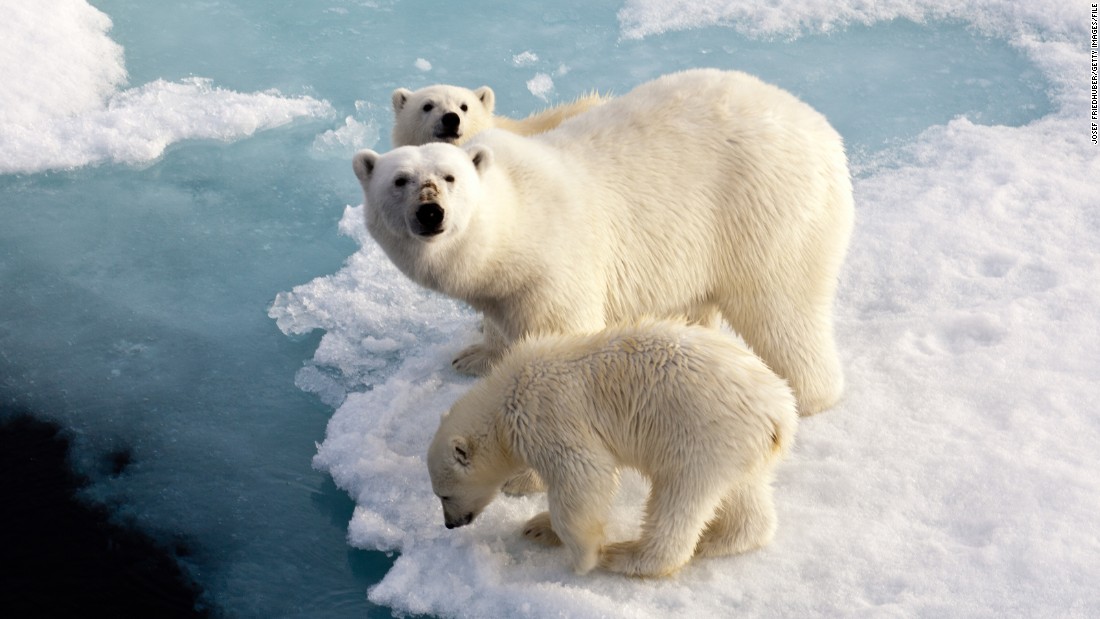
“So it wouldn’t just be the polar bear and the mountain pika, but other species living in lowland and temperate habitats that aren’t necessarily at risk right now.”
Against this backdrop, the world’s carbon emissions have continued to rise and the task of staying below 2C looms ever larger. Global leaders will meet again in Paris in December to agree on a plan for how to get ourselves on a pathway to achieving 2C in the long term.
But suppose that doesn’t happen. Suppose we collectively decide the task of keeping to this target is too great, or the price of cutting emissions quickly is too high. What would it mean to resign ourselves to a post-2C world? And if not 2C, then what?
Science is helping to answer these important questions. Climate models tell us that if carbon emissions stay very high, global temperatures could reach 4C above pre-industrial temperatures by the end of the century, perhaps even rising to 5C.
And unless emissions cease altogether after that, temperatures will continue to rise long past the end of the century.
And that would mean a world unlike anything we have ever known.
Climate change won’t treat all countries the same. Often the most serious and damaging effects will happen in the countries that are least able to cope.
A global temperature rise of 4C by the end of the century would see parts of Africa warm by up to 6C, making life near impossible for vulnerable urban populations and people working outdoors.
Drying of river basins and falling crop yields would raise the risk of food and water scarcity in many parts of the world, particularly among poorer rural populations.
Society is vulnerable to extreme weather. The UN body whose job it is to assess the science on climate change says the North Atlantic and Western North Pacific will see more strong storms like Typhoon Haiyan, which tore through the Philippines in 2013.
In Europe, heatwaves like the 2003 event, which killed 70,000 people, are already 10 times more likely than a decade ago, and this pattern is set to continue. Scientists also know that warmer air will mean rainfall in heavier bursts, while higher seas will make storms more likely to breach coastal flood defenses.
As humans, we tend to focus on what we experience up here on Earth’s surface. So it’s often overlooked that more than 90% of the heat trapped by greenhouse gases goes into the oceans, warming them up from the surface to hundreds of metres below.
The oceans take up some of the extra carbon in the atmosphere, too, making them more acidic. Warming and acidifying oceans spell bad news for marine ecosystems, including valuable fisheries that people the world over depend on for their food and livelihoods.
As seawater warms, it expands. That’s why, throughout Earth’s history, changing temperatures and sea levels have always been closely linked. Since the turn of the 20th century, the global sea level has risen by nearly 20cm, which is already enough to threaten low-lying island nations such as Kiribati, Tuvalu, or the Maldives.
Even if the oceans continued this steady march, scientists expect sea levels to be at least another half a meter higher by the end of the century. But the higher temperatures rise, the greater the chances of tipping the balance into a totally altered state, which carries far more serious consequences.
At some point, the vast Greenland ice sheet will collapse. Scientists don’t know exactly when this will happen, but they say it’s likely to be with less than 4C of global warming. The collapse wouldn’t happen quickly, perhaps taking centuries or millennia.
But once it starts, we’d be committed to a sea-level rise of several metres. This would inundate some of the world’s biggest cities, including New York and Shanghai.
At the other end of the globe, scientists are already seeing early signs of collapse in parts of the Antarctic ice sheet. And once that starts, it’s likely to be unstoppable.
In the meantime, almost all the world’s glaciers are losing ice. In the Arctic, temperatures are rising more than twice as fast as the global average, and if we stay on a path to 4C, scientists predict there could be no Arctic sea ice left in summer in as little as 30 or 40 years.
The climate system, in all its infinite complexity, is impossible to predict entirely.
There are some things happening that scientists don’t completely understand yet, such as why ice floating on the sea around Antarctica is currently growing slightly.
Scientists think, perhaps counter- intuitively, that it’s down to climate change, too, as the winds encircling the continent push freezing water outward from the coastline, extending the icy platform offshore.
And the climate system could still hold some surprises. As the Arctic warms, the once-frozen ground is thawing and releasing the powerful greenhouse gas methane.
Scientists are unsure yet just how much 4C of global warming could speed up this process.
Two, three, and four degrees are all points along a global warming continuum. None represents a climate precipice, but it’s clear that as the temperature rises, so do the risks.
What’s left to decide is, how much of a chance are we willing to take? The science is solid enough that whatever we choose, we can’t tell future generations that we didn’t know the risks.

Bees ‘prefer gardens with native flowers’


Gardeners keen to help wildlife are advised to plant a variety of flowering plants

Bees and other pollinating insects prefer gardens planted with flowers that are native to the UK and the northern hemisphere, a study has found.
But exotic plants provide nectar and pollen food for bees and hoverflies at times of the year when native flowers are thinner on the ground, while certain foreign blooms can prove a hit with some species, the Royal Horticultural Society research showed.
The researchers, writing in the Journal of Applied Ecology, said the best advice for gardeners keen to help wildlife was to plant a variety of flowering plants, focusing on native and northern hemisphere species but with a selection from further afield.
With around half of gardeners in the UK actively encouraging wildlife into their gardens, the findings will help nature-lovers make their plots more attractive to bees, hoverflies and other insects
Garden border-like plots were planted with three different sets of bulbs, perennials, shrubs, climbers, grass and ferns that were either native to the UK, near-native from the northern hemisphere, or exotic species from the southern hemisphere.
The plots were monitored for the abundance of flowers and the number of pollinating insect visitors over a four year period for the study, which was supported by the Widllife Gardening Forum.
More flowers – wherever they were from – meant more visits from pollinators, but a greater number of insects were recorded on the plots with native and near-native species than the exotic ones, with 40% fewer visits to the beds with flowers from far away.
Short-tongued bumblebee species were found in larger numbers on the native and near-native plants, hoverflies favoured native flowers and honeybees preferred the near-native plots, the study found.
Long- tongued bumblebees and solitary bees were found on all three sets of plants in around the same numbers, but in the exotic plot a third of visits by solitary bees were to one type of plant, the Eryngium agavifolium Griseb, a variety of sea holly.
There were fewer visits to exotic plants in early summer compared to the other plots, but relatively more later in the season when the non-native species were flowering more than the UK and northern hemisphere blooms.
RHS experts said the results showed that gardeners who wanted to encourage and support pollinating insects should plant a mix of flowers from a wide range of geographical regions.
While there should be an emphasis on plants native to the UK and the northern hemisphere, southern hemisphere plants such as Lobelia tupa and Verbena bonariensis can play an important role.
Southern hemisphere plants tend to flower later, extending the flowering season and providing much needed food for bugs and bees after other species have gone to seed.
Lead researcher Dr Andrew Salisbury said: “The UK’s 1,500 species of pollinator are thought to be under increasing pressure due to the loss of habitat and food sources.
“As more traditional habitats have been reduced the role of gardens as havens for pollinators and other wildlife is growing in importance.”
But he said the role native and non-native plants play in helping wildlife had been unclear and confusing before now.
“Now for the first time, gardeners can access robust, evidence-based information on the most effective planting strategy they can adopt if they wish to attract and support pollinators.
“These findings will help gardeners to confidently pack their borders, window boxes and allotments with flowers without getting hung up on the idea that they are somehow doing the ‘wrong thing’ if the plants are not all UK natives,” he said.