Ireland most expensive EU country due to taxes and retail, says academic
NEW DATA SHOWS IRELAND MOST EXPENSIVE COUNTRY IN EUROPE IN WHICH TO BUY ALCOHOL


IRELAND IS THE MOST EXPENSIVE COUNTRY IN THE EU IN WHICH TO BUY ALCOHOL, ACCORDING TO RECENT DATA.
An Irish academic says higher taxes, a different retail structure and market factors are the reason why Ireland is one of the most expensive countries in Europe.
Damien O’Reilly, a lecturer in retail management in DIT, told Morning Ireland that market factors tend to drive up the cost of food. He was responding to new data from Eurostat which show that Ireland is the most expensive country in Europe in which to buy alcohol with prices at 175% of the EU average.
On average the cost of food and non-alcoholic drinks in Ireland is 119% of the EU average, the fourth highest in the EU.
The EU’s statistics agency also said Ireland is the second most expensive for tobacco at 189% of the EU average, with only the United Kingdom higher at 218%.
Only Denmark (145%), Sweden (124%), Austria (120%) are more expensive.
In Ireland, bread and cereals (111% of EU average), meat (106%) and milk, cheese and eggs (128%) all cost above the EU average.
The data is based on a 2015 price survey covering 440 products across Europe.
Donall O’Keefe of the Drinks Industry Group of Ireland (DIGI) said the high price of alcohol in Ireland is directly related to the unfair excise rate and that this is a direct tax on jobs, tourism and consumers.
“Excise is a tax on jobs, it is a tax on tourism and it is a tax on Irish consumers,” he said.
The Eurostat figures also show Ireland had the second highest per capita GDP in the EU in 2015 at 145% of the EU average.
Luxembourg had the highest per capita GDP in the EU at 271% of the average, while Bulgaria (46%) had the lowest.
However, when it comes to Actual Individual Consumption (AIC) – which measures the material welfare of households – Ireland was at 95% of the EU average.
Mr O’Reilly said that the reason Ireland’s dairy products cost so much even though there is a large dairy industry here is because 90 per cent of the milk produced in Ireland is for export.
“A lot of it is then re-imported as finished product which drives up the cost,” he said.
He also said supermarkets in Ireland have higher margins than elsewhere in Europe and that Irish shoppers are attracted to brands when they could buy cheaper own brands.
He said Irish shoppers tend to go for “higher quality foods”
EU may rule on Apple tax case next month
EU FOUND AGAINST IRELAND IN INITIAL FINDINGS ON APPLE IN 2014


MINISTER FOR FINANCE MICHAEL NOONAN SAYS THERE IS SPECULATION THAT THE EUROPEAN COMMISSION IS TO DECIDE NEXT MONTH ON WHETHER APPLE’S TAX DEALINGS IN THIS COUNTRY BREACHED STATE-AID RULES.
Minister for Finance Michael Noonan says there is speculation that the European Commission is to decide next month on whether Apple’s tax dealings in this country breached state-aid rules.
“The speculation now is that the Commission may make a decision sometime in July,” Mr Noonan said in an interview with Bloomberg in Luxembourg. “But we don’t know that with certainty. It’s the general feel around Brussels that they’re walking toward a July decision.”
Initial findings by the commission in 2014 said that Apple’s Irish tax arrangements were improperly designed to give the iPhone and iPad maker a financial advantage in exchange for jobs in the country. In a worst-case scenario, JP Morgan analysts estimate Apple could end up having to pay a $19 billion (€16.7 billion) in back taxes, though the expectation is that any negative ruling would end up with a much smaller bill.
The Government has repeatedly said that it will appeal any negative finding to the EU Court of Justice.
In the past, Apple has said it doesn’t use “tax gimmicks”, while the Government has repeatedly said that no State-aid rules were breached in this case.
Jobs lost shock as receivers shut McCormack Stores in the North West


SOME 208 JOBS HAVE BEEN LOST AND 15 BUSINESS LOCATIONS CLOSED ACROSS THE NORTH WEST FOLLOWING A RECEIVERSHIP ORDER BY BANK OF IRELAND AGAINST MCCORMACK OILS.
The news that the stores at Leitrim Village, Drumshanbo and Manorhamilton had been closed down with immediate effect was met with shock and astonishment by staff and members of the public.
The receivers arrived at the 15 premises located across Leitrim, Cavan, Sligo and Meath on Monday morning after 10am.
It is understood the three stores in Leitrim were open as per normal when the receivers entered the premises and told staff to close the doors and proceeded to put up the closure notice and seize assets.
In the ensuing hours other staff members arrived at the doors to be informed they no longer had jobs and were handed letters of redundancy from the receivers.
A statement from Receivers to the Leitrim Observer said, “Grant Thornton can confirm that Aengus Burns and Michael McAteer have been appointed as receivers to Excol Oil Limited which operates ten filling stations across the North West, two oil distribution facilities (McCormack Fuels Limited, Sligo and Breffni Oil Distribution, Cavan) and McCormack’s car sales and garage businesses in Sligo.”
They told the paper, “Our first priority is to brief employees at all 15 locations and process their entitlements for redundancy. The receivers are making every effort to sell the various businesses.” It is understood they do not intend to re-open the businesses and are hoping to sell them as soon as possible.
The umbrella company operated filling stations in Drumshanbo, Leitrim Village and Manorhamilton as well as in Killeshandra, Belturbet and Virginia, Co Cavan, Athboy, Co Meath and more in Castlebaldwin, Carraroe and the Mail Coach Road, Sligo.
Staff who were not at work on Monday were called to the businesses and handed letters of redundancy. It is understood the offer is the statutory redundancy of two weeks pay for every year worked. The letter explained that Bank of Ireland has appointed receivers to the business and also outlined entitlements for social welfare payments.
The businesses employed many local people, including a number of couples and workers from the same family.
Staff told the Leitrim Observer they are “devastated” and that the news came as a “huge shock” as they felt local stores were performing well.
A spokesperson for Grant Thornton told the paper he was unaware if the owners had knowledge of the order for receivership before Monday morning, as sometimes they are not notified beforehand.
The McCormack Family were contacted for a comment but they declined to speak at this time. Security remains outside all stores this week.
Local people were shocked and annoyed at the closures with many calling it “sad news” on Monday.
On Facebook, locals poured out their sadness and disbelief. Kelly Hewitt Kelly said, “It’s bloody awful. My husband worked in Manor and they were just handed stupid letters and told they have no job at all – out, that was it terrible way to be treated – we have 4 young kids to think about.”
Noeleen Moffatt commented, “Terrible News for Leitrim Village and surrounding areas. Travel to Drumshanbo, Carrick-on-Shannon or Pauline Skeffington’s Shop in Drumboylan for essential items.”
Mar Kelly sympathised saying, “Terrible for the McCormack family and their loyal staff.”
About 15 minutes of exercise may lower death risk in elderly people
NEW STUDY FINDS

EXERCISING IS AS IMPORTANT FOR THE ELDERLY AS IT IS FOR THE YOUTH. A STUDY HAS FOUND THAT EVEN AS LITTLE AS A 15-MINUTE WORKOUT COULD DO WONDERS FOR THE ELDERLY AND DECREASE DEATH RISK.
The study, in fact, goes on to say that it may help them cheat death, by linking it to lower death risk among the elderly, which showed how exercising lesser than the recommended number of hours might help them.
The Tech Times, French researchers analyzed a group of 1,011 French individuals aged 65 in 2001 and were followed for 12 years. They also looked at a huge group of more than 122,000 people from an international cohort who were about 60 years old and were followed for about 10 years.
The team measured physical activity via Metabolic Equivalent of Task (MET) minutes every week, meaning calories spent per minute of physical activity. A MET minute every week equates to the amount of energy expended by sitting; recommended levels of exercise, for instance, are from 500 to 1,000 MET minutes a week.
It was observed that, during the study, as people exercised more, their potential death risk dropped considerably. Furthermore, those with low activity levels, recorded approximately 22% decreased death risk, while those with medium and high levels had 28% and 35% lower risks.
Tech Times interviewed study author and University Hospital of Saint-Etienne physician, Dr. David Hupin, who said that, “Age is not an excuse to do no exercise. It is well established that regular physical activity has a better overall effect on health than any medical treatment.”
Top professionals are twice as likely to marry as unskilled workers
A RECENT SURVEY REVEALS ‘MARRIAGE CHANCES’ BY CLASS WHICH DIMINISH RIGHT DOWN THE ECONOMIC SCALE?


THIS IS THE FIRST TIME SUCH DATA LOOKING AT THE GAP IN “MARRIAGE CHANCES” BY CLASS HAS BEEN BROUGHT TOGETHER IN IRELAND.
Highly paid processionals are almost twice as likely to be married as unskilled workers, a report published this morning finds.
Some 65.7% of adults, aged 18-49 in the best off groups, were married at the end of last year, while 31.8% of the same age in the least well off group were married, notes the study, Mind the Gap, published by the Iona Institute Christian think tank.
The report also shows the likelihood of marrying diminishes right down the economic social scale, apart from in the second least well off group, which are described as “process, plant and machine operatives”.
Some 53.6% of adults in this class were married, according to the report which draws on data contained in the Central Statistics Office’s Quarterly National Household Survey from the end of 2015.
This is the first time such data looking at the gap in “marriage chances” by class has been brought together in Ireland. The findings reveal a phenomenon replicated in other western societies. It is an issue which receives much discussion and scrutiny in the United States.
This study maps likelihood of marriage by area, in Dublin, Cork and Galway cities, showing huge variations aligning by levels of prosperity or disadvantage.
In Dublin marriage rates range from highs of up to 59 per cent in Clontarf and Rathgar/Terenure to as low as 19% in north and south inner city.
WORST CHANCES
In Cork, they range from 60% in Ballinlough, to 17% in Shandon, Gilabbey and South Gate, while Galway adults with the best prospects of marriage are those in Rockbarton, Knockacarragh and Taylor’s Hill where rates are up to 53%. Galwegians with the worst chances are in Nun’s Island and St Nicholas, with rates as low as 19%.
Prof Patricia Casey of the Iona Institute said the inequality in access to marriage were “deeply concerning”. She said those entering marriages had better social and economic prospects, while children in lone parents households were at the greatest risk of poverty.
The Institute said it was publishing the report in the hope of sparking a debate on why some groups were not marrying.
Marriage, she said, was one of the greatest bulwarks against poverty and yet those in poverty had far less access to it.
“Why is it that the better off a person is the more likely they are to be married? Social disadvantage clearly diminishes a person’s chances of marrying and not marrying in turn increases the odds of remaining socially disadvantaged, It’s a vicious circle and one which obviously affects children.”
Irish society had shown it believed the gay and lesbian community should have access to marriage. So too should the poor, said Prof Casey.
The increasing proliferation of low-paid, insecure jobs at the lower end of the economic scale undoubtedly had an impact on people’s sense of their financial ability to enter into marriage, she added.
“There are also disincentives to marry built into the social welfare system . . . It can be more financially advantageous for two people on social welfare to remain single than to marry.”
Gravitational waves detected for the second time
Scientists spot ripples in space-time caused by two colliding and merging black holes
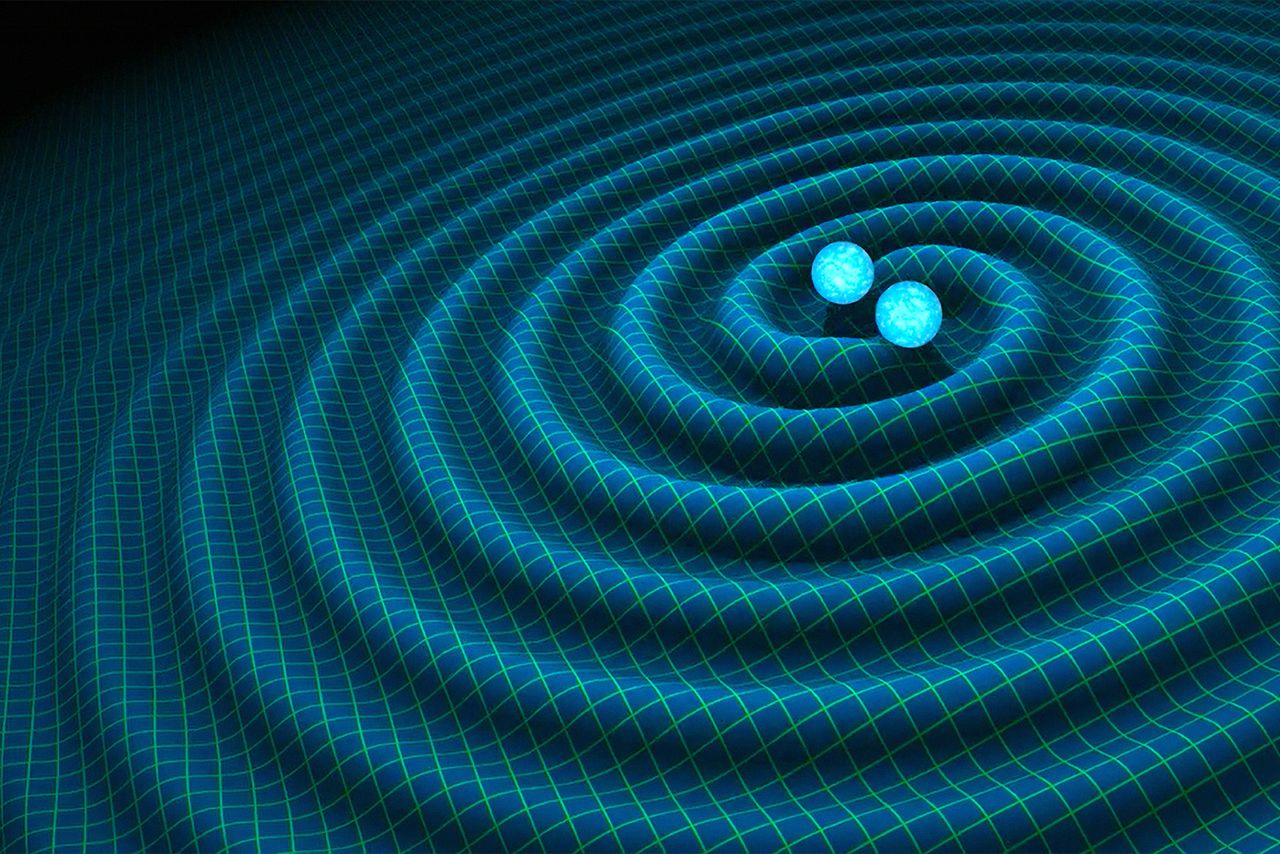
/cdn0.vox-cdn.com/uploads/chorus_asset/file/6653629/spirally.0.gif)
AN ARTIST’S RENDITION SHOWS TWO BLACK HOLES 14 AND 8 TIMES THE MASS OF THE SUN JUST MOMENTS BEFORE THEY COLLIDED AND MERGED TO FORM A NEW BLACK HOLE 21 TIMES THE MASS OF THE SUN.
Gravitational waves, ripples in space-time predicted by Albert Einstein a century ago, have been detected for the second time, scientists have announced.
An international team spotted the phenomenon on St Stephen’s Day but has only now made the news public.
As with the earlier detection in September 2015, the source was found to be two colliding and merging black holes unleashing titanic forces.
The event, some 1.4 billion light years away, caused a quantity of energy roughly equivalent to the mass of the Sun to be converted into gravitational waves.
After travelling an unimaginable distance across space, the waves were “captured” by the twin Ligo (Laser Interferometer Gravitational-wave Observatory) detectors located in Livingston, Louisiana, and Hanford, Washington, US.
Team member Dr Stephen Fairhurst, from Cardiff University, said: “This event heralds the true beginning of gravitational wave astronomy and the opening of a new window on the universe.
“The different masses and observable spins that we witnessed in the Boxing Day event show that we’re starting to collect vital information about the population of black holes that exist in the universe.
“Future gravitational wave observations will allow us to understand how black holes form from the death of massive stars, and test whether they are really as predicted by Einstein’s theory.”
THE THEORY OF GENERAL RELATIVITY?
Gravitational waves are predicted in Einstein’s Theory Of General Relativity, which shows how gravity arises from mass curving space and time.
They are ripples in space-time that propagate as waves. Anything in their path, from humans to whole planets, is made to stretch and compress slightly as the fabric of space-time is distorted.
Each of the Ligo detectors, consisting of an incredibly sensitive system of mirrors and lasers, is also made to “wobble”. But the effect is really tiny.
The amount of movement is thousands of times smaller than the width of the nucleus of an atom.
Scientists hope gravitational waves will offer a completely different view of the universe, allowing them to study events that might be hidden from traditional optical and radio telescopes.
An illustration of this was seen in results from the December 26th detection, presented at the annual meeting of the American Astronomical Society in San Diego, US.
By analysing the signal, the scientists were able to tell that the colliding black holes were 14 and eight times more massive than the Sun.
They orbited each other at least 27 times before merging into a more massive spinning black hole 21 times the Sun’s mass.
Using two detectors spotting the waves 1.1 milliseconds apart made it possible to determine the source’s rough position in the sky.
‘KEY QUESTIONS’
Prof Sheila Rowan, director of the University of Glasgow’s Institute for Gravitational Research, who took part in the discovery, said: “We know from this second detection that the properties being measured by Ligo will allow us to start to answer some key questions with gravitational astronomy.
“In future we will be able to study this and better understand cosmic history, aiming to fill in the ‘missing links’ in our knowledge.”
The findings have been accepted for publication in the journal Physical Review Letters.
Dr Chad Hanna, from Pennsylvania State University in the US, who co-led the detection team, said: “We now have far more confidence that mergers of two black holes are common in the nearby universe.
“Now that we are able to detect gravitational waves, they are going to be a phenomenal source of new information about our galaxy and an entirely new channel for discoveries about the universe.”
The Ligo Scientific Collaboration consists of more than 1,000 scientists from 17 countries.
Each Ligo site has two tubes, both 4km long, arranged in an L shape.
A laser is beamed down each tube to monitor very precisely the distance between mirrors at each end.
If a gravitational wave is present, it will alter the distance between the mirrors by a minute amount.


