Dáil expected to pass Bill legalising medicinal cannabis
UP TO 90 TDS SUPPORT NEW LEGISLATION PROPOSED BY PEOPLE BEFORE PROFIT’S GINO KENNY

GINO KENNY TD, WHOSE BILL FOR THE LEGALISATION OF MEDICINAL CANNABIS HAS RECEIVED WIDESPREAD SUPPORT IN THE DÁIL.
Legislation allowing for the use of cannabis for medicinal purposes is expected to pass through the Dáil.
A Bill proposed by People Before Profit TD Gino Kenny has secured the support of Fianna Fáil, Sinn Féin, Labour, the Social Democrats, the Green Party and his colleagues in the Anti-Austerity Alliance.
A number of other Independent TDs including Dr Michael Harty and the Independents4Change are also expected to back it.
The Independent Alliance, which includes Minister for Transport Shane Ross, Minister of State at the Department of Health Finian McGrath and Minister of State John Halligan, has also secured a free vote on the legislation.
This means the Bill will have the support of up to 90 TDs in the Dáil ensuring its passage through the House.
Minister for Health Simon Harris is likely to propose a reasoned amendment to the legislation.
Mr Harris is eager to see change on the issue of medicinal cannabis but is awaiting a report from the Health Products Regulatory Authority (HPRA) on the subject. It is due to report back by the end of January.
The Minister has met Mr Kenny and People Before Profit TD Richard Boyd Barrett to discuss the legislation.
Mr Harris has asked the deputies to consider adjourning the debate or suspending the vote until the report is concluded.
The Bill, which is to be debated on Thursday, provides for the regulation of cannabis for medicinal use so that patients can receive a legally protected, secure supply that is safe and effective.
Regulatory authority?
However, it also proposes the establishment of a cannabis regulatory authority, which would be tasked with regulating the sale, labelling, advertising and marketing of cannabis and related products.
A Cannabis Research Institute, which would conduct or commission and publish cannabis-related research, has also been proposed.
Once the Bill is passed it will go to the Oireachtas health committee for examination.
While a number of parties have agreed in principle to support the Bill, it is likely they will seek a number of changes at committee stage.
Sinn Féin is to request the HPRA oversee the regulation of cannabis rather than establishing two new bodies. Fianna Fáil, the Independent Alliance and Labour are likely to seek safeguards to ensure this does not lead to abuse of the law or the decriminalisation of cannabis.
Under the Misuse of Drugs Acts 1977 to 2016, cannabis is subject to stringent controls. A doctor can prescribe cannabis products in limited circumstances if granted a licence by the Minister for Health. One cannabis-based medicine, Sativex, is authorised for the treatment of multiple sclerosis in limited circumstances. Legislation could be amended to allow for its prescription on a wider basis.
Cannabis for medicinal use is permitted in the Netherlands, Croatia, Malta, the Czech Republic, Australia, Canada and a number of US states.
Minister of State with responsibility for the National Drugs Strategy Catherine Byrne said there should be an option for people to access cannabis for medical use.
“I have had a lot of calls on the issue with people making very good cases in favour of legalising cannabis for medical use, and against. In my own position, as Minister of State, I would be concerned that there would have to be very tight controls on it,” she said.
“I wouldn’t want people to think we are legalising cannabis, which is something I’d be totally against. We don’t want to see cannabis available on prescription and then being dealt on the streets.”
Doctor allegedly admitted cutting C-section patient in the wrong place
OBSTETRICIAN ACCUSED OF PROFESSIONAL MISCONDUCT IN SLIGO IS BEFORE MEDICAL COUNCIL


DR ANDREA HERMANN WAS ALSO THE SUBJECT OF A PREVIOUS FITNESS TO PRACTICE INQUIRY AT THE MEDICAL COUNCIL, IN 2009 AND 2010.
A doctor who allegedly admitted cutting a patient undergoing a Caesarean section “in the wrong place” is before a medical council fitness to practice inquiry.
Dr Andrea Hermann faces allegations of professional misconduct and poor professional performance arising from her care of six patients at Sligo Univerity Hospital where she worked as an obstetric and gynaecological registrar in 2013 and 2014.
Patient A told the inquiry that she suspected something was not right when she was still in hospital four days after giving birth. She asked her husband to take a look at her scar and, when he did so, she said he told her, “It’s an awful big scar. It goes down one side.”
She was allowed go home on the Sunday but just as she was leaving a woman at reception “roared” at her to stay. She said Dr Hermann then came up to her. The doctor brought Patient A into a room and, according to Patient A, said, “I cut you in the wrong place.”
Patient A said Dr Hermann admitted she had made a mistake, apologised and said she was sorry this had happened to her.
Patient A said Dr Hermann said by way of explanation that they were using new drapes – a large piece of fabric placed over the patient with a slit for the incision – during the surgery.
“At this point I didn’t know what to think,” Patient A told the inquiry. “I was very shocked. I was quite upset leaving the hospital.”
“I was devastated,” she said. “I couldn’t get my head around how she had made a mistake doing a planned section.”
She said she still experiences a twinge of pain on her side.
Serious consequences.
In relation to another patient, it is alleged that Dr Hermann failed to establish whether a Mirena coil was still in place during a follow-up appointment. This patient later conceived and miscarried, the inquiry heard.
It is also alleged that Dr Hermann failed to display any surgical skill when closing a uterotomy during a procedure undergone by a woman referred to as Patient F. The inquiry heard that during this procedure, in January 2014, Dr Hermann was attempting to suture Patient F’s uterus to her abdominal wall. If it had not been for the intervention of one of her colleagues, there could have been very serious consequences for the patient, the inquiry heard.
It is also alleged Dr Hermann failed to tell the Sligo hospital of previous conditions imposed on her by the Medical Council following an earlier fitness to practice inquiry in 2010.
Her legal representative, Gerard O’Donnell, of O’Donnell Waters solicitors in Galway, read out a statement on behalf of Dr Hermann, before going off record. In the statement, Dr Hermann said that as a result of events following the previous inquiry in 2009 and 2010, she suffered from severe depression and was “traumatised”. She said her privacy was of huge importance and asked that her name did not appear in the media again.
Senior counsel Patrick Leonard, for the Medical Council, said Dr Hermann was also the subject of a previous fitness to practice inquiry at the Medical Council, in 2009 and 2010. Before this time, Dr Hermann worked in the Galway Clinic.
On foot of this, the Medical Council recommended that Dr Hermann be suspended for one year and that certain conditions be attached to her registration, such as agreeing to certain supervision, once she began work again. These conditions were confirmed by the High Court in March 2011.
Dr Hermann was suspended from June 2010 to June 2011. During this time, she practiced as a doctor in Germany, where she is from originally, and she continued to work there until the summer of 2013.
Restrictions disclosure?
It is alleged that she did not disclose the restrictions attached to her registration at a job interview at Sligo University Hospital when she returned to Ireland, although Dr Hermann disputes this.
Her application for re-registration was accepted and on July 24th, 2013, the Medical Council emailed Sligo hospital to confirm that Dr Hermann was registered, with certain conditions attached.
However, it appears that the hospital “did not appreciate” that Dr Hermann’s registration was subject to conditions, according to Mr Leonard.
By January 2014, concerns had been raised within Sligo hospital about Dr Hermann’s clinical competencies. The hospital removed her from the on-call rota, and they increased levels of supervision for her. In May 2014, Dr Hermann resigned from her post.
The inquiry heard that Dr Hermann, who is not present at the inquiry, admits to a number of the clinical allegations, and that they amount to poor professional performance. However, she has not made any admissions regarding the allegations concerning the conditions attached to her registration.
At the start of the inquiry Dr Hermann applied for a privacy application, so that her name would be anonymised, but this was denied.
Ireland’s unemployment rate falls to 7.3% for this November 2016
YOUTH UNEMPLOYMENT ALSO SLIPS TO 15.5%, ACCORDING TO NEW CSO FIGURES FOR NOVEMBER


THE UNEMPLOYMENT RATE FOR WOMEN IN NOVEMBER WAS 6.1% NOW DOWN FROM 6.2% IN OCTOBER.
The Republic’s unemployment rate fell to a new post-crash low of 7.3% during November, according to the latest figures from the Central Statistics Office.
The seasonally adjusted unemployment rate for November 2016 was 7.3% – down from 7.5% in October 2016 and down from 9.1% in November 2015.
The number of people unemployed was 160,700 in November 2016, down from 164,100 in October 2016.
The 160,700 figure also represents a decrease of 36,200 when compared to November 2015.
In November 2016, the unemployment rate was 8.3% for men – down from 8.6% in October 2016 and down from 10.7% in November 2015.
Youth unemployment
The unemployment rate for women in November 2016 was 6.1% – down from 6.2% in October 2016 and down from 7.1% in November 2015.
The number of men unemployed in November 2016 was 99,600. This is a decrease of 3,400 when compared to the October 2016 figure of 103,000.
In November 2016, the number of women unemployed was 61,100 – an increase of 100 when compared to October 2016.
The unemployment rate for people aged 15-24 years (youth unemployment rate) was 15.5% in November 2016, a decrease from 16.4% cent in October 2016.
Merrion Stockbrokers economist Alan McQuaid said the fall in the figrues may “to some degree” be down to people returning to education or taking up training schemes.
“Although emigration has been a factor to some degree in keeping unemployment down since the financial crisis, the labour market has improved dramatically in recent years, reflecting the strengthening of the economic recovery,” he said.
“Meanwhile, in the third quarter of 2016, employment rose in twelve of the fourteen economic sectors on an annual basis and fell in the other two in the quarter.”
The greatest rates of increase were in the accommodation and food service activities sector, which rose 9.6% or 13,400, and in construction, which rose 7.3% or 9,300.
“The pick-up in the latter is particularly encouraging given that it was the building industry that suffered the worst in the downturn,” said Mr McQuaid.
The outlook?
The outlook from next year on however, is “more uncertain” in light of Britain’s impending exit from the European Union.
“Increased labour market participation will also impact on the numbers,” he said. “Still, we expect the downward trend in unemployment to continue over the next twelve months, albeit at a slower pace than before.”
ISME chief executive Neil McDonnell said living costs were impacting job creation.
“Government policies strongly influence almost 48% of the costs in the Consumer Price Index,” he said. “They must act now to reduce these costs, in health, education, housing, rent, insurance and travel”.
Mr McDonnell called on Government to reduce business costs to below the EU average, target capital investment in job rich infrastructure, outsource more state sector services to SMEs, and to reform the social welfare system to make it more profitable to work.
“If Government-controlled costs are reduced, workers would have more money in their pockets,” he said. “This would reduce the calls for pay increases, and would allow employers take on more staff.”
A Fathers’ embrace as role leader is tied to less behavioural problems in pre-teens


A new U.K. study suggests a new father’s adjustment to being a parent and his confidence in this role, rather than the amount of direct childcare they give, seems to be important during a child’s early years.
Investigators discovered pre-teens whose dads embrace parenthood may be less prone to behavioral issues.
The nature of parenting in a child’s early years is thought to influence their short- and long-term well-being and mental health, which are in turn linked to development and educational attainment.
But it’s not entirely clear what impact the father’s role might have, as much of the research to date has tended to characterize paternal involvement in a child’s upbringing as one-dimensional.
The researchers therefore drew on data from the Avon Longitudinal Study of Parents and Children (ALSPAC) study, which has been tracking the health of nearly 15,000 children since birth, to assess several aspects of paternal involvement. The study is published in the online journal BMJ Open.
The parents of 10,440 children living with both their mother and dad at the age of 8 months were asked to complete a comprehensive questionnaire about their and their child’s mental health. The questionnaire explored attitudes to parenting; time spent on childcare; their child’s behavior and development; as well as details of household income/education.
When the children were aged nine and 11, their behavior was assessed using the strength and difficulties questionnaire (SDQ). This covers emotional symptoms, behavior (conduct) problems, hyperactivity, peer relationship issues, and helpfulness (pro-social behavior).
Fathers’ parental involvement was measured by asking them to rate their level of agreement with 58 statements, reflecting the amount of direct childcare they engaged in, including household chores; their attitudes to parenting; the relationship with their child; and how they felt about the birth eight weeks and eight months afterwards.
The final analysis was based on almost 7,000 nine year-olds and nearly 6,500 of the same children at the age of 11.
THREE KEY FACTORS EMERGED IN RELATION TO THE CHILDREN’S SDQ SCORES:
1. fathers’ emotional response to the baby and their parenting role;
2. how much time the dads spent on direct childcare;
3. and how well they adjusted to their new role, including how confident they felt in their abilities as a parent and partner.
Investigators discovered a father’s emotional response and confidence in their new role were most strongly associated with lower odds of behavioural problems when their children reached nine and 11 years of age.
A high paternal factor one score was associated with 21 percent and 19 percent lower odds of a higher SDQ score at the ages of nine and 11, respectively. Similarly, a high paternal factor three score was associated with 28 percent lower odds of a higher SDQ score at both time points.
When researchers adjust for potentially influential factors, such as age at fatherhood, educational attainment and household income, hours worked and sex of the child, the results remained consistent.
Researchers noted, however, that the study is observational and no firm conclusions can be drawn about cause and effect. Moreover, researchers note the study dates back 25 years, and parenting styles may have changed, so the findings may therefore not be widely generalizable.
But they write, “The findings of this research study suggest that it is psychological and emotional aspects of paternal involvement in a child’s infancy that are most powerful in influencing later child behavior, and not the amount of time that fathers are engaged in childcare or domestic tasks in the household.”
A flying camera will now take your selfies from mid-air!
IT’S A DRONE, AND ALSO, A FLYING CAMERA.



Selfie sticks are so passé. Millennials now have something new to look forward to: a pocket-sized flying camera or perhaps the only portable flying camera that integrates with smartphones has now set a completely new aspiration for the selfie brigade.
It is simply called AirSelfie the device generates its own WiFi that a smartphone can pair with, and comes equipped with a rechargeable battery through a cell phone case. Additionally, a vibration-absorber system and a host of in-flight stability systems claim to offer fluid flight and sharp images. Compatible with most popular smartphones such as iPhone (6, 6s, 7 and 7 Plus), Huawei P9, Google Pixel and Samsung Galaxy S7 Edge, it is comprised of four propellers and a 5MP video camera with which you can take both photographs and video recordings.
With the built-in 260 mAh 7.4 V battery and a 4GB microSD card, the mini-drone can fly for up to three minutes on a single charge, and is controlled by its own app (available for iOS and Android.) For obvious reasons, the AirSelfie will work well for those personal selfies, and will also prove beneficial while taking group shots and family photos from up to 66 feet away. Users can take indoor and outdoor aerial photos of subjects and locations that would otherwise be unreachable.
“Our team of 60 seasoned technology professionals and enthusiasts researched, designed and created a flying camera that exceeds all current standards,” said Edoardo Stroppiana, co-founder of AirSelfie. “We saw an increasing need for a device that goes beyond a selfie stick, allowing users to take pictures from all angles, and we’re excited to introduce AirSelfie to millennials and consumers around the world. It sets a completely new bar for the market.”
HOW IT WORKS?
To activate AirSelfie, users need to remove it from its case, turn it on, then pair it with a smartphones via its self-generated WiFi access point. After use, simply pressing the ‘slide to land’ label on the app causes the device to descend and power off. Using the ‘selfie delay timer’ function, users can also take timed photos, giving them up to 10 seconds to get into position for the picture.
AirSelfie is available for pre-order via Kickstarter beginning November 17, and is slated to commence deliveries by March next year.
The Great Barrier Reef has suffered the worst coral devastation on record
 V
V 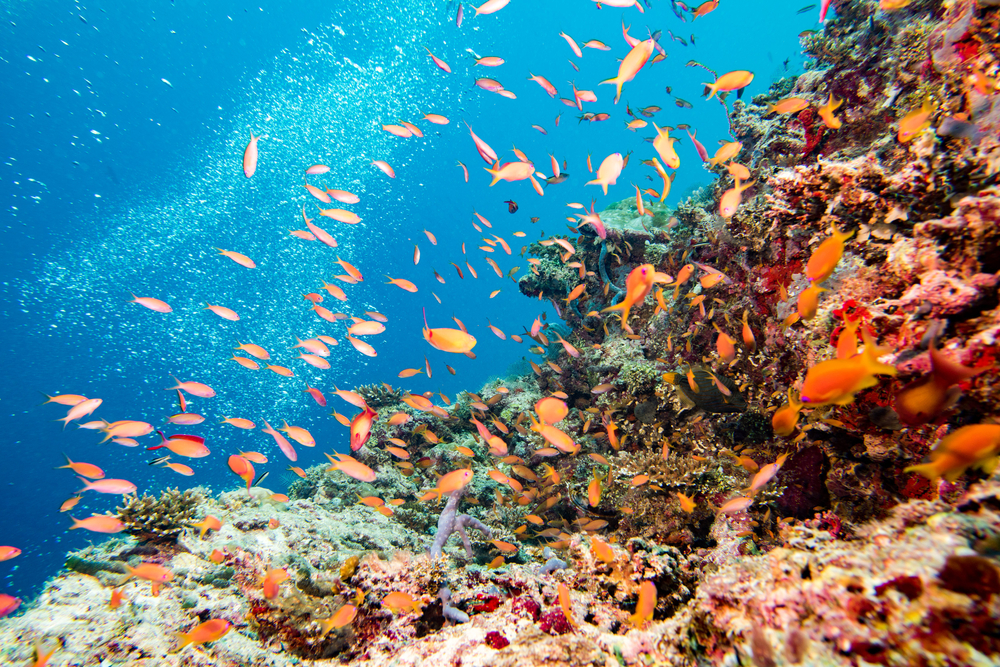
EARLIER THIS YEAR, THE GREAT BARRIER REEF WAS DEVASTATED BY THE LARGEST MASS BLEACHING EVENT EVER SEEN AS RECORD-WARM OCEAN TEMPERATURES TURNED LARGE SWATHS OF THIS VIBRANT 1,400 MILE HABITAT INTO A GHASTLY WHITE BONEYARD.
Now scientists have finally tallied up the damage. Data released Monday by Australian researchers shows that an unprecedented fraction of the coral in the more pristine northern part of the reef has died, with average mortality rates of 67 percent.
The good news is that the southern sections fared much better, with just 6 percent of coral dead in the central section and 1% dead in the south. “The [sea] corals have now regained their vibrant colour, and these reefs are in good condition,” said Professor Andrew Baird of the Australian Research Council Centre of Excellence for Coral Reef Studies in a release. Here’s a map showing the damage:
The map, detailing coral loss on Great Barrier Reef, shows how mortality varies enormously from north to south.
The scientists note that it could take 10 to 15 years for the worst-hit sections of the reef recover — but the real fear is that, thanks to global warming, another mass bleaching event will come along very soon and make the situation even worse.
How mass bleaching ravaged the Great Barrier Reef this year
Coral reefs are often dubbed the rain forests of the ocean. Anchored by millions of coral polyps — tiny, soft-bodied animals that create elaborate calcium carbonate skeletons that shelter fish — these reefs cover just 0.1 percent of the sea floor but are home to 25 percent of marine fish species.
They’re popular spots for divers and tourists. They protect coasts from storms. They sustain food for half a billion people. And they’re just plain lovely. Here’s what a healthy reef looks like:
Coral reefs are, however, extremely vulnerable to soaring temperatures. In normal times, the living coral polyps form a symbiotic relationship with zooxanthellae, a colorful type of algae that synthesizes sunlight and carbon dioxide to create nutrients for the reef. This algae gives the coral its purple/gold color.
But this symbiosis only thrives within a fairly narrow temperature band. If the water in the reef gets too warm, the zooxanthellae’s metabolism goes into overdrive and starts producing toxins. The polyps recoil and expel the algae from their tissue, leaving the coral with a ghastly “bleached” appearance. At that point, the coral loses a key source of food and becomes more susceptible to deadly diseases.
That’s what happened in January through March of this year. Record high temperatures in the Pacific Ocean, fueled by global warming and a powerful El Niño, caused mass bleaching throughout the Great Barrier Reef. Here’s a shot of bleached staghorn coral at Lizard Island, taken February 2016:
Bleaching doesn’t kill the coral right away; if ocean temperatures drop again, the zooxanthellae will come back. But if temperatures stay high for a long period and the bleaching gets really severe, as was the case in the Great Barrier Reef, then a lot of coral will start to die of malnutrition or disease.
Here’s another picture of Lizard Island taken two months later, in April 2016 — the staghorn coral is completely dead and smothered in algae:
Dead staghorn coral overrun by algae in April 2016 at Lizard Island, Great Barrier Reef.
Once the coral dies off, it can adversely affect the fish that rely on the reefs. The entire ecosystem suffers.
Bleached coral reefs can recover — but only if they’re given a chance
Now, the good news is that coral reefs can recover from these mass die-offs. Now that El Niño is gone, ocean temperatures have fallen around Australia. New polyps are returning and starting to build new skeletal structures to replace the dead coral.
The hitch is that recovery takes time. Lots of time. In places like the Seychelles, where reefs are mostly sheltered from pollution, tourism, and heavy fishing, it has taken at least 15 years for damaged reefs to come back. In areas stressed by human activity, the process can take much longer.
What’s more, recovery is often uneven. The fast-growing “branching” corals bounce back first. But there are also older, massive corals that are centuries old and provide valuable shelter for bigger fish. When those die off, they don’t return overnight.
And here’s the catch: The current pace of global warming may not give these damaged reefs sufficient time to bounce back fully. Before the 1980s, mass bleaching events were virtually unheard of. Now they’re becoming more and more frequent, particularly every time there’s an El Niño, as ocean temperatures spike. In April, a paper in Science warned that the Great Barrier Reef may lose its ability to bounce back as global warming continues.
“This year is the third time in 18 years that the Great Barrier Reef has experienced mass bleaching due to global warming, and the current event is much more extreme than we’ve measured before,” Terry Hughes of the ARC Centre said back in May.
Another complication: As we pump more carbon dioxide into the atmosphere, the oceans are becoming more acidic. In some cases, acidification can make corals more sensitive to bleaching at lower temperatures. It can also make it harder for the corals to build their protective skeletons and recover from events like this.
Now, there are some things that Australia (and other countries) can do to help make reefs more resilient to bleaching. Humans can limit fertilizer and sewage runoff that further damage the coral. We can avoid overfishing key herbivores like the rabbitfish that nurture the reefs by clearing away excessive algae.
Chomp, chomp. The white-spotted rabbit-fish has been spotted clearing away harmful coral in the Great Barrier Reef.
Humans can also avoid wreaking havoc on reefs by rerouting boats around them and restricting construction in the coastal areas near them. Australia is on the wrong track here: In 2015, the government approved plans to expand coal exports via ship in the southern part of the Great Barrier Reef.
But ultimately, reducing our CO2 emissions is the crucial step. Mark Eakin, who runs who runs NOAA’s Coral Reef Watch program, told me back in March that we’d likely need to keep total global warming to below 1.5 degrees Celsius for coral reefs to continue thriving. Right now we’re on course to blow past 2 degrees Celsius, which could doom recovery efforts.
“At 2 degrees Celsius,” Eakin says bluntly, “we are likely to lose numerous species of coral and well over half of the world’s coral reefs.”


