Pages

Showing posts with label HIQA. Show all posts

Friday, October 21, 2016

Donie's Ireland daily news BLOG.

New Finance Bill sets mortgage threshold for help-to-buy scheme

THRESHOLD FOR FIRST-TIME-BUYER SCHEME REDUCED TO 70% OF PROPERTY’S VALUE

Image result for New Finance Bill sets mortgage threshold for help-to-buy scheme   Image result for New Finance Bill sets mortgage threshold for help-to-buy scheme

EVEN WITH A MAXIMUM REBATE, A COUPLE BUYING A €400,000 HOME WILL NEED TO FIND €38,000 FOR THEIR DEPOSIT.

The mortgage threshold for first-time buyers looking to apply for a rebate under the new help-to-buy scheme has been reduced to 70% of the value of the home in the Finance Bill.
The Government reduced the figure from the 80% announced in the budget last week after intervention by the Central Bank, which was concerned that it would encourage young homebuyers to take on excessive debt.
There has been no change as yet in other elements of the rebate scheme. However, it is expected that the Government will introduce an amendment to the Bill as it passes through the Oireachtas lowering the €600,000 upper limit on the value of homes eligible under the scheme.

REBATE. 

As it stands, first-time buyers can apply for a rebate of income tax paid over the four completed tax years prior to purchase up to 5% of the value of the home, or €20,000, whichever is the lesser.
That effectively limits the 5% rebate to properties worth €400,000 or less. Homebuyers can still avail of the relief on properties worth more than that but get no further relief. If the property is worth more than €600,000 – or whatever lower limit is eventually agreed – no relief is available.
The properties bought must either be newly built or self-built by the first-time buyer, and the buyers must have signed a contract on or after July 19th last, or, in the case of self-builds, drawn down the first tranche of their mortgage on or after that date.
A couple buying a €400,000 home require a deposit of €58,000 – 10% on the first €220,000 of value and 20% on the balance. Even with a maximum rebate, they will need to find €38,000 for their deposit.
Applications for the rebate will require the filing of tax returns for the years in question even for PAYE earners who might not, until now, have filed such returns. Revenue will start accepting applications on January 1st, 2017, and will outline the application details required before then.
There will also be a clawback arrangement, blocking homeowners from vacating the property for at least five years after the purchase – for instance to rent it. However, they can avail of the potential €14,000 a year available under the rent-a-room scheme.

Garda strikes would halt criminal court cases, lawyers now say

APPLICATIONS TO HAVE NEW CASES STRUCK OUT WILL BE MADE, A SOLICITOR WARNS

Image result for Garda strikes would halt criminal court cases, lawyers now say   Image result for Garda strikes would halt criminal court cases, lawyers now say
Lawyers say criminal cases at the Central Criminal Court in Dublin, pictured, and throughout the country would be halted by the proposed strikes by Gardaí.
It will be practically impossible for criminal cases to proceed if the strikes planned by Gardaí go ahead, lawyers have warned.
Civil cases, particularly at the Four Courts, where a private security company operates, are likely to proceed, though Gardaí do provide a level of security in many other civil courts. There may be issues with family courts, where a Garda presence, particularly at district level, is often required as a peacekeeping influence.
Two Garda unions have voted to take industrial action and 10,500 rank-and-file Gardaí and an estimated 2,000 sergeants and inspectors will refuse to work for 24 hours from 7am on the four Fridays beginning on November 4th.

Garda COURT ROLE?

Gardaí play an integral part in criminal court cases. Their roles include giving evidence as witnesses, liaising with other witnesses and ensuring they attend court, and liaising with victims and their families. Exhibits officers also control all of the physical evidence in cases.
At District Court level, Gardaí bring prosecutions in minor cases and sergeants or inspectors act as court presenters, bringing forward cases in court instead of requiring a large number of individual gardaí to attend.
Senior counsel Vincent Heneghan said he expected the overall effect of the strike, if it goes ahead, will be that the courts will lose four days out of 20 in November.
“That is hugely significant,” he said. “There will also be cases adjourned and new cases coming into the system could be substantially delayed. The strike could create a clogging effect at the District Court.”
Another senior counsel said Gardaí giving evidence in trials are summonsed to appear in court, like any other witness, and so would be required to appear, even on strike days. But given that other elements of Garda work would not be in place, it remains to be seen whether this will be an issue.

Hospital patients nutrition levels are not being assessed adequately says HIQA

THE HEALTH WATCHDOG RELEASED NEW REPORTS INTO CARE AT TALLAGHT, LIMERICK AND BEAUMONT HOSPITALS

Image result for Hospital patients nutrition levels are not being assessed adequately says HIQA v Image result for Hospital patients nutrition levels are not being assessed adequately says HIQA Image result for Hospital patients nutrition levels are not being assessed adequately says HIQA

HEALTH WATCHDOG HIQA IS REPORTING THAT SOME HOSPITALS ARE NOT ADEQUATELY ASSESSING PATIENT’S NUTRITION LEVELS.

Ad hoc systems are implemented when it comes to ensuring patients are properly nourished and hydrated, the reports find.
Concern has also been raised about communication with patients on their food requirements during their time under medical care.
An unannounced inspection in Tallaght Hospital was carried in August this year. Inspectors found that patients on these wards were not always screened for their risk of malnutrition on admission, nor were they re-screened weekly.
Patients offered mixed views on the quality of meals. In addition, a small number of patients reported that they had not always received what they had ordered.
During an unannounced inspection at Beaumount Hospital, it was found that patients were routinely screened for the risk of malnutrition on admission on some of the wards. However, inspectors found that screening was not always carried out for patients in a timely manner.
Most patients were positive about the meals offered, other patients offered mixed views on the meals. A small number of patients reported that they had not always received what they had ordered.
Findings from their inspection at University Hospital Limerick show that the hospital routinely screened patients on all wards for their risk of malnutrition within 24 hours of admission to hospital. However, weekly re-screening was not always carried out.
While the majority of patients spoken with by inspectors were complimentary about the choice, taste and temperature of food and drinks available in the hospital, some patients told inspectors that meal times, especially the evening meal, was too early.
Results also show that not all patients who required assistance were offered it in a prompt manner and there was no system in place to alert catering staff as to which patients needed assistance with meals.

David McGowan adds vintage train to quirky collection in Glamping village Enniscrone Co Sligo

Image result for David McGowan adds vintage train to quirky collection in Glamping village Enniscrone Co Sligo  Image result for David McGowan adds vintage train to quirky collection in Glamping village Enniscrone Co Sligo  Image result for Train carriages transported to the glamping site in Sligo
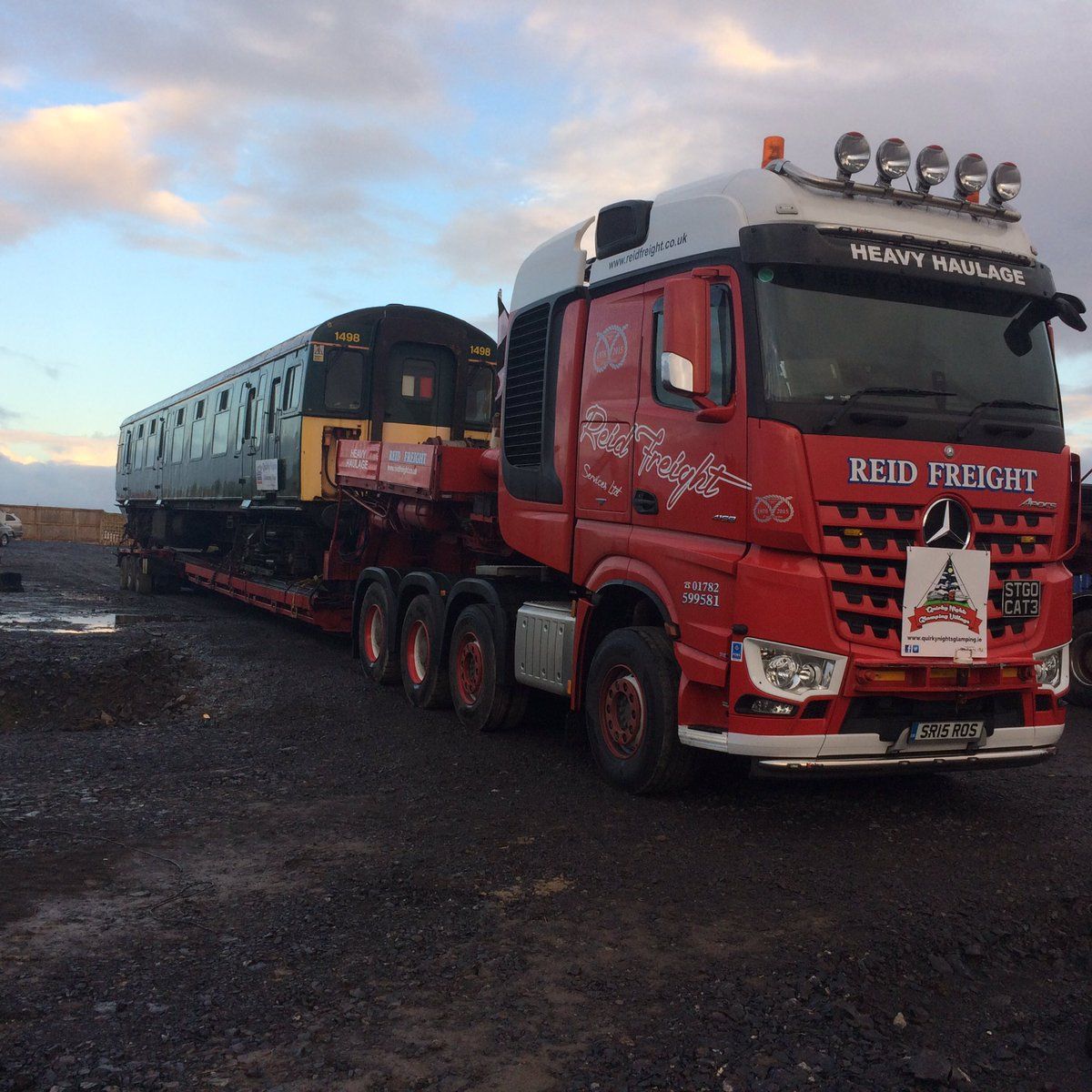
Train carriages transported to the glamping site in Sligo.

David McGowan oversaw the arrival of a three-carriage train to Enniscrone in Sligo from London on Monday.
A funeral director has told how he wants to bring a “bit of life” back into his area with a quirky glamping village where guests can sleep in a vintage train.
Image result for David McGowan adds vintage train to quirky collection in Glamping village Enniscrone Co Sligo  David McGowan oversaw the arrival of a three-carriage train to Enniscrone in Sligo from London on Monday – just months after bringing a Boeing 767 to the seaside town.
The 56-year-old businessman, who is from nearby Ballina, Co Mayo, became a local celebrity in May when he transported the aircraft north from Co Clare by sea on a barge.
And he was delighted with his latest arrival at 7am on Monday, confident his unique collection of a plane, train, yacht and helicopter can make his glamping site a must-see for thousands of visitors.
The dad of three said: “There’s great support for it and there’s a great social impact as well.
“It’s putting Sligo on the world map and there’s two towns there, Ballina and Enniscrone, and it’s bringing a bit of life about the place.”
The train was bought from a preserved railway in North London and the huge task of bringing it to the West of Ireland took almost four days – and was only permitted to take place in Ireland at night.
The carriages, which were used on the London rail network for many years, cost €20,000 with transport costs likely to add up to a further €20,000.
A Boeing 767 airplane arrives at Enniscrone estuary after being tugged from Shannon airport out to sea around the west coast of Ireland, May 7, 2016.
The train was brought by truck from London to Heysham before being transported by ferry to Dublin Port.
The mammoth delivery was then taken through the capital and across Ireland to Sligo with 10 voluntary bike marshalls driving alongside the unique consignment.
However, while David said it was a challenge, he added it was not as difficult as transporting the Boeing 767 in May.
He said: “I was after moving a plane so nothing could be bigger than that. And I was better prepared this time, I wasn’t prepared for the plane. I was a lot cuter this time.”
David added they have had 40,000 visitors in Enniscrone since the Boeing 767 arrived and he is eager to build on the interest and increase tourism in the area.
He also told how they streamed the transportation of the train live online.
David said: “There was 1,000 people at the quays when we arrived.”

Monkey toolmakers smash some long-held beliefs

CAPUCHIN MONKEYS MAKE SHARP STONE FLAKES SIMILAR TO THOSE MADE BY ANCIENT HUMANS

Image result for Monkey toolmakers smash some long-held beliefs  Image result for Monkey toolmakers smash some long-held beliefs  Image result for Monkey toolmakers smash some long-held beliefs

A CAPUCHIN MONKEY ABOVE PIC BREAKS ITS HAMMERSTONE AS IT STRIKES AN EMBEDDED COBBLE IN THE SERRA DA CAPIVARA NATIONAL PARK, BRAZIL. THE MONKEYS PREFERRED TO LICK OFF THE STONE DUST AND THEN THROW THE FLAKES AWAY.

A troop of monkeys in Brazil has smashed a long-held belief that only humans were smart enough to manufacture tools.
The capuchin monkeys were videoed happily banging one stone against another, chipping off sharp-edged rock flakes in the process.
These flakes look identical to the stone flake tools made by early humans.
But while our ancestors used the sharp edges for cutting and scraping objects, the monkeys preferred to lick off the stone dust and then throw the flakes away.
Prof Tomos Proffitt of Oxford University and colleagues travelled to South America to video the capuchins as they bashed stones together.
The monkeys very deliberately smashed the stones to break them apart but the resultant sharp flakes were an unintentional result of their efforts, the scientists write on Wednesday in the journal Nature.
The discovery is hugely important, however. The team collected stone fragments immediately after they were produced and these are virtually indistinguishable from the flakes produced intentionally by early humans.
This means there could be doubts about whether the stone tools found at early stone age sites were produced by humans or monkeys.
Hallmark of earliest human tool development. Image result for Monkey toolmakers smash some long-held beliefs
Scientists use the distinctive characteristics of flaked stone tools to distinguish them from naturally broken stones. The flakes have always been considered a hallmark of human involvement in the earliest stone tool technology, the authors write.
The capuchin’s party piece, a trick perhaps also repeated by its ancestors, undermines the assumption that the making of sharp flakes must have been achieved through human involvement.
The monkeys use two hands to pound a hammer stone against another, the goal being to break the stones open, the authors say. The animals then lick up the dust, perhaps to get at minerals inside or to consume lichens released by all the banging.
They discard the stone flakes once the dust has been licked off and they were never seen using the sharp edges to cut or scrape, the scientists add.

Wednesday, January 22, 2014

Donie's Ireland daily news BLOG Tuesday

Long-awaited Irish banking inquiry to get under way


the ANNOUNCEMENT ABOUT NATURE AND SCOPE OF COMMITTEE TO BE MADE WITHIN TWO WEEKS

A new Oireachtas committee will be established in the next two weeks to preside over the long-awaited banking inquiry.
Government chief whip Paul Kehoe tonight met the whips of the Opposition parties to present them with a proposed set of standing orders for the new committee.
These standing orders will be discussed by the Committee on Procedure and Privileges tomorrow evening.
An announcement about the nature and scope of the committee will be made within two weeks.
It is understood one of the key elements of the standing orders will be a requirement that no member of the committee should have made any public comments about the banking crisis that could be regarded as biased.
This requirement will mean that many prominent political figures who have made trenchant speeches about the banking crisis will not be eligible to serve.
Government sources said no decision had been made as to whether the new committee will be composed of TDs and Senators or whether it will be restricted to TDs.
However, the indications are that the Government favours the establishment of a small committee composed of around six TDs to handle the complex issues involved in the banking inquiry.
The sub-committee of the public accounts committee that inquired into the Dirt tax scandal in 1999, chaired by the late Jim Mitchell, has been widely cited as a template for the banking inquiry.
The then attorney general David Byrne pointed out that an essential element of the Dirt committee’s success was that it operated to a strict set of parameters laid down by his office, which prohibited findings relating to the responsibility of individuals.
That committee concluded its business in 26 days and issued a comprehensive report within a few months.

Irish house prices now rising at a faster rate than most EU states


Eurostat figures indicate property prices here rose by 4.1% in third quarter of last year

According to the latest Eurostat figures, house prices here rose by 4.1 per cent in the third quarter of last year compared with the previous quarter.

Irish house prices are now rising at a faster rate than in nearly every other European Union country.

According to the latest Eurostat figures, house prices here rose by 4.1 per cent in the third quarter of last year compared with the previous quarter.
This was the second-highest rate of acceleration recorded across the EU, eclipsed only by Estonia where prices jumped by 5.3 per cent.
Compared with the second quarter of 2013, house prices rose by 0.6 per cent in the euro area and by 0.7 per cent in EU in a sign that economic recovery was slowly gathering pace.
On an annual basis, house prices fell by 1.3 per cent in the euro zone and by 0.5 per cent in the EU in the third quarter compared with the same quarter of 2012.
The quarterly gain was the strongest since a 1.1 per cent increase in the second quarter of 2011, while the annual drop was the smallest since the fourth quarter of 2011.
Among the EU member states for which data are available, the highest annual increases in house prices in the third quarter of 2013 were recorded in Estonia (+11.1 per cent),Luxembourg (+6.5 per cent) and Latvia (+6.2 per cent), with the largest falls in Croatia (-16.9 per cent), Cyprus(-8.0 per cent) and Spain (-6.4 per cent).
The highest quarterly increases in the third quarter of 2013 were recorded in Estonia (+5.3 per cent), Ireland (+4.1 per cent), and the United Kingdom (+2.5 per cent), with the largest declines recorded in Slovenia (-4.0 per cent),Denmark (-3.3 per cent) and Romania (-2.4 per cent).
Only five of the 17 euro area countries – Italy, Cyprus,Malta, Slovenia and Finland – saw house prices fall between July and September last year, according to the data.
Meanwhile, mortgage lenders in the UK reported that last month was their strongest December since 2007.
Some £17 billion worth of mortgages were advanced to customers last month, up 49 per cent on the same month a year ago when £11.4 billion worth of loans were issued, according to a report from the UK’s Council of Mortgage Lenders (CML).
It was also the highest total for a December month since 2007, the CML added.

Woman’s car swept off road by ‘avalanche of slurry’


Estimated 50,000 gallons of slurry flows onto road after tank on a hilltop farm ruptures.

How slurry has traditionally been spread on fields. In Co Limerick last night a slurry tank burst and an estimated 50,000 gallons of material flowed over a road.
A woman is recovering after her car was swept off a road by an avalanche of slurry in Co Limerick last night after a tank on a hill ruptured.
The Doon to Cappamore Road in east Limerick remains closed after the spillage of an estimated 50,000 gallons of slurry onto the road.
It is expected the route will re-open later today.
The surge was so powerful that a Ford Fiesta carrying a woman was washed off the road and into a field at around 9.45pm .
The female driver was taken from the car by a local man who responded to her screams .
The woman, who is from Cappamore, did not sustain any injuries but is said to suffering from shock.
A hearse and another car narrowly escaped the spillage which came from a slurry pit on a hilltop farm.
A number of houses nearby were damaged by the spillage and will have to be cleaned and the cost of the incident is expected to be several thousand euros.
A source at the scene said: “It must have been like an avalanche. The slurry smashed through the slurry tank wall and it ran down a hill about 50 yards from the road. There was a woman driving a car and she was swept across the road with the force if it. There was a hearse and another car in front of her and they got through it.”
Members of the Limerick City and County CouncilEnvironment Department have attended the scene to assess the cost of the clean up and the damage to the local environment.
A Council spokesperson said engineers have inspected the slurry tank.
“Engineers from the council have discussed the matter with the farmer. They have expressed concern about the condition of the tank. It is believed the tank is fifty to sixty years old,” the spokesperson said.
“The road embankment was removed by the slurry flow. The Council is currently building it back up. There is some structural damage to the road boundary, it is being rebuilt by staff from the (Council’s) Roads Department,” the spokesperson said.
The spokesperson added: “The council is confident it will be able to contain the slurry spill and minimise any environmental impact”.
He said because the material had flowed onto a flat area without any rivers or streams the council did not anticipate any issues with local water supplies.

Pharmacists want to spare Irish patients a visit to their GP?


Pharmacists in Ireland should be allowed provide a greater range of services to spare many patients an expensive visit to the GP.

The call was made at a conference in Dublin today which was told that pharmacists in Canada and Scotland are already being given an expanded role.
Already the  introduction of the flu vaccination service and loosening of restrictions on the way women can access the morning after pill have shown that pharmacists here can prove an accessible, convenient and cost-effective,” said Rory O’ Donnell, President of the Irish Pharmacy Union which organised the conference.
But overall Ireland has been “laggard “in unleashing the power of pharmacists in the provision of health services.
“Internationally the argument for expanding the role of pharmacists is settled and the question now is only on what more services they can do,” he said.
Research in the UK “suggests that greater use of pharmacists there could reduce the number of visits to GPs by 51 million a year.
“The same approach in Ireland could make a significant impact on reducing pressures on GPs and A&E visits.”
There are over 20 million visits to GPs in Ireland each year. The bulk of these will require a GP but a significant percentage doesn’t and could be dealt with by a pharmacist.”

Advantages of using pharmacists would:

•     Improve access to professional healthcare;
•     Reduce overall Exchequer spending on healthcare;
•     Ease some of the existing burden on GP services and free up crucial resources; and
•     Improve health outcomes for patients and the public.
He said:“There is clear evidence internationally to show that these additional pharmacy-based services have led to considerable improvements in patients’ health outcomes and considerable savings to healthcare budgets.
“The focus of the system must be towards the creation of a patient-centred health service delivered at the lowest level of complexity.”

Pat Rabbitte defends new Irish postcode system


The Communications Minister Pat Rabbitte has defended his decision to choose a new form of postcode for Ireland.

A private firm is being given a 10-year contract to roll out a postcode system in Ireland, with the process beginning this year.
At an Oireachtas committee Minister Rabbitte was criticised over the decision not to use a free system for assigning codes to every property.
Mr Rabbitte said the only difficulty with the process will be the need to update existing Government systems.
He said: “Ours will be a unique system.
“The reason that it will take 12 months to be brought into play is that other systems with which it is doing business and interacting will have to be brought into line.
“Databases will have to be brought into line and Government departments for example,and so on.”

Overcrowding in our hospitals cannot not be tolerated


A Letter to Hiqa highlights staffing issues, overcrowding and unsafe work conditions.

The HSE said work is “well under way” to implement all of the recommendations in the Tallaght report in hospitals.
Frontline doctors have warned that emergency departments (EDs) in hospitals across the country are “unequivocally dangerous” to patients due to severe overcrowding.In a letter addressed to the Health Information and Quality Authority (Hiqa), which was also sent to the directorate of the HSE, the doctors highlight issues with staffing coupled with increasing numbers of patients and an ageing population.
“ED overcrowding should not be tolerated,” wrote Dr Aileen McCabe, president of the Irish Emergency Medicine Trainees Association (IEMTA). “We believe that current ED conditions are unequivocally dangerous for patients and staff and there is substantial medical evidence that overcrowding leads to higher mortality and poorer patient outcomes.”
In the letter, which was sent on January 9th, Dr McCabe says doctors around the country “whole-heartedly” welcomed the Hiqa Tallaght Hospital Investigation Report published in May 2012. “We felt that your report signalled clearly and unambiguously to hospital management and the healthcare commissioners that these unsafe systems of healthcare provision would no longer be accepted.”
She said doctors working in Tallaght at the time of the report saw “immediate improvements in conditions and quality of care for ED patients”. However, she argues that the HSE has not issued directives to hospital managers and is relying on a “recommended compliance”.
In response, Hiqa said it would have “serious concerns” if the recommendations from its Tallaght investigation report had not been implemented in full, in particular those relating to emergency departments. “We will be in contact with the HSE seeking assurance on the issues raised by the IEMTA.”
The HSE said work is “well under way” to implement all of the recommendations in the Tallaght report in hospitals.
Meanwhile, all “non-urgent” surgery continued to be deferred at University Hospital Galway (UHG) for a sixth day today due to a “significant” increase in demand at its emergency department.
UHG was overall top of the Irish Nurses and Midwives Organisation (INMO) trolley and ward watch table today, with 27 people on trolleys in corridors and 17 people on trolleys or chairs in wards or “inappropriate settings”, according to the union.
This compares to 20 on trolleys in corridors and 17 in inappropriate ward settings today in Connolly Hospital, Blanchardstown, Dublin, and 30 on corridor trolleys and three in inappropriate ward settings in Our Lady of Lourdes Hospital, Drogheda, Co Louth.

Deep-space Rosetta a comet hunter wakes up from hibernation & gets back to work


Rosetta, a dormant billion-dollar comet-chasing spacecraft, arose from its deep-space slumber and sent a message back to Earth, but not before an unanticipated 18-minute delay in waking up.

Scientists waited with bated breath to hear back from Rosetta, the slumbering billion-dollar comet-chasing spacecraft.
“But an unanticipated 18-minute delay made everybody nervous, as you can imagine” Stephen Fuselier, co-investigator of one of the instruments on Rosetta, told the Monitor.
Rosetta did eventually wake up, though.
The spacecraft, which was made to fall asleep in mid-2011 after it cruised far from the Sun and out toward the orbit of Jupiter, sent out the first signal that was received by both NASA’s Goldstone and Canberra ground stations, according to a press release by the European Space Agency.
Rosetta was launched in 2004 and is chasing comet 67P/Churyumov–Gerasimenko.
Currently, the spacecraft is within about 400 million miles of the Sun, which means that Rosetta will continue to get enough solar energy.
“We have our comet-chaser back,” said Alvaro Giménez, ESA’s Director of Science and Robotic Exploration.
The successful wake-up mission was announced to the world via the @ESA_Rosetta twitter account, which tweeted: “Hello, world!”
“This was one alarm clock not to hit snooze on, and after a tense day we are absolutely delighted to have our spacecraft awake and back online,” said Fred Jansen, ESA’s Rosetta mission manager.
In a press release, NASA announced that it will also be participating in the European Space Agency’s Rosetta mission, which aims to observe “one such space-bound icy dirt ball from up close — for months on end.”
“We are going to be in the cometary catbird seat on this one,” said Claudia Alexander, project scientist for U.S. Rosetta from NASA’s Jet Propulsion Laboratory in Pasadena, Calif.  “To have an extended presence in the neighborhood of a comet as it goes through so many changes should change our perspective on what it is to be a comet.”
The scientists are now trying to increase the data rate so that they can study the comet in detail, says Dr. Fuselier. They are looking at the data for the entire time period during which Rosetta was asleep, he adds.
“All other comet missions have been flybys, capturing fleeting moments in the life of these icy treasure chests,” says Matt Taylor, ESA’s Rosetta project scientist. “With Rosetta, we will track the evolution of a comet on a daily basis and for over a year, giving us a unique insight into a comet’s behaviour and ultimately helping us to decipher their role in the formation of the Solar System.”

THE SPACECRAFT WOKE UP AFTER 957 DAYS OF HIBERNATION.

In November, Rosetta will release a lander – another spacecraft within the larger spacecraft – whose shock absorbers will touch down on the surface of the comet. 

Friday, August 24, 2012

donie's Ireland news Blog Friday


Hiqa raises concerns over the running of another Galway nursing home 

  Oranmore Nursing Home

Health information and Quality Authority inspectors have raised serious concerns about the running of another private nursing home in Oranmore Co Galway.

In a report, the inspectors said they were very concerned about the inadequate response of Oranmore Nursing Home to allegations of abuse and its failure to take suitable and sufficient measures to protect one of the residents. Details of the allegations are not contained in the authority’s five inspection reports on the home.
Earlier this week it published inspection reports that found some residents at Owen Riff nursing home in Oughterard, Co Galway, had not had a bath or shower for a month. The Health Service Executive has taken over the running of this home.
While Oranmore Nursing Home has retained its registration, Hiqa inspectors criticised a lack of progress on improvements ordered in their previous reports.
They also expressed grave concern about an inadequate response to a serious medication error and measures to protect the safety of residents, and the provider was instructed to take immediate action on these issues, the third time it had received such a warning since last December.
The inspectors found that while progress had been made on some of the actions required on foot of previous reports, this was insufficient to allay their concerns or to meet the official regulations.
They said risk-managements systems were inadequate and identified a number of risks to residents that were not being managed. New staff had not received mandatory fire training or training in manual handling, and fire exits continued to be obstructed.
Some progress was noted in the management of restraint, patient falls and nutritional care but further improvements were required. Improvements were also required in arrangements to ensure staff were suitable to work in the centre and were trained properly.
In its response the home said all staff had been reminded to be extra vigilant for the possibility of abuse, and the director of care was undertaking additional supervision to protect residents from abuse. Staff had also been provided with fire training.
Meanwhile, a threat to deregister the Stella Maris Nursing Home in Athlone has been lifted after the owners made significant improvements to the premises and its operations. Last year Hiqa inspectors expressed serious concerns about the safety of residents at the home. They demanded the appointment of additional staff to meet concerns over fire safety, instructed the person in charge to improve her focus on management and stated that residents did not always receive timely access to healthcare.
However, in a report published yesterday, they said five out of six actions required by the authority had been carried out. The centre was described as warm and its staff as friendly and welcoming.
A separate report on Leopardstown Park Hospital in south Dublin was also positive. The operator was praised for delivering strong leadership and a high-quality service to residents, though the “institutional nature” of the building was criticised.
Eleven nursing homes have been closed on foot of inspections by Hiqa over the past two years.

Over one in five of Ireland’s mortgage holders in difficulty


Just over one in five 20%+ home loans was in some form of financial difficulty at the end of June, according to new figures on mortgage arrears from the Central Bank.

The figures include for the first time mortgages where borrowers have missed repayments for fewer than 90 days in addition to regularly reported figures on mortgage arrears of 90 days or more.
There were 168,637 owner-occupier mortgages, or just over 22 per cent of the 761,533 home loans in the State, either in arrears or which had been modified to help borrowers make some form of repayment at the end of June.
This was up from 162,572 or 21.3 per cent three months earlier.
In terms of the value of the debt, €30.5 billion or 27.2 per cent of the €112 billion outstanding in owner-occupier mortgages at banks in Ireland was in arrears or had been restructured, compared with €29.5 billion or 26 per cent in March.
The number of borrowers falling into arrears slowed in the second quarter, with arrears of 90 days or less falling to 45,165 mortgages at the end of June, down from 46,284 mortgages in March.
The Irish Banking Federation said the high rate of arrears reflected “the difficult economic circumstances in which an increasing number of customers find themselves” but noted that there had been a slowdown in the rate at which new customers were falling into arrears over a number of successive quarters.
“This easing in the pace at which new arrears cases are arising is welcome and we will look to future quarters for confirmation of the sustainability of this trend over time,” said the group.
Stockbroking firm Davy said the figures showed that the rate at which early-stage arrears converted into longer-stage arrears fell for the first time.
The percentage of mortgages in arrears of 90 days or more increased to 10.9 per cent, or 83,251 mortgages at June, compared with 10.2 per cent or 77,630 mortgages at the end of March.
Mortgages in arrears of 90 days or more or which had been restructured rose to 16.2 per cent, or 123,472 mortgages, at the end of June from 116,288 mortgages or 15.2 per cent three months earlier.
By value, the amount of mortgage debt in arrears of 90 days or more totalled €16.5 billion or 14.7 per cent of total owner-occupier mortgage debt, compared with €15.4 billion or 13.7 per cent of mortgages three months earlier.
Fianna Fáil finance spokesman Michael McGrath accused the Government and banks of failing to tackle the crisis in a meaningful way, saying they seemed “paralysed” by the scale of the problem.
The figures were “dismal”, a “personal crisis” for thousands of families and an economic crisis for the State, said Mr McGrath.
The Central Bank said it was continuing to monitor the progress of lenders on the roll-out of “new forbearance and loan modification techniques to provide longer-term and more sustainable solutions for customers in financial difficulty” before the year end.
Further details on these measures would be published early next year, the Central Bank said.
The number of properties in possession remained unchanged at 961 in June over the three-month period. The Central Bank said legal proceedings were issued to enforce on debt or security on a mortgage in 345 cases during the second quarter of the year.
Court proceedings concluded in 193 cases during the period and in 97 of these cases the courts granted orders for possession or sale of the property. During the three months, lenders took possession of 146 properties, 44 of which were repossessed on foot of a court order, while the remaining 102 properties were voluntarily surrendered or abandoned. There were 142 properties disposed of, leaving lenders in possession of 961 properties at the end of June.

Close ties with friends boost men’s mental health

  Group of senior people enjoying themselves - Outdoor stock photo, Portrait of a happy senior man laughing with his friends - Outdoor by Yuri Arcurs

Middle-age adults who have regular contact with a group of friends are psychologically better off than those who don’t, but when it comes to having close ties with many family members, men benefit more than women, a new study from England says.

The results of psychological tests show that people who had regular contact with 10 or more friends at age 45 had higher levels of well-being at age 50 than those with five or fewer friends. This was the case even when education levels, employment status and previous mental health issues were taken into account.
When the researchers looked at people’s relationships with family members (outside their own household), they found that men who had regular contact with fewer than 10 relatives had worse mental health than men with at least 10 close relatives. But in women, there was no link between psychological well-being and the number of family members a woman saw regularly.
While the reason women didn’t seem to benefit from a greater number of close family members is not entirely clear, it may be related to the negative effects of certain family relationships, the researchers said.
Among people of both genders, those who were in a relationship with a partner had higher numbers of relatives that people saw regularly. “It is possible that negative social exchanges within women’s social ties might have reduced any positive effects from [family relationships] built upon their partnership, as these have been found to be related to depression,” the researchers wrote in their article, published yesterday (Aug. 22) in the Journal of Epidemiology and Community Health.
The researchers looked at information from 6,500 people in England who were born in 1958, gathered as part of the National Child Development Study. Participants were asked how many friends and relatives they met up with at least once a month. They also answered questions about their education, job and partnership status, and took a psychological well-being test that scored their mental health on a scale from 14 to 70.
Results also showed that study participants tended to have more friends than family members that they saw regularly. While nearly 19 percent of men and 16 percent of women reported having no family members that they saw regularly, only 11 percent of participants reported having no friends.
People’s employment status did not affect the size of their social networks, but education did. Men with more education tended to have smaller groups of both friends and family members that they were close to; women with more education tended to have regular contact with fewer family members, but had more friends.
Among participants who reported having no close friends, women’s mental health suffered more than men’s. However, men’s well-being was also affected if they had no close relatives, whereas for women, a lack of close relatives had no effect, the researches said.

Diageo drink sales fall by 5% in 2011 as market declines


 Drinks company Diageo saw its sales fall by 5 per cent in Ireland last year, as consumers opted to drink less of the black stuff.

According to the London-headquartered group, while Guinness Draught and Smithwick’s grew their share of the on-trade, or pubs market, and Harp in the off-trade, “the beer market remains in decline” in Ireland.
This led to a 5 per cent decline in net sales in the year to the end of June, in comparison with an 8 per cent rise in global sales and an outperformance by emerging markets, where sales jumped 15 per cent.
These regions now account for almost 40 per cent of Diageo’s business.
A growing African taste for spirits plus demand for scotch in Latin America and Asia, particularly de-luxe brands in southeast Asia and China, boosted Diageo’s sales, while the company said performance in its established north American and western European markets improved from 2011.
“Europe’s performance improved in the year despite the macro backdrop. We’re achieving what we set out to achieve in Europe. I wouldn’t declare victory – I think it’s still going to remain to be a challenging environment,” chief financial officer Deirdre Mahlan said.
Pre-tax profits jumped 32 per cent to £3.1 billion (€3.9 billion) for the group, and, following its strong performance, Diageo is now set to raise its full-year dividend by 8 per cent to 43.5 pence per share.
Irish whiskey continues to sell well in Russia and eastern Europe, and Diageo noted that Bushmills saw growth of more than 30 per cent in the year. While Baileys saw “weak” sales in Europe, sales of the liquor jumped 26 per cent in Africa.
Back in Ireland, Diageo reported “strong double-digit top-line growth” in Ireland for its rum product, Captain Morgan.
In 2011 the group announced a significant restructuring of its Irish brewing operations, with the loss of 70 jobs. In 2012 this restructuring resulted in costs of £11 million, up from £10 million in 2011.
Diageo currently employs about 1,500 people in Ireland.
The group is believed to be eyeing the acquisition of a minority stake in Mexican tequila maker Jose Cuervo from its owners, the Beckmann family. Its long-term distribution deal with the brand ends in June 2013, and analysts estimate that the world’s best-selling tequila brand could be worth about $3.4 billion.
“We are continuing discussions with the Beckmann family given the end period for our distribution arrangement,

Galway has third highest public order offence list in Ireland

   
Gardaí on duty in Galway city. “I think in Galway a lot of the public order issues that happen come to our attention, but in other parts of the country that are harder to police more things would happen under the radar so they wouldn’t be in the crime figures,” says a senior Garda source
Geography, emigration, drug and alcohol consumption, and reduced Garda resources all play a part in the number of recorded public order offences
Quay Street in Galway city at the height of summer, there is little evidence that the recession has battered people’s disposable incomes or that the tourism sector is struggling.
The pubs are full to overflowing on a recent warm August Saturday night, and people are spilling on to the streets to enjoy their drinks. Tourists mingle with locals and the droves of hen and stag parties that have descended on the packed pubs.
Gardaí patrol the narrow city streets on foot and in Garda vans and cars.
Most pubs have hired security staff, manning the doorways to check who’s coming and going. The bouncers are watching to ensure people taking drinks outside have availed of the offer of a plastic glass from the bar.
Groups of younger men and women have clearly been on the go since earlier in the day, with more than a couple of drinkers the worse for wear by early in the evening.
But, overwhelmingly, the atmosphere is jovial, with little to indicate that Galway has one of the biggest public order crime rates in the State.
Crime figures broken down to Garda station level by the Central Statistics Office and the All-Island Research Institute at NUI, Maynooth, show that Galway recorded 4,363 criminal offences last year, making it the seventh busiest station nationwide in terms of recorded crime.
The figures do not offer a per capita breakdown.
Given the large size of the area policed by Galway, not to mention its city centre nature, it is perhaps not surprising that the main Garda station in the west is in the top 10 busiest in the State.
Of the total crimes recorded last year in Galway, 1,559 were classified as public order offences. That figure puts Galway third on the public order list, behind only the Dublin inner Garda stations of Pearse Street (2,237 public order offences) and Store Street (1,654), both of which police the busiest retail and nightlife districts in the State.
Nationally, public order crimes have fallen by 21 per cent since a peak of 61,822 offences in 2008. Assaults have fallen by 12 per cent since peaking in 2008, while criminal damage has tumbled by 21 per cent.
In Galway, some 36 per cent of all offences recorded last year were public order offences.
Gardaí say that part of the reason Galway records more public order offences than most other parts of the country is that the compact nature of the city centre means it is relatively easy to police for public order offences.
“The city itself is compact and it means you can cover a lot of it very well with a relatively small number [of gardaí],” said one senior source.
“I think in Galway a lot of the public order issues that happen come to our attention, but in other parts of the country that are harder to police more things would happen under the radar so they wouldn’t be in the crime figures.”
Other Garda sources and experts on crime point to the fact that the rate of public order crimes recorded by gardaí depends heavily on the extent to which gardaí prioritise the issue in local policing plans.
As one garda says: “If I’m in the square in Thurles and two guys have a fight and I arrest them, then that’s two crimes recorded. If I’m not there then I don’t make the arrests and that fight never happened.”
A reduction of two-thirds in the Garda’s overtime budget – from €155.5 million in 2007 to €54 million in the current year – and a drop in Garda numbers from 14,400 in early 2010 to 13,567 as of June 30th suggests there are fewer gardaí “in the square in Thurles” and that more public order crime is going undetected.
Demographics and emigration are also playing a part.
With young men the most likely group to become involved in public order offences, it seems certain that the reduction of 15 per cent in the male population aged 16-30 reflected in the latest census is feeding into the reduction in public order offences.
However, every Garda source who spoke to The Irish Times on the issue cited the same two factors as main drivers of public order crime: drink and drugs.
With the recession affecting young people’s budgets for socialising, drug crime has fallen 23 per cent since its peak in 2008. And the specific offence of possessing drugs for personal use has declined by 30 per cent in the same period.
According to figures compiled by the Alcohol Beverage Federation of Ireland, the consumption of alcohol has also fallen: from 14.4 litres per adult per year in 2001 to 13.5 by 2005 and 12 litres last year.
Says one Garda source: “There are definitely fewer people absolutely out of their brains and not knowing what they’re doing.”

Children born to older women have a better start in life, claims new study


  • Nine-month-old had 9.5% risk of having accident if mother was 20 and 6.1% risk if mother was 40
  • Children also more likely to have vital immunisation if mother was older
    • Children born to older mothers appear to have a healthier start in life as they are less likely to be admitted to hospital and more likely to have vital immunisation jabs, say researchers.
    • The study also found children with older mothers experienced faster language development and suffered fewer social and emotional difficulties before the age of five.
    • Researchers from University College London analysed data from more than 78,000 children born in England between 2000 and 2002. The mothers were between 13 and 57 years of age.
In developed countries, there has been a strong trend towards later childbearing. In England and Wales, the number of births to women 40 and over trebled from 1989 to 2009 to almost 27,000.
Although there has been substantial research on young mothers and childhood development, there is little evidence of any effects of older mothers.
So the team looked at outcomes including child weight, accidents, hospital admissions and language development.
Rates were adjusted for several factors, including child’s sex, age, birth weight, father’s age, family income and social class.
Results showed that both the risk of accidents and hospital admissions decreased with increasing maternal age.
The risk of a nine-month-old child with a 20-year-old mother having an accident was 9.5 per cent. This fell to 6.1% for a mother of 40 and the decline continued for three and five-year-olds.
Similarly, at nine months, the risk of a child with a 20 year old mother being hospitalised was 16 % which fell to 10.7% for a mother of 40.
Babies were also 98.1% likely to have had their immunisations if their mother was 40 compared to 94.6% if their mother was half that age.
The authors say that older mothers tend to be more educated, have higher incomes and be married – all factors which are associated with greater child well-being.
They concluded that the ‘findings are noteworthy given the continuing increase in average age at maternity’.