Pages

Showing posts with label Deposits. Show all posts

Tuesday, November 8, 2016

Donie's Ireland daily news BLOG

President Higgins starts eight-day visit to Vietnam and Laos

HIGGINS SAYS IRISH IMPRESSED BY VIETNAM’S DEFEAT OF SEVERAL IMPERIALIST AGGRESSORS.

   Image result for President Michael D Higgins on an eight-day visit to Vietnam and Laos will focus on trade, investment, development, education and training

PRESIDENT MICHAEL D. HIGGINS AND HIS WIFE WERE WELCOMED AT NOI BAI INTERNATIONAL AIRPORT.

PRESIDENT MICHAEL D HIGGINS: “I THINK ONE OF THE GREAT CHALLENGES FACING BOTH COUNTRIES, HERE IN IRELAND AND IN VIETNAM, IS TO GET AN ECONOMIC MODEL THAT WILL BENEFIT ALL THE PEOPLE.”

President Michael D Higgins has begun an eight-day visit to Vietnam and Laos that will focus on boosting bilateral ties, especially in trade, investment, development, education and training.
Mr Higgins is due to meet Vietnamese president Tran Dai Quang at the presidential palace on Monday and later in the day he will also meet Nguyen Thim Kim Ngan, chair of the National Assembly.
A strong focus of the trip will be Irish Aid projects in Vietnam and Laos, and on Tuesday President Higgins will give a keynote address to the country’s oldest university, the Vietnam National University. He will be accompanied by Sabina Higgins, as well as Minister for Foreign Affairs Charles Flanagan
A significant part of the visit will be focused on aid. Vietnam is the only Irish Aid Key Partner country outside Sub-Saharan Africa, and while it continues to have significant development challenges, Vietnam has made major progress in recent years.
Imperialism
In an interview with Vietnam News, Mr Higgins said Ireland and Vietnam shared a struggle for independence, and he said Irish people were impressed by how the Vietnamese people had to defeat not one but several imperialist aggressors.
“I think one of the great challenges facing both countries, here in Ireland and in Vietnam, is to get an economic model that will benefit all the people, when all the citizens have an opportunity to get an education, get housing, etc,” he said.
“In this context, the reduction of poverty from 70 per cent to less than 23 per cent is a very significant achievement,” the president said.
Vietnam is four times bigger than Ireland and has a population of over 88 million. Ireland gave $150 million (€134.88 million) in non-refundable aid to Vietnam between 2007 and 2016, focusing on poverty reduction, support for vulnerable groups, and improving economic management.
Ireland has provided €1.54 million for research into the climate impacts on the Lower Mekong Basin work through the EU-led Global Climate Change Alliance (GCCA) from 2012 to 2015.
Climate-sensitive development
Ireland provides support to civil society organisations (CSOs) working to pilot and scale up new models in community-based climate-sensitive development. Of the total funding under the bilateral development co-operation programme in Vietnam, administered and co-ordinated by the Irish Embassy in Hanoi, €3.33 million relates to climate finance.
The state visit marks 20 years of diplomatic relations between Ireland and Vietnam.
Bilateral trade reached $402 million (€360.55 million) in 2015, up 28 per cent from the previous year. Ireland currently has 17 investment projects with combined capital of $20.7 million (€18.7 million) in Vietnam, ranking 67th among 115 countries and territories investing here.

Pepper Money sells out new mortgage’s with geographic criteria

AUSTRALIAN FINANCIAL FIRM SELLING MORTGAGES THAT EXCLUDE CERTAIN IRISH COUNTIES

Image result for Pepper Money sells out new mortgage with geographic criteria  Image result for Pepper Money sells out new mortgage with geographic criteria

PEPPER MONEY WILL PROVIDE MORTGAGES FOR BOTH RESIDENTIAL AND BUY-TO-LET CUSTOMERS, AND IT SPECIALISES IN AREAS INCLUDING REFINANCERS, BUY-TO-LET, THE SELF-EMPLOYED AND PEOPLE WITH HISTORIC CREDIT ISSUES.

Pepper, the Irish subsidiary of the Australian-listed financial services group, is to start selling mortgages directly to Irish customers for the first time through the launch of a new direct-to-consumer platform .
Pepper Money will provide mortgages for both residential and buy-to-let customers, and it specialises in a number of areas including refinancers, buy-to-let, the self-employed and people with historic credit issues.
Customers can apply for a mortgage with the lender via its website (peppermoney.ie) or its customer services team in Shannon. Customers can also still submit an application through Pepper’s panel of approved mortgage brokers. Pepper promises to respond with an approval in principle for customers within 24 hours.
Paul Doddrell, chief executive of Pepper Ireland, said the move was a reflection of the success of its mortgage launch in the Irish market, particularly for groups of consumers with otherwise limited options.
“ Our products are intended to target a broader and more diverse range of customers so we tailor our loans based on people’s needs; for example, our Advantage mortgage is really unique and fit-for-purpose in this market because it gives people with a legacy credit event an option they probably won’t find elsewhere.”

POST-CRASH

Pepper became the first new mortgage lender in the Irish market since the banking crash in late 2008 and the first non-bank group to offer home loans, when it started offering mortgages last February through a small group of brokers. Now it’s ramping up its presence.
Pepper Money is the new consumer-facing brand launched globally by Pepper Group, and it offers a range of consumer finance products including mortgages, personal and car loans, equipment finance and credit cards. It is expected that the group will roll out some of these additional products, such as car loans, in Ireland too.
“The new Pepper Money brand will support our ambition to expand our finance products into areas such as auto and personal loans, as we look to grow the business,” Mr Doddrell said.

THREE PRODUCTS

Pepper offers three mortgage products, with specific products available for self-employed professionals or those with non-standard employment types, as well as those with legacy credit issues that may hinder their ability to borrow. Rates start from 3.1 per cent or 3.23 per cent APR for borrowers with a loan to value of less than 50 per cent, or from 3.85 per cent (4.01) for those with credit issues. For investors, Pepper has buy-to-let rates starting at 4.4 per cent. However, there are restrictions in where it will lend; on its website Pepper says it will only lend in Dublin and surrounding counties (Louth, Meath, Kildare, Wicklow); Cork city; Galway city; Limerick city; Ennis; Shannon; and Kilkenny. However, according to Pepper, while its initial focus is on the main geographic regions and commuter belts, it will look to expand to new locations over time, and recently added Kilkenny to its approved locations.
Pepper first came to Ireland in 2012 and it now employs more than 400 people in Shannon and Dublin, where its offices are located. It has over €16 billion of assets under management.

Ireland’s new home buyers are using big deposits to buy their properties

Image result for Ireland's new home buyers are using big deposits to buy their properties  Image result for Ireland's new home buyers are using big deposits to buy their properties  Image result for Ireland's new home buyers are using big deposits to buy their properties

NEW HOME BUYERS ARE USING BIG DEPOSITS TO BUY PROPERTIES here, A NEW RESEARCH SHOWS.

The findings come just weeks before of the Central Bank is due to announce a review of its mortgage lending restrictions.
These rules set out that first and second-time buyers have to have big deposits when buying, and limit lending based on income.
Now economists working for the Central Bank have looked at most mortgages issued this year and found that the average first-time buyer has a deposit of €64,000.
This represents 26% of the value of the home, new research carried out by Central Bank economists shows.
The average income for these borrowers was €66,000.
Small numbers of borrowers can get exemptions from the limits, but these tend to be Dublin-based, with high income.
When those getting an exemption are excluded, the average deposit size for a first-time buyer works out at 21% of the property’s value, economists Christina Kinghan, Paul Lyons and Yvonne McCarthy found.
The findings come ahead of a review of Central Bank lending restrictions, the outcome of which is expected to be announced before the end of this month.
The lending limits have proved hugely controversial, with estate agents and mortgage brokers claiming they are slowing down the home-buying market. They were introduced in February 2015.
The Government’s new help-to-buy scheme is seen as an attempt to circumvent the rules.
Under the regulations first-time buyers can borrow with a deposit of at least 10% for the first €220,000, and need a 20% deposit for all amounts over this. They are limited to borrowing only three and a half times their income.
Second-time buyers need a deposit of at least 20%, and have the same income limit on borrowing. There are some exemptions.
The average second-time buyers have equity of €170,000 when moving home, the research shows.
Those not getting an exemption have equity of 34% on average when moving.

Why it’s no surprise that hypochondriacs get more heart disease

Image result for Why it’s no surprise that hypochondriacs get more heart disease Image result for Why it’s no surprise that hypochondriacs get more heart disease Image result for Why it’s no surprise that hypochondriacs get more heart disease

HYPOCHONDRIACS ARE MORE LIKELY TO DEVELOP HEART DISEASE, ACCORDING TO RESEARCH AT THE UNIVERSITY OF BERGEN IN NORWAY.

The ‘worried well’ were 73% more likely to develop heart disease than those who are not anxious about their health.
The link may be explained by the fact that stress of any kind has long been recognised as a risk factor for the disease.
During the study, published in the journal BMJ Open, the researchers examined health data from more than 7,000 people born in Norway in the 1950s. The participants’ heart health was tracked using national data on hospital treatment for heart conditions. Their anxiety was measured using a standard scale.
By 2009, 234 people in the group had experienced acute angina or myocardial infarction (a heart attack). The researchers said they were unable to establish a causal relationship between anxiety and heart disease, and that people with anxiety were more likely to have other mental health problems which could contribute to poor health.
The researchers wrote: ‘These findings illustrate the dilemma for clinicians between reassuring the patient that current physical symptoms of anxiety do not represent heart disease, contrasted against the emerging knowledge on how anxiety, over time, may be causally associated with increased risk of coronary artery disease.
‘Our research indicates that characteristic behaviour among persons with health anxiety, such as monitoring and frequent check-ups of symptoms, does not reduce the risk of coronary heart disease events.’
This study was a prospective cohort study examining the relationship between health anxiety (determined by validated questionnaire) and the development of coronary heart disease (defined as heart disease leading to angina or a heart attack). Studies like this do not establish causation but usually highlight correlation.
During the seven-year follow-up period, double the number of people with health anxiety experienced a cardiac event compared to those without (6.1% versus 3%). After analysis, men and women with anxiety were almost twice as likely to develop coronary heart disease, with the effect more pronounced in men, even after adjusting for risk factors.
The results are consistent with previous data suggesting stress is an important risk factor for heart disease; anxiety about health is also a form of stress, and so it should come as no surprise that this relationship was found.
What would have been interesting is if the activities of those patients most at risk had been tracked. Did their health anxiety translate into ‘heart-healthy’ activities? Did they attempt to make positive lifestyle changes in order to alleviate risk?
Take-home message: mental health is as important as physical health.

Things you need to be doing to get a good night’s sleep

Image result for Things you need to be doing to get a good night’s sleep  Image result for Things you need to be doing to get a good night’s sleep  Image result for Things you need to be doing to get a good night’s sleep
According to various researches, it has been found out that there are a myriad of habits and practices that can help you have a good night’s sleep. This is also called “Sleep Hygiene”. By following these habits, you can be benefited even if you’re suffering from insomnia.
These habits when practised regularly will help you have a peaceful sleep. Sleep is the most important thing that each one of us require on a daily basis. Ideally, 7-8 hours of sleep time is a must to rejuvenate your body and also have a calm, peaceful mind. Here are some things you need to do for a good sleep.

THINGS YOU NEED TO DO FOR A GOOD SLEEP ARE:

1.Hit the sack when you feel tired: There is no need to struggle to fall asleep. If you don’t have a busy schedule, try to keep yourself engaged with various other activities like gym, cycling, grocery shopping, cooking, reading, etc. After a totally busy day, you will automatically feel tired enough to doze off in no time. This is one of the simplest tips for a healthy sleep.
2.Say Goodbye To Alcohol, Caffeine, Nicotine, etc: If you want to have a good quality sleep, you must avoid all the caffeinated stuff because they contain caffeine, which is a stimulant that keeps you active and awake. Stay away from coffee, cola, chocolate, tea, etc, for at least 4-5 hours before your bedtime. If you’re addicted to smoking, you should avoid cigarette just before hitting the bed.
3.Exercise Is A Must: Exercise stimulates your body to secrete the “cortisol” (stress-related hormone) which helps to trigger the alerting mechanism in your brain. Exercise also promotes a good night’s sleep if it is done at the right time. One of the simplest tips for a healthy sleep is to work out early in the morning and avoid exercising when you are too close to your bedtime.
4.Always Keep Your Sleep Schedule Constant: Always keep your wake-up time and your bedtime same, even on your weekends. This will help to control your body’s clock and will help you fall asleep every night at the same time.
5.Avoid the afternoon naps: If you have the habit of taking naps during the daytime, then this can keep you awake till late night. Thus, avoid napping, especially in the afternoon, to get a better and sound sleep throughout the night.
6.Have a light Dinner: Having rich foods, very close to your bedtime, can trigger indigestion which can disrupt your sleep. Take a light dinner that includes the necessary nutrients and try to finish your dinner a few hours before hitting the bed. This is what you need to do for a good sleep.
7.Take a balanced intake of fluids: Hydrate yourself enough before going to bed, so that you do not wake up feeling thirsty during the night. However, make sure you do this a couple of hours before hitting the bed, so that you don’t have to wake up to go to the bathroom in the night.
8.Make your room devoid of all the disruptions: One of the simplest tips for a healthy sleep is to slumber in a tranquil and cool room. Make sure the room is dark while you sleep and there should also be no noises or any other disturbances during your bedtime.
9.Make your bed comfortable: Make sure that your mattress and pillows are soft and comfy. If you have been using the same mattress for more than 9-10 years now, then it is time you got a new one. Keep beautiful and comfortable pillows on your bed that invite you for sleep.

THEY ARE THE THINGS YOU NEED TO DO FOR A GOOD NIGHT’S SLEEP.

Ireland ratifies Paris Agreement on global climate change

MINISTER FOR COMMUNICATIONS TO PARTICIPATE IN UN CLIMATE TALKS IN MOROCCO NEXT WEEK

Image result for Ireland ratifies Paris Agreement on global climate change  Image result for Ireland ratifies Paris Agreement on global climate change  Image result for Ireland ratifies Paris Agreement on global climate change

UN CLIMATE CHIEF PATRICIA ESPINOSA (ABOVE) SAID NO ONE CAN DOUBT THAT THE WORLD IS DETERMINED TO SHIFT TOWARDS A “LOW-EMISSION, RESILIENT SOCIETY”.

Ireland has formally ratified the Paris Agreement on global climate change, it was announced on Monday.
Minister for Communications Denis Naughten completed the process last Friday, the day the deal came into force.
A spokeswoman for Mr Naughten said Ireland had “deposited the instrument of ratification” with the United Nations last week.
The confirmation came as leaders from almost 200 countries met in Marrakesh, Morocco, for the annual United Nations climate talks.
UN climate chief Patricia Espinosa told delegates “no politician or citizen, no business manager or investor” can doubt that the world is determined to shift towards a “low-emission, resilient society”.
The agreement marks the first time all countries have pledged to fight global warming by curbing the rise in greenhouse gas emissions, primarily carbon dioxide from fossil fuels.
Ms Espinosa said: “Achieving the aims and ambitions of the Paris Agreement is not a given. The peaking of global emissions is urgent, as is attaining far more climate-resilient societies.”
Mr Naughten is expected to travel to Morocco next week to participate in the discussions.
Delegates will meet for two weeks to work on the rules for implementing the deal, including how to measure and report emissions so that countries can be held accountable.
The goal of the agreement is to keep the global temperature rise below 2 degrees Celsius compared with pre-industrial times.   

Friday, October 21, 2016

Donie's Ireland daily news BLOG.

New Finance Bill sets mortgage threshold for help-to-buy scheme

THRESHOLD FOR FIRST-TIME-BUYER SCHEME REDUCED TO 70% OF PROPERTY’S VALUE

Image result for New Finance Bill sets mortgage threshold for help-to-buy scheme   Image result for New Finance Bill sets mortgage threshold for help-to-buy scheme

EVEN WITH A MAXIMUM REBATE, A COUPLE BUYING A €400,000 HOME WILL NEED TO FIND €38,000 FOR THEIR DEPOSIT.

The mortgage threshold for first-time buyers looking to apply for a rebate under the new help-to-buy scheme has been reduced to 70% of the value of the home in the Finance Bill.
The Government reduced the figure from the 80% announced in the budget last week after intervention by the Central Bank, which was concerned that it would encourage young homebuyers to take on excessive debt.
There has been no change as yet in other elements of the rebate scheme. However, it is expected that the Government will introduce an amendment to the Bill as it passes through the Oireachtas lowering the €600,000 upper limit on the value of homes eligible under the scheme.

REBATE. 

As it stands, first-time buyers can apply for a rebate of income tax paid over the four completed tax years prior to purchase up to 5% of the value of the home, or €20,000, whichever is the lesser.
That effectively limits the 5% rebate to properties worth €400,000 or less. Homebuyers can still avail of the relief on properties worth more than that but get no further relief. If the property is worth more than €600,000 – or whatever lower limit is eventually agreed – no relief is available.
The properties bought must either be newly built or self-built by the first-time buyer, and the buyers must have signed a contract on or after July 19th last, or, in the case of self-builds, drawn down the first tranche of their mortgage on or after that date.
A couple buying a €400,000 home require a deposit of €58,000 – 10% on the first €220,000 of value and 20% on the balance. Even with a maximum rebate, they will need to find €38,000 for their deposit.
Applications for the rebate will require the filing of tax returns for the years in question even for PAYE earners who might not, until now, have filed such returns. Revenue will start accepting applications on January 1st, 2017, and will outline the application details required before then.
There will also be a clawback arrangement, blocking homeowners from vacating the property for at least five years after the purchase – for instance to rent it. However, they can avail of the potential €14,000 a year available under the rent-a-room scheme.

Garda strikes would halt criminal court cases, lawyers now say

APPLICATIONS TO HAVE NEW CASES STRUCK OUT WILL BE MADE, A SOLICITOR WARNS

Image result for Garda strikes would halt criminal court cases, lawyers now say   Image result for Garda strikes would halt criminal court cases, lawyers now say
Lawyers say criminal cases at the Central Criminal Court in Dublin, pictured, and throughout the country would be halted by the proposed strikes by Gardaí.
It will be practically impossible for criminal cases to proceed if the strikes planned by Gardaí go ahead, lawyers have warned.
Civil cases, particularly at the Four Courts, where a private security company operates, are likely to proceed, though Gardaí do provide a level of security in many other civil courts. There may be issues with family courts, where a Garda presence, particularly at district level, is often required as a peacekeeping influence.
Two Garda unions have voted to take industrial action and 10,500 rank-and-file Gardaí and an estimated 2,000 sergeants and inspectors will refuse to work for 24 hours from 7am on the four Fridays beginning on November 4th.

Garda COURT ROLE?

Gardaí play an integral part in criminal court cases. Their roles include giving evidence as witnesses, liaising with other witnesses and ensuring they attend court, and liaising with victims and their families. Exhibits officers also control all of the physical evidence in cases.
At District Court level, Gardaí bring prosecutions in minor cases and sergeants or inspectors act as court presenters, bringing forward cases in court instead of requiring a large number of individual gardaí to attend.
Senior counsel Vincent Heneghan said he expected the overall effect of the strike, if it goes ahead, will be that the courts will lose four days out of 20 in November.
“That is hugely significant,” he said. “There will also be cases adjourned and new cases coming into the system could be substantially delayed. The strike could create a clogging effect at the District Court.”
Another senior counsel said Gardaí giving evidence in trials are summonsed to appear in court, like any other witness, and so would be required to appear, even on strike days. But given that other elements of Garda work would not be in place, it remains to be seen whether this will be an issue.

Hospital patients nutrition levels are not being assessed adequately says HIQA

THE HEALTH WATCHDOG RELEASED NEW REPORTS INTO CARE AT TALLAGHT, LIMERICK AND BEAUMONT HOSPITALS

Image result for Hospital patients nutrition levels are not being assessed adequately says HIQA v Image result for Hospital patients nutrition levels are not being assessed adequately says HIQA Image result for Hospital patients nutrition levels are not being assessed adequately says HIQA

HEALTH WATCHDOG HIQA IS REPORTING THAT SOME HOSPITALS ARE NOT ADEQUATELY ASSESSING PATIENT’S NUTRITION LEVELS.

Ad hoc systems are implemented when it comes to ensuring patients are properly nourished and hydrated, the reports find.
Concern has also been raised about communication with patients on their food requirements during their time under medical care.
An unannounced inspection in Tallaght Hospital was carried in August this year. Inspectors found that patients on these wards were not always screened for their risk of malnutrition on admission, nor were they re-screened weekly.
Patients offered mixed views on the quality of meals. In addition, a small number of patients reported that they had not always received what they had ordered.
During an unannounced inspection at Beaumount Hospital, it was found that patients were routinely screened for the risk of malnutrition on admission on some of the wards. However, inspectors found that screening was not always carried out for patients in a timely manner.
Most patients were positive about the meals offered, other patients offered mixed views on the meals. A small number of patients reported that they had not always received what they had ordered.
Findings from their inspection at University Hospital Limerick show that the hospital routinely screened patients on all wards for their risk of malnutrition within 24 hours of admission to hospital. However, weekly re-screening was not always carried out.
While the majority of patients spoken with by inspectors were complimentary about the choice, taste and temperature of food and drinks available in the hospital, some patients told inspectors that meal times, especially the evening meal, was too early.
Results also show that not all patients who required assistance were offered it in a prompt manner and there was no system in place to alert catering staff as to which patients needed assistance with meals.

David McGowan adds vintage train to quirky collection in Glamping village Enniscrone Co Sligo

Image result for David McGowan adds vintage train to quirky collection in Glamping village Enniscrone Co Sligo  Image result for David McGowan adds vintage train to quirky collection in Glamping village Enniscrone Co Sligo  Image result for Train carriages transported to the glamping site in Sligo

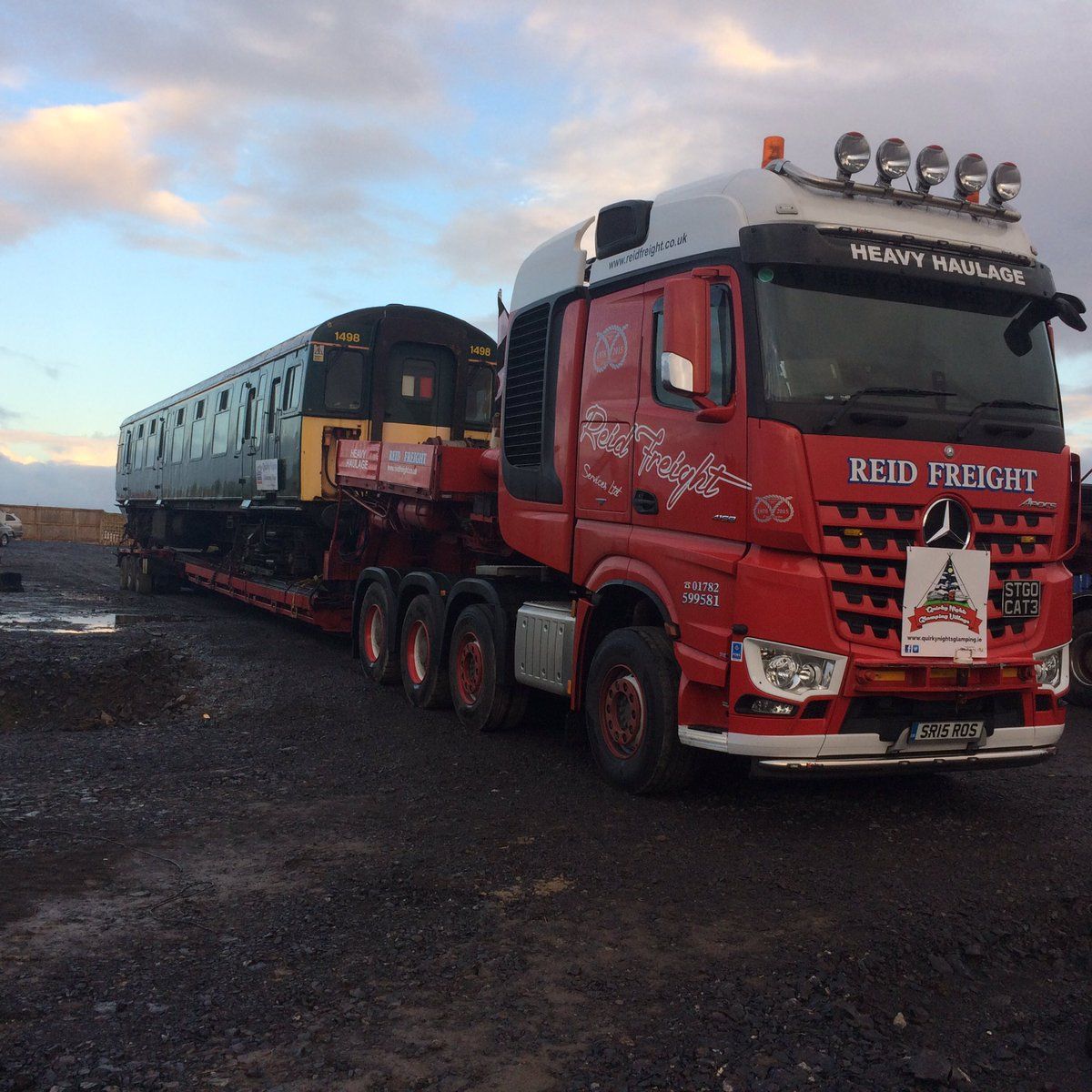
Train carriages transported to the glamping site in Sligo.

David McGowan oversaw the arrival of a three-carriage train to Enniscrone in Sligo from London on Monday.
A funeral director has told how he wants to bring a “bit of life” back into his area with a quirky glamping village where guests can sleep in a vintage train.
Image result for David McGowan adds vintage train to quirky collection in Glamping village Enniscrone Co Sligo  David McGowan oversaw the arrival of a three-carriage train to Enniscrone in Sligo from London on Monday – just months after bringing a Boeing 767 to the seaside town.
The 56-year-old businessman, who is from nearby Ballina, Co Mayo, became a local celebrity in May when he transported the aircraft north from Co Clare by sea on a barge.
And he was delighted with his latest arrival at 7am on Monday, confident his unique collection of a plane, train, yacht and helicopter can make his glamping site a must-see for thousands of visitors.
The dad of three said: “There’s great support for it and there’s a great social impact as well.
“It’s putting Sligo on the world map and there’s two towns there, Ballina and Enniscrone, and it’s bringing a bit of life about the place.”
The train was bought from a preserved railway in North London and the huge task of bringing it to the West of Ireland took almost four days – and was only permitted to take place in Ireland at night.
The carriages, which were used on the London rail network for many years, cost €20,000 with transport costs likely to add up to a further €20,000.
A Boeing 767 airplane arrives at Enniscrone estuary after being tugged from Shannon airport out to sea around the west coast of Ireland, May 7, 2016.
The train was brought by truck from London to Heysham before being transported by ferry to Dublin Port.
The mammoth delivery was then taken through the capital and across Ireland to Sligo with 10 voluntary bike marshalls driving alongside the unique consignment.
However, while David said it was a challenge, he added it was not as difficult as transporting the Boeing 767 in May.
He said: “I was after moving a plane so nothing could be bigger than that. And I was better prepared this time, I wasn’t prepared for the plane. I was a lot cuter this time.”
David added they have had 40,000 visitors in Enniscrone since the Boeing 767 arrived and he is eager to build on the interest and increase tourism in the area.
He also told how they streamed the transportation of the train live online.
David said: “There was 1,000 people at the quays when we arrived.”

Monkey toolmakers smash some long-held beliefs

CAPUCHIN MONKEYS MAKE SHARP STONE FLAKES SIMILAR TO THOSE MADE BY ANCIENT HUMANS

Image result for Monkey toolmakers smash some long-held beliefs  Image result for Monkey toolmakers smash some long-held beliefs  Image result for Monkey toolmakers smash some long-held beliefs

A CAPUCHIN MONKEY ABOVE PIC BREAKS ITS HAMMERSTONE AS IT STRIKES AN EMBEDDED COBBLE IN THE SERRA DA CAPIVARA NATIONAL PARK, BRAZIL. THE MONKEYS PREFERRED TO LICK OFF THE STONE DUST AND THEN THROW THE FLAKES AWAY.

A troop of monkeys in Brazil has smashed a long-held belief that only humans were smart enough to manufacture tools.
The capuchin monkeys were videoed happily banging one stone against another, chipping off sharp-edged rock flakes in the process.
These flakes look identical to the stone flake tools made by early humans.
But while our ancestors used the sharp edges for cutting and scraping objects, the monkeys preferred to lick off the stone dust and then throw the flakes away.
Prof Tomos Proffitt of Oxford University and colleagues travelled to South America to video the capuchins as they bashed stones together.
The monkeys very deliberately smashed the stones to break them apart but the resultant sharp flakes were an unintentional result of their efforts, the scientists write on Wednesday in the journal Nature.
The discovery is hugely important, however. The team collected stone fragments immediately after they were produced and these are virtually indistinguishable from the flakes produced intentionally by early humans.
This means there could be doubts about whether the stone tools found at early stone age sites were produced by humans or monkeys.
Hallmark of earliest human tool development. Image result for Monkey toolmakers smash some long-held beliefs
Scientists use the distinctive characteristics of flaked stone tools to distinguish them from naturally broken stones. The flakes have always been considered a hallmark of human involvement in the earliest stone tool technology, the authors write.
The capuchin’s party piece, a trick perhaps also repeated by its ancestors, undermines the assumption that the making of sharp flakes must have been achieved through human involvement.
The monkeys use two hands to pound a hammer stone against another, the goal being to break the stones open, the authors say. The animals then lick up the dust, perhaps to get at minerals inside or to consume lichens released by all the banging.
They discard the stone flakes once the dust has been licked off and they were never seen using the sharp edges to cut or scrape, the scientists add.

Saturday, December 20, 2014

Donie's Ireland daily news BLOG

Joan Burton says abortion laws do not serve women in Ireland well


Tánaiste would like to see eighth amendment to the constitution repealed. 

Tánaiste Joan Burton said abortion laws do not serve women well.
Tánaiste Joan Burton has said she agrees with Minister for Health Leo Varadkar’s comments that the current abortion laws are “too restrictive”.
Ms Burton also said she would like to see the eighth amendment to the constitution, which gives equal rights to life to the mother and the unborn, repealed.
However, in a Christmas briefing with political correspondents, she declined to comment on the right to life case currently in the public domain.
On the issue in general, she said: “The people that I want to see around the bed are the doctors, not the lawyers.
“In my view the eighth amendment does not actually serve women well when issues of their life, their safety, their health, are in question.”
“The thing that I find extraordinarily difficult about this kind of a case is that as a consequence of the eighth amendment, and I’m somebody who was opposed to the eighth amendment, the Labour Party was opposed to the eighth amendment, we said it was wrong to put it into the constitution, but the people of Ireland in their wisdom decided differently – and that’s their prerogative in any referendum to make a decision as they see fit,” Mr Burton said.
“But, what we have now, and will have, without a doubt, is over a period of time cases which will throw up the most agonising and difficult dilemmas and at the centre of that will inevitably be young women and the babies that they’re carrying.
“Now, if my daughter, or my nieces, or anyone in my circle, my friends, my family, my neighbours, is facing a pregnancy and the pregnancy and the delivery become very difficult, thankfully in Ireland our maternity services are pretty good, very good, but we all know that difficult situations arise.”

Donegal driver jailed for worst car crash in Irish history

It left eight people dead


A motorist, who killed seven close friends and a pensioner in the most deadly collision in Ireland’s history, has been jailed.

Shaun Kelly, 26, was handed a four-year sentence, with the final two years suspended and disqualified from driving for 10 years for the accident which left eight people dead.
Kelly was driving his friends and family home after watching theWorld Cup final in 2010, when the tragic accident occurred.
The 26-year-old’s Volkswagen Passat was seen speeding away from a pub. The vehicle then careered into the path of Anne McGilloway’s car in Co Donegal, ripping off a front wheel on her vehicle, causing it to spin out of control. The car crashed into an oncoming Toyota belonging to Hugh Friel, a 66-year-old man who died instantly.
“It’s very unfortunate that Shaun has been left to accept all the blame. We wish that Shaun is given a chance in life. He needs all the help and support he can get, not punishment.”
Kelly’s car ploughed into a ditch and smashed into a telegraph pole. He suffered a brain injury in the crash, while all of his friends – aged between 19 and 23 – died at the scene. None of them had been wearing seatbelts.
In Letterkenny Circuit Court, four of the victims’ families spoke in defence of Kelly stating that they “didn’t believe a prison sentence is needed”, as “enough lives have been ruined in this accident”.
Eamon Sweeney, the father of a teenage boy killed in the accident, said his son Ciaran also needed to take some responsibility for the tragedy.
“It’s very unfortunate that Shaun has been left to accept all the blame,” he said. “We wish that Shaun is given a chance in life. He needs all the help and support he can get, not punishment.”
Kelly’s father, Liam, apologised to those who were bereaved in the accident, on behalf of his son, as Kelly is incapable of doing so properly.
“They are very honest and decent people and we are very sorry for what has happened to them,” he said during sentencing. “Despite their loss, they have given us all great comfort and support.”
The former lorry driver had spent two years denying dangerous driving, but entered a guilty plea in July.
Despite also having a previous conviction for dangerous drivingafter a near-miss with a police car in 2007, he is likely to serve only two years behind bars.
While some of the bereaved relatives have reacted angrily at the sentence, the local community has remained united in its support for the Kelly family.

Ireland’s mortgage lending surges as clarity is sought on deposits


There was a massive jump in mortgage lending for the three-month period to the end of November compared with the same period last year. 
According to figures released by the Banking and Payments Federation Ireland, there was a 52.8% increase in the number of mortgages approved for the September to November period.
There were an average of 2,752 mortgages sanctioned per month. The value of mortgages issued over the three months was €502m, which is 56.4% higher than the same period in 2013.
Moreover, 95% of this lending was for house purchases. To the end of November, 23,796 mortgages have been approved, with a value of €4.2bn, which is a 42.2% rise on last year. Market sources say the surge in mortgage applications since September may in part be explained by the new Central Bank rules originally scheduled to come in next month.
Under the new rules, prospective house buyers would have to put up a 20% deposit and lending would be capped at three-and-a-half times’ salary. Roughly 157 submissions have been made to the Central Bank from stakeholders. The majority broadly support the cap on income but there is overwhelming opposition to the 20% deposit rule.
The Central Bank will take until the end of January to review the submissions and then release its findings.
This week Nama and the ESRI came out against the 80% loan-to-value cap. They claimed it had the potential to adversely affect housing supply.

Are you a worrier? Then you’re more likely to be a smart person


Worriers can be kept awake at night replaying the day, or imagining all the possible worst case scenarios in their lives.

But they can at least take comfort in the fact that this behaviour could be a sign of intelligence.
More than 125 students were surveyed about their mood, anxiety levels and intelligence levels – and those found to worry the most, were also the smartest.
The research was carried out at Ontario’s Lakehead University, led by Alexander Penney.
The researchers surveyed 126 students about their anxiety levels, depression, overall mood, social skills, rumination and intelligence by gauging their responses to set questions.
The majority (77 percent) of participants were women. Based on their answers, each of the students were then ranked on the both the Cognitive Test Anxiety Scale (CTAS) and the Wechsler Adult Intelligence Scale (WAIS).
The higher scores on the respective tests indicate more severe test anxiety and higher verbal intelligence.
People who are verbally intelligent are better at reading and writing, and have stronger verbal reasoning skills. By comparison, non-verbally intelligent people are better ‘hands-on’ learners and pick up skills using non-verbal clues.
In the study, those who ranked highest on CTAS were also the most verbally intelligent, according to the WAIS. However, the students who scored highly for non-verbal intelligence were found to worry less. Experts believe verbally intelligent people spend more time relaying past and future events, trying to make sense of them, for example.

Cancer survival rates higher than ever, says a new report


National Cancer Registry finds deaths from disease dropped consistently in last 20 years.

The incidence of lung cancer is falling among men but rising among women, reflecting changing smoking patterns from decades earlier, a newly published review of 20 years of treating cancer indicates.
Cancer is still “the big C” but not quite as fearsome as before, a newly published review of 20 years of treating the disease indicates.
For the thousands of people with cancer and their families, there are many positives to glean from the report from theNational Cancer Registry.
Although the incidence of cancer is increasing, this is largely due to better and earlier detection of the disease. Meanwhile, deaths from cancer dropped consistently over the period 1994 to 2012, mainly thanks to improved treatment, and there are more cancer survivors than ever.
Over 122,000 people who contracted cancer in the past 20 years are alive today, and 94,000 of these have survived at least 10 years with the disease.
While this is welcome news, it rightly notes “the growing population of cancer survivors has implications for health service provision in the decades ahead”.
The five-year survival rates for all invasive cancers jumped from 45 per cent for patients diagnosed in 1994-1999, to 59 per cent during 2006-2011.
If you had breast cancer, your chances of survival increased from 72 per cent to 81 per cent. The improvement for prostate cancer was even better, from 69 per cent to 91 per cent.
Even in the case of tumours affecting internal organs, which tend to be harder to treat, there were significant improvements from a low base. The five-year survival rate for cancers of the pancreas grew from 6 per cent to 9 per cent, and lung cancer survival increased from 10 per cent to 15 per cent.
The bad news is that Irish cancer rates are generally higher than the European average, as improvements in our services have failed to keep pace with progress elsewhere in the EU.
The incidence of the disease is 10 per cent higher than the EU average for men and 16 per cent higher for women. Mortality is 14 per cent higher for women but 9 per cent lower for men.
Black spots
Other black spots are increases in the incidence of and deaths from lung cancer and melanomas, high mortality from pancreatic cancer and low treatment rates among older patients.
Ireland has the worst survival rates in Europe for cancer of the ovaries and fallopian tubes, and below average rates for cervical, breast and stomach cancer. The incidence of lung cancer is falling among men but rising among women, reflecting changing smoking patterns from decades earlier.
The report credits the rise in prostate cancer to large-scale prostate-specific antigen (PSA) testing of men not showing symptoms. The number of PSA tests increased five-fold between 1995 and 2004. Mortality rates have declined by 2.6 per cent a year since 2001.
On average, about 36,000 people are diagnosed with cancer each year, with over half of all cases involving the four major malignancies – prostate, breast, colorectal and lung.
The risk of dying from cancer is about one in 10 for women and one in eight for men. Lung cancer was the single most common cause of cancer death, with about 1,780 deaths each year, one-fifth of all cancer deaths.

Crows are capable of utilizing tools and keeping Faces in Mind

  
Once it was considered by the scientists that primates were the only animals who had ability of rational thinking. But, researchers have found that Crows have the ability to utilize tools and keep faces in mind.
According to reports of Science Daily, researchers have found in a new study that crows also have capability of rational thinking. For the study, two hooded crows were given training to recognize cards by color and shape. By identifying matching cards, the crow got mealworms.
The research was published in the journal current biology. Ed Wasserman, a psychology professor at the University of Iowa and researchers at Lomonosov Moscow State University, explained how they firstly gave training to two hooded crows to win the treats by matching images.
After this, crows received training to identify cards by relationships. It was found by the researchers that crows could correctly perform the relationship identifications and do it spontaneously.
“Analogical reasoning, matching relations to relations, has been considered to be among the more so-called higher order abstract reasoning processes”, said Anthony Wright, a neurobiology and anatomy professor at the University of Texas-Houston Medical School.
Adding to it, Wright said that for decades such reasoning has been considered to be restricted to humans and some great apes. Joel Fagot, the director of research at the University of Aix-Marseille in France, said that the results breaks the view that complicated forms of cognition can only be found in our smart human species.
It was suggested by accumulated evidence that animals can do more than anticipated. Wasserman agrees that there will be skeptics and expects that the experiment will be repeated with more crows and also with other species.