Pages

Showing posts with label Humans. Show all posts

Wednesday, January 4, 2017

Donie's Ireland daily news BLOG update

Employment in IDA Irish backed firms reaches a record high

ALMOST 200,000 EMPLOYED IN MULTINATIONALS BUT IDA WARNS OF POLITICAL UNCERTAINTY

Image result for Employment in IDA Irish backed firms reaches a record high  Image result for The IDA   Image result for Employment in IDA backed firms reaches a record high
Martin Shanahan, chief executive of IDA Ireland, with Minister for Jobs, Enterprise and Innovation, Mary Mitchell O’Connor: “That companies have continued to invest in Ireland is testament to the quality of the offering we have here,” he said.
IDA Ireland says the flow of foreign direct investment (FDI) into Ireland will remain strong in coming months after a record 2016, although the State enterprise agency warned against “complacency” over cost-competitiveness and potential threats in the global economy.
Employment in foreign multinationals backed by IDA reached a record high of almost 200,000 in 2016, with 244 investments during the year. This is up from a previous high of 213 in 2016.
At the publication of its annual statement on Tuesday, IDA said the number of investments from companies new to the Irish market went to 99 from 94 in 2016, with 11,842 additional jobs (net) created. Job losses were at their lowest level in 19 years.
In 2016, more than half (52%) of all jobs created by IDA clients were based outside Dublin. The mid-west experienced the fastest growth rate, of 10%, with some 1,500 jobs created during the year. The midlands fared the worst, with just 58 jobs created during the year.
Martin Shanahan, chief executive of the IDA, said he expected some US companies to delay investment announcements until details emerged of US president-elect Donald Trump’s trade policies.
He also said some London-based banks were close to choosing alternative locations, as Dublin fights to pick up business amid post-Brexit vote uncertainty.

SUCCESS

Mr Shanahan said: “That companies have continued to invest in Ireland is testament to the quality of the offering we have here. That being said – we absolutely cannot be complacent about this success. We have to keep an eye on our competitiveness including costs.
“The contribution of the FDI sector has always been important to Ireland, but the 2016 results show that the contribution has never been greater. It is particularly welcome to see such a broad-based performance and all regions growing. International services, pharmaceuticals and medical devices and financial services all showed significant employment increases in 2016.”
On Brexit, the IDA said the UK’s planned departure from the European Union has led to “a significant volume of specific queries” to IDA offices from across the world, with Ireland among a small number of locations in Europe being considered. However the IDA also noted that Brexit brings with it some “adverse impacts”.

ACCESS.

“FDI companies that depend heavily on the UK market have already been impacted by exchange rates and they may also need to consider their future access to the UK market in a post-Brexit environment.”
Looking ahead, Mr Shanahan said that “ongoing global political and economic uncertainty will continue to affect investor confidence in 2017”, while competition from other jurisdictions for FDI has “never been as strong”.
However, the outlook is still “promising”. “While there is significant uncertainty, the jobs pipeline for the first quarter of 2017 looks promising. In 2016, job losses within IDA client companies were at their lowest level since 1997. Given market turmoil, Brexit impacts and cost-competitiveness pressure, IDA does not expect this trend to continue,” Mr Shanahan said.

Irish property prices to rise by at least 8% this year 2017

HELP-TO-BUY SCHEME WILL ADD ‘FUEL TO THE FIRE’ AND DRIVE PRICE RISES, MYHOME.IE REPORTS

Image result for Irish property prices to rise by at least 8% this year 2017  Image result for Irish property prices to rise by at least 8% this year 2017  Image result for Irish property prices to rise by at least 8% this year 2017

IRISH PROPERTY PRICES ARE SET TO RISE BY AT LEAST 8% IN 2017, WITH DOUBLE-DIGIT GROWTH A ‘DISTINCT POSSIBILITY’.

Property prices are set to rise by at least 8% in 2017, with double-digit growth a “distinct possibility”, as today’s launch of the new help-to-buy scheme, plus looser mortgage lending rules and constrained supply drive price growth across the country.
The prediction comes in a report from myhome.ie, the property website, and Davy, the stockbroking firm, which says the help-to-buy scheme will add “fuel to the fire” in driving price growth.
The scheme, which opens for applications today (January 3rd), will give first-time buyers of new homes 5 per cent back on the cost of their property.
According to the Central Statistics Office, property prices rose by 7.1% in the year to October, while full-year calculations from estate agent Sherry FitzGerald, also published today, estimate that prices rose by 5.2% for 2016 as a whole, a moderate increase on the 4% recorded in 2015.
Prices in Dublin increased by 3.7% in 2016, compared to 1.4% in 2015, according to Sherry FitzGerald with growth of 7.4%, 10.1% and 6.9% respectively in Cork, Galway and Limerick.
Despite recent price growth, however, average values are still about 40% off peak 2006 levels.
Big fall in supply?
Predictions of an acceleration in house-price growth next year comes as the number of properties for sale across the country has fallen to a 10-year low.
New figures from Daft.ie, also published today, show just 21,700 properties for sale nationwide on the property portal in December 2016, the lowest since January 2007.
Myhome.ie reports a similar picture, with just 20,875 properties listed for sale on the site, down 7.7% from last year.
This suggests that just 1% of the Irish housing stock is currently listed for sale – a normally functioning market would typically boast turnover levels of 4%.
“The lack of liquidity is particularly acute in Dublin where there are just 3,619 properties listed for sale.
“This is down 20% on last year and means just 0.7% of Dublin’s housing stock of 535,000 properties is currently listed for sale,” says Angela Keegan, managing director of myhome.ie.
Trinity College Dublin economist and author of the Daft.ie report Ronan Lyons warns that demographic trends, housing obsolescence and migration means that close to 50,000 new properties are needed each year but just about 14,000 were built in 2016.
“Without this kind of supply, we will all have to spend more and more of our income just to have a home,” he warns.
With fewer homes for sale, transaction levels are also slumping. While the full figures for Q4 are not yet available from the property register, early returns suggest a sharp fall in transactions in the final quarter of 2016, with sales down by 12% on the year, according to Daft.ie.
But the decline may also be due to the imminent arrival of the new help-to-buy scheme, as prospective purchasers postponed their decisions.
Asking prices rise.
The latest survey from Daft.ie for the fourth quarter of 2016 shows that asking prices across the country rose by 8% in the year, with prices continuing to rise at a faster rate outside the capital.
Asking prices in Dublin were 5% higher than in 2015, but in Cork, Galway and Kilkenny, inflation exceeded 10%, although the rate of growth has fallen since 2014.
The figures mean that the average national asking price has risen 34.3% or just over € 56,000 – since the property market reached its nadir in the third quarter of 2013.
In Dublin, however, the bottom was reached in the second quarter of 2012 and prices have risen by an average of 46.2% or €101,850 since that time.
In Limerick, prices have risen by 39% in the city (and by 19% in the county) since its low in 2014.
According to myhome.ie, while asking prices on new instructions fell by more than 2% in the fourth quarter, bringing the mix adjusted asking price for new sales nationally to €227,000 – prices on their site are still up 5.5% year on year.
In Dublin, the average asking prices for a newly listed property remained unchanged at €328,000, but this is still up 4.9% year on year, according to myhome.ie.

Flu, respiratory illness, and the winter vomiting bug on the rise in Ireland

IRELAND IS UNDER THE WEATHER AT THE MOMENT

Image result for Flu, respiratory illness, and the winter vomiting bug on the rise in Ireland  Image result for Flu, respiratory illness, and the winter vomiting bug on the rise in Ireland

HSE Hospitals across IRELAND have reported a significant increase in the number of cases of winter-related illnesses, including influenza, respiratory illness and the winter vomiting bug.
The Health Protection Surveillance Centre (HSPC), which monitors the spread of infectious diseases, says that there has been a tripling in the numbers of people with norovirus (winter vomiting bug) over the past five weeks.
The HSPC also warned that this escalation is expected to continue until at least the end of February.
Minister for Health Simon Harris has described the outbreak of the infections as “a very challenging period of time” for Ireland’s health service.
The HSE has asked people with symptoms of the winter vomiting bug not to visit or attend hospitals or GP surgeries.
“This bug, while often unpleasant, rarely causes serious problems for otherwise healthy children and adults,” the HSE said in a statement.
It can, however, “be a serious problem in hospitals and residential facilities where it can lead to ward closures, postponed operations, and worryingly, can result in very serious illness for patients in hospital who are already weakened by other medical conditions.”
The comments were echoed by Minister Harris, who warned against spreading the flu:
We all as citizens have a role to play in terms of doing everything we possibly can to minimise the spread of what is a very significant outbreak of flu.
The HSE confirmed that there have been 21 outbreaks of flu and respiratory infections in healthcare settings such as hospitals, residential centres and nursing homes so far, this season, and a significant increase in people aged 75 and older seeking treatment.
All hospitals around the country have put in place contingency measures to manage the increased number of patients coming to Emergency Departments, with the HSE saying that the spike in demand is expected to continue over the coming weeks.
The HSE has urged at-risk people to get the flu vaccination as soon as possible.
“The winter tends to be a difficult period for the health service, and that is why we have put significant resources [into dealing with it] but the particular challenges we’re experiencing now are not just the challenges of a normal winter,”Minister Harris said at a press conference this afternoon.
The minister said that there has been almost a 20% increase in the number of people over the age of 75 attending Emergency Departments over this Christmas period compared to last year.
The HSPC said the increase in the winter vomiting bug has been due to new strains of the infection being reported in Ireland, which the population is not immune to.
The HSE’s ‘Winter Initiative’ has seen at least €15 million spent in recent months to deal with the increased demand for the health service, particularly in ensuring that people are discharged from beds once they have recovered from their illness.

Irish Scientists identify a new organ in Humans & it’s official

Image result for Irish Scientists identify a new organ in Humans  Image result for Irish Scientists identify a new organ in Humans

DR. J. CALVIN COFFEY ABOVE RIGHT PIC, A PROFESSOR OF SURGERY AT THE UNIVERSITY OF LIMERICK IN IRELAND, HAS CONCLUDED THAT THE MESENTERY, WHICH IS A MEMBRANE FOUND IN THE GUT, IS IN ITS OWN AN ORGAN.

A mighty membrane that twists and turns through the gut is starting the new year with a new classification: the structure, called the mesentery, has been upgraded to an organ.
Scientists have known about the structure, which connects a person’s small and large intestines to the abdominal wall and anchors them in place, according to the Mayo Clinic. However, until now, it was thought of as a number of distinct membranes by most scientists. Interestingly, in one of its earliest descriptions, none other than Leonardo da Vinci identified the membranes as a single structure, according to a recent review.
In the review, lead author Dr. Calvin Coffey, a professor of surgery at the University of Limerick’s Graduate Entry Medical School in Ireland, and colleagues looked at past studies and literature on the mesentery. Coffey noted that throughout the 20th century, anatomy books have described the mesentery as a series of fragmented membranes; in other words, different mesenteries were associated with different parts of the intestines. [6 Strange Things the Government Knows About Your Body]
More recent studies looking at the mesentery in patients undergoing colorectal surgery and in cadavers led Coffey’s team to conclude that the membrane is its own, continuous organ, according to the review, which was published in November in the journal The Lancet Gastroenterology and Hepatology.
What’s in a name?
The reclassification of the mesentery as an organ “is relevant universally as it affects all of us,” Coffey said in a statement.
By recognizing the anatomy and the structure of the mesentery, scientists can now focus on learning more about how the organ functions, Coffey said. In addition, they can also learn about diseases associated with the mesentery, he added.
“If you understand the function, you can identify abnormal function, and then you have disease,” Coffey said.
The continuous nature of the mesentery, for example, may serve as a means for disease to spread from one part of the abdomen to another, according to the review.
In addition to studying disease, researchers may also look to the mesentery for new approaches to surgery, the authors said in the review.
More questions need answers
The authors noted in the review that many anatomical and other features of the mesentery still need to be described.
For instance, what body system should the mesentery be classified in? “Whether the mesentery should be viewed as part of the intestinal, vascular, endocrine, cardiovascular or immunological systems is so far unclear, as it has important roles in all of them,” the authors wrote.
While many organs have distinct functions in the body, the mesentery’s distinct function is still unknown, according to the review.

Venus is looking stunningly bright next to the moon right now and here’s why

Image result for Venus is looking stunningly bright next to the moon right now and here's why Image result for Venus is looking stunningly bright next to the moon right now and here's why Image result for Venus is looking stunningly bright next to the moon right now and here's why

THE SECOND ROCK FROM THE SUN HAS BEEN EVEN BRIGHTER THAN NORMAL AND IT’S NOT TOO LATE TO CATCH A GLIMPSE.

Those with their eyes on the skies have been noticing that Venus, the second rock from the sun, has been even more stunning than normal recently.
Venus is always one of the brightest lights in our night skies but in recent days it has been especially luminous.
All over the country, people have been posting pictures on social media of Venus below the crescent moon. Particularly sharp-eyed observers could also see a ruddy red Mars close to the moon.
We answer some questions that people have been asking.
Have I missed it?
Not necessarily. Like yesterday, Venus will remain very bright tonight but unfortunately it could be obscured by cloud cover.
If there is a break in the cloud, the best time to see it will be in the hours just after sunset as Venus sets about four hours after the Sun this month.
Early January 2017 is a great time to see Venus. According to the Beckstrom Observatory, it will reach its peak height above the horizon this month.
It will also see the distance between Venus and Mars get smaller as Venus gets higher each night.
Why is Venus so bright?
Venus is the brightest of all the planets visible in the skies above Earth due to a highly reflective acidic atmosphere.
Over the last billion years Venus’ atmosphere has become incredibly thick. Scientists believe that this is because of a runaway greenhouse effect.
And with the atmosphere being so dense, it reflects 70 per cent of the sunlight that reaches it.
In comparison, the moon only reflects 10 per cent of the light that hits it. However, due to its close proximity to earth, the moon appears brighter than Venus to us.
Can I see Mars?
Yes! Mars was bright red in the sky in May and June last year but is no longer as bright. However, you can still see it with the naked eye, with it appearing a ruddy red colour.
As the Red Planet is not as bright as Venus you need to wait until total nightfall to see it. Bear in mind it won’t be visible immediately after sunset.    

Friday, October 21, 2016

Donie's Ireland daily news BLOG.

New Finance Bill sets mortgage threshold for help-to-buy scheme

THRESHOLD FOR FIRST-TIME-BUYER SCHEME REDUCED TO 70% OF PROPERTY’S VALUE

Image result for New Finance Bill sets mortgage threshold for help-to-buy scheme   Image result for New Finance Bill sets mortgage threshold for help-to-buy scheme

EVEN WITH A MAXIMUM REBATE, A COUPLE BUYING A €400,000 HOME WILL NEED TO FIND €38,000 FOR THEIR DEPOSIT.

The mortgage threshold for first-time buyers looking to apply for a rebate under the new help-to-buy scheme has been reduced to 70% of the value of the home in the Finance Bill.
The Government reduced the figure from the 80% announced in the budget last week after intervention by the Central Bank, which was concerned that it would encourage young homebuyers to take on excessive debt.
There has been no change as yet in other elements of the rebate scheme. However, it is expected that the Government will introduce an amendment to the Bill as it passes through the Oireachtas lowering the €600,000 upper limit on the value of homes eligible under the scheme.

REBATE. 

As it stands, first-time buyers can apply for a rebate of income tax paid over the four completed tax years prior to purchase up to 5% of the value of the home, or €20,000, whichever is the lesser.
That effectively limits the 5% rebate to properties worth €400,000 or less. Homebuyers can still avail of the relief on properties worth more than that but get no further relief. If the property is worth more than €600,000 – or whatever lower limit is eventually agreed – no relief is available.
The properties bought must either be newly built or self-built by the first-time buyer, and the buyers must have signed a contract on or after July 19th last, or, in the case of self-builds, drawn down the first tranche of their mortgage on or after that date.
A couple buying a €400,000 home require a deposit of €58,000 – 10% on the first €220,000 of value and 20% on the balance. Even with a maximum rebate, they will need to find €38,000 for their deposit.
Applications for the rebate will require the filing of tax returns for the years in question even for PAYE earners who might not, until now, have filed such returns. Revenue will start accepting applications on January 1st, 2017, and will outline the application details required before then.
There will also be a clawback arrangement, blocking homeowners from vacating the property for at least five years after the purchase – for instance to rent it. However, they can avail of the potential €14,000 a year available under the rent-a-room scheme.

Garda strikes would halt criminal court cases, lawyers now say

APPLICATIONS TO HAVE NEW CASES STRUCK OUT WILL BE MADE, A SOLICITOR WARNS

Image result for Garda strikes would halt criminal court cases, lawyers now say   Image result for Garda strikes would halt criminal court cases, lawyers now say
Lawyers say criminal cases at the Central Criminal Court in Dublin, pictured, and throughout the country would be halted by the proposed strikes by Gardaí.
It will be practically impossible for criminal cases to proceed if the strikes planned by Gardaí go ahead, lawyers have warned.
Civil cases, particularly at the Four Courts, where a private security company operates, are likely to proceed, though Gardaí do provide a level of security in many other civil courts. There may be issues with family courts, where a Garda presence, particularly at district level, is often required as a peacekeeping influence.
Two Garda unions have voted to take industrial action and 10,500 rank-and-file Gardaí and an estimated 2,000 sergeants and inspectors will refuse to work for 24 hours from 7am on the four Fridays beginning on November 4th.

Garda COURT ROLE?

Gardaí play an integral part in criminal court cases. Their roles include giving evidence as witnesses, liaising with other witnesses and ensuring they attend court, and liaising with victims and their families. Exhibits officers also control all of the physical evidence in cases.
At District Court level, Gardaí bring prosecutions in minor cases and sergeants or inspectors act as court presenters, bringing forward cases in court instead of requiring a large number of individual gardaí to attend.
Senior counsel Vincent Heneghan said he expected the overall effect of the strike, if it goes ahead, will be that the courts will lose four days out of 20 in November.
“That is hugely significant,” he said. “There will also be cases adjourned and new cases coming into the system could be substantially delayed. The strike could create a clogging effect at the District Court.”
Another senior counsel said Gardaí giving evidence in trials are summonsed to appear in court, like any other witness, and so would be required to appear, even on strike days. But given that other elements of Garda work would not be in place, it remains to be seen whether this will be an issue.

Hospital patients nutrition levels are not being assessed adequately says HIQA

THE HEALTH WATCHDOG RELEASED NEW REPORTS INTO CARE AT TALLAGHT, LIMERICK AND BEAUMONT HOSPITALS

Image result for Hospital patients nutrition levels are not being assessed adequately says HIQA v Image result for Hospital patients nutrition levels are not being assessed adequately says HIQA Image result for Hospital patients nutrition levels are not being assessed adequately says HIQA

HEALTH WATCHDOG HIQA IS REPORTING THAT SOME HOSPITALS ARE NOT ADEQUATELY ASSESSING PATIENT’S NUTRITION LEVELS.

Ad hoc systems are implemented when it comes to ensuring patients are properly nourished and hydrated, the reports find.
Concern has also been raised about communication with patients on their food requirements during their time under medical care.
An unannounced inspection in Tallaght Hospital was carried in August this year. Inspectors found that patients on these wards were not always screened for their risk of malnutrition on admission, nor were they re-screened weekly.
Patients offered mixed views on the quality of meals. In addition, a small number of patients reported that they had not always received what they had ordered.
During an unannounced inspection at Beaumount Hospital, it was found that patients were routinely screened for the risk of malnutrition on admission on some of the wards. However, inspectors found that screening was not always carried out for patients in a timely manner.
Most patients were positive about the meals offered, other patients offered mixed views on the meals. A small number of patients reported that they had not always received what they had ordered.
Findings from their inspection at University Hospital Limerick show that the hospital routinely screened patients on all wards for their risk of malnutrition within 24 hours of admission to hospital. However, weekly re-screening was not always carried out.
While the majority of patients spoken with by inspectors were complimentary about the choice, taste and temperature of food and drinks available in the hospital, some patients told inspectors that meal times, especially the evening meal, was too early.
Results also show that not all patients who required assistance were offered it in a prompt manner and there was no system in place to alert catering staff as to which patients needed assistance with meals.

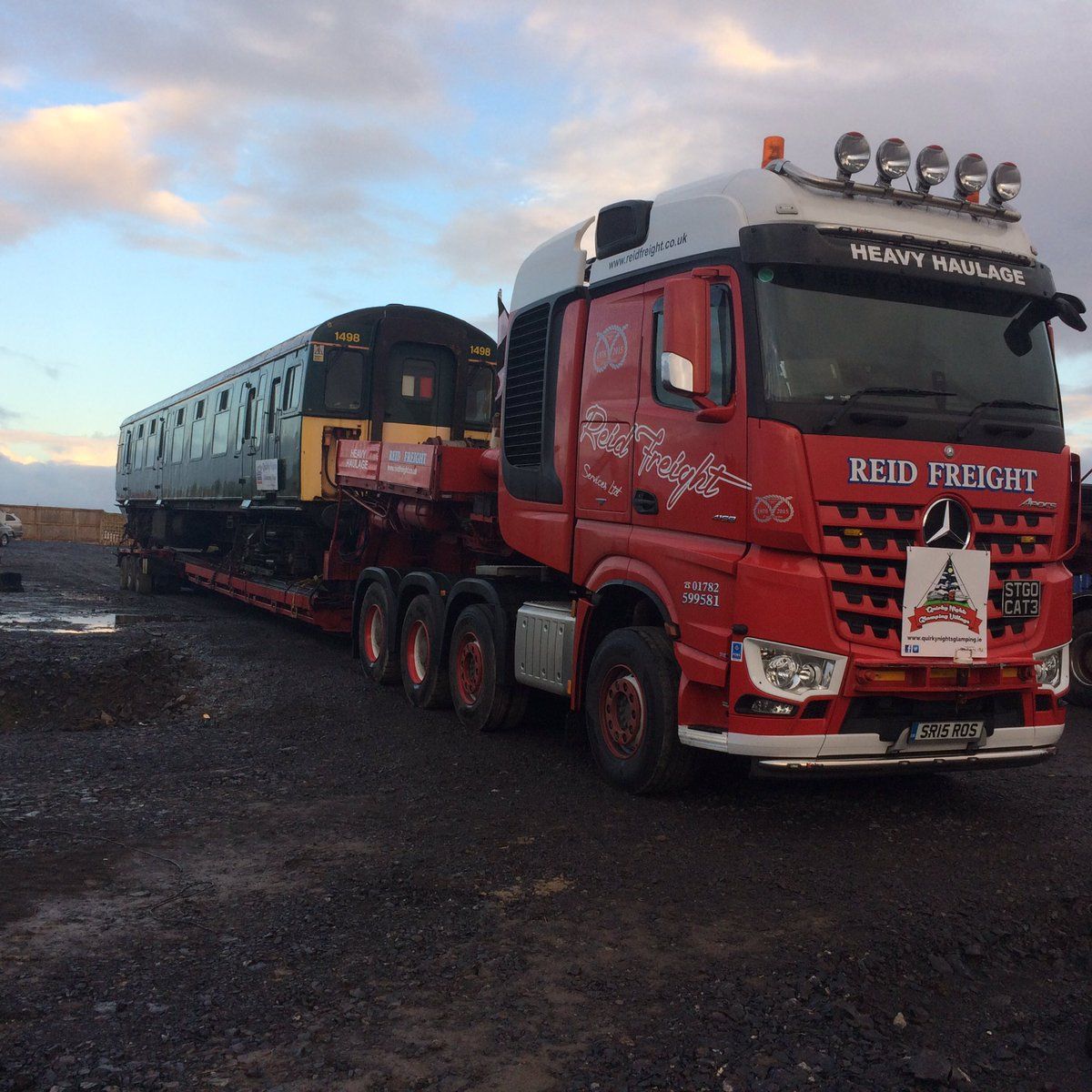
David McGowan adds vintage train to quirky collection in Glamping village Enniscrone Co Sligo

Image result for David McGowan adds vintage train to quirky collection in Glamping village Enniscrone Co Sligo  Image result for David McGowan adds vintage train to quirky collection in Glamping village Enniscrone Co Sligo  Image result for Train carriages transported to the glamping site in Sligo

Train carriages transported to the glamping site in Sligo.

David McGowan oversaw the arrival of a three-carriage train to Enniscrone in Sligo from London on Monday.
A funeral director has told how he wants to bring a “bit of life” back into his area with a quirky glamping village where guests can sleep in a vintage train.
Image result for David McGowan adds vintage train to quirky collection in Glamping village Enniscrone Co Sligo  David McGowan oversaw the arrival of a three-carriage train to Enniscrone in Sligo from London on Monday – just months after bringing a Boeing 767 to the seaside town.
The 56-year-old businessman, who is from nearby Ballina, Co Mayo, became a local celebrity in May when he transported the aircraft north from Co Clare by sea on a barge.
And he was delighted with his latest arrival at 7am on Monday, confident his unique collection of a plane, train, yacht and helicopter can make his glamping site a must-see for thousands of visitors.
The dad of three said: “There’s great support for it and there’s a great social impact as well.
“It’s putting Sligo on the world map and there’s two towns there, Ballina and Enniscrone, and it’s bringing a bit of life about the place.”
The train was bought from a preserved railway in North London and the huge task of bringing it to the West of Ireland took almost four days – and was only permitted to take place in Ireland at night.
The carriages, which were used on the London rail network for many years, cost €20,000 with transport costs likely to add up to a further €20,000.
A Boeing 767 airplane arrives at Enniscrone estuary after being tugged from Shannon airport out to sea around the west coast of Ireland, May 7, 2016.
The train was brought by truck from London to Heysham before being transported by ferry to Dublin Port.
The mammoth delivery was then taken through the capital and across Ireland to Sligo with 10 voluntary bike marshalls driving alongside the unique consignment.
However, while David said it was a challenge, he added it was not as difficult as transporting the Boeing 767 in May.
He said: “I was after moving a plane so nothing could be bigger than that. And I was better prepared this time, I wasn’t prepared for the plane. I was a lot cuter this time.”
David added they have had 40,000 visitors in Enniscrone since the Boeing 767 arrived and he is eager to build on the interest and increase tourism in the area.
He also told how they streamed the transportation of the train live online.
David said: “There was 1,000 people at the quays when we arrived.”

Monkey toolmakers smash some long-held beliefs

CAPUCHIN MONKEYS MAKE SHARP STONE FLAKES SIMILAR TO THOSE MADE BY ANCIENT HUMANS

Image result for Monkey toolmakers smash some long-held beliefs  Image result for Monkey toolmakers smash some long-held beliefs  Image result for Monkey toolmakers smash some long-held beliefs

A CAPUCHIN MONKEY ABOVE PIC BREAKS ITS HAMMERSTONE AS IT STRIKES AN EMBEDDED COBBLE IN THE SERRA DA CAPIVARA NATIONAL PARK, BRAZIL. THE MONKEYS PREFERRED TO LICK OFF THE STONE DUST AND THEN THROW THE FLAKES AWAY.

A troop of monkeys in Brazil has smashed a long-held belief that only humans were smart enough to manufacture tools.
The capuchin monkeys were videoed happily banging one stone against another, chipping off sharp-edged rock flakes in the process.
These flakes look identical to the stone flake tools made by early humans.
But while our ancestors used the sharp edges for cutting and scraping objects, the monkeys preferred to lick off the stone dust and then throw the flakes away.
Prof Tomos Proffitt of Oxford University and colleagues travelled to South America to video the capuchins as they bashed stones together.
The monkeys very deliberately smashed the stones to break them apart but the resultant sharp flakes were an unintentional result of their efforts, the scientists write on Wednesday in the journal Nature.
The discovery is hugely important, however. The team collected stone fragments immediately after they were produced and these are virtually indistinguishable from the flakes produced intentionally by early humans.
This means there could be doubts about whether the stone tools found at early stone age sites were produced by humans or monkeys.
Hallmark of earliest human tool development. Image result for Monkey toolmakers smash some long-held beliefs
Scientists use the distinctive characteristics of flaked stone tools to distinguish them from naturally broken stones. The flakes have always been considered a hallmark of human involvement in the earliest stone tool technology, the authors write.
The capuchin’s party piece, a trick perhaps also repeated by its ancestors, undermines the assumption that the making of sharp flakes must have been achieved through human involvement.
The monkeys use two hands to pound a hammer stone against another, the goal being to break the stones open, the authors say. The animals then lick up the dust, perhaps to get at minerals inside or to consume lichens released by all the banging.
They discard the stone flakes once the dust has been licked off and they were never seen using the sharp edges to cut or scrape, the scientists add.

Thursday, June 9, 2016

Donie's Ireland daily news BLOG update.

The average age of first time buyers in Ireland rises to 34

BUYERS IN THEIR 20’S AND EARLY 30’S ABSENT FROM THE MARKET FOR PROPERTIES OVER €160K


THE AVERAGE AGE OF FIRST-TIME BUYERS IN IRELAND HAS RISEN BY FIVE YEARS TO 34 OVER THE PAST DECADE, ACCORDING TO REAL ESTATE ALLIANCE (REA).

In 2006 the average first-time buyer in Ireland was approximately 29 years old, according REA, but this figure has since increased by 17% cent and is still rising.
The estate agency group said agents around Ireland are reporting that first-time buyers in their twenties and early thirties are now mainly absent from the market for properties priced over €160,000.
“A definite two-tier system has emerged over the past year nationwide, with €160,000 emerging as the breaking point for interest from buyers in that age group – ruling out most properties in Dublin,” REA chairman Michael O’Connor said.
Mr O’Connor said the introduction of the Central Bank’s requirements, combined with higher rents, has made it increasingly difficult for young people to save deposits, especially in Dublin.
“House ownership is now off the table for many couples earning average salaries, with their only hope of purchase now coming from an injection of outside help, usually from close relatives.”
He said a couple on a combined average industrial wage income of €74,000 can borrow 3.5 times their income, making a total of €259,000.
“From a Dublin price perspective, the rules don’t make sense, with the combination of the deposit rates and the multiplier falling far short of our average three-bed semi price in Dublin city and county of €334,000.”
The group said another huge factor in the first-time buyer market has been the recent strength of buyers from outside Ireland who have been typically living and working here for over a decade now putting down roots and buying houses.
“In areas such as Carlow, REA agents are reporting that 30 per cent of first-time buyers are now from Eastern Europe, a percentage that has grown rapidly over the past two years,” said Mr O’Connor.

With some flair & a push, Ireland can attract the prized Chinese tourists


WHEN IT COMES TO ATTRACTING THE PRIZED CHINESE TOURIST, THE TASK IS COMPLEX AND THE POTENTIAL IS REALLY HUGE.

Up to 140m Chinese are predicted to travel overseas in 2016, spending upwards of €300bn, marking a 15% upward spike from 2015. By 2020, it is expected that 235m Chinese tourists will splurge €400bn across the globe.
With travel enshrined as the preferred activity for the burgeoning Chinese middle class, Europe figures prominently on their overseas wish list.
France is a consistent top choice for this new breed of traveller, attracted by its cultural romance, vintage wines and luxury fashion labels. Despite the terrorist attacks, Paris and other historic sites welcomed over 2m Chinese last year, a growth of over 50%.
Two weeks ago, Tourism Ireland led its largest ever sales mission to China in a bid to increase our share of this rapidly growing market.
Ireland attracted 45,000 Chinese visitors in 2015 — a figure expected to grow by 10% annually to 2020.
The Tourism Ireland delegation was joined by a number of key agencies – including the Dublin Airport Authority, exploring the possibility of direct flights from China to Ireland.
Last year, Shi Boli, general manager of Beijing Airport, indicated that a Dublin route was on his radar, in tandem with an additional direct service to Manchester.
Irish visa offices continue to highlight the British-Irish Visa Scheme, which enables leisure and business travellers from China to visit Ireland and the UK on a single visa.
Tourism Ireland has offices in Shanghai, Beijing, Guangzhou, and Chengdu. The organisation’s activity in China involves establishing and building relationships with influential intermediaries, such as the travel trade, airlines and media — highlighting Ireland’s natural attractions, cities, castles, and proximity to Britain.
The sales mission included representatives from Guinness Storehouse, Kildare Village, Manor House & Irish Country Hotels, National Trust Giant’s Causeway, The Merrion Hotel, and Titanic Belfast.
“Our sales mission is to win a greater share of the 4m Chinese visitors who travel to Europe each year,” says Niall Gibbons, chief executive of Tourism Ireland. “We are committed to growing Chinese visitors to Ireland to 50,000 per year by 2017, and our sales mission will play a significant role in helping us achieve this target.”
Ireland has featured prominently in the Chinese news spotlight recently, following the visit last year of Chinese premier Li Keqiang to the west of Ireland, and the state visit of China’s president, Xi Jinping, in 2012.
An episode of a popular reality TV show, Exploration of the World, recently aired to more than 6m viewers as it tracked eight Chinese celebrities attempting to master hurling, Gaelic football, and handball.
The celebrities also took on the challenge of learning Irish dancing and traditional music.
China Central Television, the predominant state broadcaster, also visited Ireland in 2015, filming a documentary entitled Glamorous Ireland, highlighting the scenic landscape, arts and crafts and family life, for an audience of over 100m Chinese around the world.
Opening to the theme music of Riverdance, Ireland was described as a “dream destination” and one of “Europe’s most popular places to live”.
The week-long shoot around Dublin, Wicklow, Cork, and Clare featured a tour of Dublin Castle, scenes from President Michael D Higgins’s inauguration, the Guinness Storehouse, and a visit to the Museum of Irish Whiskey.
The warmth and sincerity of the Irish people hits a very positive note with Chinese visitors, says Fiona O’Sullivan of Custom Ireland, which organises tailor-made travel itineraries.
“Despite the language difficulties, Chinese visitors clearly love interacting with Irish people on every level,” she says. “They feel a genuine connection and are very happy and comfortable with Irish people. The welcome and the scenery are, without a doubt, amongst the top things they love.”
Paula Cogan, director of sales and marketing at Cork’s River Lee Hotel, says Chinese guests expect a very high level of service in hotels and are not afraid to voice their criticism.
“They like genuine Chinese food as part of the menu and appreciate it when items such as green tea, slippers, bath robes, and toothpaste are provided,” says Ms Cogan. “They would be mid price spenders when it comes to accommodation, and they expect value for money. ”
Along with golf and historic sites, Chinese visitors are keen shoppers — with the emphasis on brand name goods.
“They love to shop, specifically for luxury goods,” says Ms Cogan. “In many countries, like Switzerland, hotels and retailers work together, and some shops will subsidise accommodation costs just to get Chinese visitors to spend on luxury goods.”

A 3.8% growth in Irish retail grocery market, SuperValu retains largest share

THE EVER INCREASING COMPETITION AMONG THE MAIN GROCERY RETAILERS SEES SHOPPERS VISITING STORES MORE OFTEN


THE IRISH RETAIL GROCERY MARKET HAS GROWN BY 3.8% IN THE LAST YEAR, WHILE SUPERVALU RETAINS THE LARGEST SHARE OF ANY SUPERMARKET.

New figures from Kantar Worldpanel – covering the 12 weeks up to 24 April – show increasing competition among the main grocery retailers as shoppers are visiting stores more often.
In the three months to the end of April the average household made 63 separate trips for grocery items, an additional four trips compared with the same time in 2015.
Kantar Worldpanel said this trend is linked to a reduction in the overall size of the average grocery trip which has dropped from €22.40 last year to €21.60 so far in 2016.
Meanwhile, SuperValu remains the largest supermarket in Ireland, with a 23% share of the market after recording a year-on-year sales increase of 2.8%.
Commenting on SuperValu’s growth, Director at Kantar Worldpanel David Berry said: “Most recently the retailer has launched its ‘Good Food Karma’ campaign, which aims to inspire the general public to cook from scratch using fresh ingredients.
“The retailer saw strong growth across fresh staples in the past 12 weeks as a result: sales of fruit, vegetables, meat and poultry all saw healthy increases.”
Tesco is in second place, with the retailer’s share of the market standing at 22.2%.
Tesco has managed to sell more items so far this year but at a lower average price point – investing in low prices in a bid to win back customers.
This has led to a dip in the value of sales of 0.7%, however, volume sales have remained more positive, increasing by 2.7%.
Dunnes Stores has continued its recent strong performance, with sales growth of 8% helping it to a market share of 21.5% (third place).
Mr Berry said “bigger trips have been the main driver of this growth, with an additional €2.50 spent each time the tills ring compared with the same time last year”.
The retailer’s ongoing ‘Shop and Save’ campaign – where it incentivises shoppers to spend more each visit in return for money off next time – is attributed as a main driver of this growth.
According to Kantar World Panel, Lidl has maintained its position as the fastest growing retailer with an additional 43,000 shoppers visiting the grocer in the 12 weeks to 24 April.
Lidl’s market share now stands at 11.2%, while Aldi has seen growth of 1% to bring its market share in Ireland to 10.9%.

Fish can recognise human faces, a research now shows

ARCHERFISH (BELOW PIC) ARE ABLE TO IDENTIFY FACES THEY HAVE SEEN BEFORE, ACCORDING TO NEW STUDY


A STUDY FROM OXFORD UNIVERSITY FINDS THAT ARCHERFISH CAN LEARN TO RECOGNISE HUMAN FACES.

Fish do not get much credit for memory skills, but new research shows they can learn to recognise human faces.
Far from having a three-second memory, the study found that tropical archerfish were able to pick out a face they had seen before from a group of 45 faces.
Researchers from Oxford University and the University of Queensland trained their fish to recognise one human face, and then tested them by putting that face in a group with 44 new faces.
Archerfish are so named because they spit streams of water to knock bugs out of the sky.
The researchers used this novel trick and trained the fish to spit water at the face they recognised and disregard all others in the group.
Although this sounds like a fishy tale, it was no fluke. The fish managed to get the right face more than 80 per cent of the time.
When the job was made more challenging, with the faces standardised for brightness and colour, the fish did even better, with 86 per cent accuracy.
Being able to recognise faces “is a surprisingly difficult task”, mainly because we must all look the same to a fish, said Dr Cait Newport of the department of zoology at Oxford University.
The assumption has always been that only primates with their large complex brains could accomplish such a thing, she said.
Humans even have a special section of the brain, the neocortex, given over to the recognition of faces, which fish do not have.
Findings
The researchers published their findings on Tuesday in the journal Scientific Reports.
They positioned a camera underneath a clear-glass aquarium so that viewers could watch as their fish learned to recognise a face and then chose it again and again even when other faces were shown.
The proof was in the spitting.
“In all cases the fish continued to spit at the face they had been trained to recognise, proving that they were capable of telling the two apart,” Dr Newport said.
The experiments show you do not need a neocortex to recognise a face, the researchers said.
The research suggests there are probably plenty of fish in the sea with similar visual skills.