Pages

Showing posts with label Donald Trump. Show all posts

Tuesday, February 7, 2017

Donie's Ireland daily news BLOG

Irish Government Ministers divided over inviting Donald Trump to Ireland?

KENNY TO GO AHEAD WITH WHITE HOUSE TRIP BUT DECLINES TO CLARIFY IF HE WILL INVITE TRUMP HERE

Image result for Irish Government Ministers divided over inviting Donald Trump to Ireland?   Image result for Irish Government Ministers

US PRESIDENT DONALD TRUMP: MINISTERS ARE AT ODDS OVER WHETHER TAOISEACH ENDA KENNY SHOULD INVITE THE US PRESIDENT TO IRELAND.

Government Ministers are divided over whether Taoiseach Enda Kenny should invite US president Donald Trump to visit Ireland.
Mr Kenny has confirmed he will proceed with his trip to the White House on St Patrick’s Day despite protest from Opposition parties.
However, the Taoiseach has declined to clarify whether he will issue an invitation to Mr Trump to come here.
Minister for Social Protection Leo Varadkar and Minister of State at the Department of Health Finian McGrath have both said they would not support such a proposal being made.
“I’m not sure what purpose it would serve,” Mr Varadkar said. “An invite will be the Taoiseach’s decision. I wouldn’t invite him.”
Minister for Jobs Mary Mitchell O’Connor and Minister for Finance Michael Noonan have indicated they would back a visit from the president.
  • Ministers at odds over inviting Donald Trump to Ireland
  • Diarmaid Ferriter: Supine pragmatism will define Irish dealings with Trump
  • Hundreds attend protest against Trump at US embassy
‘Appalling policies’
Mr McGrath, an Independent Alliance Minister, told The Irish Times: “I do not think we should invite him. His statements and policies are appalling and have to be rejected.”
Mr Varadkar questioned what purpose a visit would have, insisting he would not issue such a request.
Speaking last week, the Taoiseach declined to rule out an invitation to Mr Trump, saying that he would consider the question of an invitation when he was in Washington for St Patrick’s Day.
However, newspaper reports on Sunday said Mr Kenny had decided not to invite Mr Trump.
A Government spokesman then followed up stressing that Mr Kenny’s remarks still stood, but that the Taoiseach would be concentrating on raising the plight of illegal Irish immigrants in the United States when he meets Mr Trump.
Government sources stressed the importance of the meeting with the US president went beyond the occupant of the White House at any one time.
The Minister for Finance said an invitation should not be ruled out but insisted the timing must be right. Mr Noonan was strongly criticised when he welcomed Mr Trump to Ireland previously.
Strong links
While Ms O’Connor claimed Ireland needed to actively work to maintain the strong links with the United States. She said she fully supported Mr Kenny in his decision to travel to meet Mr Trump.
“There are over 150,000 Irish people employed in US companies here in Ireland and I would like to make sure that there is US investment into the country,” Ms O’Connor said.
“I want to see US investment so I want to see a good collaborative environment and a good collaborative relationship between Ireland and the US.”
Mr Trump had planned a visit to Ireland during the election campaign but it did not proceed.

Brexit already hitting English businesses, A UK survey finds

UP TO 58% OF RESPONDENTS FROM BRITAIN’S BIGGEST FIRMS SEE NEGATIVE IMPACT

Image result for Brexit already hitting English businesses, A UK survey finds   Image result for Brexit already hitting English businesses, A UK survey finds

“BUSINESS IN THIS COUNTRY IS ALREADY FEELING THE PAIN OF THE ECONOMIC UPHEAVAL OF LEAVING THE EU,” SAID BEN PAGE, CHIEF EXECUTIVE OF IPSOS MORI.

Business is already suffering from Brexit, according to some of Britain’s biggest companies, lending weight to a cross-party effort by MPs this week to avert the risk of the UK crashing out of the EU without a deal.
Despite a stream of positive economic data, an Ipsos Mori survey of senior executives from more than 100 of the largest 500 companies found 58 per cent felt last year’s vote was already having a negative effect on their business.
Just 11 per cent found the Brexit decision had meant a positive impact while nearly a third – 31 per cent – thought it had made no difference to their company.
“Business in this country is already feeling the pain of the economic upheaval of leaving the EU,” said Ben Page, chief executive of Ipsos Mori. “There is no sign that this is likely to ease this year.”
Company bosses have voiced concern about losing competitive advantage against European rivals if tariffs rise after Brexit, adding to the cost of producing and exporting goods.
Investors also appear to be waiting for greater clarity about the outcome of Brexit negotiations before committing funds to longer-term projects.
Theresa May will this week face a rebellion by pro-European Tory MPs who fear that she could walk away from the negotiating table in Brussels without a deal, with potentially serious effects for business.
The prime minister has said she would prefer “no deal to a bad deal”, raising the prospect of Britain leaving the EU to fall back on World Trade Organization rules, including tariffs.
Steve Baker, a Tory Eurosceptic MP, said up to 27 Tory MPs could this week back a “wrecking amendment” in the committee stage of the bill authorising Mrs May to invoke Article 50 and trigger Brexit.
The amendment would give parliament a say if Mrs May concluded that no deal was possible, in effect requiring her to go back to Brussels to seek better terms. She will order Tory MPs to oppose the measure.
For Labour, the agony over Brexit continues, with Jeremy Corbyn facing the prospect of losing two of his closest allies – Diane Abbott and Clive Lewis – if they defy him and vote against the Article 50 bill on its third reading on Wednesday.
Mr Corbyn said he had yet to decide whether to impose a three-line whip requiring Labour MPs to back Brexit, but hinted that he would show clemency to rebels in any event: “I am a very lenient person,” he told Radio 4’s The World this Weekend.
The Commons battles over Brexit have been played out against a benign economic backdrop, confounding those who predicted a downturn after a Leave vote.
The Office for National Statistics reported last month that the UK was the fastest growing economy in the G7 last year, and was not yet showing any signs of the slowdown that many economists predicted would follow the vote to leave the EU in June.
But the less rosy sentiment from business is supported by economic forecasters, with Sir Charlie Bean of the Office for Budget Responsibility and former deputy governor of the Bank of England saying last week that the strong consumer spending seen after the Brexit vote in June was likely to fall away in coming months.
Bank of England figures show that consumer borrowing growth in December slowed to its lowest in more than two years, while consumer confidence has also dipped.
Two-thirds of the 114 FTSE 500 business leaders surveyed believe the business environment will become more negative over the next 12 months, while only 13 per cent believed the opposite.
A large majority – 84 per cent – said that it was “vital” to their business that the government handled Brexit negotiations well. But half said they were not confident in the government’s ability to negotiate the “best deal possible” with the EU for UK companies.
An even larger majority – 96 per cent – was confident their business could adapt to the consequences of leaving the EU, and more than two-thirds had already taken action in response to the referendum result. A tenth were moving business outside the UK.
In terms of their priorities for the forthcoming negotiations, the business leaders said movement of labour and access to skilled labour came the highest, followed by securing free trade or retaining the single market with the EU and passporting rights.

Nurses’ union talks break down & are now likely to give notice of industrial action

Related image  Related image  Related image

TALKS BETWEEN THE HSE AND NURSES’ UNIONS THAT HAVE BEEN ONGOING FOR THREE WEEKS ENDED THIS EVENING WITHOUT AGREEMENT.

Now, unions will meet to discuss potential industrial action.
The INMO told Health Service management that proposals have to be “radically improved” before any further discussion can take place.
The talks were focused on staffing, recruitment and retention.
They were aimed at restoring the current nursing/midwifery workforce to “at least 2007 levels”.
  1. In a statement issued to the media, the INMO said HSE management,
  2. “Refused to allow Directors of Nursing and Midwifery fill all posts which become vacant during 2017;
  3. Refused to guarantee that sufficient funding would be made available to allow the permanent employment of all Irish trained nurses and midwives graduating in 2016/17; and,
  4. Refused to guarantee replacement of maternity leave vacancies on a one for one basis.”

A 17% rise in complaints to the Food Safety Authority of Ireland

Image result for 17% rise in complaints to the Food Safety Authority of Ireland  Image result for live insects# complaints to the Food Safety Authority of Ireland  Image result for 17% rise in complaints to the Food Safety Authority of Ireland

A LIVE INSECT IN A DESSERT, A HUMAN NAIL IN A TAKEAWAY MEAL, AND A CIGARETTE BUTT IN A BAG OF CHIPS WERE AMONG THOUSANDS OF COMPLAINTS MADE BY THE PUBLIC TO THE FOOD SAFETY AUTHORITY.

New figures from the FSAI show its advice phoneline received 3,202 complaints by consumers relating to food, food premises, and food labelling last year. That was an increase of 17% on the 2015 figure of 2,739.
Meanwhile, the number of complaints about food poisoning jumped by 45% last year compared to 2015.
A total of 1,126 complaints were made relating to unfit food, 864 to hygiene standards, 741 to suspect food poisoning, 221 to incorrect information on food labelling, and 60 related to non-display of allergen information.
Grievances about poor hygiene standards were up 34% on the previous year, while complaints about incorrect information on food labelling were up 15% and those on unfit food was up 7%.
Edel Smyth, FSAI’s information manager, said Irish people are far more likely to complain about hygiene standards than they may have been in the past.
“The statistics from our advice line service continue to show an upward trend, with consumers expressing much more concern and being more conscious about the food they consume, and are being increasingly vigilant about food safety issues,” she said.
“There is a culture developing among consumers, which indicates zero tolerance towards poor hygiene standards and, in particular, food that is unfit to eat.”
The FSAI report says contamination of food with foreign objects was also frequently reported by consumers.
In 2016, reports included allegations of food contaminated with insects and glass, as well as other foreign objects.
Examples included a live insect found in a packaged dessert, a long black hair in garlic sauce, a human nail in a takeaway meal, glass in a dessert, plastic rope in a takeaway meal, and a cigarette butt in a bag of chips.
Other complaints in relation to poor hygiene standards referred to dirty customer toilets, rats observed on the premises, and dirty tables and floors.
In one case, a consumer complained about a staff member at a deli sneezing into their hands and then preparing sandwiches without washing their hands.
All complaints received by the FSAI were followed up and investigated by its enforcement officers throughout the country.
Its advice line received a total of 10,497 queries in 2016 from not only consumers but people working in the food service sector, such as manufacturers, retailers, researchers, and consultants.
The most popular queries were regarding legislation on food labelling requirements, allergens, and additives, as well as requests for FSAI publications.
FSAI chief executive Pamela Byrne said the advice line, as well as the agency’s website are important resources for the food industry where its experts are available to assist food business owners and managers to fully understand their legal requirements.

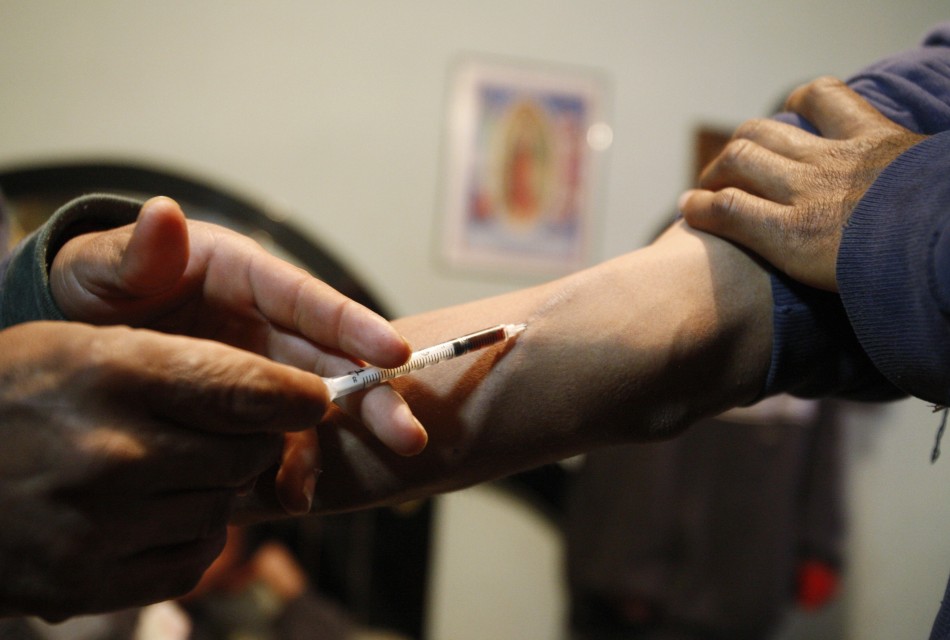
Proposed plan to open injection facility in Dublin for drug users

LAWS WOULD EXEMPT DRUG USERS FROM PROSECUTION IF FOUND WITH CERTAIN DRUGS AT CENTRE

Image result for Proposed plan to open injection facility in Dublin for drug users  Image result for Proposed plan to open injection facility in Dublin for drug users  Related image

THE PROPOSED INJECTION CENTRE WOULD OPEN FOR 12 HOURS A DAY, SEVEN DAYS A WEEK AND WOULD COST BETWEEN €1.5 MILLION AND €1.8 MILLION PER YEAR.

The Government will on Tuesday discuss legislation which would exempt drug users from prosecution if found with certain illegal drugs in a supervised injection facility.
Minister for Drugs Catherine Byrne will seek approval to proceed with plans which would open such a facility in Dublin’s city centre.
The centre would open for 12 hours a day, seven days a week and would cost between €1.5 million and €1.8 million per year.
Government sources stressed the Misuse of Drugs Act, which controls the possession of substances, will still apply.
Exemption from prosecution will only be applicable to authorised users when on the premises and injecting with the licence holder’s permission.
A Government source stressed: “In all other circumstances, inside and outside a supervised injecting facility, the offence of possession of a controlled drug still applies.
“The possession of a drug for the purpose of selling and supplying it to another is unaffected and remains a crime.”
A concern?
GardaĆ­ will be able to enter the premises without a warrant but they will not be able to arrest those inside.
There has been some concern that GardaĆ­ may be unable to adequately enforce the law while reflecting the Government policy.
Ministers have said the law must be clear and insisted there can be no ambiguity which would affect the powers of the GardaĆ­.
The legislation will also provide an exemption for licence holders to allow them to possess or prepare a controlled substance on the premises.
The initiative, which was first proposed by the former Labour Party minister of state AodhĆ”n Ɠ RĆ­ordĆ”in, has caused some concern.
However, Ms Byrne will stress the facility will not become a free-for-all for those who want to inject drugs.
Government sources say the aim is to minimise the harm associated with injecting drugs by providing a controlled environment.
The Health Service Executive will be asked to run the facility and will consult with An Garda SƭochƔna and community groups before its establishment.
Minister for Education Richard Bruton has requested that the centres do not open near schools.
Debated
Mr Bruton has asked that proximity to children must be considered as part of the discussion on location and called for schools to be consulted ahead of any decision being made.
The legislation proposed by Ms Byrne is not prescriptive in terms of location but sets out policies which should be considered.
The level and the nature of drug use, paraphernalia and incidents of overdose or death should be factors, according to the Minister.
The legislation, if passed by Cabinet, will be debated in the DƔil and the Seanad.
It is expected the facility may be open by September. It will not be a new building but one that is unused at present.
If the pilot project is successful, it is envisaged a number of others will be opened across the country.
However, funding has only been set aside for one facility and the Department of Health has been advised any additional spend must come from within expenditure allocations.

The moon will smash Earth and turn our planet’s surface into a sea of fire, scientists warn

Image result for The moon will smash Earth and turn our planet’s surface into a sea of fire, scientists warn Image result for The moon will smash Earth and turn our planet’s surface into a sea of fire, scientists warn

STARGAZERS SET OUT THE GRIM DESTINY OF OUR PLANET’S SATELLITE, WHICH WILL PLOUGH INTO HUMANITY’S HOME WORLD IN THE VERY DISTANT FUTURE

The moon is locked into a death spiral which will eventually cause it to smash into Planet Earth, an astronomer has warned.
This apocalyptic event is likely to be so devastating that it will turn the surface of our home world into a seething pit of red hot lava.
The moon will plunge into Earth, although humans may not be around to see it
“The final end-state of tidal evolution in the Earth-Moon system will indeed be the inspiral of the Moon and its subsequent collision… onto Earth,” Jason Barnes, a planetary scientist at the University of Idaho, told Forbes.
“The energy released in the merging would re-melt the Earth into a magma ocean.”
Sadly, humans won’t be around to see this disaster – because they will probably have been wiped out in another one like?
According to the Global Catastrophic Risks 2016 report, the biggest threats humanity should prepare for are climate change-related catastrophes, natural pandemics and nuclear war.
These were all listed as high priority and had the highest likelihood of occurring in the next five years.
However, other threats to look out for include pandemics from man-made pathogens, failure of geo-engineering projects, and catastrophic disruption from artificial intelligence.
In terms of mitigating risks, the report draws comparisons with fatal car accidents, where governments have mandated basic safety features, such as seatbelts and air bags.
It states that while the risk of human extinction is small, at 0.1% each year, it means that a person is five times more likely to die in an extinction event than a car crash.
Catastrophic climate change poses such a high risk due to the cumulative effects of rising carbon dioxide levels, feedback loops in the carbon cycle, and lack of action and financial investment.
The report states of the need for the international community to take strong action to avoid the upper limits of global temperature change, which could have devastating impacts on food security and human life.
The sun will one day swell to a huge size and fry everything on Earth
The moon will crash into Earth in about 65 billion years, which is about 59 billion years after everything in our planet has been burned alive in the death throes of the sun.
If our species manages to avoid being wiped out by nuclear war, doomsday space rocks or apocalyptic epidemics, we may live to see the day our closest star swallows up much of the solar system.
“Five billion years from now, the Sun will have grown into a red giant star, more than a hundred times larger than its current size,” Professor Leen Decin from the KU Leuven Institute of Astronomy said last year.NASA astronaut Eugene Cernan, last man to walk on the moon, dead at 82
Earth will be hit by an asteroid that will wipe out life as we know it today… but not for a million years, say boffins.
“It will also experience an intense mass loss through a very strong stellar wind. The end product of its evolution, 7 billion years from now, will be a tiny white dwarf star.    

Tuesday, November 15, 2016

Donie's Ireland daily news BLOG

Construction activity in the Irish Republic rose again in October

BUILDING, ORDERS AND EMPLOYMENT ALL ROSE RAPIDLY LAST MONTH of October,

Image result for Construction activity in Irish Republic rose again in October  Image result for Construction activity in Irish Republic rose again in October

TOTAL CONSTRUCTION ACTIVITY IN THE REPUBLIC INCREASED FOR THE SECOND SUCCESSIVE MONTH IN OCTOBER.

The construction sector in the Republic recorded a strong start to the final quarter of the year, with activity, new orders and employment all increasing at faster rates in October, according to the latest Ulster Bank Construction Purchasing Managers’
Meanwhile, a similar survey by Ulster Bank in Northern Ireland showed that firms enjoyed a surge in export orders last month on the back of sterling’s continued weakness but their good fortune was mirrored by growing problems for local importers as costs continue to spiral.
In the Republic, the seasonally adjusted index, designed to track changes in total construction activity, increased for the second successive month in October to 62.3, up from 58.7 in September.
This represented a sharp monthly rise in total construction activity, and the fastest in seven months. Construction output has increased continuously since September 2013.
Commenting on the survey results, Simon Barry, chief economist for the Republic of Ireland at Ulster Bank, said: “Importantly, construction firms are continuing to benefit from robust increases in new business levels, with the new orders index rising to its highest level since February following a fifth consecutive monthly acceleration in October.
  • Cantillon: To spend or not to spend – FF seem to want it both ways
  • Court to fast-track legal challenge to Apple data centre in Athenry
“Firms continue to report a strengthening in client demand amid a general improvement in economic conditions as an important contributor to the ongoing uplift in new business volumes. In turn, the healthy expansion of new orders continues to underpin increased demand for construction workers. The employment index rose sharply last month, with the pace of hiring accelerating to its fastest in eight months as almost one-third of firms noted a rise in employment.”
Mr Barry said the mainly domestic-facing construction sector was less directly exposed to adverse Brexit impacts than more heavily trade-dependent areas of the economy.
Northern Ireland figures
In Northern Ireland, Ulster Bank’s PMI survey showed that although businesses are enjoying an export boost following the Brexit vote, the total number of new orders recorded by local firms remained largely unchanged during October.
The PMI survey also highlighted that while business activity demonstrated growth last month in the local economy, the pace of growth was sluggish and weaker compared to nearly every other UK region.
Richard Ramsey, Ulster Bank’s chief economist in Northern Ireland, said the survey reveals the stark differences between domestic and export markets.
“Overall, incoming orders stagnated in October and have failed to grow since June. However, export orders expanded at their second-highest rate since the survey began. This implies that domestic orders have been contracting at a significant rate.
“The converse seems to be the case within the construction sector. Given Belfast’s crane-cluttered skyline, it would appear that business conditions within the local construction market are relatively buoyant.
“However, despite this, and perhaps surprisingly, the PMI points to rapid rates of contraction in construction output orders and employment. This is largely due to subdued demand within a major external market, ie GB.”
Mr Ramsey said sterling’s current weakness was a “mixed blessing” for the North as the manufacturing and retail sectors are forced to bear the brunt of the input-cost inflation.

Donald Trump’s temperament will not serve him well as the next president of USA,

Image result for Donald Trump's temperament will not serve him well as the next president of USA,  Image result for Donald Trump's temperament will not serve him well as the next president of USA, Image result for Donald Trump's temperament will not serve him well as the next president of USA,

DONALD TRUMP IS KNOWN FOR HIS BLUNT SPEAKING

PRESIDENT BARACK OBAMA HAS WARNED THERE ARE “CERTAIN ELEMENTS” OF DONALD TRUMP’S TEMPERAMENT THAT WILL NOT SERVE HIM WELL “UNLESS HE RECOGNISES THEM AND CORRECTS THEM”.

With just weeks left in office, Mr Obama said the president-elect understands that a candidate being reckless with his words can be less consequential than a president saying the same thing.
Mr Obama noted that markets move and foreign governments take note of a president’s rhetoric and stressed that national security “requires a level of precision” so that deadly mistakes are not made.
He said blunt-spoken Mr Trump “recognises that this is different – and so do the American people”.
In a White House news conference ahead of his final overseas trip as president, Mr Obama made the argument that immigration is good for the American economy.
He acknowledged that many Americans have grown sceptical about the “complex argument” in support of immigration, when they see factories closing at home and jobs going offshore. But he said “immigration is good for our economy” if it is “orderly and lawful”.
Mr Trump campaigned on a promise to limit immigration into the US and bring offshore jobs back home.
But Mr Obama maintained that it is still his “strong belief” that achieving a strong global economy does not mean “shutting people out”.
And he believes Mr Trump will seek to “send some signals of unity” to people alienated by his ferocious campaign.
He said he advised the president-elect “to reach out to minority groups or women or others that were concerned about the tenor of the campaign” and “that’s something that he will want to do”.
But he added that Mr Trump is trying to balance commitments he made to “supporters that helped to get him here”.
On the campaign trail, Mr Trump described Mexicans as rapists and criminals. He vowed to build a wall along the US’s southern border and make Mexico pay for it.
He appeared to mock a reporter with a physical disability and threatened to sue several women who accused him of assaulting them. Mr Trump also disparaged the Muslim American parents of an Army captain killed in Iraq, and battled a former Miss America who is Latino about having gained weight.
Mr Obama stressed the need to give Mr Trump the “rope and space” for a “reset” once he takes over the reins of power.
Earlier it emerged that Mr Trump was considering a woman and an openly gay man to fill major positions in his new leadership team.
It would be seen as history-making moves that would inject diversity into a Trump administration already facing questions about its ties to white nationalists.
The incoming president is considering Richard Grenell as United States ambassador to the United Nations.
If picked and ultimately confirmed by the Senate, he would be the first openly gay person to fill a Cabinet-level foreign policy post.
Mr Grenell previously served as US spokesman at the UN under former President George W Bush’s administration.
At the same time, Mr Trump is weighing up whether to select the first woman to serve as chairman of the Republican National Committee.
On his short list of prospective chairs: Michigan GOP chairwoman Ronna Romney McDaniel, the former sister-in-law of Trump rival and 2012 presidential nominee Mitt Romney.
“I’ll be interested in whatever Mr Trump wants,” Ms McDaniel said, adding that she was planning to seek the Michigan GOP chairmanship again
Internal deliberations about staffing come a day after Mr Trump made overtures to warring Republican circles by appointing RNC Chairman Reince Priebus as his White House chief of staff and Breitbart News executive Stephen Bannon as chief strategist and senior counsellor.

Meanwhile:–

Will Mike Pence the US vice-president elect visit his roots in Ireland?

Image result for Will Mike Pence the US vice-president elect visit Ireland  Image result for Mike Pence grandparent from Doocastle outside Tubbercurry co Sligo  Image result for Tubbercurry town co Sligo

THE VICE-PRESIDENT ELECT OF THE USA MIKE PENCE WILL BE OFFICIALLY INVITED TO THE CO SLIGO TOWN OF TUBBERCURRY WHERE HIS GRANDFATHER HAILS FROM.

And the Chamber of Commerce in Tubbercurry believes Donald Trump’s running mate could himself end up in the top job in as little as four years’ time.
“Local people are delighted,” said chamber spokesman Roger McCarrick.
“We will be writing to him officially to invite him to the home of his ancestors. Regardless of policies he is still an ex-Tubbercurry man as far as we are concerned.
“There has been a sense of pride that a descendant of here could aspire to such high office. He has been Governor of Indiana since 2013 and it’s possible he could run for President in four or eight years’ time and he could be on the biggest political stage of all for the next 16 years.”
Governor Pence’s grandfather was Richard Michael Cawley, who emigrated in 1923 to Chicago where he became a bus driver.
He is said to have hailed from the Doocastle area outside Tubbercurry.
Pence has spoken in the past on how his views on immigration were shaped by his grandfather’s entry from Ireland through Ellis Island in 1923.
Now, further details of Mr Cawley’s Sligo roots have emerged thanks to research carried out by New York native, Robert Theiss from Arlington, Virginia, a postgraduate in history who has a strong interest in genealogy.
Theiss said: “Passenger arrival records show Richard Cawley, aged 20, a miner, arriving in New York on April 11, 1923, on a ship called the Andania, which had set sail from Liverpool.
“The passenger arrival record shows Richard Cawley’s place of birth as Doocastle. The passenger arrival record shows his last place of residence as having been Ashton-in-Makerfield, Lancs., England.”
Pence’s Irish granddad died on Christmas Eve 1980. He was 77. Pence was 21 at the time.
Richard Cawley’s wife, was Mary Elizabeth Maloney. She was born on March 22, 1907, in Chicago, Illinois. She died in Chicago on November 1, 1980, aged 73, just weeks before her husband Richard died.
She was the daughter of Irish immigrants. Her father, James Michael Maloney, was born on February 1, 1872, in Killaloe, Co. Clare, and her mother, Mary Anne Downes, was born on July 16, 1880, in Doonbeg, Co. Clare. James died in Chicago on October 10, 1916, aged 44. Mary Anne died in Chicago on December 23, 1955, aged 75.
Mike Pence and his family visited Ireland three years ago going to Co. Clare and Co. Sligo. Mike Pence met Moloney and Downes distant cousins, in Co. Clare.

Ireland’s Garda reserve membership has fallen 13% from June-Sept this year

Image result for Ireland's Garda reserve membership has fallen 13% from June-Sept this year  Image result for Ireland's Garda reserve membership down

FIANNA FƁIL HAS CALLED ON THE JUSTICE MINISTER TO START RECRUITING MORE MEMBERS ONTO THE RESERVE FORCE.

The number of Garda reserves across the country has fallen to under 800 in the past four months.
New figures released to Fianna FĆ”il’s Jim O’Callaghan showed how there were 1,179 reservists at the beginning of 2014. This number has now fallen a further 13% in the four-month period between June and September to 756.

DEPLETED RESERVES?

The biggest drop was in the Dublin South Central district where the number fell by a further 12% since May of this year.
O’Callaghan said: “Concerns have been expressed for some time on not utilising the significant potential of the garda reserve. This poses a much bigger challenge if the numbers continue to fall.
“The Garda Inspectorate report, published last December, indicated that despite receiving considerable training, reserves are not consistently or strategically maximised for operational purposes.
Just last month it was stated that there are plans afoot to more than double the number of Garda reserves nationally. This would bring the strength of the force up to 2,000. I am calling on the minister to kick start this process without delay.

NUIG refutes claims of continued gender discrimination at University

Image result for NUIG refutes claims of continued gender discrimination at University   Image result for NUIG refutes claims of continued gender discrimination at University
The five female lecturers (right) who claimed NUIG overlooked them for promotion.

NUI GALWAY HAS REFUTED CLAIMS THAT IT’S ‘PUNISHING’ WOMEN WHO HIGHLIGHTED ISSUES SURROUNDING GENDER DISCRIMINATION AT THE UNIVERSITY.

In a statement, college authorities said accusations made by the Irish Federation of University Teachers are ‘ill-informed’ and ‘untrue’.
The Irish Federation of University Teachers claims NUI Galway has failed to address outstanding legal cases relating to gender discrimination.
It argues that the university is stalling and prolonging actions taken by four female staff members, which are currently before the Circuit and High Court.
It says the situation amounts to the ‘punishment’ of whistleblowers who have highlighted vital issues on the national stage.
It comes more than two years since the Equality Tribunal ruled against NUI Galway in a case involving Dr. Micheline Sheehy-Skeffington.
NUI Galway says the cases are subject to the remit and rules of the courts and it is actively seeking their progression.
It adds that the contention by the IFUT that the university is delaying or prolonging court cases is ill-informed and simply untrue.

A new search in depression area for life on Mars now being looked at

Image result for A depression area on Mars now being looked for new life  Image result for A depression area on Mars now being looked for new life  Image result for A depression area on Mars now being looked for new life

SCIENTISTS AT THE UNIVERSITY OF TEXAS HAVE ZEROED IN ON A DEPRESSION THAT COULD POSSIBLY SUPPORT LIFE ON MARS.

A newly discovered depression may breathe new life into the pursuit to find life on Mars.
A strangely shaped depression—likely formed by a volcano beneath a glacier—could be a warm, chemical-rich environment suited for microbial life, according to a study from the University of Texas at Austin.
“We were drawn to this site because it looked like it could host some of the key ingredients for habitability — water, heat and nutrients,” lead author Joseph Levy, a research associate at the University of Texas Institute for Geophysics, a research unit of the Jackson School of Geosciences, said in a statement.
The depression is located inside a crater perched on the rim of the Hellas basin and is surrounded by ancient glacial deposits.
The depression first came to light in 2009 when Levy noticed crack-like features on pictures of depressions taken by the Mars Reconnaissance Orbiter looked similar to ice cauldrons formations found in Iceland and Greenland, which were made by volcanos erupting under an ice sheet. Levy and others also discovered another depression in the Galaxias Fossae region of Mars that had a similar appearance.
“These landforms caught our eye because they’re weird looking,” Levy said. “They’re concentrically fractured so they look like a bulls-eye. That can be a very diagnostic pattern you see in Earth materials.”
Earlier this year, Levy and his research team were able to more thoroughly analyze the depressions using stereoscopic images to investigate whether the depressions were made by underground volcanic activity that melted away surface ice or by an impact from an asteroid.
Timothy Goudge, a postdoctoral fellow at the University of Texas- Austin, used pairs of high-resolution images to create digital elevation models of the depressions that enabled in-depth analysis of their shape and structure in 3D.
“The big contribution of the study was that we were able to measure not just their shape and appearance, but also how much material was lost to form the depressions,” Levy added. “That 3D view lets us test this idea of volcanic or impact.”
A closer analysis showed that both depressions shared an unusual funnel shape with a broad perimeter that gradually narrowed with depth.
“That surprised us and led to a lot of thinking about whether it meant there was melting concentrated in the center that removed ice and allowed stuff to pour in from the sides,” Levy said. “Or if you had an impact crater, did you start with a much smaller crater in the past and by sublimating away ice, you’ve expanded the apparent size of the crater.”
After running formation scenarios for the two depressions, researchers concluded that the debris spread around the Galaxias Fossae depression suggests that it was the result of an impact with the possibility it could be formed by a volcano due to the volcanic history of the area. However, the Hellas depression has many signs of volcanic origins, lacks the surrounding debris of an impact and has a fracture pattern associated with concentrated removal of ice by melting or sublimation.
According to Levy, the interaction of lava and ice to form a depression would show that it could create an environment with liquid water and chemical nutrients.