Pages

Showing posts with label Homeless. Show all posts

Tuesday, April 25, 2017

Donie's Ireland daily news BLOG update

Housing census figures in Ireland paints a bleak picture?

A BLEAK PICTURE OF HOMELESSNESS, OVERCROWDING AND RELIANCE ON OVERPRICED RENTALS

Image result for Housing census figures in Ireland paints a bleak picture?   Image result for Housing census figures in Ireland paints a bleak picture?
Even the Irish Government admits that its plans to increase the supply of new homes will fall woefully short of expanding demand. The State needs to build about 35,000 new homes every year to begin making a dent in the housing crisis,
The Minister for Housing Simon Coveney said last week. He admits that the current target is to build only some 25,000 new houses a year, a third less. It was a challenge, he confessed, that reflects a “fundamental structural problem in the housing sector”.
The first Central Statistics Office “thematic” report on housing from the 2016 census paints a bleak picture: homelessness, overcrowding, and forced reliance on an overpriced rental sector, on the rise, while home ownership and house-building have declined – a perfect storm of rising demand and falling supply.
Perhaps most dramatic is the stark contrast between the 0.4% growth (just 8,800 units) in the housing stock between 2011 and 2016 and the previous five-year period – the latter, at 225,232 new dwellings, was 26 times larger.
Close to one in 10 of the population now lives in some 95,013 overcrowded households which have more people than rooms, a rise in five years of 28%. The hidden homeless. And the number of owner-occupied homes also fell between 2011 and 2016 causing the overall rate to drop from 69.7% to 67.6%, a level last seen in 1971. We are moving backwards, fast.
For most young people renting is the only option and now exceeds owner-occupation among under-35s . And in a squeezed market like Dublin, rents have inevitably soared – up some 30 per cent in the capital since 2011, if you are lucky enough to find somewhere.
Yet, why is there not a more serious attempt to incentivise bringing the 183,000 homes that are currently vacant back into use? And why the obsession with building homes-to-buy for first-time buyers at ever-inflating prices, when the real demand is for affordable social and affordable housing and rental properties? Time for a broader range of solutions, Says Mr Coveney.

Meanwhile: —

New data shows just 2,076 homes built last year

FREEDOM OF INFORMATION FIGURES SHOW NEW HOMES FALLING FAR SHORT OF GOVERNMENT’S 15,000 ESTIMATE. 

Image result for New data shows just 2,076 homes built last year  Related image

THE NUMBER OF NEW HOMES BUILT IN THE STATE LAST YEAR WAS JUST 2,076, A FRACTION OF THE GOVERNMENT’S 15,000 ESTIMATE, ACCORDING TO NEW FIGURES.

The number of new homes built in the State last year was just 2,076, a fraction of the Government’s 15,000 estimate, according to new figures obtained under the Freedom of Information.
Taken from the Building Control Management System, which is widely acknowledged as the most reliable construction database, the figures cast further doubt on the Government’s estimate of homebuilding rates in the economy.
They show that, when one-off homes are excluded, just 848 estate houses and apartments were completed in 2016 compared to an official Department of Housing estimate of 8,729.
In Dublin city, the most populous part in the State, just 68 scheme homes and apartments were completed last year.
The figures for other local authorities were also well below official estimates; Fingal (121), DĂșn Laoghaire-Rathdown (78), South Dublin (69) and Cork City (21).
In three local authorities, Longford, Leitrim and Roscommon, there were no housing completions recorded at all in 2016, while a further eight counties recorded fewer than 10 completions.
The figures stand in stark contrast to the Department of Housing’s official housing completion figure for 2016 of 14,932.
The discrepancy stems from the department’s use of ESB metering data as a proxy to count new builds. Electricity connections can be triggered by work to existing buildings or by formerly vacant units coming back on stream.
Ghost estates in Ireland?
The official figures are also likely to have been inflated by the finishing out of so-called ghost estates built during the boom.
Dublin architect Mel Reynolds said the Government’s housing targets, contained in its Rebuilding Ireland strategy, are based on new-build levels that were “fictional”.
He said the remarkably low output figure for scheme homes and apartments also raised questions about the Government’s new Help-to-Buy scheme, which has been blamed for fuelling further inflation in the market.
Mr Reynolds said there were now almost five Help-to-Buy scheme applicants for every new home being built.
The Department of Housing has repeatedly defended its use of the 14,932 completion figure, suggesting electricity connections have been used as a proxy for completions since the 1970s, as developers would not connect a property to the grid until it is ready for sale.
It also claims the Building Control Management System database is not an accurate measure of homebuilding activity as it was only established in 2014 and may fail to capture projects commenced prior to that.
Last week, Minister for Housing Simon Coveney said he hoped the level housing supply could be accelerated to 25,000 units a year by the end of next year. However, he indicated the State may need to build 35,000 units before demand in the market can be met.

Minister Varadkar supports an SSIA-style scheme to top up personal pensions

VARADKAR SAYS A PLAN IS URGENTLY NEEDED TO ENCOURAGE MORE SAVING’S.

Image result for Minister Varadkar supports an SSIA-style scheme to top up personal pensions  Image result for an SSIA-style scheme to top up personal pensions
A new SSIA-style savings scheme should be introduced to try to tackle our ‘pensions time bomb’, according to Social Protection Minister Leo Varadkar.
The original State-backed five-year SSIA plan, introduced in 2001, offered a bonus of €1 for every €4 saved monthly, subject to an agreed maximum.
Now Minister Varadkar wants a similar type of incentive for workers to pay into their own “personal” pension fund. The plan would give them additional retirement cover – on top of their State pension entitlement – and employers would be required to match their contributions.
“The minister’s preferred option would be an SSIA-type top-up from the Government, rather than the current system of a tax-relief incentive,” a spokesperson confirmed to the Sunday Independent.
“The SSIA top-up is very well understood, much more so than tax relief.
“It costs much the same, and would add to an individual’s pension income, as the money would go into their personal pension savings account.”
The fund would have to be phased in over a period of time with contributions starting at a “low level” in the first year.
The most favoured model would be similar to the Australian, Singaporean and New Zealand systems, and specially “tailored” for Ireland.
Every worker would be automatically enrolled in the scheme – but would have the right to avail of an opt-out clause. The fund would be the “private property” of the individual, could not be expropriated by any government, and could be inherited by a partner or family members if the worker passed away before drawing down any benefits.
It could be transferred to another jurisdiction, and there would be flexibility as to when benefits accrued could be taken out. The SSIA scheme of 16 years ago was generally regarded as a success, generating a huge national savings kitty.
Only a third of private-sector workers have a pension. During the recession years, many people sacrificed saving for their retirement as they battled to cope with more immediate bills such as mortgages, heating and food.
Meanwhile, the latest census data shows the proportion of those in the older age bracket continues to increase.
There are now 296,837 males and 340,730 females aged 65 or older in Ireland.
The number of men in this age category has gone up by 22% since 2011, compared with an increase of 16% for women. Medical experts predict improved medical care and other lifestyle changes will result in people generally living longer.
Financial studies show the demise of the traditional ‘permanent pensionable job’ as the nature of the workplace changes. Problems in many company schemes are an added complication.
Dermot O’Leary, chief economist with Goodbody Stockbrokers, suggests an SSIA-style government initiative could help deal with the ‘ticking pensions time bomb’.
He said recent census figures provided further confirmation that the over 60s segment of the population will increase in the coming years.
He suggested there would be obvious benefits to an SSIA-style scheme linked to pensions provision.

Nutritionists now agree there’s only one fruit that must find a place in your shopping basket “Berries”?

Related image  Image result for Nutritionists now agree there's only one fruit that must find a place in your shopping basket "blue Berries"?

Every fruit has its nutritional benefits but there is only one that seems to be winning the battle across the board when it comes to the expert’s advice.
If you tend to opt for berries of the red variety over blue because of their appealing buy me attractions, it might be time to change that because blueberries have multiple health benefits with 17 different dietitians agreeing that they’re one of the best superfoods available.
After surveying a group of nutritionists and cross-referencing their answers, Byrdie found the non-assuming berry came out on top.

WHY IS THAT?

Nutritionist Frida Harju, sums it up perfectly, when explaining:
“If you are going to add one fruit to your diet, make it blueberries. They have been labelled a superfood due to their high levels of polyphenols, antioxidative, and anti-inflammatory compounds that help to combat memory loss and enhance your mood.”
Due to the high amount of antioxidants present in blueberries, they help cardiovascular health and brain health.
They’re also high in fibre, good for your skin, aid digestion and unlike other fructose-laden fruits, blueberries have been shown to improve blood glucose and insulin levels.
If food shopping is on your Weekly to-do list, make sure blueberries find their way into your basket…

‘Hobbits’ Now claimed as one of the earliest forms of the human species?

Image result for 'Hobbits' Now claimed as one of the earliest forms of the human species?  Image result for 'Hobbits' Now claimed as one of the earliest forms of the human species?
A model of a female Homo floresiensis right picture.

HOBBITS, KNOWN AS HOMO FLORESIENSIS, COULD BE ONE OF THE MOST ARCHAIC FORMS OF HUMAN ACCORDING TO NEW RESEARCH.

Remains of hobbits were discovered on an Indonesian island in 2003, and since then scientists have debated where they originated from.
While some claim they were just short Homo sapiens, new Australian National University (ANU) research claims the hobbits were most likely a sister species to Homo habilis – who lived in Africa about 1.75 million years ago.
There’s also a chance that they even proceeded the Homo habilis, making them one of the oldest forms of humans.
They were about 3.5ft tall and used stone tools.
“It’s possible that Homo floresiensis evolved in Africa and migrated, or the common ancestor moved from Africa then evolved into Homo floresiensis somewhere,” study leader Dr Debbie Argue says.
Dr Argue said the analyses could also support the theory that Homo floresiensis could have branched off earlier in the timeline, more than 1.75 million years ago.
“If this was the case Homo floresiensis would have evolved before the earliest Homo habilis, which would make it very archaic indeed,” she said.
The hobbits lived on the Indonesian island of Flores until as recently as 54,000 years ago.
Prior to the ANU study it was believed that the Homo floresiensis evolved from Homo erectus, a larger human that lived on the Indonesian mainland of Java.
However the ANU researchers say that’s almost certainly not the case.
“We can be 99 per cent sure it’s not related to Homo erectus and nearly 100 per cent chance it isn’t a malformed Homo sapiens,” Professor Mike Lee said.
The research was published in the Journal of Human Evolution.
It’s unclear whether Bilbo Baggins is connected to the Homo floresiensis, or how he and his relatives made their way to Hobbiton from Indonesia.  

Tuesday, April 4, 2017

Donie's Ireland daily news BLOG

Major broadband providers ordered to block illegal streaming sites

MAJOR FILM AND TV STUDIOS SAY UP TO 1.3 MILLION USERS HERE MAY BE INVOLVED IN ILLEGALLY ACCESSING THEIR OUTPUT

Image result for Broadband providers ordered to block illegal streaming sites  Image result for Broadband providers ordered to block illegal streaming sites

SIX MAJOR FILM AND TV STUDIOS HAVE SECURED INJUNCTIONS DIRECTING INTERNET SERVICE PROVIDERS TO BLOCK ACCESS TO WEBSITES INVOLVED IN ILLEGAL STREAMING OR DOWNLOADING OF FILMS AND TV SHOWS.

Mr Justice Brian Cregan made the orders against nine internet service providers after saying it was “clear” from evidence before the court breaches of the studios’ copyright had “manifestly occurred.”
The orders would not amount to a breach of lawful use of the internet and were not disproportionate, said the judge.
Their proceedings were brought against a number of ISPs – Eircom, Sky Ireland, Vodafone Ireland, Virgin Media Ireland, Three Ireland, Digiweb, Imagine Telecommunications and Magnet Networks.
None opposed the application for the injunctions and the court heard they had adopted a neutral stance.
The studios, all members of the Motion Picture Association, sought the orders on grounds including up to 1.3 million users here may be involved in illegally accessing their films via various websites.
  • Irish film industry lauds judgment blocking piracy websites
  • Online content: Studios’ battle with streaming services heats up
  • Music industry shows movie makers the way with illegal downloads
Represented by Jonathan Newman SC, the companies argued digital piracy is costing the studios hundreds of millions annually and, according to recent research, led to the loss of 500 jobs here in 2015 and €320 million in lost revenues.
The plaintiffs are Twentieth Century Fox, Warner Bros Entertainment, Paramount Pictures, Disney Enterprises, Universal Studios, Sony Pictures Television and Columbia Pictures. Their case was supported by independent distributors and film-makers in Ireland.
Disable access ???????
In a ruling on Monday evening, Mr Justice Cregan granted orders requiring the ISPs to block or disable access by subscribers to a number of websites, known as “streaming” websites, including movie4k.to, primewire.ag and onwatchseries.to.
There was no opposition to the orders but the court was asked to deal with issues raised by Eir.
Eir said it was prepared to pay the cost involved in dealing with the relevant websites to date but was concerned about the cost implications if it had to deal with a large number of these sites into the future.
It asked the court to put a cap on the number of notifications per month, which the movie companies could make directing the ISPs to block websites.
Conor McDonnell, solicitor for Eir, said it was suggesting a cap of perhaps 50 notifications per month but the movie companies were opposed to any cap.
The judge said there should be no cap on the amount of notifications for the time being.
The judge welcomed that Eir and the movie studios had resolved another outstanding issue in relation to the temporary blocking of certain websites.

American families desperate to flee to Canada from Donald Trump’s power grasp

Image result for American families desperate to flee to Canada from Donald Trump's power grasp  Image result for fleeing families to Canada

THE NUMBER OF PEOPLE TRYING TO CROSS THE US BORDER INTO CANADA HAS INCREASED DRAMATICALLY SINCE DONALD TRUMP CAME TO POWER.

At the end of a lonely country road in upstate New York, a taxi pulls up.
Five people get out and stand uncertainly in the freezing rain – two men from Yemen, a woman from Eritrea and her two small boys.
They’ve come to flee America through its northern border, in to Canada.
The Royal Canadian Mounted Police waiting on the other side of the snowy ditch tell them they will be arrested if they cross at this unofficial border point.
They know this, but it is still scary to hear and the group pauses, just a few feet from the border.
One man is starting to shiver in the cold? and another explains that his visa has expired and he cannot go back to his war-torn country.
“Can you help us, please?” asks the woman as she tries to hold both her children to stop them standing in the snow, but they are wriggling and she lets one go.
He is giggling and playing next to abandoned luggage and a baby stroller from previous crossings as his mother calculates if this is going to be worth the risk.
Suddenly an officer offers the information she is waiting to hear – she will be arrested, processed, and then if all is well, released to the immigration authorities.
The two men, the woman and her sons take just a few steps over the invisible border and in to police custody, hoping to one day become a refugee in Canada.
The next morning it happens again.
Three smartly dressed men from Turkey say they want to claim asylum in Canada.
They don’t speak much English but they’ve brought carefully written letters explaining why they want to leave.
One is a former history teacher who was arrested and harassed in Turkey and he has been living in the States but now feels he cannot remain here anymore.
Why not stay in America? We asked “Because of Trump” his friend says, shaking his head.
In just this one location these crossings are happening up to five times a day.
Up and down this vast border region thousands have done the same, the numbers increasing sharply since Donald Trump rode to power on a wave of populist anti-immigrant sentiment.
The Canadian Border Services Agency says there was a six-fold increase in refugee claims just at Quebec’s border in February compared to the same month in 2016.
Nationally, the agency says that in January and February 2017 more than 2,500 people crossed over and made asylum claims.
RCMP Corporal Francois Gagnon said: “It’s mostly families … parents with kids, strollers.
“We’re going to use compassion on every occasion, but definitely seeing those families crossing the border, you know it touch somewhere our hearts, you know we are all most of us fathers and mothers, so the approach is going to be softer.
For many, being detained by the Canadian police is actually the aim.
An agreement between the US and Canada prevents people from either country seeking refugee status in the other.
But if they are arrested while crossing illegally, most people are given a criminal background check and then are released and given access to housing, schools, emergency healthcare and work permits while they await immigration hearings.
Immigration lawyer and head of the Canadian Association for Refugee Lawyers Mitchell Goldberg said: “I think it’s decent, I think it’s the right thing to do, I think it’s an investment in the future of Canadians.”

‘A lot of the time’ I am just waiting on a system that may or may not work properly

COLIN MCSWEENEY IS JUST ONE OF 4,875 ADULTS NATIONWIDE RELYING ON EMERGENCY ACCOMMODATION EVERY NIGHT?

Image result for we am just waiting on a system that may or may not work properly  Colin, who told his story on Ireland's Property Crisis (Image via RTE)

AN RTÉ DOCUMENTARY HIGHLIGHTING IRELAND’S PROPERTY CRISIS TONIGHT SHONE A BIG LIGHT ON A HOMELESS TRINITY COLLEGE GRADUATE WHO IS WORKING BUT STILL CAN’T AFFORD SOMEWHERE TO LIVE.

Colin McSweeney, 45, above left pic began working in the IT sector after completing his degree in Dublin. When that company folded, he found himself not being able to afford his rent and relying on the emergency accommodation system to shelter him.
Although he has a job as a researcher in a library, Colin spends his nights searching for accommodation in different hostels.
The college graduate details the trouble with finding a bed in the city and revealed that he sometimes relies on using the 24-hour Starbucks, which is located at the former Anglo Irish Bank HQ on St Stephen’s Green, to keep him warm through the night.
“This is Dublin’s first and only 24-hour Starbucks. I’ve spent a few nights over the last five months here. I’ve gone an entire evening here on just a cup of tea. The one thing is that if you try and sleep, you’ll be woken up by the security guard. But they’re nice.”
Colin is forced to find ways of keeping warm and safe for a whole night when the emergency accommodation system lets him down.
He spends his days in Pearse Street library waiting for a call back to see whether or not he has somewhere to stay that night.lin receives the phone call telling him he has a bed for the night.
Waiting on the call, he says: “Today revolves around this phone call. At this point, the system should ring me back.
“A lot of the time, you’re just waiting on a system that may or may not work properly and call you back. The longer you wait, the worse it seems.”
Thankfully, just as he was about to give up hope, Colin receives a call telling him he has a bed for the night and he makes his way to Frederick Street. This is what he does every night of the week.
Other people featured on Ireland’s Property Crisis included single mother Selena who is trying to find a new home to rent since her landlord sold her current property. Selena must leave the property by Easter Monday but the new Housing Assistance Payment (HAP) scheme has found nothing suitable in her area.
In another example of people trying to make ends meet, the Sadlier family are paying rent on their house in Donnycarney, Dublin, while also trying to pay off the mortgage on a one-bed apartment they bought ten years ago.
The number of people presenting as homeless in Ireland was at an all-time high in February.
There were 4,875 adults staying in emergency accommodation. As well as this, there are 1,239 families with 2,546 children, according to the latest Housing Department figures.

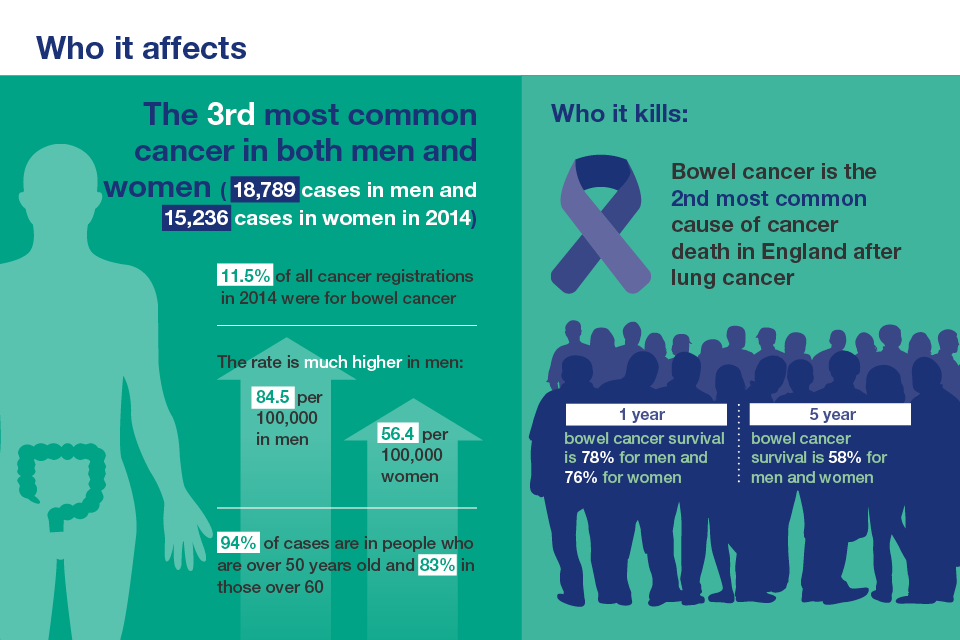
Bowel cancer and doing this could reduce the risk of this cancer by nearly 50%

Image result for Bowel cancer and doing this could reduce the risk of this cancer by nearly 50% Image result for Bowel cancer and doing this could reduce the risk of this cancer by nearly 50%

BOWEL CANCER RISK IS 46% HIGHER IN PEOPLE WITH THE LARGEST WAIST CIRCUMFERENCE, COMPARED TO THOSE WITH THE SMALLEST.

Bowel cancer: Losing weight is key and could reduce the risk by as much as 50%, experts now claim
Research has revealed women in the UK are not considering their cancer risk when it comes to their weight.
According to 2017 statistics, only just over one in ten UK women – 11 per cent – would be motivated to lose weight to reduce their cancer risk.
Lee Dvorkin, consultant general and colorectal surgeon at BMI Healthcare said: “Factors thought to increase the risk include smoking, obesity and eating excessive red meat, alcohol, animal fat and sugar.”
Obesity and a high body mass index (BMI) ratio are strongly associated with an increased risk of bowel cancer, argue experts.
Additional body fat is classified by the International Agency for Research on Cancer (IARC) and World Cancer Research Fund as a cause of bowel cancers.
Bowel cancer: Over half of cancer cases are diagnosed too late
An estimated 13% of bowel cancers in the UK are linked to being overweight or obese.
Maintaining a healthy weight through diet and exercise is essential to lowering the risk of the second biggest cancer killer.
Bowel cancer can affect both men and women of any age.
It is the fourth most common cancer in the UK, and the second biggest cancer killer, with someone dying of bowel cancer every 30 minutes in the UK.
Factors thought to increase the risk include smoking, obesity
Over half of bowel cancer cases are diagnosed late, but an early diagnosis is crucial.
In line with new 2017 NHS Digital statistics, 58% of women in the UK are currently overweight or obese, and 27% of women are currently inactive – doing less than 30 minutes of exercise a week.
Maintaining a healthy weight is essential not just for overall health but also to help prevent cancer development.
Despite this the latest research, conducted on behalf of BMI Healthcare points to the vast majority of women in the UK not being motivated to lose weight to cut their risk of cancer.
Bowel cancer concern: Maintaining a healthy weight can prevent the cancer developing
The new research conducted independently on behalf of BMI Healthcare as part of its April Be Bowel Cancer Aware campaign reveals that 42% of UK women would feel embarrassed to tell someone if they had irregular bowel habits or blood in their stool, the two key warning signs of the cancer.
The new figures raise the concern that women are putting themselves at increased risk of late diagnosis because they are too embarrassed to tell anyone about their bowel habits.
More than a quarter – 27% – of women have or may have had bowel cancer related symptoms.
However some 40% of women did not discuss their bowel cancer related symptoms with anyone – this includes just talking to a partner, friend or a family member.

Fearless fanged Coral Reef fish’s heroin-like venom could lead to pain killing treatments

Image result for Fearless fanged Coral Reef fish’s heroin-like venom could lead to pain killing treatments   Image result for Fearless fanged Coral Reef fish’s heroin-like venom could lead to pain killing treatments

A FEARLESS FANGED CORAL REEF FISH THAT DISABLES ITS OPPONENTS WITH HEROIN-LIKE VENOM COULD OFFER HOPE FOR THE DEVELOPMENT OF NEW PAINKILLERS.

University of Queensland researcher Associate Professor Bryan Fry said the venomous fang blenny was found in the Pacific region, including on the Great Barrier Reef.
“The fish injects other fish with opioid peptides that act like heroin or morphine, inhibiting pain rather than causing it,” he said.

“ITS VENOM IS CHEMICALLY UNIQUE????

“The venom causes the bitten fish to become slower in movement and dizzy by acting on their opioid receptors.
“To put that into human terms, opioid peptides would be the last thing an elite Olympic swimmer would use as performance-enhancing substances. They would be more likely to drown than win gold.”
Fang blennies, also known as poison-fang blennies or sabre-tooth blennies, of the genus Meiacanthus, are popular as ornamental tropical aquarium fish.
“Fang blennies are the most interesting fish I’ve ever studied and have one of the most intriguing venoms of them all,” Associate Professor Fry said.
“These fish are fascinating in their behaviour. They fearlessly take on potential predators while also intensively fighting for space with similar sized fish.
“Their secret weapons are two large grooved teeth on the lower jaw that are linked to venom glands.”
Associate Professor Fry said the unique venom meant, the fang blenny was more easily able to escape a predator or defeat a competitor.
“This study is an excellent example of why we need to protect nature,” he said.
“If we lose the Great Barrier Reef, we will lose animals like the fang blenny and its unique venom that could be the source of the next blockbuster pain-killing drug.”
The research, published in Current Biology, was led by Associate Professor Fry, who works with the UQ School of Biological Sciences Venom Evolution Laboratory, and Dr Nicholas Casewell of the Liverpool School of Tropical Medicine in the UK.
It involved researchers from across UQ and from Leiden University and the Leiden University Medical Center in the Netherlands; Monash University; and the Bangor and Anglia Ruskin universities in the UK.    

Tuesday, February 28, 2017

Donie's Irelnad daily news BLOG.

A child became homeless in Ireland every five hours in January, DĂĄil is told

Image result for A child became homeless every five hours in January, DĂĄil told  Image result for A child became homeless in Ireland every five hours in January, DĂĄil is told

‘SHAMEFUL’ STATISTIC SHOWS GOVERNMENT POLICY NOT WORKING, SAYS FF TD BARRY COWEN. 

Fianna FĂĄil TD Barry Cowen accused the Government of attempting to bamboozle people with details.
Focus Ireland said a child became homeless every five hours in January, a statistic called “shameful” by Fianna FĂĄil housing spokesman Barry Cowen.
“We are obliged in this House to seek to remove whatever obstacles that are preventing the implementation of any plans,” Mr Cowen told the DĂĄil on Thursday.
He said only 1,829 housing units were under construction as part of the Government’s plans. “The rest are going through various stages and the majority of them were approved over two years ago,” he said.
Mr Cowen accused the Government of being obsessed about announcements in the hope that people would be bamboozled by detail.
TĂĄnaiste Frances Fitzgerald, who took Opposition Leaders’ Questions, said the country was in a extraordinarily difficult economic situation just a few years ago. On Wednesday, she told the DĂĄil that unemployment figures were revealed to be down 6.8 per cent, a figure Fianna FĂĄil said would never be reached, she added.
The Government was providing more money and more detailed work with local authorities to deal with the housing situation, Ms Fitzgerald said.
Repair and leasing
The TĂĄnaiste later said the allocation of €32 million to deal with repair and leasing of housing would be announced and local authorities would work to ensure that more properties were available for people seeking housing.
She said the four Dublin local authorities had confirmed the target would be met to ensure children and families would not be using hotels in the city.
There was a targeted social plan, but it would take some time, Ms Fitzgerald added.
Later, Minister for Housing Simon Coveney said last year 2,700 “housing solutions” were put in place for homeless individuals and families.
In the past number of months, he said, the Government had managed to stop the significant increase by taking a lot of people out of homelessness as quickly as possible.
“We need to ensure that we slow down the numbers becoming homelessness and continue to increase the pace in which we can facilitate the transition out of emergency accommodation,” Mr Coveney added.
“I am still confident we can do that by July 1st.”
Mr Coveney said it was a big job to get between 700 and 800 families out of hotel accommodation and into appropriate accommodation in that period, but the Government was determined to do it.

RSA Ireland losses widen on setting aside £50m for prior-year accidents

Image result for RSA Ireland losses widen  Image result for RSA Ireland losses widen
INSURER TARGETS RETURN TO IRISH OPERATING PROFITABILITY THIS YEAR AFTER £42 MILLION LOSSES.

RSA Insurance Ireland’s operating loss widened by 62% last year after the country’s once-largest provider of motor and property coverage was forced to set aside £50 million (€59.1 million) of reserves to cover the costs of accidents in 2014 and 2015.
The local subsidiary of London-listed RSA Group posted a £42 million full-year loss compared with a £26 million loss for 2015. The performance was described by the parent as “disappointing”, especially as it had returned last year to writing new business on a profitable basis, as it and the wider industry hiked rates.
Insurers in the Republic have increased motor rates by almost 60 per cent over the past three years, according to Central Statistics Office data, in an effort to return to profitability as they struggle with rising claims, attributed to more cars on our roads in a recovering economy and spiralling court awards.
RSA Insurance Ireland has suffered more than most, as it was embroiled in an accounting scandal in 2013, when it emerged the company had not been setting aside enough reserves to cover large claims.
RSA said it is targeting a return to operating profitability for the Irish unit this year “through continued underwriting improvement, portfolio remediation and cost reduction”. However, it warned that the unit may face “additional reserve volatility” this year as a result of claims inflation on the back of the Personal Injuries Assessment board recently updating its so-called “book of quantum” – the guidelines for injury awards and judicial reviews.
As a result of the additional amount of money RSA Insurance Ireland had to set aside to cover higher expected costs from accidents in 2014 and 2015, its combined ratio – a keenly followed figure that measures insurance losses and expenses against premiums earned – rose to 116.2% from 113.4% year-on-year. A combined ratio off less than 100% indicates an insurer is writing insurance on a profitable basis.
“The prior year loss is predominantly in the Republic of Ireland commercial and motor portfolios, where a combination of higher-than-expected claims and the distortion of our reserving patterns following the events of 2013 have resulted in further strengthening of reserves during 2016,” the company said.
“The issues have been amplified by a challenging Irish market, characterised by aggressive claims inflation and increasing litigation mitigated by a very hard rating environment.”
The bulk of the additional provisioning appeared to be in RSA’s commercial insurance business rather than its personal line, comparing the full-year results with its interim figures that were published in August.
RSA said premiums in Ireland were up 6% last year to £306 million from a year earlier. This was largely driven by continued rating actions. Net written personal premiums rose 2% to £185 million with commercial premiums increasing 12% to £121 million.
Insurers have been less able to rely in recent years on investment income to cushion the blow from underwriting losses, as they grapple with low global bond yields. RSA Insurance Ireland’s investment profit fell to £7 million last year from £9 million in 2015.
The latest results come a day after three former RSA Insurance Ireland staff Rory O’Connor, Martin Ryan and Gerard Bradley were fined a combined £182,000 (€206,090) under sanctions tied to an investigation by a UK accounting watchdog into financial irregularities at the firm in 2012.
The Dublin-based insurer’s London-listed parent RSA Insurance Group injected €423 million of cash between 2013 and 2015 after the country’s once-largest insurer was thrown into crisis when it emerged it had a large hole in its balance sheet. This was mainly the result of the business having been found at the time to have set aside too little money in reserve to cover large claims.
RSA Group made a further €90 million available to the Irish division, if needed, last March to bolster its balance sheet under new insurance capital rules, known as Solvency II.
The continuing woes of the Irish business contrast with a 25% surge in operating profits delivered by the broader RSA Group last year, to £655 million. The group, which has been undergoing a restructuring programme under ex-RBS boss Stephen Hester, raised its target for return on tangible equity to 13-17% from a previous range of 12-15% on Thursday, and said it hoped to “perform in the upper part of this range”.
RSA said its cost-reduction programme was ahead of original targets and it was upgrading that target for a third time to more than £400 million sterling of gross annualised savings by 2018, from a previous target of more than £350 million.
The insurer said it would pay a final dividend of 11 pence per share and total dividend of 16 pence, up 52% from a year earlier and above a forecast 15.1 pence.

Tesco calls on union to reconsider strikes after five more stores vote no

Image result for Tesco calls on union to reconsider strikes after five more stores vote no  Image result for Tesco calls on union to reconsider strike
SIX BALLOTS HELD ON WEDNESDAY NIGHT WITH ALL BUT ONE STORE VOTING AGAINST STRIKE ACTION

Tesco has called on Mandate to re-visit its strike strategy after five more stores voted against joining the picket.
There were six “supportive ballots” held on Wednesday night with all but one store voting against strike action. There are currently pickets on 16 stores, with six more set to go on strike from next Monday.
The strike centres around what the Mandate union says is an attempt by Tesco management to enforce contract changes which will see the wages of staff recruited before 1996 fall by more than 15%.
Tesco has repeatedly denied this and says it needs to make changes to contracts to reflect an altered retail environment which now includes late-night and online shopping, as well as Sunday openings.
It says only a very small number of staff will see contract changes and promised that they will not lose out financially.
In a statement, Tesco said that 23 stores, or more than of half the shops balloted, had “overwhelmingly refused to co-operate with the union’s strike”.
The company said there was “an onus now on Mandate to face up to the emphatic decisions by the majority of colleagues. It is incumbent on Mandate after tonight’s strike rejections to re-visit its strike plans.”
The spokeswoman said it was “incontrovertible that Mandate’s strike plan is not being endorsed, as is shown not just by the union’s overwhelming losses in ballots, but also by the increasing number of colleagues crossing picket lines to return to work, with a further increase today.”
The company said the union would have to “urgently reconsider its refusal to accept the Labour Court Recommendation and its undermining of the industrial relations processes at the company and of the State, including its use of a Labour Court intervention to try to strengthen its hand in ballots.”
However, Mandate has said supportive ballots in other stores will continue next week and has said intense pressure by management on staff in voting stores was having an impact on outcome of the ballots.

Eat more fruit and veg for a longer life & eat 10 portions a day

Image result for Eat more fruit and veg for a longer life & eat 10 portions a day  Image result for Eat more fruit and veg for a longer life & eat 10 portions a day  Related image

EATING LOADS OF FRUIT AND VEGETABLES – 10 PORTIONS A DAY – MAY GIVE US LONGER LIVES, SAY RESEARCHERS.

The study, by Imperial College London, calculated such eating habits could prevent 7.8 million premature deaths each year.
The team also identified specific fruit and veg that reduced the risk of cancer and heart disease.
The analysis showed even small amounts had a health boon, but more is even better.
A portion counts as 80g (3oz) of fruit or veg – the equivalent of a small banana, a pear or three heaped tablespoons of spinach or peas.
What counts as five-a-day?
The conclusions were made by pooling data on 95 separate studies, involving two million people’s eating habits.

LOWER RISKS OF CANCER WERE LINKED TO EATING:
1. GREEN VEG (EG SPINACH)
2. YELLOW VEG (EG PEPPERS)
3. CRUCIFEROUS VEGETABLES (EG CAULIFLOWER).

Lower risks of heart disease and strokes were linked to eating:
1. apples
2. pears
3. citrus fruits
4. salads
5. green leafy vegetables (eg lettuce)
6. cruciferous veg.et is a big fan of spinach.
Harriet Micallef, from Chippenham, says she often manages eight to 10 portions a day and has multiple portions of spinach every day.
She told the BBC: “I have a lot, I don’t ever have a meal without veg or salad so eight to 10 portions is a regular thing.”
She starts her day with a veg-packed omelette containing spinach and sometimes avocado or tomatoes.
Harriet’s salad-based lunch is also packed with a mix of veg and her evening meals tend to be stir fries or stews.
Snacks during the day include blended fruit smoothies or peppers dipped in hummus.
She added: “It’s definitely healthy, if you’ve got loads of colours on your plate then you’re pretty much okay.”
The results, published in the International Journal of Epidemiology, also assessed the risk of dying before your time.
Compared with eating no fruit or veg a day, it showed:
• 200g cut the risk of cardiovascular disease by 13% while 800g cut the risk by 28%
• 200g cut the risk of cancer by 4%, while 800g cut the risk by 13%
• 200g cut the risk of a premature death by 15%, while 800g cut the risk by 31%
The researchers do not know if eating even more fruit and veg would have even greater health benefits as there is little evidence out there to review.
Dr Dagfinn Aune, one of the researchers, said: “Fruit and vegetables have been shown to reduce cholesterol levels, blood pressure, and to boost the health of our blood vessels and immune system.
“This may be due to the complex network of nutrients they hold.
“For instance, they contain many antioxidants, which may reduce DNA damage and lead to a reduction in cancer risk.”
However, many people struggle to even eat the five a day (400g) recommended by the World Health Organization.
In the UK, only about one in three people eats enough.
Heather Saunders, 24 and from Oxford, routinely manages nine or 10 portions a day since becoming vegan.
She has two pieces of fruit with breakfast, a “massive pot” of roasted vegetables at lunch and then at least four vegetables in curries or chillies in the evening.
She told the BBC: “It is about making a conscious decision, I feel fuelling myself with plant-based foods is a more healthy way to sustain myself.”
Her tips for anyone trying to eat more is to do it gently: “Maybe decide to have one or two meat-free days a week and phase more veg in, I quite like a sweet potato curry with spinach and chickpeas.”
Dr Aune said the findings did not mean the five-a-day message needed to change.
He told the BBC: “There are many different considerations if changing policy, it’s not just the health effects – is it feasible?
“But our findings are quite clear in that they do support five a day, but there are even some further benefits for higher intakes.”
• Five-a-day advice ‘unrealistic’ says new GPs’ head
• Take the test: are you getting five-a-day?
Dr Alison Tedstone, chief nutritionist at Public Health England, said: “The five-a-day target is the foundation of a healthy balanced diet and is an achievable way to help prevent a number of diseases.
“Whilst consuming more than five portions of fruit and vegetables a day may be desirable… adding pressure to consume more fruit and vegetables creates an unrealistic expectation.”

Bumble bees found to have ‘impressive’ brain power as they are trained to score ‘goals’

Image result for Bumble bees found to have 'impressive' brain power as they are trained to score 'goals'  Image result for Bumble bees found to have 'impressive' brain power as they are trained to score 'goals'

BUMBLEBEES CAN TEACH EACH OTHER HOW TO SCORE “GOALS” WITH A TINY BALL, A NEW STUDY FINDS

Bumblebees can teach each other how to score “goals” with a tiny ball, displaying a learning ability never before seen in insects, a study has shown.
The bees surprised scientists by working out how to use a novel tool to obtain a food reward simply by watching their neighbours.
In the experiment, the bees were placed on a platform and had to roll a yellow ball to a specific location – or “goal” – in order to obtain a sugar solution.
They were given two types of training, either watching a previously trained bee “score”, or being shown the ball that appeared to move on its own with help of an unseen magnet.
Insects that observed the success of other bees were better at learning the task than those given the “ghost” demonstration.
Project leader Professor Lars Chittka, from Queen Mary, University of London’s School of Biological and Chemical Sciences, said: “Our study puts the final nail in the coffin of the idea that small brains constrain insects to have limited behavioural flexibility and only simple learning abilities.”
The bees did not simply copy exactly what they saw, but figured out their own way to get the ball to the right destination.
“This shows an impressive amount of cognitive flexibility, especially for an insect,” said Dr Olli Loukola, another member of the Queen Mary team.
During the tests, the bees had to roll a ball from the edge of the platform to the centre.
Initially, “demonstrator” bees were trained by watching a plastic bee pushing the ball to the goal.
They then moved the ball in front of other bees undergoing training, who quickly learned the same trick.
But in later trials “observer” bees faced with a choice of three balls made a beeline for the one closest to the goal, rather than the one at the platform edge.
In yet another test they had to move a differently coloured ball to earn the reward.
Dr Loukola said: “It may be that bumblebees, along with many other animals, have the cognitive capabilities to solve such complex tasks, but will only do so if environmental pressures are applied to necessitate such behaviours.”