Pages

Showing posts with label Irish taxpayers. Show all posts

Wednesday, December 31, 2014

Donie's Ireland daily news BLOG update

Irish taxpayer being forced ‘to plug €58m hole in regulatory bill’


Noonan pledges to establish working group to examine costs to State of financial regulation

Sinn Fein’s Pearse Doherty said this was an unacceptable way for such an important and profitable industry to be regulated.
Minister for Finance Michael Noonan is to establish a special working group to examine the costs to the State of financial regulation.
This comes in the wake of revelations that the Irish taxpayer is being forced to plug a €58 million hole in the State’s annual regulatory bill.
Sinn Féin finance spokesman Pearse Doherty said the Central Bank confirmed to him that €57.9 million of the State’s €136 million bill for overseeing the sector in 2013 went “unrecovered”.
Mr Doherty had raised the question of regulatory costs with Central Bank governor Patrick Honohan at a recent finance committee meeting.
In a written reply to the Donegal TD, Prof Honohan confirmed that just under 50 per cent of the regulatory costs were still being funded by the State.
“This effectively means the taxpayer is picking up the tab for regulating the financial industry. That is an unacceptable way for such an important and profitable industry to be regulated,” Mr Doherty said.
“The time has come for Minister for Finance Michael Noonan to tell the financial services industry that it must pay for its upkeep,” he said.
In a statement, the Department of Finance said Mr Noonan planned to establish a working group in the new year to examine the issue on foot of a request from the Central Bank.
The group is to be made up of personnel from the department and the Central Bank and would feed into a consultation process aimed at shifting the entire cost of regulation onto the industry itself, the department said.
Currently, banks and other financial institutions pay only half the costs of the State’s financial regulatory budget, albeit with some sectoral variations, an arrangement that was agreed back in 2010.
Most of the regulation costs stem from the introduction of new EU banking rules imposed on the sector after the financial crash.
Prof Honohan is, however, keen to move to 100 per cent funding by the industry prior to the introduction of new rules connected with the Single Supervisory Mechanism (SSM), which will increase the costs of the regulation further.
The department said: “The [proposed consultation] process would also take into consideration issues such as; the fee model proposed under the SSM; the use of 100 per cent industry funding by Irish regulators in other sectors; the disparate sectoral complexities within the financial services industry; affordability; and the impact on Ireland’s competitiveness vis-à-vis competing jurisdictions in the area of financial services.”
In his letter to Mr Doherty, Prof Honohan listed the sectors that only contributed 50 per cent of their regulatory costs. These included insurance undertakings, securities and investment firms, investment funds and investment fund service providers and moneylenders.
“We are talking about some businesses with turnovers in the millions if not billions,” Mr Doherty said.
In 2010, the Government established an annual industry funding levy to fund approximately 50 per cent of the cost of the annual budget for financial regulation.
Following a consultation process last year, the Central Bank introduced a revised approach to the levy calculation process designed to more closely align the funding of the costs of financial regulation with its supervisory resources.

40% of us vow to get fit in the New Year

 

Two in five 40% of people are aiming to get fit in the New Year and three quarters of people asked for workout gear for Christmas, a survey has found.
In the age of computer games and electronic gadgets, people are more than ever pledging to beat the sedentary life.
The New Year has traditionally been the favoured time for new resolutions and a survey of 2,500 people found that even before the Christmas holidays, 85% had already decided what they would change for 2015.
The survey asked how many people has split their pants in the gym, with 8pc admitting that this had happened to them while 10pc admitted to a treadmill tumble.
It also found that music was a must for working out at the gym with and that one in four four had a gym crush.
When questioned about a “gym idol,” two names were outright winners, actress Jessica Alba and wrestler and actor Dwayne ‘The Rock’ Johnson.
Technology has also changed the way that people train, with three out of four runners saying that they now track their runs using GPS devices, such as a phone app.
The survey also asked how far each respondent thought that they could run with two in five claiming to be able to travel at least 5km and one in five saying at least 10km.
The survey was carried out by Irish sports chain Life Style Sports. It also found that 50% of people were exercising at least three times a week.
Tracking
“This is the first running and fitness survey that we have conducted and it made for some fascinating reading.
“It’s inspiring to see that people are running or working out at least three times a week, even during these cold winter months,” Debbie Byrne, marketing manager, said.

HSE to launch new supports to help smokers quit


The HSE is today launching new additional supports as part of its QUIT programme to help people who want to give up smoking.

The QUIT service provides a support team of counsellors over the phone, by email, live web-chat or via Twitter and Facebook.
It also features a new interactive website with an online QUIT plan.
People who sign up to the standard treatment programme will be tracked and supported for 12 months.
More information is available on the website QUIT.IE. More than 7,200 people signed up to the QUIT programme in 2014.
Dr. Stephanie O’Keeffe outlined how the HSE will promote the new QUIT service.
“On this day last year, our QUIT campaign launched its powerful advertising featuring Gerry Collins from Greystones in Co. Wicklow, who died earlier this year from lung cancer caused by smoking,” she said.
“Gerry’s trio of unique adverts have prompted a remarkable response from smokers trying to quit since they first aired in January 2014, and his family have generously committed to allowing the HSE to continue to use these adverts to lead the QUIT campaign.
“We will continue to show Gerry’s ads – giving people a chance to reflect on why they should quit.
“From now on, they’ll be matched by a call to contact the new QUIT support service – helping smokers know how to quit. We aim to add to the fantastic total of over 500,000 quit attempts prompted by our campaign since 2011.
“We want to continue to reduce the number of smokers, preventable deaths and many thousands of disabilities caused by tobacco that devastate families across the nation each year.”

‘I’m struck by the green every time I fly back to Ireland’
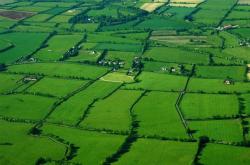
 

‘Ireland and Me: by Margaret O’Donnell, San Diego, California. 

‘On our approach into Dublin, once we have lurched our way through several layers of those dark, threatening clouds, there it is, in all of its verdant shades.
It’s been eleven years since I left. I did not intend to stay this long. The original plan was to leave after seven years, taking husband and cats with me, and move back to my apartment in Dublin.
Then, I became used to my life on a small island across the bay from San Diego. The weather is perfect here. Most days, I need no longer rush to the window to pull back the curtains to see if there’s an aqua blue sky outside. It’s usually there and, if not, it will be back shortly. No living under low, threatening, dark clouds for me. “Ah, but that’s what makes Ireland so green” I’m told here.
Yet, I’m struck by that green every time I fly back to Ireland. On our approach into Dublin, once we have lurched our way through several layers of those dark, threatening clouds, there it is, in all of its verdant shades. It speaks to me as if my very blood were green.
I feel a childlike delight when I listen to the announcements (in Irish and in English), that I’m back in Dublin again. My spirit veritably jumps up and down, listening to people who speak like I do. It is through the people at home (and I still call it “home”) that I again find my own identity. Strangers, family, good friends. All of them help me knit myself back together again.
The people in Southern California are, in the main, kind and well-meaning. Most of them rejoice in my Irishness and that still fills me with wonder. Being Irish here is like having that extra passport that lets you pass by the normal borders people have with strangers.
I sometimes get away with things because it is put down to my Irish “quirkiness”. It is even said I am some people’s favourite Irish person. That possibly would be because I’m the only Irish person they know. In some instances, my role as an “ambassador” makes me want to present the best me possible, so that we don’t all get a bad name. I strive to be better in all kinds of ways which, of course, has to be a good thing.
But no matter how well received I am here, I feel like I’m getting into a comfortable suit of clothes when I go home. I never feel that in San Diego. I’m too watchful, alert to the very high sense of “political correctness” I find here sometimes. There’s nothing wrong with being careful about others’ feelings, but when you have to watch your Ps and Qs because someone might take umbrage against my saying the word “Christmas” for instance.
And sometimes I just don’t care what I say. Not in a bad way, but I just have to let go of the constraints for a moment. There is also the dichotomy of what I hear and the behaviours I see that really confuse me sometimes. At home, everything tends to be more overt.
There’s an ache in my heart when I think of family and friends that an annual two-week holiday never fills. Yet I know I have an incredibly good life here in so many ways and should feel thankful. I do feel thankful. I just want it all. The Irish and the American. I will have to just be content with what I have. And it is indeed a good life.

UK scientists plan to grow lettuce on Mars


Photos of the lettuce are to be transmitted to Earth so the public and scientists would be able to watch the lettuce mature

Scientists could soon be enjoying out of this world lettuces 
A team of scientists have created a plan to grow lettuce on Mars, and it has been short-listed to be included in a future space flight to the red planet.
The project, being run at the University of Southampton, aims to put the first life on Mars by growing the salad vegetable in a greenhouse which will use the atmosphere and sunlight to help it grow.
The plan is one of 10 short-listed university projects, and the only one from the UK, to be selected for potential inclusion in the payload for the Mars One landing in 2018.
Project leader Suzanna Lucarotti said: “To live on other planets we need to grow food there. No-one has ever actually done this and we intend to be the first.
“This plan is both technically feasible and incredibly ambitious in its scope, for we will be bringing the first complex life to another planet.
“Growing plants on other planets is something that needs to be done, and will lead to a wealth of research and industrial opportunities that our plan aims to bring to the University of Southampton.
“We have tackled diverse sets of engineering challenges, including aeroponic systems, bio filters, low-power gas pressurisation systems and fail-safe planetary protection systems and then integrated them all into one payload on a tight mass, power and cost budget.”
For the project called £LettuceOnMars, the greenhouse would be launched from Earth with lettuce seeds, water, nutrients, and systems for atmospheric processing and electronic monitoring.
On the way to Mars, it would be powered down and inactive whilst the lettuce seeds are frozen.
Following a safe landing, the Mars One lander will start to supply power and heating elements to maintain a temperature between 21C to 24C.
Carbon dioxide, which is essential for plant life, would be extracted from the Martian atmosphere and processed before entering the growth chamber.
The lettuce would then be grown without soil and would be regularly sprayed with water and nutrients (aeroponically).
Once the environment had reached suitable conditions, the plant would start growing.
The aim is then for photos of the lettuce to be transmitted to Earth, so the public and scientists would be able to watch the lettuce mature from seed to full plant. Once the mission is completed, the heaters would switch to full power, exterminating all life in the payload.   

Sunday, July 22, 2012

Donie's Sunday news Ireland Blog


Conor Lenihan has key role in $8bn plan for Russia’s Silicon Valley

Ex-Fianna Fail minister says that the Irish were key to massive project

 FROM RUSSIA WITH LOVE: Conor Lenihan, on Moscow's Red Square  

Former Fianna Fail Minister for Innovation Conor Lenihan is at the heart of a hugely ambitious $8bn (€6.5bn) plan to establish Russia’s Silicon Valley.

Speaking at length for the first time since leaving Irish politics after the 2011 general election, Lenihan told the Sunday Independent of his pivotal role in the massive Skolkovo project taking shape just outside Moscow. The plan is to create a vast hub of innovation and research anchored by the Skolkovo Tech University — a Silicon Valley with more vodka, stray bears and furry hats.
“I was asked to join by Victor Vekselberg,” Lenihan said. Vekselberg is a billionaire Russian oligarch who has been tasked with making the project happen. “I conduct active negotiations with large global corporations — usually at CEO level. That’s my role,” he says. In effect, Lenihan is a one-man IDA.
There’s a bigger budget than anything the IDA has to offer though. The Russian state has already spent $4.2bn (€3.4bn) on the project but the overall bill could be up towards $80bn. “About 70 per cent of that is in city build. This will be a city of 31,000 people,” Lenihan said.
“It would take three to six years to move something like this in the EU. It’s a great tribute to the Russians that they have been able to mobilise their resources. It has been hugely impressive,” he said.
Some 25 global companies ranging from IBM, Microsoft, Cisco and Boeing have set up research and development operations at Skolkovo. The key strands of research are bio-technology, IT, clean tech, nuclear and space technology — with the project anchored by a major partnership with the world famous MIT.
“The main objective for them is in talent, market access and alignment with a high-profile government- backed project,” according to Lenihan. The key thrust of the project is to move the research along through to market — when it can actually make money. “The heart of the project is the commercialisation of research,” he confirmed.
There is also a pipeline of 500 start-up companies at Skolkovo. “We’ve funded 100 companies,” he says. Grants range from $2m to $5m and don’t have all the bells and whistles that Irish grants have. The Russians don’t have claw-backs, equity stakes or profit shares.
“There’s a number of Irish companies interested, with quite a few in active negotiations,” according to Lenihan. The Irish companies are involved in sectors such as IT, bio-medical and energy efficiency sectors.
“Enterprise Ireland has been over here and they are very interested in the idea,” he says. “Irish universities are also in active negotiations.”
Lenihan feels that Ireland has traditionally had a strong relationship with Russia, with Shannon Airport flights and the development of the Moscow Duty Free by Aer Rianta seen as key links between the two countries.
The Skolkovo project was also hugely influenced by the Irish model, according to Lenihan, pointing to the role of Science Foundation Ireland in commercialising research and helping attract foreign direct investment.
Given that he’s rubbing shoulders with some of the top insiders in Russia as well as hugely powerful CEOs of global companies, Lenihan has a unique viewpoint on how Ireland is perceived abroad by influential players.
“I think that the Russian view is that Ireland is a different case to the other countries in difficulty like Spain, Portugal or Greece.
“It’s recognised at international level, when I talk to CEOs of major companies, that Ireland was one of the first to move to get its costs down,” he said.
Lenihan is positive for the future of the Irish economy: “Ireland would be one of the first countries to come out should an economic recovery occur across the EU. This is a tribute to the last and current Government, who are not weakening under the pressure of austerity.”
However, the former politician and member of the famous Fianna Fail dynasty has gone cold on party politics at the moment.
Lenihan says that he has no plans to return to Irish politics “in the short or medium term”. Skolkovo is going to take up all of his time.
“It’s very interesting and it’s very significant that Victor — a billionaire — is giving up so much of his time. He’s devoting about 70 per cent of his time to Skolkovo It’s a great privilege to work here,” he said. “I’m well employed and very grateful. After three or four years, who knows?”

The next big hot potato for Irish taxpayers is property tax of up to €1,000


Can you afford to pay €1,000 a year in a property tax? Well, according to the man charged with designing such a tax, that is what we will, on average, all pay once it is introduced.

Don Thornhill, a career civil servant who describes himself now as a consultant “who advises on strategy and policy to a number of leading Irish organisations” has recently presented his report to Minister Phil Hogan recommending how such a property tax should work.
Politically toxic and highly unpopular, the lack of enthusiasm of either Fine Gael or Labour to discuss the matter is a clear sign of the trepidation that surrounds the idea of lumping the extra burden on the shoulders of the Irish taxpayer, but in particular the “squeezed middle classes”.
Phil Hogan’s department is saying nothing other than they have received the report and will consider it.
Even Thornhill himself declined to comment on the matter when asked.
The Government, clearly spooked by the €100 Household Charge debacle earlier this year, is caught in a dilemma.
Unwilling to increase income taxes, as promised in the Programme for Government, its options are limited and Thornhill has long argued that common sense dictates that Ireland should have a property tax.
“It must be remembered that Ireland stands unique in the developed world in that it does not have an annual recurring tax on land or on buildings,” Thornhill and Donal de Buitleir wrote in an October 2008 report called: “The Agenda for Tax Reform: Playing to and developing our strengths.”
WHY A PROPERTY TAX?
“Proposals for tax reform are potentially unpopular — this is certainly the case for our proposals for a recurring property tax,” Thornhill himself wrote previously.
Advocating such a tax, the duo said in contrast to increasing income tax, which has an adverse impact on people getting back into, or staying in, the workforce, property taxes do not have the same negative impact.
Many of the same points are restated in his new report to Phil Hogan.
“Recurring annual taxes on land and buildings (especially residential) are generally thought to have minimal negative effects on economic performance. This arises because a recurrent tax, particularly on residential, is a fixed sum. It has a zero marginal rate and does not negatively effect decisions on whether or not to seek work or to invest in further education or in business expansion,” they wrote.
Thornhill says most of the opposition for property taxes is driven by the lack of opportunity to evade it when a system is up and running.
Essentially, it is a wealth tax, the bigger the house you have the more you will pay.
“A recurring property tax on residences would be very unpopular. This may have something to do with the difficulty of evading a tax on a very visible base and because payment of the tax was traditionally demanded in lump sums,” he argued.
“The tax base is also stable and predictable. Another attraction from a government point of view is that recurring taxes on property are difficult to avoid or evade because the tax base is so visible. This last feature may explain their unpopularity,” they added.
In January 2010, Thornhill argued that a property tax should be based on a combination of the size and location of a house — not its market value.
“The tax would be based on a combination of the floor area and a valuation band, which would differ from one district to another. Differences in prices between districts vary less than actual prices themselves,” he said.
If such a tax was levied, the Central Bank said it would average out at €1,000 per household raising €1.5bn a year.
But, if the average is €1,000, by definition many people would be paying more than that, while many other would be paying less than that.
The real fear is that once again, the squeezed middle classes — those who earn between €50,000 and €150,000 a year — will be hit hardest.
Labour’s Anne Ferris said that any suggestion of €1,000 charges on average houses “wouldn’t wash” with people and that any tax would have to be fair. “No way could I stand over a charge like that. Maybe it might be that for those living on the hill of Howth, but I mean €200 or €300 for average homes.”
Thornhill and De Buitleir recognised the political toxicity of such a tax and referred to softening measures like waivers for the old and the poor could be factored in.
They also sought to recognise the plight of those who had paid high levels of stamp duty during the last decade.
“A variety of transition measures can also be introduced to provide relief for individuals and households who have recently paid large amounts of stamp duty. Income tax credits, deductions or reliefs could also be introduced to address concerns about increasing the overall burden of taxation,” they said.
WHY NOT INCOME TAX/STAMP DUTY INCREASES?
Advising against increasing income taxes, Thornhill is pressing the case to Hogan that income taxes affect both job creation and people’s ability to spend in the economy.”
Lower income taxes increase consumer spending thus stimulating the economy. If income taxes go too high, they become a barrier to consumer spending, but also jobs.
VAT and other consumption taxes are thought to have a less negative impact on economic performance and consumer spending as they do not distort decisions to work or to invest.
In contrast, taxes on property transactions (stamp duties) are highly distortionary — by for example reducing liquidity in the housing market. The yield is also highly volatile.
“There is nothing more difficult to take in hand, more perilous to conduct, or more uncertain in its success, than to take the lead in the introduction of a new order of things,” Thornhill quoted Niccolo Machiavelli’s Prince.
Following the major fallout of the household debacle, where almost half the population refused or failed to pay on time. Even now, only 60 per cent — or €97m out of a total estimated €160m — has been collected.
Coalition tensions were then raised last month when it was reported that Thornhill had called for the property tax to be taken directly from the pay packets of PAYE workers in his report to Hogan.
This approach was one of the key recommendations of a report by Thornhill and Donal de Buitleir in 2008.
Following loud calls of outrage from some within the Labour party, most vocal was party chairman Colm Keaveney, Phil Hogan was forced to deny this would happen.
Fine Gael backbenchers too have their concerns. In particular they are anxious that any property tax will not increase the financial burden on the so-called “coping or squeezed middle classes”.
But it was Thornhill himself in 2009, who pointed out the greatest threat to the equity and fairness of a property tax.
“People are naturally afraid of the return of rates because it was so badly administered. Any system that is introduced had better be equitable and had better be simple,” he said.
He hit the nail on the head.
The absence of one centralised universal database leaves any new property tax regime vulnerable to charges that certain sectors will be unduly burdened.
A perception has taken hold that the PAYE worker in that middle-income bracket will once again be hammered while the self-employed, the farmer, the immigrant, the working class, the old, the sick will all have means of avoiding the charge.
Given the difficulties of implementing such a property tax a political fudge appears to be under way.
In recent days and weeks, Hogan’s department has written to county councils, saying they will be fined if they fail to get the compliance rates up to some sort of a respectable level.
If, say, come the Budget in December, over 80 per cent of people have paid the charge and registered, Hogan could then argue to retain the household charge, albeit at a higher rate, say the €200 or €300 referred to by Anne Ferris above for another year or two, thus kicking the can down the road.
However, the Troika may take issue with any move to delay the targets and commitments it has set for the Government. The key to the household charge was not the fee, but the register which was to be the basis of the property tax.
Following the backlash it suffered earlier in the year, the Government cannot afford any mistakes on the introduction of property tax.

Murdoch Resigns from most newspaper Boards Including U.K.’s News International

  
News Corp. (NWSA) Chairman and Chief Executive Officer Rupert Murdoch, preparing to split his media empire into entertainment and publishing businesses, resigned as a director from a number of boards, including the company’s News International newspaper division in the U.K.
“Last week, Mr. Murdoch stepped down from a number of boards, many of them small subsidiary boards, both in the U.K. and U.S.,” New York-based News Corp. said in an e-mailed statement yesterday. “This is nothing more than a corporate housecleaning exercise prior to the company split.”
In addition to resigning as a director of News International — the publisher of the Times, the Sunday Times and the Sun newspapers in the U.K. — Murdoch left the boards of Newscorp Investments and Times Newspapers Holdings, according to U.K. regulatory filings.
News Corp., facing shareholder pressure, announced plans last month to split into two publicly traded entities focused on publishing and entertainment. The publishing business will consist of newspapers in the U.S., U.K. and Australia, as well as book, education and marketing assets, the company said at the time. The media and entertainment company will have film and TV assets. Murdoch is slated to be chairman of both entities and CEO of entertainment when the deal closes in about a year.
The move followed a costly yearlong scandal at Murdoch’s newspaper operation, which is seen as a drag (NWSA) on the larger and growing film, broadcast and pay-television units.

Voice-Mail Hacking

The Guardian newspaper reported on July 4 of last year that journalists at the now-closed News of the World tabloid hacked into the voice-mail account of a murdered schoolgirl. The revelation disrupted News Corp.’s plans to take to take full control of British Sky Broadcasting Group, Britain’s biggest pay-TV operator.
A U.K. committee, after probing whether News Corp. misled Parliament in the phone-hacking scandal, concluded in May that Murdoch is “not a fit person to exercise the stewardship of a major international company.” Murdoch “exhibited willful blindness to what was going on in his companies and publications,” the House of Commons Culture Committee said in a report. “This culture, we consider, permeated from the top.”
Murdoch’s son James resigned as chairman of the News International division this year. James Murdoch also stepped down as chairman of BSkyB.
Operating income at News Corp.’s publishing unit, which includes the Wall Street Journal, New York Post and Times of London, dropped 32 percent from fiscal 2008 to 2011, according to data compiled by Bloomberg. A shift to the Web has cut industry advertising and circulation revenue, while News Corp.’s entertainment units, including Fox networks and the Twentieth Century Fox film studio, increased profit by 13 percent.

86 per cent of Irish people believe corruption is a major problem in Irish life


The majority of Irish people think that corruption is a major problem in the country, according to the Standards in Public Office Commission’s annual report for 2011.

A substantial minority of respondents (36 per cent) believed that they were personally affected by corruption in their daily lives, and 65 per cent said they believed that bribery and abuse of position for personal gain was widespread among politicians at national level.
Commenting on findings, Chairman of the Commission, Mr Justice M P Smith said that progress in reforming Ireland’s anti-corruption legislation – including legislation regarding ethics and elections – was an “absolutely essential” step in regaining the people’s trust in public institutions and in restoring Ireland’s international reputation.
Smith said there were “encouraging indications” that the recommendations of the Mahon and Moriarty Tribunals, together with many of the Standards Commission’s recommendations for change, were being taken seriously by the Government.
The Standards Commission welcomed, in particular, the proposed changes in political funding and whistleblower protection as well as the announcement earlier this year by Minister for Public Expenditure and Reform that he intends to introduce ‘root and branch’ reform of the existing ethics legislation.
The Commission said it had been seeking the introduction of a comprehensive act consolidating the Ethics Acts and all other legislation providing for disclosure of interests – and related provisions for public officials along with wider disclosure of interests – for a number of years.
The report also showed that the overall expenditure in Dáil Éireann for last year’s general election was nearly €18. million less than in 2007 – and that there were 100 fewer candidates.