Pages

Showing posts with label Organ transplants. Show all posts

Wednesday, January 1, 2014

Donie's Ireland daily news BLOG Tuesday

Make Meatless Mondays a weekly practice for 2014?

and IT WILL BE GOOD FOR THE CLIMATE AS WELL

       
This year has seen much heated debate over climate change – on the campaign trail, in Washington and in newspaper headlines. But a conclusion shared by a growing number of climate experts underscores the fact that Americans can do more than just debate climate change; each and every one of us can take action to fix the problem.
In fact, every time we sit down to eat we can choose to help stop global warning, and it’s as easy as eating our fruits and vegetables.
Let’s look at the big picture. Raising enormous numbers of animals for food—tens of billions globally—causes significant emissions of three of the most important climate-changing gases — methane, carbon dioxide, and nitrous oxide – which disrupts weather, temperature and ecosystem health.
This is one reason the Food and Agriculture Organization of the United Nations calls animal agriculture one of the top causes of climate change, contributing nearly 20 percent of all human-induced greenhouse gas emissions.
Additionally, the mass production of farm animals is a main cause of deforestation, clearing land for grazing as well as to grow corn and soy to feed to billions of farm animals. I don’t think we could create a less efficient and more environmentally troublesome model to feed the world if we tried.
And, of course, the industrial scale production methods inherent to factory farming are the source of inhumane practices and large amounts of animal suffering.
With the mounting evidence of animal agriculture’s damaging toll, leading climate experts, environmental organizations and animal welfare advocates are urging people to take one simple action to yield big results for the planet: eat less meat.
Rajendra Pachauri, Ph.D., the chairman of the United Nations Intergovernmental Panel on Climate Change, which won the Nobel Peace Prize in 2007 with Vice President Gore, makes no bones about his stance, stating “Give up meat for one day [a week] initially, and decrease it from there…”
The European Union has come to the same conclusion. This year, a study for European Commission found that among the behavioral options studied, the continent’s greatest potential for reduction in greenhouse gas emissions by 2020 was to simply reduce its meat intake.
As we start out this New Year and plan how to better ourselves and the world around us, we can start by cutting back on meat for a more sustainable  and more compassionate planet.
Eating less meat is a simple solution to a big problem, which is why the Meatless Mondays campaign has gained such widespread support among climate scientists, environmental nonprofits, celebrities like Oprah and Paul McCartney,  more than 2,400 hospitals, schools and restaurants  and millions of Americans.
An increasing numbers of family farmers also are voicing their support for Meatless Monday as a means to achieve a more sustainable agricultural system. With the rise of industrial-style consolidation, more and more animals are being raised on fewer farms with the result being that factory farming has harmed animals, farmers, and the environment alike.
Eating less meat might be the most simple – and delicious – way to help combat global warming and factory farming in 2013. At The Humane Society of the United States, we call it implementing the Three R’s: reducing the consumption of meat and other animal-based foods; refining the diet by avoiding products from the worst production systems, like gestation crates for breeding pigs and barren battery cages for egg-laying hens; and replacing meat and other animal-based foods in the diet with plant-based foods.
While we don’t know what steps will be taken in 2014 to combat climate change by the world’s politicians and businesses, we can take action for a more sustainable planet every time we eat, and January 1 is as good a day as any to get started.

Small Firms Association warning that tax rates in Ireland are an impediment


The Small Firms Association (SFA) has warned that Ireland’s tax rates are an impediment to entrepreneurship and business start-ups.

SFA chairman AJ Noonan said that despite the impact on the sector in the years since 2008, there are still 200,000 small firms in Ireland, employing 655,000 people and 13,000 new businesses being set up each year.

BUT HE WARNED THAT TAX RATES WERE TOO HIGH.

“The marginal tax rate of 55pc for self-employed at average earnings is well above the OECD average of 36pc. These levels of tax rates are unusual across OECD countries and it is an obstacle for entrepreneurs and business start-ups,” said Mr Noonan.
“Ireland’s small business sector is deeply embedded in the Irish economy; it is now time to put jobs and small business at the centre of everything. With the right environment small businesses in Ireland will generate 20,000 jobs in 2014.”

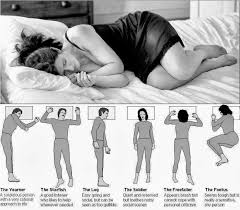
Eight Sleeping Positions and their effects on your Health
 8 

Getting enough sleep is the most important thing – but did you know that how you sleep can also impact your health? Let’s take a look at eight common sleeping positions and what they do to your body.

1. ON YOUR BACK, ARMS AT SIDES

  Sleeping on your back with your arms at your side is generally considered to be the best sleeping position for spine health and it’s good for your neck, too, as long as you don’t use too many pillows. That said, back sleepers tend to snore more than those in any other position and sleep apnea is strongly associated with sleeping on the back.

2. ON YOUR BACK, ARMS UP

 This so-called “starfish” position is also good for the back. Whether you have your arms up around your pillow or not, sleeping on your back may also help to prevent facial wrinkles and skin breakouts. However, like the arms-down back sleeping position, this one can also result in snoring and problems with acid reflux. Plus, having your arms up can put pressure on nerves in your shoulders, leading to pain.

3. FACE DOWN

  Sleeping on your stomach can improve digestion but unless you’ve developed a way to breathe through your pillow, it most likely leads to you tilting your face in one direction or the other. This can put a lot of strain on the neck. Sleeping face down can also cause back pain, as the curve of the spine is not supported.

4. FETAL POSITION

  Sleeping all curled up into a ball with your knees drawn up and your chin tilted down might be comfortable but it can do a number on your back and neck.
The extreme curl of the fetal position can also restrict deep breathing. That considered, sleeping like a fetus can have you sleeping like a baby if you typically have problems with snoring or if you’re pregnant.

5. ON SIDE, ARMS AT SIDES

  When you’re sleeping on your side with both arms down, the spine is best supported in its natural curve. This can definitely help reduce back and neck pain while also reducing sleep apnea. The downside? Sleeping on the side can contribute to skin aging due to gravity, meaning facial wrinkles and sagging breasts.

6. ON SIDE, ARMS OUT

This position has many of the same benefits of sleeping on your side with your arms straight down. However, any side sleeping can cause shoulder and arm pain due to restricted blood flow and pressure on the nerves, which may be exacerbated by having your arms out in front of you.

7. ON THE RIGHT SIDE

  If you’re a side-sleeper, which side you sleep on also makes a difference. Sleeping on the right side can worsen heartburn while sleeping on the left side can put strain on internal organs like the liver, lungs, and stomach (while minimizing acid reflux). For pregnant sleepers, doctors typically advise sleeping on the left side, since this can improve circulation to the fetus.

8. PILLOW-SUPPLEMENTED

Regardless of which sleeping position you prefer, it’s highly likely that you can get a better night’s rest with less pain in the morning by supplementing your body with a pillow.
Back sleepers can put a small pillow under the arch of their spine, side sleepers can place a pillow between their knees, and stomach sleepers can place a pillow under their hips to support the joints and allow for full, pain-free relaxation.

Social welfare fraud claim tip-offs rocket to 21,000


More than 21,000 cases of suspected welfare fraud have been reported to the Department of Social Protection in anonymous tip-offs by members of the public this year.

The massive increase in reports of people abusing the social welfare system, up 2,500pc in just five years, shows that public acceptance of such practices has dropped since the economic collapse.
People allegedly working while claiming benefits make up the majority of the reports, while others related to allegations that lone parents were living with their partners and that people living outside the jurisdiction were claiming benefits.
TRIGGER: Social Protection Minister Joan Burton said that each report made by a member of the public is followed up but social welfare payment is not suspended or stopped solely on the basis of an anonymous report.
The tip-offs, however, may trigger a review of a person’s entitlements.
Minister Burton is expected to soon announce record savings of more than €700m through targeting fraud and clerical errors during 2013.
While the number of anonymous tip-offs from the public has grown rapidly, only 16pc resulted in welfare payments being reduced of stopped, according to a recent survey.

2013 a record year for organ transplants in Ireland

SAYS KIDNEY ASSOCIATION


THE NUMBER OF LUNG TRANSPLANTS AT THE MATER DOUBLES TO 32

This year was a “record” one for organ transplants in the State which reached 293 , the Irish Kidney Association said today.
There were 18 more transplants this year than in the previous record year of 2011, according to end-of-year figures released by the association.
It said the highlight achievement for the year was the more than doubling in the number of lung transplants at theMater Hospital from 14 in 2012 to 32 in 2013. This figure is more than the total number of transplants from 2009 to 2012.
There was also a record 38 living donors taking part in the kidney transplants atBeaumont Hospital, the association said. It also noted that 86 deceased donors saved the lives of 245 people, ten of whom received two organs.
Beaumont Hospital’s transplant team had record activity with 195 transplant operations and 38 living donor operations, the association said. There were 185 kidney operations at the hospital in 2013.
In addition there were 55 liver transplants at St. Vincent’s Hospital and 11 heart transplants at the Mater Hospital.
“Transplantation is a national team effort. The public are an essential element of the team with their generosity to donate organs,” Mark Murphy, chief executive of the Irish Kidney Association said in a statement.
He said transplant teams from St Vincent’s Hospital, the Mater Hospital and Beaumont Hospital had achieved “outstanding results in very difficult times for the health service”.
The HSE’s service plan for 2014 planned more investment in management of organ donation giving “encouragement to the 550 people on transplant waiting lists (of which 480 are waiting for kidneys)”, he said.
For organ donor cards freetext DONOR to 50050 or visitika.ie

€1.75m paid to Irish Farmers to protect 344 rare Hen Harrier birds


Forget about the millions of euro spent on turkeys this Christmas, Ireland’s most expensive bird is the rare and protected Hen Harrier.

New figures show that the Government spend on the bird of prey in the 10 months to the end of October this year amounted to €1.75m — or an average spend of over €5,000 per recorded adult bird.
The most recent national survey recorded between 128 and 172 breeding pairs across the country, giving an estimated total of 344 adult birds.
In response to a Freedom of Information request, the Department of Arts and Heritage confirmed that €1.75m was spent on conservation measures for the bird between January and October 20.
The largest proportion of the monies goes to farmers whose land is located in Special Protection Areas for the Hen Harrier. In the first 10 months of this year, farmers received €1.64m.
The highest amount was received by a Co Clare-based farmer who received €16,054 — with two other farmers from that county receiving in excess of €14,000. Two farmers from Co Galway received the second and third highest amounts at €15,097 and €14,884.
The vast proportion of the remainder — €97,342 — went on farmer planner fees.
SUPPORTED: In a statement yesterday, the Department of Arts and Heritage said it believed that the overall spend on the Hen Harrier represented value for money for the taxpayer.
A spokesman said: “Without the traditional type of hill farming in Hen Harrier areas being supported, it would be expected that the Hen Harrier population would decline and possibly become extinct. The Hen Harrier is a magnificent bird of prey and a beautiful part of Ireland’s natural heritage.”
The spokesman also claimed that the scheme supported farmers to remain on the land.
“The general trend in the absence of such a scheme has been land abandonment and rural depopulation, and without this scheme it is likely that much more high nature value farmland and habitat would have been lost,” he said.

Climate change worse than Scientists thought?

‘CATASTROPHIC RATHER THAN SIMPLY DANGEROUS’

      
Climate change may be far worse than scientists thought, causing global temperatures to rise by at least 4 degrees Celsius by 2100, or about 7.2 degrees Fahrenheit, according to a new study.
The study, published in the journal Nature, takes a fresh look at clouds’ effect on the planet, according to a report by The Guardian. The research found that as the planet heats, fewer sunlight-reflecting clouds form, causing temperatures to rise further in an upward spiral.
That number is double what many governments agree is the threshold for dangerous warming. Aside from dramatic environmental shifts like melting sea ice, many of the ills of the modern world — starvation, poverty, war and disease — are likely to get worse as the planet warms.
“4C would likely be catastrophic rather than simply dangerous,” lead researcherSteven Sherwood told the Guardian. “For example, it would make life difficult, if not impossible, in much of the tropics, and would guarantee the eventual melting of the Greenland ice sheet and some of the Antarctic ice sheet.”
Another report released earlier this month said the abrupt changes caused by rapid warming should be cause for concern, as many of climate change’s biggest threats are those we aren’t ready for.
In September, the Intergovernmental Panel on Climate Change said it was “extremely likely” that human activity was the dominant cause of global warming, or about 95 percent certain — often the gold standard in scientific accuracy.
“If this isn’t an alarm bell, then I don’t know what one is. If ever there were an issue that demanded greater cooperation, partnership, and committed diplomacy, this is it,” U.S. Secretary of State John Kerry said after the IPCC report was released.

Wednesday, July 10, 2013

Donie's Ireland daily news BLOG

Martin fears home repossessions will be ramped up by Irish banks


Michael Martin of Fianna Fáil says the Government has failed to deal with the mortgage crisis

The Government has handed the banks a charter to repossess family homes and failed to grasp the scale of the mortgage arrears crisis, Fianna Fáil  claimed this morning.
The party has published a private members bill on mortgage arrears which is being debated in the Dáil today and tomorrow.
It wants a clear definition of what constitutes a sustainable mortgage to be included in the Central Bank’s code of conduct on mortgage arrears and believes a minimum income level should be protected as part of all negotiations.
It also seeks the reintroduction of a ceiling of unsolicited contacts a bank can have with a borrower in arrears and wants a new clause put into the code which would forbid a bank from moving a borrower off a tracker mortgage unless they were given independent financial advice from a third party.
The bill also wants a 12 month moratorium on home repossessions to be reinstated and a new rule put in place which would force banks to record all calls made to borrowers and given the Central Bank access to those recordings .
Describing the arrears crisis as a “major economic and social issue” which had created a “paralysis” across the wider economy, party leader Micheál Martin accused the Government of repeatedly failing to deal with the issue and described the banks’ engagement with distressed borrowers as “pitiful”.
He said he was “very fearful repossessions will be ramped up” over the next six months.
Finance spokesman Michael McGrath said the Government had given increased powers to the banks through changes to the Code of Conduct on Mortgage Arrears which was published late last month and he said the banks had been given a “charter for the repossession of family homes”.
He said repossession was supposed to be used as a last resort but suggested that banks were becoming increasingly aggressive and repossession was becoming the “solution of choice” for many lenders.
“There are now 70,000 family homes where banks have been given carte blanche to repossess,” Mr McGrath said. “It is very difficult to understand the deferential approach to the banks.”
He said the number of real alternatives being offered by the banks to distressed borrowers was inadequate and lacked consistency. He pointed out that the banks had offered fewer than 150 split mortgages to borrowers in arrears and said that while AIB did not charge interest on the warehoused portion of such loans, Bank of Ireland did which meant “they were not a sustainable solution.
Fianna Fáil has already published a number of proposals on mortgage arrears since 2011 which have been ignored by Government and both Mr Martin and Mr McGrath did not indicate that things would be any different on this occasion.
“We have a platform and we will continue to make the case,” Mr Martin said.
“We are being constructive rather than populist and we have been repeatedly told by groups such as New Beginnings, the Irish Mortgage Holders Association and the Free Legal Advice C entre not to underestimate the power of the pressure we are applying.”

165 different amendments to Irish abortion bill tabled by TD’s & various other groups


The amendments will be discussed prior to the final vote on the Protection of Life During Pregnancy Bill 2013.

A List of all of the amendments tabled regarding the Protection of Life During Pregnancy Bill 2013 has been published.
The 165 amendments come from a range of TDs and cross a number of different aspects of the bill. They will be discussed in the Dáil tomorrow.
TDs will cast their votes on the bill tomorrow in the Dáil, and the document released this evening is a compilation of amendments tabled by the deputies over the past few days.
There is likely to be heated discussion over which of the 165 amendments do get discussed, given that there could be time constraints tomorrow evening.
Some of the most contentious amendments have related to Section 9 of the bill, which concerns suicide grounds as a means to obtain a lawful termination.
In her amendments, Fine Gael Minister Lucinda Creighton seeks the removal of the suicide section, and sets out a line of care for women who present as suicidal.
Deputy Terence Flanagan also seeks the removal of the suicide section.
Meanwhile, an amendment jointly tabled by TDs Clare Daly and Joan Collins would allow for lawful terminations in cases of rape and incest.
In the first Dáil vote, 24 TDs voted against the legislation. This led to four Fine Gael members losing the party whip.
Tánaiste Eamon Gilmore told RTÉ today that the amendments discussed by Cabinet won’t involve any “fundamental or substantial change” to the bill.
He said that there will be no change to the issue of suicidal ideation in the bill.

Non-payers of water charges face having pressure reduced


THE GOVERNMENT HAS CONFIRMED PLANS TO LIMIT THE WATER PRESSURE IN HOMES WHO DON’T PAY THEIR WATER CHARGES.

The Department of the Environment says the measure will be included in legislation to be published in the autumn.
The measure is intended as an alternative way of punishing homes without having to cut off their supply.
Water charges are due to take effect in October 2014, with the first bills due in January 2015.
Leader of the Green Party Eamon Ryan said the approach would not work.
“The way Phil Hogan has set this up, it’s pushing for revenue, it’s done in a way that I fear could be privatised in the long run,” he said.
“Everything about having one single Irish water company which they’ve set up rather than, I think, a regional structure which would make more sense.
“It would connect to the river basin districts where our water actually comes from, it would connect to the planning systems.
“Everything that’s been done by Phil Hogan is driven by a revenue-raising, finance-led approach. I think that’s not going to work.”

‘A Dead’ woman opens her eyes on operating table as her organs are about to be removed


A woman in New York state was pronounced dead and about to have her organs removed for transplant when she awoke and opened her eyes.

Colleen Burns had been taken to St. Joseph’s Hospital Health Centre in Syracuse after taking a drug overdose in 2009. She was thought to have passed away, a victim of “cardiac death”, and so her family agreed to turn off the 41-year-old’s life support machine and donate her organs.
It was not until she was wheeled into the operating theatre and opened her eyes in response to the lights that doctors called off the procedure.
Lucille Kuss, Ms Burns’ mother, told Syracuse’s The Post-Standard newspaper that the doctors never explained what went wrong.
“They were just kind of shocked themselves,” she said. “It came as a surprise to them as well.”
Ms Burns, a mother of three, was discharged from the hospital a fortnight after the operation, but committed suicide less than two years later.
“She was so depressed that it really didn’t make any difference to her,” said her mother.
The family did not sue but the hospital was fined $6,000 (£4,000) by the state health department in September – the case only came to light after the newspaper made requests through the Freedom of Information Act.
“These sorts of things do happen,” said Lisa McGiffert, director of Consumers Union Safe Patient Project. “It’s pretty disturbing.”
Mrs McGiffert said there is no way of knowing how often near-catastrophes like the Burns case happen because in the US there is no system in place to collect information from hospitals about medical errors.
The state started investigating the case in March 2010 in response to an inquiry from The Post-Standard.
The investigation revealed a catalogue of errors in the handling of Ms Burns’ case.
The drugs overdose had sent her into a deep coma, the state health department found, and hospital personnel misread that as irreversible brain damage without doing enough to evaluate her condition.
Furthermore, the day before her organs were to be removed, a nurse had performed a reflex test – scraping a finger on the bottom of her foot. The toes curled downward – not the expected reaction of someone who’s supposed to be dead.
Outside the operating theatre, her nostrils appeared to show signs of breathing, and her lips and tongue moved.
“Dead people don’t curl their toes,” said Dr Charles Wetli, a forensic pathologist from New Jersey. “And they don’t fight against the respirator and want to breathe on their own.”
Twenty minutes after those observations were made, a nurse gave Burns an injection of the sedative Ativan, according to records.
In the doctors’ notes, there’s no mention of the sedative or any indication they were aware of her improving condition.
“If you have to sedate them or give them pain medication, they’re not brain-dead and you shouldn’t be harvesting their organs,” said Dr David Mayer, a surgeon and an associate professor of clinical surgery at New York Medical College.
St. Joseph’s submitted a plan to correct problems identified in the investigation to the state health department in August 2011.
The state fined St. Joseph’s and ordered it to hire a consultant to review the hospital’s quality assurance program and implement the consultant’s recommendations.
The hospital also was ordered to hire a consulting neurologist to teach staff how to accurately diagnose brain death.
Kerri Howell, spokeswoman for the hospital, told the newspaper: “St. Joseph’s goal is to provide the highest quality of care to every patient, every time.
“These policies were followed in this case, which was complicated in terms of care and diagnosis.
“We’ve learned from this experience and have modified our policies to include the type of unusual circumstance presented in this case.”

Irish drinks industry is willing to work with Government to combat misuse of alcohol


There is no evidence a ban on sponsorship of sporting events will impact on problem drinking

Tourists come to Ireland and hope to visit places connected with our beer and whiskey industries just as they would want to visit a vineyard in France.
I work in the alcohol industry. I work so that people can share a drink with colleagues in the pub on a Friday evening. I work so that people can invite friends over for Sunday dinner and enjoy a drink with their meal. Working for Irish Distillers also means that I promote the craftsmanship and tradition of Irish whiskey – a product that is experiencing a global renaissance and is an important part of Ireland’s food and drink success in recent years.

This is what it means to be part of the drinks industry.I very much welcome the current debate on alcohol and society, and want to be very clear on behalf of the industry that we are absolutely committed to tackling misuse. However, I also want to be clear that to suggest otherwise is not only untrue but unfair to more than 62,000 people who work in our sector.I am not blind to the problem of alcohol misuse. Working in this industry without commitment to promoting responsible drinking would be like working in the car industry and not caring about seat belts and brakes. Drinking too much or too often has negative consequences for individuals, for their families and for wider society. We value our customers and wish them long, happy and healthy lives.
We in the Irish drinks industry agree with the vast majority of the proposals in the National Substance Misuse Strategy. However, some parts of Government do not appear willing to engage with us on this topic. If they would engage they would see how committed we are to promoting responsible drinking.
When considering the problems with alcohol, it is important we acknowledge the fact that the vast majority of people consume alcohol responsibly. It is a fact that alcohol consumption in this country has fallen by more than 19 per cent since 2001, and our consumption levels are fast approaching European norms.
A Unicef report of 29 countries, published earlier this year, found the percentage of young people who reported having been drunk on more than two occasions has fallen in Ireland. Irish consumption is falling and youth consumption is declining.
Scientific proof
It is, of course, still vital that we implement policies that are scientifically proven to combat alcohol misuse. There are many such examples, some of which are very well-articulated in the current proposal from the Department of Health. However, I would like to see further initiatives explored, specifically in the area of young adult education.
For example, I know from my own experience in my home country of Sweden how effective education can be and I would be happy to share independent Swedish research with anyone who would like to discuss this science-based approach. But some of the proposals being considered by the Irish Government will be completely ineffective in combating alcohol misuse and at the same time bring with them many negative economic consequences for this important industry.
I would like to give two examples.
First, let us consider the proposed ban on sponsorship. While initial reports indicated that all sporting, cultural and arts events would be banned from using alcohol sponsorship by 2020, recent media reports seem to imply that this ban would now only apply to major sporting events. As was noted by the Joint Oireachtas Committee on Transport and Communications in its Report on Sponsorship of Sports by the Alcohol Drinks Industry, there is no evidence to show that banning the sponsorship of sporting events will have an impact on reducing alcohol misuse.
It would, however, remove a significant source of funding from our sporting organisations. Also, I do not believe that this is where the ban on sponsorship will end. Next in line will be undoubtedly be events related to the arts, culture and music.

Nasa’s next Mars rover will advance the hunt for past life


This view obtained on July 9, 2013 from the left Navigation Camera (Navcam) of Nasa’s Mars Rover Curiosity looks back at wheel tracks made during the first drive away from the last science target in the ‘Glenelg’ area.

RELATED: ‘Resolution not gone far enough’Curiosity provides strong evidence for flowing water on MarsUN General Assembly approves Syria resolutionNasa tests Mars rover prototype in ChileDMK slams AIADMK over resolution on Stalin
The next robotic rover to explore Mars in 2020 should scour the surface of the red planet more closely than ever for signs of past life, a Nasa science team said Tuesday.
The US space agency’s science definition team (SDT) released a 154-page document containing its proposals for the next Mars rover, after five months of work.
The mission would use microscopic analysis for the first time, collect the first rock samples for possible return to Earth and test ways to use natural resources on site for a future human trip, it said.
The Mars 2020 mission would build on the work being done by Nasa’s Curiosity rover, which has been exploring the red planet since August 2012 and has already found evidence of potentially habitable environments.
The mission would present “a major step toward seeking signs of life,” said Jim Green, director of the Planetary Science Division at Nasa headquarters.
The next step is for Nasa to analyze the recommendations and issue a call for scientific instruments, which could include higher resolution imaging devices, microscopes, fine scale minerology, chemistry and organic carbon detection tools to scan for biosignatures on the surface of Mars.
“To combine this suite of instruments would be incredibly powerful,” said Jack Mustard, SDT chair and professor of geological sciences at Brown University.
The rover would collect about 31 samples that might someday be returned to Earth, representing “a legacy for understanding the development of habitability on the planet,” he told reporters.
The US space agency has not yet devised the technology to bring the cache back to Earth without disturbing its contents, and no plans have been set for any potential sample-return.
The next Nasa mission to Mars is a November launch of MAVEN, an orbiter that will study how Mars interacted with the solar wind and lost its atmosphere.
The European Space Agency will follow in 2018 with its ExoMars rover.
John Grunsfeld, Nasa’s associate administrator for science, said the 2020 Mars rover would get the US space agency to the next step in the “quest to answer the grand questions,” before a planned human mission in the 2030s.
“Do we see any evidence of past life in those habitable environments?” he said, alluding to the aims of the future missions.

Sunday, January 27, 2013

Donie's Ireland news daily BLOG Saturday


Horse-meat ingredient in burgers ‘Poland was the possible source’ says Minister Simon Coveney 


The horsemeat found in burgers came from imported ingredients, the Agriculture Minister Simon Coveney has confirmed. Polish ingredients were the likely source of horse meat found at 29 per cent in a Tesco burger made by Silvercrest Foods, Minister for Agriculture Simon Coveney said this evening.

He said three burgers produced since the start of January by Silvercrest Foods had tested positive for horse DNA, at levels of seven per cent, 3.6 per cent and 1.2 per cent, relative to beef content. Mr Coveney said the burger which had seven per cent horse DNA contained a significant amount of Polish ingredients and when that raw material was tested, it contained 4.1 per cent horse DNA. The other burgers also contained the Polish material which he described as a beef product made from low value cuts and trimmings. The raw ingredients that went into the burger with 29 per cent horse meat are no longer available as that burger was produced in November.
“We are now in a position to be able to say with a degree of certainty that the horse meat in burgers is likely, is more than likely, to have come from a significant ingredient that has been supplied to the factory now for nearly a year,” he said.
“It’s certainly the likely reason for the 29 per cent horse DNA content in the burger that actually kicked off this whole thing.”
Mr Coveney said there was no evidence that the ABP Food Group, which owns Silvercrest Foods, had knowingly imported product containing horse meat.
He said he had asked the company to source all product from Ireland and the UK from now on. “Secondly they have agreed to change the management at Silvercrest. Thirdly they have agreed to remove all product from the Silvercrest facility,” he said. It was also agreed that the Department of Agriculture would have a presence in the plant for at least six months.
A statement from ABP confirmed that a new management team would be appointed to the facility and said ABP had undertaken a group reorganisation. “With immediate effect responsibility for the Silvercrest business will transfer to ABP Ireland – the Irish chilled beef division. The sister business in the UK, Dalepak Foods, will come under the immediate control of ABP UK – the UK chilled beef business.”
A statement from Tesco welcomed the news and said the findings correlated with the results of its own investigations at the plant. “We will give detailed consideration to all the findings during next week,” the statement said.
Burger King, which said last week it was replacing Silvercrest Foods as its supplier, welcomed the confirmation that no horse DNA was found in tests of its products. “We want to apologise to our guests who may have been concerned by the news of a breach at one of our suppliers and we will dedicate ourselves to determining where the breakdown occurred, what lessons can be learned and what additional measures should be taken to ensure that we always provide our guests the high quality products they expect from us,” the statement said.
IFA president John Bryan said these results should bring a definitive conclusion to this issue. “The Minister also confirmed that all tests of Irish ingredients are clear of equine DNA. This will provide the necessary reassurance to consumers and buyers about the integrity and reputation of Irish-produced food”.
The Irish Cattle and Sheep Farmers’ Association president Gabriel Gilmartin said farmers had been let down by industry. “There are now serious questions to be asked about why Polish ingredients were going into Irish beef burgers even though Ireland is the largest exporter of beef in the Northern hemisphere,” he said. “ICSA welcomes the new stringent terms that will apply but Irish farmers will feel very let down by what has happened. The Department must learn the lesson that there has been too much focus on farms and not enough on meat

Brave Fiona Doyle (47) still love’s her father despite the years of sexual abuse


The brave victim Fiona Doyle above left picture of evil dad Patrick O’Brien right picture says she still loves her father, despite enduring a decade of sexual abuse at his hands.

Fiona Doyle (47) finally saw victory in a life-long battle to see her father jailed.
The 72-year-old had walked free from court on bail earlier this week having been sentenced to 12 years, with nine years suspended.
However, he was back before the court a few days later when his three-year term was activated following a reversal by trial judge Mr Justice Paul Carney.
The woman who won the hearts of the nation, and even the Taoiseach, through her courage in telling her horror story, admitted last night that she still loved her dad, but did not forgive him.
She told Ryan Tubridy on RTE’s Late Late Show that seeing her father in the courtroom was “hard. I felt pity, he’s still my dad.”
Asked if she still loved him, she replied: “Yes.”
“Isn’t it normal for every child to love her parents?
Coffee: “When he was being led from court to begin his jail sentence, I nearly shouted at them not to take him.
“I walked out those court doors an orphan, because I left my mother sitting inside there. I haven’t told anybody this actually, but I was nearly on the verge of asking her if she wanted a lift home.”
Fiona also described some of the horrific effects of the sexual abuse which, the court heard, had become as regular and as normal as having dinner.
She revealed that her father asking her for a cup of coffee at night was the signal to rape her.
She said she has been attending a counsellor for the past two years. “I know I didn’t do nothing wrong, but it doesn’t stop you feeling uncomfortable. And you feel bad because you make other people feel uncomfortable.”
Her life was like “being born and put on a rollercoaster straight away.
“I was put on to a rollercoaster, handcuffed on to it, and it was let go. There was nobody there”.

Mental health education promotion is the key in Irish primary schools

‘Say’s President Michael D Higgins’


The importance of the promotion of positive mental health and well being in the primary school setting has been stressed by President Michael D. Higgins.

Addressing over 1,000 primary school principals at the Irish Primary Principals Network’s annual conference on Friday, the President said that the achievement of good mental health and the building of positive self esteem and problem-solving abilities amongst young people must happen in their primary years of education and the school environment has a critical role to play in promoting that positive mental well-being.
“A country’s well-being is so much more than its economic performance. The ability of people to relate as one equal citizen to another to value our shared health and the natural environment is a proper aim of education and a true measure of a country that has the mental well being of its citizens as its concern.”
Addressing the issue of cyberbullying he commented that bullying often extends far beyond the boundaries of the school grounds, blurring the demarcation line between where the school principal can and cannot become involved.
President Higgins also expressed his great concern at the results of the IPPN survey of Irish principals which showed that one principal in five reported that more and more children are arriving at school hungry. Drawing on his visits to schools, he said “it is the wish of Irish people that no child go to school hungry”.

A decrease of 17% in organ transplants in Ireland the last year of 2012


The number of organ transplant operations carried out in Ireland fell last year from a record high of 248 in 2011 to 206 in 2012

The figures show a drop in kidney, liver and pancreas procedures, but a rise in heart and liver transplants.
  In total the number of deceased donors dropped from 93 to 78 last year.
The total number of transplants from deceased donors fell from 248 in 2011 to 206.
There were 131 kidney transplant operations, and 50 liver procedures in 2012, both down by around 20%
One pancreas transplant was carried out – down from eight the previous year.
Ten heart transplants and 14 lung transplants were carried out.
There was an increase in the number of kidney donations from living donors, continuing a trend that began five years ago when the procedure was first made available here

Irish state refuses to acknowledge genetic mother of Twins


A surrogate who gave birth to twin girls because their genetic mother could not do so is the children’s mother as a matter of law, the High Court has heard.

In a landmark legal action that has raised issues never considered by the courts, the Government insists that a married couple who arranged for the wife’s sister to act as surrogate for their children can not be recognised as the twins’ parents.
The ova produced by the genetic mother was fertilised by sperm from the father and implanted in the surrogate mother who then gave birth and supports the genetic parents bid to be recognised as the parents on the girls’ birth certs.
The married couple claim that the State’s refusal to recognise them as the twin’s parents is unlawful and in breach of their constitutional rights.
But the State is defending the case on the basis that the genetic parents cannot be recognised as the parents because of the “invariable and irrefutable rule” that the gestational mother – the woman that gives birth – is and must always be treated as the mother of the child.
Expert geneticists have travelled to Ireland to testify in the action which is expected to be appealed to the Supreme Court by the losing parties.
The family law division of the High Court has heard that the children are seeking declarations, under the Status of Children Act, that their genetic mother is their mother, and that she is entitled to be registered as their mother and have the register of births corrected to reflect their true parentage. They want the court to order the Registrar General to correct the register of births to reflect this.
Unlawful
They are also seeking a declaration that the continued failure to recognise the father and genetic mother of the children is unlawful.
In the alternative, they seek a declaration that the father and genetic mother are the children’s guardians.
Senior Counsel Gerry Durcan, acting on behalf of the children, in his opening of the case before Mr Justice Henry Abbott, said the legal issues raised in the case won’t be easy to resolve.
The surrogate mother is supporting the couple’s application, which was refused by the office of Registrar in 2011, on the ground that there is no legal basis to change the name of the mother on the birth cert from the surrogate mother to the genetic mothers.
More details of the case emerged yesterday following the release to designated media of redacted transcripts of the opening days of the hearing, before Mr Justice Henry Abbott.
Following an application by the Irish Independent, ‘Sunday Times’ and ‘Irish Times’ Newspapers, Mr Justice Abbott allowed restricted reporting of the case by designated media.
The restrictions include that direct evidence given by the parties taking the case cannot be reported on.
There is also a prohibition on contemporaneous reporting of the proceedings on social media, such as Twitter. The restrictions were imposed in order to protect the identity and privacy of the parties taking the landmark action.