Irish economy outpaces euro zone countries with a 5.2% growth for 2016
QUARTERLY NATIONAL ACCOUNTS FROM CSO SUGGEST OUTPUT GREW IN ALL SECTORS OF ECONOMY


The latest figures show industrial output in 2016 increased by 2.4% in volume terms.
Ireland’s economy grew 5.2% last year, outstripping all other euro zone countries and most official forecasts for the third successive year.
While the rate of growth is a fraction of the 26% recorded for 2015, that was largely seen as an aberration.
The latest quarterly national accounts from the Central Statistics Office (CSO) suggest output increased in all sectors of the economy.
The figures show gross domestic product (GDP) accelerated 5.2% in 2016, while gross national product (GNP) rose 9%. The bigger GNP number reflects the profits associated with so-called redomiciled plcs, which have relocated their headquarters here for tax purposes.
On a quarterly basis, GDP advanced 2.4% in the final quarter of 2016, down from the 4% recorded for the three months to September.
Investment, meanwhile, jumped 45.5% to €76 billion, driven by the import of intellectual property assets to Ireland. This was linked to once-off tax planning by multinationals amid a global clampdown on corporate tax avoidance.
Personal consumption, which accounts for almost half of domestic demand and ranks as the best indicator of local economic activity, rose 3%. This tallies with the rise in employment and tax revenue evidenced in other indicators.
Vigilant view?
Minister for Finance Michael Noonan welcomed the latest figures, saying the Government was committed to remaining vigilant in the face of an increasingly uncertain external environment.
“Domestic demand is now the main driver of growth, with private consumption up 3% in 2016 supported by favourable labour market dynamics, continued increases in disposable income and solid consumer confidence.”
While his department expects growth to stay above 3% over the next three years, it has estimated that a “hard Brexit” involving Britain exiting the EU’s single market entirely – could knock about 3.5% off GDP over the next decade.
Merrion analyst Alan McQuaid said the latest figures show personal spending and construction were holding up well, but he warned of a possible Brexit-related slowdown in headline growth. “We expect that ‘Brexit’ worries will intensify in 2017, leading to lower overall GDP growth this year.”
Latest industrial output?
The latest figures show industrial output last year increased 2.4% in volume terms. Within the industry sector, building and construction grew 11.4%, reflecting the recovery in property.
The distribution, transport, software and communications sector grew 7.8%; while the other services and agricultural sectors grew 6% and 6.2% respectively.
Separate CSO figures on the State’s balance of payments pointed to a current account surplus of €12.5 billion in 2016, which was €26 billion lower than the surplus recorded in 2015.
Over half in favour of an empty homes tax according to Peter McVerry Trust


PAT DOYLE SAYS TAX COULD YIELD AN EXTRA €20 MILLION PER ANNUM TO THE STATE.
The latest CSO figures show there are 198,000 empty homes, excluding holiday homes in Ireland.
New research by homeless charity the Peter McVerry Trust has found that 62% of people are in favour of a tax on empty homes.
The latest CSO figures show there are 198,000 empty homes, excluding holiday homes in Ireland.
CEO of the Peter McVerry Trust, Pat Doyle said that putting a tax on empty homes, collected through the existing property tax would yield an extra €20 million per annum to the State.
“The Government is launching at the end of the month an empty homes strategy and what we are saying is that there will be grants to encourage landlords and those who are not using their properties to bring them back. But if they won’t or they are not interested in supporting the State tackle what is a crisis in housing right now we are saying there should be a tax.
“If you turn down the grant and you don’t have a legitimate reason to bring it in and are just sitting on it waiting for property prices to go up then that’s not good enough.
“That (the tax) could bring in about €19 or € 20 million a year and would support the Government’s campaign around granting aid to landlords to bring the properties back.”
Mr Doyle told Newstalk Breakfast that the trust believes there are 13 homes for every homeless person in urban areas.
“If you do the normal, there is around two of them will be in probate, three of them in legal dispute, two of them used for the fair deal scheme where people are using the property because someone is in hospital, that still leaves half of them at moment lying idle while we have a housing crisis.”
Minister of State for Housing and Urban Renewal Damian English said the Government was not be considering a tax on vacant homes at the moment and was more focused on projects like the repair and lease initiative and the national vacant housing reuse strategy to reduce homelessness.
He said a vacant tax levy had been scheduled for 2019 but that it was not a short term solution to the housing crisis.
“We’re very clear that there would be a long lead in time if you went down that road and we actually believe that we can get a better result by putting in place new initiatives to encourage people to bring their houses forward and to make them available.”
Mr English told RTÉ Morning Ireland that the Government had “reactivated 7,000 houses over the last 3-4 years” and had spent over €100 million on bringing vacant properties back into use.
He added that Minister for Housing Simon Coveney had committed to ensuring that the 720 families currently living in commercial hotels would be moved into housing by July. This move from hotels into housing would be made possible through the use of existing housing, refurbishing vacant properties through the repair and lease initiative and the “rapid construction” of new homes.
Asked by Morning Ireland to elaborate on the target of building 1,500 homes through rapid construction, Mr English said 150 were already under construction while 350 more “are in play”.
“We know and our targets, we have the sites secured to achieve about a 1000 additional housing under the rapid construction scheme before the end of this year,” said Mr English. “The increase of supply of housing is the solution here.”
The number of homeless people in Ireland reached a new high of 7,167 in January.
Some 4,760 adults and 2,407 children were homeless in January, a marginal increase of the previous record high of 7,148 reached in December, but a rise of a quarter on the same month last year (5,715).
The situation remains worst in Dublin where 3,247 adults and 2,046 children are homeless.
The number of homeless families in the State declined by 33 in January 2017, but it was still up by a third on that time last year.
Sister of ‘Sarah’ talks of ‘horrific sex abuse’ of those who lived in the Grace Foster Home.
‘THEIR LIVES WERE ROBBED’


THE SISTER OF A CHILD WHO SPENT TIME IN THE ‘GRACE’ FOSTER HOME HAS CLAIMED HER SISTER ‘SARAH’, ALSO SUFFERED HORRIFIC SEXUAL ABUSE AT THE HOME.
In an interview with David McCullagh on RTÉ’s Prime Time, the woman spoke out about her family’s experience at the foster home.
Sarah had intellectual disabilities and the family decided that the best learning option for her would be in a home that was far away from the family.
“There was a private arrangement where Sarah could go just kind of respite during the week just to give her a break from all the travelling but this wasn’t approved by the Health Board at that stage and they were keen for Sarah to go and stay in a registered foster placement.
“It was a comforting thing to our mother because she felt well if this was under the Health Board, the HSE, then all the checks were in place and that would be the best place for Sarah because she would be safe.”
Sarah’s sister said the family began to have concerns about the home?
“As a parent this is your worst nightmare. Sarah was home on a Sunday afternoon with Mom playing in the sitting room and just being in the space and Sarah was a beautiful young child and Mom said a very innocent turn of phrase and to her absolute horror Sarah got into a position, took down her pants, and kind of got into a sexual position and as you can imagine for any Mum, my mum was shocked and she just was you know immobilised.”
The family raised their concerns with the Health Board as they believed it needed to be addressed immediately.
“It was led by our mother who just looked at other options to get her out of there and to see what would offer her the best and safest environment again to learn and grow into her young teens and into adulthood and that meant that she left the jurisdiction and had to go to the North.
“We knew that Sarah had to go and leave that place but again the options were limited and again mom had to look for places outside of Ireland up to Northern Ireland.”
According to RTÉ, Sarah’s mum was one of the first whistle-blowers in the home, and a recommendation was made that another child named ‘Grace’ would be removed from the foster home but no action was taken.
“Our mother would have been the first whistle-blower and again you’re living in a different time and different context altogether and it would have taken a lot of strength and courage to go forward really start speaking out about what her concerns were and not only was she met with a brick wall, they came down really hard on our mother, there was reports written up, they were quite aggressive towards the family, they just totally bullied us in to thinking that it was all just in Mam’s head.
“On the other hand, they were doing all of these checks themselves and reaching a decision well actually there is something going wrong and Sarah was there the same time as Grace, you know their lives have been robbed in so many ways.
“Both beautiful, innocent children. Some of the most vulnerable children in our state.”
Sarah’s sister said that she is not only a victim but a survivor.
“Sarah is a victim of this but she’s also a survivor and she is one of the most incredible human beings I know. I have no idea of the pain, the physical pain and the mental torture. Sarah doesn’t have words to express what happened to her how she suffered and yet Sarah greets every day fighting.
“Some days she struggles to get out of bed, there’s so much damage done to her bowel and yet she still has the ability to laugh, she’s one of the most forgiving people you’ll meet and she fights for her life and she fights to have meaningful role within our community and be part of our family and that’s why we’ll continue to fight for her right to be heard and her to have a voice and have justice and some truth around what she’s faced and what she’s gone through.”
The family are hoping that the Commission of Investigation will give them answers into why this happened.
“I just wonder why Finian Mc Grath in his role as the Minister, particularly in his role as Minister for Disability has chosen this path. We have looked under the Freedom of Information for Sarah’s files to know who has had access to her file and yet we still haven’t got that.
“I think we’re very fortunate that we have some really strong individuals who have gone forward as whistle blowers and we know that whistle-blowers are not treated very well in this country but I think without them and without the support of lots of champions in the area this story would be very easily forgotten about and the absolute horrors that have been inflicted on young vulnerable children would be just laid to rest.”
Brain activity can continue for 10 minutes after death?
A NEW STUDY REVEALS


SCIENTISTS CANNOT EXPLAIN THE SINGLE DELTA WAVE.
The human brain can continue functioning for more than 10 minutes after the body has died, scientists have discovered.
Intensive care doctors reported observing the same kind of brain waves in a patient whose pulse had stopped and whose pupils were unreactive as occurs during deep sleep in healthy people.
Researchers had previously thought that brain activity ends before or shortly after the heart stops beating, although two studies last year demonstrated that genes continue to function, in some cases more energetically, in the days after people die.
The authors of the new study, published in the Canadian Journal of Neurological Sciences, say the fresh discovery raises ethical problems as to when it is appropriate to remove donor organs in patients who appear to have died.
The Canadian doctors reported observing seeing “single delta wave bursts” in the brain of a patient after the cessation of cardiac rhythm and arterial blood pressure.
Only one of the four people studied exhibited the long-lasting and mysterious brain activity, they pointed out, with activity in most patients dying off before their heart stopped beating.
However, all of their brains behaved slightly differently in the minutes after they died.
The study authors say they have no idea why one of the brains might have continued partially functioning so long after clinical death.
Probiotic found in yogurt can reverse depression symptoms, A study finds


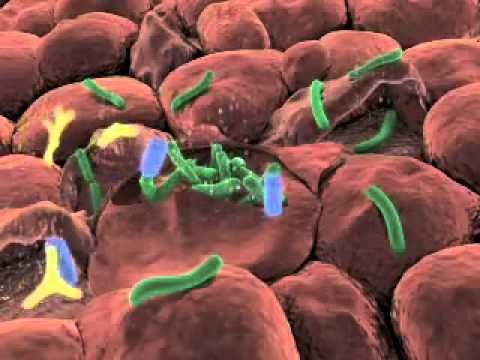
Researchers at the University of Virginia School of Medicine have reversed depression symptoms in mice by feeding them Lactobacillus, a probiotic bacteria found in live-cultures yogurt. Further, they have discovered a specific mechanism for how the bacteria affect mood, providing a direct link between the health of the gut microbiome and mental health.
Based on their findings, the researchers are optimistic that their discovery will hold true in people and are planning to confirm their findings in patients with depression.
“The big hope for this kind of research is that we won’t need to bother with complex drugs and side effects when we can just play with the microbiome,” explained lead researcher Alban Gaultier, Ph.D. “It would be magical just to change your diet, to change the bacteria you take, and fix your health – and your mood.”
Treating depression
Depression is one of the most common mental health conditions in the United States, with up to 7 percent of people experiencing a major depressive episode, Gaultier noted. “It’s a huge problem and the treatments are not very good, because they come with huge side effects,” he said.
The role of the gut microbiome – the bacteria that live inside us – has been of tremendous interest to researchers studying depression and other health conditions, both mental and physical. Gaultier, of the UVA Department of Neuroscience and its Center for Brain Immunology and Glia, set out to see if he could find a concrete link between depression and gut health. “When you’re stressed, you increase your chance of being depressed, and that’s been known for a long, long time,” he said. “So the question that we wanted to ask is, does the microbiome participate in depression?”
The answer appears to be yes. Looking at the composition of the gut microbiome before and after mice were subjected to stress, Gaultier’s team found that the major change was the loss of Lactobacillus. With the loss of Lactobacillus came the onset of depression symptoms. Feeding the mice Lactobacillus with their food returned them to almost normal. “A single strain of Lactobacillus,” Gaultier observed, “is able to influence mood.”
He and his team then went on to determine the mechanism by which Lactobacillus influences depression. They found that the amount of Lactobacillus in the gut affects the level of a metabolite in the blood called kynurenine, which has been shown to drive depression. When Lactobacillus was diminished in the gut, the levels of kynurenine went up – and depression symptoms set in.
“This is the most consistent change we’ve seen across different experiments and different settings we call microbiome profiles,” explained researcher Ioana Marin, a graduate student who is finishing up her Ph.D. work. “This is a consistent change. We see Lactobacillus levels correlate directly with the behavior of these mice.”
Testing in humans ASAP.
Gaultier was careful to call the symptoms seen in mice as “depressive-like behavior” or “despair behavior,” as mice have no way to communicate that they are feeling depressed. But those symptoms are widely accepted as the best available model for looking at depression in creatures other than humans.
Based on the new findings, Gaultier plans to begin studying the effect in people as soon as possible. He intends to examine the effects of Lactobacillus on depression in patients with multiple sclerosis, a group in which the disorder is common. Promisingly, the same biological substances and mechanisms Lactobacillus uses to affect mood in mice are also seen in humans, suggesting the effect may be the same.
In addition to looking at the effects in people, the researchers are continuing to explore the important role of kynurenine. “There has been some work in humans and quite a bit in animal models talking about how this metabolite, kynurenine, can influence behavior,” Marin said. “It’s something produced with inflammation that we know is connected with depression. But the question still remains: How? How does this molecule affect the brain? What are the processes? This is the road we want to take.”
While there is no harm in people with depression eating yogurt, people receiving treatment for depression should not stop taking their medications without consulting their physicians. More studies, the researchers noted, are needed.
Low gluten diets linked to higher risk of type 2 diabetes

![[assorted laves of bread]](https://i1.wp.com/cdn1.medicalnewstoday.com/content/images/articles/316/316285/assorted-loaves-of-bread.jpg)
Diets higher in gluten were associated with a lower risk of developing type 2 diabetes. Study participants who ate less gluten tended to eat less cereal fiber, a known protective factor for developing type 2 diabetes.
Gluten, a protein found in wheat, rye and barley, gives bread and other baked goods elasticity during the baking process and a chewy texture in finished products.
Eating more gluten may be associated with a lower risk of developing Type 2 diabetes, according to research presented at the American Heart Association’s Epidemiology and Prevention / Lifestyle and Cardiometabolic Health 2017 Scientific Sessions.
Gluten, a protein found in wheat, rye and barley, gives bread and other baked goods elasticity during the baking process and a chewy texture in finished products. A small percentage of the population cannot tolerate gluten due to Celiac disease or gluten sensitivity, but gluten-free diets have become popular for people without these conditions, even though there is lack of evidence that reducing gluten consumption provides long-term health benefits.
“We wanted to determine if gluten consumption will affect health in people with no apparent medical reasons to avoid gluten,” said Geng Zong, Ph.D., a research fellow in the Department of Nutrition at Harvard University’s T.H. Chan School of Public Health in Boston, Massachusetts. “Gluten-free foods often have less dietary fibre and other micronutrients, making them less nutritious and they also tend to cost more. People without Celiac disease may reconsider limiting their gluten intake for chronic disease prevention, especially for diabetes.”
Micronutrients are dietary components such as vitamins and minerals.
In this long-term observational study, researchers found that most participants had gluten intake below 12 grams/day, and within this range, those who ate the most gluten had lower Type 2 diabetes risk during thirty years of follow-up. Study participants who ate less gluten also tended to eat less cereal fiber, a known protective factor for Type 2 diabetes development.
After further accounting for the potential effect of cereal fiber, individuals in the highest 20 percent of gluten consumption had a 13 percent lower risk of developing Type 2 diabetes in comparison to those with the lowest daily gluten consumption (approximately fewer than 4 grams).
The researchers estimated daily gluten intake for 199,794 participants in three long-term health studies — 69,276 from the Nurses’ Health Study (NHS), 88,610 from the Nurses’ Health Study II (NHSII) and 41,908 from the Health Professionals Follow-up Study (HPFS) — from food-frequency questionnaires completed by participants every two to four years.
The average daily gluten intake in grams was 5.8 g/d for NHS, 6.8 g/d for NHSII, and 7.1 g/d for HPFS, and major dietary sources were pastas, cereals, pizza, muffins, pretzels, and bread.
Over the course of the study, which included 4.24 million person-years of follow-up from 1984-1990 to 2010-2013, 15,947 cases of Type 2 diabetes were confirmed.
Study participants reported their gluten consumption and the study was observational, therefore findings warrant confirmation by other investigations. Also, most of the participants took part in the study before gluten-free diets became popular, so there is no data from gluten abstainers.


