Pages

Showing posts with label Suicide figures. Show all posts

Saturday, September 10, 2016

Donie's Ireland daily news BLOG update

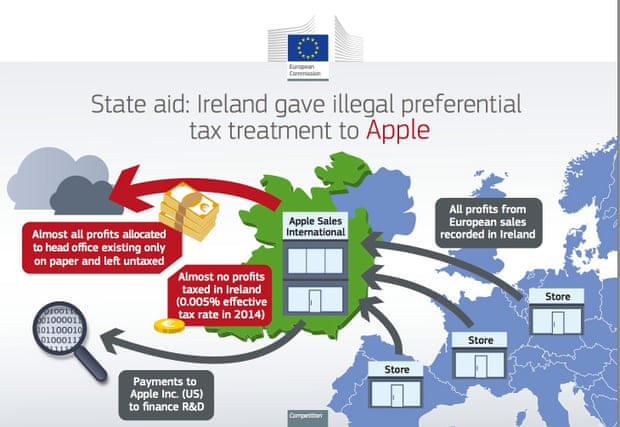
Various EU member states claim a share of Apple’s €13bn tax bill

SPAIN IS EXPECTED TO RAISE THE ISSUE AS FINANCE MINISTERS GATHER FOR FIRST TIME SINCE RULING

Image result for Various EU states claim a share of Apple €13bn tax bill  Image result for Various EU states claim a share of Apple €13bn tax bill  Image result for Various EU states claim a share of Apple €13bn tax bill

SEVERAL EU MEMBER STATES ARE SEEKING A SHARE OF THE €13BN WHICH APPLE HAS BEEN ORDERED TO REPAY THE IRISH GOVERNMENT.

Several European Union member states are seeking a share of the €13 billion which Apple has been ordered to pay the Irish Government.
Spain, which is under pressure to reach EU-imposed budget deficit targets, is expected to raise the issue today as European finance ministers gather for the first time since the European Commission’s competition ruling againstIreland.
“Tax rulings are having a budgetary impact in Spain,” said a senior Spanish finance ministry source.
“When your revenues are falling and you have public deficit problems every euro counts,” said the source, adding that the Spanish government was currently making a calculation about how much tax it may be owed.
Concerns from Madrid were echoed by Austria’s finance minister Hans Joerg Schelling yesterday, who said his country, along with Italy and France, would also examine whether they were entitled to a portion of the €13 billion.

ELECTIONS DUE?

The development could complicate Ireland’s forthcoming appeal of the competition ruling.
Announcing the record state-aid ruling against Ireland last week, EU competition commissioner Margrethe Vestager said that other EU countries – and the US – could be entitled to some of the unpaid taxes that it ruled were due to Ireland.
But competition officials say the question of how countries might access unpaid taxes is a matter for national tax authorities, and not the competition commissioner.
With elections due in a number of European countries next year, finance ministries are anxious to display their willingness to pursue unpaid taxes.
But experts say that any serious move to recoup the funds would have to wait until the full Apple ruling was published and possibly until the appeal by Apple and Ireland went through the European courts.

Ireland has fourth highest rate of teen suicide in Europe

PSYCHOLOGISTS URGE FOCUS ON FIGHTING PROBLEM AHEAD OF WORLD SUICIDE PREVENTION DAY

Image result for Ireland has fourth highest rate of teen suicide in Europe   Image result for Ireland has fourth highest rate of teen suicide in Europe

AHEAD OF WORLD SUICIDE PREVENTION DAY ON SEPTEMBER 10TH, THE MOVEMBER FOUNDATION HAS RELEASED A POWERFUL VIDEO ENCOURAGING MEN TO SPEAK ABOUT THEIR MENTAL HEALTH.

Psychologists have called for great focus on measures to tackle the high rates of suicide among teenagers in Ireland.
The Psychological Society of Ireland (PSI), which has about 3,000 members, made the call ahead of World Suicide Prevention Day on Saturday.
Ireland has the fourth highest rate of suicide among teens in the EU, with only Lithuania, Estonia and Finland experiencing higher rates.
The society’s chief executive Terri Morrissey said putting a focus on preventative measures for teenagers and adolescents was important.
Ms Morrissey said depression and suicidal thoughts among teenagers were major health problems in Ireland but early intervention and the promotion of well-being and resilence could prevent such issues.
“Far too often we hear about such issues when it is already too late and we have to deal with the consequences and aftermath. Intervening at an early stage would have been effective,” she said.
“There is a range of methods and therapies that have been demonstrated to have been effective and which can be used to prevent behavioural, psychological and emotional problems.”
Ms Morrissey said these should begin at an early age, however.
“Well-being and resilience can be promoted through sport, exercise, healthy eating, parental support and other forms of physical, emotional and mental development,” she said.
Dr Gary Diamond, a clinical psychologist and international expert on teenage depression and suicide, will give a public talk on the subject on behalf of the society later this month. He is a professor and chair of the Department of Psychology at Ben-Gurion University in Israel.
“The goal of this parenting approach according to the author reduce family conflict, open lines of communication within families, help the adolescent make better sense of his or her own world and to better position parents to understand, support and advocate for their child,” Dr Diamond said.

SERVICES AVAILABILITY?

Separately, the founder of the Suicide or Survive charity Caroline McGuigan said everyone had the responsibility to create the change that will ensure that there is a broad range of services and supports for people struggling with mental health and suicide.
“We’ve come a long way as a country when it comes to mental health but there is so much more we can do. We all have mental health just like we have dental and physical health and this needs to be recognised and mental health needs to be prioritised if we are to reduce the number of people who die by suicide in Ireland every year,” she said.
Brian Higgins of Pieta House, the centre for the prevention of suicide and self-harm, will return to Dublin on Friday night following a rickshaw tour of Ireland to raise awareness of the issue.
The tour took him to Wexford, Waterford, Cork, Tralee, Listowel, Limerick, Ennis, Galway, Tuam and Athlone. As it marks its 10th year, Pieta House has just opened its 10th centre (in Waterford).
“Our vision is of a world where suicide, self-harm and stigma have been replaced by hope, self-care and acceptance,” he said.
Dr Diamond’s talk will take place on Thursday September 22nd at Chartered Accountants Ireland, Pearse Street, Dublin at 6.30pm.

A new lease of life for Roger Gannon after losing ten stone in less than a year.

Yes It can be done he assures me "I did it"
     

ROGER GANNON WHO WAS 25 STONE AND 3.5 POUNDS WHEN HE JOINED ‘SARAH’S SLIMMING WORLD’ CLASSES. HIS HEALTH WAS SUFFERING AS A RESULT OF HIS WEIGHT, AND HIS CONFIDENCE TOO WAS DENTED.

Fast forward 42 weeks, and Roger has shed an impressive 10 stone after 42 weeks at Slimming World.

BLOGGER DONIE HAD THE PLEASURE OF MEETING AND TALKING WITH ROGER IN SLIGO RECENTLY AND WHEN I SAID I WAS CHECKING MY BLOOD SUGAR BEFORE ENTERING A RETAIL UNIT TO PURCHASE A LARGE HOUSEHOLD ITEM AND HOPING IT WOULD FIT INTO MY CAR? HE REPLIED OH I HAVE DIABETES AS WELL?

Roger went on to explain the journey he had being on as below in red text, of losing over 10 stone in less than 18 months as a result of of joining ‘Sarah’s Slimming World’ classes in the Gillooly Hall, Temple street, Sligo.
I could see the pride and sense of achievement on his face as he talked about his life’s ambition of being a normal human being not looking at the obstacles that were ahead of him while he was that crucifying weight of 25 stone and 4 pounds.
I congratulated Roger on his outstanding  achievement and wished him the best of luck with his diabetes management and continued success with ‘Sarah’s Slimming World diet’. before purchasing my hard to fit item into my Ford Focus car.
The 50-year-old, who has lived in Tubbercurry his whole life, knew he needed to make changes to his lifestyle for the sake of his health, at the very least.
“Before joining Slimming World I was a size XXXXXL now I am a large and I am loving it,” said Roger.
“I’ve gone from someone who hated shopping and who had to travel to Dublin a lot for my clothes to being able to just pop into my local men’s wear store and pick right off the hanger in Gilespie’s.”
“I ‘had’ been overweight all my life to date. I can’t ever remember a time when I was slim. Looking back on old pictures it frightens me a little of how large I’d become.”
Roger’s weight had a huge effect on him as a person and his day to day life. Small things had to be taken into consideration, such as how long he would be walking for.
He explains: “I had to always think about where I was going and whether I’d be able to sit down as I knew I couldn’t be on my feet for long as the pressure on my knees was unbearable at times.
“I had seriously high blood pressure and type 2 diabetes. The doctor was constantly onto me about trying to lose weight. My hips were bad and my back was constantly giving me trouble, I was travelling the country for treatments and physiology.
“Now since I have lost the weight my blood pressure is completely normal, the doctor was thrilled. My diabetes is well in control and reducing dramatically.
“My knees don’t hurt anymore and I feel a thousand times healthier. I can live again. Slimming world has saved my life.”
Roger tried everything to shed weight. As soon as he joined ‘Sarah’s Slimming World’, he knew it was the right place for him.
“There were a number of reasons I joined Slimming World. I guess one that stands out the most would be I wanted to go somewhere where nobody knew me. I had heard great reports about Sarah’s group and that it was fantastic.
“On my first day I was shaking with nerves – I was outside for hours before I got the courage to walk in.
“I had tried so many things in the past, but from the second I walked in the door I new I’d come to the right place.
“The welcome I got was so warm and friendly, everyone was there for the same reason as me and I found that so reassuring.
“The first cup of coffee they made me at group really settled me and I was then relaxed. I went from wanting nobody to know me to being a big part of the group there. I have made so many new friends for life. I love Wednesdays, it’s the best day of the week for me now. For the first time in my life I can climb the stairs without getting breathless. My knees don’t hurt anymore I am always smiling.”
Roger’s weight loss has not only given him a new lease of life, but he has also inspired others to follow him in his journey, by starting their own.
“I can’t wait to head out of the house in the morning to meet people.
“I can’t go into my local shop without people stopping me and talking to me to congratulate me on how well I have done. It makes me so happy to know that I am inspiring people across the county to join slimming world. I am an inspiration, I not only changed my life but I’m helping others change theirs, it makes me so proud.”
He is now a brand new man. He’s loving life once again, and it’s all thanks to his new found health.
“The best thing that has happened to me as a result of my weight loss is that I am a whole new person.
“I am happy, friendly, and no longer sad on the inside and always smiling. People enjoy being around me again; they enjoy my company and treat with me respect for once in my life.
“I think the most important, best and most rewarding thing that has happened to me since this whole journey started is that
“Slimming World has taught me to love life again and that alone is the greatest gift anyone could ever have given me.”
‘Sarah’s Slimming World’ classes take place every Wednesday at Gillooly Hall, Temple street, Sligo at 9.30am, 11.30am and 1.30pm.

3D bone-scanning technique devised by Irish scientists
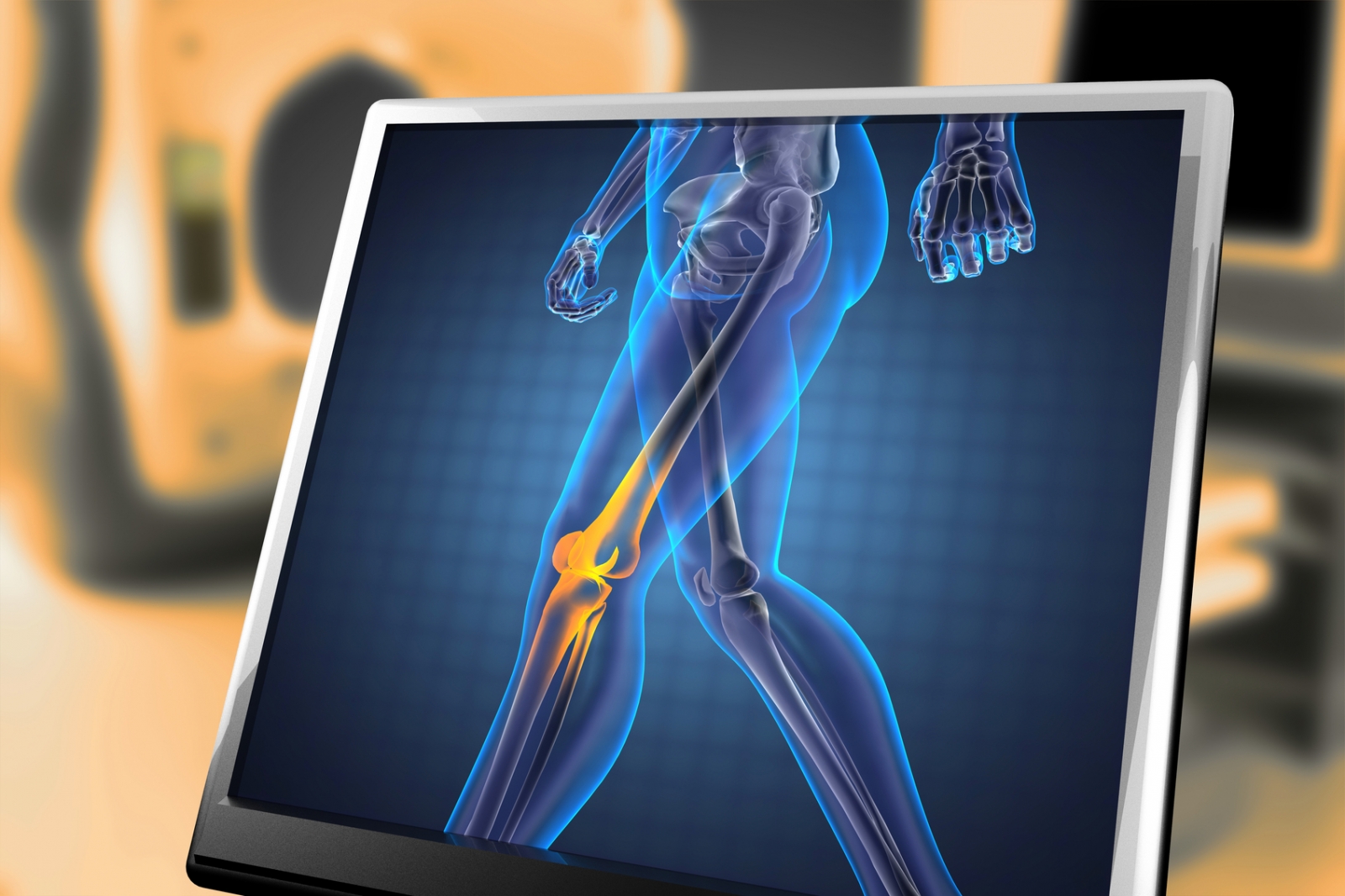
Image result for 3D bone-scanning technique devised by Irish scientists  Image result for 3D bone-scanning technique devised by Irish scientists  Image result for 3D bone-scanning technique devised by Irish scientists
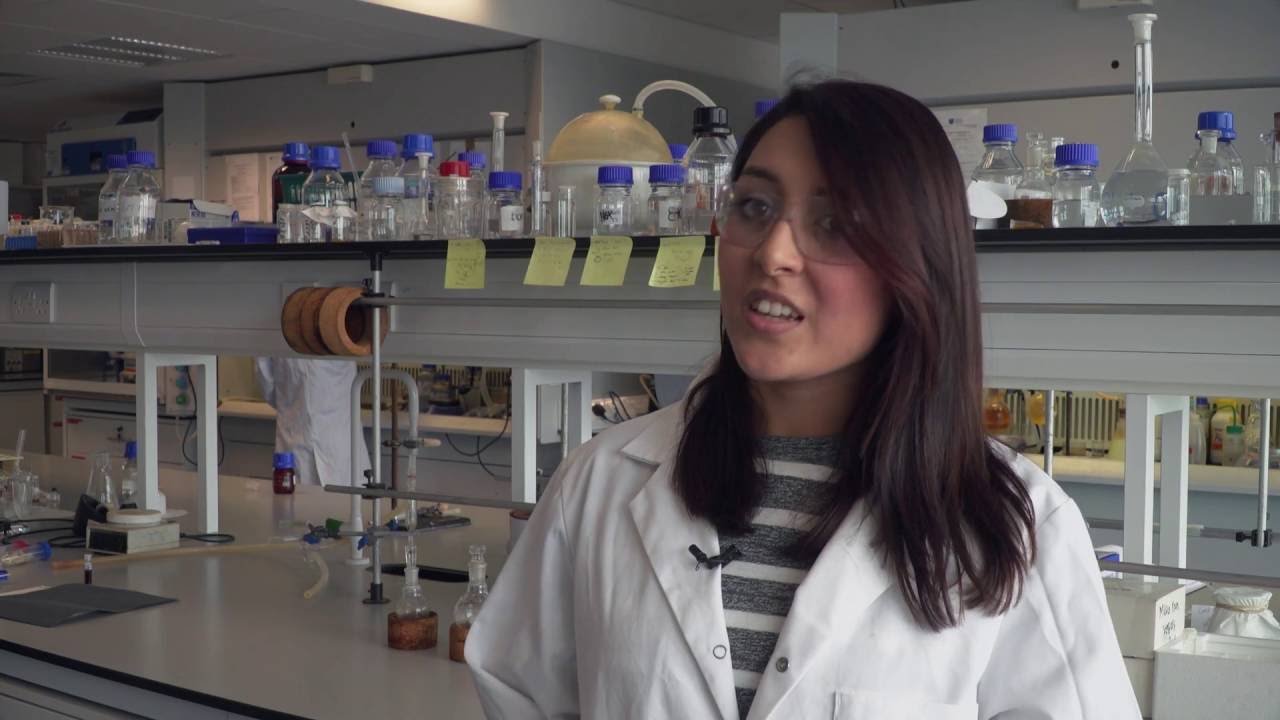
DR ESTHER SURENDER, POSTDOCTORAL RESEARCHER AT TRINITY COLLEGE DUBLIN

Irish scientists have devised a revolutionary new scanning technique that produces extremely high-res 3D images of bones, sparing patients exposure to X-ray radiation.
The chemists in Trinity College and the Royal College of Surgeons (RCSI) said the technique could have major benefits for healthcare, allowing a patient’s bone strength to be assessed in detail. The elderly and athletes will be among those to benefit.
It works by forming agents that are attracted to calcium-rich surfaces, which appear when bones crack, even at a micro level.
X-rays give off radiation and have, in some cases, been associated with an increased risk of cancer. The red, gold-based agents used in this alternative technique are biologically safe.
The researchers point out that gold has been used safely by medics in a variety of ways in the body for some time.
A spokesman for Trinity College said these nanoagents target and highlight the cracks formed in bones, allowing researchers to produce a complete 3D image of the damage.
The spokesman pointed out that it could give a detailed blueprint of the extent and precise positioning of any weakness or injury in the bone.
“Additionally, this knowledge should help prevent the need for bone implants in many cases, and act as an early warning system for people at a high risk of degenerative bone diseases.”
The research is led by Trinity Professor of Chemistry Thorri Gunnlaugsson and Postdoctoral Researcher Esther Surender.

VISUALISE

Prof Gunnlaugsson pointed out: “This work is the outcome of many years of successful collaboration between chemists from Trinity and medical and engineering experts from RCSI.
“We have demonstrated that we can achieve a three-dimensional map of bone damage, showing the so-called microcracks, using non-invasive luminescence imaging.
“The nanoagent we have developed allows us to visualise the nature and the extent of the damage in a manner that wasn’t previously possible.”
Diagnosing weak bones before they break should cut down on the need for operations and implants.
Dr Surender predicted it had great potential in a clinical setting.
The findings have been published in the leading journal ‘Chem’.

Glencar Sligo Ireland’s highest waterfall

THE BEST TIME TO VISIT IS AFTER OR EVEN DURING A GOOD DOWNPOUR ON A WILD ATLANTIC DAY

Image result for Glencar Sligo Ireland’s highest waterfall  Image result for Glencar Sligo Ireland’s highest waterfall   Image result for Glencar Sligo Ireland’s highest waterfall

IT’S A ‘SPATE’ RIVER, SO IT’S BEST TO VISIT AFTER (OR EVEN DURING) A DOWNPOUR ON A WILD ATLANTIC DAY OF SOUTH-WESTERLY GALES; THE WATERFALL THEN CAN APPEAR TO ‘SMOKE’

Poetry and good descriptive prose can wonderfully enrich one’s perception of the natural beauty of a place – making it much more than just a visual experience. Indeed, a good poet or writer can bring the magic of a real or imagined place to his/her reader, without her/him ever having to put on the boots and get all muddy and cold.
And nowhere on our beautiful island is that more true than in Sligo andLeitrim. Here Yeats has impregnated a visually beautiful landscape with a spirit of magic, wonder and mystery.
Glencar is a case in point. It’s waterfall, “where the wandering water gushes from the hills above Glencar”, attracts visitors by the thousand; however, that beautiful verse of the poem The Stolen Child takes the reader/visitor high into the hills above the waterfall to meet mischievous fairies, tiny pools and stars, weeping ferns, trout and “unquiet” dreams; and, having carried the reader/visitor into this imaginative and magic space, Yeats (via the Fairies) seduces us (the “human child”) to come and stay.
And few of us can deny sometimes feeling that pull to escape into his “waters and the wild” – though perhaps not with a dodgy kidnapping fairy!
Glencar waterfall in Co Leitrim is more than worth a visit; but one’s imagination can be crowded out by coffee shops and neat lawns and paths and facilities. About a kilometre west, however, is another less well-known waterfall, called “the Devil’s Chimney” – despite the name more suited to quiet contemplation, though without the help of a caffeine injection.
Officially, it’s Ireland’s highest waterfall – in Irish, “Sruth in Agaidh an Aird” (the stream against the height). It is accessed via a new woodland path that climbs 120m up the talus slope above Glencar Lake. The walk is short but very rewarding. Its “feel” is of quiet deep woods and wide vistas, wild flowers, birdsong and glimpses of beautiful Glencar Lake.
It’s over private land, access being kindly granted by the landowner and has been put in place jointly by the counties of Sligo, Cavan, Leitrim and Fermanagh under the EU-funded Border Project. The roadside CP has an information panel which sets out clearly the geology, flora and fauna of the place while another warns you that this “is NOT Glencar Waterfall”.
I’ve been there in late spring and have loved it, despite the waterfall being in a quiet mood. It’s a “spate” river, so it’s best to visit after (or even during) a downpour on a wild Atlantic day of south-westerly gales; the waterfall then can appear to “smoke” – be blown back into the sky and recycled over and over again – and you’ll understand why perhaps it got its name!
There are seats to sit on and woods and space to shelter you, and give permission to the child in you, or with you, to be “stolen” for a while in this lovely place.

Wild areas of World shrinks by 10% in just 20 years

Image result for Wilderness areas of World shrinks by 10% in just 20 years  Image result for Wilderness areas of World  Image result for Wilderness areas of World

A 10TH OF THE WORLD’S UNSPOILED WILDERNESS AREAS HAVE BEEN LOST SINCE THE 1990S, SAY EXPERTS CALLING FOR URGENT ACTION TO PRESERVE BIODIVERSITY ON EARTH.

A 10th of the world’s unspoiled wilderness areas have been lost since the 1990s, say experts calling for urgent action to preserve biodiversity on Earth.
New findings from a global ecosystem study show “staggering” declines affecting the last bastions of undisturbed nature, it is claimed.
In the last 20 years, wilderness regions amounting to an area twice the size of Alaska have vanished, the research reveals. The Amazon basin and central Africa have been hardest hit. ‘Wilderness’ is defined as a biologically and ecologically intact landscape free of any significant human disturbance.
Lead researcher Dr James Watson, from the University of Queensland in Australia, said: “Globally important wilderness areas, despite being strongholds for endangered biodiversity, for buffering and regulating local climates, and for supporting many of the world’s most politically and economically marginalised communities, are completely ignored in environmental policy.

INTERNATIONAL POLICIES?

“International policy mechanisms must recognise the actions needed to maintain wilderness areas before it is too late. We probably have one to two decades to turn this around.”
The scientists mapped wilderness areas around the world and compared the results with a previous similar map produced in the 1990s. Their findings are reported in the journal Current Biology.
The updated map shows that a total of 30.1 million sq. km of the Earth – more than a fifth of the world’s land area – now remains as wilderness. Although that might sound like a large amount of land, the proportion of surviving wilderness in the world has fallen alarmingly in the last two decades, say the authors.
An estimated 3.3 million sq. km – almost 10% – of wilderness has disappeared since the 1990s, the research showed.
The most affected continents were South America, which had lost 30%c of its wilderness, and Africa, where 14% had gone.
The majority of wilderness areas today were located in North America, North Asia, North Africa, and Australia.
Dr Watson added: “The amount of wilderness loss in just two decades is staggering and very saddening.
“We need to recognise that wilderness is being dramatically lost and that without proactive global interventions we could lose the last jewels in nature’s crown. You cannot restore wilderness,” he said.
“If we don’t act soon, it will be all gone, and this is a disaster for conservation, for climate change, and for some of the most vulnerable human communities on the planet. We have a duty to act for our children and their children.” 

Thursday, October 3, 2013

Donie's Irish daily news BLOG

Finance Minister Michael Noonan hints at the easing Irish austerity in budget


The budget will save less than €3.1 billion euro in tax hikes and spending cuts, Finance Minister Michael Noonan has revealed.

Despite warnings from the Central Bank not to ease off on austerity, Mr Noonan followed up a report on strong Exchequer returns with a hint that the October 15 adjustment may be less harsh than anticipated.
The Government has been buoyed by an increase in tax this year, a fall in spending and steady drops in unemployment, with emigration playing a key part.
“We think we can do it somewhat less than the €3.1 billion, but we still have a lot of number crunching to do to see where we come in,” he said.
The Central Bank warned the Government that any let up in austerity risked Ireland’s hopes of exiting the bailout.
But Mr Noonan said getting the deficit down to at least 5.1% nextyear remained a priority.
In its latest quarterly bulletin, the bank cut its previous economic growth forecasts – 0.5% this year for all goods and services, including multinationals as measured under gross domestic product.
That was down 0.2% on the original estimate.
It also cut its projections for the Irish-owned sector of the economy, gross national product, down to 0.1% and 1.2% next year.
“No easing off in adjustment,” was the message from the bank ahead of the October 15 budget.
Amid planning for Budget 2014, official Exchequer figures showed the tax take to the end of September was up €768 million to €26.9 billion, while spending had been cut by €1.6 billion to €31.6 billion.
Some of the most significant improvements were in VAT, up 3.9%, and corporation tax, up 7.1% on the year.
But the VAT take for the year was running 2% behind schedule despite a boost from new car sales.

Mr Noonan described the figures as “pretty good”.

“The first thing to note is that the anxiety coming out of August has now disappeared,” he said.

“VAT figures are very strong.

“We’re on target to meet the deficit target of 2013 of 7.5%.

“The significance of that for the budget and 2014 is we’ll be starting the nextrace from the starting line, not five yards behind it, which is the problem if you don’t meet your target in the preceding year.”
Other figures of note in the Exchequer returns were €200 million euro  collected from Local Property Tax receipts, of which €9 million were received in September.
Corporation tax for the year was 10% ahead of the target.
Elsewhere, the Central Bank estimated that the economy would push on nextyear and turn out growth of 2%.
It said its figures pointed to continued gradual recovery, but slower than it originally anticipated after exports slowed and consumer spending dipped this year.
Ireland’s unemployment was forecast to be 13.6% this year and 13% next year.
The report noted that full-time employment was growing for the first time since early 2008 and it said this suggested that consumer spending would be boosted.
The bank warned of three remaining challenges – fiscal consolidation, banking soundness, and competitive wages and prices.
“Market participants will focus closely on how Ireland is likely to perform outside the (bailout) programme and whether the sustainability of the overall debt position is firmly secured,” it said.
“These considerations underpin the bank’s view that there should be no easing off in adjustment.”

EY accountant's targets Irish emigrants to ‘come home’ to work


‘Big Four’ accountant announces plans to create 80 jobs and increase graduate intake to 160

Minister for Jobs Richard Bruton welcomed EY’s jobsannouncement. “Today’s announcement of an additional 80 jobs is a further boost [to the economy], and the recruitment campaign targeting Irish people living abroad is a strong sign of the progress [Ireland] is making.
EY, an accountancy and professional services firm, is targeting Irish emigrants to “come home” to work for the firm. It has announced 80 new consultancy jobsover the next six months, as well as a further 160 graduate roles for 2014.
The company said the new jobs would be spread across its Dublin, Cork, Limerick, Waterford and Belfast offices, and were as a result of “client wins”. EY said some of the roles would be in its business and transaction advisory divisions.
It said it would also hire accountants and business executives for its financial accounting, fraud investigation and dispute services. About 40 of the new jobs will be filled before Christmas by its auditing department.
Strong growth
The company, formerly Ernst & Young, said it had experienced strong growth in Ireland in the past three years, increasing its revenues by more than 20 per cent with “almost half” of the growth coming this year as the economic recovery gathers pace.
EY has increased its number of employees in Ireland by 18 per cent over the past two years to 1,260.
The company has started a “targeted” campaign to woo Irish emigrants back to work for it on home soil.
“We aim to attract local talent but we are also reaching out to those who have emigrated to Australia, America, South Africa and beyond to ‘come home’ and build a future with EY. We have already commenced a targeted recruitment campaign in these locations.”
As mergers and acquisitions activity increases, EY said it had invested heavily in this area in the past two years.
“We anticipate growth in transaction services as there is an ongoing demand for corporate recovery services, supported by the re-emergence of a more normal transactions market,” said managing partner at EY Ireland Mike McKerr.
The 160 graduate roles, such as trainee accountant jobs, will become available next year.
Richard Bruton, Minister for Jobs, welcomed EY’s announcement. “Today’s announcement of an additional 80 jobs is a further boost [to the economy], and the recruitment campaign targeting Irish people living abroad is a strong sign of the progress [Ireland] is making.”

Irish Families now up to €500 worse off a month due to budget changes


Working people are having to live on 10% less than they were used to because of the impact of harsh budgets during the last five years.

An analysis by Grant Thornton, said income tax changes, the introduction of the universal social charge and cuts to child benefit have had a stark impact on the disposable income of middle-income households.
Even if workers have been spared unemployment or pay cuts, the accountants have worked out that budgetary measures have left the average family between €300 and €500 worse off each month.
In the case of a family in which two parents work and earn €40,000 each, and they have two children, the analysis indicates they are €6,100 worse off on an annual basis.
This equates to a 10% drop in their disposable income or €511 a month.
It is marginally worse than what would be expected for single people, who also earn €40,000; and couples who do not claim child benefit.
The biggest hit all workers have had to endure is the controversial social charge, which is levied at 7% against the entire income of all earners.
Tax partner at Grant Thornton, Peter Vale, said low and middle-income earners have paid a heavy price to help address the annual national deficit that opened up after the property crash: “Whilst five years of austerity was necessary to restoreeconomic stability, it’s clear low to middle-income earners have paid a heavier price in terms of the percentage increase in taxes they pay.”
He also said the lack of spending money had a knock-on effect for the wider economy: “With disposable income sucked out of the economy to shore up government finances, it is no surprise that consumer spending remains weak and the strength of any economic recovery uncertain. It’s worth noting the effective tax rate for well-off families has risen close to 40%, with high earning professionals likely seeing disposable income down a minimum of €10,000 since 2008.”
Grant Thornton said it expected there to be additional hits in the upcoming budget, especially in the area of tax relief on pension contributions and increases in DIRT to discourage saving.
The analysis was published on the eve of the final set of monthly exchequer returns, out today. These are the figures that will guide Finance Minister Michael Noonan’s key budget decisions.

Eamon Gilmore sets out his position as the party leader


LITTLE DISSENT TOWARDS TÁNAISTE AT LABOUR PARLIAMENTARY PARTY MEETING

Labour Party leader Eamon Gilmore at a press conference in Dublin yesterday. Rumours of pressure on his leadership have been circulating in recent weeks.
Tánaiste Eamon Gilmore addressed his party’s poor showing in recent opinion polls when the Labour parliamentary party met yesterday.
During a meeting that lasted for about two hours, Mr Gilmore was said to have given a firm address in which he set out his stall as leader, and pointed out that the party was doing what was best for the country’s economic recovery.
Party sources who attended the meeting said that despite obvious concerns about the party’s recent difficulties and public perception, there was little to no dissent towards the Tánaiste and that his leadership was not questioned.
One member who attended the meeting said however concern was expressed about Mr Gilmore’s role at the Department of Foreign Affairs and his regular absences from the country. Members believe the party would be better served if he had a more domestically focused ministry.
Mr Gilmore was said to have told the meeting that if there were concerns about his leadership there was a mechanism to remove him.
An MRBI poll on Tuesday showed support for Labour had fallen to 6 per cent, its lowest point since 1987, and was 13 points below where it was in the general election 2½ years ago.
The poll also showed more of Labour’s own supporters were dissatisfied than satisfied with Mr Gilmore’s performance.
Rumours of pressure on Mr Gilmore’s role at the helm of the party have been circulating in recent weeks, and Minister for Social Protection Joan Burton, seen as his most likely challenger, has had to publicly state her support for Mr Gilmore on a number of occasions.
On Tuesday the Tánaiste said he intended to complete his term as leader of the Labour Party notwithstanding the result of the poll.
A number of TDs and Ministers have since offered their public support to the leader.
Following yesterday’s meeting, one backbench TD said that while the poll result was daunting there was a “unity of purpose” during the discussion at the parliamentary party meeting, and it had been taken on board that the party may need to “communicate its message differently” to the public.
“Since he became leader in 2007, everything Eamon has put his mind to has been achieved,” the TD said, before pointing to the party having its best ever general election result in 2011, its candidate Michael D Higgins had won the presidential election, and Patrick Nulty, who has since left the party, had won the Dublin West byelection.
Another TD described the meeting as “frank” and “positive”, and said there were no serious mentions of discontent when it came to Mr Gilmore’s leadership of the party.
Improve its standing
Party members believe the continued return of positive jobs and exchequer data will help Labour improve its standing before the local and European elections next year and the general election in 2016.
“Until people start to feel they are better off we do not expect the party to get a huge bounce,” said another TD.

An Irish study finds most people who died by suicide had relationship problems


AN NORTHERN IRELAND STUDY FINDS MEN REMAIN MUCH MORE LIKELY TO TAKE THEIR OWN LIVES

Almost four out of five people who died by suicide in Northern Ireland suffered relationship problems in the lead-up to their deaths.
Almost four out of five people who died by suicide in Northern Ireland suffered relationship problems in the lead-up to their deaths, a new analysis of suicide in Northern Ireland has found.
The study by University of Ulster academics Professor Siobhan O’Neill and Dr Colette Corry showed that 78 per cent of the deceased had experienced relationship difficulties or a breakup in the period prior to death.
Financial crisis was recorded in 13 per cent of cases and employment related problems in 12 per. In around a quarter of deaths, the illness or death of a relative or friend was noted.
The academics described their study as the “first ever detailed analysis of deaths by suicide in Northern Ireland from 1995” that draws on data from the Northern Ireland coroners’ files.
The findings show that men remain three times more likely to take their own lives than women. Suicide rates are similar across all the middle age cohorts with rising rates among the over 70s. More than two thirds (67 per cent) of those who died by suicide had a recorded mental illness while 59 per cent had a recorded physical illness.
“This study provides us with the most detailed information to date, upon which to base future suicide prevention initiatives in Northern Ireland,” said Prof O’Neill from the Bamford Centre for Mental Health and Well-being at the University’s Magee campus in Derry and of the Irish Association of Suicidology.
“We need to find ways of helping people of all ages, and men in particular, to seek help and support for mental health problems during stressful life events,” she added.
“Suicide prevention is not simply a matter for health care providers. Politicians and policy makers all need to remain cognisant of the impact of their social policies on mental health and suicide. Suicide prevention is everyone’s responsibility,” Prof O’Neill said.

Russian Police charges 14 from Greenpeace ship Arctic Sunrise with piracy after protest


Russian authorities turned their informal descriptions of Greenpeace activists as pirates into legal charges Wednesday, the latest escalation in a saga that began two weeks ago as a protest against drilling in the Arctic.

Prosecutors charged 14 people — including a British journalist — with piracy, which carries a maximum penalty of 15 years in prison. An additional 16 await formal charges. All 30 had been ordered detained for two months while the investigation proceeds.
The detentions and accusations of piracy have angered not only Greenpeace and human rights organizations around the world but also environmentalists across Russia, along with one of the country’s most revered rock stars, Yuri Shevchuk.Two weeks ago, the American captain of the Greenpeace ship Arctic Sunrise, who is among those still awaiting charges, sailed near an oil rig in the Pechora Sea owned by a subsidiary of Gazprom, the energy giant controlled by the Russian government. Activists in inflatable boats approached the platform, and two were detained as they tried to climb onto it and raise a banner.
The next day, members of the Russian coast guard boarded the Arctic Sunrise in international waters, seized the ship at gunpoint and towed it to the northern city of Murmansk, where it arrived Sept. 24.
Even before the ship reached Murmansk, more than 50 Russian environmental groups had signed a letter to President Vladimir Putin asking him to release the activists. The petition, organized by the World Wildlife Fund’s Russian branch, said the drilling project had been extensively criticized by Russian experts concerned with safe oil and gas extraction.
“Detention of environmental activists looks especially cynical in Russia’s Year of Environmental Protection,” the letter said.
Russian prosecutors, who declined further comment until all 30 have been charged, said Greenpeace put workers aboard the oil rig — which is expected to begin pumping by the end of the year — in danger.
Greenpeace said it had launched the protest because the platform threatens the fragile Arctic environment, describing the rig as poorly built and ill-equipped to deal with oil spills.
The arrests were an attempt to intimidate Greenpeace, Human Rights Watch said, alluding to Russian law, which defines piracy as an assault on a ship. The oil rig is on a platform that cannot move.
Kumi Naidoo, Greenpeace International’s executive director, called the charges an assault on the principle of peaceful protest. “Any claim that these activists are pirates is as absurd as it is abominable,” he said in a statement. “It is utterly irrational, it is designed to intimidate and silence us, but we will not be cowed.”
Those charged with piracy Wednesday include Kieron Bryan, a British videographer who was documenting the protest, and Dmitri Litvinov, an activist with Swedish and American citizenship, as well as the ship’s doctor and cook.
The captain, Peter Willcox, is an American who was captain of Greenpeace’s Rainbow Warrior when it was blown up by French security agents in 1985 during a journey to protest French nuclear weapons testing in the Pacific. Naidoo called the arrests the most serious threat to Greenpeace’s peaceful environmental activism since that time.
In an interview on Ekho Moskvy Radio on Wednesday, Shevchuk, the rock singer, dismissed the piracy charges as ridiculous.
“The whole world knows Greenpeace,” he said. “Greenpeace is the organization that helped save the Antarctic . . . and penguins and scientists live there happily. And what about saving whales?”
Then he said he had a secret to reveal: He had planned to sail with the ship himself. He had even bought warm clothes. He had a ticket to Norway, where he would have met the ship. At the last minute, he said, family reasons prevented him from going. “I am really sorry about it,” he said.
“They are hooligans, of course,” he quipped about the activists, apparently likening them to the three young women convicted of hooliganism last year for singing a protest song in Moscow’s main cathedral. The Pussy Riot members were sentenced to what was widely considered an excessive two years in a labor camp.
Now, some activists have begun referring to the Greenpeace ship as the Pussy Sunrise.