Pages

Showing posts with label Brendan Howlin. Show all posts

Friday, September 23, 2016

Donie's Ireland daily news BLOG update

Cash buyers In Ireland pay less for properties than those who need a mortgage?

Image result for Cash buyers In Ireland pay less for properties than those who need a mortgage?   Image result for Cash buyers In Ireland pay less for properties than those who need a mortgage?

CASH BUYERS ARE PAYING LESS FOR PROPERTIES THAN THOSE WHO NEED TO GET A MORTGAGE AND FIRST-TIME BUYERS ARE BEING SQUEEZED OUT OF THE MARKET.

The findings are contained in the newly revamped property price index from the Central Statistics Office (CSO) which is now based on stamp duty returns and includes cash buyers for the first time.
The CSO data now shows that the collapse in property prices was more pronounced than previously thought, while the recovery has been slightly stronger.
For example, the peak-to-trough fall in residential property prices was 54.4%, not 50.9% as recorded previously.
Similarly, the price increase from the trough to July of this year is 43.2% using the new index, whereas it was previously estimated as 37.4%.
The CSO confirmed that cash buyers — who are estimated to make up around 50% of the market — pay less for property than those who must buy their house by securing a mortgage between 2010 and 2016 and that the differential was most pronounced when the market was at its lowest and outside of Dublin.
Throughout the period 2010 to 2015, former-owner-occupiers have consistently paid the most on average for housing, followed by first-time buyers. Non-occupier households have consistently paid the least.
The CSO also found that first-time buyers have gradually been pushed out of the market between 2010 to 2015.
In 2010, they represented 53.1% of all household market transactions filed. By 2015, first-time buyers’ share fell to just 24.4% of the market. In the first seven months of 2016, first-time buyers accounted for 24.6% of household market purchases.
Across the country, residential property prices rose by 6.7% in the year to July. This compares with an increase of 4.9% in June and a rise of 6.1% recorded in the year to July 2015.
Residential prices increased by 2.5% in the month of July compared with an increase of 1% in June and an increase of 0.8% in July of last year.
Residential property prices are currently 34.7% lower than at their highest level in April 2007.
Prices declined steadily over the years 2010 to 2011, followed by a bottoming-out in 2012 to 2013.
“Since then, prices have risen again. However, the rise in prices has been uneven, with noticeable fluctuations up to the present point in time,” noted the CSO.
In the Dublin residential property market, prices increased by 3.8% in the 12 months to July. This compares with an increase of 2.5% in the year to June and an increase of 4.5% in the year to July 2015.
Dublin residential property prices increased by 1.6% in the month of July compared with an increase of 0.4% in June and an increase of 0.4% in July of last year.
Residential prices in the capital are now 58.2% higher than their lowest level but remain 35.3% below their peak price level in 2006.

The Irish Labour Party made mistakes in office, Says Brendan Howlin

LABOUR PARTY THINK-IN TOLD ECONOMIC IMPLOSION WOULD HAVE HAPPENED WITHOUT PARTY

Image result for The Labour Party made mistakes in office, Brendan Howlin admits   Image result for The Labour Party made mistakes in office, Brendan Howlin admits

Labour Party leader Brendan Howlin with Andrew Montague, Rebecca Moynihan, Ged Nash and Kevin Humphreys: “We are rightly proud of the many things we did in office. But we’re also honest enough to recognise that we didn’t get everything right.”

Labour Party leader Brendan Howlin has conceded the party made mistakes in office, but said the current Government was interested in power and nothing else.
Speaking to the Parliamentary Labour Party at its think-in yesterday, Mr Howlin said the Government was leading “a do-nothing Dáil”.
“If [it] survives at all, these will be known as the lost years,” said Mr Howlin.
“Politics is about the resolution of differences in a peaceful and civilised manner – not pretending they don’t exist.”
In the 1990s and again in 2011, Labour entered government when the country was in chaos, but twice it left office when the country had returned to economic growth.
“Had Sinn Féin or the anarchists entered government in 2011 Ireland would now have no economy to speak of. We wouldn’t have been talking about health and housing at the election just gone.
“We’d have been talking about our economic implosion, the collapse in foreign direct investment, soaring joblessness and unimaginable hardship. There would have been no debate about the scale of the recovery because things would still be getting worse.”
The liberal society
For 40 years Labour has been the parliamentary vanguard of change which has seen Ireland transformed from a narrow intolerant society to a more pluralist and liberal society.
“There are many in Ireland who only see problems as opportunities for political gain. They will always have a certain advantage over those of us that seek to solve such problems.”
Labour’s election manifesto was principled and progressive and would have helped to build a fair society: “But, frankly, I think many Irish people had stopped listening to Labour.
“Let’s be honest enough to recognise why. By the time the election came around, we faced an enormous challenge in having any of our messages heard.
“I’ve said this before – and I will continue to say it – we recognise that we made plenty of mistakes along the way; that there is a gap between what people heard us say and what they saw us do.” Mr Howlin said this was partly because governing during a crisis was messy and distracting and stopped the party from being clear about some of the things it had achieved.
“But partly also because we made some particularly high-profile promises in areas such as third-level fees. And we didn’t always deliver.
“We are rightly proud of the many things we did in office. But we’re also honest enough to recognise that we didn’t get everything right.”

Yahoo admits information from 200m accounts stolen by hackers

HACKED DATA MAY INCLUDE BIRTH DATES, USER NAMES AND PASSWORDS GOING BACK TO 2012

Image result for Yahoo admits information from 200m accounts stolen by hackers  Image result for Yahoo admits information from 200m accounts stolen by hackers  Image result for Yahoo admits information from 200m accounts stolen by hackers

DATA BREACH REVELATION WOULD CONFIRM REPORTS SAME HACKER WHO STOLE DATA FROM LINKEDIN WAS NOW SELLING INFORMATION FROM 200 MILLION YAHOO ACCOUNTS.

Yahoo announced on Thursday that the account information of at least 500 million users was stolen by hackers two years ago.
In a statement, Yahoo said user information – including names, email addresses, telephone numbers, birth dates, passwords, and in some cases security questions – was compromised in 2014 by what it believed was a “state-sponsored actor.”
It did not name the country involved. The company said it was working with law enforcement officials. It encouraged users to review their online accounts for suspicious activity and to watch out for suspicious emails.
The announcement comes as Verizon Communications moves forward with its $4.8 billion acquisition of Yahoo. It is unclear what effect the breach, if any, will have on Yahoo’s sale price.
That will most likely depend on what Verizon learns about Yahoo’s security controls. But security experts say the incident could have far-reaching consequences for users beyond Yahoo’s services.
“The stolen Yahoo data is critical because it not only leads to a single system but to users’ connections to their banks, social media profiles, other financial services and users’ friends and family,” said Alex Holden, the founder of Hold Security, which has been tracking the flow of stolen Yahoo credentials on the underground web.
“This is one of the biggest breaches of people’s privacy and very far reaching.”
The revelation would confirm earlier reports that the same hacker who stole data from LinkedIn was now selling information from Yahoo! accounts on a dark web marketplace.
Hacker named Peace
The data for sale includes user names, scrambled passwords and birth dates and probably dates from 2012, Motherboard reported in August, citing the cyber-attacker, who went by the name Peace.
Yahoo! said at the time it was investigating the claim. Many of the stolen accounts in a sample of data obtained by Motherboard were no longer in use and had been cancelled.
The sale of all of the data for just under $2,000 (€1,781) also suggested that the information itself was of little value, either because most of it was obsolete, made up, or useless because the hackers had already attacked legitimate accounts and exhausted their need for the data.
Whatever the scale of the alleged breach, the incident shows the danger of large datasets spilling into the hacker underground and being used for criminal purposes for years without the breached companies knowing or taking minimal action based on whatever data hackers tell them was taken.
LinkedIn said in May it was investigating whether a breach of more than six million user passwords in 2012 was bigger than originally thought, following a hacker’s attempt to sell what was purported to be login codes for 117 million accounts.
Reset passwords?
The company said it appeared more data was taken in the initial compromise and that the company was just learning about the larger amount through the hacker’s posting. Like many internet companies that have been breached, LinkedIn only reset passwords of everyone it believed was part of the breach at the earlier time, which amounted to 6.5 million users.
It is unclear what steps, if any, Yahoo has taken since learning about the alleged compromise.
Reports of the security breach come just as chief executive Marissa Mayer is about to close a deal that ends the once-dominant internet firm’s independence.
Verizon is acquiring its internet assets for $4.8 billion, bringing the web portal together with long-time rival AOL. The telecommunications company will pick up services that still draw a billion monthly users, including mail, news and sports content and financial tools.

Volkswagen investors seek compensation in emissions cheating scandal,

A COURT RULES

Image result for Volkswagen investors seek compensation in emissions cheating scandal  
VW Making Slow Progress On Fixing Rigged Diesels In Europe
  Image result for Volkswagen investors seek compensation in emissions cheating scandal
Vera Jourova, European Union Commissioner for Justice, Consumers and Gender Equality, presents the results of the 2016 Consumer Markets Scoreboard in Brussels, Belgium on September 5. Questions mainly focused on Dieselgate and Volkswagen, due to a scandal involving the manipulated data of emission tests.
Volkswagen (VW) faces 8.2 billion euros ($9.1 billion) in damages claims from investors over its emissions scandal in the legal district where the carmaker is based, a German court said on Wednesday.
About 1,400 lawsuits have been lodged at the regional court in Braunschweig near Volkswagen’s Wolfsburg headquarters, the court said.
The Braunschweig court said it received some 750 lawsuits on Monday alone, which marked the first business day after the anniversary of VW’s diesel emissions test-rigging scandal.
It said it brought in extra staff to process suits submitted by shareholders concerned September 18 – the day VW’s manipulations were disclosed a year ago – could be the deadline to file.
Plaintiffs say the German carmaker didn’t inform shareholders quickly enough over its cheating software, which was installed in up to around 11 million vehicles worldwide.
VW, which faces lawsuits and investigations across the world, has consistently said it did not break capital markets regulations in the disclosure of its cheating.
The biggest claim at the Braunschweig court, totaling 3.3 billion euros, was filed by lawyer Andreas Tulip on behalf of institutional investors around half a year ago.
The court detailed additional complaints on Wednesday, saying they included a filing by institutional investors for 30 million euros in damages, two investor groups demanding 1.5 billion and 550 million euros respectively and an investment company that sued the carmaker for 45 million euros.
It would take about four weeks to fully process the additional claims, the court said.
Complaints have also been filed by German state pension funds.
VW has so far set aside about $18 billion to cover the cost of vehicle refits and a settlement with US authorities, but analysts think the bill could rise much further as a result of lawsuits and regulatory penalties.
VW pledged to fix all cars equipped with illicit engine software in Europe by autumn 2017, the European Commission said on Wednesday after talks with the carmaker to ensure it is doing enough for affected customers.
At a meeting with consumer Commissioner Vera Jourova, VW board member Francisco Javier Garcia Sanz committed to a plan to inform customers by year’s end of the need for a technical fix to bring diesel cars into line with EU caps on toxic nitrogen oxide emissions, Jourova’s spokesman said.
The German carmaker also committed “to have all cars repaired by autumn 2017,” spokesman Christian Wigand said, adding the carmarker would offer clients “proof of conformity.”
VW has admitted that it installed improper software that deactivated pollution controls on more than 11 million diesel vehicles that had been sold around the world.
EU officials have called on the German carmaker to do more to compensate European clients since its $15 billion settlement in the US for using the cheat software, saying it is unfair for them to be treated differently.
“Volkswagen committed to an EU-wide action plan today, which is an important step toward a fair treatment of consumers,” Jourova said in a statement.
Volkswagen has rejected suggestions it may have breached EU consumer rules and said that it does not see the need to compensate affected car owners.
Europe’s largest automaker is making slow progress on fixing cars in Europe, having repaired less than 10 percent of the 8.5 million affected models in Europe.
It said the majority of the cars in Europe can be repaired by the end of this year, but an unspecified number will have to wait.
VW group models with 1.2 liter and 2.0 liter engines require only a software update on pollution control systems, but about 3 million 1.6 liter models also require a mesh to be installed near the air filter.

Native (aboriginal) Australian DNA reveals ancient inter-breeding profiles

Image result for Native (aboriginal) Australian DNA reveals ancient inter-breeding  Image result for Native (aboriginal) Australian DNA reveals ancient inter-breeding  Image result for Native (aboriginal) Australian DNA reveals ancient inter-breeding

DNA FROM NATIVE AUSTRALIANS HAS REVEALED EVIDENCE OF ANCIENT INTERBREEDING WITH AN UNKNOWN BRANCH OF HUMANITY THEIR ANCESTORS ENCOUNTERED AS THEY MIGRATED OUT OF AFRICA.

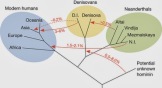
Genetic traces of the mysterious early humans, whose fossil remains have never been found, are still carried by Australian aboriginal people.
The same study suggests that indigenous tribes from Australia and Papua New Guinea have one of the oldest human pedigrees on the planet.
It also points to a single “exit” from Africa by early modern humans around 72,000 years ago.
Experts disagree on whether present-day non-African people are descended from explorers who left Africa in a single exodus or a series of distinct waves of travelling migrants.
The new research supports the single migration hypothesis. It indicates that Australian aboriginal and Papuan people both originated from the same out-of Africa migration event some 72,000 years ago, along with ancestors of all other non-African populations alive today.
Tracing the Papuan and Australian groups’ progress showed that around 50,000 years ago they reached “Sahul”. This was a prehistoric supercontinent that once united New Guinea, Australia and Tasmania – they were separated by rising sea levels.
Here in “Sahul”, they met and interbred with the unknown race of humans, who may have had links with Siberian Denisovans.
If you’re wondering exactly who the Denisovans were, they were a distinct sub-species of the human family that has been extinct for many thousands of years, like the Neanderthals.
Study leader Professor Eske Willerslev, from Cambridge University, said: “We don’t know who these people were, but they were a distant relative of Denisovans, and the Papuan/Australian ancestors probably encountered them close to Sahul.”
The research addressed “fundamental questions” about human evolution, he added.
“Technologically and politically, it has not really been possible to answer those questions until now,” said Prof Willerslev.
“We found evidence that there was only really one wave of humans who gave rise to all present-day non-Africans, including Australians.”
The findings have been published in the journal Nature. And they show that aboriginal Australians are descended directly from the first people to inhabit the continent.
Once in Australia, the ancestors of today’s aborigine communities remained almost completely isolated from the rest of the world’s population.
That was until a few thousand years ago, when they came into contact first with some Asian populations followed by European explorers in the 18th century.    

Thursday, October 16, 2014

Donie's Ireland daily news BLOG

12% Of Irish won’t benefit from water charge measures, says Michael Noonan


MICHAEL NOONAN (R) SAID THE DOUBLE IRISH SCHEME WOULD BE PHASED OUT

Minister for Finance Michael Noonan has said 12% of households will not benefit from Budget measures designed to alleviate the water charges, but the Government is examining how to reach them.
Mr Noonan and Minister for Public Expenditure and Reform Brendan Howlin faced the verdict of listeners in a phone-in on RTÉ’s Today with Sean O’Rourke this morning.
He said the aim of Budget 2015 was to spread the recovery throughout the country as a whole.
Minister Noonan also said if the Government mirrors what it did this year for the next two years, around 15,000 extra jobs will be created.
Speaking this afternoon, Minister Noonan rejected suggestions by the Opposition that any gains in the Budget are cancelled out by the water charges.
He said that if you take a couple, both earning €50,000 each, the tax reliefs in the Budget are worth €1,200 for them.
Meanwhile, the debate over the taxation and spending measures in the Budget continued in the Dáil today.
The Opposition accused the Government of introducing unfair tax measures that favour the better off over low paid workers.
The Taoiseach said 400,000 workers have no liability for the Universal Social Charge.
Enda Kenny added that the Government’s three year Budget plan would ease the burden of the 52% marginal tax rate.
The debate on the Budget continues in the Dáil until 9pm this evening.
Budget 2015 contains a range of new measures aimed at reducing the tax burden.
They include changes to the Universal Social Charge and an income tax cut of 1% for the highest earners.
A tax relief in respect to water charges and a €100 payment under the Household Benefits package is being extended to help more social welfare recipients.
There were no new cuts to social welfare rates in this year’s Budget.
The Government announced the introduction of a new Back to Work Dividend to encourage lone parent families and long-term unemployed back to work.
Child Benefit will increase by €5 per child next year. If possible, there will be a further €5 increase in 2016.
The Christmas Bonus has been partially restored, so welfare recipients can expect a 25% increase in their December payment.
The living alone allowance has been increased to €9 a week.
Addressing social housing needs, the Government has announced an investment of more than €2.2bn over the next three years.
It said 2,500 social housing units will be built next year, with 10,000 houses to be built by 2018.
It allocated €10m to tackle homelessness, a move that has been welcomed by campaigners.
In education, more than 1,700 new teachers will be taken on next September.
Of these, 920 will be mainstream teaching posts, while there will be 480 new resource teachers and 365 new special needs assistants.
In justice, 200 new gardaí will be recruited in the next four months and €10m has also been secured for the garda fleet.
Prescription charges, emergency department fees and hospital bed charges have been frozen.
It has also been announced that savings of €130 million will be made on drugs and agency staff in health.
Budget a ‘recipe to grow the economy’ – Burton
Tánaiste and Minister for Social Protection Joan Burton has said yesterday’s Budget is a recipe to grow the economy and to get more people back to work.
Speaking on RTÉ’s Morning Ireland, Ms Burton said on the spending side, people who have children will get an increase in Child Benefit and there is a partial return of the Christmas bonus.
Minister Burton acknowledged that the increases are small but said the focus of this Budget was on creating jobs.
She said the €100 tax credit will make water charges more affordable.
The Tánaiste said in terms of water charges, many people who are not earning enough money to pay tax, live in a household where another person in the household will be claiming either the tax relief or be entitled to the social welfare €100 benefit.
She said the situation will have to be looked at for those who do not fall into that category.
OECD welcomes ‘Double Irish’ plans
Earlier, the Organisation for Economic Co-operation and Development (OECD) welcomed a measure in the Budget to end a scheme known as the “double Irish”, a corporate tax loophole.
Minister Noonan said he was ending the scheme for new entrants and phasing it out over six years for companies already based in Ireland.
Pascal Saint-Amans, Director for the OECD’s Centre for Tax Policy and Administration, said the measure would make for a level playing field and is a very courageous step.
The move sends out a very strong signal that Ireland wants to be competitive, but does not want to facilitate double non-taxation, which is of concern to so many countries, he said.
Speaking on RTÉ’s Morning Ireland, Mr Saint-Amans said what the Government has proposed will strengthen its competitive position.
ICTU critical of failure to address water charge issue
The Irish Congress of Trade Unions has criticised the Government for failing to address the problem facing lower income families in paying for water charges.
At a post-budget briefing, General Secretary David Begg acknowledged that the Budget had been expansionary.
However, he said the Government had not fully factored in the problem of affordability of water charges, adding that people were now at the end of their tether.
He said congress had proposed a system of water credits to take the lower paid out of the water charges net.
He said congress would not have reduced the 41% tax rate, but would have concentrated most of the largesse for tax reductions towards water charges and those on lower end of income scale.
Mr Begg said by giving people at that level extra money, it would all be spent in the local economy on essential rather than luxury goods.
He also voiced scepticism about the claim that 30,000 hospitality jobs had been created due to the 9% VAT rate for the hospitality sector.
He said ICTU’s calculations reckoned that only 2,500 of those jobs were directly attributable to the VAT cut and noted that the tax cut had cost €450 million.
Mr Begg claimed there would have been a better return for the economy with better quality jobs if that money had been invested in infrastructure.
He also described the failure to allocate additional funding for capital investment as a missed opportunity, and warned that the Irish rate of such investment is less than half the EU average.

‘Ireland’s recovery is the people’s recovery’

SAY’S TAOISEACH AS HE OPENS ONE YOUNG WORLD SUMMIT IN DUBLIN


Taoiseach Enda Kenny has told a global summit of young people gathered in Dublin that Ireland’s economic recovery “was and remains a democratic privilege, a national obligation.”

Addressing delegates to the One Young World conference of some 1,400 young leaders at the National Convention centre, he described the recovery as “the people’s recovery”.
“Because it is through our recovery that this, and future generations, could fulfil their right and desire as citizens of this republic of this ‘one world’.  And that is to live a dignified, meaningful life. ,” he said.
However he said the unemployment figures amongst our young people was ‘intolerable’.
“To you, as young leaders, I reprise what I told the European Parliament.  That the unemployment figure amongst our young people is intolerable,” he said.
” As leaders we must not allow a generation to grow up believing that democracy itself has failed to give them a reasonable chance in life.  Because it is they who are democracy’s future, Europe’s tomorrow, our Union’s hope. “
Meanwhile he talked of the importance of environmental initiatives and sustainable living, saying: “Because if we do not, then for our children and grandchildren,  it won’t be a question of how they will live in a world of nine billion people.  But rather one of whether they will be living at all.”
The conference was opened by host Ryan Tubridy and addressed by Bob Coggins and Clara Kelleher who brought the global event to Dublin.
Delegates were entertained by the Ballymun Children’s Choir.
One Young World founders David Jones and Kate Robertson were also on stage.
It is estimated that the event over the next three days will be worth up to €3m to the local economy.
Key note speeches will be delivered later this evening by One Young World Counsellors, former President Mary Robinson and Sir Bob Geldof.
Kofi Anaan, former UN Secretaray General and will be five former and current Latin-American Presidents are also in attendance, along with Wikipedia founder Jimmy Wales and many others.

What have politicians got against older people?


Minister for Finance Michael Noonan and Minister for Public Expenditure Brendan Howlin, on the Seán O’Rourke programme on RTÉ radio today.

Minister for Finance Michael Noonan and Minister for Public Expenditure and Reform Brendan Howlin have completed their traditional post-budget radio interview on RTÉ, fielding questions from listeners who consider themselves adversely affected by the budget.
John, a pensioner from Mallow, Co Cork, described the return of a quarter of the Christmas bonus as “derisory” and urged the Ministers to think about older people, those who were sick and young people.
“What have politicians down the ages got against older people? They seem to love to cut the gains that we’ve fought for and there’s no justice.”
Mr Howlin said he understood what John was saying but he did not agree with it.
James from Donegal, on an invalidity pension and married to a woman on illness benefit, asked the Ministers what had been given back to him, other than the partial Christmas bonus.
“Is it worth working at all?” he asked. Mr Howlin asked him to leave his details, and said he hoped the additional payment of €48 euro at Christmas time would be a small help.
James said the motorised transport grant had not been replaced after two years. Mr Howlin said the Government was in the process of putting in place an alternative that would the meet needs of people.
Brian, a self-employed worker, asked Mr Noonan about people who earned more than €100,000.
He asked Mr Noonan how he could justify politicians paying eight per cent in USC and self-employed people 11 per cent. “Either raise the 8 to 11 or lower the 11 to 8,” he said.
Mr Noonan said the two situations were not comparable but the gap was “wider than one can justify”. He said that what was announced yesterday was a three-year programme and “we’ll see where it goes in year two and year three”.
David described himself as a reformed smoker. Nevertheless he was concerned about the increase in the price of cigarettes.
Mr Noonan said the increase was a health measure and a disincentive especially for young people, rather than a revenue raising measure.
Another caller, Brendan, had a question about tax individualisation. He described him as a stay-at-home dad in a poor household. He said the tax individualisation system was unequal and unfair to families like his.
Mr Noonan said individualisation had bedded in now and was an integral part of the tax system. Mr Howlin said the Government had been given independent advice to retain tax individualisation.
The caller, Brendan, said the measure had been brought in by the “Darth Vadar of Irish economics, Charlie McCreevy”.
Mr Howlin said it would cost €700 million to revert to the situation pre individualisation.
Mr Noonan agreed with the caller that he had criticised it at the time, but said society had changed. However, he added: “I’ll see can anything be given by way of an individual allowance”.
Shortly before 10.50am, Jane, the first and only woman caller asked a question about working families with very small children. Why was there no second free pre-school year, she asked.
Mr Howlin said it would cost €175 million and he did not have it.

See the monkeys making a new home in Scotland


THESE MONKEYS HAVE RELOCATED TO SCOTLAND FROM GIBRALTAR TO SET UP A NEW HOME.

The troop of 30 wild Barbary macaques are now in quarantine at Blair Drummond Safari Park, near Stirling.
The animals were flown from Gibraltar to Gatwick Airport before completing their journey on land.
  But the reason why the monkeys relocated is an interesting one – a deal was struck with the Gibraltar government to help reduce the territory’s monkey population.
Ministers said exporting the macaques was preferred to culling the animals, whose rise in numbers has been causing problems for local residents
  Their new home is a “luxury” heated house and a 2.5-acre (1 hectare) enclosure with a swimming pool and trees to climb in.
From March next year visitors will be able to see the macaques in a new drive-through section of the park.
  Gibraltar environment minister John Cortes said the transfer was the first large-scale export of macaques since 1990.
The group of monkeys, which includes three babies, were known as the “Middle Hill Troop” and lived between the top of Gibraltar rock and the town, where they had been causing problems for residents.
  Craig Holmes, head of the macaque section at Blair Drummond Safari Park, said: “They had been moving down into the town and they’re not stupid, they’re clever, they know that there’s food down there. People leave bins out and tourists feed them as well.
“They were just working their way down and they were causing problems for the local people, making a mess in their gardens, ripping open their bags to get to the food. So they’re reducing the numbers to try and slowly move them out of the town and encourage them back up on to Gibraltar rock.”
 A macaque named Sir Scoffalot explores the quarantine enclosure.
The macaques left Gibraltar yesterday and arrived at the safari park at about 7.15am today.
Holmes said: “They seem to have settled in really well. They are grooming each other, they are all foraging around for food, drinking, so they all seem quite happy considering they’ve had a long journey.”
The monkeys will spend 30 days in quarantine before moving to their new enclosure.  

Tuesday, August 12, 2014

Donie's Ireland daily news BLOG update

Ireland eyes a gradual reversal of crisis cuts in public sector pay


Ireland’s Finance Minister Michael Noonan (R) stands with Minister for Public Expenditure Brendan Howlin as they present the budget to waiting media at the Government Buildings in Dublin October 15, 2013.

Ireland’s government will start talks next year with trade unions on the gradual reversal of public sector pay cuts that helped it overcome financial crisis, the spending minister was quoted as saying on Saturday.
Ireland’s coalition government won praise in Europe for meeting all major targets under the 85 billion euro (67.36 billion) EU-IMF aid programme it completed last year, but is under pressure at home to ease austerity measures.
Public spending minister Brendan Howlin said talks would begin next year on reversing some elements of the Financial Emergency Measures in the Public Interest Acts (FEMPI) which included a pension levy averaging 7.5 percent and a pay cut averaging 6.5 percent for public sector workers.
The acts were introduced between 2009 and 2013, after a property crash left the banking sector near collapse and dragged Ireland into the euro debt crisis.
“Next year, we certainly will have to engage with the unions on the orderly winding down of FEMPI and who should benefit first and how that should be done over time,” Howlin was quoted as saying by the Irish Independent newspaper.
“We have to have agreement with the public sector unions that it is not going to be a big bang, because that would undo all the good work we have done over three years. There has to be an orderly wind-down, as opposed to a sudden ending,” he said.
Howlin is a member of the junior coalition Labour party, which suffered a collapse in support in midterm elections in May.
New Labour party leader Joan Burton last week said the fact that the economy was growing faster than expected meant the government would be able to ease austerity measures when it sets its budget for 2015 in October.

The drunken Irish still struggle to beat demon drink


ALCOHOL CAUSES HUGE PROBLEMS IN IRISH SOCIETY, YET WE CONTINUE TO REMAIN IN DENIAL ABOUT ITS EFFECTS. DOES ANYBODY CARE?

By definition, a binge means more than six units of alcohol – that’s three pints. It’s a factual medical term, which relates to the fact that more than six units causes adverse physical effects. But when you say three pints is a binge to an Irish person, you almost always get the same response, “That’s not a binge!” Generally followed by description of climbing a crane, langers, in your underwear. In Irish terms, a binge is being legless. Twenty or 30 units can constitute a binge around here. We consider six units drinking in moderation. It’s not.
This latest study talks about our ‘collective denial’ of the issue, and, indeed, that’s the case. 1.3m harmful drinkers. Eight pc of the total health spend going on alcohol-related problems. A&Es ugly, violent places at night. Our major cities family unfriendly on our national saints’ day. Public disorder endemic on our streets after dark.
And yet we baulk at the ‘drunken Irish’ stereotype.
We go nuts when British politicians refer to it, and when we’re lampooned on The Simpsons. Irish doctors in the US campaigned to have a medical text book there changed – it suggested there should be a high suspicion of alcoholism in patients of Irish extraction. Collective denial.
We talk out of both sides of our mouths when it comes to alcohol in this country. On the one hand we say, “It’s a disgrace!” when we see people puking, urinating, fighting and copulating in the streets. And on the other hand, we continue to describe as ‘legend’, the mad nights out we’ve had when we were pissed.
We wonder why our young people drink like fish, while the older generations do the exact same. Only work, babies and age reign us in. And in women over 45 – whose children are no longer babies – we see drinking patterns increase once more.
So I think it’s time for debate. Is it actually worth it? Is all the havoc wreaked, worth the night out, that you cut loose and lived to tell the tale – of stealing a Garda’s hat and throwing up in your handbag? Because that’s the issue. The madder the tale, the funnier the story – the more we frame it as having a good time. The more we perpetuate the drink culture.
The fact is that alcohol is implicated in three quarters of suicides. And it is the single biggest risk factor for death in young men under 30. It is also a factor in countless rapes, assaults and accidents. It sucks up a huge amount of our health budget, while sober patients lying in wait on trolleys continue to be ignored.
So let’s have the debate and please let’s keep the drinks industry out of it. Let’s decide if it’s worth it. Because while we still talk about it like it’s cool – despite other nations thinking we’re basically drunks – it’s never going to change.
Railing against the drunken Irish stereotype while lauding the nights we were most pissed, says we want to continue this pattern of drinking but just don’t want anyone to notice.
If we really do want to change our relationship with drink, drunkenness has to stop being cool and become, in fact – like in many countries – uncool and unacceptable. Drunk tanks might be a good place to start. It’d clean up our streets, and ending up in one might be harder to eulogise.

OTHER NATIONS CAN SEE WE’RE DRUNKS.

SUCK IT UP LIKE YOU’RE IRISH: We baulk at the ‘drunken Irish’ stereotype. We complain when British politicians refer to it, and we went nuts when we were lampooned on ‘The Simpsons’
Isn’t it time we had a grown up debate about alcohol? Recently, yet another study has shown that we Irish drink far in excess of other countries. It says that 1.3m of us have a harmful drinking pattern and that 75% of our episodes of drinking constitute a binge. In other words, we don’t drink to add pleasure to a meal, or oil the social machinery. Ireland drinks to get drunk.

Ireland’s ‘Free’ GP care will come with a fee for every doctor’s visit


New health Minister Leo Varadkar is planning a small fee for every visit to the doctor under his free GP care plan – to prevent abuse of the system and clinics being overwhelmed.

The fee has yet to be set, but would act similarly to the prescription charge, which serves as a deterrent to patients getting unneeded medicines.
But the fee would not apply to patients already on a medical card or a GP-only medical card.
The free GP scheme is being rolled out for the under-sixes, followed by the over-70s.
But these categories are also expected to be exempt from any fee. From there, the Government plans to extend the scheme to primary and secondary school children.
Ultimately, the entire population will be covered. But the minister has not put a timescale on everybody having free GP care.
Talks are continuing with the doctor’s unions and the Irish Medical Organisation about the free GP care.
Mr Varadkar’s spokesman said the details had yet to be finalised on the size of the fee.
“No decision at all has been taken on this matter. Talks are continuing with the IMO.
“We want to ensure that anyone with health concerns can access GP services. We are especially aware that the under-sixes and over-70s have particular needs.

BREAKING

“But we do not want services to be overwhelmed and we don’t want people with legitimate concerns to find that GP services are struggling to cope.
“That may require a very modest charge but no final decision has been taken on that matter,” the spokesman said.
Ireland is unusual as three in five of the population do not have access to GP or primary care as part of the 
State’s healthcare system.
Nominal fees have been used in other countries which provide universal GP care.
The possibility of a small fee was first suggested by former Junior Health Minister Alex White and others.
Last week, Mr Varadkar said he was delaying the introduction of the Government’s controversial plan to reform the health insurance system and end the two-tier service.
But the Health Minister said free GP care remains a priority, but he separated the universal health care aspects from Universal Health Insurance.
“Personally, I think we need to get Universal GP and Primary Care right and show people that it works,” he said.

Spar South Africa has entered into an agreement to buy an 80% stake in the BWG group for €55m.

  
BWG owns Spar in Ireland and services more than 1,100 stores with annual revenues of €1.2bn.
Its brands here include Spar, EuroSpar, Mace, ValueCentre and XL and it has 35% of the Irish convenience store market.
Spar South Africa is a wholesaler and distributor to over1,800 independent retailers spread across Southern Africa with annual sales of around €3.5bn and a market capitalisation of approximately €1.5 billion.
Today’s announcement also secures a further reduction in BWG’s borrowings following a buyback of exiting banks’ debts. This further reduction in debt comes on top of that achieved as part of a successful refinancing concluded in November 2013, which also saw BWG agree new five year banking facilities.
These facilities have been reaffirmed by BWG’s lenders as part of this transaction with Bank of Ireland and AIB increasing their commitment, the company said today.
The new partnership will have up to €100m  to invest in the expansion of BWG’s leading wholesale and convenience retailing operations over the next five years.

Zoo animal trainer awarded masters’ degree for research into sea lion’s whiskers 


Alyx Milne, 27, combines her work at Blackpool Zoo with her MSc studies at Manchester Metropolitan University

An animal trainer at Blackpool Zoo has become the first person to be awarded a masters’ degree for her research …. into sea lion whisker’s.
Alyx Milne, 27, has been fascinated by the mammals ever since she went on holiday as a five year-old to SeaWorld in Florida.
Now working at Blackpool Zoo, Alyx combined her work as an animal trainer and presenter, with her MSc studies at Manchester Metropolitan University.
Her dissertation on the motor neuron abilities of sea lions’ whiskers, which she said are so sensitive they pick up vibrations in the water to help them find fish, earned her a distinction from the university.
And because hers is the first masters’ degree research into the subject – her sea lion whisker paper is being featured in the Comparative Physiology Journal.
Today, M/s Milne, from Liverpool, said: “From the moment I was splashed by a killer whale while visiting SeaWorld, Florida, I knew that I was going to be a ‘Shamu’ trainer one way or another.
“Working with the sea lions at Blackpool Zoo has been a major part of my research.
“I’m so pleased I have something so great to show for it.”
It is already widely known that sea lions are tactile mammals. Their whiskers contain nerve fibers, which make them sensitive.
They may use their whiskers to aid in navigation or to detect vibrations from prey in the water.
M/s Milne is now aiming for a PhD relating to marine mammals.
California sea lions belong to the family Otariidae which means “little ears.” In the scientific community, there are many debates concerning the ancestry of eared and true seals.
Some scientists believe that eared seals and walruses may have evolved 30 million years ago from bear-like creatures in the North Pacific, and that seals evolved from otter-like carnivores in the North Atlantic.