Varadkar and Coveney in dogfight for power as gap closes on successor to Enda

 OR
OR 
The likely lads to succeed Enda Kenny above?
Simon Coveney has dramatically narrowed rival Leo Varadkar’s lead as the public’s favourite to succeed Enda Kenny yes but there is also clear evidence that a third candidate could emerge to win a Fine Gael leadership contest, according to a Sunday Independent/Kantar Millward Brown opinion poll.
Social Protection Minister Mr Varadkar (27%) has a slight lead over Housing Minister Mr Coveney (23%), but almost a quarter of all voters favour somebody else (16%) or neither (8%) of the two front-runners to lead Fine Gael, according to the nationwide poll.
This is the first time that those polled were offered a choice of just two candidates to succeed Taoiseach and Fine Gael leader Mr Kenny.
Mr Varadkar (37%) extends his lead over Mr Coveney (28%) among Fine Gael supporters, according to the opinion poll, but again almost one-quarter of party supporters favour somebody else (15%), or neither front-runner (7%), should Mr Kenny decide to step down.
Yesterday, Mr Varadkar increased the pressure on Mr Kenny to make his continued leadership intentions known, but the Taoiseach told the Sunday Independent he intended to “focus on the job in hand” which, his spokesman said, he would carry out with “continued dedication and dignity”.
But today’s opinion poll contains further findings which will add to the mounting pressure on Mr Kenny to resign. The state of the parties shows Fianna Fail (33%) — up six points since a comparable poll in October — has opened up an eight-point lead over Fine Gael (25%), down four points.
Fianna Fail is extending its lead — it is now at its highest point since 2008 — at a time when there has been a marked increase in consumer confidence.
The poll finds 23% believe they are better off than they were last year, a seven-point increase, and 21pc feel worse off, a nine-point decrease, while 27% feel they will be better off next year, a seven point increase, and 14% feel they will be worse off, a nine- point decrease.
The poll also shows Sinn Fein (20%) unchanged, Labour (6%) down two points, the Greens (2pc) unchanged and Independents/others (14%) down one point.
Mr Varadkar told the Sunday Independent: “Everyone is waiting to hear from the Taoiseach. The current situation is distracting and destabilising for the Government, the party and the country. I have full confidence in the Taoiseach to settle it.”
Simon Coveney and his wife Ruth at the wedding Photo: Gerry Mooney
However, Mr Coveney said the Taoiseach should not be forced to “set a date” for his departure.
“Enda is still the leader of our party – he has been for 15 years. I think he deserves the respect to be given time and space to make any decisions he thinks he needs to make.”
Today’s poll also finds Mr Kenny’s satisfaction rating (27%) down just two points and dissatisfaction rating (62%) up three points since October. Furthermore, satisfaction with the Government (27%), down four points, and dissatisfaction (64%), up two points, have not significantly changed despite recent political turmoil.
The poll, among a representative sample of 960, was carried out between February 6 and 16 and has a margin of error of 3.2%.
Fianna Fail leader Micheal Martin (44%), up one point, remains comfortably the most popular party leader with an unchanged dissatisfaction rating of 40%.
However, only a slim majority (53%), down one point, want Mr Kenny to resign as Fine Gael leader while 25%, up one point, want him to remain. Fascinatingly, a majority (57%) of Fine Gael supporters say Mr Kenny should remain leader, a finding which may encourage him to resist pressure to resign and choose the time of his own departure. Furthermore, 73% of Fine Gael supporters are satisfied with his leadership.
Also interestingly, of those who believe Mr Kenny should remain, more opt for Mr Coveney (29%) than Mr Varadkar (27%c) as his successor, a finding which indicates that the Housing Minister is in a position to win the backing of more of Mr Kenny’s supporters in a leadership contest.
Of those who believe Mr Kenny should resign, 31% would support Mr Varadkar and 28% would support Mr Coveney.
These findings show that while Mr Varadkar must be the favourite to succeed Mr Kenny, a Fine Gael leadership contest would be far from a foregone conclusion.
Yesterday, Foreign Affairs Minister Charlie Flanagan said Fine Gael needed to “keep calm and measured over the next few months” or the party would “catapult ourselves into a messy general election that will play into the hands of Sinn Fein and the loony left”.
Today’s opinion poll, however, finds that support for Independents and smaller parties has almost halved since the General Election.
Furthermore, when asked which party or political grouping they would not consider voting for in the next election, the poll finds that the Socialist Party (22%), up seven points; AAA-PBP (22%), up four points; Greens (20%), up three points; and Social Democrats (14%), up four points, appear to be falling out of favour with voters, while 36%, down two points, say they would not consider voting for Sinn Fein.
Tribalism is still a problem in Northern Ireland politics after 20 years of peace


It is no great surprise to see that Northern Ireland politics are still as polarised as ever nearly two decades after the Good Friday Agreement was signed in a wave of optimism that society here could be changed forever.
It is no great surprise to see that Northern Ireland politics are still as polarised as ever nearly two decades after the Good Friday Agreement was signed in a wave of optimism that society here could be changed forever.
The survey from the Electoral Reform Society shows that only a tiny proportion of unionists or nationalists would ever contemplate voting first for a party outside their own bloc.
And even though the STV system allows voters to give their preferences right through the list for their constituency, few Catholics or Protestants would put their mark in the box of an opposing party.
Around one-third of all preferences were for parties outside the big four – DUP, Sinn Fein, SDLP and UUP – but that does not give a corresponding return of Assembly Members. The centre ground still remains a minority.
Little wonder that UUP leader Mike Nesbitt received such a cold shoulder from even his own party when he said he would vote for a SDLP candidate as a second preference in the forthcoming election. His gesture may be the ideal way to conduct politics, but obviously tribal considerations trump real cross-party co-operation.
So where did it all go wrong after the Good Friday Agreement? The hope for a brighter future was fuelled first by the ending of conflict, but the guerrilla war conducted by the DUP and Sinn Fein against the original power-sharing partners, the UUP and SDLP, ensured that devolution never gained the momentum it should have.
The decision eventually by the DUP and Sinn Fein to share power offered new hope, but this has dwindled over the last decade as the parties both retreated towards the trenches in a welter of bad feeling and even more virulent language.
We are now a fortnight away from a new election, but the prospect of an early return to devolved government seems remote.
The inevitable conclusion – unless there is an unprecedented sea-change in voting habits – is that the majority of those who go to the polls are content to keep to their tribal silos no matter what the implications.
The one glimmer of hope is that a significant number of the 45% of voters who didn’t bother going to the polls last May – either through apathy or weariness -turn out this time and change voting patterns to register their displeasure with the status quo. History is not encouraging.
An Irish mum shares a heart-breaking video of her 21-year-old scoliosis daughter in agonising pain?

 The Video. http://www.irishmirror.ie/news/irish-news/heartbreaking-scoliosis-video-shows-sufferer-9845391
A KILDARE MUM TINA O’KELLY HAS SHARED A VIDEO OF HER 21-YEAR-OLD DAUGHTER COLLEEN IN AGONY AND PLEADED WITH HEALTH MINISTER SIMON HARRIS FOR A SURGERY DATE.
Colleen O’Kelly has Joubert Syndrome and has now been waiting for an appointment for two years just to get on the list for scoliosis surgery.
Her mum Tina says that Colleen’s condition will worsen, unless she is granted surgery. The rate of curvature of her daughter’s spine is at 97%, and apart from causing Colleen to live with agonising chronic pain, it significantly increases her risk of lung collapse, pneumonia, and respiratory infections.
Tina spoke to Her Family about the heart-breaking situation,
“I wish that the HSE management and the government would stop blaming each other and just get together to get the root of this mess.
The HSE says it’s caused by a lack of money and the government say that it’s not a lack of money that’s the problem, but rather mismanagement of it.
While they are busy squabbling with each other nothing is getting done.”
The Naas mum explained that her 21-year-old daughter has already undergone a kidney transplant but unfortunately Colleen still has no date for surgery to correct the painful curvature of her spine,
“When Colleen turned 18 she had to be transferred from the care of Crumlin to Tallaght hospital as an adult patient. Her doctor in Crumlin essentially had to write a letter referring her to himself – from one of his patient lists to another.
She has waited two years just to get on another waiting list, she has been on the surgery waiting list since last August. The secretary said she’d ask the doctor for a 7th of March listing but I have heard nothing.”
Tina told us that Colleen is a fighter who has been through so much but has managed to keep a smile on her face,
“She is normally such a happy, happy person. She has flown through her transplant…through everything…with a smile on her face. That’s why it’s so heart-breaking to see her suffering like this now. She doesn’t have to suffer like this. This is avoidable.”
Tina says that she agonised over sharing a video of her daughter crying in pain, but she wants people to see the completely avoidable reality that they live with on a daily basis,
“Everyone that knows Colleen knows how amazingly happy she is. Lately her scoliosis has really been causing awful problems for her and it’s heart-breaking. She has no date for surgery. We have no idea when it will be.
This is the reality of living with this condition. It’s getting worse and compromising her health that we have fought so hard for all her life. It’s compromising her kidney transplant.
We wait every day for word from Tallaght.
We want her pain to end – she’s been through enough – and call on Simon Harris to fix this. ”
Take a minute to boost your fitness the easy way & it works
ROSE COSTELLO LOOKS AT THE QUICKEST AND SIMPLEST WAY TO GET FITTER?


If you think that running for the bus is a waste of time, think again. Even if you don’t catch that bus, you will be doing a lot more for your fitness than you might realise. The latest research shows that taking exercise in short bursts could be just what the doctor ordered.
It’s known as high-intensity interval training (Hiit) and it is now part of any fitness instructor’s offering. Even those who can’t be bothered to go to a gym or who don’t have the time can benefit.
High-intensity training means really pushing yourself for a short amount of time, resting, then pushing yourself again. What’s shocking is how little time it can take to make a difference to your fitness.
A report published in the PLOS One journal last year followed two groups over 12 weeks: one spent just 10 minutes on training that included intense intervals that added up to one minute; the second group worked out at a moderate, even pace for 45 minutes. The surprise is that the two groups saw similar improvements in health. There are a number of other studies showing equally encouraging results.
Claire Mc Glynn, a competitive weightlifter and personal trainer at cmgfit.com in Dublin, loves to use Hiit and says it is the best and quickest way to achieve positive results in your physical and mental health. “It’s very simple really – everyone knows that when you put 100 per cent of effort into something, you get the best results and there is no exception when it comes to exercise.”
Level of intensity?
Mc Glynn points out that she can do the same Hiit routine as a beginner, but if they both do it at their top level of intensity, they both benefit dramatically. There is no need for modification of a routine for beginners. They key is to feel that you are pushing past your own comfort.
They might curse me for asking them to do it,” she says, “but once they’re doing it, the adrenaline kicks in and it’s just a matter of working through the process. Afterwards, endorphins – happy hormones – have been released and they’re tired, yet contented and have an air of accomplishment, and sometimes surprise at what they have been able to achieve.”
The 29-year-old runs hardcore classes in CrossFit353, which involves using heavy weights or pushing around massive tyres for fun. But she also teaches members of the Retired Teachers’ Association of Ireland, who are between 50 and 70.
“Their progress has been unbelievable. Many started with me two years ago and now they are blitzing sessions of many, many squats, lunges, push-ups, plank holds for up to three minutes and so on. Their mobility, strength, fitness, self-belief and confidence has increased tenfold.”
Hiit also boosts your metabolism, ie the rate at which you burn calories, for hours afterwards.
No class needed?
Good form is key on whatever exercise you are doing, she says. “There is no point in repping out 100 squats if your back is rounded and knees are caving in, you’ll just do more harm than good.”
You don’t have to join a class to experience the benefit, however. These are principles you can put into practice every day. This doesn’t mean you should give up on beach walks, rather that you should run after that bus with abandon, for a minute anyway. And regardless of whether you catch it or not, you will have done yourself some good.
The World Health Organisation advises adults do at least 150 minutes of moderate-intensity aerobic physical activity a week or at least 75 minutes of vigorous activity. Incorporating Hiit doesn’t mean slacking off, simply realising that a few sharp bursts can be valuable too.
If you cannot exercise most days, but try to get out at the weekend, take heart. A report last month in the JAMA Internal Medicinejournal shows that “weekend warriors”, who did all their exercise on one or two days of the week, were found to lower their risk of dying from cardiovascular disease by 41 per cent and cancer by 18 per cent, compared with the inactive. Even those who didn’t manage to get the 150 minutes of activity advised by the WHO reduced their risk of early death by one-third.
Push yourself
For those not exercising now, walking quickly can count as “high-intensity” if you push yourself. Even a brisk 20-minute daily walk could reduce your risk of early death, according to research published in the American Journal of Clinical Exercise in 2015. The study of more than 334,000 Europeans found that twice as many deaths may be attributable to a lack of physical activity compared with the number attributable to obesity, but that a modest increase in physical activity could have significant health benefits.
An earlier study in the Lancet in 2012 said that inactivity was killing about as many people as smoking.
If you have been following this series, you should be eating a pretty balanced diet that gives you more energy. Put that energy to good use by adding in some extra exercise – or even just some exercise.
An effective way?
The maxim still holds that you cannot outrun a bad diet, but to be healthy you need to do some exercise too. Using the principles of high-intensity interval training is an easy and effective way to achieve results without putting in too much effort.
Ashley Borden of the Body Foundation in California, who has trained actor Ryan Gosling, says she uses Hiit training because it is efficient, burns fat and builds muscle. There is no need to have any fancy equipment either, just the focus to really go for it for half a minute at a time.
This all comes with a proviso, of course: as with any form of exercise, you need to be in fairly decent shape to get started. If not, or if you are on medication or have any concerns or conditions, check with your doctor first. And wear the appropriate footwear. Then go for it.
GM ‘surrogate hens’ could lay eggs of rare chicken breeds,
SO SCIENTISTS SAY
A radical plan to maintain diversity of gene pool proposes the use of genetically modified chickens as surrogate mothers?


SOME OF THE GENETICALLY MODIFIED CHICKENS BRED BY SCIENTISTS AT THE ROSLIN INSTITUTE.
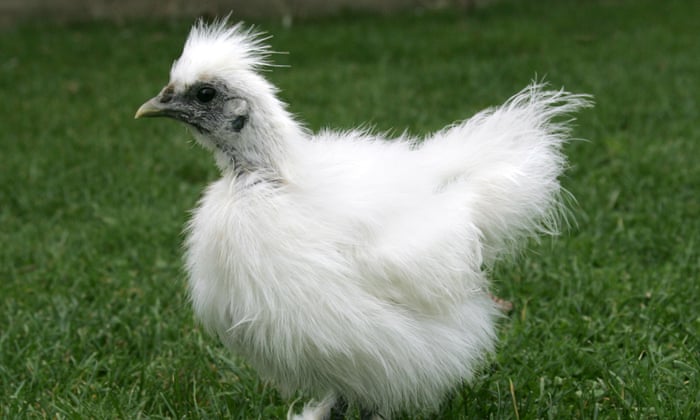
The Rumpless Game is squawky and, as its name suggests, lacks a tail, while the Burmese Bantam, has fantastically flared leg feathers and a head like a feather duster. But the true value of rare chicken breeds, according to a team of scientists working to save them from obsolescence, is not their decorative crests and plumage, but the diversity they bring to the chicken gene pool.
In a radical plan to preserve rare varieties such as the Nankin, Scots Dumpy and Sicilian Buttercup, scientists at the the University of Edinburgh’s Roslin Institute have bred genetically modified chickens designed to act as surrogates that would be capable of laying eggs from any rare breed.
Speaking to journalists at the AAAS conference in Boston, Mike McGrew, who is leading the project, said: “These chickens are a first step in saving and protecting rare poultry breeds from loss.”
The surrogacy technique, which places a new, mind-bending twist on the classic chicken or egg question, involves first genetically engineering hens to be sterile. This is done by deleting a gene, called DDX4, that is required for the development of primordial follicles (the precursors to eggs) meaning that the surrogate hens will never lay eggs that are biologically their own.
A baby bantam. The scientists’ ultimate goal is to create a gene bank of chicken breeds preserved for posterity.
A batch of sterile GM chicks hatched at the Roslin Institute in 2016, becoming the first genetically modified birds created in Europe. “We produced a hen that doesn’t have any eggs,” said McGrew, who is first author on a paper on the work published this week in the journal Development.
The next step will be to transplant follicles from rare birds into the surrogate (this is done before the surrogate chick is hatched from its own egg), meaning it would go on to lay eggs belonging to entirely different breeds of chicken.
Given that the hens would also need to be artificially inseminated with sperm from the same rare variety, the approach may appear unnecessarily convoluted. Why not just breed the rare birds the normal way?
The scientists’ ultimate goal is to create a gene bank of chicken breeds preserved for posterity, and since primordial follicles can be frozen efficiently, while eggs cannot, the surrogacy technique serves an essential work-around.
The Roslin team has set up the Frozen Aviary, a £14m project aimed at preserving a wide variety of poultry breeds.
“We’re interested in chicken because that is the animal which is the most consumed animal on the planet and we want to protect all the different breeds of chickens that we have,” said McGrew. “So we can freeze down all the breeds of chicken.”
McGrew predicts that the surrogates will be able to lay eggs from any breed, including chicken’s wild predecessor, the red junglefowl, but he is doubtful about whether it will work efficiently across species – it is not likely that the surrogate hens will be giving birth to eagle chicks, for instance.
Richard Broad, a field officer for the Rare Breeds Survival Trust, said the idea was appealing: “You can save all kinds of breeds, put them in a freezer and there would be a genetic ark for us.”
A Salmon Faverolle chicken. Scientists say rare breeds can bring diversity to the chicken gene pool.
“If you had one in every country it would be a wonderful thing. In terms of usefulness, we couldn’t wish for anything better – it would be unbelievably useful.”
Broad agreed that rare chickens could be a source of valuable genetic variation, potentially carrying variants that would provide resistance against new forms of avian flu. “It’s not what we’re protecting in the breeds that’s important, it’s what those breeds represent in their genes,” he said.
The Frozen Aviary, which would allow scientists to rapidly expand populations that contained a protective gene for a new disease, bring breeds back to life after they had been declared extinct and provide an insurance against commercial breeds, which have been honed for their fast-growing, being wiped out by a disease.
The avian biobank currently has genetic material from 25 different breeds and more than 500 samples from individual birds, all stored in liquid nitrogen cryostats. “They should be good – as long as the power doesn’t go out – for decades,” said McGrew.
At present, the team is focused on chicken breeds, but expects the technique to work to preserve rare varieties of ducks, geese and quail. Previously, scientists in Dubai used a similar technique in male birds to create a houbara (a large bustard) fathered by a cockerel.
In the future, it may also be possible to use the technique to conserve endangered species such as golden eagles – although this would depend on a suitable surrogate being identified.
“The question remains open on how evolutionarily related they have to be for them to transplant them,” said McGrew. “You need a bird that can be bred in captivity and produce a lot of eggs.”

