Pages

Showing posts with label irish politicians. Show all posts

Monday, February 22, 2016

Donie's Ireland daily news BLOG update

Michael Collins would be very ‘p****d off’ with the current crop of Irish politicians?

AIDAN QUINN (ACTOR) RIP RIGHT BELOW MIGHT CLAIM? WHO DIED LAST MONTH AFTER A BATTLE WITH CANCER AT THE AGE OF 69

  V 

MICHAEL COLLINS MIGHT NOT BE VERY PLEASED WITH THE CURRENT CROP OF IRISH POLITICIANS, ACCORDING A STAR OF THE 1996 HIT FILM THAT TELLS HIS STORY.

Irish-American actor Aidan Quinn RIP, who was raised in both Dublin and Offaly, said the Irish icon would have split feelings when it comes to modern politicians.
“A part of him would be proud and part of him would be dismayed and pissed off, like the rest of us,” he said.
The ‘Elementary’ star admitted he’s not as familiar with Irish politics as he used to be, since he spends most of his time living and working in America.
Quinn joined a variety of cast and crew members from ‘Michael Collins’ to mark 20 years since the film debuted, as part of the part of the Audi Dublin International Film Festival.
Director Neil Jordan was among the crowd celebrating the film’s anniversary and agreed that Collins would be no fan of contemporary politicians.
“I think it’s lucky he’s not around actually. The landscape has changed so much really,” he said.
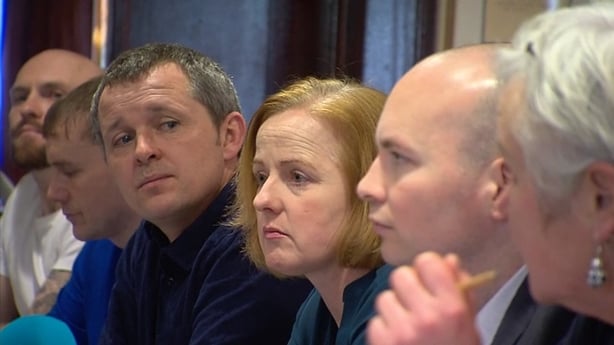
The Sligo native said he was fond of People Before Profit Alliance candidate Richard Boyd Barrett. “He’s not Michael Collins either,” he added.
The movie, which will be released on Blu Ray for the first time next month, also starred Alan Rickman, who died last month after a battle with cancer at the age of 69.
The English actor, who played Eamon DeValera, made his final public appearance in Ireland at last year’s film festival. Quinn, who played republican politician Harry Boland, said Rickman’s Irish roots were very important to him.
“Year’s after filming, I met [Alan] in Whelan’s at a concert and I realised he had a huge affinity for all things Irish that he loved.
“He was a lovely man and an incredible talent and he’ll be missed.”
Jordan, who also directed ‘Interview With The Vampire’ and ‘Crying Game’ said both the film and playing DeValera on screen were very important to Rickman.
The Audi Dublin International Film Festival runs until the 28 February.

Independents soar in the latest Ireland poll’s state of the parties

FIGURES INDICATE FINE GAEL AND LABOUR TO FALL FAR SHORT OF REQUIRED 80 SEATS FOR GOVERNMENT


UNLESS THERE IS A DRAMATIC SHIFT IN OPINION IN THE FINAL DAYS OF THE CAMPAIGN THE COUNTRY IS HEADING FOR A PERIOD OF POLITICAL INSTABILITY AFTER THE GENERAL ELECTION.

The final Irish Times/Ipsos MRBI poll of the campaign, conducted on Friday and Saturday, showed little change for the Government parties since the first poll of the campaign.
On the basis of the figures Fine Gael and Labour will fall far short of the 80 seats needed to form a majority government.
They will also be well short of the number they require to put together a stable administration backed by Independents.
Fianna Fáil has gained support since the campaign began and has closed the gap with Fine Gael to five points, but it is hard to see how the party can win the number of seats required to lead a government.
The only way this could come about would be if Fianna Fáil, Sinn Féin and a majority of Independents combined to form a coalition but, given the wide range of views across the Independents and smaller parties, it is hard to see this happening.
In any case Fianna Fáil leader Micheál Martin has been unequivocal about not going into coalition with Sinn Féin, and if his party does well he will be in a position to impose his will on the elements in the party who do not share his views.
Unstoppable march
The apparently unstoppable march of the Independents and smaller parties is the standout feature of the poll.
At 28% nationally, the category is level with Fine Gael and in Dublin they far outstrip every other party with an astonishing 41% of the vote.
This 41% breaks down into a number of categories, with pure Independents on 9% in the capital, closely followed by the Social Democrats and the AAA/PBP on 7% each, Shane Ross’s Independent Alliance on 6%, the Greens on 4%, Renua on 3%, and other groupings on 3%. A final 3% are not sure which of the Independent categories they support.
The poll indicates that the election counts in all the Dublin constituencies could provide unexpected results if the Independents and smaller parties transfer to each other in any significant fashion.
The Independent brand is not as strong outside Dublin but they still poll a significant share of the vote right across the country.
The disparate nature of the Independent/Others vote could be a lifeline for Fine Gael as a very broken field could allow the candidates of the main government party to stay in the race as various Independents go out.
In Dublin, Fine Gael is in second place, well behind Independents/Others, on 22 per cent. The party gets 26 per cent in Connacht/ Ulster, 30 per cent in the rest of Leinster and 33 per cent in Munster.
Fine Gael’s strongest support is among middle-class AB and C1 voters, where it gets 35 per cent and 33 per cent respectively. It drops back among C2 and DE categories but jumps to almost 50 per cent among farmers.
The party also has a reasonable spread across the age categories, peaking at 37 per cent among the over-65s and dropping off significantly among those aged under 34.
Labour party struggling?
The news for Labour is grim on all fronts. Its national level of support, at 6 per cent, is about a third of what it won at the last election and almost all of its seats are in danger.
The party does best in Dublin where it is on 9 per cent. Its next best region is Munster where it hits 6 per cent, but it is at only 4 per cent in the rest of Leinster and Connacht/Ulster.
In class terms, Labour is strongest among the AB group but struggling among the other social categories.
The poll is very good news for Fianna Fáil, with the party making gains at precisely the right moment. It can now have serious hopes of emulating its local election performance when it hit 25 per cent of the national vote.
What will encourage the party is that it has extended its lead over Sinn Féin to eight points with the election finish line in sight.
However, one point of concern for Fianna Fáil is that its vote in Dublin remains at just 13 per cent. The party has no seats in the capital at present and, on that share of votes, will be lucky to win a handful.
Strong in Leinster
In the rest of the country the picture is better. Fianna Fáil’s strongest region is the rest of Leinster where at 31 per cent it is marginally ahead of Fine Gael.
It is the same story in Connacht/ Ulster, but in Munster the party is well behind Fine Gael.
In class terms Fianna Fáil is strongest among the least well off C2 and DE categories and weakest among the better off.
In age terms it has pulled ahead of Fine Gael among the under-34s but is behind among the older age groups, particularly the over-65s.
It seems Micheál Martin’s positioning of Fianna Fáil as a slightly left-wing party has gained traction with poorer and younger voters and that has helped it eat into the Sinn Féin vote.
Support for Sinn Féin has dropped back significantly to 15 per cent with the party’s vote in Dublin under pressure from the rise of AAA/PBP as well as Fianna Fáil, while in Munster it has dropped back in tandem with the rise of Independents.
Sinn Féin is now on 14 per cent in Dublin and Munster and 17 per cent in the rest of Leinster and Connacht/ Ulster.
The Sinn Féin vote is massively concentrated among the poorest C2 and DE social categories and among people aged under 34.

Ex Fianna Fáil Minister Mary says voters should not be expecting election promises to be fulfilled


A FORMER FIANNA FÁIL MINISTER HAS WARNED VOTERS THAT NO POLITICAL PARTY WILL BE ABLE TO KEEP ALL THEIR ELECTION PROMISES.

Mary O’Rourke has said there is too much emphasis on candidates’ ability to make changes, if voted into power.
She also has said no one can keep the economic recovery going at the current rate.
With less than a week for people to decide who they want to vote for, Mary O’Rourke is reminding us to be realistic: “I think there has been an overemphasis on promises, on the green fields beyond when life is going to be very good, it isn’t.
“All the promises will never be fulfilled, never ever, because the growth rate is not going to continue at 3.1/2% for five years.”

Facebook launches a new feature of preventing suicide tool in the UK
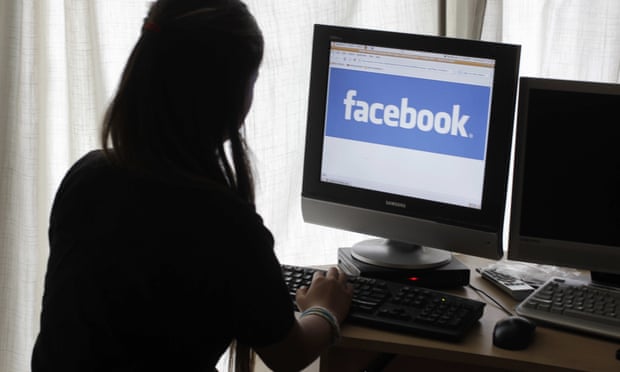
    
Facebook has launched a new feature in the UK to offer support to users who may be considering suicide.
The Suicide Prevention tool has been developed with support from charity Samaritans, and works by asking users to flag and report posts from friends that cause concern. These posts will then be reviewed by a special team at the social network, with help options sent to those the reviewers deem to be struggling.
A message appears when the person in question next logs in that reads: “Hi, a friend thinks you might be going through something difficult and asked us to look at your recent post.”
Talk-talk-talk options
The user can then choose to talk to someone – either a friend or helpline worker, or be sent tips and support directly. There is also an option to ignore the offers altogether.
Facebook’s safety policy manager in the UK Julie de Bailliencourt said: “Keeping the Facebook community safe is our most important responsibility. We worked with organisations including Samaritans to develop these tools, and one of the first things they told us was how much connecting with people who care can help those who are struggling to cope – whether offline or online.
“People use Facebook to connect with friends and family, and that’s why we’re evolving the support, resources and advice available to people who are in distress and their concerned friends and family members.”
A powerful resource tool?
According to the social network, more than half the UK’s population is on Facebook (36 million) and this resource makes it a powerful tool to connect with those most at risk.
Samaritans chief executive Ruth Sutherland said: “Social media is a great thing, it provides an outlet for many people and it’s a great source of information and support. It’s a way that we connect with our friends, a way of communication. Samaritans welcomes Facebook’s commitment to keeping their users safe in this environment.”

‘Ireland well placed to be a world leader in addressing climate change issues’


IRELAND IS WELL PLACED TO BE A WORLD LEADER IN ADDRESSING CLIMATE CHANGE, ACCORDING TO JOHN MULDOWNEY, AGRICULTURAL INSPECTOR WITH THE DEPARTMENT OF AGRICULTURE, FOOD AND THE MARINE.

Speaking at the Agricultural Science Association’s (ASA) Climate Change Forum in Tipperary recently, eh said that “by 2050, the planet will need to produce 70% more food with less land, water and energy while also reducing greenhouse gas emissions,” and that he believes “Ireland is well placed to continue showing leadership in the creation of innovative solutions where climate action is at the centre of sustainable food production”.
Muldowney was joined by Oisín Coghlan, Director of Friends of The Earth; Paul Nolan, Computational Scientist at the Irish Centre for High-End Computing; and Pat Murphy, Head of Environmental Knowledge Transfer at Teagasc along with more than 70 delegates.
The forum background:-
The forum was held against the backdrop of the unanimous agreement among the 195 nations represented at COP 21 about the urgent need to address climate change with specific targets to keep global warming well below a +2°C rise in temperature compared to pre-industrial times and pursuing efforts to limit this increase to +1.5°C.
As part of this agreement, the EU has committed to reducing greenhouse gas emissions (GHG) by 40% by 2030 and Ireland, as part of the EU, will have its own GHG emissions target to achieve.
Irish agriculture represents one-third of total Irish GHG emissions and, with its ambitious Food Wise 2025 objectives, climate change target compliance is a key consideration for the sector.

FRIENDS OF THE EARTH FOCUS.

Oisín Coghlan, Director of Friends of The Earth focused on COP 21 and the importance of addressing the climate change challenge in all sectors.
He said that the Paris Agreement increases the pressure on Ireland to come up with a credible plan to cut emissions, and as we now face into EU negotiations about how to divide up the emissions budget across the EU, the question is whether the Irish Government will continue to seek exemptions for Irish agriculture placing a heavier burden on other sectors to reduce their emissions, and whether the Commission or other Member States will be in any mood to reward Irish inaction, especially now that we are the fastest growing economy in Europe”.

THE IMPACT OF CLIMATE CHANGE?

Computational scientist Dr. Paul Nolan from the Irish Centre for High-End Computing (ICHEC) presented the results from a recently released climate change impact study Ensemble of regional climate model projections for Ireland funded under the EPA research programme and carried out at ICHEC and UCD in conjunction with Met Éireann.
It analyses the impacts of global climate change on the mid-21st-century climate of Ireland and he discussed data of future rainfall, temperature, frequency of storms and growing season length as part of his presentation.
“It is our intention in the near future to set up collaborations with agricultural policy makers and researchers in order to provide more detailed projections on the effects of climate change on the Irish agricultural sector.”

THE ADVISORS

Speaking about up-skilling advisors on environmental needs to help them better inform and prepare farmers to be more climate change aware, Head of Environmental Knowledge Transfer at Teagasc Pat Murphy said: “The success in reducing Irish agriculture emissions will be largely determined by the degree to which agricultural advisors of all types manage to engage farmers to address the problem.
“Therefore, reducing the carbon footprint of Irish Agriculture can only be achieved through an effective combination of increased efficiency at farm level, supportive policy to incentivise mitigation and regulation. The agricultural advisor/consultant has a key role in improving the effectiveness of all three approaches and their efforts will be critical in reducing agricultural emissions.”

ASA (AGRICULTURAL SCIENCE ASSOCIATION’S)

According to ASA vice-president Mary Delaney, the purpose of the event was to provide a platform for information sharing and meaningful debate around what is a very important issue for Irish agriculture. “Climate change will have far-reaching, long-term consequences for the Irish agri-food industry,” she said.
“Today provided us with an opportunity to hear four different perspectives on climate change, investigate current research and explore how knowledge transfer can help instigate action. All of the presentations and resulting discussions were centred on hard-hitting facts and projections that affect the industry as a whole as it strives to increase production in line with Food Wise 2025 objectives.
“Changes in weather patterns and pressures to reduce our GHG emissions will have significant implications for our agri-food sector and agricultural science will play an increasingly important role in finding practical solutions to this challenge.”

Before the dinosaurs an ‘Ugly reptile named pareiasaurs’ in China once roamed the earth


HEFTY HERBIVORES CALLED PAREIASAURS RULED THE EARTH 260 MILLION YEARS AGO; HAVE BEEN DESCRIBED AS THE ‘UGLIEST FOSSIL REPTILES’ THANKS TO KNOBBLY SKIN

Long before the dinosaurs, hefty herbivores called pareiasaurs ruled the Earth. Now, for the first time, a detailed investigation of all Chinese specimens of these creatures – often described as the ‘ugliest fossil reptiles’.
Pareiasaurs have been reported from South Africa, Europe (Russia, Scotland, Germany), Asia (China), and South America, but it is not known whether there were distinct groups on each of these continents.
In a new study published in the Zoological Journal of the Linnean Society, Professor Mike Benton of Bristol’s School of Earth Sciences shows there are close similarities between Chinese fossils and those found in Russia and South Africa, indicating that the huge herbivores were able to travel around the world despite their lumbering movement.
Professor Benton said: “Up to now, six species of pareiasaurs had been described from China, mainly from Permian rocks along the banks of the Yellow River between Shaanxi and Shanxi provinces. I was able to study all of these specimens in museums in Beijing, and then visit the original localities. It seems clear there were three species and these lived over a span of one to two million years.”
Pareiasaurs were hefty animals, two to three metres long, with massive, barrel-shaped bodies, short, stocky arms and legs, and tiny head with small teeth. Their faces and bodies were covered with bony knobs.
It is likely the pareiasaurs lived in damp, lowland areas, feeding on huge amounts of low-nutrition vegetation. No stomach contents or fossilized faeces from pareiasaurs are known to exist, but in Russia, pareiasaurs have been found with evidence they had made wallows in the soft mud probably to cool off or coat themselves in mud to ward off parasites.
The new study confirms that the three Chinese pareiasaur species differed from each other in body size and in the shapes of their teeth.
Professor Benton added: “My study of the evolution of pareiasaurs shows that the Chinese species are closely related to relatives from Russia and South Africa. Despite their size and probably slow-moving habits, they could walk all over the world. We see the same sequence of two or three forms worldwide, and there is no evidence that China, or any other region, was isolated at that time.”
Pareiasaurs were the first truly large herbivores on Earth, and yet their tenure was short.
As in other parts of the world, the species in China were wiped out as part of the devastation of the end-Permian mass extinction 252 million years ago, when 90 per cent of species were killed by the acid rain and global warming caused by massive volcanic eruptions in Russia.
Without forests, landscapes were denuded of soils which washed into the seas. Shock heating of the atmosphere and oceans as a result of the massive release of carbon dioxide and methane also killed much of life. The end-Permian mass extinction killed off the pareiasaurs after they had been on Earth for only 10 million years.    

Monday, December 29, 2014

Donie's Ireland daily news BLOG update

Politicians and Irish developers will be paid up to €100m?

ITS A SCANDAL?


Enda Kenny admits little hope of a return of AIB €17bn; USC cut for ‘squeezed middle’ will be just 1%

  George Redmond, (90), former assistant Dublin city and county manager leaving court after the hearing. 
The taxpayer will now pay up to €100m in third-party legal costs resulting from the Mahon Tribunal to developers and politicians because of the George Redmond judgment, the Sunday Independent can reveal.
Substantial and previously unforeseen legal costs, running to “tens of millions” will now have to be met by the taxpayer as the full impact of the December 19 Redmond High Court judgment emerges.
A number of politicians and developers – including former Justice Minister Ray Burke, developer Michael Bailey and businessman Joseph Murphy Junior – were previously found to have not cooperated with the tribunal.
In a number of cases, those findings have now been “quashed” on foot of the Redmond judgement. The Sunday Independent has learned that in the days before Christmas, the Mahon Tribunal wrote to parties named in its report informing them that adverse findings against them have been withdrawn “with immediate effect.”
Previous rulings refusing the paying of legal costs for those individuals, who include prominent developers and former politicians, have also been overturned. One affected developer alone is known to have amassed legal costs of at least €11m, which will now have to be paid for by the taxpayer.
While the Government had expected to spend €64m on third-party legal costs, that figure could now top €100m, senior Government sources have conceded.
The news comes as Taoiseach Enda Kenny has strongly indicated that Ireland will not receive any retrospective bank bailout from Europe for the 2008 saving of our banks.
Mr Kenny, speaking at a Christmas briefing for political correspondents, ruled out any potential return on the €32bn poured into Anglo Irish Bank and strongly indicated that Government will seek to sell AIB rather than continue to seek EU funds.
“Clearly our banks were in a very different position then, than they are now. The Government’s target here is to find out how can you get the best return for the taxpayer?” Mr Kenny said.
“So you have two options here; one is an application for recapitalisation, and that is where Ireland is mentioned specifically in that decision (June 2012), and the other is the second option that has grown now because of the improvement in the bank situation.”
The taxpayer is now facing a monumental additional legal bill after the Mahon Tribunal withdrew all adverse findings against Mr Redmond, a former assistant Dublin City manager, in the High Court on December 19.
The withdrawal arose from a settlement in the High Court of his long-running action against the inquiry. Mr Redmond was awarded his costs, which are estimated to run into several million euro.
“Arising from the settlement of proceedings between the tribunal and Mr George Redmond concerning the third interim report the findings have been quashed. Current members of the Tribunal have completed a review of those findings. Accordingly, it is their decision that the said findings of hindrance and obstruction be withdrawn with immediate effect,” the December 22 letter from Tribunal solicitor Susan Gilvarry states.
Given the tribunal has withdrawn its 2002 third interim report, which dealt primarily with Mr Redmond, people who previously had costs applications rejected by the tribunal will now have their costs paid by the State.
The latest development also follows Mr Murphy’s 2010 Supreme Court challenge which found the Tribunal was not entitled to refuse costs on the basis of findings of obstruction and hindrance made by it against him.
Among those believed to been contacted by the tribunal include some former politicians, Bovale developers Michael and Tom Bailey and Hollystown Golf Club owner Oliver Barry. The Sunday Independent understands more than half a dozen letters were sent out by the Tribunal to affected parties.
The Tribunal letter added that an “order providing for the payment of your costs subject to taxation by the Taxing Master of the High Court has been made”. Political concern is growing that the decision may now open the door for a number of other high-profile tribunal figures to recoup the entirety of their legal costs.
Mr Burke’s 2004 submission for costs of €10m was rejected in its entirety by the tribunal on the grounds that the level of his non-cooperation with the tribunal had been in breach of his legal obligation to cooperate with and assist the tribunal.
The Department of the Environment said: “The decision of the courts in respect of Mr Redmond is a matter for the Tribunal in the first place. The full findings of the decision will be examined by the department.
There is already a provision in the 2015 estimates for the department in respect of the ongoing costs in respect of the Mahon Tribunal.”
Two leading members of the Dail’s spending watchdog have said they will demand answers from the Department of the Environment as to the potential costs facing the taxpayer.
John McGuinness, PAC Chairman, said Department of the Environment officials will be called before the committee to explain their response to the fall-out of the Redmond judgment.
Speaking to the Sunday Independent, Mr McGuinness said: “Now that this has been stated by the tribunal, I would be concerned from a public accounts perspective, that we need to now examine the full scale of this. We need to bring in the accounting officer, who is the Secretary-General of the Department of the Environment, and discuss with him the issues and the potential exposure to the State.”
PAC vice-chairman and Government TD John Deasy said: “I think the taxpayer wants to see the end of costs in relation to tribunals. The department needs to be asked for an update as to the impact of recent court cases. It needs to be discussed as to how it will minimise costs to the taxpayer. The very least we need to find out what the liability is going to be and where the money is going to come from.”
Meanwhile, the Government is considering reducing the 7pc Universal Social Charge (USC) rate for all those earning over €17,000. There is a growing desire to reduce the “penal impact” on those low-to-middle-income earners of between €17,000 and €70,000.
Fine Gael and Labour backbench TDs have increasingly raised their concerns about the need to further reduce the impact of the hated charge ahead of the general election.
The Government is set to use a ‘spring statement’ to outline its USC plan for Budget 2016, which will then be unveiled next October.

THE 30 YEAR SECRET DOCUMENT REVELATIONS?

Border rethink raised during 1984 NI talks


Secret government documents from 1984 reveal Margaret Thatcher proposed “simply” moving the border in a bid to resolve the crisis enveloping Northern Ireland.

The talks preceded the signing of the Anglo Irish Agreement. However, the then Taoiseach Garret FitzGerald warned the radical change would be a “fatal mistake”, adding that they had managed to lower expectations of unifying Ireland and the move could reignite the public’s hopes of a 32-county state.
The revelation is contained in secret government files released in Dublin’s National Archive under the 30 year rule.
During heated exchanges at a critical summit in the run up to the Anglo Irish Agreement, Mrs. Thatcher argued that giving Dublin an official role in the governing of the region would plunge it into civil war.
Venting fears that Northern Ireland was heading toward a Marxist state, the Conservative Party leader told her Irish counterpart in the November 1984 talks that resolving the crisis could mean altering the border.
“She wondered if a possible answer to the problem might not simply be a redrawing of boundaries,” records an official note of the top-level meeting.
But Taoiseach Mr. FitzGerald immediately rejected the apparent offer.
“What we have achieved at present is a lowering of expectations,” he said.
Mr FitzGerald said the Irish government had worked on dampening down hopes among some for an end to Northern Ireland, as it was constituted.
Most people had accepted “unity was not on” in the short term.
The Taoiseach, and Fine Gael leader, pressed Mrs Thatcher for a new “system” of governing Northern Ireland, based on agreed policies between Britain’s secretary of state and an Irish Government minister.
Where they could not agree, decisions would be appealed to the Prime Minister and the Taoiseach, he said.
The unionists would say you are giving up your Constitutional claims but you are coming across the border and don’t really need the claim. That would put us well on the way to civil war.

Margaret Thatcher’s reaction:-

  But Mrs Thatcher “reacted strongly” to the plan, according to the Dublin government files. “No, no – that is a joint authority,” she said.
The Prime Minister said Catholics in Northern Ireland, who made up 40% of the population, argued that they owed no allegiance to London “but they took the government’s money”.
They thought they were different to any other minority and were “drawing on resources which the Republic did not provide,” she told Mr FitzGerald.
“The nationalists feel that all they have to do is to wait.”
She accepted there were problems with Catholics getting jobs and admitted some areas – pointing to Lisburn as an example – “would not accept Catholics”.
Mr FitzGerald said there had been agreement on an Irish Government role in running the region, adding that he could not ask the nation to give up its territorial claim over Northern Ireland without such a deal.
But Mrs. Thatcher insisted: “It smacks too much of joint authority. That was definitely out.”
During one sharp exchange, as she argued that Westminster was answerable for Northern Ireland, Mr FitzGerald retorted that “for 50 years they had not regarded themselves as being answerable”.
“That was partly the reason for the present trouble,” he said.
On a suggestion from the Taoiseach of a Belgium-style solution – a federal arrangement under a monarchy- Mrs Thatcher said she “had not ruled it out, even though it would be attacked by unionists as an effective repartition.”
She added: “History shows that the Irish, whether the Scottish-Irish or the Irish-Irish, don’t like to move. However, they all seem to be terribly happy to move to Britain.”
Mrs Thatcher also complained that there was too much public sector in Northern Ireland that was costing London £2bn a year – with no wealth creation.
Later that day, in a press conference, Mrs Thatcher gave her infamous “out, out, out” declaration, when she rejected three options put forward from the Irish for a solution to Northern Ireland – Irish unity; a two-state federation; or joint authority.
It was later reported that Mr FitzGerald thought her behaviour was “gratuitously offensive”.

Also revealed in the secret papers?

Ireland’s entry into the European Union was delayed by half an hour in the last days of 1972. A delay meant the official ratification papers for the EEC – as it was then – only arrived with President Eamon De Valera 30 minutes before the official signing ceremony. The documents were found to be drawn up in a manner that was “repugnant to the Constitution” and needed to be re-written. The country’s European status technically remains open to question.
In 1984 Taoiseach Garret FitzGerald wanted a national lottery set up to end the Irish State’s involvement in illegal activities overseas. Paddy McGrath – who ran the Irish Sweepstakes which operated on the black markets in the US, UK and Canada – offered to set up a lottery and end his internationally notorious gambling operation. The Irish Government took donations from the Sweep to help fund the country’s cash-strapped hospitals.
During talks in November 1984 the papers reveal Margaret Thatcher’s “incomprehension” as to what exactly Irish nationalists wanted. Taoiseach Garret FitzGerald urged Mrs Thatcher to tackle alienation of nationalists in Northern Ireland. He said there was “hard evidence” of bias in the justice, security and policing systems in Northern Ireland while the guns of the British Army’s controversial Ulster Defence Regiment were being used to “bully” Catholics. “They cannot fly the flag of their own nation in their own country” he said.
Also during those talks in November the Taoiseach proposed having different local police services across Northern Ireland to tackle the “policing problem”. He cited the example of Brussels having 46 different forces. He also foresaw “Provisional Sinn Féin” emerging as the “legitimate voice of nationalist Ireland” if constitutional nationalism was seen to be getting nowhere.
The Irish Government lavished Zimbabwean premier Robert Mugabe with gifts worth thousands of punts during his visit to Dublin in 1983. Among the centrepiece offerings from the then Taoiseach to Mr Mugabe and his first wife Sally Hayfron were a Waterford Crystal bowl, a vase, Irish linen and flowers. Gifts were also presented to President George Bush Senior and his wife Barbara during their visit.
And during a state visit to Washington, Garret FitzGerald presented the then US President Ronald Regan a book about Irish plants. Curiously it was exactly the same book he then later gifted to President Regan during his state visit to Ireland.

The lunatics world have taken over the social media asylum


Twitter and Facebook have become playthings of the authoritarian left, and they’re welcome to both of those suppositions?

Anna Stoehr drew national attention in the US after her attempt to create a Facebook account
It feels as if the world has gone mad lately. Everyone’s angry about everything all the time. Not just a bit cross, but palpably, blisteringly furious, and any spark can set it off.
Some would blame the recession – but it can’t be that, because we’ve been poor before, much poorer than we are right now, and we didn’t go utterly crazy as a result. Though perhaps the only reason we managed to stay sane back then was because we didn’t have social media.
In the same way there’s a theory that no two countries ever go to war when both have a McDonald’s restaurant, it may well be discovered in future that a country’s mental well-being is directly linked to the proportion of its population which is on Twitter. The more tweeters there are, the more messed up a country becomes.
Because there’s no getting away from it. Tweeting does strange things to people.
There was another illustration of that last week when, after the awful crash in Glasgow which left six people dead, a young man in England posted a tasteless joke about it.
What was worrying was not the joke; sick humour will always be with us. Far more disturbing was the reaction which followed, as the man became the target of other social media users, who not only circulated his photograph and address online, but wished that he would “get done in”, or that someone would “shove a knife up your fat a*******”, or “smack him with a cricket bat”.
Curiously, it was the joker himself who ended up being investigated by police, rather than those calling for his murder. The result is that another young person’s life has potentially been ruined for one small act of stupidity, but no one cares because they’re too filled with righteous anger to see their own intolerance.
Of course, there are always limits to free speech, and it’s extraordinary how so many still don’t seem to understand that things said online are public not private statements.
Otherwise normal people, who presumably hold down respectable jobs and have friends and families, suddenly become monsters when they go online, sending hundreds of abusive and defamatory tweets to, or about, other people. Here they are, with all this astonishing technology at their fingertips, and all they can think to do with it is to act like raging morons.
That each tweet must be shorter than 140 characters probably encourages them to do so, by forcing users to reduce their thoughts to the crudest caricatures. Subtlety dies from lack of space.
Add alcohol to the equation, and trouble’s bound to follow. People may say hateful things when drunk, but they don’t usually have a megaphone on hand through which to shout, and Twitter is the ultimate megaphone. There’s no filter. Just type, then send.
The young woman jailed in England for sending abusive messages to feminist campaigner Caroline Criado-Perez had generally been drinking when she lost the lost the run of herself.
In fact, she even admitted that she’d done it again one night after being released. She came in from the pub, turned on the laptop, and was soon embroiled in a spat with some randomer who’d annoyed her, presumably involving LOTS OF CAPITAL LETTERS, because that’s a feature of these exchanges too.
In the past, when you rolled home the worse for wear from the pub in the early hours, the most embarrassing thing you could do was drunk text your ex. Now the whole world beckons on Twitter. It’s like having your own private media organisation. It’s compulsive.
There have been studies done on this, which suggest there’s something addictive about social media. Each time someone “likes” a post on Facebook, or retweets your comment on Twitter, it’s the equivalent of a little shot of adrenalin into your bloodstream. You feel empowered and validated. You become like Sally Field, gushing as she wins an Oscar: “You like me, right now, you really like me.”
Or hate you. It’s all the same to the needy. Each provides a quasi-narcotic kick of delight.
And when that addiction goes political, it makes for an even more toxic cocktail.
Eoghan Harris recently wrote a prescient piece on groupthink, in which he described the process whereby mobs begin to think and act as one person, and outsiders are demonised and hounded.
That’s as near perfect a description of Twitter as it’s possible to find, and this year was flanked by two textbook examples.
The first was Pantigate, when anyone who expressed the slightest reservations about same-sex marriage was howled down as a homophobe and pelted with hashtags and slogans until they either submitted to the mob or were driven offline.
The second was the mass trolling of IRA rape victim Mairia Cahill. Some of that came from pathetic individuals, drinking too much, their lives out of control, who are able to misuse Twitter and Facebook and convince themselves that sending hundreds of messages insulting a rape victim counts as iconoclasm or, more laughably, fearless investigative journalism. These are on a level with the misfits who think it’s funny to taunt Madeleine McCann’s parents about their missing child.
Far too much of it, however, was cruelly organised by supporters of Sinn Fein/IRA, which, like the hard left in general, have a social media presence hugely out of proportion to its actual support in the country, which it uses to intimidate opponents into silence.
Consider it a lesson in what life will be like if they ever do get an actual, as opposed to a Twitter, majority.
In their hands, social media has become a plaything of the authoritarian left, as they casually disseminate libels which, were they repeated in print, would have those who wrote them fired whilst likely bankrupting any publication foolish enough to reprint the lies. On social media, it doesn’t matter, because there are no consequences.
Unlike mainstream media, Twitter doesn’t accept responsibility for what its users say and do, and you can’t sue every paranoid loser with a smartphone and nothing better to do with his time than use it to stalk those against whom he has a grudge. The lack of consequences has coarsened public discourse and brought something ugly into the political landscape.
There’s nothing that can be done about that. Censorship doesn’t work online, and, even if it did, it would be wrong to throw away the anarchic, democratic openness of social media simply in order to put manners on a few socially inadequate dingbats. Whether there’s any point engaging with it is the real question.
Increasingly it’s hard to escape the conclusion that the lunatics have taken over the asylum and should be left to squat there in their own filth. They may mistake it for the real world, but that doesn’t mean the rest of us have to share the same sad delusion.

Making a trip to Mars is cheaper & easier than ever

BUT WHAT ABOUT THE “BALLISTIC CAPTURE” METHOD


When sending spacecraft to Mars, the current, preferred method involves shooting spacecraft towards Mars at full-speed, then performing a braking maneuver once the ship is close enough to slow it down and bring it into orbit.

Known as the “Hohmann Transfer” method, this type of maneuver is known to be effective. But it is also quite expensive and relies very heavily on timing. Hence why a new idea is being proposed which would involve sending the spacecraft out ahead of Mars’ orbital path and then waiting for Mars to come on by and scoop it up.
This is what is known as “Ballistic Capture”, a new technique proposed by Professor Francesco Topputo of the Polytechnic Institute of Milan and Edward Belbruno, a visiting associated researcher at Princeton University and former member of NASA’s Jet Propulsion Laboratory.
In their research paper, which was published in arXiv Astrophysics in late October, they outlined the benefits of this method versus traditional ones. In addition to cutting fuel costs, ballistic capture would also provide some flexibility when it comes to launch windows.
Currently, launches between Earth and Mars are limited to period where the rotation between the two planets is just right. Miss this window, and you have to wait another 26 months for a new one to come along.
At the same time, sending a rocket into space, through the vast gulf that separates Earth’s and Mars’ orbit, and then firing thrusters in the opposite direction to slow down, requires a great deal of fuel. This in turn means that the spacecraft responsible for transporting satellites, rovers, and (one day) astronauts need to be larger and more complicated, and hence more expensive.
As Belbruno told Universe Today via email: “This new class of transfers is very promising for giving a new approach to future Mars missions that should lower cost and risk. This new class of transfers should be applicable to all the planets. This should give all sorts of new possibilities for missions.”
The idea was first proposed by Belbruno while he was working for JPL, where he was trying to come up with numerical models for low-energy trajectories. “I first came up with the idea of ballistic capture in early 1986 when working on a JPL study called LGAS (Lunar Get Away Special),” he said. “This study involved putting a tiny 100 kg solar electric spacecraft in orbit around the Moon that was first ejected from a Get Away Special Canister on the Space Shuttle.”
The test of the LGAS was not a resounding success, as it would be two years before it got to the Moon. But in 1990, when Japan was looking to rescue their failed lunar orbiter, Hiten, he submitted proposals for a ballistic capture attempt that were quickly incorporated into the mission.
“The time of flight for this one was 5 months,” he said. “It was successfully used in 1991 to get Hiten to the Moon.” And since that time, the LGAS design has been used for other lunar missions, including the ESA’s SMART-1 mission in 2004 and NASA’s GRAIL mission in 2011.
But it is in future missions, which involve much greater distances and expenditures of fuel, that Belbruno felt would most benefit from this method. Unfortunately, the idea met with some resistance, as no missions appeared well-suited to the technique.
“Ever since 1991 when Japan’s Hiten used the new ballistic capture transfer to the Moon, it was felt that finding a useful one for Mars was not possible due to Mars much longer distance and its high orbital velocity about the Sun. However, I was able to find one in early 2014 with my colleague Francesco Topputo.”
Granted, there are some drawbacks to the new method. For one, a spacecraft sent out ahead of Mars’ orbital path would take longer to get into orbit than one that slows itself down to establish orbit.
In addition, the Hohmann Transfer method is a time-tested and reliable one. One of the most successful applications of this maneuver took place back in September, when the Mars Orbiter Mission (MOM) made its historic orbit around the Red Planet. This not only constituted the first time an Asian nation reached Mars, it was also the first time that any space agency had achieved a Mars orbit on the first try.
Nevertheless, the possibilities for improvements over the current method of sending craft to Mars has people at NASA excited. As James Green, director of NASA’s Planetary Science Division, said in an interview with Scientific American: “It’s an eye-opener. This [ballistic capture technique] could not only apply here to the robotic end of it but also the human exploration end.”
Don’t be surprised then if upcoming missions to Mars or the outer Solar System are performed with greater flexibility, and on a tighter budget.