Pages

Showing posts with label marijuana. Show all posts

Friday, July 1, 2016

Donie's Ireland daily news BLOG update

Noonan says Brexit will not affect Budget as Irish shares rise

UK REFERENDUM MAY DELAY EU RULING ON APPLE’S IRISH TAX AFFAIRS, MINISTER NOW SAYS?


MINISTER FOR FINANCE MICHAEL NOONAN AT THE SELECT COMMITTEE ON FINANCE, PUBLIC EXPENDITURE AND REFORM

The Brexit vote will not affect Budget 2017 but its longer term effect on Ireland could be serious depending on what deal the UK agrees with the EU, Minister for Finance Michael Noonan has said.
The tax streams for 2017 are relatively fixed at this stage and contingencies for the initial impact of the Brexit result have already been worked out, Mr Noonan said. Beyond that it will depend on what sort of new arrangement the UK agrees with the EU.
If the UK remains in the single market “then the impact [on Ireland] will be quite low,” Mr Noonan told the Select Committee on Finance, Public Expenditure and Reform, and An Taoiseach on Thursday. But if a more distant relationship emerges involving tariffs and border posts, “the impact would be bigger… it would be serious.”

IRISH SHARES RISE.

The Minister’s comments came as Irish and other European shares rose for a third straight session as they continued to claw back some of the ground lost in the immediate aftermath of the UK referendum. The Iseq added 1%, while the FTSE 100 gained 2.3% in London. Meanwhile, the market interest rate, or yield, on the Government’s 10-year bonds fell to a record low of 0.509% as investors continued to speculate that the European Central Bank will add stimulus to limit the fallout from Brexit.
Mr Noonan said post-Brexit market movements have been bad for the UK in terms of exchange rates and stock exchange values, with the international expectation being that the UK will become a weaker economy. He said the UK quitting the EU presents potential economic and foreign direct investment (FDI) advantages for Ireland, though if the British government feels it is losing out “they’ll probably adjust policy to forestall that.”
Meanwhile, Mr Noonan said the UK vote may delay the EU’s decision on whether iPhone-maker Apple’s tax dealings in this country breached state-aid rules. While he said it had been rumoured that the EU would deliver its final ruling on its case against Ireland in July, the possibility of an adverse finding and large tax bill for “an American company operating in Europe” next month is now less likely, following the the referendum.
Enda Kenny
Also speaking to the committee, Taoiseach Enda Kenny insisted that the best thing for Ireland would be if the UK retains access to the single market. But he added that for this to happen the country must accept the key principles of the EU, including the free movement of people.
He said the new British prime minister, due to be in place by September 9th, will be given a short period of time to work out their strategy before they will be expected to initiate formal exit negotiations.
The process should last about two years, after which a short extension may be granted. However, if the UK and EU fail to reach an agreement, then World Trade Organisation rules will come into effect. Mr Kenny said he hoped this didn’t happen.
Mr Kenny also said he has made the EU aware that Ireland’s interest are in maintaining the common travel area between Ireland and the UK, protecting the peace process, maintaining the open border between the Republic and the North and maintaining trade links between Ireland and the UK.

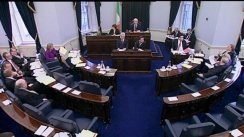
Ireland’s Seanad to invite Nicola Sturgeon to address it on Brexit

GREAT AFFINITY BETWEEN IRELAND AND SCOTLAND, SAYS FINE GAEL SENATOR PADDY BURKE
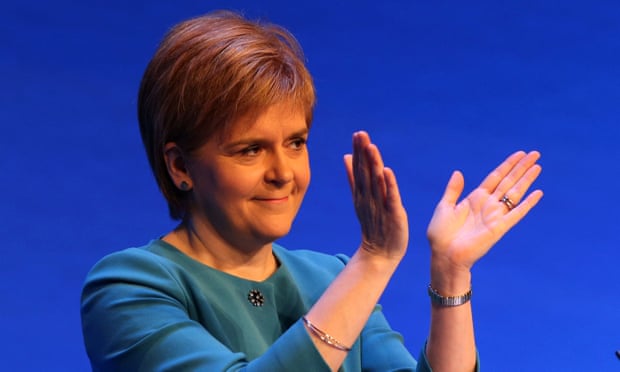
  

SCOTLAND’S FIRST MINISTER NICOLA STURGEON (above) DELIVERS A SPEECH DURING A MEDIA CONFERENCE AT THE SCOTLAND HOUSE IN BRUSSELS.

Scottish first minister Nicola Sturgeon is to be invited to address the Seanad on the UK’s exit from the EU before it adjourns for the summer recess later this month.
The proposal was made by Fine Gael Senator Paddy Burke, who said there was a great affinity between parts of Ireland and Scotland, with both having a lot in common.
“We heard a lot recently about countries that want to leave the EU, but Scotland wants to stay in it,’’ he added.
Sinn Féin Senator Rose Conway-Walsh said she agreed with the proposal.

SCOTTISH INDEPENDENCE

“People seem to be fighting the cause for Scottish independence and its right to have a say over its own destiny, but they need to show the same consideration and fight with the same vehemence for our comrades in the North,’’ she added.
“It cannot be done for one without the other.’’
She said she admired and respected Ms Sturgeon and would be very happy to hear from her in the House.
Later, during a debate on delivering sustainable full employment, Fine Gael Senator Neale Richmond said a week from the referendum some people had expressed frustration that Brexit was still being discussed.

EXTREMELY IMPORTANT

While he was sorry to disappoint them, the referendum result was extremely important in the context of delivering sustainable full employment.
Mr Richmond said it was important to emphasise Ireland would continue to be an EU member, with full access to the single market and retaining all of the advantages for inward investment.
A report produced in May suggested Brexit could push about €6 billion of investment into Ireland’s financial services sector, he said.
A bank already moving some operations to Ireland was Switzerland’s Credit Suisse, which had said in December it would make Dublin its primary hub for servicing hedge funds in Europe and move staff from London to here, said Mr Richmond.
“A report from Bloomberg earlier this week compared Dublin with Paris, Frankfurt, Luxembourg, Amsterdam and even Edinburgh as possible destinations for financial institutions now looking to relocate from London in a post-Brexit world,’’ he added.
“A glowing recommendation brought just two negative concerns to light: a relative lack of office space and high personal tax rates.’’

LOW PAY SCANDAL

Sinn Féin Senator Paul Gavan said there was a scandal of low pay in Ireland, particularly in the hospitality industry.
“It is an industry that for some time has enjoyed a generous tax break in terms of a reduced VAT rate of nine per cent, costing taxpayers €650 million a year,’’ he added.
“We know that the hotel industry is booming, with record levels of room occupancy, but that stands in stark contrast to the terms and conditions of workers in that sector.’’

Just 7% of Irish parents think their kids may be overweight?

DENIAL?  REALITY IS THAT 1 IN 4 IS OVERWEIGHT OR OBESE

Image result for Just 7% of parents think their kids may be overweight?    

LESS THAN HALF OF IRISH PARENTS KNOW WHAT WEIGHT THEIR CHILDREN ARE, WHILE JUST 7% FEEL THAT THEIR CHILDREN MAY BE OVERWEIGHT, NEW DATA HAS SHOWN.

According to the latest Pfizer Health Index, Only 47% of parents know what weight their children are and the vast majority do not think they are overweight, despite the fact that currently, one in four children in Ireland is overweight or obese.
When asked if their children were undertaking 60 minutes of physical activity per day – the recommended daily amount – just 20% of parents said that their children were achieving this. The average was 60 minutes per day four times a week.
“One in four of our children is currently overweight or obese, yet because the norm has changed we are not recognising this reality. Children’s social, emotional and physical health is being harmed. We as a society must partner with industry and the Government to turn the tide on childhood obesity in Ireland as a matter of priority,” commented Dr Cliodhna Foley-Nolan of Safefood.
Parents were also asked about the use of screens in their home. The average length of time children spend looking at various screens each day is two hours and 16 minutes according to these findings.
Some 15% of children bring a screen, such as a smartphone or tablet, to bed with them, and 24% of parents have no rule in relation to screens in bed.
“Modern technology is undoubtedly impacting on the health of our family unit and we can see that children are more sedentary than before. There has been exponential growth in the use of screens particularly with mobiles and tablets and in Ireland we currently have more mobile phones than we do people.
“While technology is a powerful tool, it is important that parents aim to be in charge of the use of that technology, rather than technology being in charge of you,” said family psychotherapist, Dr John Sharry.
The health index also looked at family health in general. It asked parents to rank health priorities for their children. The biggest priority for parents was that their children reached their developmental milestones (31%). The second most important priority was that their children would have access to GP care (29%).
Other areas that were seen as priorities by parents included the social development of their child, including developing friendships, educational performance and having their children vaccinated.
This is the 11th annual Pfizer Health Index to be carried out. This year’s index was based on a survey of over 1,200 people aged 16 and older. It was undertaken by Behaviour & Attitudes in April.

Marijuana shown to protect brain cells from Alzheimer’s


A NEW STUDY SUGGESTS THAT COMPOUNDS FOUND IN MARIJUANA CAN STAVE OFF THE BRAIN DAMAGING EFFECTS OF ALZHEIMER’S DISEASE. IT’S A PROMISING DISCOVERY, BUT CLAIMS THAT POT CAN PREVENT THIS AGE-RELATED BRAIN DISORDER ARE PREMATURE. PUT THE PIPE AWAY, MAN.

Researchers from the Salk Institute have shown that tetrahydrocannabinol (THC) and other compounds found in marijuana can contribute to the removal of toxic proteins, known as amyloid beta, which have been linked to Alzheimer’s disease. This research offers new insight into the role that inflammation plays in this neurological disorder, which could point the way to new drugs.
But this research should be taken with a grain of salt. The protective effects of marijuana were observed in neurons grown in the lab, so it’s not immediately clear if the same process is applicable to living human beings. What’s more, this study doesn’t speak to the potential negative effects of marijuana on the aging brain. It’s far too early to be making claims about pot being some kind of miracle cure for Alzheimer’s, or even as something that can be used as a protective measure. Only time—and further research—will truly tell.
Previous research has shown that compounds in marijuana, called cannabinoids, protect the brain from the symptoms of Alzheimer’s. This new study is unique in that it’s “the first to demonstrate that cannabinoids affect both inflammation and amyloid beta accumulation in nerve cells,” as the study’s lead author David Schubert put it in a statement.
Scientists are fairly certain that these toxins contribute to the growth of damaging plaque deposits in the brain, but they’re not entirely sure about the precise role that’s played by amyloid beta in the process. To learn more, Schubert’s team studied nerve cells that were modified to produce high levels of amyloid beta. Left untreated, these cells were subject to inflammation and higher rates of death. But when the researchers exposed these cells to cannabinoids, the levels of the amyloid beta proteins were reduced. The inflammation disappeared, and the neurons were able to survive. The compounds found within marijuana appeared to be protecting the cells from dying.
As noted, this research was conducted on neurons in a petri dish, so it’s not clear if an actual brain would respond to cannabinoids in the same way. Scientists will need to perform clinical trials to find out.
They’re also going to have to consider the potential tradeoffs of using marijuana as a drug to stave of neurodegeneration. Previous studies have shown that pot can screw around with our memories—which is clearly a bad thing in a disease that already ravages memories. Recent research also shows that marijuana alters the brain reward system, and that that long-term use makes it more difficult to recall memories during middle age.
Pot may very well help with Alzheimer’s, but we’re clearly going to have to be mindful of its negative effects as well.

Pollution has been causing springtime to come early 'Says researchers'


ARTIFICIAL LIGHTING HAS BEEN CAUSING SPRINGTIME TO COME EARLY, WITH TREES BURSTING INTO LEAF A WEEK EARLIER IN AREAS WITH MORE LIGHT POLLUTION, SCIENTISTS HAVE FOUND.

Researchers at the University of Exeter compared the amount of artificial night-time light across the country and the date at which new leaves first appeared on trees such as sycamore, oak, ash and beech.
The research drew on “citizen science” data from the Woodland Trust, which asks members of the public to record the signs of the changing seasons, such as bud-burst, in its Nature’s Calendar scheme.
Comparing 13 years of data about when the buds were bursting with satellite images of artificial lighting, the researchers found the key sign of spring was occurring up to 7.5 days earlier in brighter areas, with the effect larger in later-budding trees.
Excluding large urban areas from the analysis showed the advance of spring was even more pronounced, the research published in the journal Proceedings of the Royal Society B, found.
This showed the early bud bursting was not simply down to the “heat-island” effect in which cities are slightly warmer than the surrounding areas.
The way the effect was seen across all areas also suggests it is not down to temperature rises, according to the study, which was a collaboration between the university and independent environmental consultants Spalding Associates, in Truro, Cornwall.
The scientists raised concerns that the impact of artificial night-time lighting – such as street lights – on trees would have a knock-on effect on other wildlife.
Winter moths, which feed on emerging oak leaves, could be affected, which in turn could have an impact on birds which feed on them.
Dr Kate Lewthwaite, Woodland Trust citizen science manager, said: “Analysis of Nature’s Calendar data suggests that increased urbanisation is continuing to put pressure on the natural world, in ways that we could not have foreseen.
“As the seasons become less and less predictable, our native wildlife may struggle to keep up with fluctuations that affect habitats and food sources.
“Hopefully this research will lead to new thinking on how to tackle such issues, and will help influence future development decisions.”   

Friday, February 19, 2016

Donie's Ireland daily news BLOG

Enda Kenny playing cute over taxation issue remarks by President Higgins

TAOISEACH SAYS HE RESPECTS MICHAEL D HIGGINS WHO ‘UNDERSTANDS HIS REMIT’

 TAX CUTS?  

PRESIDENT MICHAEL D HIGGINS HAS QUESTIONED THE EMPHASIS BEING PLACED ON TAX CUTS BY POLITICAL PARTIES IN A INTERVIEW ON THE EVE OF THE GENERAL ELECTION CAMPAIGN.

The Taoiseach Enda Kenny refused to be drawn on Wednesday whether he had remonstrated with the President Michal D. Higgins after the President publicly asked if it was possible to have a decent society and at the same time lower taxes for short political gain.
Asked on RTÉ radio if it was appropriate for the President to make such a comment, Mr Kenny said he had spoken to Mr Higgins and that “he understood his remit”.
“I am not going to interfere across [the]threshold. The President has made a number of comments over the years. I have conversations with him. We understand each other”.
Asked if he had remonstrated with him over the remarks, Mr Kenny said he had a pleasant exchange of views with the President.
“He is a president I respect very much”.
Asked whether he disagreed with the President’s remarks, Mr. Kenny said politicians had to make decisions in the interests of the people.
“ My answer is it is possible to have a decent society with lower taxes”.
In an unprecedented intervention on the eve of the general election campaign President Michael D Higgins questioned the emphasis being placed on tax cuts by political parties.
“Is it possible to have a decent society and at the same time continue to lower taxes for the purposes of securing the best short-term benefit?” asked Mr Higgins.
Speaking earlier this month after the publication of his report on The President of Ireland’s Ethics Initiative, Mr Higgins warned that essential services must not become a political football in the election campaign.“I can’t obviously comment on the platforms of the parties that will contest the election,” he said before discussing the issue of taxation.
“People setting their face against tax and using the language that regards it as inevitably a great burden I’m afraid represents a view of the world [which]is not one that I think really can engage with what we are speaking about in the ethics initiative.”
The President said there had been great failures of an ethical kind in the lead-up to the recession but the good news was that the public wanted to get to a new place and wanted to get there ethically.
“But sometimes they are contradicted because they are being offered short-term advantages for themselves which are, if you like, contradicting the best of their social aspirations,” he said.

Irish Bishops urge the public to engage with and challenge election 2016 candidates?

    
The Archbishop of Armagh (above left) Eamon Martin, 

IRISH BISHOPS HAVE THIS MORNING RELEASED A STATEMENT CALLING ON THE PUBLIC TO VOTE IN THE FORTHCOMING GENERAL ELECTION.

They want all citizens and political parties to reflect and take stock of how we respond to the plight of the most vulnerable, ahead of the vote.
They say democracy flourishes when it is rooted in a shared social ethic and that good social policy requires economic stability and sustained growth.

THE BISHOPS ALSO SAID THAT IRELAND’S HEALTH CRISIS IS THE RESULT OF A FUNDAMENTAL FAILURE OF POLITICS.

Pastoral Statement of the Catholic Bishops of Ireland on the Upcoming General Election in full
A general election is an important moment which offers a democratic society an opportunity to reflect on its successes and failures.
In Ireland we are fortunate to live in a lively democratic society, even with all its imperfections.
Democracy requires in the first place that all citizens exercise their right to vote and we strongly encourage all to vote in the up-coming election.
Democracy however is not limited to voting.
Democracy is fundamentally about people working and walking together to foster the common good.
Democracy is damaged by indifference and by a splintering of society or a fixation on individual interests.
A general election is a moment in which all citizens, and not just political parties, should reflect and take stock of the health of the nation and especially on how we respond to the plight of the most vulnerable.
Democracy flourishes when it is rooted in a shared social ethic.
To succeed, good social policy requires economic stability and sustained growth.
But economic growth on its own does not necessarily generate social equity.
Social equity has a logic of its own which must be worked on to achieve its aim.
Our comparatively wealthy Ireland has still a long path to travel in this task.
We share the anxiety of many citizens in Ireland at the fact that there is an uncertain social climate in the country regarding vital sectors of people’s lives, especially regarding health, homes, education, security, the fostering of a solid human ecology, and international responsibility.
Health: Most people feel great unease about the current health care system. They worry about what would happen to them if they became ill. They worry about the health of their children.
They worry about what would happen to their parents and other elderly people should they become ill. They are worried about the cost of health care.
They are worried about the quality of health care, including mental health care.
Successive governments have presented a variety of solutions and in so many cases they have either failed or have not been implemented. A blame game is not the answer.
Ireland’s health crisis is the result of a fundamental failure of politics.
Home: There is a crisis of homelessness, not just of those who sleep rough on our streets, but of those who are housed in inadequate and precarious accommodation especially in hotel rooms totally unsuitable for children and families.
All recognise that providing adequate and affordable social housing is an essential pillar of any solution.
Some more recent social housing has been poor in quality. Private rental accommodation is scarce and property market dealings are even reducing the available pool.
Education: This General election takes place on the anniversary of the 1916 Rising and the Proclamation of a Republic which set out to cherish all the children of the nation equally.
There has been much discussion about inequality in access to education. We are a young country and we will urgently need more and more new schools for the future.
The real inequality in Irish schools is not religious in nature but it is the economic inequality where poorer communities and schools with a large percentage of disadvantaged children are not being adequately supported.
Ireland is still marred by neglect of children and of lack of opportunity for the children of the most deprived and groups such as Travellers.
Security: Citizens can only exercise their rights fully if they live within an overall climate of security. The most fundamental obligation of the State is the protection of its citizens.
Recent killings on the streets of Ireland have shocked all of us.
These are not simply about gangland feuds; they are the product of a criminal industry of death which unscrupulously floods our streets and our children with drugs.
It is an “industry” which destroys young lives daily and which fosters even broader criminality.
People feel insecure in their homes both in rural and urban communities. They will willingly support policies which will strengthen An Garda Síochána.
Human ecology: Pope Francis speaks often of climate change. But he also speaks of a “human ecology”.
Austerity is not a popular word but there is another kind of austerity, that of simplicity in life-style in harmony with nature, through which all of us indicate where our real values lie, rather than in the empty values of consumerism and a rush for the superfluous.
Families deserve much greater support in their work in fostering and transmitting values.
A true human ecology recognises the equal right to life of every person from the moment of conception to the moment of natural death.
The Constitution of Ireland embraces the right to life of the unborn child.
It is a fundamental affirmation of equality, where the right to life of no child is considered of less value than that of another.
We strongly oppose any weakening of the affirmation of the right to life of the unborn.
International responsibility: Ireland is an island nation but not an isle of isolation. We belong within a world community. Ireland’s missionary past is a clear indication of the deep concern of the people of Ireland for the progress of peoples worldwide.
As a traditionally emigrant country we share a historical memory of how our emigrants were received or at times rejected in the lands to which they moved. Now it is the time for us to reciprocate the experience of openness by welcoming to our communities people who flee from persecution, from economic exclusion or from religious discrimination. Despite economic challenges Ireland can and must maintain its commitments in international life especially recent commitments to finance development and to combat climate change.
The believer in Jesus Christ cannot separate his or her understanding of responsibility in and for society from those criteria of judgement which are set out in the Gospel: “For I was hungry and you gave me food, I was thirsty and you gave me something to drink, I was a stranger and you welcomed me, I was naked and you gave me clothing, I was sick and you took care of me, I was in prison and you visited me” (Mt 25:35–36).
The Christian in politics and in society cannot renounce his or her special responsibility to protect the weak and the marginalised.
This responsibility cannot be delegated or suppressed to party interests or emptied into the language of spin.
Politics is not just the art of the possible; it is a vocation where the interests of all citizens should respected and where the respect and trust of citizens will only be won by honesty and integrity.
As bishops we encourage all citizens to engage with and challenge their local candidates about their commitment to the questions we have indicated, and about their understanding of politics as truly working and walking together to foster the common good.

Social group activities after retirement may be a good way for a longer life

  
A group of friends above relaxing together playing cards and getting involved with a choral group is a great way of transition from working to retirement life. 
Should retirement planning include strategies for being active and involved in social groups? the answer is probably yes, researchers have to say.
Losing membership in social groups during the retirement transition may be tied to lower quality of life and higher risk of death over the next six years, according to a new study of older adults in England.
“As people reach the end of their working lives, they are typically exposed to a lot of advice about how to plan their finances, medical care, and physical exercise in order to have a long and healthy retirement,” said a leading author Niklas K. Steffens of The University of Queensland in Brisbane, Australia.
Social group membership may not be a part of this discussion, although the new results indicate that perhaps it should be, Steffens told Reuters Health by email.
“Social groups provide you with a sense of identity,” he said. “Amongst other things, they give you a sense of belonging, meaning, and purpose.”
The researchers studied survey responses from 424 adults who retired between 2002 and 2010 and 424 similar older adults who did not go through the retirement transition. The surveys included questions on work status, age, sex, subjective physical health, quality of life and socioeconomic status.
The surveys also asked about membership in eight categories of social groups, including social clubs, church or other religious groups.
About three-quarters of both groups were married.
For those who retired and were members of two social groups while still working, the risk of death over the next six years was 2 percent if they maintained both group memberships, 5% if they lost one group membership and 12% if they lost both group memberships, according to a report in BMJ Open.
The quality of life also decreased as group membership decreased.
“These effects are not small but are comparable with those derived from regular physical exercise,” Steffens said.
This study provides initial evidence of some connection between social groups and quality of life or mortality, but the statistics didn’t really directly test number of membership changes, said Mo Wang of the University of Florida, Warrington College of Business in Gainesville, who was not involved in the analysis.
Since the comparison group did not go through retirement, it is hard to compare them to the retirement group, Wang told Reuters Health by phone.
“The issue with this kind of study is causality is very difficult to determine,” he said. “While my inclination is that social membership would probably help directly or indirectly,” that’s not necessarily the case based on this study, he said.
Healthier people are more likely to join more groups and be more active to start with, the researchers noted.
In any case, an important part of joining a new group is making sure it’s a good fit for purpose and you, he said – make sure you choose one you enjoy and that does not cause undue stress.
“If you are in the process of retiring and don’t belong to any group, join one,” Steffens said. “If you exercise regularly, this is also likely to be good for you and your health.”
Exercising in a group may be even better, he said.
“One important way for all of us to enhance the health of those who are retired is to support them in their efforts to be part of groups that provide them with a sense of communality and belonging,” he said.

The number of swine flu deaths in Ireland this winter rises to 12

HEALTH PROTECTION SURVEILLANCE CENTRE SAYS 341 H1N1-RELATED HOSPITALISATIONS THIS SEASON


ACCORDING TO THE LATEST WEEKLY FLU REPORT FROM THE HSE’S HEALTH PROTECTION SURVEILLANCE CENTRE (HPSC), A 16TH INDIVIDUAL DIED OF FLU BETWEEN FEBRUARY 8TH AND FEBRUARY 14TH.

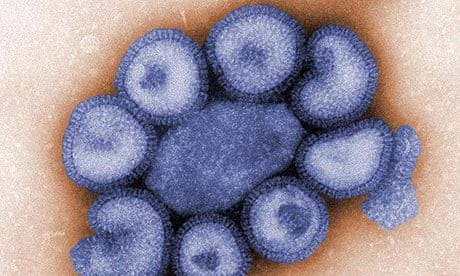
There has been another death from swine flu bringing the death toll from the virus so far this winter to 12.
According to the latest weekly flu report from the HSE’s Health Protection Surveillance Centre (HPSC), a 16th individual died of flu between February 8th and February 14th.
The deaths have been mostly from the H1N1 virus, which is otherwise known as swine flu, as well as the B strain of the virus. The median age of those who have died from flu this year is 63.
Flu-associated deaths include all deaths where it is reported as the primary or main cause of death by the physician, or if flu is listed anywhere on the death certificate as the cause of death.
During the sixth week of the year, there were 194 confirmed flu hospitalisations, bringing the 2015/2016 season total to 665. Of these, 341 have been associated with swine flu, and 225 with the B strain. The median age of hospitalised cases for the season to date is 25.
The HPSC said most indicators of flu activity in the State decreased during week six of the year, but that activity remained “at high levels”.
It said swine flu was the “predominant virus” circulating and that reports of hospitalisations and intensive care admissions associated with flu “remain elevated”. It recommended that antivirals be considered for the treatment and prevention of flu in high-risk groups.

Smoking marijuana does not make you likely to be anxious or depressed,

A STUDY FINDS OUT?


CANNABIS USE IS NOT ASSOCIATED WITH INCREASED RISK FOR DEVELOPING

CANNABIS USE DISORDERS NEW RESEARCH SUGGESTS.

But smoking marijuana does increase the risk of becoming addicted to alcohol and other substances, the study based on 35,000 American adults found.
The alcohol and drug use disorders marijuana users are at risk of include nicotine dependence, after three years of follow-up according to the paper – published in the journal JAMA Psychiatry.
The authors wrote: “Our study indicates that cannabis use is associated with increased prevalence and incidence of substance use disorders. These adverse psychiatric outcomes should be taken under careful consideration in clinical care and policy planning.”
Amir Englund, a post-doctoral researcher in psychopharmacology at the Institute of Psychiatry, Psychology and Neuroscience at King’s College London, said: “The present study is a large study exploring the effects of cannabis use on future problems such as anxiety, depression and drug and alcohol addiction.
“They found that use of cannabis was related to increased risk of later addiction to alcohol, cannabis and other drugs. Cannabis was not related to anxiety or depression at follow-up.
“Of course a study such as this is unable to ascertain causality between cannabis use and later drug addiction, merely that a relationship exists.”

Russian plan for saving our earth? Nuking the 60-megaton Apophis asteroid may be the target?

    
Russia’s new plan for protecting Earth from potential asteroid strikes has some chilling aspects. Not only would it violate a 49-year-old international treaty, but it involves nuking potentially-hazardous asteroid 99942 Apophis.
On February 15, 2013, a 20-metric-tonne asteroid plummeted into Earth’s atmosphere and exploded over Chelyabinsk, Russia. Although the incident did not result in any fatalities, it highlighted exactly how important our asteroid detection and monitoring programs are, and that we should be investing considerably more in both these programs and into future plans to protect ourselves should we discover one of these space rocks on a collision course with Earth.
While teams of scientists from around the world have come up with many novel ideas on how to do this – including splattering asteroids with bright paint and letting pressure from sunlight divert their path, to putting a small satellite next to them and using gravity to draw them into safer orbits.
An old standby from science fiction has been to simply “nuke” them. The two latest examples of “doomsday from space” films – Armageddon and Deep Impact – follow this philosophy, although with slight alterations and slightly different targets (asteroid vs comet).
It seems that Russian scientists have taken some cues from these scripts now, as Russian News Agency TASS reported last week that a new project is in the works to convert some of the nation’s complement of Intercontinental Ballistic Missiles (ICBMs) into planetary defense missiles. Rather than targetting exceptionally large asteroids, however, these upgraded ICBMs would be aimed at smaller objects, between 20-50 metres across.
On the one hand, this makes a certain amount of sense. Nuclear weapons are the most powerful ones at our disposal, and ICBMs can be launched at a moment’s notice. If we detected an asteroid inbound with only a short lead time, it is possible for an ICBM to intercept it beforehand.
On the other hand, though, there are several problems with this plan.
The very first one is that putting nuclear weapons into space violates an important part of the Outer Space Treaty of 1967, which Russia both signed and ratified (along with 103 other parties around the world). Along with the basic issue of the potential political tensions that could result from stationing nuclear weapons in space or simply aiming them in that direction, if a nuclear weapon were set off close enough to Earth, the resulting electromagnetic pulse could cripple satellites and spacecraft in orbit, and knock out power grids and computers here on the ground. This is preferable to a devastating asteroid impact, however it is not an ideal choice.
Beyond that, if a special exception was made in the Treaty for planetary defense, even science fiction has been quick to point out that some asteroids are simply too large and dense, and moving too quickly, to be noticeably affected by a blast from a nuclear weapon. Smaller asteroids, such at the one that exploded over Chelyabinsk or a bit larger, could be dealt with in this way, however that particular asteroid was only spotted when it entered the atmosphere. Not the best time to be targetting it with a nuclear missile. Others of the same size, caught further out in space, could be effectively destroyed, however.
For larger ones, a few hundred metres wide or bigger, the best you could probably do is divert it slightly from its path. If you have a very long lead-time before an impending impact, this is actually an effective strategy: Blow up several bombs in its vicinity, each one nudging it further off course, and you could put it on a trajectory that will take it safely past us (and lock it into a safe path for the foreseeable future).
Get a little more aggressive with one of these larger asteroids, such as by directly targetting the rock itself in an attempt to destroy it, and the likely result would be turning a single large space rock into a cloud of smaller pieces. In this case, unless you can guarantee that you’ve broken it down so the largest chunks are only about a metre wide or so (which would burn up fairly harmlessly in the atmosphere), you’ve probably made the situation worse. Rather than one massive strike, there would be multiple impacts, spread out over a large area, which could result in just as much damage, or possibly even more.
Why is this alarming?
According to TASS, the Russian scientists say that they want to test out their new system on a very specific asteroid – 99942 Apophis.
Apophis has already caused some concern in recent years. Discovered in 2004, plots of this asteroid’s orbit showed that it comes around for an encounter with Earth every three years or so, with some of those encounters involving close approaches. Two of these close approaches, in 2029 and 2036, were especially worrisome, since the 2029 pass had the potential to alter Apophis’ orbit just enough that the 2036 encounter could result in an impact.
NASA has since ruled out any possibility of impact from Apophis, ever, but if Russia launches one or more nuclear missiles at the asteroid during its March 28, 2036 pass – which seems to be the plan, according to TASS – it could cause unintended consequences.
The asteroid is expected to be quite distant during that flyby – at least 34 million km away, or roughly 88 times farther away than the Moon. Thus, one or even a few tiny nudges from nuclear blasts wouldn’t likely cause any immediate problems. The biggest concern for such a test is that Apophis is quite a bit larger than the size group of asteroids this defense system is apparently intended for. At roughly 325 metres across and tipping the scales at around 60 million metric tonnes, this is not an asteroid you want to mess around with, especially now that it has been deemed safe. Without knowing Apophis’ exact characteristics and composition, detonating nuclear weapons near it, or using them to break it apart, could result in a raised threat level for future passes.
There’s no word yet on whether the plan has been funded or been given the final go-ahead. Hopefully the rest of the world will be able to weigh in on the feasibility of this plan before it would go into effect.