Pages

Showing posts with label pollution. Show all posts

Friday, July 1, 2016

Donie's Ireland daily news BLOG update

Noonan says Brexit will not affect Budget as Irish shares rise

UK REFERENDUM MAY DELAY EU RULING ON APPLE’S IRISH TAX AFFAIRS, MINISTER NOW SAYS?


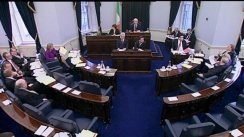
MINISTER FOR FINANCE MICHAEL NOONAN AT THE SELECT COMMITTEE ON FINANCE, PUBLIC EXPENDITURE AND REFORM

The Brexit vote will not affect Budget 2017 but its longer term effect on Ireland could be serious depending on what deal the UK agrees with the EU, Minister for Finance Michael Noonan has said.
The tax streams for 2017 are relatively fixed at this stage and contingencies for the initial impact of the Brexit result have already been worked out, Mr Noonan said. Beyond that it will depend on what sort of new arrangement the UK agrees with the EU.
If the UK remains in the single market “then the impact [on Ireland] will be quite low,” Mr Noonan told the Select Committee on Finance, Public Expenditure and Reform, and An Taoiseach on Thursday. But if a more distant relationship emerges involving tariffs and border posts, “the impact would be bigger… it would be serious.”

IRISH SHARES RISE.

The Minister’s comments came as Irish and other European shares rose for a third straight session as they continued to claw back some of the ground lost in the immediate aftermath of the UK referendum. The Iseq added 1%, while the FTSE 100 gained 2.3% in London. Meanwhile, the market interest rate, or yield, on the Government’s 10-year bonds fell to a record low of 0.509% as investors continued to speculate that the European Central Bank will add stimulus to limit the fallout from Brexit.
Mr Noonan said post-Brexit market movements have been bad for the UK in terms of exchange rates and stock exchange values, with the international expectation being that the UK will become a weaker economy. He said the UK quitting the EU presents potential economic and foreign direct investment (FDI) advantages for Ireland, though if the British government feels it is losing out “they’ll probably adjust policy to forestall that.”
Meanwhile, Mr Noonan said the UK vote may delay the EU’s decision on whether iPhone-maker Apple’s tax dealings in this country breached state-aid rules. While he said it had been rumoured that the EU would deliver its final ruling on its case against Ireland in July, the possibility of an adverse finding and large tax bill for “an American company operating in Europe” next month is now less likely, following the the referendum.
Enda Kenny
Also speaking to the committee, Taoiseach Enda Kenny insisted that the best thing for Ireland would be if the UK retains access to the single market. But he added that for this to happen the country must accept the key principles of the EU, including the free movement of people.
He said the new British prime minister, due to be in place by September 9th, will be given a short period of time to work out their strategy before they will be expected to initiate formal exit negotiations.
The process should last about two years, after which a short extension may be granted. However, if the UK and EU fail to reach an agreement, then World Trade Organisation rules will come into effect. Mr Kenny said he hoped this didn’t happen.
Mr Kenny also said he has made the EU aware that Ireland’s interest are in maintaining the common travel area between Ireland and the UK, protecting the peace process, maintaining the open border between the Republic and the North and maintaining trade links between Ireland and the UK.

Ireland’s Seanad to invite Nicola Sturgeon to address it on Brexit

GREAT AFFINITY BETWEEN IRELAND AND SCOTLAND, SAYS FINE GAEL SENATOR PADDY BURKE

  

SCOTLAND’S FIRST MINISTER NICOLA STURGEON (above) DELIVERS A SPEECH DURING A MEDIA CONFERENCE AT THE SCOTLAND HOUSE IN BRUSSELS.

Scottish first minister Nicola Sturgeon is to be invited to address the Seanad on the UK’s exit from the EU before it adjourns for the summer recess later this month.
The proposal was made by Fine Gael Senator Paddy Burke, who said there was a great affinity between parts of Ireland and Scotland, with both having a lot in common.
“We heard a lot recently about countries that want to leave the EU, but Scotland wants to stay in it,’’ he added.
Sinn Féin Senator Rose Conway-Walsh said she agreed with the proposal.

SCOTTISH INDEPENDENCE

“People seem to be fighting the cause for Scottish independence and its right to have a say over its own destiny, but they need to show the same consideration and fight with the same vehemence for our comrades in the North,’’ she added.
“It cannot be done for one without the other.’’
She said she admired and respected Ms Sturgeon and would be very happy to hear from her in the House.
Later, during a debate on delivering sustainable full employment, Fine Gael Senator Neale Richmond said a week from the referendum some people had expressed frustration that Brexit was still being discussed.

EXTREMELY IMPORTANT

While he was sorry to disappoint them, the referendum result was extremely important in the context of delivering sustainable full employment.
Mr Richmond said it was important to emphasise Ireland would continue to be an EU member, with full access to the single market and retaining all of the advantages for inward investment.
A report produced in May suggested Brexit could push about €6 billion of investment into Ireland’s financial services sector, he said.
A bank already moving some operations to Ireland was Switzerland’s Credit Suisse, which had said in December it would make Dublin its primary hub for servicing hedge funds in Europe and move staff from London to here, said Mr Richmond.
“A report from Bloomberg earlier this week compared Dublin with Paris, Frankfurt, Luxembourg, Amsterdam and even Edinburgh as possible destinations for financial institutions now looking to relocate from London in a post-Brexit world,’’ he added.
“A glowing recommendation brought just two negative concerns to light: a relative lack of office space and high personal tax rates.’’

LOW PAY SCANDAL

Sinn Féin Senator Paul Gavan said there was a scandal of low pay in Ireland, particularly in the hospitality industry.
“It is an industry that for some time has enjoyed a generous tax break in terms of a reduced VAT rate of nine per cent, costing taxpayers €650 million a year,’’ he added.
“We know that the hotel industry is booming, with record levels of room occupancy, but that stands in stark contrast to the terms and conditions of workers in that sector.’’

Just 7% of Irish parents think their kids may be overweight?

DENIAL?  REALITY IS THAT 1 IN 4 IS OVERWEIGHT OR OBESE

Image result for Just 7% of parents think their kids may be overweight?    

LESS THAN HALF OF IRISH PARENTS KNOW WHAT WEIGHT THEIR CHILDREN ARE, WHILE JUST 7% FEEL THAT THEIR CHILDREN MAY BE OVERWEIGHT, NEW DATA HAS SHOWN.

According to the latest Pfizer Health Index, Only 47% of parents know what weight their children are and the vast majority do not think they are overweight, despite the fact that currently, one in four children in Ireland is overweight or obese.
When asked if their children were undertaking 60 minutes of physical activity per day – the recommended daily amount – just 20% of parents said that their children were achieving this. The average was 60 minutes per day four times a week.
“One in four of our children is currently overweight or obese, yet because the norm has changed we are not recognising this reality. Children’s social, emotional and physical health is being harmed. We as a society must partner with industry and the Government to turn the tide on childhood obesity in Ireland as a matter of priority,” commented Dr Cliodhna Foley-Nolan of Safefood.
Parents were also asked about the use of screens in their home. The average length of time children spend looking at various screens each day is two hours and 16 minutes according to these findings.
Some 15% of children bring a screen, such as a smartphone or tablet, to bed with them, and 24% of parents have no rule in relation to screens in bed.
“Modern technology is undoubtedly impacting on the health of our family unit and we can see that children are more sedentary than before. There has been exponential growth in the use of screens particularly with mobiles and tablets and in Ireland we currently have more mobile phones than we do people.
“While technology is a powerful tool, it is important that parents aim to be in charge of the use of that technology, rather than technology being in charge of you,” said family psychotherapist, Dr John Sharry.
The health index also looked at family health in general. It asked parents to rank health priorities for their children. The biggest priority for parents was that their children reached their developmental milestones (31%). The second most important priority was that their children would have access to GP care (29%).
Other areas that were seen as priorities by parents included the social development of their child, including developing friendships, educational performance and having their children vaccinated.
This is the 11th annual Pfizer Health Index to be carried out. This year’s index was based on a survey of over 1,200 people aged 16 and older. It was undertaken by Behaviour & Attitudes in April.

Marijuana shown to protect brain cells from Alzheimer’s


A NEW STUDY SUGGESTS THAT COMPOUNDS FOUND IN MARIJUANA CAN STAVE OFF THE BRAIN DAMAGING EFFECTS OF ALZHEIMER’S DISEASE. IT’S A PROMISING DISCOVERY, BUT CLAIMS THAT POT CAN PREVENT THIS AGE-RELATED BRAIN DISORDER ARE PREMATURE. PUT THE PIPE AWAY, MAN.

Researchers from the Salk Institute have shown that tetrahydrocannabinol (THC) and other compounds found in marijuana can contribute to the removal of toxic proteins, known as amyloid beta, which have been linked to Alzheimer’s disease. This research offers new insight into the role that inflammation plays in this neurological disorder, which could point the way to new drugs.
But this research should be taken with a grain of salt. The protective effects of marijuana were observed in neurons grown in the lab, so it’s not immediately clear if the same process is applicable to living human beings. What’s more, this study doesn’t speak to the potential negative effects of marijuana on the aging brain. It’s far too early to be making claims about pot being some kind of miracle cure for Alzheimer’s, or even as something that can be used as a protective measure. Only time—and further research—will truly tell.
Previous research has shown that compounds in marijuana, called cannabinoids, protect the brain from the symptoms of Alzheimer’s. This new study is unique in that it’s “the first to demonstrate that cannabinoids affect both inflammation and amyloid beta accumulation in nerve cells,” as the study’s lead author David Schubert put it in a statement.
Scientists are fairly certain that these toxins contribute to the growth of damaging plaque deposits in the brain, but they’re not entirely sure about the precise role that’s played by amyloid beta in the process. To learn more, Schubert’s team studied nerve cells that were modified to produce high levels of amyloid beta. Left untreated, these cells were subject to inflammation and higher rates of death. But when the researchers exposed these cells to cannabinoids, the levels of the amyloid beta proteins were reduced. The inflammation disappeared, and the neurons were able to survive. The compounds found within marijuana appeared to be protecting the cells from dying.
As noted, this research was conducted on neurons in a petri dish, so it’s not clear if an actual brain would respond to cannabinoids in the same way. Scientists will need to perform clinical trials to find out.
They’re also going to have to consider the potential tradeoffs of using marijuana as a drug to stave of neurodegeneration. Previous studies have shown that pot can screw around with our memories—which is clearly a bad thing in a disease that already ravages memories. Recent research also shows that marijuana alters the brain reward system, and that that long-term use makes it more difficult to recall memories during middle age.
Pot may very well help with Alzheimer’s, but we’re clearly going to have to be mindful of its negative effects as well.

Pollution has been causing springtime to come early 'Says researchers'


ARTIFICIAL LIGHTING HAS BEEN CAUSING SPRINGTIME TO COME EARLY, WITH TREES BURSTING INTO LEAF A WEEK EARLIER IN AREAS WITH MORE LIGHT POLLUTION, SCIENTISTS HAVE FOUND.

Researchers at the University of Exeter compared the amount of artificial night-time light across the country and the date at which new leaves first appeared on trees such as sycamore, oak, ash and beech.
The research drew on “citizen science” data from the Woodland Trust, which asks members of the public to record the signs of the changing seasons, such as bud-burst, in its Nature’s Calendar scheme.
Comparing 13 years of data about when the buds were bursting with satellite images of artificial lighting, the researchers found the key sign of spring was occurring up to 7.5 days earlier in brighter areas, with the effect larger in later-budding trees.
Excluding large urban areas from the analysis showed the advance of spring was even more pronounced, the research published in the journal Proceedings of the Royal Society B, found.
This showed the early bud bursting was not simply down to the “heat-island” effect in which cities are slightly warmer than the surrounding areas.
The way the effect was seen across all areas also suggests it is not down to temperature rises, according to the study, which was a collaboration between the university and independent environmental consultants Spalding Associates, in Truro, Cornwall.
The scientists raised concerns that the impact of artificial night-time lighting – such as street lights – on trees would have a knock-on effect on other wildlife.
Winter moths, which feed on emerging oak leaves, could be affected, which in turn could have an impact on birds which feed on them.
Dr Kate Lewthwaite, Woodland Trust citizen science manager, said: “Analysis of Nature’s Calendar data suggests that increased urbanisation is continuing to put pressure on the natural world, in ways that we could not have foreseen.
“As the seasons become less and less predictable, our native wildlife may struggle to keep up with fluctuations that affect habitats and food sources.
“Hopefully this research will lead to new thinking on how to tackle such issues, and will help influence future development decisions.”   

Wednesday, April 6, 2016

Donie's Ireland daily news BLOG

Irish Water the elephant in the room of government talks

HEALY-RAE SAYS PUBLIC HAS WAITED FOR 40 DAYS FOR A GOVERNMENT AND WAS GETTING FRUSTRATED


MICHAEL HEALY RAE (LEFT) AND HIS BROTHER DANNY. MICHAEL HEALY RAE HAS SAID THAT IRISH WATER IS THE ‘ELEPHANT IN THE ROOM’ DURING THE GOVERNMENT FORMATION TALKS.

An Independent TD has said the issue of Irish Water is the “elephant in the room” in all the negotiations with Fine Gael and Fianna Fáil.
Independent TD for Kerry Michael Healy-Rae said “our Lord spent 40 days in the desert” and said the Irish public had waited for a similar period for a government and that patience was now wearing thin.
Mr Healy-Rae said it was unhelpful that Fine Gael leader Enda Kenny and Fianna Fáil leader Micheál Martin have still not spoken to each other, he told Newstalk Breakfast.
On the same programme, Independent Alliance TD for Galway East Sean Canney, also called on the two largest parties to talk directly.
He said it would be wrong to spend another €40 million on a second election and said this money could be spent on tackling homelessness or employing more hospital consultants
Mr Canney said a lot of newly elected TDs, including those in Sinn Fein, had not engaged in the process of government formation and said there should be more focus on them. “What were they elected to do?”
Another Independent Alliance TD, Kevin ‘Boxer’ Moran says his group would make a collective decision on Wednesday on who they will back during a second vote in Dail on the election of a new Taoiseach.
The Longford Westmeath TD’s comments follow the suggestion that a number of non-party deputies may abstain from Wednesday’s vote.
A number of Independent TDs yesterday expressed anger about a tweet posted by Minister for Health Leo Varadkar on Sunday, in which he said his posters were ready for a second election if necessary.

The Panama Papers simply explained even a 5-year old can understand

    
The Panama Papers leak has pretty much been big news around the world. The scandal however has not been the easiest to understand for many people. A Reddit user here tries to ‘Explain it in simple terms Like I’m 5’ (ELI5) type of post that has since gone viral.
ELI5 is exactly what it sounds like – how you would explain a certain thing to a five-year-old. So how do you explain secret banking, offshore accounts and tax evasion to a five-year-old?
Here’s how Dan Gliesack explained the Panama Papers leak to five-year-olds:
When you get a quarter you put it in the piggy bank. The piggy bank is on a shelf in your closet. Your mom knows this and she checks on it every once in a while, so she knows when you put more money in or spend it.
Now one day, you might decide “I don’t want mom to look at my money.” So you go over to Johnny’s house with an extra piggy bank that you’re going to keep in his room. You write your name on it and put it in his closet. Johnny’s mom is always very busy, so she never has time to check on his piggy bank. So you can keep yours there and it will stay a secret.
Now all the kids in the neighbourhood think this is a good idea, and everyone goes to Johnny’s house with extra piggy banks. Now Johnny’s closet is full of piggy banks from everyone in the neighbourhood.
One day, Johnny’s mom comes home and sees all the piggy banks. She gets very mad and calls everyone’s parents to let them know.
Now not everyone did this for a bad reason. Eric’s older brother always steals from his piggy bank, so he just wanted a better hiding spot. Timmy wanted to save up to buy his mom a birthday present without her knowing. Sammy just did it because he thought it was fun. But many kids did do it for a bad reason. Jacob was stealing people’s lunch money and didn’t want his parents to figure it out. Michael was stealing money from his mom’s purse. Fat Bobby’s parents put him on a diet, and didn’t want them to figure out when he was buying candy.
Now in real life, many very important people were just caught hiding their piggy banks at Johnny’s house in Panama. Today their moms all found out. Pretty soon, we’ll know more about which of these important people were doing it for bad reasons and which were doing it for good reasons. But almost everyone is in trouble regardless, because it’s against the rules to keep secrets no matter what.

Irish Central Bank handed out severance payment of €32k to a person who did not work for it?

ANOTHER TWO EXIT PACKAGES WORTH €61K EACH WERE MADE TO STAFF WHO HAD WORKED AT THE BANK FOR LESS THAN TWO YEARS

  
The Central Bank in Dublin (above left)
The state spending watchdog has criticised the Central Bank for handing out a severance payment worth €32,000 to an individual who had not even begun to work for it.
The bank suffered costs of €73,000 as a result of the case as it had to cover its own and the recruit’s legal fees.
Another two exit packages worth €61,000 each were made to staff who had worked at the bank for less than two years.
The Comptroller and Auditor General said the three payments “suggest that the Central Bank needs to review its procedures for managing recruitment and probation”.
It also noted that a long-term contractor who had never been an employee of the bank was awarded €60,000.
The report identified 14 expensive discretionary severance payments, amounting to nearly €1.5m, that were made by public sector bodies between 2011 and 2013.
The Central Bank made six of these payments, which amounted to over €540,000 including legal costs.
Between 2011 and 2013, the report said the bank had “more recourse” to termination agreements and severance payments than the other public sector bodies it examined.
“The frequency of payments could imply weaknesses in the Central Bank’s procedures for managing performance or addressing other human resource issues,” it said.
The bank clocked up its own legal costs and the costs of the employee in all but one case, but details of the legal advice it received were not documented in some cases.
The report noted that such severance payments are often made when the employment relationship breaks down “irreconcilably”.
It also says severance payments may be made to attract desirable candidates to short-term jobs.
An examination of formal severance payments awarded between 2011 and 2013 under six public sector schemes, found they had a value of €17.9m. It said nearly €11m of this was related to pension enhancements. like added years.
It found broad compliance with scheme rules in most cases, except for a scheme for chief executives of state bodies.
The report found two state bodies, who are not named, made severance payments in the form of pension enhancements worth over €1m without the Department of Public Expenditure and Reform’s prior approval.
According to the report, the governor of the Central Bank said the cases it was taken to task over arose in a period of unprecedented renewal and growth at the bank, as staff numbers grew by one third between 2009 and 2013.
A spokesman for the Comptroller and Auditor General said the Central Bank was the only public body named in the report, aside from the departments responsible for signing off on severance payments, because of the high number of discretionary payments it made.

Most Irish beaches meet water standards but six fail to make the cut


Bathers will have to think twice before taking the plunge at six of the country’s beaches after they failed basic water quality tests.
Among the six is Youghal in Co Cork, which continued its poor performance for a second year.
Untreated sewage in the water was the main culprit for the failures, with e. coli and other bacteria, making swimming and other water sports inadvisable and, in some cases, prohibited.
The Environmental Protection Agency (EPA) and Irish Water are working to see what can be done to ensure that the beaches are given a clean bill of health before the summer season, but there are concerns they could remain no-go areas this year.
Matt Crowe, director of the EPA’s Office of Evidence and Assessment, said: “The relevant local authorities, in conjunction with Irish Water, have management plans in place to tackle the main pollution risks at these beaches and these plans are designed to return these beaches to at least ‘sufficient’ quality in the next year or two.”
The EPA also warned, however, that in some cases significant investment in infrastructure will be needed to get standards up to acceptable levels.
Some of the beaches are repeat offenders — Youghal, Co Cork; Duncannon, Co Wexford; and Ballyloughane, Galway City, failed for the second year in a row, while Rush, Co Dublin, failed for the third time in the last four years.
Newcomers to the bathing blacklist are Merrion Strand in Dublin Ccity and Loughshinny, which is close to Rush in north Co Dublin.
EPA inspectors who carry out the quality survey annually stressed the vast majority of the country’s most popular beaches and lakes were clean and clear of harmful pollutants.
Of the 137 inspected, 101 were rated as ‘excellent’ quality, as measured by EU standards, while a further 13 were classed as ‘good’ and 14 were ‘sufficient’.
Two that failed the previous year, Clifden, Co Galway, and Lilliput, Lough Ennell, Co Westmeath, improved enough to escape the blacklist this year, but further tests are awaited before they get a final rating.
The rest are rated as ‘poor’, which under EU regulations means they haven’t met the minimum standards required to give a green light for bathing and recreation.
Trá Inis Oirr in the Aran Islands was inspected for the first time last year and has not been tested enough to be ranked, but the EPA said sampling so far showed excellent results.
Failing the inspections does not automatically mean the beaches are off limits. Peter Webster, EPA senior scientist, said it meant there was “a risk of periodic microbiological pollution”.
“Local authorities are required to put in place notifications for the entire bathing season advising the public against bathing, which could include a bathing prohibition if a serious pollution incident occurs,” said Mr Webster.
During the bathing season, June 1 to September 15, current water quality information and details of any restrictions on bathing are displayed on the national bathing water website, splash.epa.ie, as well as on local beach notice boards.
Bathing restrictions applied on 131 out of 14,659 ‘beach days’ last year, but most suspected pollution incidents resulted in precautionary, short-term restrictions and no evidence of pollution was subsequently discovered.

Bereaved people at greater risk of developing irregular heartbeat,

GROWING BODY OF RESEARCH SUGGESTS STRESSFUL LIFE EVENTS BOOST RISK OF HEART ATTACK OR A STROKE.

    
People who suffer the death of a partner have a heightened risk of developing an irregular heartbeat for up to a year after the event, according to new research.
The risk of an irregular heartbeat, also known as atrial fibrillation, is greatest among the under-60s and when the loss of the partner was least expected, the findings indicate. Atrial fibrillation is a risk factor for stroke and heart failure.
A growing body of evidence suggests that highly stressful life events boost the risk of a heart attack or stroke, but up to now it has not been clear whether this might also be true of atrial fibrillation.
The study, published in the online journal Open Heart, collected data on 88,612 people newly diagnosed with atrial fibrillation and 886,120 healthy people between 1995 and 2014.
The factors?
Danish researchers looked at factors that might influence atrial fibrillation risk. These included time since the bereavement; age and sex; underlying conditions, such as heart disease and diabetes; the health of the partner a month before death; and whether they were single.
Some 17,478 of those diagnosed with atrial fibrillation had lost their partner as had 168,940 of the comparison group.
Underlying illnesses, such as cardiovascular disease and diabetes, and associated treatment for these conditions, were more common among those who had been diagnosed with atrial fibrillation.
But the risk of developing an irregular heartbeat for the first time was 41 per cent higher among those who had been bereaved than it was among those who had not experienced such a loss, the findings indicated.
This heightened risk was apparent, irrespective of gender and other underlying conditions.
The risk seemed to be greatest eight to 14 days following a death, after which it gradually subsided until after a year the risk was similar to that of someone who had not been bereaved.
People under the age of 60 were more than twice as likely to develop atrial fibrillation if they had been bereaved.
Those whose partners were relatively healthy in the month before death were 57 per cent more likely to develop atrial fibrillation. No such increased risk was seen among those whose partners were not healthy and who were expected to die soon.
As an observational study, the research does not permit firm conclusions to be drawn about cause and effect.
Researchers suggest acute stress may directly disrupt normal heart rhythms and prompt the production of chemicals involved in inflammation.
Further research looking at whether the association found applies to more common, but less severe life stressors, is warranted, they say.

Seagulls are 10 times more polluting to beaches than people?

MERRION STRAND (BELOW LEFT) IN DUBLIN IS POLLUTED WITH HUMAN SEWAGE AND BIRD DROPPINGS, AN EPA REPORT FINDS.

   BEACHES_0016_LKM.jpg Rose Feerick and David Strohm pass through hundreds of seagulls as they walk along Venice Beach in Half Moon Bay. The beach has some of the most polluted water in the state, which could partially be caused by large number of seagulls that gather there. (Laura Morton/Special to the Chronicle) *** Rose Feerick
 *** David Strohm Photo: Laura Morton   
“The droppings of a seagull in a single day carried about ten times more concentrated bacteria than the waste from a human in a single day,” said EPA senior scientific officer, Peter Webster.
Seagulls are 10 times more polluting to the country’s beaches than people, according to the latest water quality report from the Environmental Protection Agency (EPA).
The birds have been blamed as one of the reasons for the EPA’s decision to brand water quality at Merrion Strand in Dublin as poor, since they have taken to resting in large number on a sandbar.
“The droppings of a seagull in a single day carried about 10 times more concentrated bacteria than the waste from a human in a single day,” said EPA senior scientific officer, Peter Webster.
Six beaches, including Merrion, have been given “poor” grades, which means that local authorities will put up warnings to swimmers, but will not ban them from swimming there.
However, the EPA report found three-quarters of sites it inspected were “excellent” and 93.4 per cent met minimum EU standards – roughly in line with last year’s numbers.
Those classed as “poor” were Youghal, Co Cork; Duncannon Co Waterford; Rush south beach. Co Dublin and Ballyloughane, Co Galway all of which were first classed as “poor” in 2014, as well as Merrion Strand and Loughshinny in Dublin which were classified as poor for the first time in 2015.
No inland bathing areas were classified as having poor water quality.
EPA senior scientific officer Peter Webster said problems at Merrion Strand in south Dublin were “complex, on-going and difficult to resolve”.
Two factors had been identified. First was the presence the Trimleston and Elm Park streams which were found to be polluted with sewage. Mr Webster said this could be a result of “poor housing connections” from anywhere as far as the M50.
The second issue was an offshore sandbar which had become home to populations of seagulls and wading birds. The droppings of a seagull in a single day carried about ten times more concentrated bacteria than the waste from a human in a single day, he said.
The EPA said where bathing waters were classified as poor, the advice was not to bathe. Where such a classification was made, local authorities must publicise the advice, or in more extreme cases close the beach.
In a statement on Monday evening Fingal County Council said it had agreed a management plan for Loughshinny Beach bathing water with the EPA, “who are satisfied that the measures set out in the plan will achieve an improvement in water quality”.
In relation to the other coastal areas, remediation measures are being put in place by agreement between the local authorities and the EPA.
Mr Webster said a complicating factor in the report was that data was compiled over a four year period, so the data applying to 2015 was collected between 2012 and 2015.
In the case of Loughsinny a once-off event in 2014 had caused a major pollution leak, but previous years had pulled the overall result up. Since 2015 was marginally worse than 2011, “the data tipped” into the poor classification this year, he said.