Pages

Showing posts with label mistakes. Show all posts

Friday, July 17, 2015

Donie's Ireland daily news BLOG

Bertie Ahern said in the banking inquiry today?

‘He did make mistakes’
 

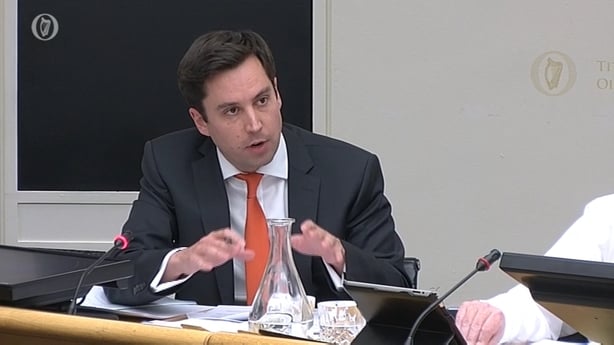
The Fine Gael TD Eoghan Murphy (pic above) asked if Mr Ahern missed warnings in OECD report.

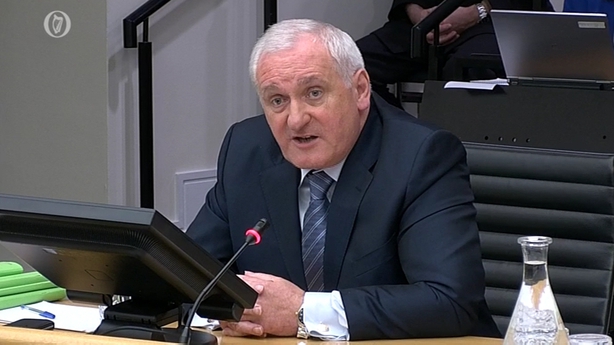
The former Taoiseach Bertie Ahern says his governments did not squander Celtic Tiger boom.

Bertie gives a good defence of his Taoiseach years in the banking inquiry under tough questioning by Pearse Doherty and others.
Former Taoiseach Bertie Ahern said he made some mistakes during his period in office but said it was a period when Ireland “finally caught up with and then surpassed average EU living standards”.
Mr Ahern, who served as Taoiseach between 1997 and 2008, is giving evidence before the Oireachtas banking inquiry.
He rejected suggestions that his governments “squandered” the Celtic Tiger boom, saying 10 of 11 budgets during his time as Taoiseach recorded surpluses.
He said: “All the time, as Taoiseach, what I wanted to do with budgets was to improve the quality of life for ordinary people and to provide services that our country did not have before.
“Those who say we squandered the boom forget that in my time as Taoiseach we actually recorded budget surpluses in 10 of our 11 budgets.”
He also said he wished the housing bubble had not happen and would, in hindsight, have done things differently.
Mr Ahern said that in 2009, the International Monetary Fund (IMF) said the housing bubble “caused mainly by cheap credit due to low interest rates, along with rising incomes and a strong demand for housing”.
He said: “There is no doubt that this created a structural weakness in the economy and the international downturn ensured this has turned from a soft landing into a very hard one.
“I wish this didn’t happen and with hindsight, of course, I would have done things differently.
‘I apologise’
“I did make mistakes, I admit that but so does everyone who governs. I know that during my time as Taoiseach, while I did not get everything right, I can honestly put my hand on my heart and say I did try my very best to do the right thing by the Irish people. Of course, I apologise for my mistakes, but I am also pleased that I did get a lot of things right.”
He said the “winds of the greatest international recession since 1929 did batter our country after my departure”.
“But now as that storm abates, it will become increasingly clear that a lot of the progress the Irish people made in the first decade of the 21st century, such as in modernising our infrastructure, investing in our roads, our schools and our hospitals, have not been washed away.”
However, he said the recession “did have a very hard impact on individuals and families, especially those who lost their jobs, and of course that saddened me and I wish the recession did not happen”.
He said: “However, it is disingenuous to suggest that all the gains this country made have been wiped out. Between 1997 and 2008, this country thrived and not only did Ireland enjoy record economic growth, but Irish living standards were raised across the board, and this drove social progress.
“This rising tide was essential in lifting hundreds of thousands of our people out of poverty, to reversing forced emigration, to significantly increasing pensions and child benefit, to modernising schools, health facilities, roads and communications infrastructure around our country, and in creating well paid jobs for our young people at home.
‘Regenerating’
“I am glad that government allocated huge amounts of money in this period into regenerating traditional areas of poverty such as Ballymun, Fatima Mansions in Rialto, and parts of Limerick, Cork, Waterford and other cities. I am glad we put money into the islands, improving the electricity supply, the sewage system, and building new piers.
“Throughout the country, people now drive on better and safer roads. The motorway network that government supported during my tenure has cut journey times and is a vital economic and social artery for our people. People also travel on better trains. Our schools and hospitals have more staff working in better buildings.”
He said his aim with budgets introduced by his governments was to improve the quality of life for ordinary people and to provide services that the country did not have before.
“I want to remind younger members of the Oireachtas that when I first came into this House in 1977 and for right through the 1980s, our national debt was an unsustainable millstone around the neck of taxpayers,” he said. “It was a barrier to national progress as huge sums of revenue had to service interest payments.”
He said: “In 1997, the year I became Taoiseach, 20% of all taxes raised in the State were used to service the national debt. In 2007, my last full year as Taoiseach, that figure stood as low as 4.3%. During my time as Taoiseach, we continued to pay into the national pension fund so that when the downturn came we had €20 billion saved, which provided some protection when the recession came.”
He said there is “zero credibility in suggesting that an open economy like ours could withstand a global recession and the collapse of the global investment banking system”.
“This was not just an Irish experience,” he said. “It was a worldwide recession that affected America, Japan, Britain, China and most of the developed economies in the world.”
He also acknowledged there were “some warnings” about over-reliance on property.
“But it is important to be clear about the record. In October 2004, the IMF alluded to a possible overheating in the housing market even though, subsequently, they themselves and other economic commentators implied there was no bubble,” he said.
Fundamentals
Mr Ahern said he believed the fundamentals of the economy were sound when he handed over to Brian Cowen. However, he also said: “I was quite clear the level of indebtedness and lending to the property sector was growing dangerously.”
He was asked by chairman Ciarán Lynch if he had seen a Department of Finance memo from 2003 warning “the period of exceptional economic growth enjoyed by Ireland is over”.
Mr Ahern said similar warnings had been made from 1999 onwards, adding: “The ups and downs were always there. I went through the current crisis when I was minister for finance, I went through the dot com [crisis].”
His view during his time in office was that public spending was extremely conservative by EU and OECD standards: “I felt we were safe enough, that we were taking a conservative view.”
However, in retrospect he said he “would have battened down the hatches in 1997 and said no to everything”. Such an approach, he said, would have allowed Ireland record huge surpluses and weather the crisis like Germany.
When asked by Sinn Féin’s Pearse Doherty why parts of his opening statement were word for word copies of extracts from his 2009 autobiography, Mr Ahern said his views had not changed since then.
Mr. Doherty also asked about the relationship between Fianna Fáil and property developers. Mr. Ahern said he mainly dealt with organisations such as the Construction Industry Federation, which he encountered during social partnership negotiations.
He said it was “no secret” Fianna Fáil had a tent at the Galway Races, as well as the Listowel Races, but said these were social events.
“There was no big deal between the connections in the Fianna Fáil tent and the construction industry. It was a social occasion.”
He told Mr Doherty: “You seem to have a bit of an obsession about the Fianna Fáil tent.”
However, he said he wished he had been able to influence some people he met on those occasions.
“I wish I had known the extent of the exposure of some of those people, that they had to the banks. I don’t believe I personally had much interaction with property developers.”
Mr Ahern also said he always tried to maintain a positive message on the Irish economy and said he immediately apologised for a 2007 comment in which he said he didn’t know how people “sitting on the sidelines, cribbing and moaning . . . don’t commit suicide”.
He said he had two friends who took their own lives and apologised immediately.
Opposition proposals
Under questioning from Fine Gael’s Eoghan Murphy, Mr Ahern said he thought public spending in 2007 may have been too high but claimed he would have spent three times as much if he had listened to proposals from the Opposition.
He also said it was “ghastly” that about a quarter of taxation was directly related to residential property.
“The amount of taxation related to property was too high. It was too high, and I accept responsibility as head of government.”
He also said that although he had personal relationships with people such as former European Central Bank president Jean-Claude Trichet, and could have put a “lean” on them during the crisis, he felt he could not have done any better than Mr Cowen as Taoiseach.
“I don’t think Brian Lenihan or Brian Cowen made any mistakes. They did their very best in the circumstances.”
Mr Ahern said he apologised “mainly to all the people who suffered as an end result” of the property crash.
He thought construction activity would decrease but did not anticipate the subsequent crash and believed public spending was sustainable given such forecasts.
Asked about public spending on the back of construction-related tax receipts by Fianna Fáil’s Michael McGrath, Mr. Ahern said: “Was it wise? No, it wasn’t. Was it dangerous? Yes, it was.”
In a reference to lending by banks, he said: “I can’t apologise for issues I have no control over but I do apologise myself that I didn’t know about them.”
His government was influenced by difficulties encountered by young people in buying houses, which he was told about “non-stop and everywhere I went”.
Mr Ahern also said the investigations of the Mahon tribunal did not affect his day-to-day work but he “certainly would have stayed on for another 18 months” had it not been for the tribunal’s work.
He said it was a mistake to abolish property tax when Fianna Fáil took office in 1997.
Mr Ahern also said, as Taoiseach, he never met the financial regulator formally but may have done so at the annual dinner of the Irish Financial Services Centre Clearing House Group.
He told the inquiry financial regulation was “non-existent”, adding: “There was hardly any regulation as far as I can see.”`

Woman battling cancer for 11 years feels ‘worthless’

As government refuses to pay for her drugs


A terminally ill woman has said that the state’s refusal to pay for her cancer treatment drug has made her feel “worthless”.

Margaret Reidy, who has been valiantly batting cancer for the past 11 years, said that a drug called T-DM1 is her best chance in her ongoing fight.
“My survival instinct is really strong and this really is my last option,” she said.
Ms Reidy said she is angry that cancer patients who would benefit from T-DM1 are being denied the treatment while the government continue with negotiations with manufacturers.
“It makes being terminally ill more difficult to know that you are approaching the end of the road and there’s something that could help that you aren’t getting the opportunity to try,” she told Newstalk’s Lunchtime.
The T-DM1 drug is designed to seek out and destroy cancerous cells while sparing healthy tissue from unnecessary damage.
As a result, Ms Reidy explained that the patient can experience less hair loss, nausea and diarrhea.
“It’s a very expensive drug. It costs between €65,000 and €85,000 depending on the weight of the patient and the stage that the illness is at,” she said.
Health Minister Leo Varadkar answered a question relating to Ms Reidy’s case yesterday.
“It would be wrong for me as a minister to intervene to change scientific fact that can’t be overturned,” he said.
In response to Mr Varadkar’s comments, Ms Reidy said: “All I asked him to do was to find out why it’s taken so long for this medicine to be introduced.”
Getting emotional, she explained how she copes with cancer in the long term.
“You get your treatment and try to forget about the cancer and live your life,” she said.
“You get as much as you possibly can out of life. I set myself a goal of 5 years at the start.
“Then I was doing well so I said I’ll aim for another three or four years.
“I have my 60th birthday in April next year and I hope to be here for that,” she added.
A spokeswoman for the HSE told Independent.ie today:
“The drug in question is being considered under the national medicines pricing and reimbursement assessment processes.
“As the process is still on-going the HSE cannot discuss potential outcomes at this time.”

Your smartphone can tell if you’re depressed


Smartphones can track fitness, sleep and nutrition, and they might be able to detect depression, too. 

A small Northwestern Medicine study tracked the smartphone use and GPS locations of 28 adults, finding that the more time you spend using your phone and the fewer places you visit, the more likely you are to be depressed.
To collect their data, researchers first administered a standardized questionnaire that commonly measures depression symptoms to the participants. They found that half of the study participants did not have any signs of depression, and the other half had symptoms that ranged from mild to severe depression.
Then, the researchers used information collected from the participants’ phone sensors over a two week period to see if depression scores matched the questionnaire. They tracked text messaging, app usage and location throughout the day. They also asked participants, via a daily pop up message, to rate their feelings of sadness on a scale of ten.
When they compared the scores to see how accurately the phone data mirrored the more traditional assessment tool, the researchers found that the sensor data could estimate depression scores with 87 percent accuracy.
What’s more, tracking behavior via these sensors was more accurate at determining depression levels than the single daily question about mood.
The phone sensors showed that people who have a more irregular schedule — like, say, leaving for work at 9 a.m. on one day and at 1 p.m. on another — were more likely to be depressed, according Dr. Sohrob Saeb, the study’s lead author and a research fellow at the Feinberg School of Medicine. Additionally, the GPS tracker linked depression with people who spent most of their time in one location, typically their homes.
Phone use behavior was also revealing: Depressed participants spent an average of 68 minutes on their phones each day, while non-depressed individuals averaged 17 minutes. Previous studies have found a link between excessive cell phone use with depression, stress and sleep issues, though more research is needed to understand the relationship, according to Saeb.
“The theories say that depressed people tend to have this ‘avoidance behavior,'” Saeb told The Huffington Post. “In order to avoid actual situations and real things out there in the world, they distract themselves by using their phone.”
This is not the first time researchers have used smartphones to track mental health. An app developed in 2014 by University of Michigan researchers, for instance, monitored vocal changes during phone conversations to detect mood swings in people with bipolar disorder.
Smartphone monitoring is attractive to clinicians who want more accurate and less invasive ways to monitor their patients. “We now have an objective measure of behavior related to depression. And we’re detecting it passively. Phones can provide data unobtrusively and with no effort on the part of the user,” said senior author David Mohr, director of the Center for Behavioral Intervention Technologies at Northwestern University Feinberg School of Medicine, in a statement.
“We can detect if a person has depressive symptoms and the severity of those symptoms without asking them any questions,” he added.

Glaxo Smith Klyne creating some 50 new jobs in Sligo


Global healthcare company GSK is recruiting 50 permanent and temporary staff in Sligo this year, the company has announced.

The roles will vary across a range of disciplines including engineering, quality, technical, logistics, finance and project management.
Half of whom have already been hired, with the remaining 25 to be recruited before the end of the year.
This recruitment drive will increase the total headcount at the site to 250 by the end of the year.
GSK Sligo manufactures a wide range of quality skin healthcare products including Physiogel, Oilatum and Driclor for over 70 markets globally.
Announcing the jobs, Kevin Wright site director of GSK Sligo, said: “It is fantastic to be celebrating our 40th year in Sligo with such positive news on the jobs front.
“It is thanks to the dedicated staff here in Sligo that the business is growing.
“We believe in recruiting and investing in top quality people and offer competitive packages to ensure that we can achieve this.”

NASA releases a closeup image of Pluto’s large moon Charon


Closeup image of an area on Pluto’s largest moon Charon. (NASA-JHUAPL-SwRI)

NASA has released a closeup image of Pluto’s largest moon Charon, the latest picture from the New Horizons spacecraft’s historic flyby of the dwarf planet this week.
The image reveals what NASA describes as a “captivating feature” of Charon – a depression on the moon’s surface with a peak in the middle. Few craters are visible in the image, which shows an area of about 240 miles from top to bottom.
In its statement, NASA said that the image was taken at approximately 6:30 a.m. ET on Tuesday, when New Horizons was about 49,000 miles from Pluto’s surface, an hour-and-a-half before its closest approach to the dwarf plant.
The agency described the depression as Charon’s ‘Mountain in a Moat’ in a tweet on Thursday, noting that the image is a preview of future closeups.
NASA will hold a briefing Friday to unveil new images of Pluto and discuss new science findings from the flyby.
The agency released the first of New Horizons’ eagerly-anticipated flyby images Wednesday. These included the first closeup of Pluto, which showed a range of mountains rising as high as 11,000 feet above the dwarf planet’s icy surface.
A stunning Charon image was also released, clearly showing a swath of cliffs and troughs stretching about 600 miles across the moon’s surface.
Imaging obtained by New Horizons and transmitted to Earth early Wednesday morning also shed light on Pluto’s outermost moon Hydra. Since its discovery in 2005, Hydra has been known only as a fuzzy dot of uncertain shape, size, and reflectivity, according to NASA, although New Horizons’ Long Range Reconnaissance Imager (LORRI) reveals the moon’s irregularly shaped body.
The spacecraft’s flyby took it within 7,750 miles of Pluto’s surface Tuesday, roughly the distance between New York and Mumbai.
Confirmation of the successful flyby came late Tuesday, when New Horizons contacted scientists back on Earth, 3 billion miles from Pluto.
Pluto has fascinated astronomers since 1930, when it was discovered by Clyde Tombaugh using the Lowell Observatory in Flagstaff, Ariz. Some of Tombaugh’s ashes are aboard New Horizons.
New Horizons is the first-ever space mission to explore a world so far away from Earth, according to NASA.   

Monday, March 10, 2014

Ireland daily news BLOG by Donie

The real crisis in Irish economy could be yet to come,

SAYS PROF. MORGAN KELLY


Cleaning up SME bank loans may lead to large section of economy being ‘wiped out’

Prof Morgan Kelly said if there is an effort to clean the Irish banks of bad loans to small and medium-sized enterprises, ‘we could be facing something really, really terrible, quite soon.’
Morgan Kelly, the first economist to predict the likely scale of the Irish banking collapse, has said the “real crisis” for the Irish economy may not yet have happened.
If the Irish banks were forced to deal with bad loans to small- and medium-sized enterprises, “we could be facing something really, really terrible, quite soon”.
He said the SME sector provided most of the employment in the economy and many companies within the sector were still struggling with debts from the property boom which they could not repay. Because of their debts, these businesses were “an existential risk to the economy”, he told a recent meeting of the Economics Society at University College Dublin, where he works.
‘Experiment: Prof Kelly said that if the European Central Bank decided to conduct an “experiment” in Ireland and implement a true, rather than a soft, stress test for its banks, this could create problems for SMEs with unmanageable debt.
However, head of economics at NUI Galway and Central Bank commission member Alan Ahearne said the EU-wide bank stress tests could result in banks being told to increase their capital, but would not lead to banks being told to call in loans.
Prof Ahearne said there was no sense of the ECB stress tests being “tough for Ireland and soft for everyone else”.
He said the banks were working towards targets for resolving loans for the SME sector and were “much further along” in resolving the issue than they were with the mortgage problem.
“The banks can’t close down the SME sector; it’s their customer base,” he told The Irish Times . Debt forgiveness for SMEs, he said, was an inevitable part of the process.
Asked about Prof Kelly’s comments, Minister for Social Protection Joan Burton said she could not see ECB president Mario Draghi plunging Europe into another systemic crisis. Speaking on RTÉ’s The Week in Politicsprogramme, she said a lot of the recent employment growth in Ireland was through the SME sector.
Prof Kelly, in his address, said the turnaround in the Irish economy had come more quickly, and the scale of the downturn had been less severe, than he had thought it would be. “This is very, very surprising. It is a big puzzle.”
The answer to the puzzle, he said, was not Enda Kenny. It was Mario Draghi.

Irish people bailed out State not troika, says Bono


U2’s Bono addresses Merkel and EPP members in Dublin and claims.

The Irish people not the troika bailed out the State, U2 singer Bono told members of the European People’s Partyin Dublin today.
Bono addressed the centre-right leaders – including German chancellor Angela Merkel – at today’s summit in Dublin of Fine Gael’s European affiliate.
“I want to give an enormous, enormous shout out. The biggest shout out I have in my heart, to the Irish people for coming through. I’d love to say it was the Troika but I think it was despite the Troika. The Irish people bailed the Irish people out,” he said.
Bono attended the event on foot of an invitation from Taoiseach Enda Kenny and his engagement with EPP leaders is non-partisan politically and part of his ongoing dialogue with global leaders.
“For all this progress, for all these achievements, nearly 60 years after the Treaty of Rome, Europe is an economic entity that still needs to become a social entity,” he said. “Europe is a thought that needs to become a feeling.”
Bono attended as a representative of the One campaign against extreme poverty, a group which argues that it is crucial for European leaders to introduce measures to make it more difficult to move money secretly around the world.
The One campaign believes money secretly moved from sub-Saharan Africa through the financial system amounts to some €38.6bn per year, greater than the €29.8 billion the region receives in developmental aid from wealthy western countries.
He called at the EPP meeting for action in European law to introduce public registers of the ownership of “phantom firms” and off-shore companies and trusts.
“Right now, your ministers . . . and your members of the European Parliament are working on another law that could help transform the lives for the poor, and the rest of us, too,” he said.
“It’s a law to inject daylight into the financial system to stop corrupt monies vanishing to ‘safe’ havens and combat money laundering,” he said.

Are we really going to repeat the same mistakes in Ireland all over again?


The Irish relationship with property is a complex and emotional one, long celebrated in song and stories, 

A European Commission report which suggested that Irish house prices may be undervalued by 13%, didn’t really surprise too many people.
They look at how house prices have stopped falling in nearly all parts of the country. They read about a supply shortage in Dublin and a house price gain last year of around 13 per cent in the capital. And they conclude that the report may well be right.
The report was based on an equilibrium price, which looks at disposable income, population and the real mortgage rate. Essentially, it is an academic exercise based on a formula and data. These are very useful indicators of the likes of house prices, but they don’t always mean things will play out to plan.
In other words, the property market won’t always do what it is “supposed” to do on paper. Nobody knows that better than we do here in Ireland. The theoretical models suggested house prices were overvalued several years before they actually came crashing down. Confidence, human nature, external surprises and a mixture of greed or sheer panic, can separate reality from the theory.
The European Commission conclusion is not all that different to the findings of a paper published by two economists in the Central Bank back in May 2012.
They concluded that there may have been an over-correction in the Irish property market resulting in an undervaluing of houses by between 12 per cent and 25%.
This paper was met with a wall of pessimism, as many felt, just two years ago, that Ireland would be like Japan with house prices falling for nearly two decades.
Some within the property sector greeted the paper from the Central Bank economists with a sense of elation, having been battered by bad news for five years at that stage.
The fundamental problem with interpreting these studies is that the residential property market is so varied. Two years ago, could you conclude that an apartment in Roscommon or Cavan was 12% to 25% undervalued? I don’t think so. But perhaps the figure was spot on in relation to a three-bedroom house in Ranelagh in Dublin.
Distilling the entire market down to a single percentage figure helps us all discuss the property market over a pint in the pub, but it doesn’t really help much with making predictions that might inform buyers’ or sellers’ behaviour.
Back in the 1990s, before the big boom and bust, it was fair to say that the property market was relatively uniform in movement, if not in value. So if the market was going up, it went up more in Dublin and the rest of the country followed to a similar, but slightly smaller, degree.
Post the crash, different markets are developing. In some parts of the country, houses and apartments in particular are still not shifting. In other places, they are shifting but at very low prices. Elsewhere, they are rising in value.
But you also have to remember that percentage increases can be a little misleading when values fall very low.
For example, take an apartment in a small town in the Midlands. Let’s say it was valued at €150,000 at the height of the boom and had fallen in value to €50,000 at the bottom of the crash. Its value would only need to go up by €6,000 to €56,000 to register a 12% rise. It would still be a very long way from the €150,000 boom- time valuation.
House prices are supposed to be linked to the fundamentals in the economy, and to a certain extent they are. But other factors come into play, including changes in the fundamentals themselves. So, for example, interest rates are incredibly low right now but will they remain so? The euro crisis has abated, but has it really been solved, especially when you look at the work still to be done in places like Italy?
The really big question now is whether anyone should actually buy a home or an investment property on the basis that it might increase in value by 12 per cent or 13 per cent. If Irish people are still using a possible 13% appreciation in value as a reason to purchase a home or make a long-term investment in a rental property, then we have learned nothing over the last seven years.
Buy the house if it makes sense for your needs at this point in time and possibly into the future. If it rises in value, so be it. Factor into your purchase decision the possibility that it could also fall in value.
There is no doubt that the property market is showing signs of life. Rising house prices don’t necessarily benefit all that many people. Falling house prices can be very painful for lots of people.
It is quite bizarre that in a small country with well over 100,000 people in mortgage arrears and thousands more in negative equity, that there is so much excitement about house price rises in Dublin.
Have we the capacity as a nation to do it all to ourselves again in 10 or 15 years time? Sadly, I think we just might.

New blood test developed that can predict Alzheimer’s disease with 90% accuracy
   

A simple blood test has been developed that gives healthy elderly people precious early warning they may get Alzheimer’s within the next three years.

It is hoped the blood test, the first to predict accurately who will become ill, will speed the search for new drugs that can delay or even prevent the devastating brain disease.
It could eventually lead on to widespread screening in middle-age to identify those most at risk and give them greater warning.
Incurable: Alzheimer’s disease causes brain atrophy (decrease in size), shown here by the enlarged ventricle cavities (white, at centre of brain) and the widened pale blue regions.
Experts called the breakthrough a real step forward, but warn it will bring with it ethical concerns, particularly if there is still no cure.
Alzheimer’s and other forms of dementia affect some 800,000 Britons and the number is predicted to double in a generation as the population ages. David Cameron has described dementia as ‘the key health challenge of this generation’.
Existing medicines are of limited use and several promising pills and potions have failed to live up to hopes. However, many believe this is because they are being tested too late in the disease – and may work if given in the very early stages.
The latest research, from Georgetown University in Washington DC, opens up the possibility of identifying those who will benefit from them the most. Even delaying the onset of Alzheimer’s would have a massive impact on the lives of sufferers and their loved ones.
Researcher Howard Federoff took blood samples from hundreds of healthy men and women aged 70-plus. During the next five years, some developed Alzheimer’s. Their blood samples were then compared with the samples taken from the people who remained free of the disease.
This flagged up a battery of ten fats that were present in lower amounts in the blood of those who went on to develop memory problems – despite them appearing healthy at the time they gave blood. Dr Federoff then confirmed the finding on a second group.
Writing in the journal Nature Medicine, he said the test can give two to three years’ warning of Alzheimer’s with 90 per cent accuracy. He said it is the first blood test to accurately forecast if an apparently healthy person will succumb to Alzheimer’s. It is also quicker, cheaper and less invasive than other methods such as expensive scans and painful lumbar punctures.
It isn’t entirely clear how the test works but changes in the blood may be a sign of brain cells deteriorating even when people appear healthy.
Dr Simon Ridley, of Alzheimer’s Research UK, said: ‘More work is needed to confirm these findings, but a blood test to identify people at risk of Alzheimer’s would be a real step forward for research.’
Dr Doug Brown, of the Alzheimer’s Society, said: ‘Having such a test would be an interesting development, but it also throws up ethical considerations. If this does develop in the future people must be given a choice about whether they would want to know, and fully understand the implications.’

Free GP care for Ireland’s under-6s will require more GPs’


Draft contract for provision of free care for under-6s not deliverable, conference hears. 

Alex White, Minister of State for Primary Care, accepted there was ‘an issue with resources’
Implementing health reforms such as free GP care for children under-6 will require “far more GPs and practice nurses” and providing an environment for doctors to do the job they were trained to do, a GPs conference heard at the weekend.
Minister of State for Primary Care Alex White was heckled as he spoke in Clonmel on Saturday about the draft contract for GPs to deliver under-6 care but said he will engage with GPs before any policies are finalised.
The Irish College of General Practitioners has described the Government’s new draft contract for the provision of free GP care for the under-6s as “not deliverable with current available manpower ” and the college’s medical director said the contract is a forerunner for the whole population.
“It’s all-encompassing, it’s vague, it’s bureaucratic. It’s layers and layers of things that will have to be reported on,” said Dr Margaret O’Riordan.
“ If you’re going to have your GP spending time reporting and doing paperwork then they’re not delivering the services they were trained to deliver.”
Resources in general practice have been cut by up to 38 per cent in recent years, the conference heard, with Dr O’Riordan describing the situation as “an ongoing saga of crisis for general practice”. The Government’s contract doesn’t take into account the reality of the current resources in general practice, she said. “If it [the new contract] was to be delivered it will require far more GPs and practice nurses.”
Addressing the conference, Mr White accepted there is “an issue with resources” and said he could see the impact that health cuts have had. “But when I go back and talk in Dublin to colleagues in government about primary care and the manifest need for more resources in primary care, I’ve got to actually also talk to them and argue with them about how we can together reconfigure primary care. And primary care is about more than general practice, although general practice is at the very heart of it, and the indispensable heart of it.”
Primary care is more than the doctor, the practice nurse and the receptionist, Mr White said. “It isn’t just going to be a question of giving more resources, although I accept that you have to have those resources, and I accept that primary care is under-resourced and I accept, as anyone with a brain can see, that in a country where you’ve had the kind of economic collapse that we’ve had, the impact that it’s had on social services.
“You cannot take €3 billion out of the health service and say it’s not going to have an impact, it’s clearly had a serious impact and it’s visible to me right across the country and it’s visible to me and manifest to me that that has to be addressed. But we can only do this in a process with dialogue.”
There was some heckling from the floor from ICGP members when he mentioned the under-6 contract and said: “It’s not just about me handing you a contract and saying, ‘sign it, take it or leave it’. That is not my intention.”
He denied the contract was a “fait accompli” and said the Government will be discussing the draft contract with representative bodies.
Professor Jim Lucey, medical director of St Patrick’s Mental Health Services in Dublin, urged GPs to embrace primary care but pointed out that change cannot happen without them. “The people you’re in a scrap with know they cannot deliver either the service or the reform of the service without you.”

New Ozone-destoying gases found in our atmosphere


Scientists have now found four new ozone-destroying gases in the atmosphere, most likely put there by humans in the last 50 years, despite a ban on these dangerous compounds.

It is the first time since the 1990s that new substances damaging to Earth’s stratospheric shield have been found, and the experts believe there may be more out there.
“Our research has shown four gases that were not around in the atmosphere at all until the 1960s, which suggests they are manmade,” wrote the team from Europe and Australia in the journal Nature Geoscience.
They analysed unpolluted air samples collected in Tasmania between 1978 and 2012, and samples from deep, compacted snow in Greenland.
“The identification of these four new gases is very worrying as they will contribute to the destruction of the ozone layer,” added a statement from the team.
“We don’t know where the new gases are being emitted from, and this should be investigated.” Three of the gases are chlorofluorocarbons (CFCs) – a group that includes chemicals once found in air-conditioning, refrigerators and aerosol spray cans but banned under the Montreal Protocol.
The fourth is a hydrochloro-fluorocarbon (HCFC), part of a closely related group of compounds which replaced CFCs but are also being phased out.
More than 74,000 tonnes of the four newly identified gases had accumulated in the atmosphere by 2012, said the team.
This is very small compared with peak emissions of CFCs in the 1980s of more than a million tonnes per year. “However, the reported emissions are clearly contrary to the intentions behind the Montreal Protocol, and raise questions about the sources of these gases,” said the team.
Two of the gases, one CFC and the HCFC, are still accumulating. Previously, seven types of CFC and six of HCFC were known to contribute to ozone destruction.
CFCs, the main cause of the hole in the ozone layer over Antarctica, are manmade organic compounds made of carbon, chlorine and fluorine.
They were phased out from 1989, followed by a total ban in 2010. HCFCs, CFC-like compounds which also include one or more hydrogen atoms, are less ozone-damaging but contribute to climate change by trapping more of the sun’s heat in the atmosphere. The ozone layer comprises triple-atom oxygen molecules that are spread thinly in the stratosphere.
It plays a vital role in protecting life by filtering out ultraviolet rays that can damage vegetation and cause skin cancer. In high latitudes in the Southern Hemisphere, where the ozone layer is damaged or subject to seasonal fluctuations, people are advised to cover exposed skin and wear sunglasses.
Possible sources for the new gases include chemicals used for insecticide production and solvents for cleaning electronic components, said the researchers.
Concentration differences between the samples suggested the dominant source was in the industrialised Northern Hemisphere, they added.