Pages

Wednesday, January 4, 2017

Donie's Ireland daily news BLOG update

Employment in IDA Irish backed firms reaches a record high

ALMOST 200,000 EMPLOYED IN MULTINATIONALS BUT IDA WARNS OF POLITICAL UNCERTAINTY

Image result for Employment in IDA Irish backed firms reaches a record high  Image result for The IDA   Image result for Employment in IDA backed firms reaches a record high
Martin Shanahan, chief executive of IDA Ireland, with Minister for Jobs, Enterprise and Innovation, Mary Mitchell O’Connor: “That companies have continued to invest in Ireland is testament to the quality of the offering we have here,” he said.
IDA Ireland says the flow of foreign direct investment (FDI) into Ireland will remain strong in coming months after a record 2016, although the State enterprise agency warned against “complacency” over cost-competitiveness and potential threats in the global economy.
Employment in foreign multinationals backed by IDA reached a record high of almost 200,000 in 2016, with 244 investments during the year. This is up from a previous high of 213 in 2016.
At the publication of its annual statement on Tuesday, IDA said the number of investments from companies new to the Irish market went to 99 from 94 in 2016, with 11,842 additional jobs (net) created. Job losses were at their lowest level in 19 years.
In 2016, more than half (52%) of all jobs created by IDA clients were based outside Dublin. The mid-west experienced the fastest growth rate, of 10%, with some 1,500 jobs created during the year. The midlands fared the worst, with just 58 jobs created during the year.
Martin Shanahan, chief executive of the IDA, said he expected some US companies to delay investment announcements until details emerged of US president-elect Donald Trump’s trade policies.
He also said some London-based banks were close to choosing alternative locations, as Dublin fights to pick up business amid post-Brexit vote uncertainty.

SUCCESS

Mr Shanahan said: “That companies have continued to invest in Ireland is testament to the quality of the offering we have here. That being said – we absolutely cannot be complacent about this success. We have to keep an eye on our competitiveness including costs.
“The contribution of the FDI sector has always been important to Ireland, but the 2016 results show that the contribution has never been greater. It is particularly welcome to see such a broad-based performance and all regions growing. International services, pharmaceuticals and medical devices and financial services all showed significant employment increases in 2016.”
On Brexit, the IDA said the UK’s planned departure from the European Union has led to “a significant volume of specific queries” to IDA offices from across the world, with Ireland among a small number of locations in Europe being considered. However the IDA also noted that Brexit brings with it some “adverse impacts”.

ACCESS.

“FDI companies that depend heavily on the UK market have already been impacted by exchange rates and they may also need to consider their future access to the UK market in a post-Brexit environment.”
Looking ahead, Mr Shanahan said that “ongoing global political and economic uncertainty will continue to affect investor confidence in 2017”, while competition from other jurisdictions for FDI has “never been as strong”.
However, the outlook is still “promising”. “While there is significant uncertainty, the jobs pipeline for the first quarter of 2017 looks promising. In 2016, job losses within IDA client companies were at their lowest level since 1997. Given market turmoil, Brexit impacts and cost-competitiveness pressure, IDA does not expect this trend to continue,” Mr Shanahan said.

Irish property prices to rise by at least 8% this year 2017

HELP-TO-BUY SCHEME WILL ADD ‘FUEL TO THE FIRE’ AND DRIVE PRICE RISES, MYHOME.IE REPORTS

Image result for Irish property prices to rise by at least 8% this year 2017  Image result for Irish property prices to rise by at least 8% this year 2017  Image result for Irish property prices to rise by at least 8% this year 2017

IRISH PROPERTY PRICES ARE SET TO RISE BY AT LEAST 8% IN 2017, WITH DOUBLE-DIGIT GROWTH A ‘DISTINCT POSSIBILITY’.

Property prices are set to rise by at least 8% in 2017, with double-digit growth a “distinct possibility”, as today’s launch of the new help-to-buy scheme, plus looser mortgage lending rules and constrained supply drive price growth across the country.
The prediction comes in a report from myhome.ie, the property website, and Davy, the stockbroking firm, which says the help-to-buy scheme will add “fuel to the fire” in driving price growth.
The scheme, which opens for applications today (January 3rd), will give first-time buyers of new homes 5 per cent back on the cost of their property.
According to the Central Statistics Office, property prices rose by 7.1% in the year to October, while full-year calculations from estate agent Sherry FitzGerald, also published today, estimate that prices rose by 5.2% for 2016 as a whole, a moderate increase on the 4% recorded in 2015.
Prices in Dublin increased by 3.7% in 2016, compared to 1.4% in 2015, according to Sherry FitzGerald with growth of 7.4%, 10.1% and 6.9% respectively in Cork, Galway and Limerick.
Despite recent price growth, however, average values are still about 40% off peak 2006 levels.
Big fall in supply?
Predictions of an acceleration in house-price growth next year comes as the number of properties for sale across the country has fallen to a 10-year low.
New figures from Daft.ie, also published today, show just 21,700 properties for sale nationwide on the property portal in December 2016, the lowest since January 2007.
Myhome.ie reports a similar picture, with just 20,875 properties listed for sale on the site, down 7.7% from last year.
This suggests that just 1% of the Irish housing stock is currently listed for sale – a normally functioning market would typically boast turnover levels of 4%.
“The lack of liquidity is particularly acute in Dublin where there are just 3,619 properties listed for sale.
“This is down 20% on last year and means just 0.7% of Dublin’s housing stock of 535,000 properties is currently listed for sale,” says Angela Keegan, managing director of myhome.ie.
Trinity College Dublin economist and author of the Daft.ie report Ronan Lyons warns that demographic trends, housing obsolescence and migration means that close to 50,000 new properties are needed each year but just about 14,000 were built in 2016.
“Without this kind of supply, we will all have to spend more and more of our income just to have a home,” he warns.
With fewer homes for sale, transaction levels are also slumping. While the full figures for Q4 are not yet available from the property register, early returns suggest a sharp fall in transactions in the final quarter of 2016, with sales down by 12% on the year, according to Daft.ie.
But the decline may also be due to the imminent arrival of the new help-to-buy scheme, as prospective purchasers postponed their decisions.
Asking prices rise.
The latest survey from Daft.ie for the fourth quarter of 2016 shows that asking prices across the country rose by 8% in the year, with prices continuing to rise at a faster rate outside the capital.
Asking prices in Dublin were 5% higher than in 2015, but in Cork, Galway and Kilkenny, inflation exceeded 10%, although the rate of growth has fallen since 2014.
The figures mean that the average national asking price has risen 34.3% or just over € 56,000 – since the property market reached its nadir in the third quarter of 2013.
In Dublin, however, the bottom was reached in the second quarter of 2012 and prices have risen by an average of 46.2% or €101,850 since that time.
In Limerick, prices have risen by 39% in the city (and by 19% in the county) since its low in 2014.
According to myhome.ie, while asking prices on new instructions fell by more than 2% in the fourth quarter, bringing the mix adjusted asking price for new sales nationally to €227,000 – prices on their site are still up 5.5% year on year.
In Dublin, the average asking prices for a newly listed property remained unchanged at €328,000, but this is still up 4.9% year on year, according to myhome.ie.

Flu, respiratory illness, and the winter vomiting bug on the rise in Ireland

IRELAND IS UNDER THE WEATHER AT THE MOMENT

Image result for Flu, respiratory illness, and the winter vomiting bug on the rise in Ireland  Image result for Flu, respiratory illness, and the winter vomiting bug on the rise in Ireland

HSE Hospitals across IRELAND have reported a significant increase in the number of cases of winter-related illnesses, including influenza, respiratory illness and the winter vomiting bug.
The Health Protection Surveillance Centre (HSPC), which monitors the spread of infectious diseases, says that there has been a tripling in the numbers of people with norovirus (winter vomiting bug) over the past five weeks.
The HSPC also warned that this escalation is expected to continue until at least the end of February.
Minister for Health Simon Harris has described the outbreak of the infections as “a very challenging period of time” for Ireland’s health service.
The HSE has asked people with symptoms of the winter vomiting bug not to visit or attend hospitals or GP surgeries.
“This bug, while often unpleasant, rarely causes serious problems for otherwise healthy children and adults,” the HSE said in a statement.
It can, however, “be a serious problem in hospitals and residential facilities where it can lead to ward closures, postponed operations, and worryingly, can result in very serious illness for patients in hospital who are already weakened by other medical conditions.”
The comments were echoed by Minister Harris, who warned against spreading the flu:
We all as citizens have a role to play in terms of doing everything we possibly can to minimise the spread of what is a very significant outbreak of flu.
The HSE confirmed that there have been 21 outbreaks of flu and respiratory infections in healthcare settings such as hospitals, residential centres and nursing homes so far, this season, and a significant increase in people aged 75 and older seeking treatment.
All hospitals around the country have put in place contingency measures to manage the increased number of patients coming to Emergency Departments, with the HSE saying that the spike in demand is expected to continue over the coming weeks.
The HSE has urged at-risk people to get the flu vaccination as soon as possible.
“The winter tends to be a difficult period for the health service, and that is why we have put significant resources [into dealing with it] but the particular challenges we’re experiencing now are not just the challenges of a normal winter,”Minister Harris said at a press conference this afternoon.
The minister said that there has been almost a 20% increase in the number of people over the age of 75 attending Emergency Departments over this Christmas period compared to last year.
The HSPC said the increase in the winter vomiting bug has been due to new strains of the infection being reported in Ireland, which the population is not immune to.
The HSE’s ‘Winter Initiative’ has seen at least €15 million spent in recent months to deal with the increased demand for the health service, particularly in ensuring that people are discharged from beds once they have recovered from their illness.

Irish Scientists identify a new organ in Humans & it’s official

Image result for Irish Scientists identify a new organ in Humans  Image result for Irish Scientists identify a new organ in Humans

DR. J. CALVIN COFFEY ABOVE RIGHT PIC, A PROFESSOR OF SURGERY AT THE UNIVERSITY OF LIMERICK IN IRELAND, HAS CONCLUDED THAT THE MESENTERY, WHICH IS A MEMBRANE FOUND IN THE GUT, IS IN ITS OWN AN ORGAN.

A mighty membrane that twists and turns through the gut is starting the new year with a new classification: the structure, called the mesentery, has been upgraded to an organ.
Scientists have known about the structure, which connects a person’s small and large intestines to the abdominal wall and anchors them in place, according to the Mayo Clinic. However, until now, it was thought of as a number of distinct membranes by most scientists. Interestingly, in one of its earliest descriptions, none other than Leonardo da Vinci identified the membranes as a single structure, according to a recent review.
In the review, lead author Dr. Calvin Coffey, a professor of surgery at the University of Limerick’s Graduate Entry Medical School in Ireland, and colleagues looked at past studies and literature on the mesentery. Coffey noted that throughout the 20th century, anatomy books have described the mesentery as a series of fragmented membranes; in other words, different mesenteries were associated with different parts of the intestines. [6 Strange Things the Government Knows About Your Body]
More recent studies looking at the mesentery in patients undergoing colorectal surgery and in cadavers led Coffey’s team to conclude that the membrane is its own, continuous organ, according to the review, which was published in November in the journal The Lancet Gastroenterology and Hepatology.
What’s in a name?
The reclassification of the mesentery as an organ “is relevant universally as it affects all of us,” Coffey said in a statement.
By recognizing the anatomy and the structure of the mesentery, scientists can now focus on learning more about how the organ functions, Coffey said. In addition, they can also learn about diseases associated with the mesentery, he added.
“If you understand the function, you can identify abnormal function, and then you have disease,” Coffey said.
The continuous nature of the mesentery, for example, may serve as a means for disease to spread from one part of the abdomen to another, according to the review.
In addition to studying disease, researchers may also look to the mesentery for new approaches to surgery, the authors said in the review.
More questions need answers
The authors noted in the review that many anatomical and other features of the mesentery still need to be described.
For instance, what body system should the mesentery be classified in? “Whether the mesentery should be viewed as part of the intestinal, vascular, endocrine, cardiovascular or immunological systems is so far unclear, as it has important roles in all of them,” the authors wrote.
While many organs have distinct functions in the body, the mesentery’s distinct function is still unknown, according to the review.

Venus is looking stunningly bright next to the moon right now and here’s why

Image result for Venus is looking stunningly bright next to the moon right now and here's why Image result for Venus is looking stunningly bright next to the moon right now and here's why Image result for Venus is looking stunningly bright next to the moon right now and here's why

THE SECOND ROCK FROM THE SUN HAS BEEN EVEN BRIGHTER THAN NORMAL AND IT’S NOT TOO LATE TO CATCH A GLIMPSE.

Those with their eyes on the skies have been noticing that Venus, the second rock from the sun, has been even more stunning than normal recently.
Venus is always one of the brightest lights in our night skies but in recent days it has been especially luminous.
All over the country, people have been posting pictures on social media of Venus below the crescent moon. Particularly sharp-eyed observers could also see a ruddy red Mars close to the moon.
We answer some questions that people have been asking.
Have I missed it?
Not necessarily. Like yesterday, Venus will remain very bright tonight but unfortunately it could be obscured by cloud cover.
If there is a break in the cloud, the best time to see it will be in the hours just after sunset as Venus sets about four hours after the Sun this month.
Early January 2017 is a great time to see Venus. According to the Beckstrom Observatory, it will reach its peak height above the horizon this month.
It will also see the distance between Venus and Mars get smaller as Venus gets higher each night.
Why is Venus so bright?
Venus is the brightest of all the planets visible in the skies above Earth due to a highly reflective acidic atmosphere.
Over the last billion years Venus’ atmosphere has become incredibly thick. Scientists believe that this is because of a runaway greenhouse effect.
And with the atmosphere being so dense, it reflects 70 per cent of the sunlight that reaches it.
In comparison, the moon only reflects 10 per cent of the light that hits it. However, due to its close proximity to earth, the moon appears brighter than Venus to us.
Can I see Mars?
Yes! Mars was bright red in the sky in May and June last year but is no longer as bright. However, you can still see it with the naked eye, with it appearing a ruddy red colour.
As the Red Planet is not as bright as Venus you need to wait until total nightfall to see it. Bear in mind it won’t be visible immediately after sunset.    

Monday, January 2, 2017

Donie's Ireland daily news BLOG update

Happy 15th birthday to the euro but where will you be at 30?

THE EUROPEAN SINGLE CURRENCY NOW 15 YEARS OLD ON JANUARY THE 1ST.

Image result for Happy 15th birthday to the euro but where will you be at 30?   Image result for Happy 15th birthday to the euro but where will you be at 30?
As the chimes of midnight struck on January 1st, 2002, almost 20,000 people gathered in the freezing cold close to the European Union institutions in Brussels to watch a spectacular fireworks display. They were celebrating the introduction of euro notes and coins in 12 European countries, an event many saw as a momentous step on the path towards Europe’s political integration.
“The euro is a victory for Europe. After a century of being torn apart, of wars and tribulations, our continent is finally affirming its identity and power in peace, unity and stability,” French president Jacques Chirac declared.
Fifteen years later, the EU has witnessed its first act of disintegration, with Britain’s vote in June to leave the organisation. And the euro, once heralded as a powerful binding agent for Europe’s nations, is now increasingly derided as corrosive to the principle of solidarity which underlies the European project.
The single currency remains popular in the countries that use it, according to the latest Euro-barometer report, although it is viewed negatively outside the euro area. The euro is especially popular in Ireland, with support for the single currency at 85%, second only to Luxembourg.
Support for the EU itself is in decline among Europeans, however, as is the number of EU citizens who say they are optimistic about the union’s future, down from 70% a decade ago to just half today.
This lack of confidence is reflected in the withering of ambition within the European institutions, where few now expect significant further political integration. In Brussels, power has shifted from the European Commission to the European Council, where national leaders pursue an intergovernmental agenda.
A loss of confidence.
Much of this loss of confidence is the result of the multiple crises that have shaken the euro zone in recent years, with the erosion of solidarity in one policy area seeping into others, making a common approach to issues such as the migration crisis more difficult to achieve.
There is a cruel irony here, as the euro was conceived by the previous generation of European leaders as a great political project as much as an economic one. When they started the process of economic and monetary union at Maastricht in 1991, it was partly in response to German unification the previous year.
France was determined that a bigger Germany should lose its dominant economic position in Europe and that the Bundesbank should no longer be in a position to determine the monetary policy of the entire continent. The historian Emmanuel Todd, who advised both Chirac and his predecessor, FranƧois Mitterand, summed up the French attitude to the euro succinctly: “Behind the euro euphoria lay a wish to make Germany disappear as a financial big power, to resolve the German question once and for all.”
Like the Schengen Agreement, which abolished border controls between most EU states, the euro was seen as a practical manifestation of the usefulness of European integration. It was hoped that it could serve as an antidote to the remoteness of European institutions, while reassuring European citizens that they could take an important step towards sharing responsibility without losing their national identities.
‘The euro must speak German’
France’s masterplan went awry from the start, with Theo Waigel, Germany’s finance minister throughout most of the 1990s, summing up his country’s determination to put its stamp on the new currency with the words “Der Euro muss Deutsch sprechen” (“the euro must speak German”).
The European Central Bank (ECB) was designed in the image of the Bundesbank, independent of political influence and with a narrow mandate focused on price stability. Other major central banks, such as the Federal Reserve in the US, must also take unemployment and economic growth into account when they make monetary policy decisions.
The impression that the currency served the interests of the EU’s more powerful members was reinforced when the euro zone’s two biggest countries, Germany and France, became the first to flout its fiscal rules, and received only the gentlest reprimand from Brussels.
But the low interest rates Germany needed to boost its economy in the early years of this century helped to fuel a massive construction boom in southern European countries and in Ireland, helping to overheat their economies.
With few political tools to influence national policies, Brussels and Frankfurt could do little more than sit back and watch the gathering storm, issuing regular warnings which were universally ignored.
Austerity doctrine
But if the ECB’s monetary policy helped fuel the spending boom and the debt crisis which succeeded it, the one-size-fits-all austerity doctrine imposed by euro-zone governments in response to the crisis helped to alienate citizens from Brussels and from their own governments.
Wielding the whip hand of the creditor, the Eurogroup of finance ministers has forced one government after another to bend the knee, obliging many to break the promises they had made to voters. The consequences of this approach can be seen in the erosion of the political centre throughout Europe, as a growing number of voters conclude that electing a new government will change little unless the entire system is upended.
As the euro enters 2017, the currency has survived its various crises and confounded predictions that it would collapse or disintegrate. ECB president Mario Draghi’s creative approach to the rules has helped to keep the euro zone together and fewer than one in three euro-zone citizens would like to return to national currencies.
But if the euro is likely to survive, its design flaws and the reckless policies pursued by the politicians charged with defending it continue to have serious repercussions for the EU itself and for public confidence in its institutions.

Policing Authority takes responsibility for senior Garda appointments

MINISTER SAYS SELECTION OF CANDIDATES TO SENIOR GARDA ROLES ‘AN ONEROUS RESPONSIBILITY’

Image result for Policing Authority takes responsibility for senior Garda appointments  Image result for Policing Authority takes responsibility for senior Garda appointments
Josaphine Feehily, chairperson of the Policing Authority.

THE POLICING AUTHORITY WILL ASSUME RESPONSIBILITY FOR THE APPOINTMENT OF SENIOR GARDAƍ FROM TOMORROW, TAKING OVER THIS FUNCTION FROM THE GOVERNMENT.

All appointments to the rank of assistant Garda commissioner, chief superintendent and superintendent will be managed by the authority.
TƔnaiste and Minister for Justice Frances Fitzgerald said with the assumption of this responsibility on January 1st, the authority had, within 12 months of its formation, assumed all of its intended functions.
The Policing Authority is an independent body which has been set up to provide oversight of the provision of policing in Ireland by the Garda SƭochƔna.
Ms Fitzgerald said the selection and appointment of candidates to senior Garda roles was “an onerous responsibility and I want to wish the authority every success with this very important work”.
Also from tomorrow, inspectors and superintendents in both An Garda SƭochƔna and the Police Service of Northern Ireland are eligible to apply for appointment to the assistant commissioner and chief superintendent ranks.
Before Christmas the Cabinet filled senior Garda vacancies shortly after Garda commissioner NóirĆ­n O’Sullivan warned “critical” roles within the force needed to be filled.
Ms O’Sullivan had said eight of the 17 senior Garda officers currently listed for promotion must be appointed immediately to fill “critical” roles.
As well as making the eight promotions requested by Ms O’Sullivan, Ms Fitzgerald said an additional three appointments were also approved by Cabinet.
The appointments included one to the position of assistant commissioner, three chief superintendents, and seven superintendents. They will be made at national, divisional and district level.
“The Government is determined that there is no undue delay filling critical Garda vacancies and is determined to ensure that An Garda SĆ­ochĆ”na has a leadership team that can address the serious challenges it faces every day in maintaining law and order,” Ms Fitzgerald said.

Burglary conviction rate may be just 7% so CSO figures suggest

Image result for Burglary conviction rate may be just 7% so CSO figures suggest  Related image   Image result for Burglary conviction rate may be just 7% so CSO figures suggest

GARDAI SAY THAT AS WELL AS BURGLARY, THEFT, PARTICULARLY OF MOBILE PHONES, IS ALSO VASTLY UNDER-REPORTED.

Just over 2,000 convictions resulted from the investigation of 27,653 ‘recorded’ burglaries in 2014, according to new data from the Central Statistics Office.
The CSO has, for the first time, included court proceedings and outcomes with figures alongside the ‘recorded’ cases of burglary.
The figures appear to uphold the long-held view of both gardai and victims of crime that there has been systematic manipulation of figures for years to suggest a higher ‘detection’ rate of crime such as burglary and theft.
Gardai say that as well as burglary, theft, particularly of mobile phones, is also vastly under-reported. Most mobile phone thefts are still recorded as ‘lost property’ even though thousands of phones are stolen annually by organised crime gangs, often from outside the State.
The change in the way the CSO records crime statistics came about in 2014 after an investigation by the independent watchdog body, the Garda Inspectorate, uncovered widespread manipulation of crime figures caused by the ‘recategorising’ of offences such as burglary to less serious offences or none at all.
For decades, Ministers for Justice have annually congratulated the Garda for falls in crime figures and this year was no different. Just before Christmas, the Tanaiste and Minister for Justice and Equality, Frances Fitzgerald, congratulated the Garda for their “impressive results in their sustained drive against burglars”. She was referring to a drop of “31pc in the level of burglary crime, continuing the positive trend shown in CSO figures for the first half of 2016”.
The Tanaiste said: “An Garda Siochana continue to achieve impressive results in their sustained drive against burglars under Operation Thor, which is powered by increased resources provided by the Government and supported by new legislation which I introduced this time last year, targeting repeat burglary offenders. The Government remains absolutely committed to supporting Garda efforts to combat crime including Operation Thor. It is encouraging that the regional breakdown of the CSO figures shows that Operation Thor is benefiting communities right across the country.
“Burglary is a terrible and invasive crime and we will continue this crackdown to ensure the safety and security of people in their homes all over Ireland.”
However, the CSO has warned that figures supplied to it by the Garda after years of inaction over an agreed system for accurately recording crime alongside court outcomes may not be accurate. For the first time, the CSO has compiled figures from the Garda and the Courts Service.
This resulted in the first record of the “number of crime incidents recorded, detected with relevant proceedings and court outcomes’ for 2014”, published in early December.
This table shows 27,653 ‘recorded’ burglaries with another Garda figure of 4,883 burglaries detected and 3,369 in which ‘proceedings were commenced’.
However, when the Garda figures are placed alongside the Courts Service records, it shows there were only 2,002 convictions, 672 acquittals and 620 appeals against conviction. This would suggest a conviction rate – rather than the ambiguous ‘detection’ rate – of 7pc or less.
The CSO states on its website that it is incumbent upon all agencies, including the Garda and private industry, to accurately supply it with data. It is an offence to provide the CSO with false data.
Commenting on the efforts made over a decade to try and establish an accurate classification system for crime, the CSO said: “It is possible to speculate that the task of providing these foundations fell between many stools and did not become the responsibility of any agency/department in particular
“There is a clear need to improve the coherence between sources of information in the criminal justice area and the introduction of a robust classification system is a fundamental step in this direction
“Ireland has one police force with one set of laws and therefore uniformity is more easily attainable.”
The figures cited by the minister show a ’31pc drop’ over 2015. This would mark the biggest annual decline in almost any crime category in the history of the force. Normally statistics supplied by the Garda show only small percentage changes.

Homeless activists take over a disused (Nama?) office building in Sligo town

Image result for Homeless activists take over a disused (Nama?) office building in Sligo town  Image result for Homeless activists take over a disused (Nama?) office building in Sligo town

ACTIVISTS IN SLIGO TOWN HAVE OCCUPIED AN EMPTY OFFICE BUILDING THERE.

The building, which is believed to be owned by Nama, has been taken over by homeless activists in a similar way to the occupation of Apollo House in Dublin by Home Sweet Home activists recently.
A local source has described the occupation as “along the same lines” as Apollo House, saying: “It’s just an old, disused Nama building, although the people involved could leave or they could stay, it’s hard to tell.”
The building’s location is being kept secret for the time being, but there is said to be fewer than 10 homeless people present in the disused offices which have no water or electricity.
However, the occupants do have mattresses and food and the conditions have been described as warm.
It is being reported by the Journal.ie that the owners of the building have not taken any action yet to take it back from the occupiers.
Breakingnews.ie have contacted the GardaĆ­ and are awaiting confirmation from them about the occupation.
The Peter McVerry Trust says there needs to be a focus on long-term solutions for homelessness.
Staff from the homeless charity will visit Apollo House in Dublin today where occupants have until January 11 to vacate the building.
The Trust is opening up a further 25 beds in Ellis Quay tonight, where 70 people will be able to stay over Christmas, and into the summer.
CEO Pat Doyle says the Home Sweet Home campaign is doing a great job at highlighting the issue, but he fears for the residents of Apollo House.
Mr Doyle said: “I know our population of homeless people, I’ve worked with them all my life and we’ve worked with around 4,500 of them this year.
“Some people who are homeless just need a house, but some people have other issues, complex issues, and so obviously, I would have concerns for their wellbeing.
“That’s not to put any judgement on those who are running Apollo House.”

New IT Sligo research aims to help transform Stroke recovery

RESEARCHERS LOOKING FOR STROKE PATIENTS TO PARTICIPATE IN CLINICAL TRIALS

Image result for New IT Sligo research aims to help transform Stroke recovery  Related image
IT Sligo Stroke Research Group member & PhD student Daniel Simpson receives his research bursary from Ed Blake of the North West Stroke Group. Back Row L-R: Dr Kenneth Monaghan (Stroke Research Group. 
An established Stroke Research Group within the Clinical Health and Nutrition Centre (CHANCE) at IT Sligo is working on new ways to help patients recover from Stroke.
Daniel Simpson from the Stroke Research Group, which is headquartered in IT Sligo’s School of Science, is currently carrying out clinical trials into new and exciting rehabilitation treatments for home-based stroke patients.
The PhD student, who is originally from Wales, has received a bursary worth €6000 from the North West Stroke Group Ltd towards continuing research into innovative rehabilitation techniques.
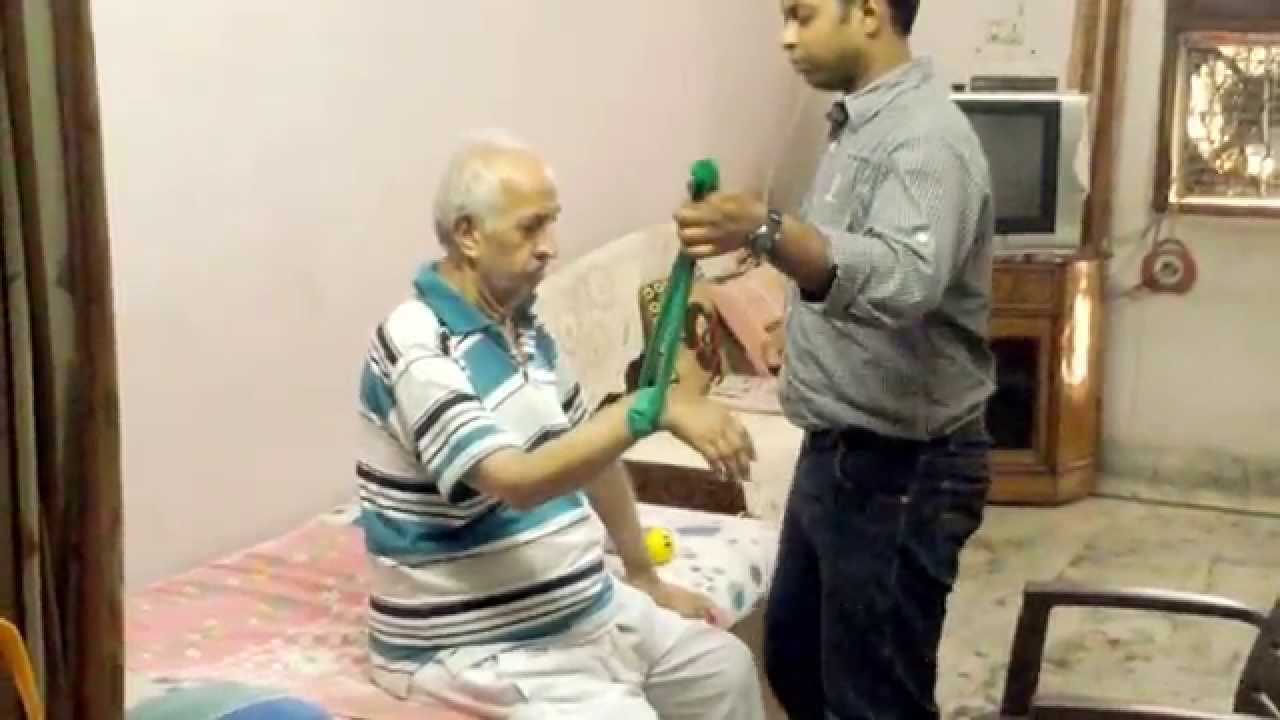
The treatments will use simple mirrors and innovative strength training techniques, to allow stroke patients to carry out therapy with minimal assistance at home or in a therapy setting. The therapy is already showing huge potential.
The stroke research group, is also carrying out home based clinical trials using a simple treadmill with mirrors, and has established a strong network with the Health Service Executive and the Stroke Unit in Sligo University Hospital, and their Consultant Geriatrician Dr Paula Hickey.
‘We know that there are over 30,000 people living in Ireland with disability due to stroke,” explains Dr Hickey.
“Through our collaboration with this research group, we are seeing substantial benefits in a group of patients that traditionally might have been viewed as having ‘finished’ their treatment and even felt to be beyond help. Not only does this help the stroke victims themselves but it has a broader benefit to their families and healthcare workers and students.”
The stroke group also works closely with both University College Dublin (UCD), and Royal College of Surgeons Ireland (RCSI).
With stroke patients allowed to carry out four-week innovative exercise programmes in their own home, in a tailored fashion, the clinical trials have been attracting increased interest in the North West stroke community.
Laurence Cassells, Secretary for the North West Stroke Group describes the potential benefits of this research as exciting. “We are donating this money because we genuinely believe that there is huge potential to improve the lives of our members,” he says.
“It is amazing to see improvements in people who had their stroke many years ago and felt that they had no chance of further recovery.”
It is expected that these new innovative rehabilitation treatments will be used within rehabilitation settings, and also within the patient’s own home in the future.
The Stroke Research Group, was founded by Dr Kenneth Monaghan, Mr Patrick Broderick, Mr Daniel Simpson, and Ms Monika Ehrensberger, in 2014. This Group is supported by IT Sligo and is currently looking for more stroke patients to participate in clinical trials in their own home.
For more information or to volunteer for clinical trials, please contact  Daniel Simpson on 087-0531507 or email Daniel.simpson@mail.itsligo.ie .

The Sun is not the key driver of climate change new studies show

Image result for The Sun is not the key driver of climate change    Image result for The Sun is not the key driver of climate change

CLIMATE CHANGE HAS NOT BEEN STRONGLY INFLUENCED BY VARIATIONS IN HEAT FROM THE SUN, A NEW SCIENTIFIC STUDY SHOWS.

The findings overturn a widely held scientific view that lengthy periods of warm and cold weather in the past might have been caused by periodic fluctuations in solar activity.
Research examining the causes of climate change in the northern hemisphere over the past 1,000 years has shown that until the year 1800, the key driver of periodic changes in climate was volcanic eruptions.
These tend to prevent sunlight reaching the Earth, causing cool, drier weather. Since 1900, greenhouse gases have been the primary cause of climate change.
The findings show that periods of low sun activity should not be expected to have a large impact on temperatures on Earth, and are expected to improve scientists’ understanding and help climate forecasting.
Historical data
Scientists at the University of Edinburgh carried out the study using records of past temperatures constructed with data from tree rings and other historical sources.
They compared this data record with computer-based models of past climate, featuring both significant and minor changes in the sun.
They found that their model of weak changes in the sun gave the best correlation with temperature records, indicating that solar activity has had a minimal impact on temperature in the past millennium.
The study, published in Nature GeoScience, was supported by the Natural Environment Research Council.
“Until now, the influence of the sun on past climate has been poorly understood,” says Dr Andrew SchurerSchool of GeoSciences.
“We hope that our new discoveries will help improve our understanding of how temperatures have changed over the past few centuries, and improve predictions for how they might develop in future. Links between the sun and anomalously cold winters in the UK are still being explored.